All Astronauts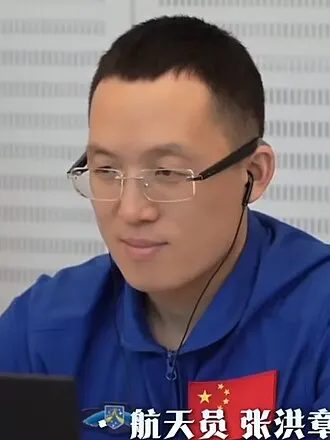 ELITEActiveCNSA
ELITEActiveCNSACNSA·🇨🇳 China·Born 1986
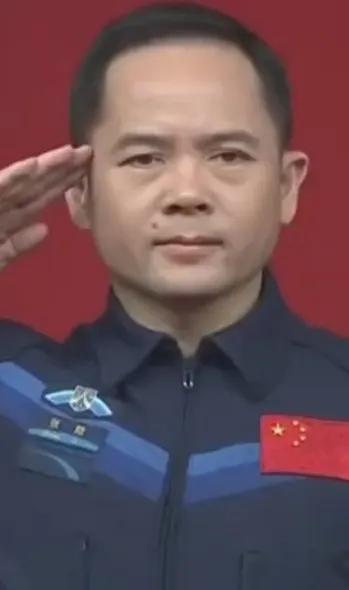
Zhang Hongzhang
Chinese taikonaut who flew his first mission aboard Shenzhou-21 to the Tiangong space station, conducting science experiments and station maintenance.
210d
Days in Space
1
Missions
0
EVAs
—
EVA Time
What they aspire to
He hopes to advance microgravity chemistry and life-science research aboard Tiangong.
Biography
Chinese taikonaut who flew his first mission aboard Shenzhou-21 to the Tiangong space station, conducting science experiments and station maintenance.
Before NASAResearcher at the Dalian Institute of Chemical Physics under the Chinese Academy of Sciences before being selected as a third-batch payload specialist astronaut.
Life & career
Zhang Hongzhang came to spaceflight from the laboratory rather than the cockpit. Born in the mid-1980s, he built an academic career in chemistry and chemical engineering, earning a bachelor's degree in the field before completing a Ph.D. and going to work as a researcher — and later group leader — at the Dalian Institute of Chemical Physics, one of the flagship institutes of the Chinese Academy of Sciences. His scientific specialty was energy storage: high-specific-energy battery technologies, including new-system flow batteries and lithium-sulfur and lithium-ion chemistries, the kind of research with direct bearing on how spacecraft and future off-world outposts might store power. When China created a payload-specialist track in its third astronaut group — opening the corps to working scientists for the first time — Zhang's expertise made him a strong candidate, and he was selected to fly experiments of his own design in orbit.
His first and, to date, only spaceflight was Shenzhou 21, which launched on 31 October 2025 toward the Tiangong space station. Zhang flew as the mission's payload specialist, the crew member whose primary job was science rather than piloting or engineering, on a long-duration expedition of roughly 210 days alongside commander Zhang Lu and flight engineer Wu Fei. Aboard the station he conducted a program of microgravity research, running self-designed experiments — including a power-supply study drawn from his battery expertise — and supporting the mission's broader science manifest, which included a widely publicized experiment using live mice carried to orbit. The three-member crew spanned three decades of birth years — the 1970s, 1980s, and 1990s — a generational spread that the program highlighted as a sign of how diverse China's taikonaut corps had become. The expedition ended with the crew returning to Earth aboard the Shenzhou 22 spacecraft after their stay was extended and their original return vehicle was affected by suspected micro-debris damage.
Zhang Hongzhang's importance is bound up with what his selection and flight represent: the arrival of the civilian research scientist in China's human-spaceflight program. As one of the first payload specialists to reach orbit under the new selection model, he demonstrated that Tiangong is not merely an engineering achievement but a working laboratory where bench scientists can carry their own research off the planet. He remains an active taikonaut, an advocate for microgravity science and for broader civilian participation in spaceflight, and a bridge between China's space agency and its academic research community — a chemist who took his experiments to a place no ground laboratory can reach.
Mission Timeline
- Payload Specialist
Shenzhou spacecraft
Shenzhou 21
Launch: Oct 31, 2025Landing: May 29, 2026Duration: 210 days- Crew returned to Earth aboard the Shenzhou-22 spacecraft
Beyond the Mission
Causes They Champion
Microgravity science researchCivilian scientific participation in spaceflight
Languages
Mandarin Chinese
Fun fact
He flew alongside crewmates born in three different decades — the 1970s, 1980s, and 1990s — making Shenzhou 21 a three-generation Chinese crew.
More Astronauts
Other space travelers from CNSA