All Astronauts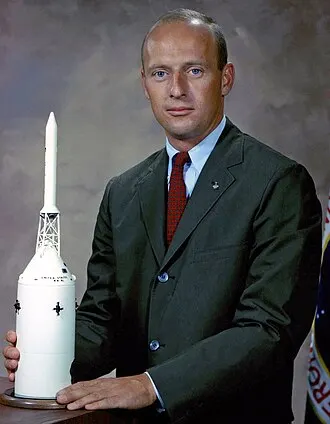 VETERANIn MemoriamNASA
VETERANIn MemoriamNASANASA·🇺🇸 United States·Born 1930
Pete Conrad
Third person to walk on the Moon, commanding Apollo 12, then led the Skylab 2 crew that repaired America's first space station and saved the program.
49d
Days in Space
4
Missions
4
EVAs
13h
EVA Time
Biography
Third person to walk on the Moon, commanding Apollo 12, then led the Skylab 2 crew that repaired America's first space station and saved the program. He died in 1999.
Before NASAU.S. Navy fighter pilot and test pilot who graduated from the Naval Test Pilot School in 1958 and logged over 6,500 flight hours despite battling severe dyslexia that had led to his expulsion from prep school.
Life & career
Charles "Pete" Conrad Jr. was born on June 2, 1930, in Philadelphia, Pennsylvania. Dyslexia went undiagnosed in his youth and cost him dearly in school — it contributed to his expulsion from one prep school — but he overcame it to earn a bachelor's degree in aeronautical engineering from Princeton University, making him the first Ivy League graduate to fly in space. He joined the U.S. Navy, won his aviator's wings, and graduated from the U.S. Naval Test Pilot School, building a reputation as a superb stick-and-rudder pilot with more than 6,500 flight hours. Passed over in the original Mercury selection, he was chosen in NASA's second astronaut group in 1962 and quickly became one of the agency's most capable and irrepressibly good-humored flyers.
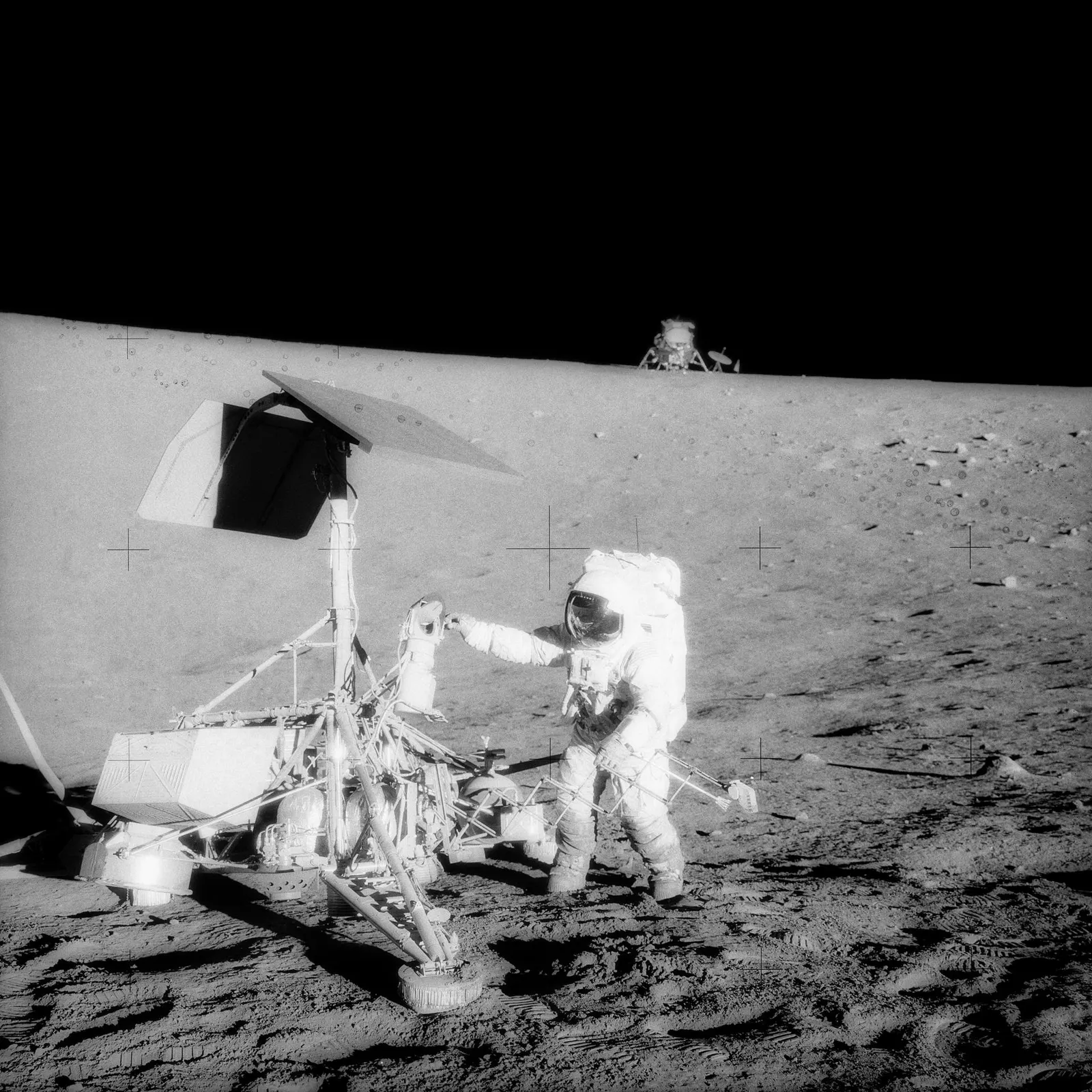
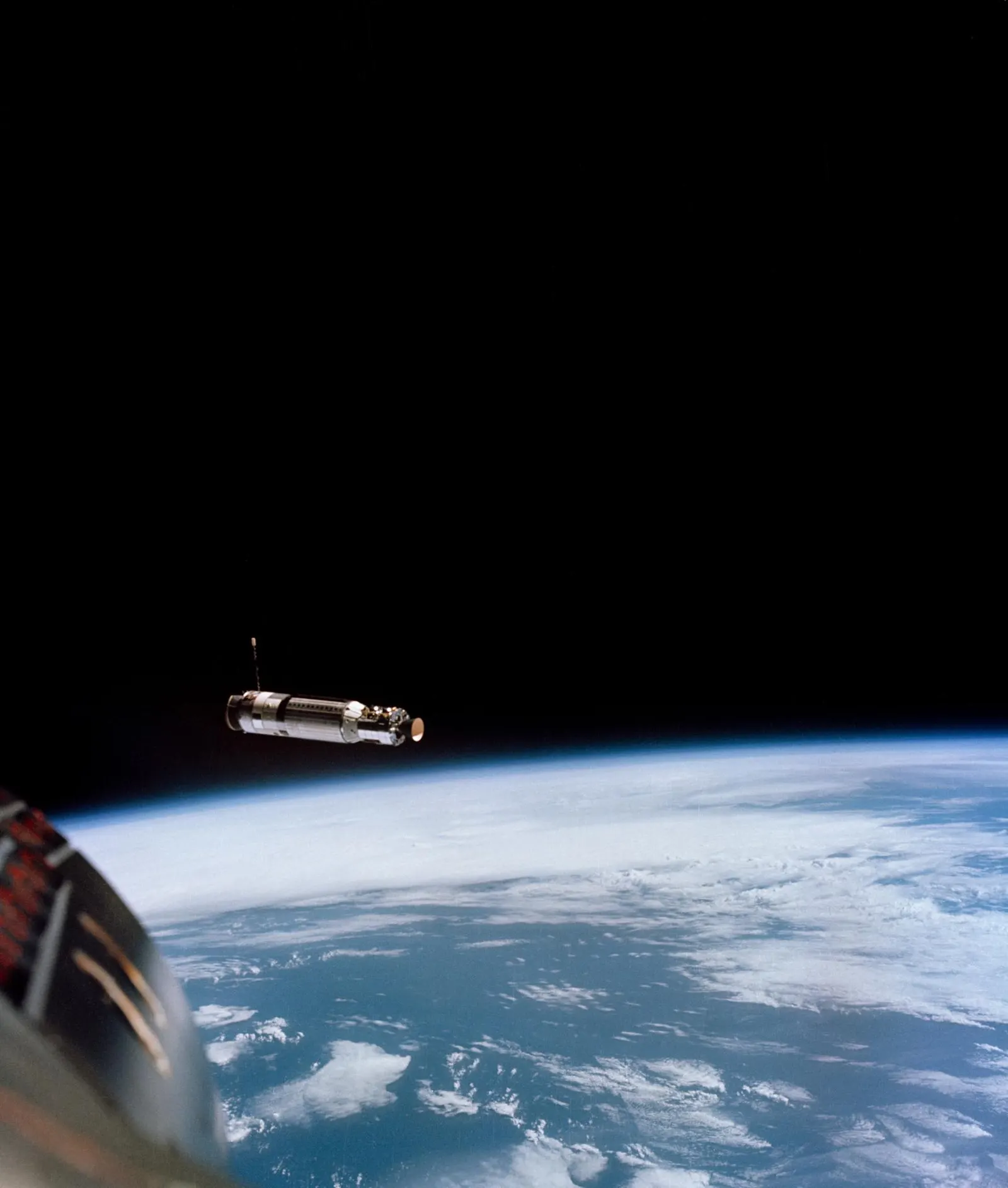
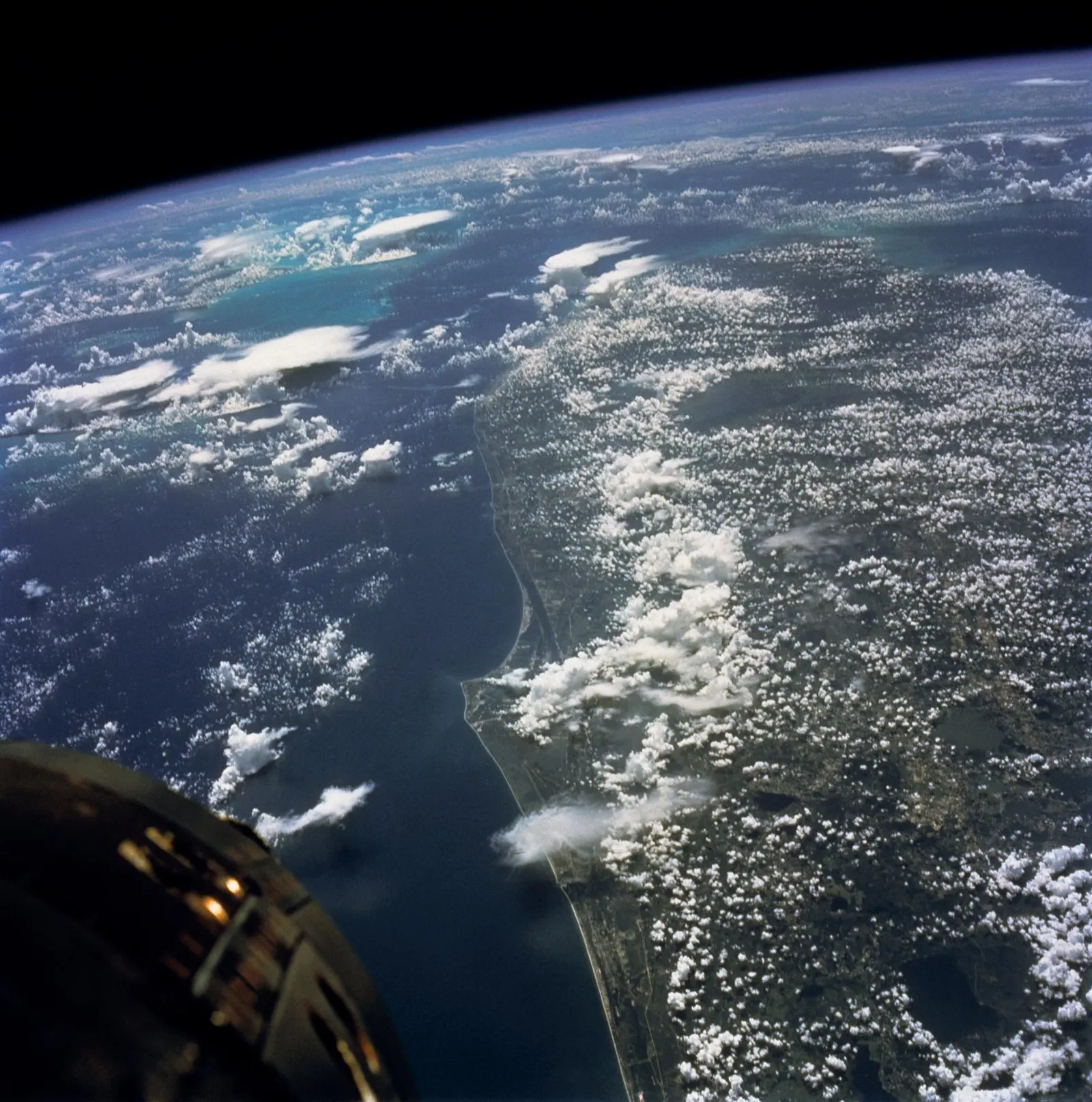
Conrad flew four times, an exceptional record for the era. On Gemini 5 in 1965 he and commander Gordon Cooper endured an eight-day mission that set a new space-endurance record, proving humans could survive in orbit long enough to reach the Moon and return. As commander of Gemini 11 in 1966, he led the flight that used its Agena target vehicle to climb to a record-high Earth orbit of roughly 1,370 kilometers. His crowning moment came on Apollo 12 in November 1969, when he became the third human to walk on the Moon, setting the lunar module Intrepid down in the Ocean of Storms in a pinpoint landing just a short walk from the earlier robotic Surveyor 3 probe, pieces of which the crew retrieved. Stepping onto the surface — and playfully referencing his own short stature against Neil Armstrong's famous words — he exclaimed, "Whoopee! Man, that may have been a small one for Neil, but that's a long one for me." In 1973 he commanded Skylab 2, the first crew to America's first space station, performing daring spacewalk repairs to free a jammed solar array and deploy a sunshade over the overheating, launch-damaged station — work that rescued the entire Skylab program. Across his four missions he logged roughly 1,179 hours in space and 13 hours of spacewalking.
After leaving NASA, Conrad worked in the aerospace industry, including on commercial launch ventures, and remained a beloved figure for his boundless energy and irreverent wit. He was killed on July 8, 1999, at the age of 69, from injuries sustained in a motorcycle accident while riding through California. He is remembered as one of the most versatile astronauts of the space age — an endurance pioneer, an altitude record-setter, a Moonwalker, and the commander who saved Skylab — and as living proof that a boy who struggled to read could grow up to leave his footprints on another world.
Mission Timeline
- Pilot
Gemini spacecraft
Gemini 5
Launch: Aug 21, 1965Landing: Aug 29, 1965Duration: 8 days- Record eight-day endurance flight
- Commander
Gemini spacecraft
Gemini 11
Launch: Sep 12, 1966Landing: Sep 15, 1966Duration: 3 days- Set a crewed Earth-orbit altitude record of 1,369 km
- Commander
Apollo CSM Yankee Clipper / LM Intrepid
Apollo 12
Launch: Nov 14, 1969Landing: Nov 24, 1969Duration: 10 days- Third person to walk on the Moon; pinpoint landing beside Surveyor 3
- Commander
Apollo CSM / Saturn IB
Skylab 2
Launch: May 25, 1973Landing: Jun 22, 1973Duration: 28 days- Repaired the damaged Skylab station, saving the program
Beyond the Mission
Hobbies & Interests
golfwater skiingauto racing
Languages
English
Fun fact
When Conrad became the third person to walk on the Moon, he deliberately quipped "Whoopee! Man, that may have been a small one for Neil, but that's a long one for me" — a line he had bet journalist Oriana Fallaci $500 he could say on the lunar surface to prove astronauts weren't scripted.
More Astronauts
Other space travelers from NASA