Every year, the governments of the world collectively wire more than $100 billion into space. That figure — conservatively estimated at around $107 billion for 2025 — represents the combined civil, scientific, and in many cases military space budgets of roughly 80 national programs. But "government space spending" is not a monolithic pool. It is a series of wildly different bets, placed by wildly different governments, on wildly different outcomes.
Some of that money funds the most ambitious scientific endeavors in human history. Some of it builds infrastructure that underpins a multi-trillion-dollar commercial ecosystem. Some of it funds prestige projects that serve geopolitical signaling more than scientific progress. And some of it — a growing fraction — is directly catalyzing private capital formation at ratios that would make a venture capitalist envious.
For investors tracking the long-term arc of the space economy, government spending is not background noise. It is the seed funding for the entire industry. Understanding who spends what, and why, is essential for identifying where commercial opportunities will emerge in the years ahead.
Top National Space Budgets (2026)

| Rank | Country | Civil Space Budget (USD) | Military Space Budget (USD) | Total (USD) | Lead Agency | Headline Programs |
|---|---|---|---|---|---|---|
| 1 | United States | ~$25B (NASA) | ~$32B (USSF/DoD/NRO) | ~$57B | NASA, USSF, NRO | Artemis, Mars Sample Return, NRO recon constellations, GPS III/IIIF, JWST/HST operations |
| 2 | China | ~$8–10B (CNSA/CASC) | ~$5–8B (PLA SSF, est.) | ~$13–18B | CNSA + PLA SSF | Tiangong station, Chang'e 7/8, Tianwen-3 sample return, BeiDou, Guowang megaconstellation |
| 3 | Russia | ~$2.5B | ~$1B | ~$3–4B | Roscosmos | Soyuz, Progress, GLONASS, Luna-26/27 |
| 4 | Japan | ~$2.5B | ~$1B | ~$3–4B | JAXA | HTV-X, MMX (Mars moons), H3 rocket, BepiColombo (joint with ESA) |
| 5 | France | ~$2B (~half via ESA) | ~$1–1.5B | ~$3–3.5B | CNES | Ariane 6, CSO recon, Pléiades Neo, Iris² contribution |
| 6 | Germany | ~$2B (heavy ESA contributor) | ~$0.5–1B | ~$2.5–3B | DLR | ESA cornerstone funding, SARah recon, Heinrich Hertz |
| 7 | India | ~$1.7–2.1B | (folded into civil) | ~$1.7–2.1B | ISRO | Gaganyaan, Chandrayaan-4, NISAR (with NASA), Bharatiya Antariksh Station |
| 8 | Italy | ~$1B | (modest, ESA-routed) | ~$1B | ASI | COSMO-SkyMed, Vega-C, Platino |
| 9 | United Kingdom | ~$0.7B | ~$0.2–0.3B | ~$0.8–1B | UK Space Agency | Skynet 6, OneWeb sovereign-equity stake, NSSIF |
| 10 | UAE | multi-year ~$5B+ envelope | (limited disclosure) | ~$0.8–1B annualized | UAE Space Agency / MBRSC | Hope Mars orbiter, Rashid 2 lunar rover, MBR Explorer asteroid mission |
| 11 | South Korea | ~$700M | (separate defense line) | ~$700M+ | KARI / KASA | Nuri (KSLV-II) rocket, Danuri lunar orbiter, KPS regional nav |
| 12 | Canada | ~$500M | (modest) | ~$500M | CSA | Canadarm3 for Gateway, lunar rover, RADARSAT Constellation |
| 13 | Israel | ~$200M | (classified, larger) | ~$200M+ | ISA | Beresheet 2, Ofek recon series |
| 14 | Australia | ~$200M | (small, growing) | ~$200M | ASA | Trailblazer lunar rover, JP9102 SATCOM |
Caption: Approximate FY2025/26 figures, in USD. Exchange-rate sensitive; some agencies report on different fiscal calendars. Military space budgets are often partially classified; figures are approximate. Smaller programs — Brazil (AEB ~$100M), Spain (AEE / INTA), the Netherlands (NSO), and the Nordic agencies — round out the global ~$107B total but are excluded here for brevity.
The Global Space Budget Landscape
The topline number hides enormous disparities. The United States accounts for roughly $68 billion of total global government space spending when you include NASA's civil budget ($25 billion), the Space Force and Department of Defense space programs ($30+ billion), and intelligence community space assets ($12+ billion). That makes the U.S. responsible for nearly two-thirds of all sovereign space investment worldwide.
China comes in a distant second at an estimated $12–15 billion, though the opacity of Chinese defense-civil space integration makes any figure approximate. The European Space Agency pools contributions from 23 member states to deploy approximately €8 billion (~$9 billion) annually. Japan's JAXA operates on roughly $2.5 billion. India's ISRO works with approximately $1.5 billion. Russia's Roscosmos has fallen to around $2 billion following sanctions, partner departures, and domestic economic pressure. South Korea's KARI has grown to approximately $700 million. The UAE's Mohammed bin Rashid Space Centre commands around $500 million.
The growth trajectory matters as much as the absolute numbers. China's space budget has roughly doubled in the past decade and shows no sign of plateauing. India's budget has grown 40 percent since 2020. South Korea's program has tripled in scale over the same period. Meanwhile, Russia's has contracted sharply — arguably the most consequential downward revision in the global space landscape since the post-Soviet collapse of the 1990s.
For investors, the direction of sovereign spending matters because government programs are the primary demand generators for national aerospace industries, the training grounds for commercial talent, and increasingly, the anchor customers for emerging commercial service providers.

NASA: The World's Biggest Space Program
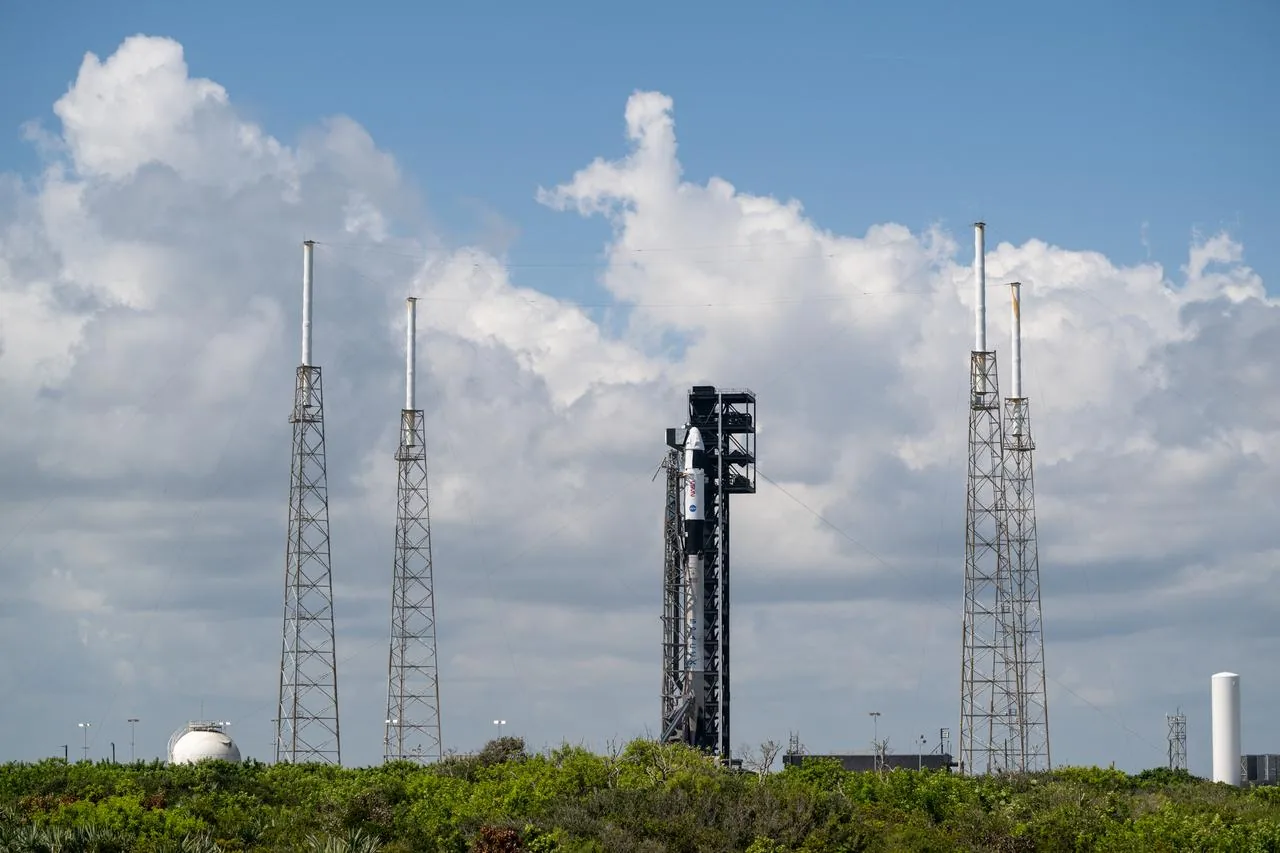
NASA's $25 billion civil budget for fiscal year 2025 is both enormous by any global comparison and, by the standards of what the agency is attempting, chronically constrained. The budget breaks down roughly as follows: Science directorate ($7.5B), Exploration Systems Development and the Artemis program ($7B), Space Operations including ISS and commercial crew ($4B), Space Technology ($1.1B), Aeronautics (~$900M), and the remainder split across safety, mission support, and education.
The Science directorate — funding Webb, the upcoming Nancy Grace Roman Space Telescope, planetary science missions, Earth observation, and heliophysics — produces the research outputs that underpin entire downstream industries. NASA Earth science data alone, freely distributed to commercial users, has been estimated to generate more than $1.8 billion in annual economic value for agriculture, insurance, and logistics companies that build products on top of it.
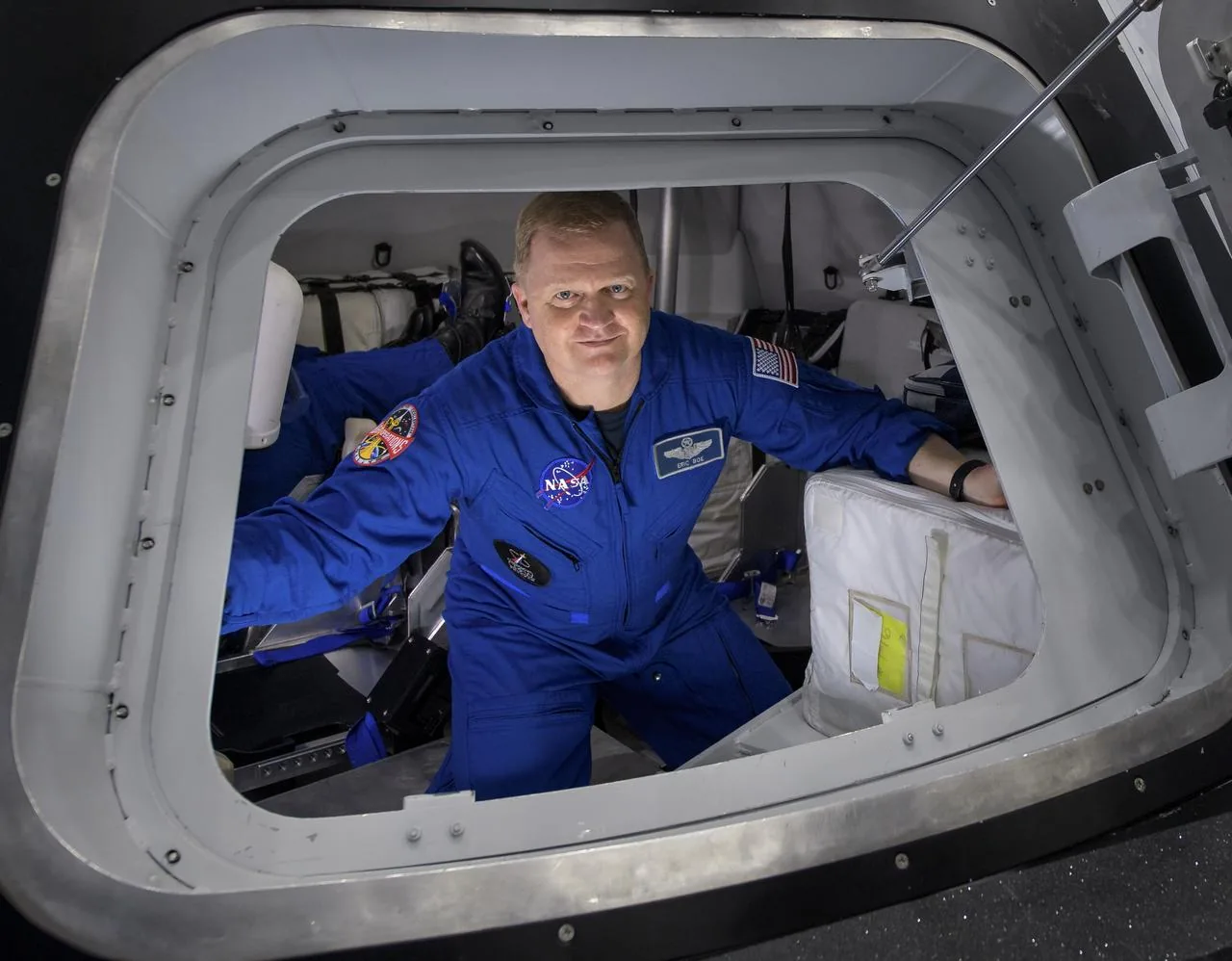
But the investor story around NASA is less about what it directly spends and more about what it catalyzes. The Commercial Crew Program, which paid SpaceX and Boeing to develop crewed orbital vehicles, invested roughly $6.8 billion in combined contracts. SpaceX's Dragon is now the backbone of crewed ISS access and has been used as the basis for additional commercial applications far beyond what NASA originally funded. The leverage ratio here is extraordinary: government investment helped SpaceX build capabilities that the company has since deployed in dozens of commercial missions, lunar contracts, and DARPA programs that collectively represent many multiples of the original NASA outlay.
The Human Landing System contract awarded to SpaceX for Artemis — initially $2.9 billion with subsequent options expanding it significantly — follows the same model. Government money is funding the development of a lunar transportation architecture that SpaceX will almost certainly use commercially. Every dollar NASA spends developing lunar logistics capability is a dollar that doesn't have to come from private investors to prove the concept viable.
Artemis more broadly represents a $93 billion program (estimated through 2025) aimed at returning humans to the Moon and establishing a sustainable presence. Whatever one thinks of its cost structure, Artemis is creating demand for habitats, life support systems, lunar surface vehicles, communication relays, and resource extraction technologies that commercial companies are already positioning to supply.
The NASA commercial leverage ratio — the amount of private capital mobilized per dollar of government spending — is estimated at roughly 3:1 across its commercial programs. In specific cases like commercial crew and commercial lunar payload services (CLPS), the ratio is considerably higher.
China's CNSA: The Fastest Growing and Most Opaque
China's space program defies easy analysis because it was never designed to be analyzed easily. The China National Space Administration is the public face of a program that also incorporates the People's Liberation Army Strategic Support Force, state-owned enterprises like China Aerospace Science and Technology Corporation (CASC) and China Aerospace Science and Industry Corporation (CASIC), and an increasingly active commercial sector funded with state guidance.
Best estimates place total Chinese government space investment at $12–15 billion annually, but this figure almost certainly understates real spending because military space activity and dual-use R&D are consolidated with broader defense budgets that do not itemize space programs separately. Some analysts tracking satellite launches, facility construction, and program disclosures have suggested actual annual expenditure could be as high as $18–20 billion.
What is visible is impressive. China has built and operates the Tiangong space station — a fully functional, independently owned orbital laboratory that China operates without international partners, providing a hedge against any future loss of ISS access. China has successfully landed rovers on the Moon (Chang'e 4 and 5), retrieved lunar samples (the first nation to do so since 1976), and returned the first samples ever collected from the lunar far side (Chang'e 6, 2024). The Tianwen-1 mission placed a rover on Mars in 2021.
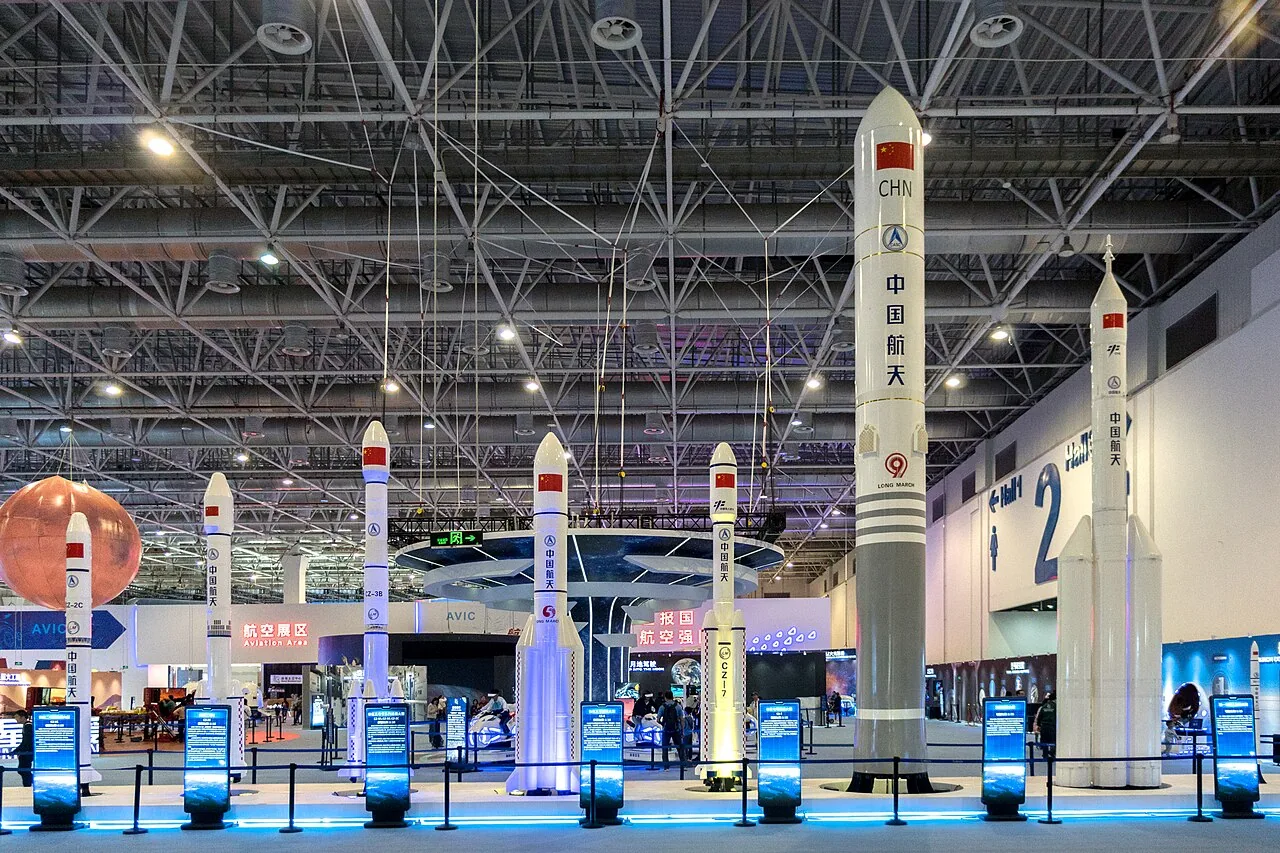
China's domestic commercial space sector — companies like LandSpace, Deep Blue Aerospace, and iSpace — is developing reusable launch vehicles with clear state encouragement and, critically, state-guaranteed early customers. This mirrors the U.S. COTS/CRS model from a decade ago: government anchor contracts de-risk private development, which then competes commercially. For international investors, direct access to Chinese new space companies is limited, but the pattern of government-seeded commercial development is identical to what has driven value creation in the American market.
The Belt and Road space dimension adds another layer. China has signed space cooperation agreements with more than 50 countries, providing ground stations, launching satellites for developing nations, and integrating BeiDou navigation as an alternative to GPS. This is infrastructure diplomacy — and it is building a commercial client base that will generate revenues for Chinese space companies for decades.
Europe's ESA: Collaborative but Fragmented
The European Space Agency is simultaneously one of the world's most capable space organizations and a textbook study in the costs of collective governance. With 23 member states each contributing according to GDP — Germany and France each around 22 percent, Italy around 15 percent, the UK around 9 percent — ESA has built extraordinary capabilities in Earth observation, navigation, and science. Its structural weakness is that political consensus moves more slowly than a competitive launch market requires.
Ariane 6, ESA's flagship heavy-lift rocket, illustrates the tension perfectly. The vehicle had its first successful flight in July 2024 — several years behind schedule and over budget — in a market that SpaceX has fundamentally reshaped. Ariane 6 is not cost-competitive with Falcon 9 at current pricing, and the political constraints of maintaining launch capability across German, French, Italian, and other industrial workshares prevent the kind of vertical integration that gave SpaceX its cost advantages. ESA is now investing in Themis (its reusable first-stage demonstrator) and in European new space companies through its Boost! program, but the gap to close is significant.
Where ESA genuinely excels — and where the investment case is strongest — is in its operational infrastructure programs. Galileo, the European navigation constellation, now has 30 operational satellites providing positioning service to over 3 billion devices globally. The service is technically superior to GPS in several respects, and the upcoming Galileo Second Generation will add features including encrypted signals and higher accuracy. The downstream market for Galileo-dependent devices and services is an €80+ billion annual market by some estimates.
Copernicus, ESA's Earth observation program operated in partnership with the European Commission, is arguably the most impactful government space infrastructure investment of the past two decades. The Sentinel satellite constellation continuously images the entire Earth surface, providing freely available data to meteorologists, disaster response agencies, agricultural companies, insurers, and dozens of downstream commercial data products. An independent study estimated Copernicus generates €67 billion in socioeconomic benefits per decade — roughly 4:1 on the investment made.
For investors tracking ESA-adjacent opportunities, the Copernicus data economy is the richest seam. Companies building agricultural intelligence, carbon monitoring, flood prediction, and maritime traffic analytics on top of Copernicus data are growing rapidly, and the underlying data is free.
Japan and India: Doing More With Less
If there is a single statistic that reframes the global government space investment conversation, it is this: India's Mars Orbiter Mission — Mangalyaan — cost $74 million. For context, that is less than the production budget of the film "Gravity." It successfully entered Martian orbit on the first attempt. No other nation has succeeded in reaching Mars on its first mission.
India's ISRO operates with roughly $1.5 billion annually, making it the most capital-efficient major space program on Earth by a significant margin. Chandrayaan-3's successful soft landing on the lunar south pole in August 2023 — the first ever achieved at that location — cost approximately $75 million. NASA's VIPER lunar rover, targeting a similar destination, carries a price tag roughly 20 times higher. ISRO's efficiency stems from a combination of lower engineering labor costs, a culture of frugality born of budget constraints, indigenous development that avoids Western export control markups, and a willingness to accept higher risk tolerance than agencies operating under intense public scrutiny.
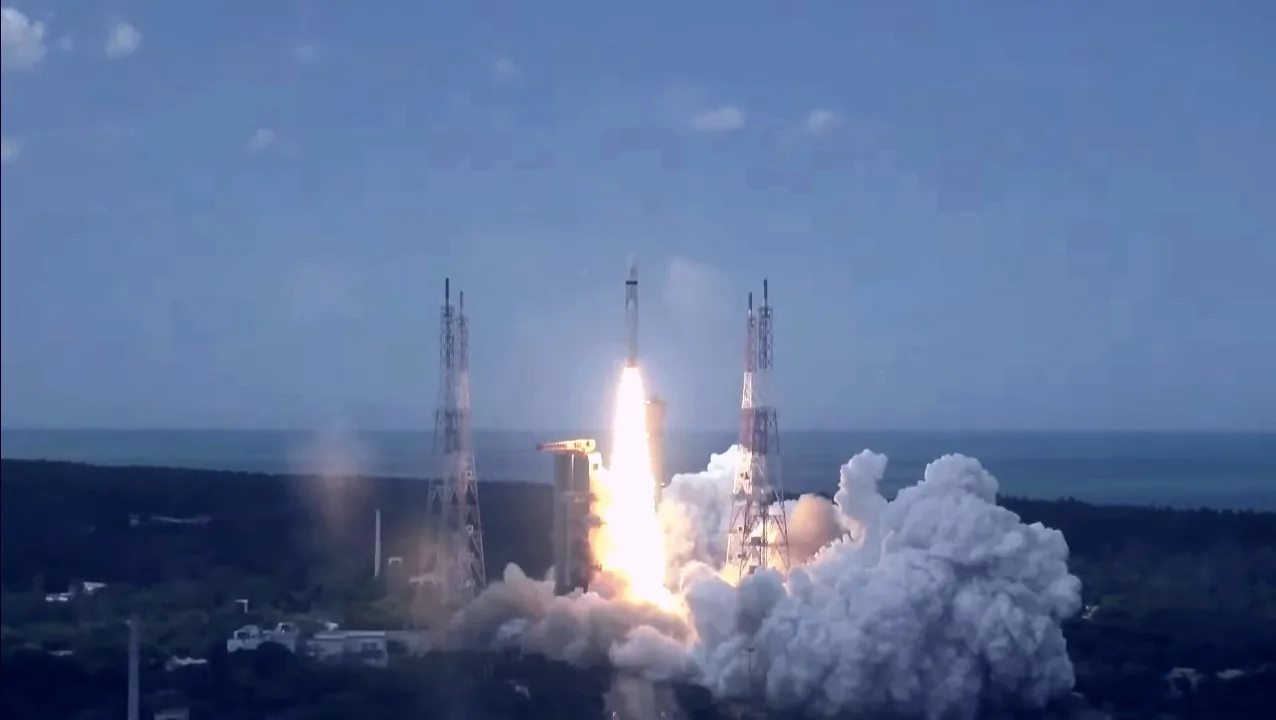
The commercial implications of ISRO's efficiency are direct and immediate. Through its commercial arm, NewSpace India Limited (NSIL), ISRO is now actively selling launch services internationally. The LVM3 rocket that carried Chandrayaan-3 also launched 36 OneWeb satellites commercially. India's InSpace regulatory authority is enabling a private sector — Skyroot Aerospace, Agnikul Cosmos, Dhruva Space — that is growing rapidly, with substantial venture investment flowing in from both domestic and international sources.
Japan's JAXA sits at roughly $2.5 billion annually and deploys that budget across an impressive range of capabilities. The H3 rocket, after a troubled first launch, has now flown successfully and represents Japan's primary orbital launch vehicle for the coming decade. The SLIM lunar lander achieved a successful Moon landing in early 2024 — making Japan only the fifth nation to achieve the feat. Japan's Hayabusa2 mission returned asteroid samples from Ryugu in 2020, providing the most pristine solar system material ever analyzed.
The Japanese commercial space ecosystem that has developed around JAXA is particularly instructive for investors. ispace, which attempted the first commercial Moon landing with its HAKUTO-R mission, raised substantial international capital on the basis of JAXA's foundational lunar research. Astroscale, the orbital debris removal company, has leveraged JAXA partnerships and contracts to build the world's leading commercial debris remediation capability. Both companies represent examples of JAXA-seeded technology reaching public capital markets.
Russia's Decline and South Korea's Rise
The contrast between Russia's Roscosmos and South Korea's KARI over the past four years is one of the starkest divergences in the global space landscape — a case study in how geopolitical decisions and domestic industrial strategy can rapidly reshape a nation's space standing.
Roscosmos entered 2022 as the world's most experienced human spaceflight organization. It had flown humans to the ISS continuously since the Space Shuttle's retirement in 2011, operated the Soyuz — the most reliable crewed spacecraft ever built — and maintained Baikonur as the world's busiest launch facility for orbital missions. Russia's estimated space budget was around $3–4 billion annually at pre-sanctions exchange rates.
The invasion of Ukraine in February 2022 triggered a cascade of consequences. ESA terminated cooperation on the ExoMars rover mission, leaving a program years from completion with no clear path forward. OneWeb stopped using Soyuz launches for its constellation, costing Roscosmos dozens of contracted launches. NASA transferred full ISS crew transportation to SpaceX and Boeing. Russia withdrew its technicians from Kourou, ending Soyuz launch operations from French Guiana.
Effective sanctions and the collapse of the ruble have reduced Roscosmos's real purchasing power substantially. The organization now operates on approximately $2 billion at current exchange rates, though the actual productive capacity has deteriorated even more than the number suggests, as expertise has departed and international supply chains have been severed. Russia's ambitious Luna-25 Moon mission, intended to recapture national prestige, crashed on the lunar surface in August 2023. The window for Russia to maintain its historical position as a tier-one space power is narrowing rapidly.
South Korea presents the opposite trajectory. KARI's Nuri rocket — Korea's first domestically developed orbital launch vehicle — achieved its first successful orbital insertion in June 2022 and has since demonstrated reliable capability. The Danuri lunar orbiter successfully reached and began mapping the Moon in late 2022. South Korea's space budget has more than tripled over the past decade, driven by both government ambition and a domestic aerospace industry — Hanwha, Korea Aerospace Industries — eager to develop exportable capabilities.
Korea's approach is deliberately commercial-first: government investment is explicitly designed to seed a private sector that can compete internationally in small satellite manufacturing and launch services by the early 2030s.
The Commercial Leverage Ratio: Which Country Gets the Best Return?
The most practically useful lens for investors is not which government spends the most, but which government spending most reliably generates private investment and commercial activity. The "commercial leverage ratio" — loosely defined as private capital mobilized per dollar of government space spending — varies dramatically across national programs.
The United States generates by far the highest leverage ratio. The combination of NASA's commercial programs (COTS, CCP, CLPS, HLS), Space Force acquisition modernization, and a regulatory environment that has been consistently friendly to commercial space has attracted an estimated $60+ billion in private venture and growth capital to U.S. space companies between 2015 and 2025. That figure dwarfs the capital mobilized by any other national program.
ESA's leverage ratio has historically been lower — European venture markets are thinner, and ESA's historical preference for member-state industrial workshare over pure commercial efficiency has slowed the development of the kind of nimble, VC-backed startups that populate the American new space ecosystem. This is changing. ESA's Boost! initiative, the BIC incubator network, and the InCubed Earth observation program are deliberately creating the conditions for European space venture investment. But the gap remains large.
India may represent the highest leverage ratio on a per-dollar basis when accounting for the informal knowledge transfer, talent development, and institutional credibility that ISRO provides to the Indian commercial space sector. ISRO's 60-year track record of successful missions, combined with InSpace's liberalized licensing framework, has attracted more than $1 billion in venture investment to Indian space startups since 2020 — on the back of a government budget that is itself modest.
Japan's leverage is strong in specific niches: the intersection of JAXA's lunar research program with ispace's commercial lunar lander ambitions, and JAXA's debris tracking capabilities with Astroscale's commercial remediation services, show how focused government programs can seed specific commercial verticals with high precision.
China's leverage ratio is structurally different because its commercial sector is not independent of the state in the Western sense. But the model of state-seeded commercial launch companies — receiving guaranteed early revenue from state-affiliated customers while developing capabilities that will eventually compete internationally — is functionally similar to the COTS model. The capital being mobilized is more domestic and less transparent to international investors, but it is real.
South Korea and UAE are early-stage leverage stories: their government programs are building the institutional, regulatory, and industrial foundations that tend to precede commercial capital formation by five to ten years. Investors with long time horizons might watch both carefully.
Following Government Money to Find the Next Investment Wave
The $100 billion that governments spend on space annually is not simply a line item in national budgets. It is the primary risk-reduction mechanism for an emerging industry that still requires public capital to validate technologies, establish safety standards, train workforces, and anchor demand for services that commercial markets are not yet large enough to sustain independently.
The pattern that has repeated itself across decades of space investment — government investment de-risks a technology, commercial capital scales it, a new industry emerges — is accelerating. NASA's commercial crew program de-risked crewed orbital transportation; SpaceX is now worth more than $350 billion and has generated returns that dwarf the original government investment. JAXA's asteroid sample return program validated the technology and approach; commercial sample return missions are now being planned by multiple private companies. India's lunar south pole program established that low-cost precision landing is achievable; half a dozen commercial lunar logistics companies are now raising capital on the back of that demonstration.
For investors, the practical implication is straightforward: track where governments are spending their space budgets today, because that identifies where commercial infrastructure and demand will be concentrated in five to ten years. Lunar surface logistics, in-space servicing, satellite broadband infrastructure, Earth observation data products, and space domain awareness are all receiving sustained, multi-year government investment across multiple sovereign programs simultaneously. That convergence of government spending from multiple directions is typically a reliable precursor to commercial market formation.
The uneven distribution of that $100 billion tells a story about which nations are positioning themselves for leadership in the industries of the 2030s and 2040s. The United States remains dominant but is increasingly willing to share the work with commercial partners on terms that create extraordinary leverage. China is building indigenous capability across every layer of the space stack with characteristic patience and long-term planning. India and Japan are demonstrating that capital efficiency and technical excellence are not mutually exclusive, and both are laying the groundwork for commercial ecosystems that are still early but clearly accelerating.
The $100 billion is not just spending. It is the map. And right now, it is pointing in more commercially interesting directions than at any point in the history of the space age.