Space Programs
From Artemis to Chandrayaan — explore humanity's missions to the stars
Showing 68 of 68 programs
🇺🇸
United States
19 programs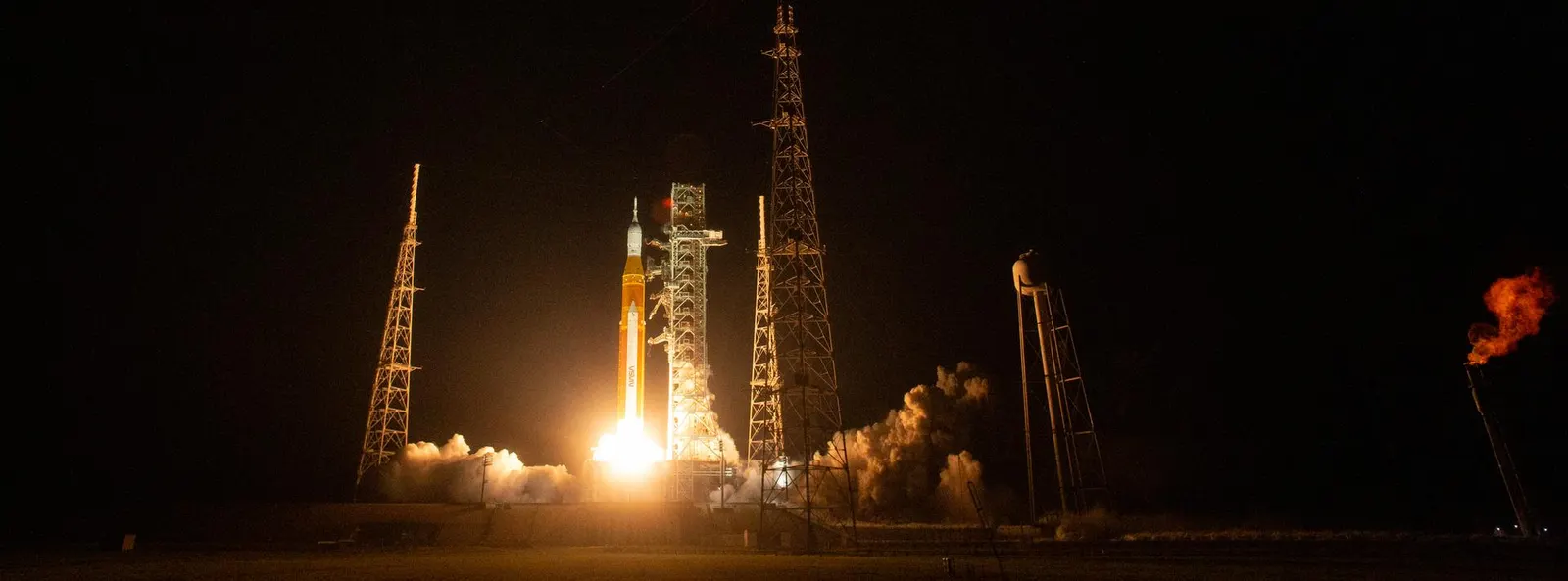
Artemis Program
NASALunar
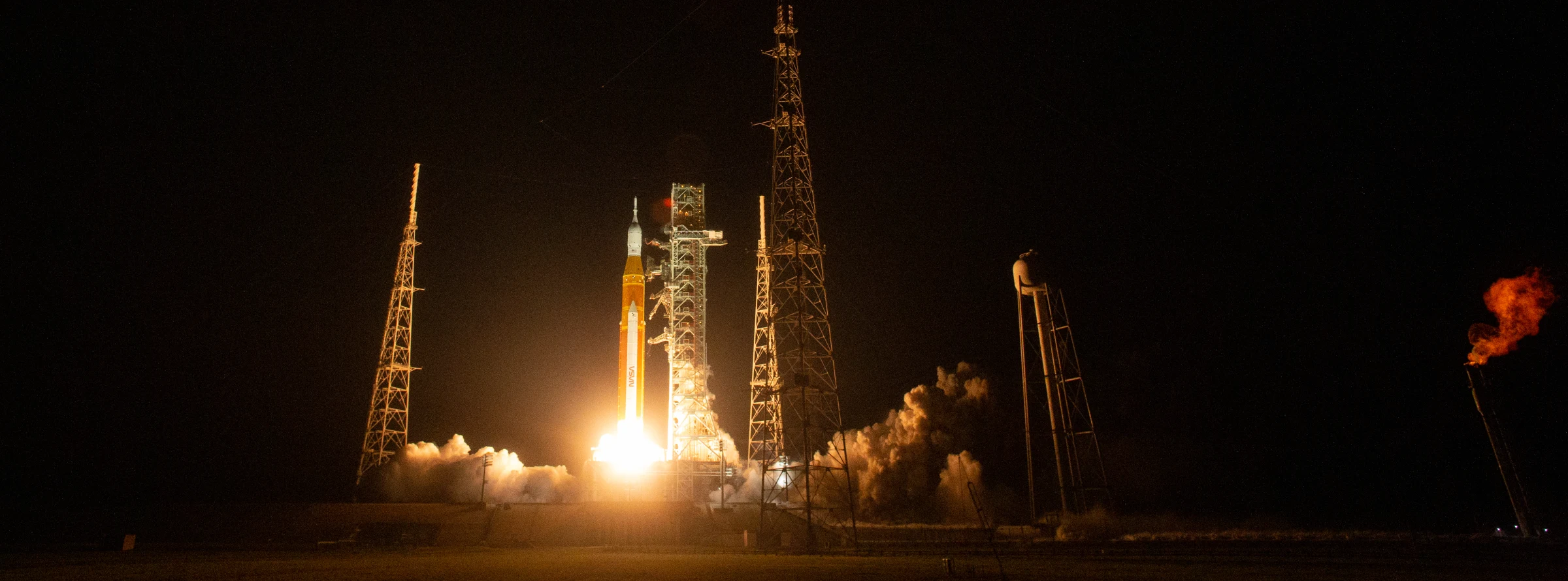
Artemis is NASA's flagship human lunar exploration programme, targeting a sustained cadence of Moon landings through the end of the decade and into the 2030s, underpinned by the Space Launch System (SLS), the Orion crew vehicle, commercial Human Landing Systems (HLS), and the Gateway lunar outpost [1]. Artemis II — launched 1 April 2026 with Wiseman, Glover, Koch and Hansen aboard — was the first crewed Orion flight, taking four astronauts on a free-return lunar flyby for the first time in over 50 years; Orion 'Integrity' splashed down in the Pacific on 11 April 2026 after setting a farthest-from-Earth record for a crewed spacecraft of 406,740 km [2][13]. Artemis III, targeted for 2027 with its crew (Bresnik, Parmitano, Rubio, Douglas) named on 9 June 2026, will serve as a Low Earth Orbit rendezvous-and-docking demonstration using one or both commercial landers before the first crewed lunar surface landing [1][14]. Artemis IV — currently targeted for early 2028 — will be the first crewed landing near the lunar South Pole, with two of four astronauts descending to the surface via SpaceX's Starship HLS [3]. NASA's OIG (IG-26-004, March 2026) found that lander development challenges will delay planned Artemis launch dates, flagging lack of crew rescue capability as an open risk [6]. As of May 2026, 67 nations have signed the Artemis Accords, underscoring broad international support for NASA's rules-based lunar framework [5].
Axiom Station
Axiom Space (NASA Commercial LEO Destinations)Exploration
Axiom Station is the privately-developed orbital outpost programme of Axiom Space, the Houston-based commercial human spaceflight company founded in 2016 by Michael Suffredini (former ten-year NASA International Space Station program manager) and Kam Ghaffarian (founder of SGT and IBX) [3]. The program operates inside NASA's Commercial LEO Destinations (CLD) framework — Axiom holds a separate $140 million contract awarded in January 2020 to attach the first commercial module to the ISS, alongside a Phase 1 CLD framework worth $415.6 million across Blue Origin/Sierra Space Orbital Reef, Nanoracks/Lockheed Starlab and Northrop Grumman that runs through 2025 [4][5]. Axiom Space's first crewed mission, Ax-1, launched April 8, 2022 with Spain's Michael López-Alegría commanding; subsequent flights Ax-2 (2023), Ax-3 (2024), and Ax-4 (mid-2025, with Indian astronaut Group Captain Shubhanshu Shukla as pilot) have established Axiom as the first commercial provider to repeatedly fly customers to the ISS on SpaceX Crew Dragon [3]. The station architecture, originally Hab-1 first then Lab/Power/Hab-2, was restructured by NASA and Axiom in mid-2024 so that the Payload, Power and Thermal Module (PPTM) launches first to ISS — providing the propulsion, power, and thermal services that enable the assembled stack to depart ISS as early as 2028 and become the free-flying Axiom Station [7]. After detachment, Axiom plans to add Habitat 1, an Airlock, Habitat 2, and a Research & Manufacturing Facility to complete the station, targeting full configuration in the early-to-mid 2030s [1]. Thales Alenia Space — the Italian-French space-prime joint venture (66.7% Thales, 33.3% Leonardo) — manufactures the primary pressurised structures at its Turin facility under a partnership announced in 2020 and expanded in subsequent years [8]. Funding mix combines NASA milestone-based payments, private equity (Series A: $130M led by C5 Capital in 2021; Series B: ~$350M led by Aljazira Capital in 2023; subsequent strategic rounds), and pre-purchased customer revenue from sovereign astronaut flights, R&D services, and in-space manufacturing demonstrations [3][12].
Commercial Crew Program
NASAHuman Spaceflight
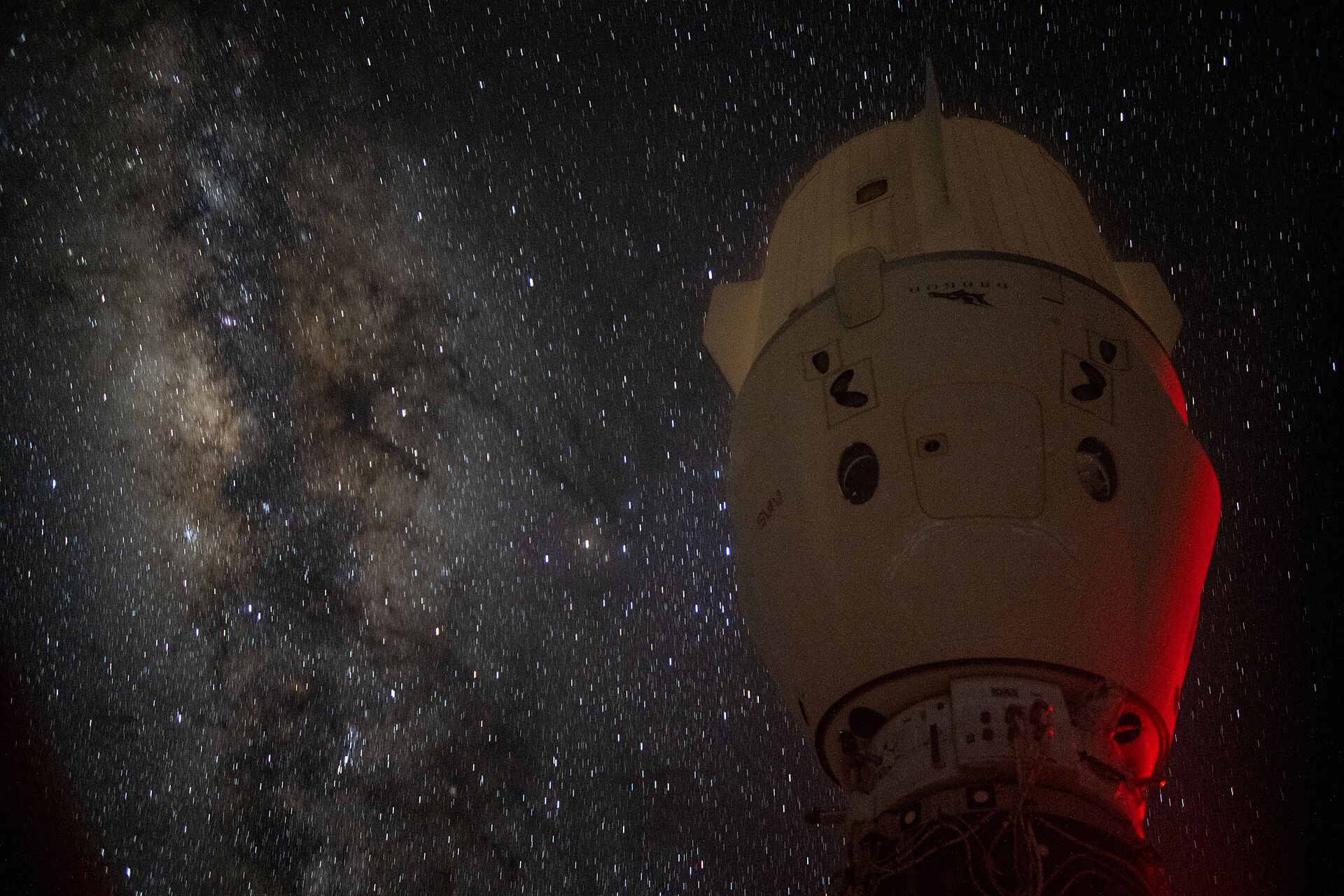
The Commercial Crew Program (CCP) was established by NASA to develop and certify privately built crew transportation systems for International Space Station rotation flights after Space Shuttle retirement in 2011 [1]. Through a series of competitive Space Act Agreements (CCDev, CCDev-2, CCiCap) and ultimately fixed-price Commercial Crew Transportation Capability (CCtCap) contracts, NASA selected SpaceX (Crew Dragon) and Boeing (CST-100 Starliner) in September 2014 [3]. SpaceX's Demo-2 in May 2020 returned US human-launch capability for the first time since STS-135 in 2011, and Crew Dragon has since flown twelve operational long-duration rotation missions — Crew-1 through Crew-12, including Crew-10 (March 14, 2025, which enabled the return of the Starliner CFT astronauts), Crew-11 (August 1, 2025) and Crew-12 (February 13, 2026 with Meir, Hathaway, Adenot and Fedyaev) — plus Demo and private flights [2][17][18][19]. Boeing's Starliner Crew Flight Test (CFT) launched June 5, 2024 carrying astronauts Butch Wilmore and Suni Williams to the ISS, but thruster anomalies and helium leaks caused NASA to return the astronauts on Crew Dragon in March 2025; on November 24, 2025 NASA and Boeing modified the contract to convert Starliner-1 into an uncrewed cargo flight (NET April 2026, window since moved to summer 2026), deferring crewed Starliner rotations pending recertification [5][16]. The model — NASA buys transportation services rather than owning hardware — is widely cited as having saved billions versus a traditional cost-plus development and is the template for HLS, Gateway logistics, and Commercial LEO Destinations [6].
Commercial Crew Program (CCP)
NASAHuman Spaceflight
Public-private partnership restoring US crew launch capability after Space Shuttle retirement. SpaceX Crew Dragon is the primary ISS crew transport vehicle, with 13+ successful crewed missions since 2020. Boeing Starliner's crewed flight test in June 2024 experienced thruster issues — crew returned via SpaceX Dragon in Feb 2025. Starliner future uncertain.
$8.3B total awarded (SpaceX $3.14B + Boeing $4.82B)2014–ongoing
Commercial LEO Destinations (CLD)
NASAHuman Spaceflight
Commercial LEO Destinations (CLD) is NASA's strategy to ensure continuous US human presence in low Earth orbit after International Space Station retirement, currently planned for 2030 [1]. Under Phase 1 (Dec 2021), NASA awarded $415.6M across three Space Act Agreement teams: Blue Origin / Sierra Space / Boeing's Orbital Reef ($130M base, increased to $172M); Voyager Space (now Starlab Space) / Airbus / Hilton / Northrop Grumman's Starlab ($160M base, increased to ~$217.5M); and Northrop Grumman's free-flyer ($125.6M), later restructured following Northrop's exit and a 2024 amendment letting Northrop pivot to subcontracting roles [2][3]. A parallel Axiom Space contract under the prior NextSTEP-2 framework ($140M) authorizes Axiom to attach commercial modules to ISS Node 2 starting with Ax-1 (Hab One), eventually detaching as a free-flyer when ISS is retired [5]. NASA aims to issue CLD Phase 2 services-procurement awards around 2026, contracting for ~$1.3B in services from at least one (preferably two) certified providers; first-station operational readiness is targeted for 2028-2030 [4]. NASA OIG IG-24-009 (Mar 2024) found Phase 1 schedule slippage and underscored the risk of a LEO presence gap if no commercial station is crew-ready by 2030 [6].
Commercial Lunar Payload Services (CLPS)
NASALunar
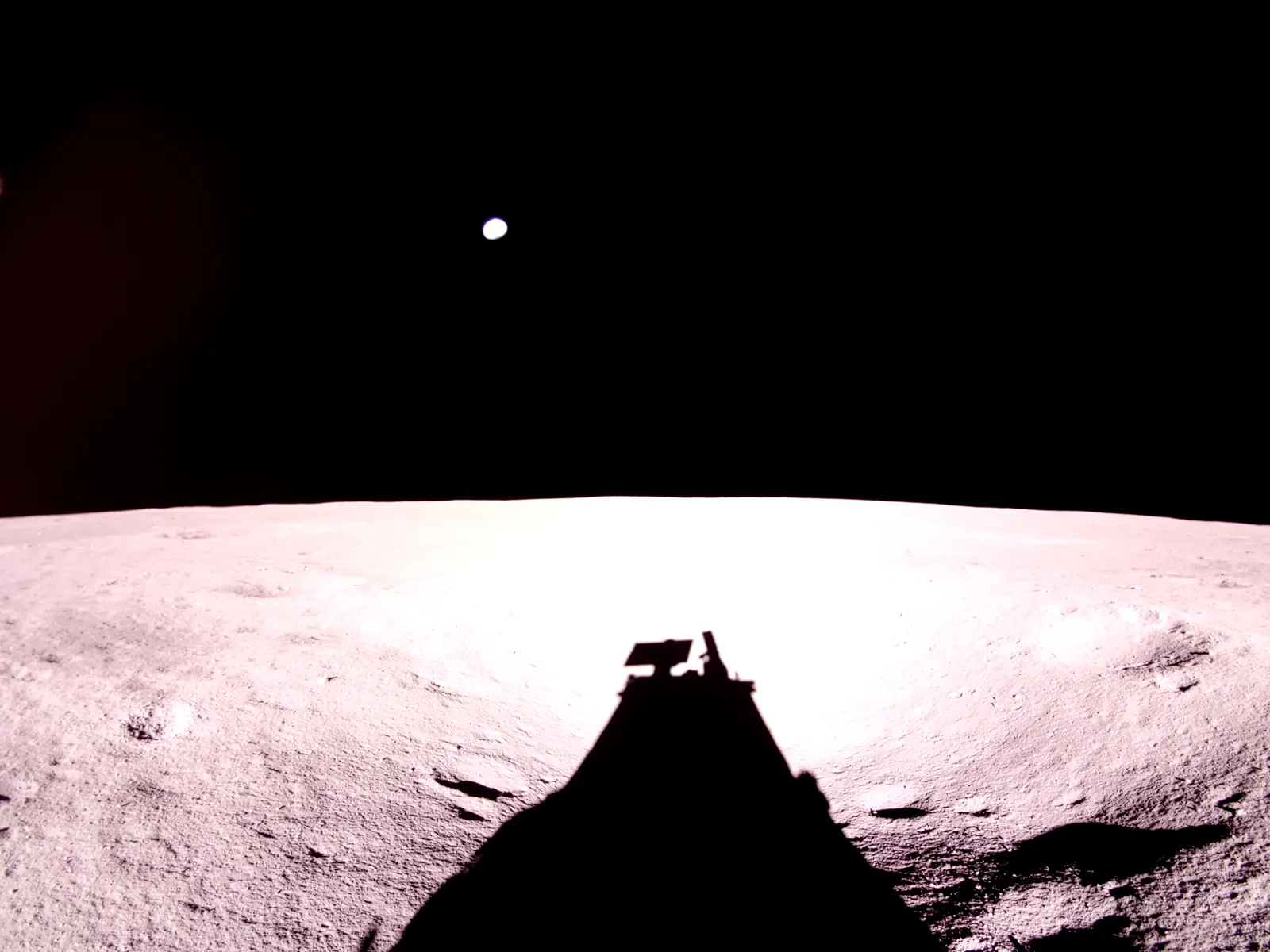
Commercial Lunar Payload Services (CLPS) is a NASA task-order IDIQ vehicle, originally awarded in November 2018 and expanded in 2019 and 2023 to a 14-vendor pool with a $2.6B aggregate ceiling through 2028 [1][2]. The contract structure is firm-fixed-price per task order — NASA buys a delivery slot (mass, destination, services) rather than a custom-built spacecraft, transferring schedule, technical and most cost risk to the commercial vendor [1]. The qualified pool includes Astrobotic Technology, Intuitive Machines, Firefly Aerospace, Draper Laboratory (teamed with ispace U.S.), Lockheed Martin, Ceres Robotics, Deep Space Systems, Masten Space Systems (subsequently acquired by Astrobotic), Moon Express, Orbit Beyond (departed), Sierra Space (formerly Sierra Nevada), SpaceX, Blue Origin and Tyvak Nano-Satellite Systems [2]. Astrobotic's Peregrine Mission One launched on the inaugural ULA Vulcan Centaur flight on January 8, 2024 but suffered a propellant leak shortly after separation and never attempted lunar landing — it was disposed of via Earth re-entry over the South Pacific on January 18, 2024 [3]. Intuitive Machines' IM-1 (Nova-C Odysseus) launched on Falcon 9 on February 15, 2024 and soft-landed near Malapert A in the lunar south-polar region on February 22, 2024, becoming the first U.S. lander to reach the surface since Apollo 17 in 1972 — but tipped over on touchdown with skids broken, limiting science return to ~7 days [4]. Firefly Aerospace's Blue Ghost Mission 1 launched on Falcon 9 on January 15, 2025 and soft-landed upright in Mare Crisium on March 2, 2025, becoming the first fully successful commercial lunar landing and operating all 10 NASA payloads through one lunar day [5]. Intuitive Machines' IM-2 launched on February 26, 2025 carrying NASA's PRIME-1 ice-drilling payload and also tipped over on its March 6, 2025 landing attempt at Mons Mouton, failing to fully deploy PRIME-1 [6]. As of June 2026, NASA has awarded 11 task orders worth over $1.4B cumulatively; next up is IM-3 (Nova-C, NET H2 2026) targeting the Reiner Gamma lunar swirl, with Blue Ghost 2 (NET late 2026), IM-4 (NET 2027) and Draper-led CP-12 (Schrödinger basin, NET 2026) in active development [7][8][17].
Dragonfly
NASAExploration
Dragonfly is a New Frontiers Program rotorcraft lander selected by NASA in June 2019, designed and built by the Johns Hopkins University Applied Physics Laboratory (APL) to fly through the dense methane-rich nitrogen atmosphere of Saturn's moon Titan [1][2]. The dual-quadcopter, MMRTG-powered vehicle will sample organic-rich surface materials at multiple sites — initially the Selk impact crater and surrounding dunes — to address questions about prebiotic chemistry, habitability, and the chemistry that preceded life on early Earth [1][6]. NASA confirmed Dragonfly's formal cost and schedule baseline in April 2024 at $3.35 billion and a July 2028 launch readiness date, after multiple replans pushed the launch from the original 2026 target and grew life-cycle cost by nearly $1 billion versus the initial $850 million New Frontiers cap [3][4][5]. In November 2024 NASA awarded SpaceX a firm-fixed-price launch services contract of approximately $256.6 million to fly Dragonfly on a Falcon Heavy from Kennedy Space Center LC-39A, with a launch window from July 5 to July 25, 2028 and a Titan arrival date in 2034 [7][8]. The NASA Office of Inspector General's IG-25-011 audit, released September 2025, found that APL's Earned Value Management System indicates cost and schedule performance is poorer than planned and flagged risks around aeroshell qualification, retropropulsion testing, and the autonomous flight software stack [4][5]. International contributions include the German Aerospace Center (DLR) supplying the DraGMet meteorology package, JAXA contributing seismometer hardware, and the French CNES participating in mass spectrometry instrumentation [1][9]. Dragonfly is the second New Frontiers-class mission to a Saturnian system body after Cassini-Huygens — and the first time a heavier-than-air, powered vehicle will operate on a non-Earth ocean world.
Europa Clipper
NASAMars
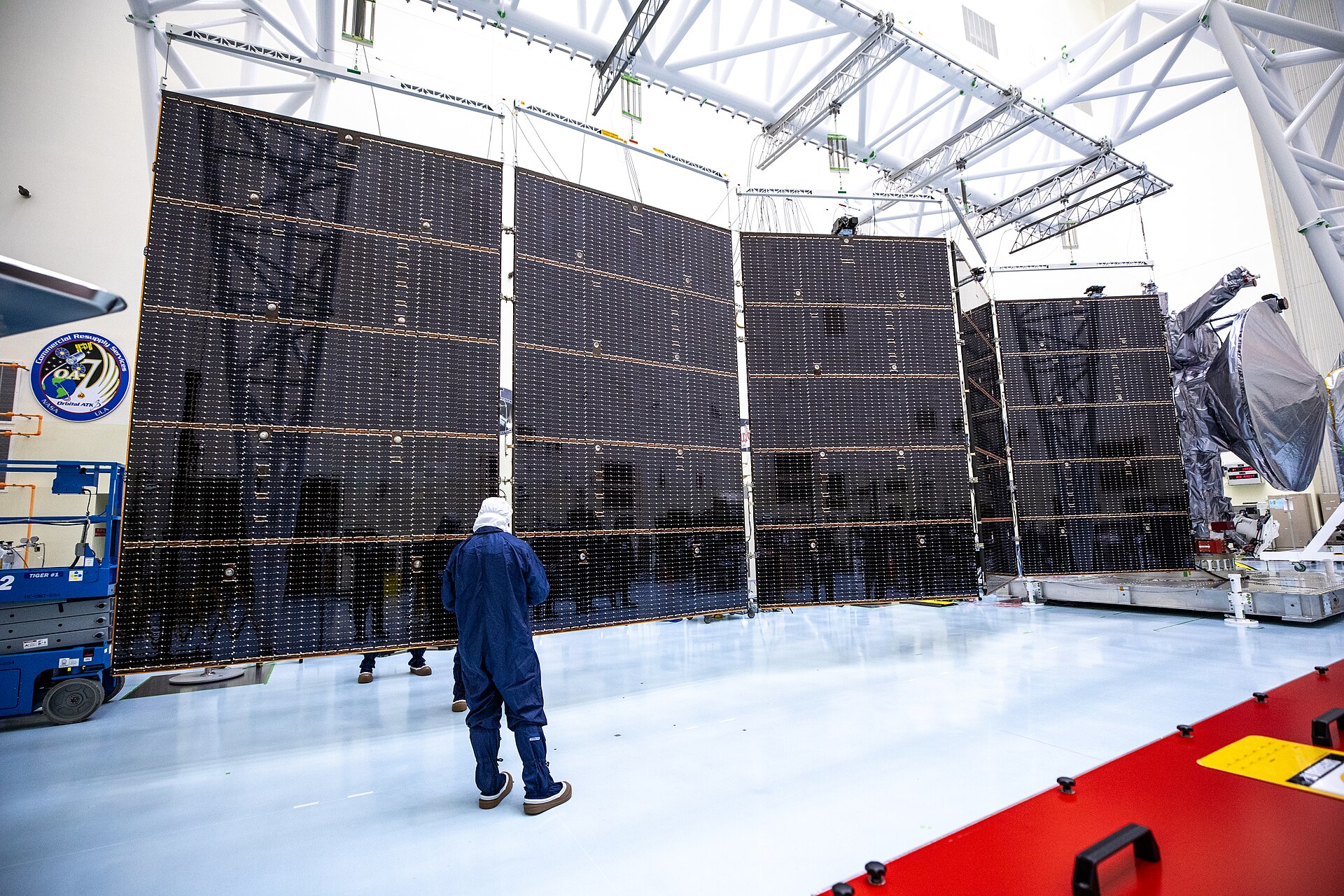
Europa Clipper is NASA's first dedicated mission to Jupiter's moon Europa, jointly developed by the Jet Propulsion Laboratory (JPL, operated by Caltech under NASA contract) and the Applied Physics Laboratory (APL, operated by Johns Hopkins University) — with JPL serving as the project office and APL leading spacecraft integration [1][2]. The mission's primary scientific objective is to assess Europa's habitability by characterizing the thickness of the icy crust, the depth and salinity of the subsurface liquid water ocean (inferred from Galileo magnetometer data in the 1990s), and the chemistry of any plumes or ice-shell exchange processes [1]. The spacecraft is the largest NASA has ever built for a planetary mission, with a 30.5m (100ft) solar array span and a fully fueled mass of 6,065 kg — necessitating the Falcon Heavy launch vehicle in a fully-expendable configuration [3][4]. Europa Clipper launched on October 14, 2024 at 16:06 UTC from Kennedy Space Center LC-39A; the launch contract awarded to SpaceX in July 2021 was valued at $178M [4][5]. The launch placed Clipper on a Mars-Earth Gravity Assist (MEGA) trajectory, with Mars flyby on March 1, 2025 (~890 km altitude) and Earth flyby on December 3, 2026, followed by Jupiter Orbit Insertion (JOI) on April 11, 2030 [6]. Once in Jupiter orbit, Clipper will execute 49 close flybys of Europa over a four-year prime mission, with closest approach altitudes as low as 25 km — orders of magnitude closer than any Galileo flyby [1]. NASA OIG IG-22-014 set the lifecycle cost at $5.2B, including the $178M SpaceX launch contract and Phase E operations through 2034 [7]. Major instrument and subsystem providers include: Europa Imaging System (EIS, APL); MAss Spectrometer for Planetary EXploration (MASPEX, SwRI); SUrface Dust Analyzer (SUDA, University of Colorado LASP); REASON ice-penetrating radar (JPL); Europa-UVS (SwRI); Europa Thermal Emission Imaging System (E-THEMIS, ASU); ECM magnetometer (APL with L3Harris boom heritage); and PIMS plasma instrument (APL) [1][8]. The spacecraft passed pre-launch radiation-hardness reviews after Aug 2024 NASA-internal evaluation of mixed-lot transistors that had earlier raised concerns; the review concluded that flight transistors were qualified for the planned mission radiation dose [9].
James Webb Space Telescope (JWST)
NASA / ESA / CSAAstronomy
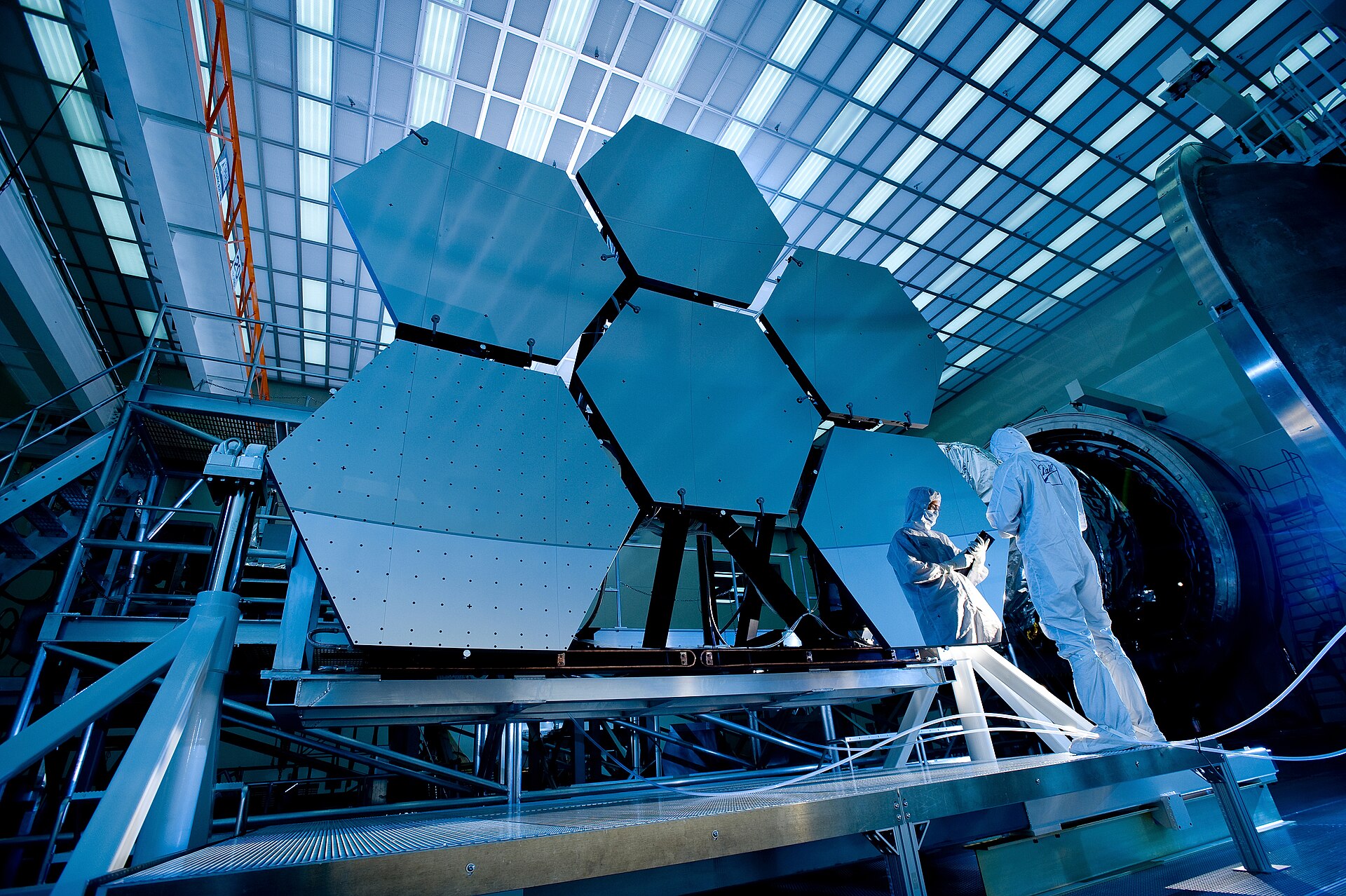
The James Webb Space Telescope (JWST) is the successor to the Hubble Space Telescope, jointly developed by NASA (lead), the European Space Agency (ESA) and the Canadian Space Agency (CSA) under a partnership agreement that exempted ESA member states from paying for U.S. development in exchange for guaranteed observing time and the supply of the NIRSpec instrument and the Ariane 5 launcher [1]. Northrop Grumman is the prime contractor responsible for the optical telescope element, the spacecraft bus and the five-layer tennis-court-sized sunshield; Ball Aerospace (acquired by BAE Systems in February 2024 and rebranded BAE Systems Space & Mission Systems) built the 18 segmented beryllium primary mirror sub-assemblies; ITT (subsequently Harris Corporation, now L3Harris Technologies) integrated the optical telescope element [6][7][8]. The observatory launched on Arianespace Ariane 5 ECA flight VA256 from Kourou, French Guiana on December 25, 2021 at 12:20 UTC; sunshield deployment completed January 4, 2022; primary mirror unfolding completed January 8, 2022; arrival at the Sun-Earth L2 Lagrange point completed January 24, 2022 [3]. First science images released on July 12, 2022 included Webb's First Deep Field — the deepest and sharpest infrared image of the distant universe ever produced [4]. As of May 2026, JWST has supported over 4,000 peer-reviewed publications, with notable highlights including the spectroscopic confirmation of galaxy JADES-GS-z14-0 at z=14.32 (290M years after the Big Bang); detailed atmospheric spectra of the TRAPPIST-1 system rocky exoplanets; and the first detection of carbon dioxide in an exoplanet atmosphere (WASP-39b) [5]. The 2018 NASA OIG IG-19-006 report set lifecycle cost at $9.7B (development $8.8B + operations $0.9B) — over the $5B 2010 baseline and the $1B 1997 baseline by approximately 8.7x [2]. Operations are funded through at least 2027 by NASA's Astrophysics Division (~$172M/year) and the project has on-board propellant for an estimated 20-year mission lifetime [9]. The Space Telescope Science Institute (STScI), operated by the Association of Universities for Research in Astronomy (AURA), runs flight operations from Baltimore [10].
Lunar Gateway
NASALunar
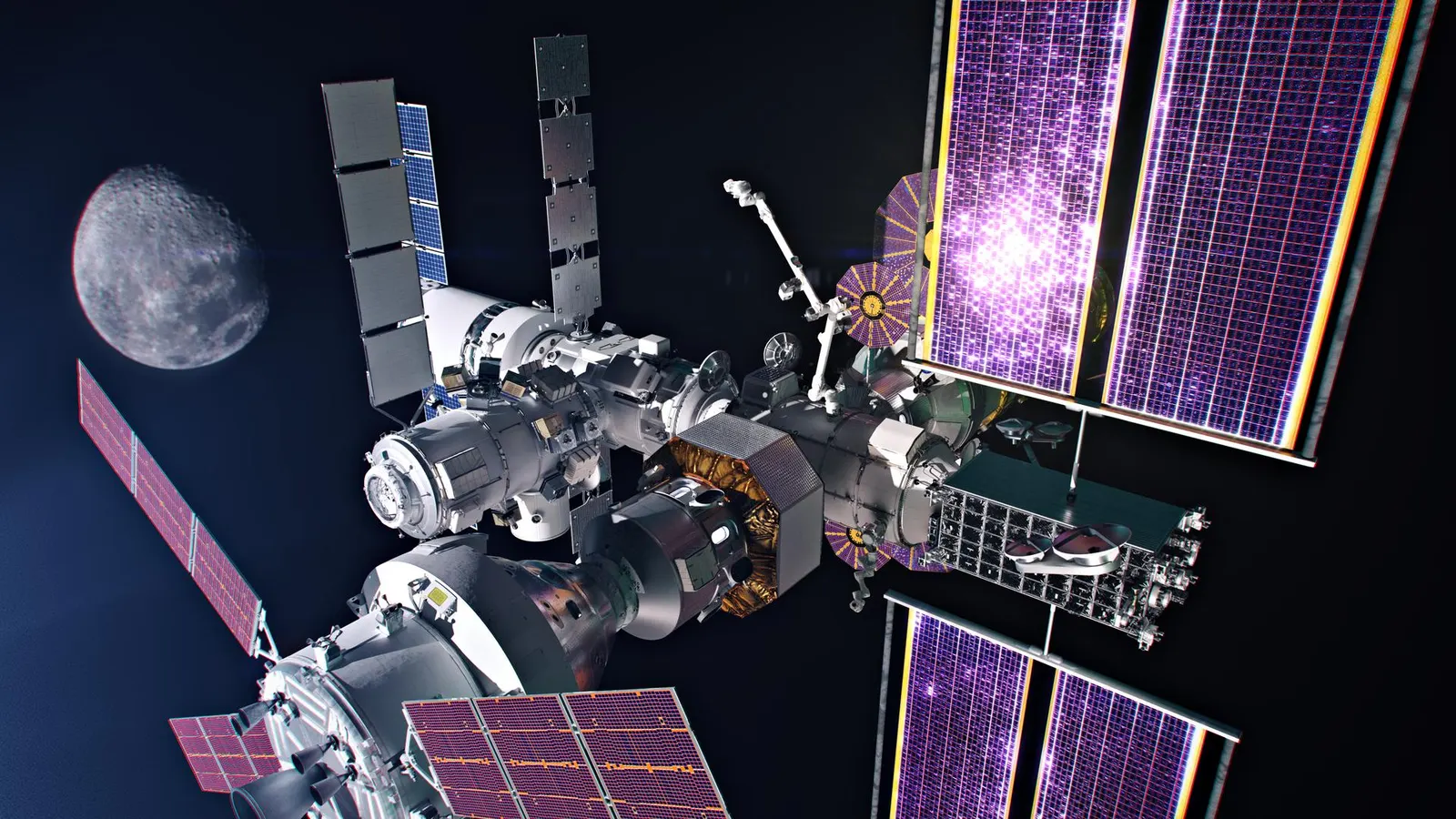
Status note: on 2026-03-24 NASA paused Gateway 'in its current form,' redirecting roughly $20B toward a surface-first lunar base architecture; the completed PPE and HALO modules may be repurposed, and ESA's decision on the disposition of its Gateway contributions is due June 2026 [4]. As originally designed, the Lunar Gateway is a small space station in near-rectilinear halo orbit (NRHO) around the Moon, intended to support Artemis crewed lunar surface missions and serve as a multi-decade platform for international cooperation, deep-space exposure science, and Mars-precursor systems testing [1]. The first two modules — the Power and Propulsion Element (PPE) built by Maxar (now Maxar Intelligence/Maxar Space) and the Habitation and Logistics Outpost (HALO) built by Northrop Grumman — are being integrated for launch as a single stack on a SpaceX Falcon Heavy, no-earlier-than December 2027 [4]. ESA contributes the I-HAB international habitation module and the ESPRIT refuelling-and-telecommunications module (Thales Alenia Space prime), JAXA supplies HTV-XG cargo and life-support hardware, CSA provides Canadarm3 robotics, and the UAE's MBRSC will deliver the Crew and Science Airlock [3]. Gateway will be uncrewed between Artemis visits, conducting heliophysics and deep-space radiation science autonomously [1]. NASA OIG IG-21-004 (Nov 2020) raised early concerns about cost growth and integration risk, and GAO-24-106256 (Dec 2023) flagged that PPE/HALO integration is on Artemis IV's critical path [5][6].
Mars Exploration Program
NASAMars
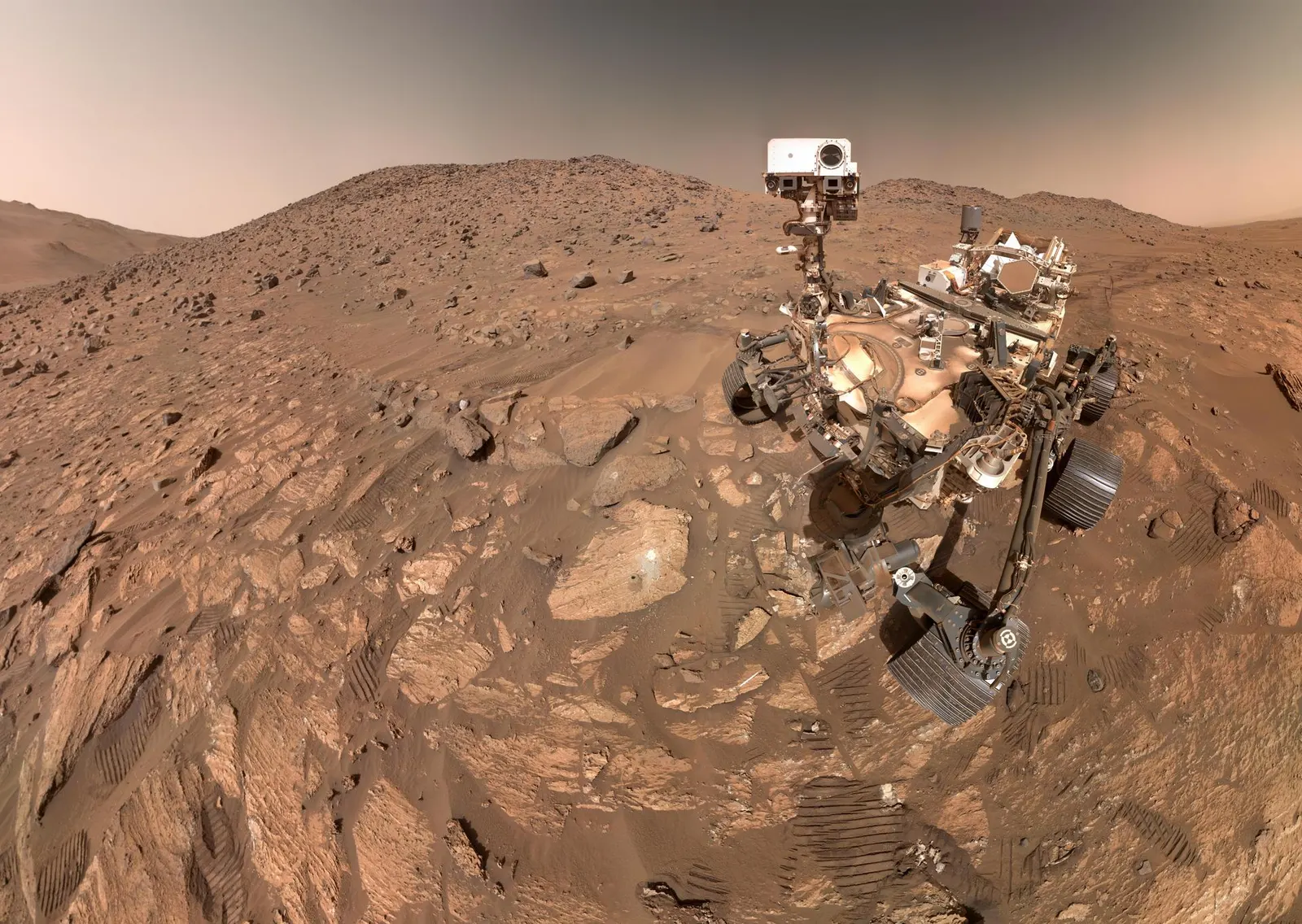
The Mars Exploration Program (MEP) is NASA's continuous robotic Mars effort dating to the 1996 Mars Pathfinder / Sojourner mission, executed through the Science Mission Directorate's Planetary Science Division and led from JPL (operated by Caltech under a NASA prime contract) [1]. The currently operational portfolio includes: Mars Odyssey (2001 launch, NASA's longest-operating Mars asset and primary telecom relay); Mars Reconnaissance Orbiter (MRO, 2005 launch, with the 0.3m/pixel HiRISE camera that has imaged effectively every Mars-bound landing target); MAVEN (2013 launch, dedicated atmospheric escape measurements); the Curiosity rover (Mars Science Laboratory, landed August 6, 2012 at Gale Crater, ~$2.5B lifecycle cost); and the Perseverance rover with the Ingenuity helicopter (landed February 18, 2021 at Jezero Crater, ~$2.7B lifecycle cost) [2][3]. Ingenuity flew 72 powered flights between April 2021 and January 2024 — the first powered flight on another planet — before sustaining rotor-blade damage and being designated stationary [4]. Perseverance has cached 24 sealed sample tubes through May 2026 along its Jezero Crater traverse, intended for retrieval by the now-restructured Mars Sample Return campaign [5]. The MSR campaign — jointly planned with ESA and originally architected around a NASA-built Sample Retrieval Lander, an ESA Earth Return Orbiter, two Ingenuity-class Sample Recovery Helicopters, and a NASA-built Mars Ascent Vehicle (MAV) — was found by the September 2023 Independent Review Board (IRB-2) chaired by Orlando Figueroa to face an $8-11B price tag and a 2040 sample-return date versus the original $4.4B / 2031 baseline, triggering a 2024 NASA decision to solicit alternative architectures from JPL plus industry (Lockheed Martin, Rocket Lab, SpaceX, Blue Origin, Northrop, Aerojet/L3Harris) [6][7]. NASA Administrator Bill Nelson and incoming leadership confirmed in January 2025 that two competing architectures — a 'JPL Optimized' option targeting ~$5.5-7.7B and a 'Commercial Heavy Lift' option targeting ~$5.8-7.1B — would feed a 2026 architecture-down-select decision [7]. The future MEP pipeline also includes the Mars Life Explorer concept (decadal-survey priority for late 2030s) and the Escape and Plasma Acceleration and Dynamics Explorers (ESCAPADE), a SmallSat pair launched on Blue Origin New Glenn maiden flight in October 2024 and arriving Mars in 2026-2027 [8].
Nancy Grace Roman Space Telescope
NASAAstronomy
The Nancy Grace Roman Space Telescope (formerly known as the Wide-Field Infrared Survey Telescope, WFIRST, until renamed in May 2020 to honor Nancy Grace Roman — NASA's first chief astronomer and 'Mother of Hubble') is NASA's next major astrophysics flagship mission, identified as the top-priority large mission by the 2010 New Worlds, New Horizons Decadal Survey [1][2]. Roman's primary 2.4m mirror was donated to NASA by the National Reconnaissance Office in 2012 — one of two spare Hubble-class mirrors transferred to NASA at no cost, eliminating roughly $250M from the development bill [3]. Roman is being developed under a $4.3B development cost cap set by Congress and confirmed by the FY2018 NASA appropriation; lifecycle cost including five-year prime mission operations is projected at approximately $4.5-4.8B [4][9]. The observatory is being integrated at NASA Goddard Space Flight Center in Greenbelt, Maryland — making it the largest single Goddard-led flagship since Hubble [1]. The Wide Field Instrument (WFI), Roman's primary survey camera, uses 18 H4RG-10 4K×4K infrared detectors developed by Teledyne Imaging Sensors providing a 0.281 sq-deg field of view at 0.11 arcsec/pixel sampling — capturing the same Hubble-equivalent depth across an area 100x larger than Hubble's Wide Field Camera 3 [5][8]. A second instrument, the Coronagraph Instrument (CGI, provided by JPL/Caltech with international partner contributions from JAXA and Japanese consortium), is a technology-demonstration coronagraph designed to suppress starlight by 10^9 and demonstrate exoplanet imaging contrast precursor to future direct-imaging missions [6]. Roman launched-readiness was confirmed by the 2024 Key Decision Point E (KDP-E) following completion of spacecraft integration; the launch window opens October 2026 with a No-Earlier-Than (NET) launch date that has held since 2023 [4]. The launch contract was awarded to SpaceX in July 2023 at $255M for a Falcon Heavy launch in a fully expendable configuration; the launch will place Roman on a direct injection to Sun-Earth L2 [7][10]. Operations will be jointly managed by the Space Telescope Science Institute (STScI) in Baltimore and IPAC at Caltech [11]. The prime science program includes: a High Latitude Wide Area Survey (HLWAS) for weak-lensing dark energy; a High Latitude Time Domain Survey (HLTDS) for Type Ia supernovae; the Galactic Bulge Time Domain Survey (GBTDS) for exoplanet microlensing; and ~25% guest observer time [11].
NEO Surveyor
NASAExploration
The Near-Earth Object Surveyor (NEO Surveyor) is NASA's first space telescope developed expressly for planetary defense, managed by the Jet Propulsion Laboratory under principal investigator Amy Mainzer (formerly UCLA, now University of Arizona) [1][2]. The spacecraft carries a 50 cm infrared telescope cooled passively to deep-space temperatures, with mid-wave infrared (MWIR, 4-5.2 μm) and long-wave infrared (LWIR, 6-10 μm) channels that allow asteroid size and orbit determination far better than ground-based optical surveys, which suffer the sunward blind spot inhabited by daytime asteroids [3]. The mission's congressional mandate, set in the 2005 NASA Authorization Act, is to find at least 90 percent of near-Earth objects ≥ 140 meters in diameter — the planetary-defense floor for regional-scale damage — within 10 years of operations; NEO Surveyor is sized to deliver roughly two-thirds of that gap in its 5-year prime mission [2][7]. After multiple budget-driven schedule rebaselines that pushed launch from 2026 to 2028 and back to September 2027 once Congress restored full-funding requests, NASA awarded SpaceX a $100M-class Launch Services II contract in February 2025 to fly NEO Surveyor on a Falcon 9 from Cape Canaveral [4][5]. The spacecraft and the instrument are built by BAE Systems Space & Mission Systems — the former Ball Aerospace acquired by BAE Systems in February 2024 for $5.55 billion — with the Space Dynamics Laboratory and Teledyne contributing detector and cryogenic subsystems [6][8]. NEO Surveyor will operate from a halo orbit around the Sun-Earth L1 point, ~1.5 million km sunward of Earth, where it can survey toward the Sun, sweep up Earth Trojans and daylight Earth-crossing asteroids, and avoid Earth's thermal background — a regime no prior NEO survey (NEOWISE, Catalina Sky Survey, Pan-STARRS, ATLAS) has been able to access [3]. Discovered objects flow into the IAU Minor Planet Center for orbit determination and into the JPL Center for Near Earth Object Studies (CNEOS) for impact risk assessment [1].
NISAR (NASA-ISRO SAR Satellite)
NASA / ISROExploration
Joint NASA-ISRO Synthetic Aperture Radar satellite that will map the entire globe every 12 days using dual-frequency radar. Will track changes in Earth's ice sheets, ecosystems, sea level, natural hazards, and groundwater with unprecedented precision. One of the most capable Earth observation satellites ever built.
$1.5B (NASA: L-band radar; ISRO: S-band radar, spacecraft, launch)2025–2028
NISAR (NASA-ISRO SAR)
NASA + ISROExploration
NISAR — the NASA-ISRO Synthetic Aperture Radar mission — is a flagship bilateral Earth-observation satellite jointly developed under a 2014 NASA/ISRO partnership agreement, then formally booked at $1.5 billion total life-cycle cost across the two agencies' contributions [1][2][3]. NASA's Jet Propulsion Laboratory provides the L-band synthetic aperture radar (24 cm wavelength), the 12-metre deployable mesh reflector (built by L3Harris Technologies, formerly Harris Corporation, with strong heritage from the Mobile Satellite Ventures and TerreStar programs), a high-rate Ka-band telecom subsystem, GPS receivers, a solid-state recorder, and a payload data subsystem [3][7]. ISRO's U R Rao Satellite Centre (URSC) in Bengaluru provides the satellite bus, the S-band synthetic aperture radar (10 cm wavelength), the GSLV Mk II launch vehicle, and on-orbit operations from the Indian Space Operations Centre [4]. Radar payload integration (L-band + S-band) occurred at JPL in 2023, and final observatory integration was performed at the ISRO Satellite Integration & Test Establishment (ISITE) in Bengaluru in 2024 [4][5]. After multiple slips driven principally by a 2024 mesh-reflector thermal-deformation concern requiring re-coating, NISAR launched on GSLV-F16 (a GSLV Mk II variant designated GSLV-F16) from the Satish Dhawan Space Centre Sriharikota on July 30, 2025 at 17:40 IST — the GSLV's first Sun-synchronous orbit mission [6][8]. Following ~90 days of commissioning, science observations began in late October 2025; mission designers anticipate a 3-year nominal observation phase covering the entire Earth land and ice surface every 12 days at sub-centimetre interferometric precision, supporting climate-change monitoring, agricultural yield estimation, deformation tracking ahead of earthquakes and volcanic eruptions, sea-ice mass-balance estimation, and aboveground biomass quantification for forest carbon accounting [1][3]. Data are delivered to NASA's EOSDIS DAACs and ISRO's Bhuvan platform within hours, with a free-and-open data policy mandated by both agencies [1].
Psyche Mission
NASAMars
Psyche is the 14th mission selected under NASA's Discovery Program, awarded to Principal Investigator Lindy Elkins-Tanton of Arizona State University (ASU) in January 2017 [1]. The mission targets asteroid 16 Psyche — the largest M-type (metallic) asteroid in the main belt, with an irregular potato-like shape approximately 280 km × 232 km × 189 km and an estimated density of ~3.78 g/cm³ — consistent with substantial metallic content, though recent radar and density measurements have moderated the original 'pure metal core' hypothesis toward a metal-rich rubble-pile body [2]. The mission's scientific goal is to determine whether 16 Psyche is an exposed planetary core — providing direct geophysical access to the kind of differentiated interior that exists at the center of every terrestrial planet but is otherwise inaccessible [1]. The spacecraft is built around a Maxar 1300-class commercial communications-satellite bus (heritage from the Maxar 1300 platform), modified for solar-electric propulsion using four SPT-140 Hall-effect thrusters provided by Maxar's heritage propulsion supplier — Psyche is the first NASA mission to use Hall-effect thrusters as the primary propulsion system [3][6]. Psyche launched on SpaceX Falcon Heavy from Kennedy Space Center LC-39A on October 13, 2023 at 14:19 UTC, in a fully-expendable Falcon Heavy configuration with a $117M launch contract [4][7]. The spacecraft also carries the Deep Space Optical Communications (DSOC) technology demonstration as a hosted payload — the first-ever deep-space laser communications experiment, which has successfully demonstrated 267 Mbps downlink at lunar distance and continues to transmit at increasing ranges as Psyche moves outward [8]. Following a Mars gravity assist on May 22-23, 2026 at ~3,000 km altitude, Psyche will arrive at 16 Psyche in August 2029 for a 26-month orbital science campaign with four distinct orbital phases (A through D) at progressively lower altitudes [4]. NASA OIG IG-22-005 set the lifecycle cost at $1.225B following a one-year launch slip from August 2022 to October 2023; the slip was attributed to flight software, hardware integration, and a JPL workforce review that found organizational stresses across multiple JPL missions [9]. Major instruments include: a multispectral imager pair (Imager-A and Imager-B, ASU); a magnetometer (MIT/UCLA); and a gamma-ray and neutron spectrometer (GRNS, APL/JHU) [1].
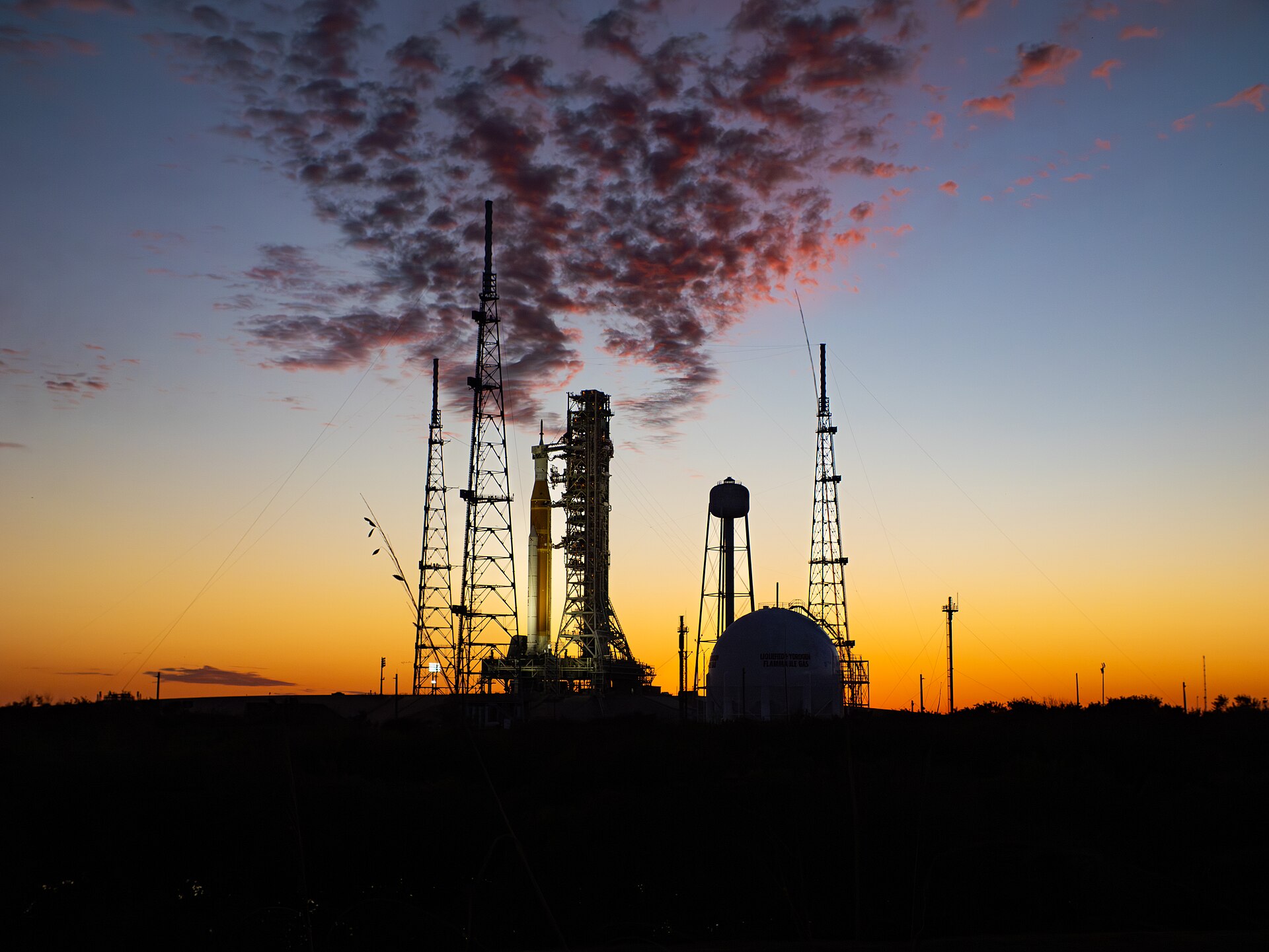
Space Launch System (SLS)
NASALaunch Vehicles
The Space Launch System (SLS) is NASA's super-heavy-lift expendable rocket, designed to launch the Orion crew vehicle and large co-manifested payloads to lunar and deep-space destinations [1]. SLS Block 1 — used for Artemis I (2022) and Artemis II (April 2026) — generates 8.8 million pounds of liftoff thrust, exceeding Saturn V, and is powered by four RS-25 engines on the Boeing-built core stage plus two five-segment Northrop Grumman solid rocket boosters [4]. Artemis I completed a 25.5-day flight test in November–December 2022, including a 1.4-million-mile distant retrograde orbit and successful Orion heat-shield re-entry [1]. Artemis II's April 1–10, 2026 crewed lunar flyby marked the first crewed SLS flight [5]. The Block 1B upgrade — featuring the Exploration Upper Stage (EUS) built by Boeing — is scheduled to debut on Artemis IV (NET early 2028), with NASA OIG IG-24-015 (August 2024) flagging Boeing quality-management issues, workforce inexperience, and continued cost growth as recurring risks [3]. NASA OIG SP-7 (2024) put the per-flight production-plus-operations cost of an SLS launch at approximately $2.5B — figures the Trump-era and subsequent administrations have repeatedly probed for restructuring [2].
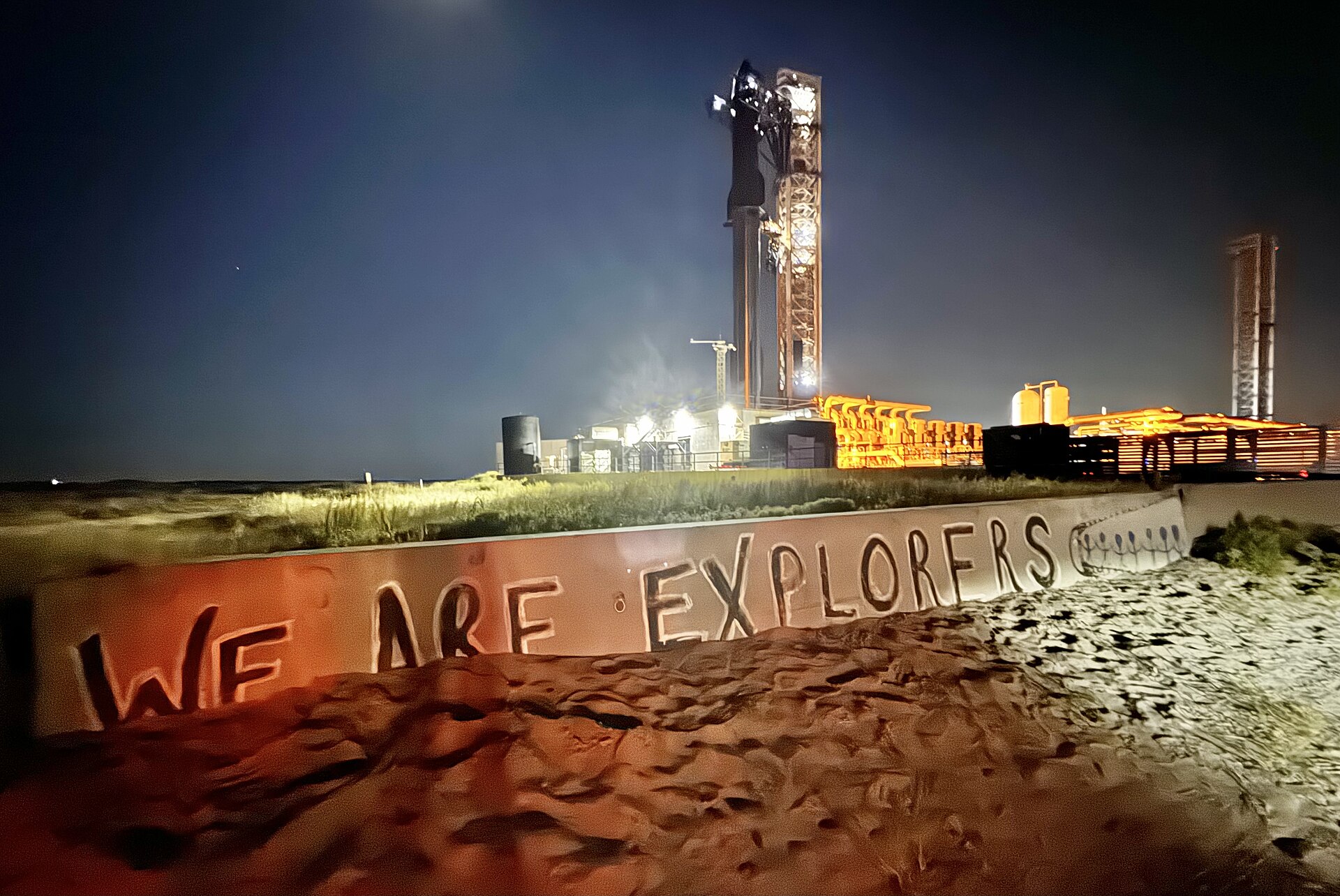
Starship Super Heavy
SpaceX (commercial; NASA HLS customer)Exploration
Starship and the Super Heavy first-stage booster together form a fully reusable two-stage launch system being developed by SpaceX primarily at its Starbase facility in Boca Chica, Texas, and now also Cape Canaveral [1]. The integrated stack stands ~120m tall and is powered by 33 Raptor methalox engines on the booster plus six on the upper stage, with a stated payload capability of 100-150+ metric tons to LEO in fully reusable configuration [1]. NASA selected SpaceX in April 2021 to develop the Human Landing System (HLS) variant under a $2.89B Option A award, then exercised the $1.15B Option B in November 2022 — the only crewed lunar lander baselined for Artemis III's lunar surface demonstration and Artemis IV's first crewed landing [3][4]. As of June 2026, SpaceX has conducted twelve integrated flight tests from Starbase: the 2025 campaign saw two V2 ship losses (Flights 7 and 8, both with successful booster catches), the first reflight of a Super Heavy booster (Flight 9, May 2025), the first Starship payload deployment and controlled Indian Ocean splashdown (Flight 10, August 2025), and a fully successful final Block 2 flight (Flight 11, October 2025) [16][17]. Flight 12 (22 May 2026) debuted the V3 vehicle from Starbase Pad 2 and reached space, but the ship was lost during descent with breakup at the ocean surface, triggering an FAA-overseen mishap investigation [18]. NASA OIG IG-26-004 (March 2026) found that lander development challenges — including in-space cryogenic propellant transfer at operational scale, a Starship architecture pre-requisite — will delay planned Artemis launch dates [6]. SpaceX remains privately held; no public ticker exists.
US Space Force / Space Development Agency (SDA)
DoD / USSFDefense/Military
US Space Force is the 6th military branch, responsible for space operations. The Space Development Agency (SDA) is building the Proliferated Warfighter Space Architecture (PWSA) — a mesh of hundreds of optically-linked LEO satellites for missile tracking, data transport, and navigation. Tranche 3 Tracking Layer ($3.5B) awarded Dec 2025 to L3Harris, Lockheed, Northrop, and Rocket Lab (18 sats each).
$26.3B Space Force FY2026 request (+$13.8B reconciliation = ~40% increase). SDA: $648M FY2026 for 7 launches.2019–ongoing
🇨🇳
China
15 programs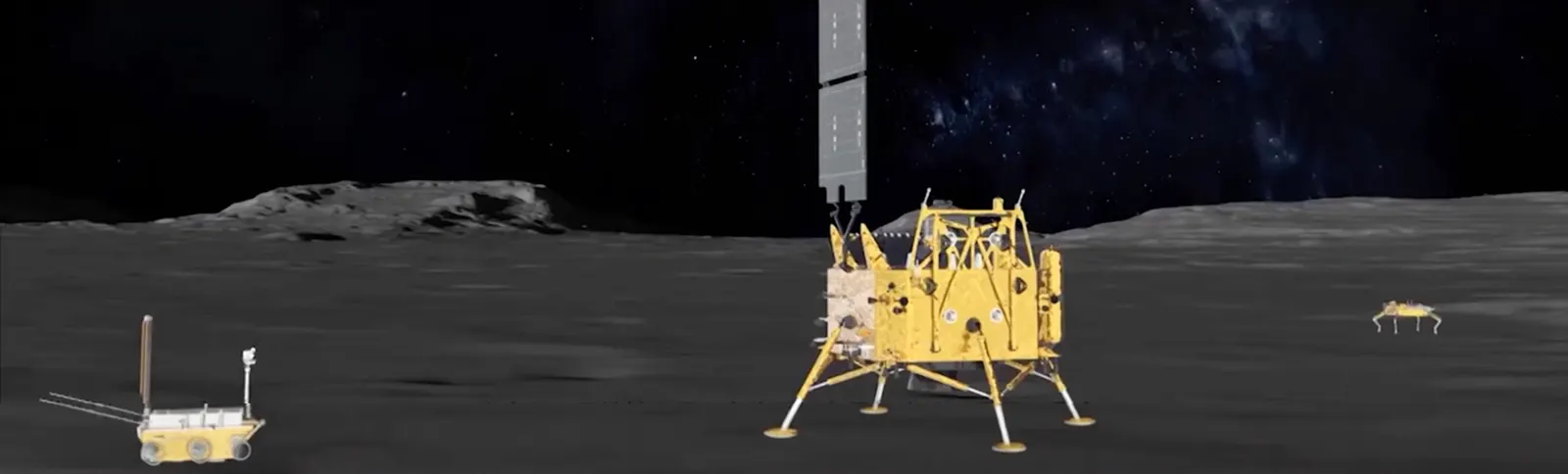
Chang'e 7
CNSALunar
Chang'e 7 (嫦娥七号) is the seventh mission in CNSA's Chang'e lunar exploration series and the first phase of the ILRS precursor campaign, executed by the China Academy of Space Technology (CAST, 5th Academy of CASC) with lunar-surface science leadership at the National Astronomical Observatories (NAOC) and the Chinese Lunar Exploration Program (CLEP) office [1][2][6]. The mission targets a 2026 launch on a Long March 5 from Wenchang Space Launch Site and combines five flight elements: a lunar relay orbiter operating around the Earth-Moon L2 halo (carrying forward the heritage of the Queqiao-2 relay), a polar-orbiting science satellite, a lander, a rover and — uniquely — a 'mini flying detector' (跃飞机器人) capable of hopping into permanently shadowed regions (PSRs) of polar craters to confirm in-situ water-ice signatures [1][3]. The flying detector represents a world first for civil lunar exploration: a tethered or jet-propelled hopper able to ingress and egress shadowed craters that no rover has ever entered [3]. The mission is the explicit scientific precursor to the China Manned Lunar Program (CMLP), which targets a first crewed landing by 2030 using the planned Long March 10 launcher and the Lanyue lunar lander [9]. Chang'e 7 carries 21 scientific instruments across its five vehicles, including a wide-field imaging spectrometer, a near-infrared spectrometer for hydroxyl mapping, ground-penetrating radar, and a seismometer suite [2][6]. International payload contributions confirmed under the ILRS framework include Egypt's Space Agency hyperspectral imager, Pakistan's ICUBE-Q CubeSat, Bahrain's lunar surface camera, Italian-Swiss laser-retroreflector arrays, a Russian neutron-and-gamma-ray spectrometer (HEND-2), and a Thai cosmic-ray detector [4][5]. Chang'e 8 (2028 NET) will follow with an in-situ resource utilisation (ISRU) and 3D-printing demonstration co-located near the Chang'e 7 site, and the two missions together establish the operational footprint for the ILRS basic configuration by ~2035 [9][10].
Chang'e 7 (Lunar South Pole)
CNSALunar
Complex multi-vehicle mission to explore the Moon's south pole region. Includes an orbiter, lander, rover, and a mini-flying probe that will hop into permanently shadowed craters to search for water ice. Key precursor to China's planned International Lunar Research Station (ILRS). Will provide the most detailed data yet on south polar ice deposits.
Undisclosed2026–2027
Chang'e Lunar Exploration Programme
CNSA (China National Space Administration)Lunar
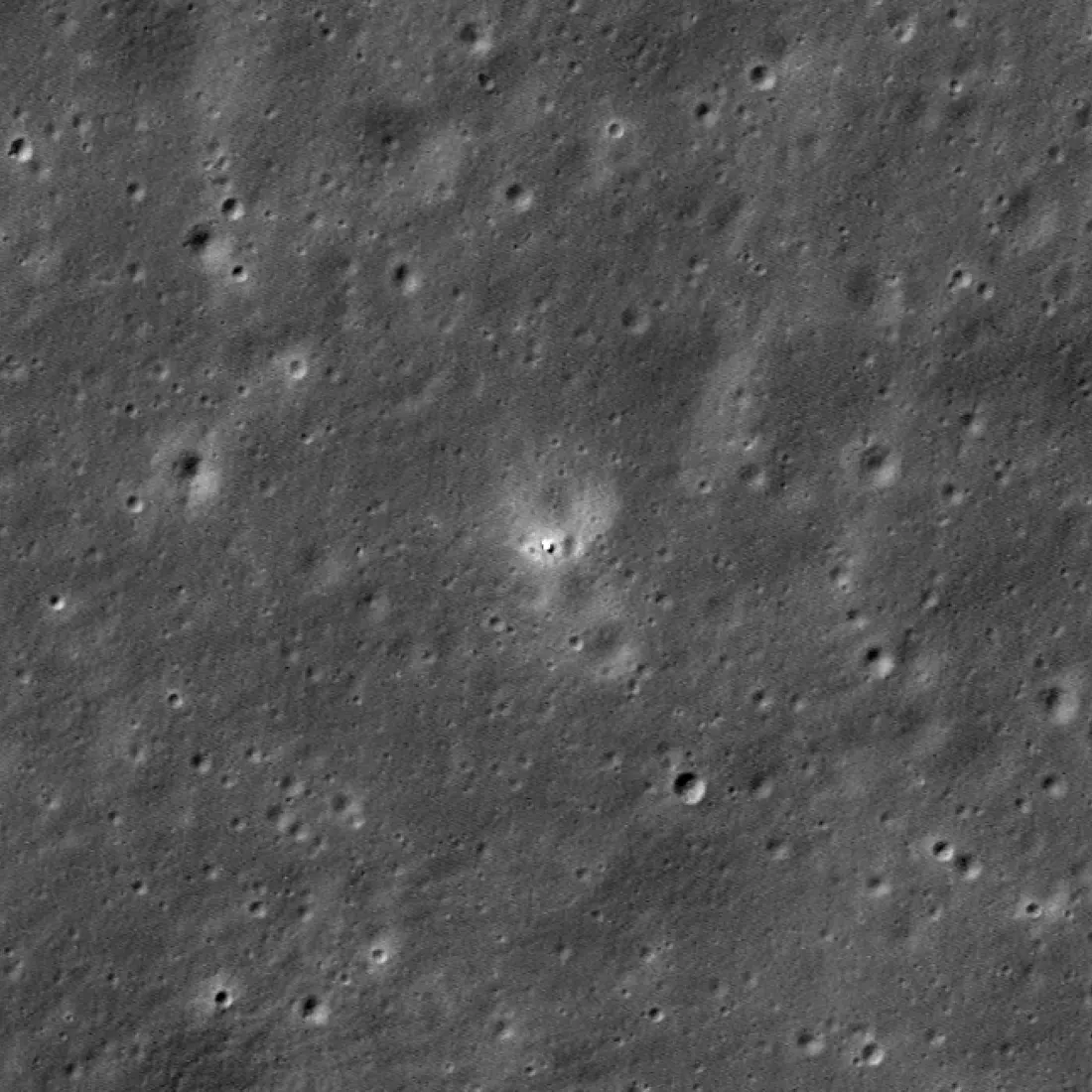
Chang'e is the Chinese Lunar Exploration Program (CLEP), administered by the China National Space Administration (CNSA) with mission integration led by CASC's China Academy of Space Technology (CAST) and the science programme directed by the National Astronomical Observatories of the Chinese Academy of Sciences (NAOC) [1][5]. The programme is structured in three phases: orbit (Chang'e-1 in 2007 and Chang'e-2 in 2010), land and rove (Chang'e-3 in December 2013 with the Yutu rover — China's first soft lunar landing; Chang'e-4 in January 2019, the first soft landing on the lunar far side at Von Kármán crater, supported by the Queqiao-1 relay satellite at Earth-Moon L2), and return sample (Chang'e-5 in November 2020, which returned 1,731 g of lunar samples from Mons Rümker — the first lunar sample return since Luna 24 in 1976; Chang'e-6 in May-June 2024, the first ever far-side sample return, which retrieved 1,935.3 g of samples from Apollo crater within the South Pole-Aitken basin) [2][6][7][8]. Chang'e-6 sample analysis confirmed in November 2024 that the South Pole-Aitken basin formed approximately 4.25 billion years ago, providing the first ground-truth absolute-age constraint on the lunar far side and the largest impact basin in the Solar System [9]. The programme's fourth phase — directly oriented around the International Lunar Research Station (ILRS) and the 2030 crewed lunar landing — comprises Chang'e-7 (NET 2026, polar reconnaissance with orbiter, lander, rover and a mini-hopper to search permanently-shadowed craters for water ice) and Chang'e-8 (NET 2028, in-situ resource utilisation (ISRU) demonstrations including 3D-printed lunar-regolith brick experiments), both targeted at the lunar south pole near the future ILRS site [3][10]. Total programme cost is not officially disclosed; analyst estimates from CSIS and SpaceNews place cumulative Chang'e spend in the low-single-digit billions of USD-equivalent — roughly an order of magnitude below comparable U.S. CLPS + commercial lunar lander spend [11].
Chang'e Lunar Program
CNSALunar
China's systematic lunar exploration program. Chang'e 5 returned 1.73 kg of lunar samples in 2020 — first sample return since 1976. Chang'e 6 made history in Jun 2024 by returning the first-ever samples from the Moon's far side (South Pole-Aitken Basin). Chang'e 7 and 8 are planned to survey the south pole and test in-situ resource utilization for a future International Lunar Research Station (ILRS).
Estimated $2B+ cumulative2007–2030s
Chinese Crewed Lunar Program
CMSA / CASCLunar
China's program to land astronauts on the Moon by approximately 2030. Uses the new Long March 10 crew-rated rocket (two launches per mission) and the Mengzhou crew capsule with a dedicated Lanyue lunar lander. The architecture requires two LM-10 launches — one carrying the crew in Mengzhou and one carrying the Lanyue lander — that rendezvous in lunar orbit. China selected its 4th batch of astronauts in 2024 including payload specialists and engineers. If successful, China becomes the second nation to land humans on the Moon.
Estimated $5B+ (combined launcher, spacecraft, and lander development)2023–2030
Chinese Crewed Lunar Programme
CMSA (China Manned Space Agency)Lunar
The Chinese Crewed Lunar Programme is the human-spaceflight extension of the broader Chinese Lunar Exploration Programme (CLEP) and is administered by the China Manned Space Agency (CMSA), with mission integration and spacecraft development led by the China Academy of Space Technology (CAST), launcher development by the China Academy of Launch Vehicle Technology (CALT), and astronaut selection and training by the Astronaut Center of China (ACC) [1][4]. CMSA publicly announced the architecture on July 12, 2023, at a State Council press conference led by Deputy Chief Engineer Zhang Hailian, formalising the 'before 2030' timeline for the first crewed lunar landing and confirming the two-launch mission profile [2][5]. The mission concept calls for two Long March 10 vehicles launched on the same day from Wenchang: one carrying the Mengzhou crew capsule (which separates and trans-lunar injects on its own) and a second carrying the Lanyue lunar lander stack [3]. Following automated lunar-orbital rendezvous and crew transfer from Mengzhou to Lanyue, two taikonauts will descend to the lunar south pole, perform an approximately 6-hour surface expedition, ascend, dock back with Mengzhou, and return to Earth [3]. The Mengzhou capsule is a next-generation crew vehicle developed by CAST that supersedes the Shenzhou architecture; the full-up Mengzhou variant supports 3-7 crew, lunar return reentry at 11 km/s and partial reusability of the return module, and successfully completed pad-abort and high-altitude escape-system tests in mid-2024 [6]. The Lanyue lander is a single-stage architecture combining lunar descent, ascent and 6-hour surface operations; the Wangyu (望宇) lunar spacesuit was unveiled in September 2024 [7][8]. CMSA selected its fourth-batch astronauts (10 taikonauts including the first Hong Kong / Macau payload specialist candidates) in 2024 specifically to support the lunar mission [9]. The first uncrewed Long March 10 test flight is targeted no-earlier-than 2027, with crewed lunar landing no-earlier-than 2030 [10][11]. The Chinese crewed lunar programme directly underpins the crewed phase of the International Lunar Research Station (ILRS) post-2035 [12].
Chinese Space Station (Tiangong)
CNSA / CMSHuman Spaceflight
China's permanently crewed modular space station completed assembly in 2022. Consists of Tianhe core module, Wentian and Mengtian lab modules. Continuous 3-person crew rotation with Shenzhou spacecraft. Conducting hundreds of science experiments. Planning expansion to 6-module configuration by 2030. Will be the only operational large space station after ISS retirement.
Estimated $8–10B total program2021–2030s
International Lunar Research Station (ILRS)
CNSA (China National Space Administration) + RoscosmosLunar
The International Lunar Research Station (ILRS) is a China-led international lunar exploration partnership administered by the China National Space Administration (CNSA) in cooperation with Russia's Roscosmos State Corporation, formally launched through a joint Memorandum of Understanding signed in St. Petersburg on March 9, 2021 by then-CNSA Administrator Zhang Kejian and then-Roscosmos head Dmitry Rogozin [1][6]. The ILRS Cooperation Organisation (ILRSCO) was formally chartered by CNSA in October 2023 as the standing secretariat coordinating multilateral participation, with administrative headquarters in Hefei, Anhui [3]. Membership has expanded progressively across 2023-2025: Pakistan (April 2024), Venezuela (July 2023), Belarus (June 2024), South Africa (September 2023), Senegal (June 2024), Egypt (December 2023), Azerbaijan (November 2023), Nicaragua (January 2024), Thailand (April 2024), Serbia (October 2024), Kazakhstan (November 2024), plus the Asia-Pacific Space Cooperation Organisation (APSCO), the International Lunar Observatory Association (ILOA), and several Chinese / Russian academic institutions — bringing the partner total to 13+ nations and 10+ international organisations as of mid-2025 [2][7][8]. The architecture is structured in three principal phases. Phase I — Reconnaissance (2026-2030) — leverages Chang'e-6 (May-June 2024, far-side sample return, complete), Chang'e-7 (NET 2026, lunar south polar reconnaissance, orbiter + lander + rover + mini-hopper to search permanently-shadowed craters), Chang'e-8 (NET 2028, in-situ resource utilisation demonstrator including 3D-printed regolith brick experiments) on the Chinese side, and Russian Luna-26 (orbiter), Luna-27 (south-polar lander targeted NET 2027) and Luna-28 (sample-return) missions on the Roscosmos side [4][9]. Phase II — Construction (2030-2035) — involves precursor base modules, power, communications and habitation experiments, partly enabled by partner-country payloads [3][4]. Phase III — Utilisation (post-2035) — adds crewed presence via China's separate Chinese Crewed Lunar Programme (LM-10 / Mengzhou / Lanyue infrastructure) and aspirational Russian crewed launches [5][10]. Total programme cost is not officially disclosed; ILRS is positioned by CNSA as a multilateral counterweight to the NASA-led Artemis Accords (67 nations as of May 2026), with target geographic emphasis on global-South and BRICS-aligned partners [11].
Long March Next-Generation Launch Vehicles
CASC (China Aerospace Science and Technology Corporation)Launch Vehicles
The Long March (Chang Zheng, 长征) family is the People's Republic of China's national-launcher portfolio, developed and produced principally by CASC's two main launch subsidiaries — the China Academy of Launch Vehicle Technology (CALT) in Beijing and the Shanghai Academy of Spaceflight Technology (SAST) [1][6]. The current operational fleet covers Long March 2F (Shenzhou crewed flights), Long March 3B (GTO commsats), Long March 4 (sun-synchronous), Long March 5 / 5B (heavy lift to LEO and GTO; the 5B was used for the three Tiangong module launches), Long March 6 (small SSO), Long March 7 (Tianzhou cargo to Tiangong) and Long March 8 (medium SSO with partial reusability under development) [2]. The next-generation roadmap covers three principal new vehicles. The Long March 10 (formerly 'New Generation Crewed Carrier Rocket') is a 3-core kerolox vehicle targeting ~70 t to LEO and ~27 t to TLI, designed specifically to launch the Mengzhou crewed capsule and Lanyue lunar lander for the 2030 crewed lunar landing; CALT-led, maiden flight targeted no earlier than 2027 [3][7]. The Long March 10A is a single-core variant for crewed LEO missions (e.g. Tiangong rotations after the LM-2F retirement) and is targeted to fly in parallel to the 3-core LM-10 [3]. The Long March 9 super-heavy is China's Saturn-V-class architecture targeting ~150 t to LEO; the design has shifted from an expendable 10-metre kerolox vehicle towards a reusable architecture in the 2023-2024 timeframe, with first flight slipping to no earlier than 2030-2033 in CASC's public roadmap [8][9]. The Long March 12 is a 3.8-metre kerolox medium-class vehicle that first flew successfully from Hainan Commercial Spaceport on November 30, 2024 — China's first vehicle designed from the outset for reusable first-stage recovery, with vertical-landing demonstrations planned in the 2025-2026 window [10]. The Long March 8 family, including the partially-reusable Long March 8A, is targeting a launch cadence supporting the Guowang and Qianfan / G60 megaconstellation deployment campaigns (cumulatively ~25,000 satellites announced under the two state-aligned networks) [11].
Long March Next-Generation Rockets
CNSA / CASCLaunch Vehicles
China's development of new-generation launch vehicles. The Long March 10 (crew-rated, 70t to LEO) will support crewed lunar missions. The Long March 9 (super heavy-lift, 150t to LEO) rivals Starship/SLS for deep space. China is also developing commercial reusable rockets — multiple private companies (LandSpace, iSpace, Deep Blue Aerospace) testing vertical landing.
Estimated $3B+ development2020–2030
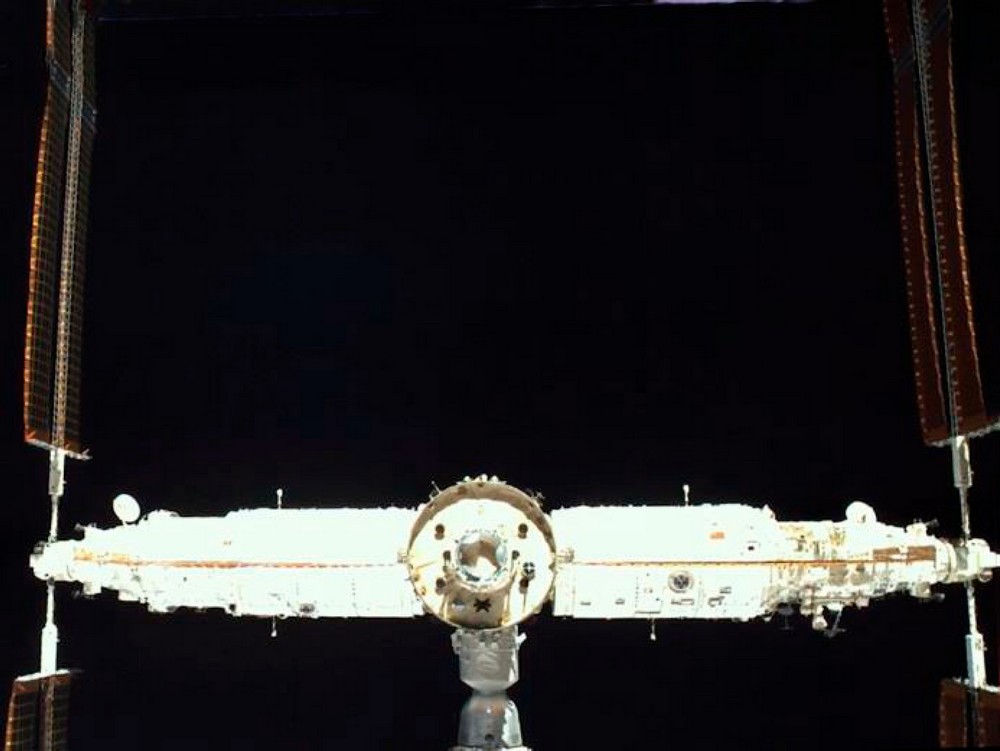
Tiangong Space Station
CMSA (China Manned Space Agency)Human Spaceflight
Tiangong (天宫, 'Heavenly Palace') is the People's Republic of China's third-generation crewed orbital station, operated by the China Manned Space Agency (CMSA) and developed by the China Aerospace Science and Technology Corporation (CASC) as the prime contractor under the broader China Manned Space Programme (CMSP, formally Project 921) [1][6]. The station's T-shaped baseline architecture comprises three pressurised modules — the 22.5-tonne Tianhe core module launched April 29, 2021 from Wenchang on a Long March 5B, the Wentian laboratory module launched July 24, 2022, and the Mengtian laboratory module launched October 31, 2022 — combined mass approximately 68-70 tonnes in a ~390 km circular orbit at 41.5° inclination [2][7]. Continuous human presence aboard Tiangong has been maintained since Shenzhou-12 in June 2021, with six-month crew-rotation cadence executed by sequentially numbered Shenzhou crewed missions (Shenzhou-12 through Shenzhou-23 as of June 2026) and resupplied by Tianzhou robotic cargo freighters launched on Long March 7 [3][8][19]. The cadence absorbed its first major contingency in late 2025: a suspected orbital-debris strike cracked a window on the docked Shenzhou-20 return capsule (November 5, 2025), forcing the crew to come home on the fresher Shenzhou-21 spacecraft on November 14 and prompting the uncrewed launch of Shenzhou-22 on November 25, 2025 as a replacement lifeboat [17][18]. Regular rotations resumed with the Shenzhou-23 crew launch on May 24, 2026 [19]. The Xuntian (巡天) co-orbital optical telescope — a 2-metre-aperture, 2.5-billion-pixel survey instrument — is targeted for launch no earlier than 2027 and will fly in formation with Tiangong, periodically docking for servicing [4]. Beijing has publicly signalled a planned expansion to a six-module 'cross' configuration, formally announced by CMSA in October 2023, and has opened crew slots to international partners — Pakistan signed a March 2025 bilateral agreement to send the first foreign astronaut to Tiangong (targeted in the late 2020s window) [5][9]. Programme cost is not officially disclosed; Western analysts (including CSIS ChinaPower and USCC commissioned research) estimate lifecycle cost in the range of $8-11B FY equivalent — roughly an order of magnitude below the ISS partner-cumulative spend [10][11].
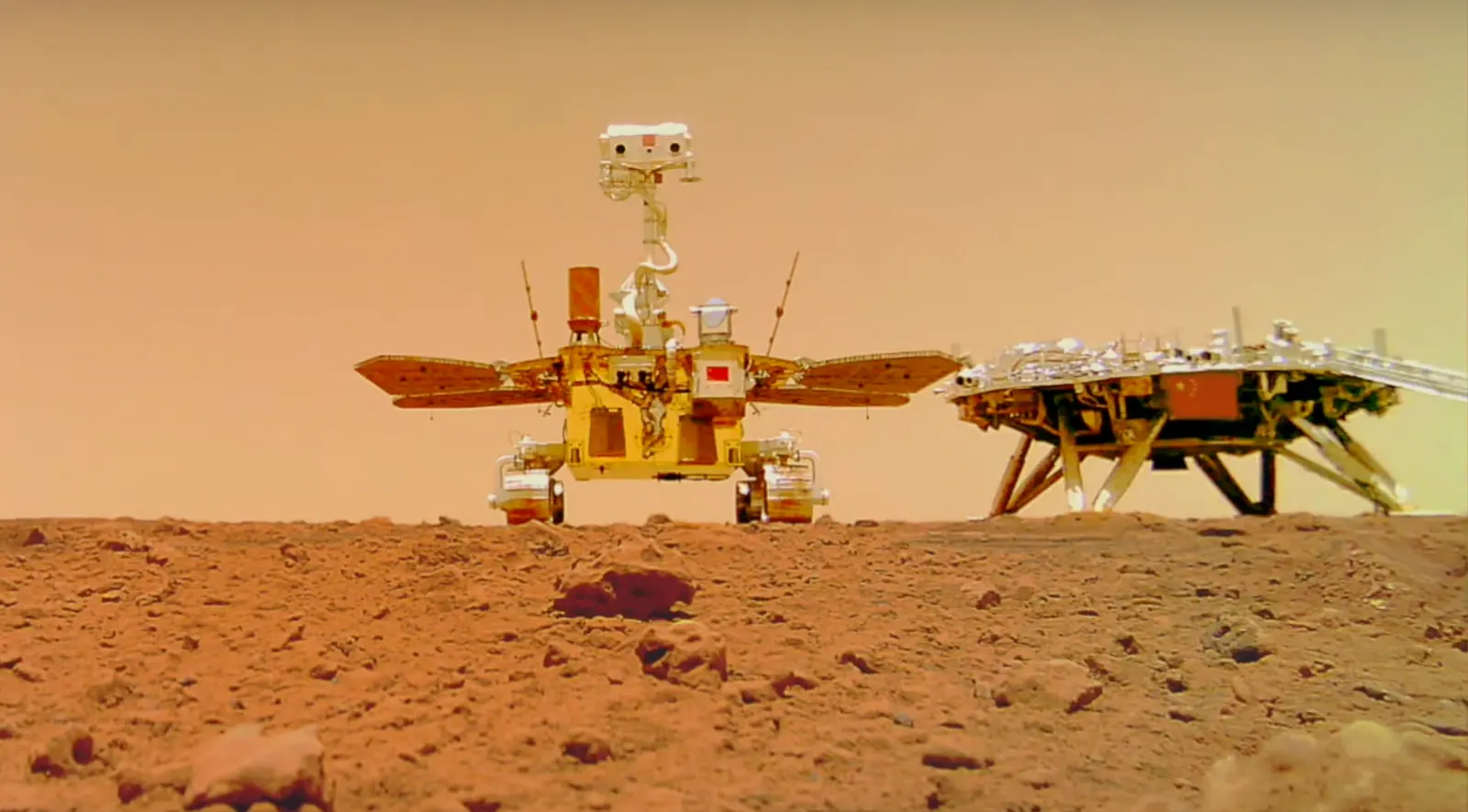
Tianwen Mars Exploration Programme
CNSA (China National Space Administration)Mars
Tianwen is the People's Republic of China's flagship deep-space exploration series, administered by the China National Space Administration (CNSA) with mission integration led by the China Academy of Space Technology (CAST), launcher development by the China Academy of Launch Vehicle Technology (CALT), and science direction from the National Astronomical Observatories of the Chinese Academy of Sciences (NAOC) [1][5]. Tianwen-1 launched on a Long March 5 Y4 from Wenchang on July 23, 2020 and entered Mars orbit on February 10, 2021 — China's first independent interplanetary mission [2]. The orbiter completed mapping, and on May 14, 2021 the Zhurong rover landed in Utopia Planitia (109.9°E, 25.1°N), making China the second nation after the United States to successfully soft-land and operate a rover on Mars [2]. Zhurong operated for 358 sols, traversing 1.921 km before entering an extended sleep cycle in May 2022; the rover did not awaken and was declared mission-complete in 2023, but published ground-penetrating radar and spectroscopic results in Nature and Science contributed first-of-class data on Utopia Planitia subsurface stratigraphy [6]. Tianwen-2 launched on May 29, 2025 on a Long March 3B targeting near-Earth asteroid 469219 Kamoʻoalewa (2016 HO3) for sample return and follow-on rendezvous with main-belt comet 311P/PANSTARRS through ~2035 [7]. The Tianwen-3 Mars sample-return mission, approved in 2022 and re-baselined in early 2024, targets a launch no earlier than 2028 on two Long March 5 boosters (lander + ascender stack and orbiter / Earth-return stack), with sample collection at a TBD landing site, ascent to Mars orbit, automated orbital rendezvous, and Earth return targeted for ~2031 — potentially several years ahead of the NASA / ESA Mars Sample Return architecture, which faced major restructuring after a NASA Independent Review Board report in September 2023 [3][8][9]. Tianwen-4 — a Jupiter system mission with a Uranus flyby — is in the design phase with launch targeted around 2029-2030 [10]. Programme cost is not officially disclosed; CSIS / SpaceNews analyst estimates place Tianwen-1 in the $250-350M-equivalent range and Tianwen-3 likely above $1B-equivalent given two LM-5 launches and the sample-return architecture [11].
Tianwen Mars Program
CNSAMars
China's Mars exploration program. Tianwen-1 arrived at Mars in Feb 2021, deploying the Zhurong rover in Utopia Planitia — making China the second country to operate a rover on Mars. Zhurong traveled 1.9 km over 347 sols before entering hibernation in May 2022 due to dust accumulation; contact has not been re-established. Tianwen-2 (asteroid sample return) is a separate but related deep space mission. Tianwen-3 is China's planned Mars sample return mission targeting 2028–2030, which could return Martian soil to Earth before NASA's MSR.
Estimated $1B+ (Tianwen-1); additional funding for Tianwen-3 sample return2020–2030s
Tianwen-2
CNSAMars
Tianwen-2 (天问二号) is the second mission in the China National Space Administration's Tianwen planetary-exploration series, executed by the China Academy of Space Technology (CAST, the 5th Academy of state-owned aerospace prime CASC) with deep-space tracking provided by the Chinese Deep Space Network and science leadership at the National Astronomical Observatories (NAOC) [1][4][6]. The spacecraft launched on a Long March 3B (Y110) from the Xichang Satellite Launch Center on May 29, 2025 at 17:31 UTC and successfully entered an Earth-leading heliocentric trajectory [2][3]. The primary science target — 469219 Kamoʻoalewa (provisional designation 2016 HO3) — is a 40-100 m near-Earth quasi-satellite of Earth that several spectroscopic studies have identified as a candidate lunar-origin object, making it a uniquely valuable in-situ sampling target [5][8]. Tianwen-2 plans to rendezvous with Kamoʻoalewa in mid-2026, perform a multi-month characterisation campaign, and then attempt two sampling modes — a 'touch-and-go' (TAG) regolith collection similar to OSIRIS-REx and a contingency 'anchor-and-attach' technique using deployable harpoon anchors — with a combined sample-mass target of at least 100 grams [1][3][6]. The sample-return capsule separates and re-enters at Dorbod Banner, Inner Mongolia in late 2027, completing the first leg of the mission [3]. Following sample release, the main spacecraft performs an Earth gravity-assist and embarks on a six-to-seven-year cruise to active main-belt comet 311P/PANSTARRS (a quasi-asteroidal body that exhibits cometary tails, discovered by Pan-STARRS in 2013) for a 2034-2035 rendezvous and remote-sensing campaign [1][7]. Tianwen-2 carries 11 scientific instruments including a wide-angle and narrow-angle imager, visible / near-infrared / thermal imaging spectrometers, a multi-band radar, a magnetometer, a charged-particle and dust analyser, and the sample-collection mechanism itself [1][6]. The mission is a strategic stepping stone toward the announced Tianwen-3 (Mars sample return, NET 2028) and the planned Tianwen-4 Jupiter system mission [9].
Tianwen-2 (Asteroid Sample Return)
CNSAExploration
China's first asteroid sample return mission targeting near-Earth asteroid 469219 Kamo'oalewa (2016 HO3), a quasi-satellite of Earth that may be a fragment of the Moon. Will collect surface samples and return them to Earth, then continue to flyby a main-belt comet. If successful, China joins Japan and the US as the only nations to return asteroid samples.
Undisclosed (est. >$500M)2025–2030
🌍
International
9 programsAmazon Kuiper (Project Kuiper)
Amazon / Blue OriginExploration
Amazon's LEO broadband internet constellation of 3,236 satellites to compete with SpaceX Starlink. First prototype satellites (KuiperSat-1 and KuiperSat-2) launched October 2023 on ULA Atlas V. Mass production underway at Amazon's Kirkland, WA facility. Will use Blue Origin's New Glenn as primary launch vehicle alongside ULA Vulcan Centaur and Arianespace Ariane 6.
$10B+ committed by Amazon2024–2029
Blue Origin New Glenn
Blue OriginMars
Heavy-lift partially reusable orbital rocket competing with Falcon Heavy. 45-tonne payload to LEO with a 7-meter payload fairing (largest in industry). Powered by 7 BE-4 engines. Primary launch vehicle for Amazon's Project Kuiper constellation. Also contracted for NASA CLPS lunar missions, ESCAPADE Mars mission, and Telesat Lightspeed constellation.
$2.5B+ (est. private development)2025–ongoing
Emirates Mars & Asteroid Mission
MBRSC / UAE Space AgencyMars
UAE's ambitious space exploration program. The Hope (Al-Amal) orbiter arrived at Mars in Feb 2021, producing the first complete weather map of Mars' atmosphere. UAE is now developing an asteroid belt mission (MBR Explorer) to visit 7 asteroids and land on one, with launch planned for 2028. The UAE also has a national astronaut program — Hazzaa Al Mansoori and Sultan AlNeyadi both flew to ISS.
~$200M (Hope); $300M+ (asteroid mission)2020–2034
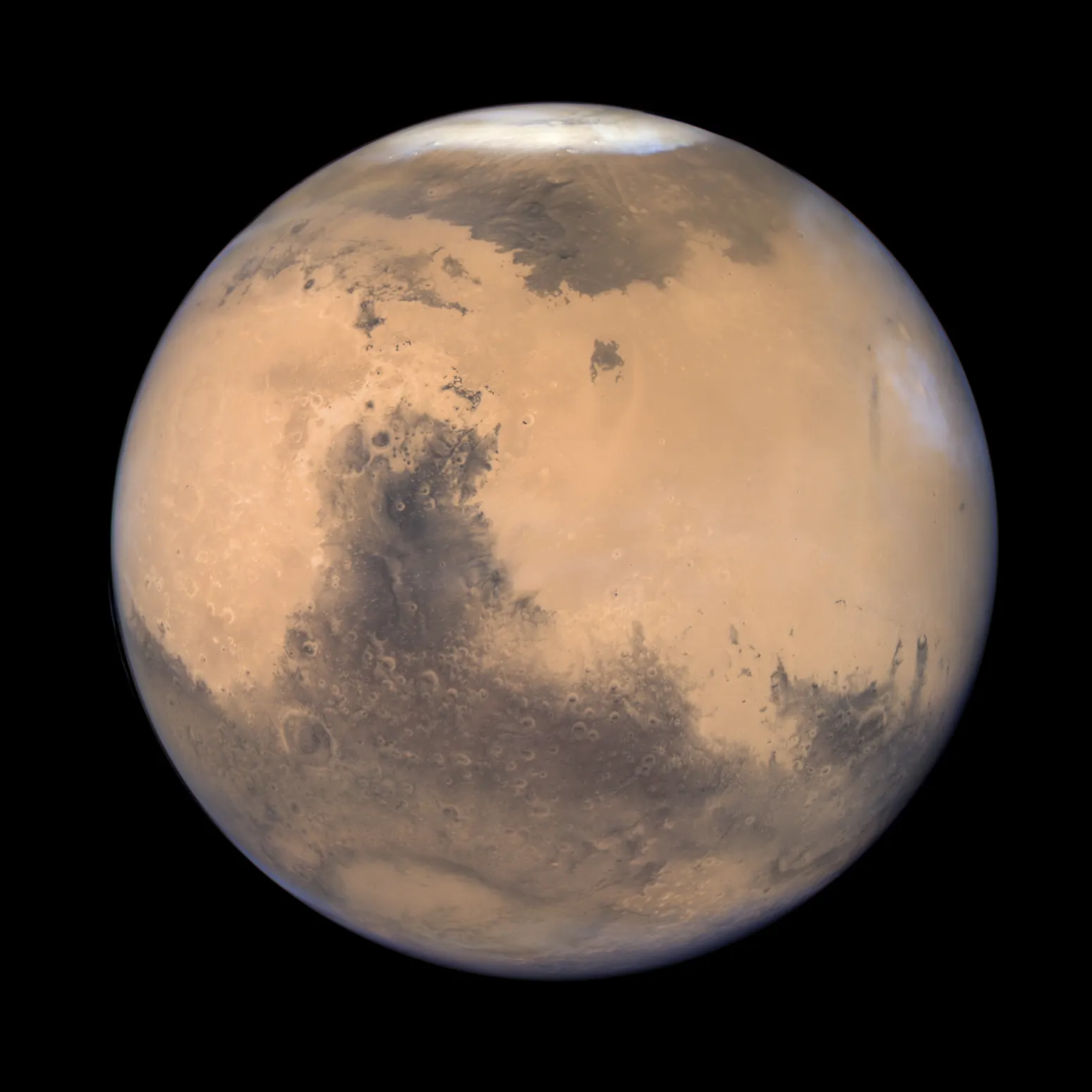
Emirates Mars + Asteroid Programme
UAE Space Agency / MBRSCMars
The UAE's planetary exploration architecture comprises two flagship missions executed by the Mohammed Bin Rashid Space Centre (MBRSC, the operational implementer) under the policy oversight of the UAE Space Agency (UAESA, the regulator) [5]. The Emirates Mars Mission (EMM, internally branded 'Hope' / Al-Amal) is the UAE's first interplanetary mission: a Mars orbiter built by MBRSC in collaboration with the Laboratory for Atmospheric and Space Physics (LASP) at the University of Colorado Boulder, with additional payload partnerships across Arizona State University and the University of California, Berkeley [1][6]. Hope was launched on a Mitsubishi Heavy Industries H-IIA Flight 42 from Tanegashima Space Center, Japan at 21:58:14 UTC on July 19, 2020 — making the UAE the fifth nation/space agency historically to launch a mission to Mars [2]. After a seven-month trans-Mars cruise, Hope executed Mars Orbit Insertion at 15:42 UTC on February 9, 2021, making the United Arab Emirates the first Arab nation to reach another planet and the second nation in history to achieve Mars orbit on its first attempt (after India's Mangalyaan in 2014) [1][2]. The spacecraft operates in a unique 20,000 × 43,000 km, 55-hour highly elliptical orbit chosen to provide simultaneous global Mars-disk coverage; instruments include the Emirates eXploration Imager (EXI), the Emirates Mars Infrared Spectrometer (EMIRS) and the Emirates Mars Ultraviolet Spectrometer (EMUS), with extended mission operations confirmed through at least 2027 [1][6]. Total mission cost has been publicly reported at approximately $200M [2]. The follow-on Emirates Mission to the Asteroid Belt (EMA) was announced by Sheikh Mohammed bin Rashid Al Maktoum on October 5, 2021 and is a far more ambitious architecture: a 5-billion-km, 7-year cruise targeting flybys of seven main-belt asteroids before a final rendezvous and landing on the carbonaceous main-belt asteroid (269) Justitia in 2034 [3][4]. The mission is again executed by MBRSC with continued partnership with LASP at the University of Colorado Boulder; the spacecraft is targeted for a launch on a commercial U.S. heavy-lift launcher in March 2028, with Venus gravity-assist flybys and Earth gravity-assist flybys structuring the multi-year cruise architecture [3]. EMA total cost has been publicly reported in the region of $200M+ — comparable in magnitude to EMM despite materially greater technical ambition [7]. Both missions exemplify the UAE's broader space-strategy positioning: a knowledge-transfer-centric programme combining co-development with U.S. university partners, sovereign skill-base accumulation, and Arab-world soft-power signalling. The UAE also formally signed the Artemis Accords on October 13, 2020 — the same day as Japan — and is participating in the Lunar Gateway airlock procurement under a 2023 NASA-UAESA framework [8][9].
Korea Space Programme (KASA / KSLV / Danuri)
KASAExploration
The Republic of Korea's civil space programme has been formally consolidated under the Korea Aerospace Administration (KASA, 우주항공청), established by Act 19743 and operational since May 27, 2024, with headquarters in Sacheon, South Gyeongsang Province [1]. KASA absorbed the space functions of the former Ministry of Science and ICT and operates alongside (and oversees) the Korea Aerospace Research Institute (KARI) and the Korea Astronomy and Space Science Institute (KASI) [1][2]. The programme rests on a Korean Space Development Master Plan that targets approximately 100 trillion KRW (~$7.5B at 2024 FX) of cumulative public space spending across 2024-2028, including indigenous launcher development, lunar exploration, satellite constellations, and a Korean satellite-based augmentation system (KASS) [2][9]. Korea's launcher heritage runs from Naro (KSLV-I, jointly developed with Russia's Khrunichev, first launch attempt August 2009; first orbital success January 30, 2013) to Nuri (KSLV-II), the first fully indigenous Korean launcher capable of placing ~1,500 kg into a 600-800 km sun-synchronous orbit [3]. Nuri completed three test flights: a partial success on October 21 2021 (third stage cutoff 46 seconds early), full success on June 21 2022 (orbital placement of a 1.3-tonne dummy payload and a performance verification satellite), and a third full success on May 25 2023 placing a NEXTSat-2 primary payload plus seven secondary CubeSats into orbit; a fourth flight is planned for late 2025-2026 [3][8]. The next-generation KSLV-III is in development under KARI and Hanwha Aerospace, targeting first launch in 2030 with a ~10-tonne to LEO payload capability and reusable elements; programme cost is reported at approximately 2 trillion KRW (~$1.5B) [3][9]. On the spacecraft side, Danuri (KPLO, Korea Pathfinder Lunar Orbiter) launched August 4 2022 on a SpaceX Falcon 9 from Cape Canaveral SLC-40 — making Korea the seventh country with a Moon-orbiting spacecraft — and is operating from a 100 km circular polar lunar orbit through at least 2026 [6]. The Korean Lunar Lander, formally approved under the Korean Space Development Master Plan, targets first launch around 2032 on a KSLV-III with a soft-lander payload [9]. Crewed-rated KSLV-III capability and Korean astronaut selection / training programmes are on the post-2030 horizon under the KASA roadmap [2][9]. The industrial base is led by Korea Aerospace Industries (KAI, KRX: 047810) as the largest listed Korean aerospace company, Hanwha Aerospace (KRX: 012450) as the prime contractor for Nuri launcher integration since 2022, and a fast-growing private launch sector including Innospace (which conducted the HANBIT-TLV test flight from Alcântara, Brazil on March 19 2023) and Perigee Aerospace (Blue Whale series in development) [4][9][10].
New Glenn Launch Vehicle Programme
Blue OriginMars
New Glenn is Blue Origin's heavy-lift, partially reusable orbital launch vehicle, developed under sustained private investment from founder Jeff Bezos at an estimated $2.0-2.5B cumulative spend through first flight [3][8]. The vehicle's architecture is a 98-metre, 7-metre-diameter two-stage design — substantially wider than SpaceX Falcon 9 (3.7 m) and Falcon Heavy (3.7 m core) — enabling a 7-metre payload fairing that accommodates larger satellites and propellant tanks than any other operational commercial launcher [1][2]. The first stage is powered by seven Blue Origin BE-4 oxygen-rich staged-combustion engines burning liquefied natural gas (methane) and liquid oxygen — the same BE-4 engine that also powers United Launch Alliance's Vulcan Centaur first stage, generating approximately 2,400 kN sea-level thrust per engine for a total first-stage thrust of approximately 17,100 kN [2][9]. The second stage is powered by two BE-3U expander-cycle liquid-hydrogen / liquid-oxygen engines, derived from the BE-3 engine used on New Shepard suborbital flights [2]. The first stage is designed for vertical at-sea propulsive recovery on Blue Origin's downrange landing vessel Jacklyn (named after Bezos's mother) and target up to 25 reuses per booster [1]. New Glenn payload performance is published at 45,000 kg to low-Earth orbit and 13,000 kg to geostationary transfer — placing the vehicle in the heavy-lift class alongside Falcon Heavy and ULA Vulcan Centaur but below SpaceX Starship and NASA SLS [1][2]. NG-1 — the first flight test — launched from Cape Canaveral Space Force Station Launch Complex 36 at 02:03 EST on January 16, 2025 carrying the Blue Ring Pathfinder demonstration payload [4]. The vehicle reached orbit successfully on its first flight, validating staging, second-stage performance and orbital insertion. The first-stage booster (named So You're Telling Me There's a Chance) was lost during the at-sea recovery attempt — Blue Origin confirmed loss of the stage in the landing burn phase, with the company stating that recovery had been a stretch objective rather than a primary success criterion [4]. NG-2 (November 13, 2025) launched NASA's ESCAPADE Mars twin-spacecraft mission and achieved the programme's first successful booster landing on Jacklyn; NG-3 (April 19, 2026) suffered an upper-stage malfunction that left AST SpaceMobile's BlueBird-7 in a wrong orbit; and on May 28, 2026 a New Glenn vehicle was destroyed in a prelaunch static-fire explosion at LC-36 that damaged the pad and grounded the fleet, with reconstruction estimated at roughly a year [17][18][19]. New Glenn's confirmed manifest includes Amazon's Leo (ex-Project Kuiper) broadband mega-constellation under a 2022 multi-billion-dollar 38-launch agreement, and several U.S. national-security payloads under the Space Force National Security Space Launch (NSSL) Phase 3 Lane 1 framework that selected New Glenn alongside Falcon 9 and Vulcan Centaur in 2024 [5][6][7]. Blue Origin also targets New Glenn as the launcher for the Blue Moon Mk1 cargo lunar lander and Mk2 Human Landing System for NASA Artemis V, materially scaling demand from late-2020s onwards [10]. The vehicle is privately developed and operated by Blue Origin LLC — not publicly traded — so equity exposure is limited to indirect proxies via Amazon (AMZN, founder Bezos affiliation) and BE-4 engine customer ULA via its parents Boeing (BA) and Lockheed Martin (LMT).
Polaris Program
Polaris (Jared Isaacman / SpaceX commercial)Exploration
The Polaris Program is a privately funded human spaceflight initiative led by entrepreneur Jared Isaacman in partnership with SpaceX, announced in February 2022 as a follow-on to the September 2021 Inspiration4 mission [1]. The program comprises three planned missions designed to push the boundaries of commercial human spaceflight: Polaris Dawn (flown September 10-15, 2024); a second Crew Dragon-class mission focused on continued capability development; and a planned crewed flight of Starship — pending vehicle certification [1]. Polaris Dawn launched September 10, 2024 from Kennedy Space Center LC-39A aboard a Crew Dragon Resilience, with a crew of four — Isaacman (commander), Scott 'Kidd' Poteet (pilot), Sarah Gillis (mission specialist, SpaceX), and Anna Menon (mission specialist / medical officer, SpaceX) [2]. The mission reached an apogee of 1,408.1 km — the highest crewed Earth orbit since Apollo 17 in 1972 and the highest ever for a female astronaut [2]. On September 12, 2024, Isaacman and Gillis conducted the first commercial spacewalk in history using newly developed SpaceX EVA suits derived from the Intravehicular suit, in a sequence in which the entire Crew Dragon was depressurized [3]. Polaris Dawn was funded entirely by Isaacman, with the mission cost not publicly disclosed; Isaacman has described the program as a private demonstration of capability that complements rather than replaces government human spaceflight [1]. In December 2024 Isaacman was nominated as NASA Administrator under the incoming Trump administration; Polaris Program plans are continuing under SpaceX operational lead pending his confirmation status [4].
Project Kuiper / Amazon Leo
Amazon (private)Exploration
Project Kuiper — rebranded Amazon Leo in late 2025 — is the Amazon-owned low-Earth-orbit broadband constellation programme, announced in 2019 and FCC-licensed in July 2020 for 3,236 satellites operating in 98 orbital planes across three shells at 590-630 km altitude [1][2]. Amazon committed over $10 billion to the programme in initial corporate disclosures and has since signed what has been widely characterized as the largest commercial launch-services procurement in history — up to 83 launches across United Launch Alliance Vulcan (38 launches plus 9 Atlas V), Arianespace Ariane 6 (18 launches, the largest contract in Arianespace's history), Blue Origin New Glenn (12 launches plus 15 options), and SpaceX Falcon 9 (3 launches awarded in December 2023, with all three completed in 2025) [3][7]. KuiperSat-1 and KuiperSat-2 prototypes launched October 6, 2023 on an Atlas V from Cape Canaveral SLC-41 and validated satellite-to-ground links, propulsion, and AWS-ground integration [9]. The first operational launch, KA-01, delivered 27 production satellites to orbit on April 28, 2025 on a ULA Atlas V; subsequent KA / KF (Kuiper Falcon) and Vulcan-Centaur launches through 2025 and 2026 have raised the on-orbit count to between 210 and 241 satellites as of April 2026 [4][10]. Amazon's FCC license requires that at least half (1,618 satellites) of the constellation be operational by July 30, 2026, with the full constellation required by July 30, 2029 — a deadline the company filed for a formal two-year extension on in January 2026, citing the launch-vehicle availability gap created by delayed Vulcan Centaur certification, New Glenn's slow ramp, and Ariane 6 Q2 2024 debut [5][6]. Customer beta service launched in late 2025 for enterprise and government customers, with commercial consumer service targeting mid-2026 in parallel with the FCC deadline; Amazon has cited integration with AWS, the broader Amazon ecosystem, and a focus on enterprise/government use cases as its differentiation versus SpaceX Starlink [1][12]. The programme is led by Rajeev Badyal (former SpaceX VP of satellite operations) under Amazon SVP Dave Limp's hardware organization [11].
USSF / SDA Proliferated Warfighter Space Architecture (PWSA)
U.S. Space Force / Space Development AgencyDefense/Military
The Space Development Agency (SDA) — created in 2019 and transferred into the U.S. Space Force in October 2022 — operates the Proliferated Warfighter Space Architecture (PWSA, formerly the National Defense Space Architecture, NDSA), an OTA-procured multi-layer constellation of hundreds of LEO satellites designed to provide low-latency military communications, missile warning, missile tracking, and battle-management mesh networking [1][2]. PWSA is structured into seven functional layers, of which the Transport Layer (data backbone) and Tracking Layer (missile warning + missile defence) are the two largest cost drivers, alongside Custody (targeting), Navigation (alternative PNT), Battle Management, Ground, and Support layers [2]. Tranche 0 (28 satellites, on-orbit demonstration) launched on Falcon 9 vehicles in 2023; Tranche 1 (~158 satellites — 126 Transport + 35 Tracking + 12 demonstration), awarded in 2022 for ~$1.8B (Lockheed Martin $700M, Northrop Grumman $692M, York Space Systems $382M for Transport) launches across 2025-2027 [3][8]; Tranche 2 (~216 satellites) Transport Layer awarded in January 2024 with prototype agreements totaling roughly $2.5B for tracking and meaningful sums for Transport, with launches beginning 2026 [4][9]; Tranche 3 Tracking Layer (72 satellites for missile warning/tracking) was awarded December 19, 2025 in firm-fixed-price OTAs totalling approximately $3.5 billion — Lockheed Martin $1.1B, L3Harris $843M, Rocket Lab $805M and Northrop Grumman $784M — for launches in fiscal 2029 [5][6][7]. Tranche 1 initial warfighting capability (IWC) is targeted for 2027; the architecture's deliberate multi-vendor design (no fewer than five primes per major tranche) and FFP/OTA contracting model is the procurement template now being copied across NSSL, NRO ESPAStar and Golden Dome air-and-missile-defence acquisitions [10][11]. The U.S. Space Force is the operational user via the Combined Space Operations Center (CSpOC) at Vandenberg SFB; SDA remains the acquisition authority [1].
🇪🇺
Europe (ESA)
9 programsAriane 6
ESALaunch Vehicles
Ariane 6 is the European Space Agency's next-generation expendable heavy-lift launcher, developed under a public-private partnership in which ESA funded development and ArianeGroup — the 50/50 joint venture between Airbus Defence and Space and Safran — serves as industrial prime and commercial operator (via subsidiary Arianespace) [1][3]. The vehicle launches from the Ariane Launch Complex 4 (ELA-4) at the Guiana Space Centre in Kourou, French Guiana, and is produced in two configurations: the A62 with two P120C solid boosters for medium-class missions and the A64 with four P120C boosters for heavy GTO and constellation deployment [1]. The Vulcain 2.1 main stage engine and the re-ignitable Vinci upper-stage engine — both manufactured by ArianeGroup — power the cryogenic core and second stage respectively, while Italian prime Avio (Colleferro) manufactures the P120C solid rocket motors used as Ariane 6 strap-ons and as the first stage of Vega-C [1][6]. The inaugural flight (VA262, A62 configuration) lifted off on 9 July 2024 at 16:00 local time, successfully demonstrated main propulsion and Vinci upper stage performance and deployed multiple satellite payloads; an Auxiliary Propulsion Unit (APU) anomaly during the final passivation phase prevented the upper stage from completing a planned deorbit burn but did not affect customer payload delivery [2]. ESA member states approved an Ariane 6 transition support package at the November 2023 Seville Ministerial — providing up to €340M/year through 2026 to bridge to commercial maturity — followed by additional commitments at subsequent Council sessions to underwrite ramp-up to roughly 9-10 launches per year by 2027-2028 [4][7]. The commercial manifest is anchored by ESA institutional missions (Galileo Second Generation, EarthCARE follow-ons, Plato), the EU Copernicus Sentinel constellation, the multi-launch Amazon Project Kuiper agreement (18 Ariane 6 launches contracted in 2022), and additional commercial GTO and rideshare missions [5][8]. The programme is a strategic instrument of European launch sovereignty: it ensures sovereign access to space for EU and ESA institutional payloads in an era where SpaceX Falcon 9 dominates commercial launch on price, while ESA's European Launcher Challenge initiative is concurrently funding smaller commercial competitors as longer-term industrial diversification [9].
Copernicus Earth Observation
EU / ESAEarth/Solar Science
Copernicus — formerly Global Monitoring for Environment and Security (GMES) — is the European Union's flagship Earth Observation programme, providing free, full, open and global access to data from a constellation of dedicated Sentinel satellites and from in-situ measurement networks [1][2]. The EU is the programme owner and primary funder, with ESA serving as the technical implementing agency for the space component, EUMETSAT operating the meteorological Sentinels (3 marine component, 4, 5, 6), and Mercator Ocean International leading the marine service [3]. The current operational Sentinel constellation comprises Sentinel-1 (C-band SAR radar imaging for land/sea monitoring, all-weather and day/night), Sentinel-2 (high-resolution multispectral optical imaging at 10 m resolution every 5 days globally), Sentinel-3 (ocean and land surface measurements including ocean colour, sea-surface temperature, surface topography), Sentinel-4 (geostationary atmospheric monitoring, launched 2025 aboard MTG-S1), Sentinel-5/5P (atmospheric chemistry, including TROPOMI for NO2, methane, SO2, ozone), and Sentinel-6 Michael Freilich (precision sea-level altimetry, launched 2020) [2]. Funding for the 2021-2027 Multiannual Financial Framework was set under EU Regulation 2021/696 (the EU Space Programme Regulation) at €9.014 billion for the combined EU Space Programme of which approximately €5.3 billion is allocated to Copernicus [4]. The Sentinel Expansion missions — six new high-priority missions selected to fill measurement gaps in the EU Green Deal context — were contracted between 2020 and 2022 to a mix of European primes: CO2M (CO2 anthropogenic emissions monitoring, OHB prime), CIMR (Copernicus Imaging Microwave Radiometer, Thales Alenia Space prime), CHIME (hyperspectral mission, Thales Alenia Space prime), CRISTAL (polar topography, Airbus prime), LSTM (Land Surface Temperature Monitoring, Airbus prime) and ROSE-L (L-band SAR, Thales Alenia Space prime), with a cumulative contract value exceeding €2.55 billion [5]. Data and Information Access Services (DIAS) were originally deployed in 2018 as cloud-based access platforms (CREODIAS, Mundi, ONDA, Sobloo, WEkEO) and are being consolidated under the Copernicus Data Space Ecosystem (operational since 2023) which provides instant access to Sentinel data with cloud-based processing tooling [6][7]. The programme directly supports six thematic services — atmosphere, marine, land, climate, security and emergency management — delivered by the European Centre for Medium-Range Weather Forecasts (ECMWF) for atmosphere and climate, Mercator Ocean for marine, the European Environment Agency for land, the European Maritime Safety Agency for security, and the European Commission's Joint Research Centre for emergency management [2].
European Launcher Challenge
ESALaunch Vehicles
The European Launcher Challenge (ELC) is the European Space Agency's first competitive multi-award commercial launch programme, structurally modelled on NASA's Commercial Orbital Transportation Services / Commercial Resupply Services / Commercial Crew procurement architecture — ESA commits to purchasing launches from successful commercial providers under a fixed-price service contract rather than developing a launcher in-house [1][3]. The initiative was announced as a concept at the Seville Ministerial Council on 6-7 November 2023, formalised through Request-for-Information and competitive Phase 1 industrial down-selection in 2024, and culminated in the November 2025 Ministerial Council confirmation of the selected providers and Phase 1 award envelope [2][3]. Five European commercial small-launch startups were selected for the Phase 1 awards announced in November 2025: Rocket Factory Augsburg (RFA, Germany), Isar Aerospace (Germany), MaiaSpace (France, ArianeGroup subsidiary), PLD Space (Spain), and Orbex (UK) — with a combined Phase 1 envelope of up to €169 million distributed across the selected awardees [3][4]. Each awardee receives a service-launch contract (purchasing one or more demonstration launches of ESA institutional payloads) plus capability-development support targeting commercial reusability, payload mass to LEO of 1-2 tonnes, and operational launch cadence in 2026-2028 [4]. The programme's strategic rationale is twofold: first, to reduce European institutional dependence on the single-source Ariane 6 / ArianeGroup model that has constrained pricing and cadence; and second, to provide a competitive industrial base of European launch providers capable of evolving toward reusable architectures over the 2030 horizon, in line with ESA's Themis reusable demonstrator and ArianeNext concept [1][5]. By inverting the historical ESA geographic-return procurement model — which guarantees national workshare proportional to member-state contributions — the ELC explicitly accepts commercial competition outcomes that may concentrate awards in fewer countries, in exchange for cost discipline and architectural diversity [5]. The November 2025 Ministerial Council also reaffirmed Ariane 6 and Vega-C as the institutional backbone for the heavier-class ESA missions, positioning the ELC squarely as a complement, not a replacement, for the existing Arianespace franchise [6][7].
European Launcher Challenge (Reusable Rockets)
ESA / Private CompaniesLaunch Vehicles
Europe's push to develop reusable and small launch vehicles to compete with SpaceX and Rocket Lab. Key players: Isar Aerospace (Spectrum — 1.3t to LEO, maiden flight 2026), PLD Space (Miura 5 — 450kg to LEO), Rocket Factory Augsburg (RFA ONE — 1.3t to LEO), and Orbex (Prime — 180kg to LEO from Scotland). ESA's FLPP program funding next-gen Themis reusable demonstrator.
€150M ESA support + private investment2022–2028
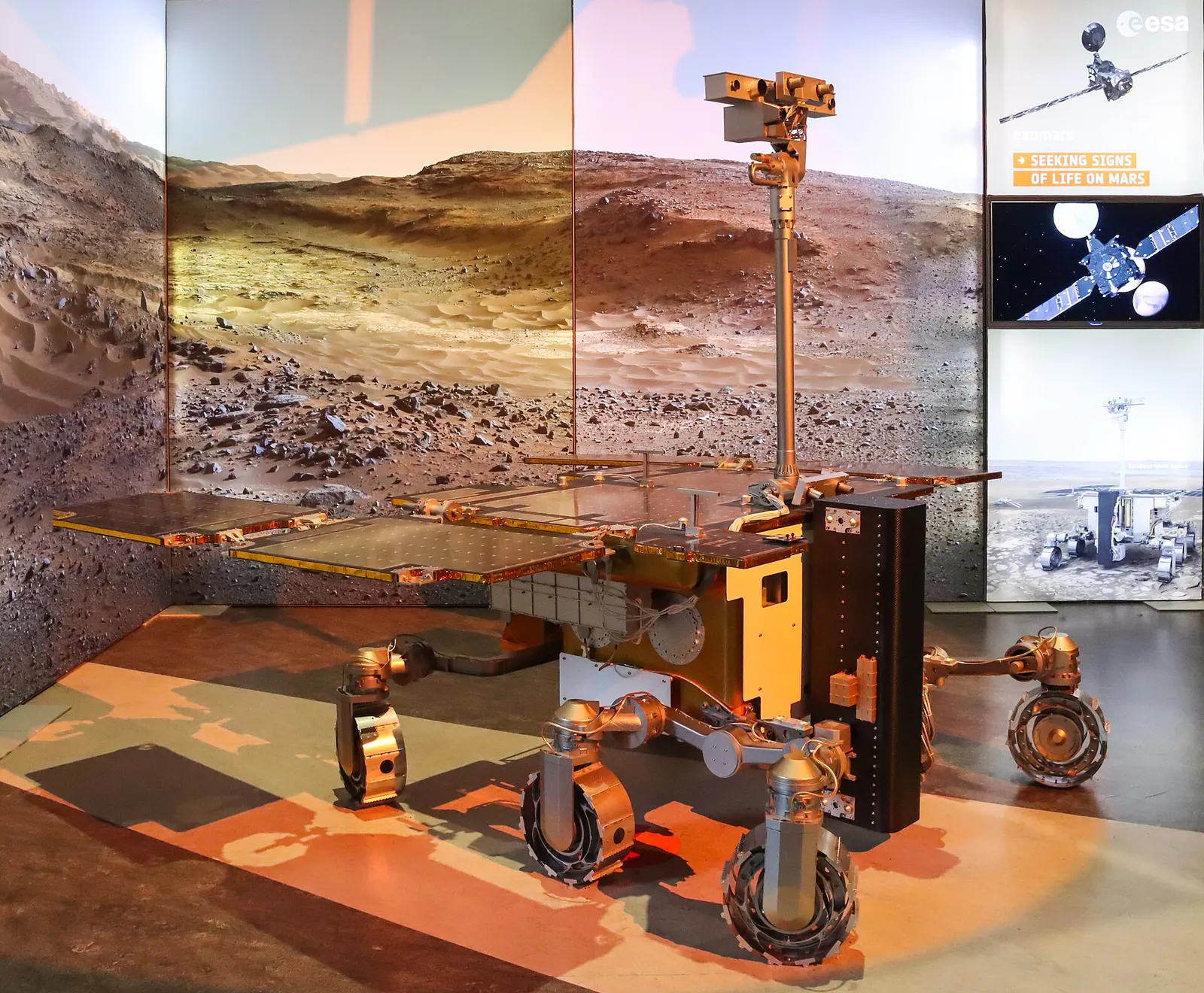
ExoMars / Rosalind Franklin Rover
ESAMars
ExoMars is the European Space Agency's two-mission Mars exploration programme. Mission 1, the Trace Gas Orbiter (TGO) plus the Schiaparelli entry-descent-landing demonstrator, launched on 14 March 2016 aboard a Proton-M from Baikonur; TGO has been mapping atmospheric trace gases and surface mineralogy since 2018 and serves as the data-relay backbone for current and future Mars surface assets, while Schiaparelli was lost during landing on 19 October 2016 [1][6]. Mission 2 — the Rosalind Franklin rover — was originally planned as a joint ESA-Roscosmos surface mission with a Russian-built Kazachok landing platform and a Proton-M launch in September 2022, targeting a 2023 arrival in Oxia Planum [2]. On 17 March 2022, the ESA Council suspended cooperation with Roscosmos in response to the invasion of Ukraine and formally terminated the joint mission on 12 July 2022, mandating that ESA re-baseline ExoMars under a fully European architecture supplemented by NASA contributions [3]. The November 2022 ESA Ministerial Council in Paris approved approximately €700 million of additional funding to redesign the landing platform and proceed under a NASA-supported architecture: NASA contributes the launch (procured commercially via Falcon Heavy or Vulcan Centaur), the Radioisotope Heater Units (RHUs) to keep the rover warm through polar night and dust storms, and the entry-descent-landing braking engines, while ESA member states (primarily Italy via Thales Alenia Space, Germany via OHB, and the UK via Airbus Defence and Space Stevenage) build the new ESA landing platform, the rover, the cruise stage and the carrier module [4][7]. The current baseline targets launch in the 2028 Mars window with arrival on Mars in 2030; the rover carries the Pasteur instrument payload, including the Mars Organic Molecule Analyser (MOMA), the Raman Laser Spectrometer (RLS) and a 2-metre core drill — capabilities that complement (rather than duplicate) NASA's Perseverance, which lacks subsurface access [2][8]. Cumulative ESA + member-state expenditure on the ExoMars programme has now exceeded €1.3 billion through the post-2022 re-baselining; the Rosalind Franklin rover hardware itself was largely completed by 2022 and has been preserved at Thales Alenia Space Turin in special clean-room storage awaiting integration with the new landing platform [4][9].
Galileo Navigation Constellation
EU / ESA / EUSPAExploration
Galileo is the European Union's global navigation satellite system (GNSS), owned by the EU, designed and implemented by the European Space Agency for the EU's space component, and operated by the European Union Agency for the Space Programme (EUSPA, formerly GSA) which assumed exploitation responsibility on 12 May 2021 under EU Regulation 2021/696 [1][2]. The constellation consists of 24 operational Medium Earth Orbit satellites in three orbital planes (8 satellites per plane at 23,222 km altitude, 56° inclination) plus active in-orbit spares, providing four free open services (Open Service, Public Regulated Service for government users, Search-And-Rescue compatible with COSPAS-SARSAT, and the High-Accuracy Service launched in January 2023) [2][6]. The First Generation (G1) constellation comprises satellites built by OHB SE (Bremen, Germany) for the bus and Surrey Satellite Technology Ltd / Airbus DS for the payload, with later batches integrated by Thales Alenia Space Italia; launches have used a mix of Soyuz from Kourou, Ariane 5 ES, and Falcon 9 from Cape Canaveral [3][7]. On 20 January 2021 ESA signed Galileo Second Generation (G2) contracts with Thales Alenia Space Italia and Airbus Defence and Space for €1.47B (six satellites) plus follow-on G2 batches under a combined contract value exceeding €2.5B announced through subsequent EUSPA / ESA awards [5]. G2 satellites are larger, fully electric-propelled, carry passive hydrogen masers and rubidium clocks of improved accuracy, and add the new Public Regulated Service link and enhanced Search-And-Rescue Return-Link functionality [5]. Galileo's High Accuracy Service (HAS), launched on 24 January 2023, provides free, open, real-time decimetre-level positioning corrections globally — a uniquely open competitor to commercial RTK and PPP services from Trimble, Hexagon and u-blox [6]. As of 2026, over 4 billion smartphones support Galileo signals (every iPhone since iPhone 6s, Android handsets shipped since 2018, all current major chipset vendors), making it the most widely deployed GNSS receiver footprint outside GPS [8].
Hera
ESAMars
Hera is the European Space Agency's contribution to the international Asteroid Impact and Deflection Assessment (AIDA) collaboration — the first full-scale planetary-defence demonstration in history [1]. NASA's Double Asteroid Redirection Test (DART) spacecraft impacted Dimorphos, the smaller moonlet of the Didymos binary asteroid system, on 26 September 2022, successfully altering its orbital period by 33 minutes — far in excess of the 73-second minimum threshold considered a successful planetary-defence test [2]. Hera is the European post-impact reconnaissance mission, designed to characterise Dimorphos in detail, measure its mass directly (DART could only estimate Dimorphos's mass from ground-based observations), confirm the impact crater morphology, and determine the precise momentum-transfer enhancement factor (beta) — a key quantity for scaling kinetic-impact deflection to other asteroids [1][2]. Hera launched on 7 October 2024 at 14:52 UTC aboard a SpaceX Falcon 9 from Cape Canaveral Space Launch Complex 40 — the first dedicated European deep-space mission flown on a SpaceX launcher [3]. After a Mars gravity-assist flyby on 12 March 2025 (a bonus opportunity that imaged Mars's small moon Deimos at close range), Hera will arrive at the Didymos system in December 2026 and conduct a six-month characterisation campaign at Didymos-Dimorphos [1][6]. Hera carries two CubeSat companions: Juventas (Tyvak International, Italian-led, GMV cofeed) — a CubeSat-class spacecraft carrying the first deep-space radar (JuRA) which will probe Dimorphos's interior; and Milani (Tyvak International, Italian-led) — carrying a hyperspectral imager to map Dimorphos's mineralogy [4][7]. The Hera mothership carries an Asteroid Framing Camera (Max-Planck-Institut), HyperScout-H hyperspectral imager (cosine Remote Sensing, Netherlands), Planetary Altimeter (PALT, GMV), and Thermal InfraRed Imager (TIRI, JAXA contribution) [4]. OHB System AG (Bremen, Germany) is the industrial prime contractor under a contract worth €129.4M signed at the November 2019 Seville Ministerial, with Avio (Italy), GMV (Spain), and other European subcontractors providing major subsystems [5][8]. The total programme cost across ESA and national contributions is approximately €363 million [3]. Hera will perform direct mass measurements of Dimorphos via radio science, image the DART impact crater at high resolution, and operate JuRA to perform the first asteroid radar interior tomography — providing the empirical ground truth that calibrates planetary-defence scaling for asteroids of different compositions and structures [4].
Hera (Asteroid Defense)
ESADefense/Military
ESA's planetary defense mission to survey the aftermath of NASA's DART impact on asteroid Dimorphos. Launched October 2024, Hera will arrive at the Didymos-Dimorphos system in late 2026. Will measure the crater left by DART, determine Dimorphos's mass and internal structure, and deploy two CubeSats (Milani and Juventas) for close-range inspection.
~EUR290M2024–2027
JUICE (Jupiter Icy Moons Explorer)
ESALunar
JUICE (Jupiter Icy Moons Explorer) is the European Space Agency's first L-class mission under the Cosmic Vision 2015-2025 programme, selected in May 2012 over Athena and NGO with the explicit objective of characterising the habitability of Jupiter's icy moons Ganymede, Europa and Callisto [1][3]. The mission was built by a European industrial consortium led by Airbus Defence and Space as prime contractor in Friedrichshafen and Toulouse, with major contributions from Thales Alenia Space (deep-space telecommunications), OHB (electrical ground support and AIT), Leonardo (electronics and instrument elements), and a 30+ company European supply chain plus international contributions from NASA, JAXA and the Israel Space Agency [4]. JUICE launched on April 14, 2023 at 12:14 UTC on the penultimate Ariane 5 (VA260, the last commercial Ariane 5) from the Guiana Space Centre in Kourou, French Guiana [2]. The spacecraft executed a successful first-of-its-kind lunar-Earth gravity assist on August 19-20 2024 (the world's first double-body flyby in a single planetary-encounter operation), followed by Venus flyby in August 2025 and additional Earth gravity assists in September 2026 and January 2029 [5]. JUICE arrives at the Jupiter system in July 2031, executes a 35-month tour with 35 flybys of Ganymede, Europa and Callisto including two Europa close flybys, and in December 2034 becomes the first spacecraft to enter orbit around a natural satellite other than Earth's Moon when it transitions to Ganymede orbit insertion [1][6]. The mission carries ten payload instruments including the Jovis, Amorum ac Natorum Undique Scrutator (JANUS) optical camera, the Moons and Jupiter Imaging Spectrometer (MAJIS), the UV imaging spectrograph (UVS), the Sub-millimetre Wave Instrument (SWI), the Ganymede Laser Altimeter (GALA), the Radar for Icy Moon Exploration (RIME), the J-MAG magnetometer, the Particle Environment Package (PEP), the Radio and Plasma Wave Investigation (RPWI), and the 3GM radio-science experiment [1][8]. JUICE is the European counterpart to NASA's Europa Clipper (launched October 14, 2024 on Falcon Heavy, arriving Jupiter April 2030) and the two missions are explicitly coordinated for complementary science returns at Europa [7]. Total mission cost is approximately €1.6 billion (ESA contribution), with national contributions from ESA member states and NASA / JAXA partners adding the payload-instrument envelope [1][6].
🇮🇳
India
8 programsAditya-L1 (Solar Observatory)
ISROEarth/Solar Science
India's first dedicated solar observation mission. Launched Sep 2, 2023, and successfully inserted into a halo orbit around Sun-Earth L1 point on Jan 6, 2024. Carries 7 payloads studying the solar corona, photosphere, chromosphere, and solar wind. Providing continuous solar observation without eclipses.
₹378 crore (~$46M)2023–2028+
Aditya-L1 Programme
ISROEarth/Solar Science
Aditya-L1 is the Indian Space Research Organisation's first space-based observatory dedicated to studying the Sun, executed by the U R Rao Satellite Centre (URSC) and the Indian Institute of Astrophysics (IIA) as the lead VELC payload integrator [1]. The spacecraft was launched aboard the Polar Satellite Launch Vehicle in its XL configuration (PSLV-C57) from the First Launch Pad at Satish Dhawan Space Centre, Sriharikota at 11:50 IST on September 2, 2023 [2]. After four Earth-bound manoeuvres and a Trans-Lagrangian Point Insertion burn on September 18, 2023, the spacecraft completed a 110-day cruise and was successfully inserted into its target halo orbit around the Sun-Earth Lagrange point L1 — approximately 1.5 million km from Earth — at 16:00 IST on January 6, 2024 [2][5]. The halo orbit provides an uninterrupted view of the Sun without eclipses or occultations, enabling continuous observations of the photosphere, chromosphere and corona. Aditya-L1 carries seven instruments: the Visible Emission Line Coronagraph (VELC), the Solar Ultraviolet Imaging Telescope (SUIT), the Aditya Solar wind Particle Experiment (ASPEX), the Plasma Analyser Package for Aditya (PAPA), the Solar Low Energy X-ray Spectrometer (SoLEXS), the High Energy L1 Orbiting X-ray Spectrometer (HEL1OS), and the Advanced Tri-axial High Resolution Digital Magnetometer [1][3]. VELC — the largest and primary scientific payload, developed by IIA Bengaluru — observes the solar corona between 1.05 and 3 solar radii at four emission lines including the Fe XIV 5303 Å line, enabling continuous spectroscopic coronal observations not previously available from any single instrument [3]. The mission's total approved cost of approximately Rs 400 crore (~$48M, FY2019 sanction) reflects an extension of ISRO's track record of low-cost interplanetary and deep-space missions; the FY2019 Cabinet sanction was the original authorisation, with subsequent budget supplements absorbed within the Department of Space science envelope [4][6]. As of 2026 the spacecraft continues nominal operations and is delivering coordinated multi-wavelength observations alongside NASA's Parker Solar Probe and ESA's Solar Orbiter, with bulk Level-1 data products released through ISRO's Indian Space Science Data Centre (ISSDC) PRADAN portal [7].
Chandrayaan Program
ISROLunar
India's lunar exploration program. Chandrayaan-3 achieved a historic soft landing at the lunar south pole on Aug 23, 2023, making India the 4th country to land on the Moon and the first to land near the south pole. The Pragyan rover operated for 14 days analyzing lunar soil composition. Chandrayaan-4 is a sample return mission approved by the Indian government.
₹615 crore (~$75M) for Chandrayaan-3; Chandrayaan-4 approved at ₹2,104 crore (~$250M)2008–ongoing
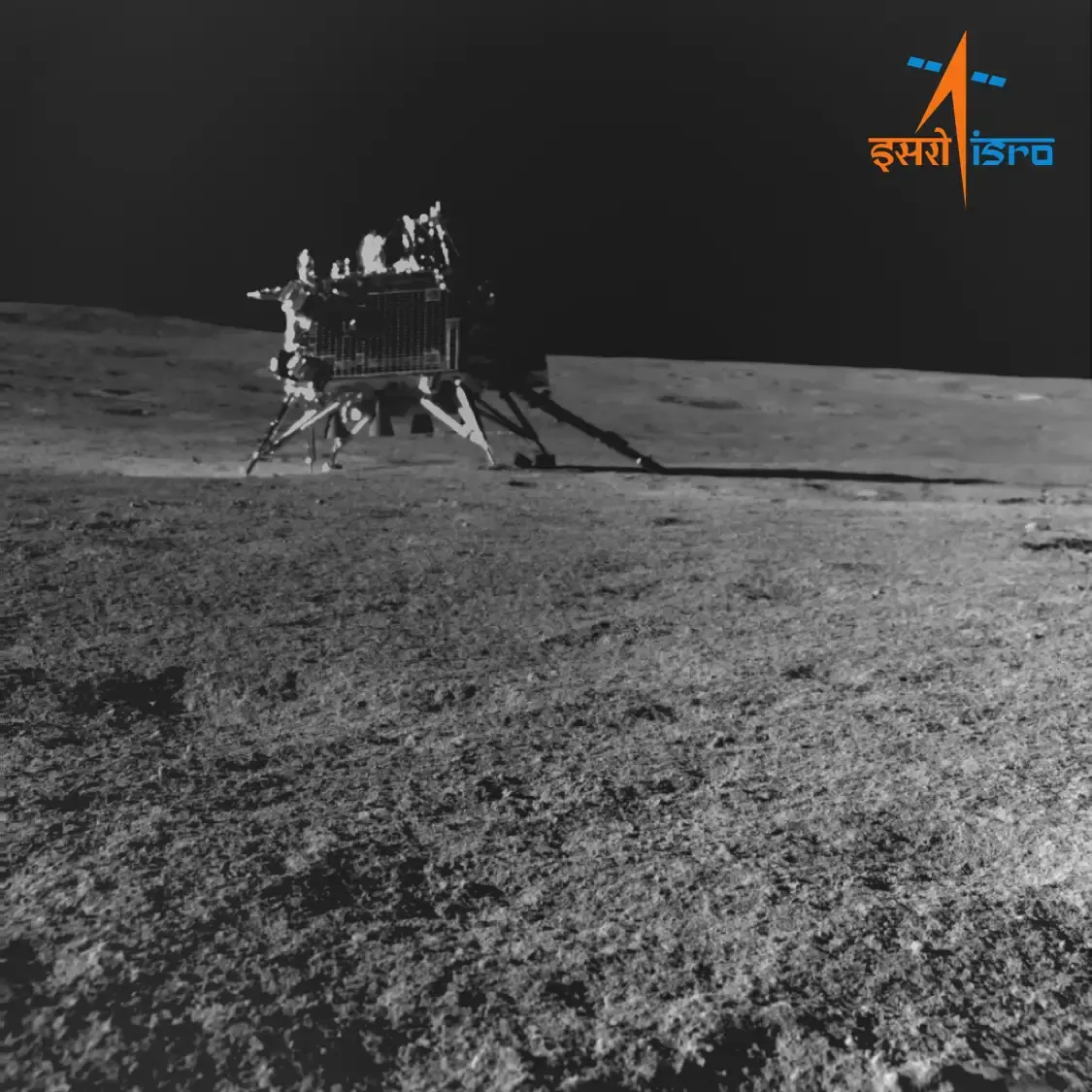
Chandrayaan Programme
ISROLunar
The Chandrayaan programme is the Indian Space Research Organisation's flagship lunar exploration series, executed under the Department of Space and increasingly opened to private contractors under the IN-SPACe regulatory framework [1][8]. Chandrayaan-1, launched on PSLV-C11 on October 22, 2008, was India's first deep-space mission; it carried 11 instruments (including NASA's Moon Mineralogy Mapper, M3, and ISRO's Moon Impact Probe) and returned spectral data that — when published in Science in September 2009 — provided the first widely accepted evidence for hydroxyl and water molecules on the sunlit lunar surface [2][3]. Chandrayaan-2, launched on GSLV Mk III in July 2019, deployed an orbiter (still operational and returning high-resolution imagery and CLASS X-ray spectrometer data as of 2026) plus the Vikram lander and Pragyan rover; Vikram lost attitude control during the final descent and crash-landed on September 7, 2019, approximately 2.1 km from the targeted Manzinus crater area [4][9]. Chandrayaan-3, launched on LVM3-M4 from Sriharikota on July 14, 2023 and soft-landed on August 23, 2023 at 6:04 PM IST, made India the fourth nation to achieve a controlled lunar soft landing and the first to land near the lunar south pole — the landing site was officially named Shiv Shakti Point by the Government of India [5]. The mission's total approved cost of Rs 615 crore (~$75M) made it one of the cheapest soft-lunar landers ever flown; the Pragyan rover operated for one lunar day (~14 Earth days) and the LIBS / APXS payloads confirmed in-situ detection of sulphur near the south pole [5][6]. Chandrayaan-4, approved by the Union Cabinet on September 18, 2024 at an outlay of Rs 2,104.06 crore, is a two-launch sample-return mission targeting the south-polar region with a target return-to-Earth in 2027-2028 [7]. The Lunar Polar Exploration mission (LUPEX) — jointly executed with the Japan Aerospace Exploration Agency (JAXA), with JAXA providing the H3 launcher and rover and ISRO providing the lander — targets in-situ characterisation of polar water ice and is currently scheduled for the late-2020s window [10].
Gaganyaan (Human Spaceflight)
ISROHuman Spaceflight
India's first crewed spaceflight program. Will make India the 4th country to independently send humans to space. Uses the GSLV Mk III (LVM3) rocket and a 3-crew orbital module. Multiple uncrewed test flights completed including abort test and TV-D2 crew escape demonstration. First crewed mission targeted for late 2026.
₹12,600 crore (~$1.5B)2018–2026
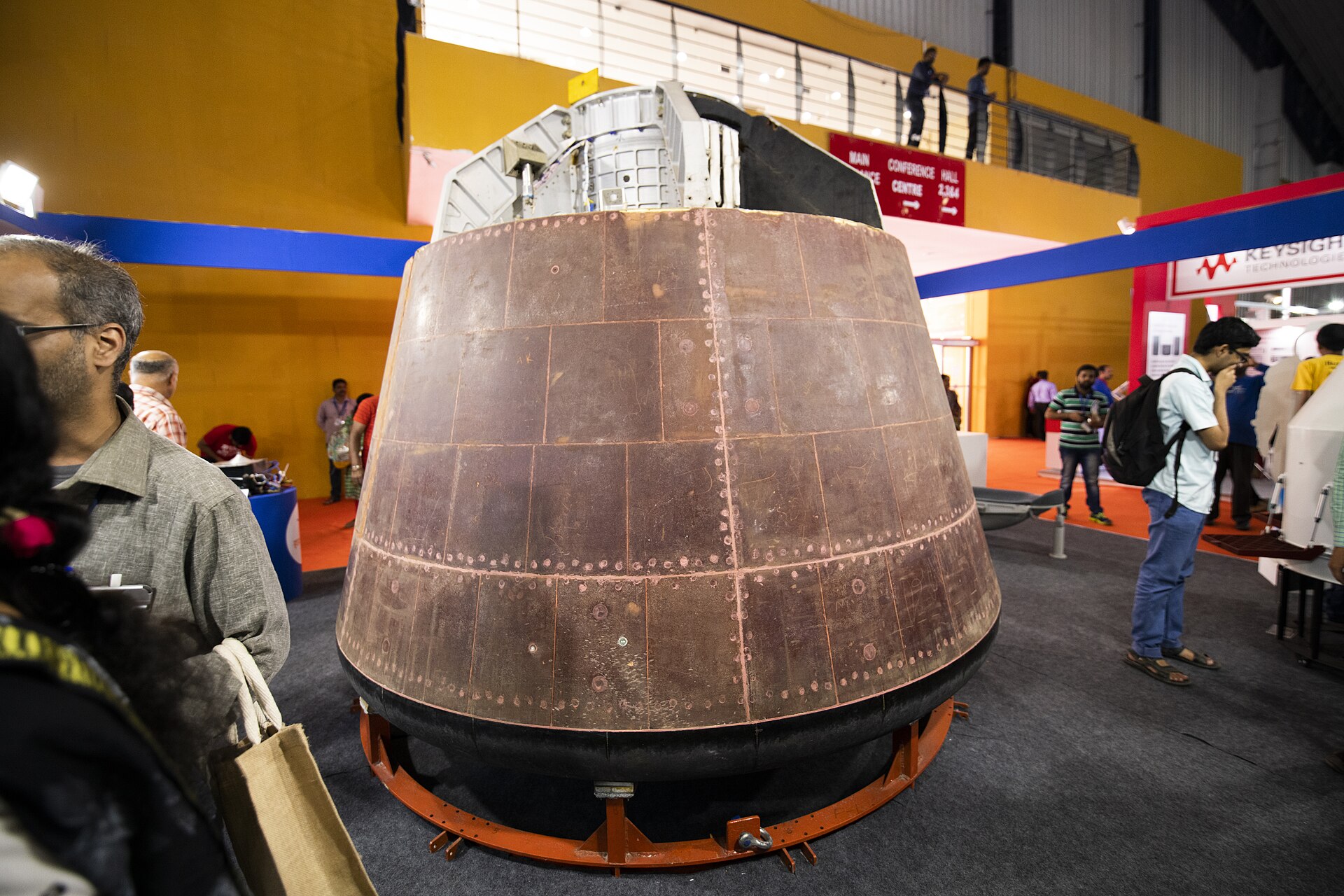
Gaganyaan Programme
ISROHuman Spaceflight
Gaganyaan is the Government of India's flagship human spaceflight programme, executed by the Indian Space Research Organisation (ISRO) with regulatory oversight from the Indian National Space Promotion and Authorisation Centre (IN-SPACe) [1][7]. The architecture combines a 5.3-tonne orbital module (a crew module mated to a service module) launched by a human-rated variant of the LVM3 vehicle — formerly the GSLV Mk III — using the indigenous S200 solid boosters, the L110 liquid core stage burning UDMH/N2O4 via twin Vikas engines, and the cryogenic C25 stage powered by the CE-20 engine [2]. The crew escape system was first demonstrated on the TV-D1 in-flight abort test from Sriharikota on October 21, 2023, with the TV-D2 follow-on test expected to qualify a higher-altitude abort regime before the first uncrewed orbital flight (G1) [5][8]. In February 2024 Prime Minister Narendra Modi publicly named the four IAF test-pilot astronaut-designates — Group Captain Prashanth Balakrishnan Nair, Group Captain Angad Pratap, Group Captain Ajit Krishnan and Wing Commander Shubhanshu Shukla — completing a Russian-led basic training rotation at the Yuri Gagarin Cosmonaut Training Centre before continuing systems-specific training in Bengaluru [6]. The Axiom-4 commercial mission to the International Space Station, on which Group Captain Shukla flew as a designated pilot in mid-2025, provided ISRO's first operational human-spaceflight experience and de-risked life-support, EVA-suit donning and on-orbit health protocols ahead of the crewed Gaganyaan flight [9]. Beyond the initial three-day mission, the Union Cabinet in September 2024 approved the Bharatiya Antariksha Station (BAS) — a five-module Indian space station with the first module targeted by 2028 and full configuration by approximately 2035 — alongside an expanded Gaganyaan envelope to support eight follow-on crewed missions through 2035 [4][7].
LUPEX (Lunar Polar Exploration Mission)
JAXA + ISROLunar
The Lunar Polar Exploration Mission (LUPEX, 月極域探査機; also publicly referenced as Chandrayaan-5 in ISRO planning) is a joint mission between the Japan Aerospace Exploration Agency (JAXA) and the Indian Space Research Organisation (ISRO), formally agreed in 2017 and progressively de-scoped, re-baselined and reaffirmed across multiple JAXA-ISRO joint working group meetings through 2024-2026 [1][2]. Under the current architecture, JAXA leads the integrated mission and provides the H3 launch vehicle (operating from Tanegashima Space Center) plus the rover element — a ~350 kg pressurised, six-wheeled mobile platform with a ~100-day surface-life design and a drilling system capable of obtaining sub-surface samples down to ~1.5 m [3][4]. ISRO provides the lander platform — leveraging the Chandrayaan-3 Vikram lineage with extensions for the heavier rover payload and the additional polar-thermal-survival requirements — and carries Indian payloads including a near-infrared spectrometer and a permanently-shadowed-region thermal imager [2][4]. The combined stack targets the southern polar region (candidate landing zones near Shackleton, Haworth and Faustini craters) and will deploy the rover into permanently shadowed crater interiors for the first sustained mobile science campaign in lunar PSRs — a capability complementary to NASA's cancelled VIPER and to CNSA's Chang'e 7 'mini flying detector' [3][7]. JAXA's published mission cost envelope is approximately ¥40 billion (~$270M) on the Japanese side [6], while the Indian Cabinet's specific LUPEX cost-share remains under negotiation as of mid-2026 and has not been formally disclosed at the line-item level beyond the broader Department of Space FY2025-26 envelope of Rs 13,416 crore (~$1.6B) [9]. Launch is currently targeted no earlier than 2026-2027, with multiple JAXA / ISRO public statements indicating slip risk into 2028 [2][8]. LUPEX builds on Japan's SLIM (Smart Lander for Investigating Moon) success in January 2024 — which made Japan the fifth nation to soft-land on the Moon — and the operational Chandrayaan-2 orbiter providing south-polar terrain reconnaissance [5].
LUPEX (Lunar Polar Exploration)
JAXA / ISROLunar
Joint Japan-India lunar rover mission to the Moon's south pole. JAXA provides the rover and ISRO provides the lander. The rover will carry a drill capable of penetrating 1.5 meters below the surface to confirm the presence of water ice and characterize its distribution. Toyota is developing the rover's driving technology.
~$500M (joint JAXA-ISRO)2028–2029
🇯🇵
Japan
4 programsH3 Launch Vehicle
JAXA / Mitsubishi Heavy IndustriesLaunch Vehicles
Japan's next-generation flagship rocket replacing H-IIA. After a failed first flight in Mar 2023 (second stage shutdown), H3 successfully reached orbit on its second attempt in Feb 2024. Now operational, targeting 50% cost reduction over H-IIA. Key for Japan's independent access to space and launching IGS reconnaissance satellites.
¥197B (~$1.3B) development2014–ongoing
H3 Launch Vehicle Programme
JAXAMars
The H3 launch vehicle is the next-generation Japanese flagship expendable rocket developed jointly by JAXA and Mitsubishi Heavy Industries (MHI) under a fixed-price contract intended to halve per-launch costs versus the previous-generation H-IIA while doubling its payload capability [1][2]. The vehicle's core architecture is a two-stage liquid hydrogen / liquid oxygen design powered by the new LE-9 first-stage engine — a high-thrust, expander-bleed-cycle LH2/LOX engine developed by JAXA and MHI, generating approximately 1,471 kN at sea level — and the LE-5B-3 second-stage engine derived from H-IIA heritage [1]. The vehicle is offered in multiple configurations distinguished by the number of LE-9 engines (2 or 3), the number of solid rocket boosters (0, 2 or 4 SRB-3 strap-ons supplied by IHI Aerospace), and the payload fairing length; the H3-24L configuration with two LE-9s, four SRBs and a long fairing is the high-capability variant baselined for GTO commercial missions and JAXA flagship deep-space programmes [1]. Total H3 development cost was disclosed by JAXA at approximately ¥190B (~$1.3B) through first flight [6]. The Test Flight 1 (TF1) launch on March 7, 2023 from Tanegashima Space Center carrying the ALOS-3 Earth observation satellite failed when the LE-5B-3 second stage failed to ignite; flight termination commanded by ground controllers resulted in the loss of the vehicle and payload — a high-profile setback widely reported in international trade press [3][7]. Subsequent failure-investigation reports identified an electrical anomaly in the second-stage ignition sequence and triggered redesign of the affected harness; remedial actions were qualified for Test Flight 2 (TF2), which successfully launched on February 17, 2024 with two CubeSat secondary payloads and a mass-simulator main payload [4]. H3 then transitioned to operational missions: H3 Flight 3 launched ALOS-4 in July 2024, Flight 4 launched the Kirameki-3 X-band defence communications satellite, and the first commercial mission carrying Inmarsat-6 F2 launched in late 2024 [5][8]. The vehicle is intended to fly at a target cadence of approximately 6 launches per year by the late 2020s, with applications including the LUPEX (Chandrayaan-5) joint ISRO-JAXA polar lunar mission, MMX Mars moons sample return, and continued operational satellite deliveries [9].
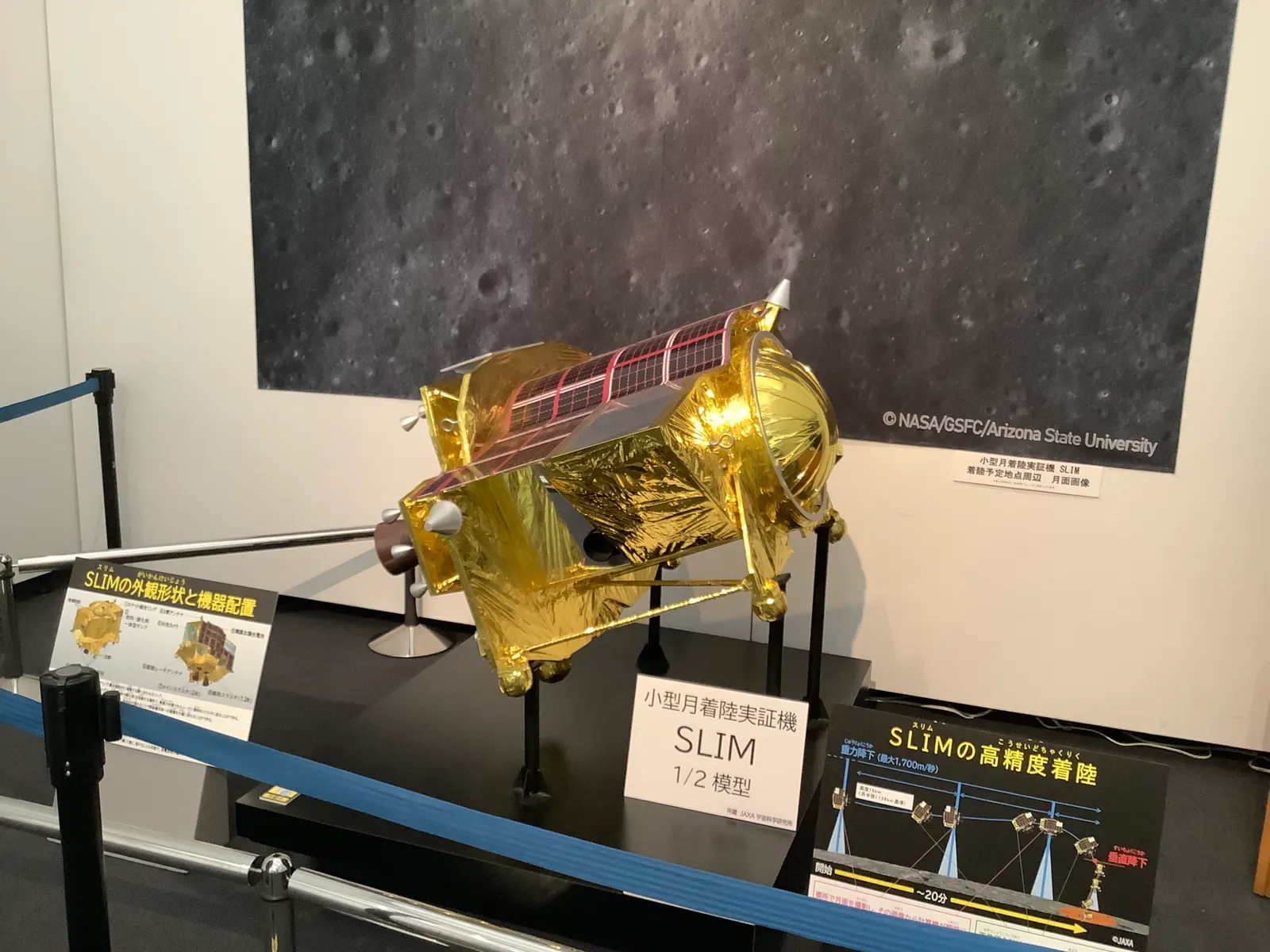
SLIM & Japan Lunar Exploration
JAXALunar
SLIM is the Japan Aerospace Exploration Agency's small-class lunar lander demonstration developed by the Institute of Space and Astronautical Science (ISAS) and built under prime contract by Mitsubishi Electric, with a stated objective to demonstrate sub-100-metre landing accuracy — orders of magnitude better than the historic kilometre-class precision typical of pre-2024 lunar landers [1]. The spacecraft was launched on an H-IIA Flight 47 from Tanegashima Space Center on September 6, 2023 alongside the XRISM X-ray observatory, executed a four-month low-energy lunar transfer, and successfully soft-landed near the Shioli crater on the lunar near side at 00:20 JST on January 20, 2024 (January 19, 2024 UTC) [2]. JAXA confirmed in a January 25, 2024 press conference that SLIM achieved its pinpoint-landing objective with a touchdown approximately 55 metres east of its targeted point — a world-first for any lunar lander — but had landed in a nose-down attitude after one of the two main engines failed during the final descent, leaving the spacecraft tilted with its solar panels facing away from optimal Sun angles [2][6]. SLIM nevertheless powered up on January 28, 2024 when solar illumination shifted, completed multispectral imaging campaigns with its LEV-1 hopping micro-rover and LEV-2 (SORA-Q) palm-sized rover developed with Takara Tomy and Sony, and survived three lunar nights before contact was lost — well beyond the original mission baseline [2][6]. The mission total cost has been reported at approximately ¥18B (~$120M) including spacecraft, payloads and launch vehicle share [3]. JAXA's broader lunar architecture extends beyond SLIM into three programmes: (1) the Lunar Polar Exploration mission (LUPEX), executed jointly with ISRO, providing the rover and an H3 launcher with ISRO providing the lander, targeting the late-2020s window [7]; (2) the Lunar Cruiser pressurised rover for NASA's Artemis programme, developed in collaboration with Toyota Motor Corporation and JAXA under a January 2024 Memorandum of Understanding with NASA, targeting deployment to the lunar surface in 2031 [4]; (3) participation in the Artemis Accords (Japan signed October 13, 2020) and commitment to deliver Japanese astronauts to the lunar surface aboard Artemis missions [4][5]. The Japanese commercial sector now also operates lunar landers — ispace's HAKUTO-R Mission 1 lander reached lunar orbit but crashed during descent in April 2023 and a Mission 2 lander (Resilience) is currently en route — providing a complementary commercial pillar to JAXA's flagship architecture [8].
SLIM & Lunar Exploration
JAXALunar
Japan became the 5th country to soft-land on the Moon with SLIM (Smart Lander for Investigating Moon) on Jan 19, 2024. Though it landed upside-down, it demonstrated pinpoint landing accuracy (within 55m of target). JAXA is now developing LUPEX (Lunar Polar Exploration) with ISRO for south pole water ice investigation, and contributing to Gateway and Artemis.
¥18B (~$120M) for SLIM; LUPEX co-funded with ISRO2023–2030
🇰🇷
South Korea
2 programsKorea Space Program (KSLV / Danuri)
KARI / KASAExploration
South Korea established KASA (Korea AeroSpace Administration) in May 2024 as a dedicated space agency. The Nuri rocket (KSLV-II) achieved operational success in May 2023. Korea Pathfinder Lunar Orbiter (KPLO/Danuri) has been orbiting the Moon since Dec 2022, mapping the surface with NASA's ShadowCam. Next-generation rocket (KSLV-III) in development.
₩1.5T (~$1.1B) space budget (2024)2022–2032
Nuri (KSLV-II) & Korean Lunar Lander
KASA + KARILunar
Nuri (KSLV-II, Korea Space Launch Vehicle II, 한국형발사체 누리호) is the first fully indigenous Korean orbital launch vehicle, developed by the Korea Aerospace Research Institute (KARI) under a 1.97 trillion KRW (~$1.5B) development envelope authorised by the National Assembly across 2010-2023 [1][3]. Nuri is a three-stage kerosene/LOX (kerolox) stack with a first stage of four clustered KARI-developed 75-tonne-class engines, a single 75-tonne-class engine on the second stage, and a 7-tonne-class engine on the third stage; total liftoff thrust is approximately 300 tonnes-force and the design payload capacity is approximately 1,500 kg to a 600-800 km sun-synchronous orbit (SSO) [3]. Nuri completed three launches across 2021-2023: flight 1 on October 21 2021 at 17:00 KST reached design altitude but the third-stage engine cut off 46 seconds early, preventing orbital insertion of a 1.5-tonne dummy payload (a partial success establishing the launcher mechanically); flight 2 on June 21 2022 was a full success, placing a 1.3-tonne dummy mass and a Performance Verification Satellite (PVSAT) into orbit; flight 3 on May 25 2023 was the first operational Nuri flight, placing the 180 kg NEXTSat-2 SAR satellite plus seven secondary CubeSats into a 550 km SSO [2][3][8]. Following flight 2 success, KARI awarded the Nuri commercialisation prime role to Hanwha Aerospace in December 2022 with a contract envelope covering Nuri flights 4-6 (planned 2025-2027) under a launcher-and-services structure that transfers KARI's manufacturing know-how to industry [5]. The next-generation KSLV-III is in advanced design under KARI and Hanwha Aerospace, targeting a first launch around 2030 with a payload capacity of approximately 10,000 kg to LEO (~3,700 kg to GTO) using a new ~100-tonne-class kerolox engine and reusable first-stage architecture; programme cost is reported at approximately 2 trillion KRW (~$1.5B) [3][9]. The Korean Lunar Lander, formally approved under the Korean Space Development Master Plan, is targeted for first launch in 2032 on a KSLV-III with a soft lander payload of approximately 1.8 tonnes and an in-situ resource utilisation payload package; precursor lunar science is provided by Danuri (KPLO) which has been in lunar orbit since December 2022 [9][12]. On the private side, Innospace (KOSDAQ: 462350) is developing the hybrid-engine HANBIT family of small launchers and conducted the HANBIT-TLV test flight from Alcântara, Brazil on March 19 2023 — the first commercial Korean launcher flight from a foreign launch site [10]. Naro Space Center on Goheung Island (Outer Naro Island) is the primary national launch site for Nuri flights, with a planned KSLV-III pad expansion under the Korean Space Development Master Plan [3][9].
🇷🇺
Russia
2 programsLuna Program (Revival)
RoscosmosExploration
Russia's revival of Soviet-era lunar exploration. Luna 25 (first Russian lunar mission in 47 years) crashed into the Moon in Aug 2023 due to a propulsion malfunction. Program continues with Luna 26 (orbiter) and Luna 27 (lander), though Western sanctions have impacted component availability and timelines have slipped significantly.
Estimated ₽10-15B (~$110-170M per mission)2021–2030s
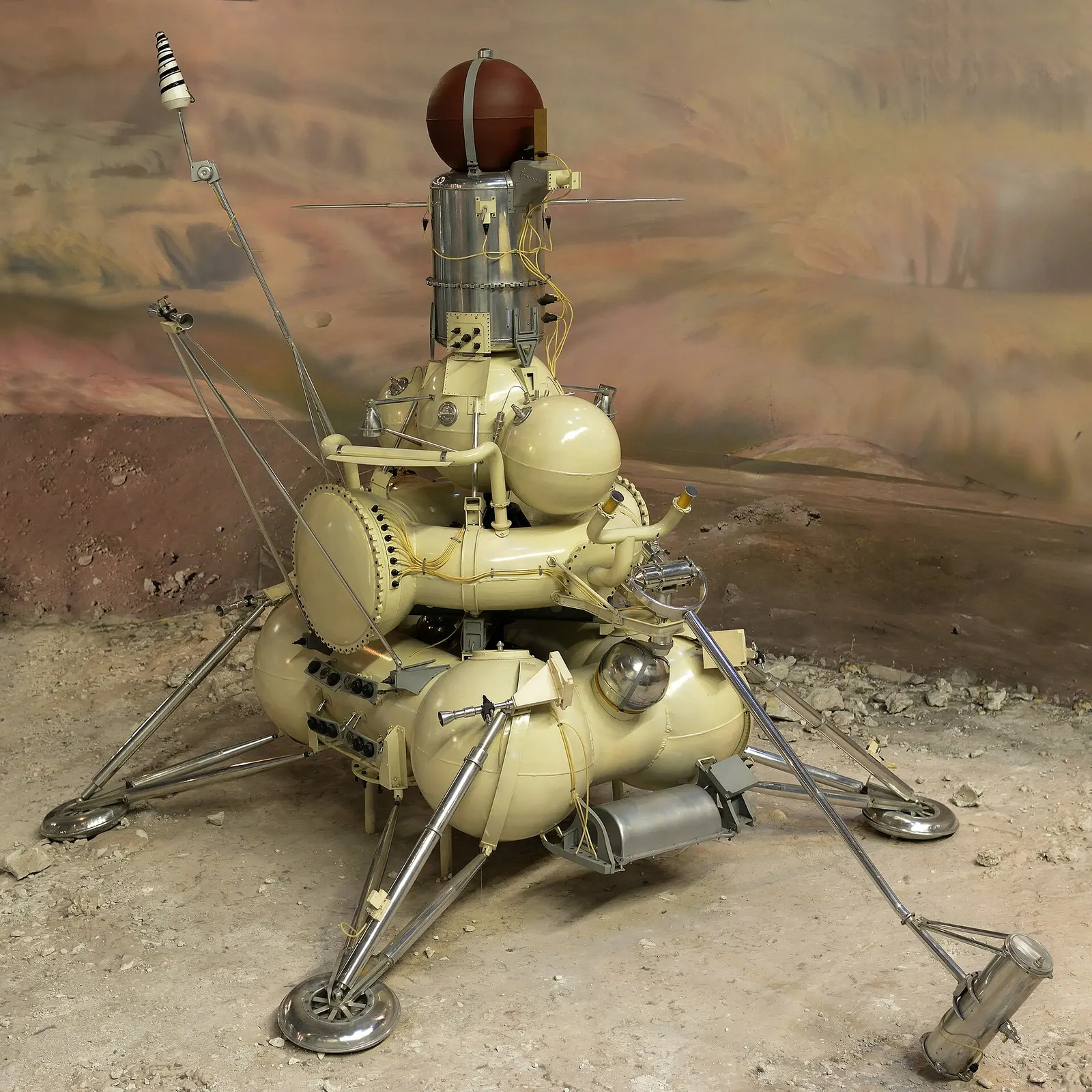
Luna Programme (Russia)
RoscosmosExploration
The contemporary Luna programme is Roscosmos's flagship lunar architecture intended to recover Soviet-era heritage capabilities after a 47-year operational gap between Luna-24 (1976) and Luna-25 (2023) [1]. The programme is executed by the NPO Lavochkin Research and Production Association — the Soviet-era specialist for robotic deep-space spacecraft — under sustained Roscosmos State Corporation oversight [2]. Luna-25 was launched on a Soyuz-2.1b / Fregat from Vostochny Cosmodrome at 02:10 Moscow time on August 11, 2023 (August 10 UTC) carrying a 1,750 kg landing platform with eight scientific instruments targeted at a south-polar landing site near Boguslavsky crater [1]. After successful trans-lunar coast and lunar orbit insertion, the spacecraft executed a pre-landing orbital correction on August 19, 2023 that produced 'an impulse with parameters different from the calculated ones,' as confirmed in Roscosmos's August 20 communiqué; the spacecraft transitioned to an unintended orbit, lost communications and impacted the lunar surface [2]. Roscosmos's interdepartmental commission attributed the failure to anomalous propulsion-system behaviour during the corrective burn and recommended significant changes to spacecraft autonomy and on-board fault management before the next mission [5]. The post-failure recovery roadmap baselines Luna-26 as a polar orbiter no earlier than 2027 carrying multispectral remote-sensing payloads, Luna-27 as a south-polar lander no earlier than 2028 with European Space Agency PILOT-D precision-landing technology that ESA disengaged following the 2022 Russia-Ukraine war (since redeveloped indigenously), and Luna-28 as a south-polar cryogenic sample-return mission no earlier than 2030 [3]. Russia's broader lunar architecture is now formally aligned with China's CNSA-led International Lunar Research Station (ILRS), a multilateral framework signed in March 2021 and steadily expanded since 2022 to include Belarus, Pakistan, Venezuela and other partners; Russia and China target a notional crewed phase by ~2035 [4]. The Russian space-sector budget has been materially constrained post-2022, with Roscosmos Director Yury Borisov publicly acknowledging cumulative funding shortfalls and prioritising defence-adjacent satellite production over civil lunar exploration [6][7]. The Luna programme thus operates as a slow-cadence multi-decade architecture rather than an active competitive flagship — sustained as a strategic signalling investment within the Russia-China bloc rather than a near-term commercial or geopolitical accelerator.
Sources & Credits
All data on this page is sourced from official space agencies, industry publications, and peer-reviewed research. Launch counts are pulled live from the Launch Library 2 API, with Jonathan McDowell's space report as our snapshot fallback. Budgets and rocket specs are cited inline against agency primary sources. Last verified: May 2026.
NASA
Official NASA mission data, program budgets, and milestones
ESA
European Space Agency missions and programs
ISRO
Indian Space Research Organisation missions
JAXA
Japan Aerospace Exploration Agency
CNSA
China National Space Administration
Roscosmos
Russian Federal Space Agency
The Space Devs (LL2 API)
Live launch data — primary source for our launches and companies charts
Jonathan McDowell's Space Report
Canonical independent orbital launch log since 1957 — used for snapshot fallback
SpaceNews
Space industry news, launch manifests, and budget reporting
SpaceflightNow
Launch schedules and mission tracking
NASASpaceflight
Technical reporting on launch vehicles and space programs
SpaceOdysseyHub is an independent publication. We are not affiliated with any space agency or company. Data is provided for educational and informational purposes. If you find an error, please contact us.