 KARI
KARI
Korea Aerospace Industries (KAI)
Overview
South Korea's national aerospace prime contractor with four segments: fixed-wing aircraft (T-50, FA-50, KF-21), rotary-wing (Surion, Marineon), MRO and structures (Boeing/Airbus tier-1 supplier), and space (KSLV-II Nuri, CAS500 satellites, Danuri lunar orbiter bus). Revenue is dominated by defense aviation production and exports, with the space segment growing as Korea's KASA agency ramps post-2024. KAI led Nuri's first three launches; Hanwha Aerospace took over from launch four (Nov 2025) under technology transfer.
Moat: Sole national aerospace prime in South Korea — monopoly position on KF-21, Surion, T-50 family, and primary contractor on Nuri/CAS500/Danuri. Three-decade institutional relationship with DAPA and KARI gives privileged access to ₩30T+ in defense and space programs. KOSPI listing (047810) provides public-market scale advantages over private competitors. Hanwha Aerospace is the only domestic peer with comparable propulsion and rocket capabilities, but KAI retains airframe, satellite-bus, and integration expertise. Growing T-50/FA-50 export wins (Poland, Malaysia, Egypt pipeline) diversify beyond domestic dependence.
Business
Primary customers
- Defense: Republic of Korea Air Force
- Defense: DAPA
- Government: KASA (Korea AeroSpace Administration)
- Government: KARI
- Commercial: Boeing / Airbus (tier-1 structures)
- Defense: Indonesia / Poland / Malaysia (T-50/FA-50 export)
Sectors
Launch Vehicles · Satellites · Defense Aviation · Space Exploration
Gallery
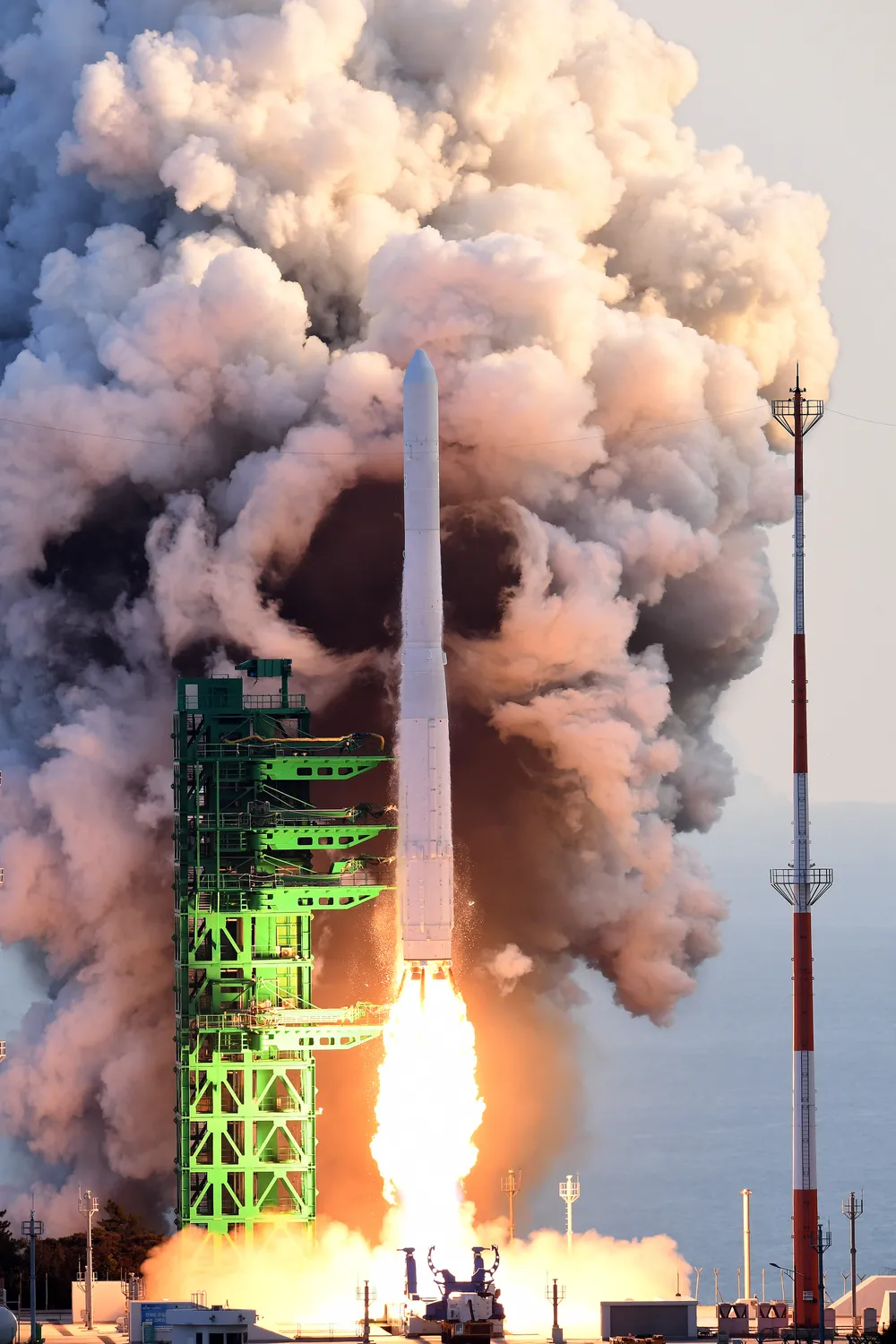
Key Products
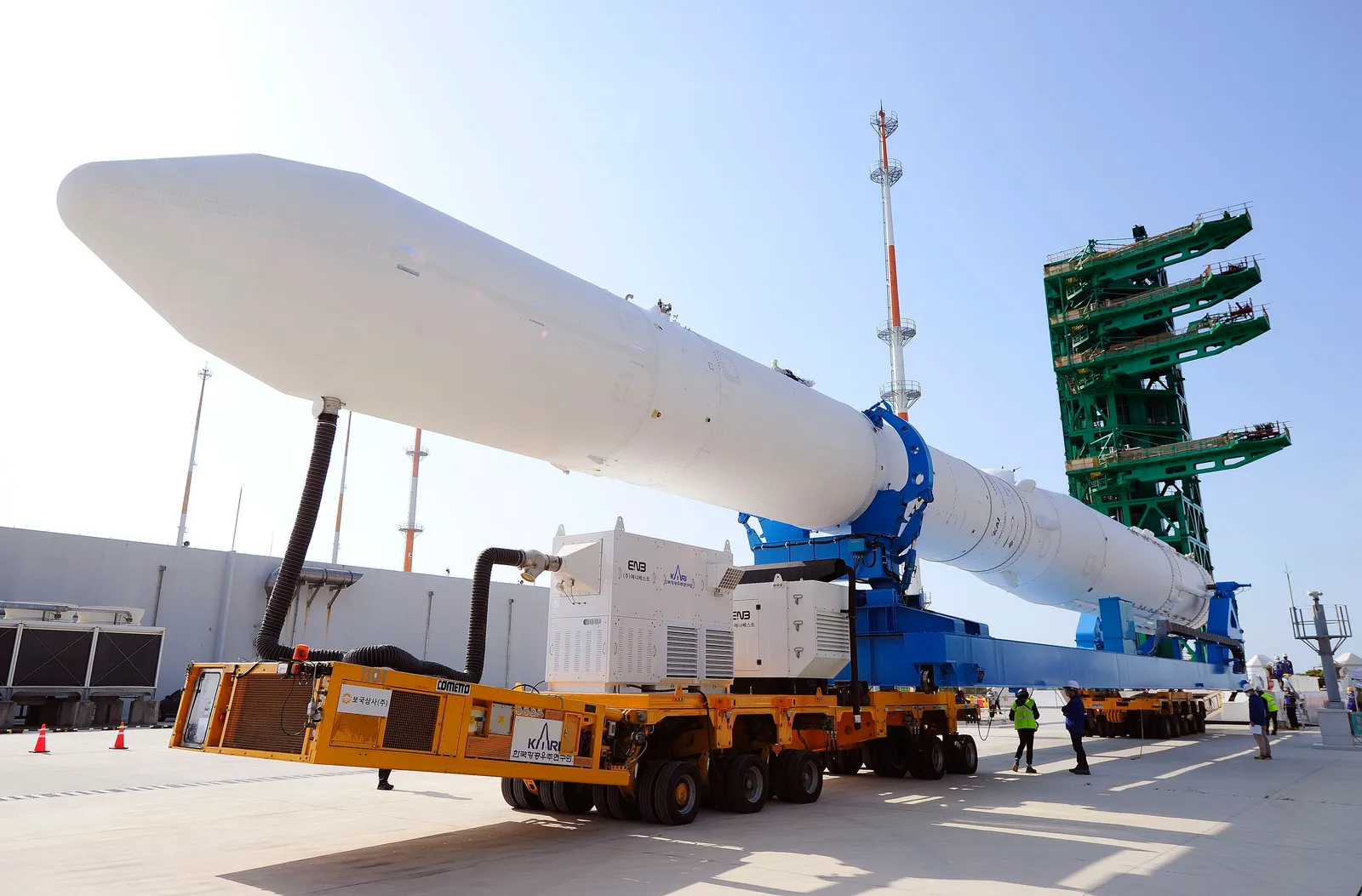
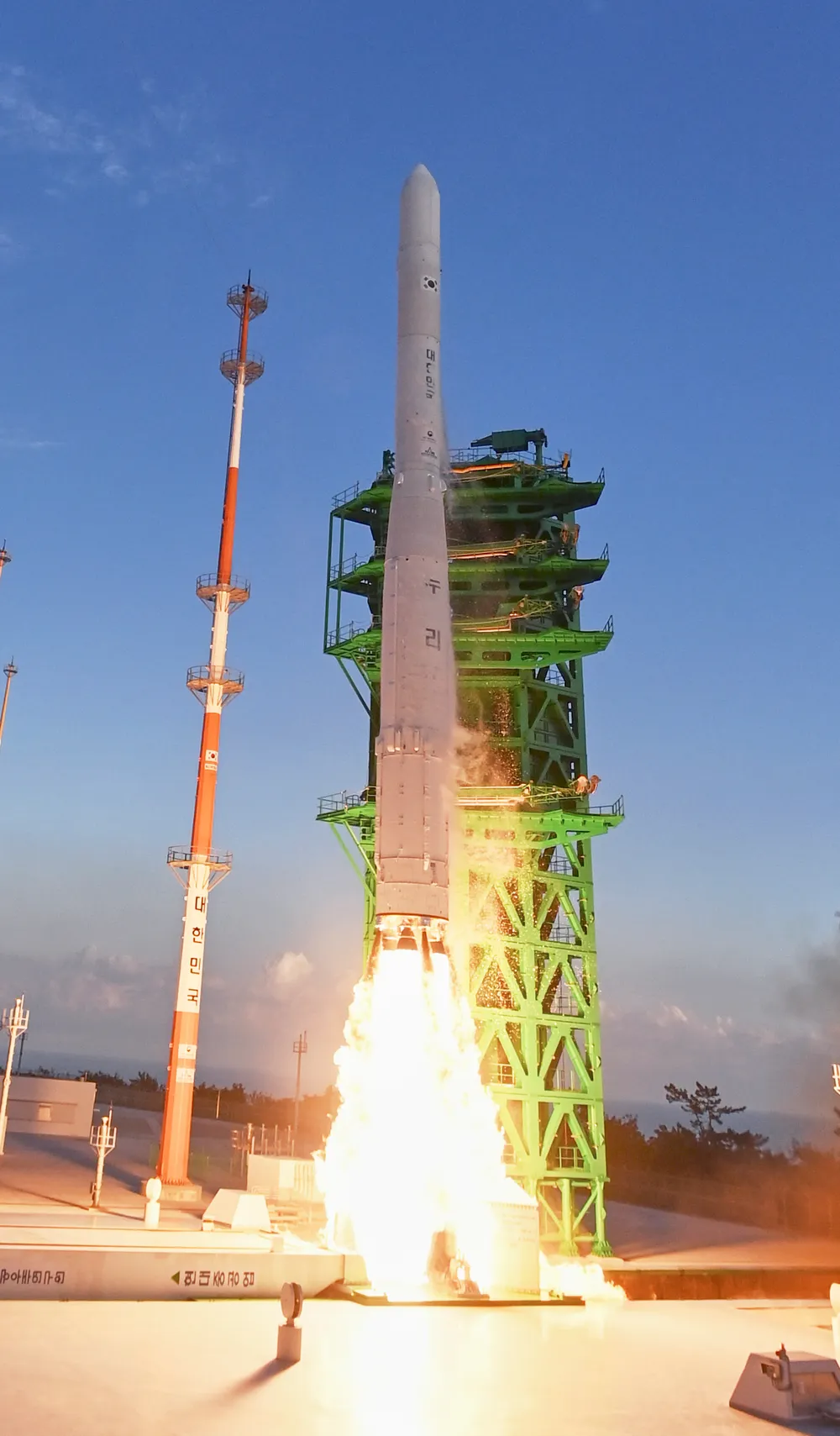
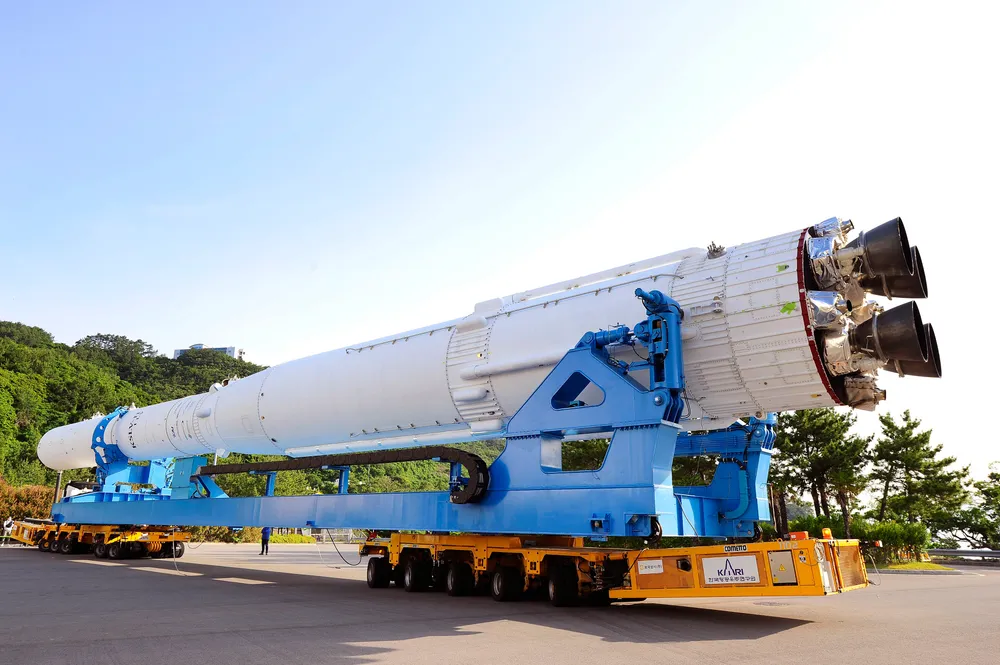
- KSLV-II Nuri (KAI integration role, Missions 1-3)operational
Korea's first indigenous orbital launch vehicle (200 t thrust, 1.5 t to 600 km SSO); KAI was prime integrator on first three missions before Hanwha Aerospace took over
First flight: 2021-10-21
- CAS500 satellite seriesoperational
Compact Advanced Satellite 500 kg-class Earth observation platform; CAS500-3 deployed by Nuri 4th launch Nov 2025
First flight: 2021-03-22
- Danuri (KPLO) lunar orbiter satellite busoperational
South Korea's first lunar mission, in stable lunar orbit since Dec 2022; KAI built core satellite bus structure
First flight: 2022-08-04
- KF-21 Boramae multi-role fighteroperational
4.5-generation indigenous fighter aircraft; production ramp 2026-2032; ₩8.8T program
First flight: 2022-07-19
Government Contracts
| Agency | Program | Amount | Year | Source |
|---|---|---|---|---|
| Korea AeroSpace Administration (KASA) / KARI | KSLV-II Nuri assembly and integration (Missions 1-3) | Multi-year framework (~₩200B segment) | 2014-2025 | |
| KARI | Danuri (KPLO) Korea Pathfinder Lunar Orbiter | ₩237B program (KAI satellite bus subcontract) | 2016-2022 | |
| DAPA (Korean Defense Acquisition Program Administration) | KF-21 Boramae fighter — multi-role combat aircraft program | ₩8.8T program total | 2015-2032 |
Investor Resources
Primary-source documents — straight from Korea Aerospace Industries (KAI)'s investor relations and SEC filings.
Near-term Catalysts
- 2026 H2
Nuri 5th launch (next-generation engine demonstration)
First flight under fully privatized model led by Hanwha; KAI retains satellite-bus and CAS500 manufacturing role
- 2026-2027
KF-21 Block-1 production ramp and Polish/UAE export competitions
Production volume grows from ~20 to ~40 aircraft/year; export wins would unlock ₩5T+ incremental backlog
- 2026
Korea AeroSpace Administration (KASA) FY2026 next-gen launcher contract award
Determines KAI vs. Hanwha allocation for the post-Nuri KSLV-III heavy launcher program
- 2026 H2
CEO Kim Jong-chul's three-year strategic plan rollout
New CEO (March 2026) signaled focus on AI pilots, MUM-T systems, and defense exports; sets capex priorities
Top Risks
- Hanwha Aerospace consolidation — Hanwha re-entered KAI shareholder registry in March 2026 and is competing in launchers, threatening KAI's space-prime position
- KF-21 program execution — single-airframe fighter program is ~25% of total backlog; delays or cost overruns hit margins
- Privatization debate — Korean government continues exploring KAI privatization, creating governance and strategic uncertainty
- Export concentration — T-50/FA-50 family is heavily reliant on a small number of large export campaigns
- Space segment dilution — Korean space program now distributes work across KAI, Hanwha, and emerging privates, capping KAI's space share
Recent Milestones
- 2022-08-04
Danuri (KPLO) lunar orbiter launched on Falcon 9 — Korea's first deep-space mission, KAI-built satellite bus
- 2023-05-25
Nuri 3rd launch successful — first operational deployment of customer payloads under KAI integration
- 2024-06-01
KF-21 Block-1 production decision approved by DAPA — initial 20-aircraft buy
- 2025-11-27
Nuri 4th launch successful (CAS500-3 + 12 CubeSats); first private-led launch under Hanwha Aerospace prime, KAI retained satellite-bus role
- 2026-02-15
FY2025 results: revenue ₩3,696.4B (+1.7% YoY), operating profit ₩269.2B (+11.8% YoY), net profit ₩187.3B
- 2026-03-20
Kim Jong-chul appointed CEO ending 8-month leadership vacuum; three-year term focused on AI pilots and defense exports
Recent News
- 2026-03-20
- 2025-11-27
From Management
Recent interviews and talks from Korea Aerospace Industries (KAI)'s leadership — hear the strategy in their own words.
What investors should know
Q1What does Korea Aerospace Industries do and what is its core business?⌄
Q2What is KAI's key technology advantage vs. global peers?⌄
Q3How is KAI funded and what are its key financial metrics?⌄
Q4Who are KAI's primary customers and what is the revenue mix?⌄
Q5What near-term events could define KAI's trajectory?⌄
Q6What are the top risks for investors in KAI?⌄
Q7How does KAI fit into Korea's broader space ambitions?⌄
Peers
Compare side-by-side →Sources & References
Agency Document
- Korea AeroSpace Administration · 2025-11-27
Investor Relations
- KAI Investor Relations · 2026-04-30
- KAI FY2025 Annual Results · 2026-02-15
Trade Press
- UPI · 2026-03-20(archived)
Programs this company benefits from
Government and commercial space programs where Korea Aerospace Industries (KAI) is listed as a contractor, beneficiary, or investable equity exposure.