"Eppur si muove." (And yet it moves.)
— Galileo Galilei, attributed, 1633
There is a line that runs from Galileo Galilei's telescope in Padua to the pressurized modules orbiting 400 kilometers above your head right now. It passes through Renaissance workshops where artisans fused art with engineering, through the physics laboratories of postwar Rome, through a converted oil platform anchored off the coast of Kenya, and through the clean rooms of Turin where Italian engineers built more of the International Space Station's livable interior than any nation on Earth except the United States and Russia.
That line is the story of Italy in space. And it is one of the most remarkable, least-told stories in the history of spaceflight. 🇮🇹
When people discuss space powers, the conversation typically centers on the United States, Russia, China, and increasingly India. Italy rarely enters the frame. This is a profound oversight. Italy was the third nation in the world to operate its own satellite, accomplishing this in 1964 — before France, before Japan, before China, before India. Italian industry has manufactured over 50 percent of the pressurized habitable volume aboard the International Space Station. Italy's Avio S.p.A. builds the only European-designed small-satellite launch vehicle. And Italian astronauts have commanded the ISS itself — not once, but twice.
Italy punches so far above its weight in space that the gap between its public reputation and its actual contributions borders on the absurd. This two-part deep dive aims to correct that.
In Part 1, we trace the arc from Italy's audacious Cold War satellite program through the founding of its space agency, the development of the Vega rocket family, the extraordinary story of Italian-built ISS modules, and the astronauts who carried the tricolore into orbit. In Part 2, we will explore the industrial giants — Thales Alenia Space, Telespazio, Leonardo — that form the backbone of Italy's space economy, along with the country's military space capabilities, commercial ambitions, and future missions including lunar exploration.
Let us begin where it all started: with a visionary engineer, a Scout rocket, and an impossible idea.
The San Marco Legacy: How Italy Became the Third Nation in Space
Luigi Broglio — The Father of Italian Space

In the late 1950s, while the United States and Soviet Union were locked in their dramatic space race, a professor at the University of Rome La Sapienza was quietly laying the groundwork for something that would astonish the world. His name was Luigi Broglio.
Born on November 11, 1911, Broglio was an aerospace engineer and senior officer of the Italian Aeronautical Engineers Corps. He had spent years studying aerodynamics and upper-atmosphere physics, and he understood something that many of his contemporaries did not: that space was not exclusively the domain of superpowers. A nation with sufficient engineering talent, institutional determination, and the right partnerships could reach orbit on a fraction of the budget that Washington and Moscow were spending.
In 1959, Broglio founded the Centro Ricerche Aerospaziali (CRA, Aerospace Research Center) at the University of Rome. Three years later, on September 7, 1962, the university signed a memorandum of understanding with NASA to collaborate on a space research program. The Italians would design and build the satellite. The Americans would provide the launch vehicle — a solid-propellant Scout rocket — and access to their launch facilities. The program was named San Marco, after the patron saint of Venice, the great maritime republic that had once projected Italian ingenuity across the Mediterranean and beyond.
San Marco 1: December 15, 1964
The first satellite, San Marco 1, was a small sphere weighing approximately 115 kilograms, designed to measure the density of the upper atmosphere through the drag on its orbit. It was not flashy. It was not large. But it was Italian — designed, built, and integrated by Italian engineers and scientists.
On December 15, 1964, at 20:24 UTC, San Marco 1 lifted off from Wallops Flight Facility in Virginia aboard a Scout rocket. The launch was conducted by an Italian crew — a critical detail that underscored Italy's operational role rather than mere passenger status. The satellite reached orbit successfully, and Italy became the third nation in the world to operate its own satellite in space, after the Soviet Union (Sputnik, 1957) and the United States (Explorer 1, 1958).
It is worth pausing on the significance of this. France would not orbit its own satellite until November 1965 with Astérix. Japan would not achieve orbit until 1970. China followed in 1970 as well. The United Kingdom launched its Prospero satellite in 1971. Italy beat them all by years.
The Sea-Launch Platform: Italy's Floating Spaceport
But Broglio was not finished. His vision extended far beyond borrowing American launch pads. He proposed something that, even today, sounds almost fantastical: building an equatorial launch platform in the Indian Ocean, off the coast of Kenya.
The logic was elegant. Launching from the equator provides a significant energy advantage for reaching equatorial orbits, as the Earth's rotational velocity is greatest at the equator (approximately 465 meters per second). Broglio identified a location near Malindi, Kenya, close to the equator at about 2.9 degrees south latitude, where Italy could construct an offshore launch complex.
The San Marco platform was a converted oil rig, anchored to the seabed north of Cape Ras Ngomeni on Kenya's coast. Alongside it, Italian engineers built two secondary platforms: the Santa Rita platform for mission control and the San Rita platform for radar tracking and communications. A ground station was established on the mainland near Malindi to provide additional telemetry support.
The complex became operational in the mid-1960s. On April 26, 1967, Italy launched San Marco 2 from the offshore platform using a Scout rocket — marking the first satellite launch from a sea-based platform and Italy's first satellite launch from its own territory (so to speak). This was an extraordinary achievement. Italy had not only built its own satellite; it had constructed its own spaceport, and it had done so on the equator, in the Indian Ocean, on a converted oil platform. The sheer audacity of the concept — and the fact that it worked — remains one of the most underappreciated feats in space history.
The Full San Marco Program
Between 1964 and 1988, the San Marco program launched five satellites (San Marco 1 through 5), all using American Scout rockets. The platform complex hosted a total of 27 launches, including numerous sounding rockets (Nike Apache, Nike Tomahawk, Arcas, and Black Brant) for atmospheric research.
One of the most historically significant launches from the San Marco platform had nothing to do with Italian satellites at all. On December 12, 1970, the platform was used to launch Uhuru (also known as Explorer 42), the first satellite specifically designed for X-ray astronomy. Built by NASA's Goddard Space Flight Center, Uhuru was launched from San Marco aboard a Scout B rocket and went on to discover over 300 X-ray sources, fundamentally transforming our understanding of the high-energy universe. The name "Uhuru" means "freedom" in Swahili, chosen because the launch occurred on Kenya's Independence Day.
The San Marco platform ceased orbital launches in 1988, though the ground station near Malindi continued operating for satellite communications and tracking. In 2003, a legislative decree transferred management of the complex to the Italian Space Agency (ASI), and the facility was renamed the Luigi Broglio Space Center in honor of its creator, who had passed away on January 14, 2001. In recent years, there have been discussions about potentially reactivating the offshore launch facility, a prospect that would bring Italy's space story full circle.
Luigi Broglio — sometimes called "the Italian von Braun" — never received the international recognition his achievements deserved. He took Italy from zero to the third space-faring nation on Earth, built an equatorial sea-launch platform decades before anyone else seriously attempted the concept, and trained a generation of Italian aerospace engineers whose expertise would flow directly into the programs we discuss next.
ASI: The Italian Space Agency
Foundation and Structure
The Agenzia Spaziale Italiana (ASI) was established in 1988, consolidating Italy's previously fragmented space research activities under a single national agency. Prior to ASI's creation, Italian space efforts had been distributed across multiple institutions — the National Research Council (CNR), the CRA at Sapienza University, and various defense research bodies. The creation of ASI followed the model established by other European nations in centralizing space policy, funding, and program management.
ASI is headquartered in Rome, with its primary technical facility, the Space Geodesy Center, located in Matera in the Basilicata region of southern Italy. The Broglio Space Center in Malindi, Kenya remains an ASI asset for satellite tracking and data reception.
Since May 2023, ASI has been led by President Teodoro Valente, a materials scientist who previously served as director of the Institute for Polymers, Composites, and Biomaterials at Italy's National Research Council. Valente succeeded Giorgio Saccoccia, who had served as president since 2019.
Budget and ESA Contributions
Italy's space investment has grown dramatically in recent years, reflecting the government's recognition of space as both a strategic capability and an economic engine.
At the ESA Ministerial Council held in Paris in November 2022, Italy committed to a contribution of €3.1 billion for the period 2023–2025 — a 35 percent increase over the previous programming period. This made Italy the third-largest contributor to ESA, behind Germany and France. At the subsequent ESA Ministerial Council in November 2025, Italy pledged €3.46 billion for 2025–2027, up from €3.06 billion in the prior three-year period.
For the 2025 budget year specifically, Italy contributed approximately €881 million to ESA, trailing Germany (€1.17 billion) and France (€1.05 billion). Italy's contribution represents roughly 16 percent of total ESA member state contributions.
But ESA contributions tell only part of the story. Italy's total public investment in space — encompassing ASI's national programs, ESA subscriptions, EU space program contributions (Galileo, Copernicus), and defense space spending — reached approximately €4.6 billion in 2023, with a government target of €7.3 billion by 2026. These figures encompass National Recovery and Resilience Plan (PNRR) allocations, EU structural funds, and direct ASI program budgets.
The 2025 Space Economy Law
In a landmark policy development, Italy approved its first comprehensive space economy framework law in June 2025 (Law 89/2025). This legislation filled a long-standing regulatory gap governing private sector space activities and established:
- A 5-year strategic space economy roadmap with binding government commitments
- A dedicated Space Economy Fund with an initial allocation of €35 million for 2025 (70% as non-repayable grants, 30% as financial instruments)
- Regulatory frameworks for commercial launch activities, satellite operations, and space data services
- Alignment with international space law standards, including the Outer Space Treaty obligations
The law signals Italy's intent to position itself not merely as a contributor to European programs but as an independent space economy with globally competitive commercial capabilities.
Key Program Areas
ASI's program portfolio spans several major domains:
International Space Station: Italy has historically been the ISS's third-largest contributor after NASA and Roscosmos, with bilateral agreements that provided Italian industry with module construction contracts and Italian astronauts with flight opportunities (discussed in detail below).
Earth Observation: Italy operates the COSMO-SkyMed dual-use (civil/military) radar satellite constellation — one of the most capable synthetic aperture radar (SAR) systems in the world. The second-generation COSMO-SkyMed Second Generation (CSG) satellites began launching in 2019.
Navigation: Italy is a major participant in the Galileo global navigation satellite system through both ESA and EU program contributions.
Telecommunications: Through programs like SICRAL (military communications) and participation in ESA's telecommunications programs, Italy maintains significant satellite communications capabilities.
Lunar Exploration: ASI has signed contracts with Thales Alenia Space for the development of pressurized lunar habitation modules, positioning Italy as a key contributor to both NASA's Artemis program (via ESA) and potential future Moon base architectures.
Science: Italy has contributed instruments and subsystems to numerous ESA science missions, including Rosetta, BepiColombo (the Mercury mission, with significant Italian scientific payload contributions), and the JUICE (Jupiter Icy Moons Explorer) mission.
The Vega Rocket Family: Italy's Gift to European Launch Autonomy

Origins and Rationale
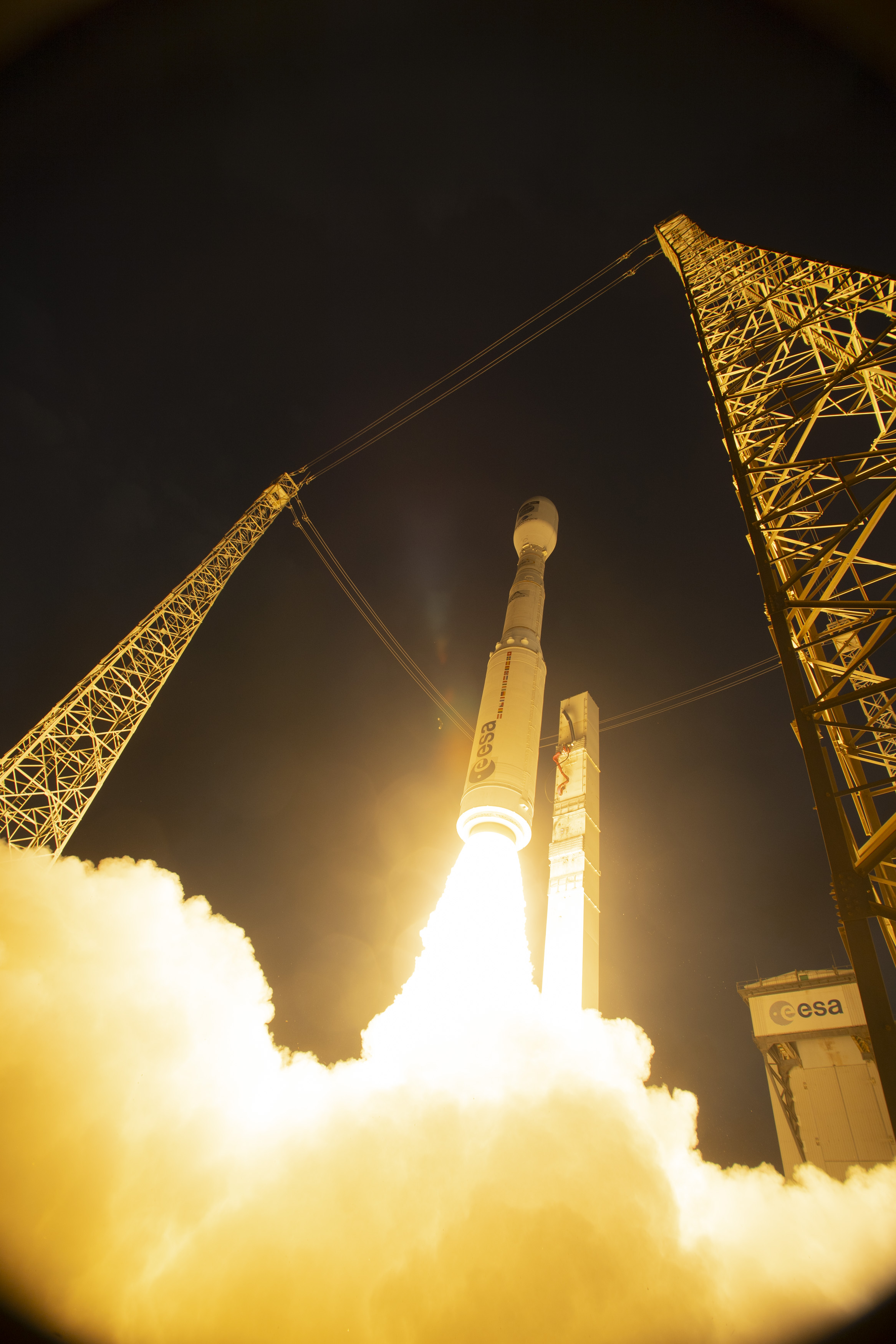
For decades, Europe's independent access to space depended on a single launcher family: Ariane. The heavy-lift Ariane rockets served Europe well for launching large geostationary telecommunications satellites and major institutional payloads. But by the late 1990s, a gap was becoming apparent. Europe had no dedicated capability for launching small satellites — the rapidly growing class of spacecraft weighing between 300 and 2,500 kilograms destined for low Earth orbit and Sun-synchronous orbit.
Italy stepped forward to fill this gap. In 1998, development began on a new small-lift launch vehicle under Italian leadership, with ASI as the largest national contributor to the program. The rocket was named Vega — an acronym for Vettore Europeo di Generazione Avanzata (Advanced Generation European Carrier Rocket), but also the name of one of the brightest stars in the night sky, appropriate for a vehicle designed to carry Europe's scientific and Earth observation satellites to orbit.
While Vega is formally an ESA program with contributions from multiple member states, Italy has always been the driving force. Italy contributed approximately 65 percent of the development funding, and Italian industry — primarily Avio S.p.A. — serves as the prime contractor responsible for design, manufacturing, and integration.
Vega: The Original (2012–2024)
The original Vega launcher made its maiden flight on February 13, 2012, lifting off from the Guiana Space Centre (Centre Spatial Guyanais) in Kourou, French Guiana. The inaugural mission, designated VV01, successfully placed the Italian LARES (Laser Relativity Satellite) laser ranging satellite, the ALMASat-1 microsatellite, and seven CubeSats into low Earth orbit.
Vega was a four-stage rocket, standing approximately 30 meters tall with a liftoff mass of around 137 tonnes:
- First stage (P80): Solid-propellant motor producing approximately 2,261 kN of thrust, burning for about 107 seconds
- Second stage (Zefiro 23): Solid-propellant motor with about 23 tonnes of propellant
- Third stage (Zefiro 9): Solid-propellant motor with approximately 10 tonnes of propellant
- Fourth stage (AVUM): Liquid-propellant Attitude and Vernier Upper Module, providing precise orbital insertion capability using hypergolic propellants (UDMH/N2O4)
The Vega could deliver up to 1,500 kilograms to a 700-kilometer Sun-synchronous polar orbit.
Over its operational lifetime from 2012 to 2024, Vega completed 22 missions, achieving 20 successes for a reliability rate of approximately 91 percent. It launched more than 100 satellites from 22 countries. The two failures occurred on VV15 (July 2019, loss of the FalconEye 1 military satellite for the UAE due to a Zefiro 23 second-stage anomaly) and VV17 (November 2020, loss of two satellites due to a fourth-stage anomaly caused by reversed cable connections).
The original Vega variant flew its final mission (VV24) on September 5, 2024, successfully delivering the Copernicus Sentinel-2C Earth observation satellite to orbit. It was retired to make way for its successor.
Vega-C: The Upgrade
Vega-C (the "C" stands for "Consolidation") is the evolved version of the Vega launcher, incorporating several significant upgrades designed to increase payload capacity by roughly 50 percent while reducing cost per kilogram:
- First stage: P120C — A dramatically larger solid motor carrying 142 tonnes of propellant in a monolithic carbon-fiber casing weighing approximately 8,000 kilograms. It delivers an average thrust of 4,500 kN during a 130-second burn. Critically, the P120C is designed as a common motor shared with the Ariane 6 heavy-lift rocket, where two or four P120C units serve as strap-on boosters. This commonality reduces production costs through economies of scale and gives both launcher families a shared industrial base.
- Second stage: Zefiro 40 — An upgraded solid motor containing approximately 36 tonnes of propellant, generating an average thrust of 1,300 kN over a 92-second burn. This replaces the smaller Zefiro 23 of the original Vega.
- Third stage: Zefiro 9 — Retained from the original Vega, burning 10 tonnes of solid propellant over approximately 120 seconds.
- Fourth stage: AVUM+ — An enhanced version of the original AVUM with increased propellant capacity for greater orbital maneuvering flexibility.
Vega-C stands approximately 35 meters tall with a liftoff mass of about 210 tonnes. It can deliver 2,300 kilograms to a 700-kilometer Sun-synchronous orbit, 3,300 kilograms to low Earth orbit, and 2,500 kilograms to polar orbits — a substantial improvement over the original.
The maiden flight of Vega-C took place on July 13, 2022, successfully delivering the Italian LARES-2 satellite and six small satellites to orbit.
The failure and return to flight: Vega-C's second mission, on December 21, 2022, ended in failure when the Zefiro 40 second stage malfunctioned, resulting in the loss of two Airbus-built Pleiades Neo Earth-imaging satellites. Investigation identified the cause as a deficiency in the Zefiro 40 engine nozzle, specifically a thermo-structural failure of the nozzle's carbon-carbon throat insert. This triggered a nearly two-year grounding while Avio redesigned the nozzle.
The corrective process was methodical. A first static-fire test of the redesigned Zefiro 40 was conducted in May 2024 at Avio's test facility in Salto di Quirra, Sardinia. A second and final qualification static-fire test followed on October 3, 2024, certifying the corrected stage for return to flight.
On December 5, 2024, Vega-C successfully returned to flight on mission VV25, launching the Copernicus Sentinel-1C radar imaging satellite to its intended orbit at approximately 700 kilometers altitude. The mission was flawless, vindicating the nozzle redesign and clearing the path for operational service.
Vega-E: The Methane Future
Looking ahead, Avio is developing Vega-E (Evolution), a next-generation variant that will replace the Zefiro 9 third stage and AVUM+ fourth stage with a single cryogenic upper stage powered by the M10 engine (now designated MR10).
The MR10 is a liquid oxygen/liquid methane (LOX/LNG) engine — making it the first operational European methane rocket engine. Methane offers several advantages over traditional hypergolic propellants: it is non-toxic, relatively cheap, produces less soot (reducing engine maintenance for potential reusability), and delivers superior specific impulse compared to solid propellants.
Development of the M10/MR10 has been a lengthy process. Initial feasibility studies began as early as 2004. An early collaboration between Avio and Russia's KBKhA engine bureau ended in 2014 following the Russo-Ukrainian War. Since then, Avio has pursued the engine independently. Testing campaigns at Salto di Quirra have included multiple development models: DM1 completed 24 firings accumulating 1,300 seconds, and DM2 added further tests. NASA's Marshall Space Flight Center also hosted thrust-chamber testing.
The maiden flight of Vega-E is targeted for approximately 2027, though the program has experienced delays. When operational, Vega-E will offer further improved performance and reduced per-kilogram launch costs, keeping Europe competitive in the increasingly crowded small-launch market.
Beyond Vega-E, Avio has disclosed preliminary plans for a Vega Next launcher, potentially introducing partial reusability and further performance enhancements, with a target introduction beyond 2032.
Avio S.p.A.: Italy's Rocket Company

Behind the Vega rockets stands Avio S.p.A., one of the most strategically important industrial companies in Italy — and one of the least known outside the aerospace sector.
Company Profile
Avio is headquartered in Colleferro, a town approximately 60 kilometers southeast of Rome in the Lazio region. The Colleferro site has a deep history in propulsion — it has been manufacturing solid rocket motors and propellants since the early 20th century, originally for military applications. Today, it serves as Avio's primary design, manufacturing, and integration facility for space launch vehicles and propulsion systems.
Avio is publicly traded on the Borsa Italiana (Milan Stock Exchange) under the ticker AVIO (Euronext Milan). For the fiscal year 2024, Avio reported:
- Revenues: €442 million
- Order backlog: €1,724 million — a 27 percent increase over December 2023, reflecting the ramp-up of Vega-C production and Ariane 6 booster deliveries
- Employees: Approximately 1,500
What Avio Builds
Avio's product and service portfolio encompasses:
Vega-C launch vehicle: Avio is the prime contractor for the complete Vega-C rocket — responsible for design, development, production, and integration of all stages and the payload fairing. Avio delivers the integrated launcher to Arianespace, which handles commercial launch services and mission management from the Guiana Space Centre.
P120C solid rocket motors for Ariane 6: Each Ariane 6 rocket uses either two (Ariane 62 variant) or four (Ariane 64 variant) P120C strap-on solid boosters — the same motor that serves as Vega-C's first stage. Avio manufactures these in Colleferro and ships them to French Guiana for integration with the Ariane 6 core stage built by ArianeGroup (an Airbus/Safran joint venture). This dual role makes Avio indispensable to both of Europe's primary launcher families.
Solid propulsion systems for defense: Avio produces solid rocket motors for tactical missile systems, leveraging the same materials science, propellant chemistry, and manufacturing expertise used in its space launchers.
MR10 methane engine development: As discussed above, Avio is developing Europe's first operational methane rocket engine for the Vega-E upper stage.
Strategic Significance
Avio's importance extends well beyond its revenue figures. The company represents Italy's sole capability to design and manufacture orbital launch vehicles — a capability that only a handful of nations and companies worldwide possess. Solid propulsion expertise is particularly strategic because solid rocket motors are dual-use technologies with direct applications in ballistic missile and air-defense systems. Italy's mastery of large solid motor production through Avio gives the nation both independent access to space and a critical defense-industrial competency.
The P120C commonality strategy is especially significant. By making the same motor serve both Vega-C and Ariane 6, Europe has created an industrial arrangement where Avio's production line supports its entire launcher portfolio. This gives Avio a guaranteed order book tied to Europe's institutional launch demand and makes Italian industry structurally embedded in European launch autonomy.
Starting in 2025, Avio assumed full responsibility for Vega-C launch services management from Arianespace, further consolidating the Italian company's end-to-end control over the small-launcher program.
Italy's ISS Contributions: The Untold Story of Europe's Spacecraft Factory
The Remarkable Deal
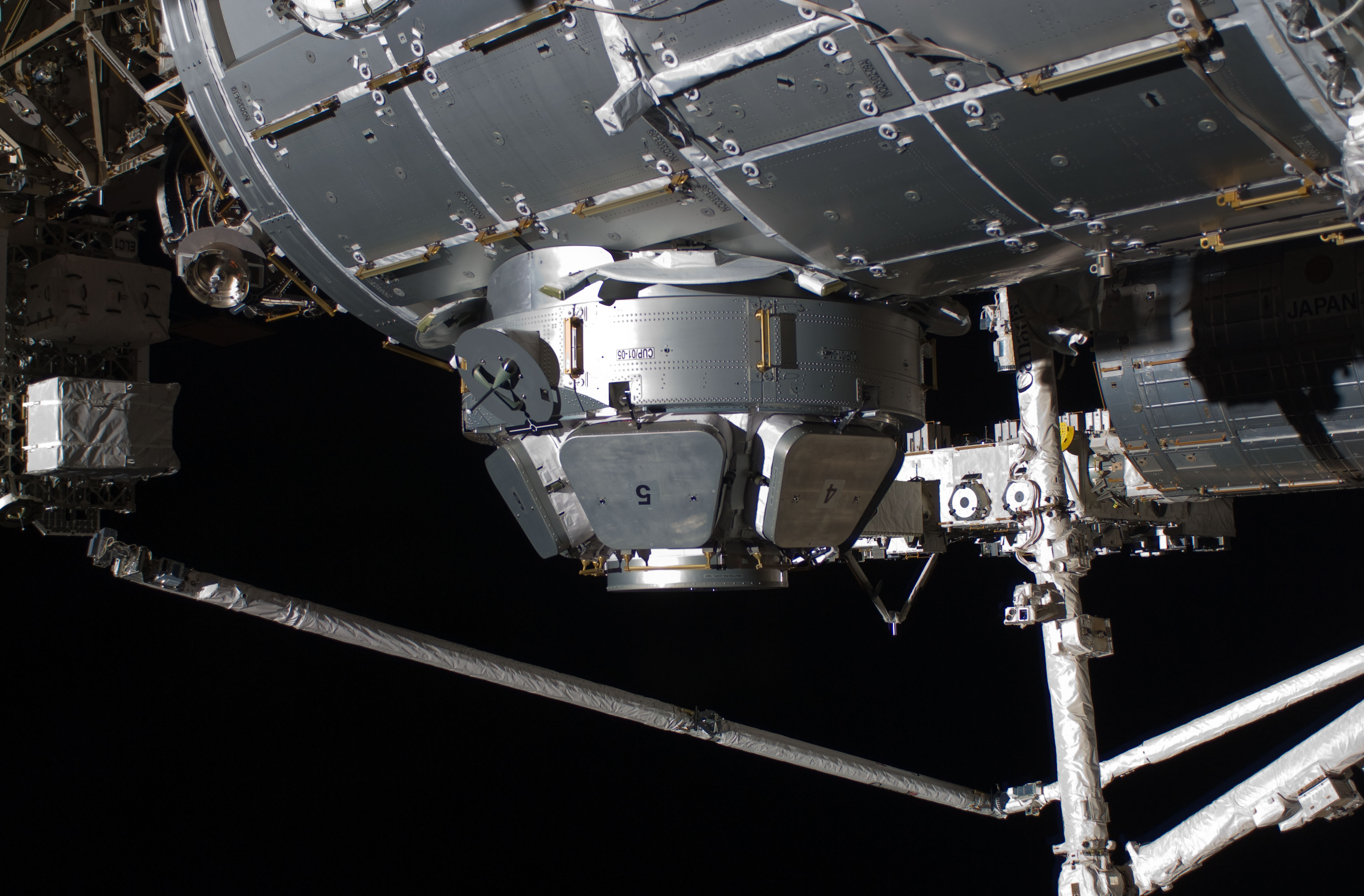
If you have ever seen a photograph of an astronaut gazing down at Earth through the ISS's iconic circular window — perhaps one of those images that has graced the cover of National Geographic or gone viral on social media — you are looking through a piece of Italian engineering. That window, the Cupola, was designed, built, and tested in Turin, Italy, by Thales Alenia Space. And the Cupola is just one element of a much larger Italian contribution to the ISS that is, without exaggeration, one of the most remarkable stories in the history of international space cooperation.
Here is the extraordinary fact: Thales Alenia Space Italy has supplied over 50 percent of the pressurized habitable volume aboard the International Space Station. More than half of the space where astronauts live, work, eat, sleep, and conduct experiments was manufactured in Turin. No nation except the United States and Russia has contributed more to the physical infrastructure of the ISS.
This contribution came about through a unique bilateral agreement between NASA and ASI signed in 1997. Under this agreement, Italy would design and build pressurized modules for the ISS under contract to NASA (with NASA covering launch costs on the Space Shuttle). In exchange, ASI received flight opportunities for Italian astronauts and research time aboard the station. It was, in effect, a barter arrangement — Italian hardware for Italian access — and it proved extraordinarily productive for both sides.
The Modules Italy Built
The roster of Italian-built ISS modules reads like a catalog of the station's most critical habitable elements:
Multi-Purpose Logistics Modules (MPLMs): Three pressurized cargo containers — named Leonardo, Raffaello, and Donatello (after the Renaissance masters, naturally) — designed to be carried in the Space Shuttle's payload bay and temporarily berthed to the ISS during resupply missions. Leonardo and Raffaello each flew multiple missions to the station, ferrying equipment, experiments, food, and supplies. Leonardo alone made seven round trips aboard the Shuttle between 2001 and 2010.
Permanent Multipurpose Module (PMM): In February 2011, the Leonardo MPLM was permanently installed on the ISS as a storage and workspace module, redesignated the Permanent Multipurpose Module. It was attached to the Earth-facing port of Node 1 (Unity) and later relocated to the forward port of Node 3 (Tranquility) in May 2015. Leonardo remains on the station today.
Node 2 (Harmony): Launched in October 2007 aboard Space Shuttle Discovery (mission STS-120), Harmony serves as a central connecting hub for the station. It provides berthing ports for the Japanese Kibo laboratory, the European Columbus laboratory, and visiting cargo vehicles. Harmony also contains avionics, environmental control systems, and crew sleeping quarters. It was built entirely by Thales Alenia Space in Turin, and Italian ESA astronaut Paolo Nespoli was on the STS-120 crew that delivered it — an Italian astronaut delivering an Italian-built module.
Node 3 (Tranquility): Launched in February 2010 aboard Space Shuttle Endeavour (mission STS-130), Tranquility houses the station's most critical life-support equipment, including the oxygen generation system, water recovery system, carbon dioxide removal system, and a toilet. Without the systems inside Tranquility, the ISS crew could not survive. Again, built by Thales Alenia Space in Turin.
Cupola: Delivered alongside Tranquility on STS-130, the Cupola is a seven-windowed observatory module attached to the Earth-facing port of Tranquility. Its central circular window — 80 centimeters in diameter — is the largest window ever flown in space. The Cupola serves dual purposes: it provides a direct-view observation post for monitoring external station operations and visiting vehicle approaches, and it has become the single most iconic architectural feature of the ISS. Virtually every viral photograph of an astronaut contemplating Earth was taken from the Cupola. Built, once more, in Turin.
Columbus Laboratory (structural shell): While the Columbus lab is formally a German-led ESA program, Thales Alenia Space Italy built the primary pressure vessel — the structural shell and micrometeorite debris shielding — at its Turin facility. German industry (EADS Astrium, now Airbus Defence and Space) was responsible for outfitting and system integration. The Columbus module launched in February 2008 aboard STS-122.
Cygnus cargo spacecraft (pressurized module): Beyond the ISS itself, Thales Alenia Space Italy also builds the pressurized cargo module for Northrop Grumman's Cygnus resupply spacecraft, which has been delivering cargo to the ISS since 2013. As of 2025, over 20 Cygnus missions have flown with Turin-built pressurized modules.
The Turin Legacy
The scale of this contribution is staggering when placed in context. A single facility in northwestern Italy — Thales Alenia Space's plant in Turin — has produced more pressurized spacecraft modules for human habitation than any facility on Earth outside of the United States and Russia. The engineers and technicians in Turin have developed deep institutional expertise in designing and building pressurized structures that must protect human beings from the vacuum of space, cosmic radiation, micrometeorite impacts, thermal extremes, and the corrosive effects of atomic oxygen in low Earth orbit.
This expertise is not theoretical — it is proven in operation, day after day, for over two decades. Every time an astronaut on the ISS floats through a connecting node, sleeps in a crew quarter, stows equipment in a storage module, or presses their face to the Cupola glass to watch a sunrise over the Pacific, they are relying on Italian engineering.
And it is this exact expertise that is now positioning Italy for the next chapter: Thales Alenia Space has been contracted by Axiom Space to build the first two pressurized modules for the Axiom commercial space station, which will initially attach to the ISS before becoming a free-flying station. The Turin factory is building the future of human habitation in space, just as it built much of the present.
Italian Astronauts: From Malerba to Cristoforetti
Italy has produced a distinguished corps of astronauts who have flown both as ASI crew members and as part of the ESA European Astronaut Corps. Their missions span three decades and encompass some of the most consequential moments in ISS history.
Franco Malerba — The First Italian in Space (1992)
Franco Egidio Malerba, born October 10, 1946, in Busalla near Genoa, became the first Italian citizen to fly in space on July 31, 1992. A biophysicist and engineer, Malerba was selected by ASI in 1989 and flew as payload specialist aboard Space Shuttle Atlantis on mission STS-46 (July 31 – August 8, 1992).
The primary payload of STS-46 was the joint NASA/ASI Tethered Satellite System (TSS-1), an audacious experiment designed to deploy a satellite on a 20-kilometer conductive tether from the Shuttle to study the electrodynamic properties of a conducting tether moving through Earth's magnetic field. During the mission, the tether deployed only 256 meters of its planned 20-kilometer length due to a jammed reel mechanism — a frustrating outcome, though the concept would be partially redeemed on the reflight STS-75 in 1996.
Malerba's flight opened the door. He demonstrated that Italy was not merely building hardware for others to fly — Italian astronauts would fly it themselves.
Umberto Guidoni — First European on the ISS (2001)
Umberto Guidoni, born August 18, 1954, in Rome, was selected by ASI in 1989 and later joined the ESA European Astronaut Corps in 1998. He flew twice on the Space Shuttle.
His first mission, STS-75 (February 22 – March 9, 1996), was the reflight of the Tethered Satellite System (TSS-1R). This time, the tether deployed to 19.7 kilometers — tantalizingly close to the full 20 kilometers — before it snapped due to electrical arcing caused by a manufacturing flaw in the tether insulation. Despite the premature termination, the experiment gathered significant scientific data on electrodynamic tether physics.
Guidoni's second and more historic mission was STS-100 (April 19 – May 1, 2001), during which he became the first European astronaut to board the International Space Station. The mission delivered the Canadian-built Canadarm2 robotic arm to the ISS. Guidoni's presence on this mission marked a symbolic milestone: a European — and specifically an Italian — was among the first to step aboard humanity's newest outpost in space.
Roberto Vittori — Three Flights, Three Different Vehicles
Roberto Vittori, born October 15, 1964, in Viterbo, is a Colonel in the Italian Air Force and an ESA astronaut who holds the remarkable distinction of having flown to the ISS three times, each on a different vehicle type.
His first flight was a Soyuz TM-34 taxi mission (April 25 – May 5, 2002) under the Italian Marco Polo mission, making him one of the first ESA astronauts to fly on a Russian Soyuz to the ISS. His second flight, the Eneide mission, flew aboard Soyuz TMA-6 (April 15–25, 2005). His third and final flight was aboard Space Shuttle Endeavour on STS-134 (May 16 – June 1, 2011) — the penultimate Shuttle mission, which delivered the Alpha Magnetic Spectrometer (AMS-02) to the ISS.
Vittori was the last non-American to fly aboard a Space Shuttle — an honorific end to the Shuttle era that fittingly fell to an Italian, given how much of the ISS the Shuttle carried had been built in Italy.
Paolo Nespoli — Three Missions, 313 Days
Paolo Angelo Nespoli, born April 6, 1957, in Milan, is a former Italian Army special forces operator turned engineer who became one of ESA's most experienced astronauts, completing three missions to the ISS and accumulating 313 days in space.
STS-120 (October 23 – November 7, 2007): Nespoli flew as a mission specialist during the Shuttle mission that delivered Node 2 (Harmony) — the Italian-built connecting module — to the ISS. The symbolism was powerful: an Italian astronaut personally installing a module built by Italian engineers in Turin. This flight was part of ESA's Esperia mission.
Expedition 26/27 (December 2010 – May 2011): Nespoli's second flight, the MagISStra mission, saw him spend nearly six months aboard the ISS as a flight engineer, conducting over 30 experiments and becoming one of the most prolific science communicators among European astronauts.
Expedition 52/53 (July – December 2017): Nespoli's third and final mission, VITA (Vitality, Innovation, Technology and Ability), was his longest, during which he completed more than 60 experiments. At age 60, he was ESA's oldest active astronaut at the time. During his career, Nespoli created the first content in space specifically produced for Wikipedia.
Luca Parmitano — Commander, Survivor, Pioneer
Luca Salvo Parmitano, born September 27, 1976, in Paternò, Sicily, is arguably the most dramatic figure in Italian astronaut history. A Colonel in the Italian Air Force and ESA astronaut, Parmitano has flown two missions and made headlines for both courage and near-catastrophe.
Expedition 36/37 — Volare Mission (May – November 2013): Parmitano's first flight included a moment that would have ended the career — or the life — of a less composed astronaut.
On July 9, 2013, Parmitano conducted his first spacewalk, becoming the first Italian to perform an EVA (extravehicular activity). The spacewalk proceeded normally, and Parmitano completed tasks including installing power cables and retrieving material research samples.
One week later, on July 16, 2013, Parmitano ventured outside for his second EVA. Approximately one hour into the planned 6.5-hour spacewalk, he noticed water accumulating inside his helmet. What followed was one of the most harrowing emergencies in ISS history. Water continued to flood the helmet from the suit's cooling system, eventually covering his nose, entering his nostrils, and impairing his vision and hearing. Parmitano was, in effect, drowning in space.
Mission Control immediately aborted the EVA. Parmitano, unable to see or hear clearly, had to navigate back to the airlock partially by memory and touch. When his crewmates removed his helmet inside the airlock, they found approximately 1.5 liters of water inside. An investigation determined that contamination had clogged a filter in the suit's cooling system, causing water to back up and flood the helmet. The incident was classified as a "high-visibility close call" — NASA's term for an event that could have resulted in loss of life — and all non-emergency spacewalks were suspended until the root cause was resolved. As a direct result, snorkels were added to spacesuit helmets as a safety measure.
Parmitano's calm, methodical response under conditions of genuine mortal danger earned him widespread admiration within the astronaut community.
Expedition 60/61 — Beyond Mission (July 2019 – February 2020): Parmitano returned to the ISS for a second mission and, on October 2, 2019, took command of Expedition 61, becoming the first Italian and the third European to command the International Space Station.
During this mission, Parmitano conducted four spacewalks totaling 25 hours and 30 minutes — six years after nearly drowning on one. These EVAs were among the most complex ever performed on the ISS, involving the repair of the Alpha Magnetic Spectrometer (AMS-02), a $2 billion cosmic ray detector that was never designed to be serviced in orbit. The AMS-02 repair spacewalks, conducted with NASA astronaut Andrew Morgan, were described as "the most challenging since the Hubble Space Telescope servicing missions" — a comparison that places them among the most technically demanding spacewalks in human spaceflight history.
Samantha Cristoforetti — Record-Setter, Commander, Icon
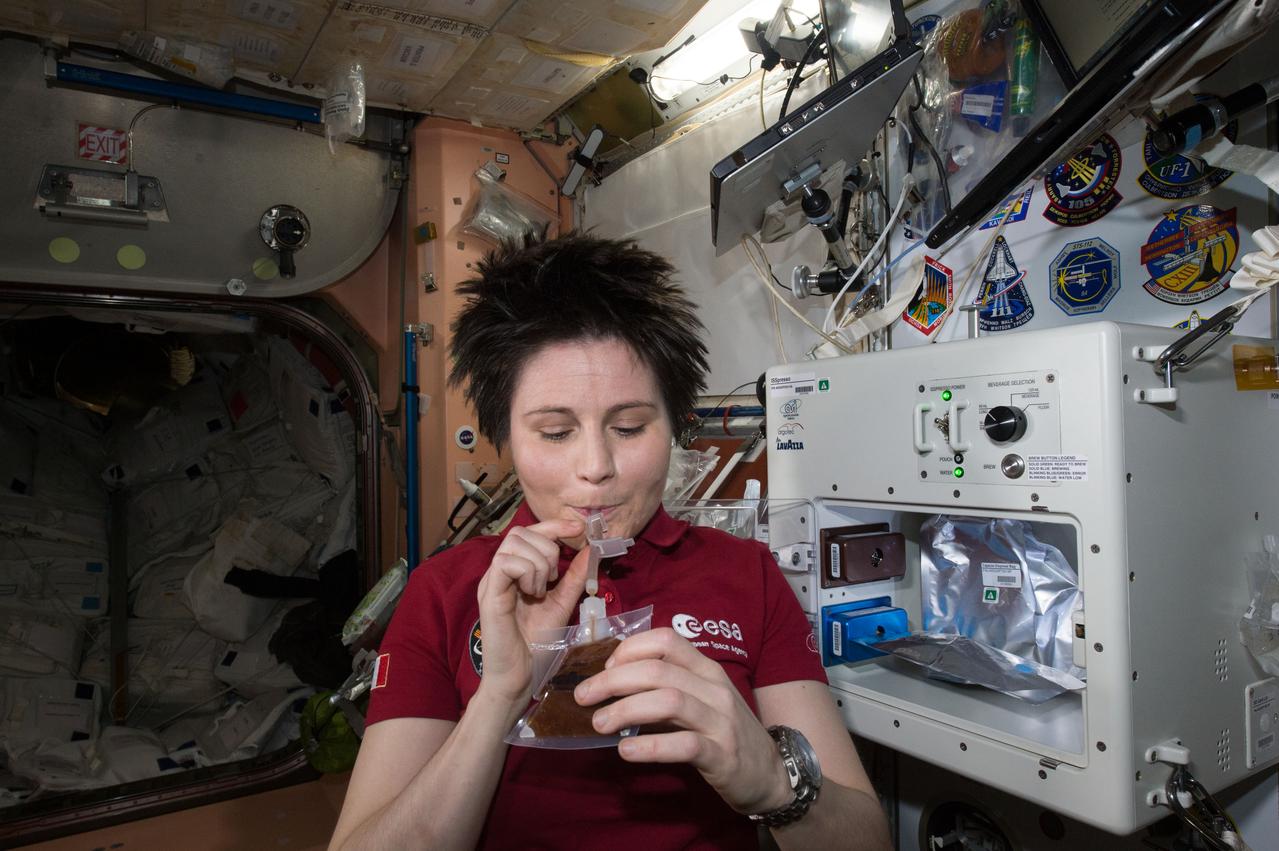
Samantha Cristoforetti, born April 26, 1977, in Milan (raised in Malè, Trentino-Alto Adige), is the first Italian woman in space and one of the most publicly recognized astronauts of her generation. A former Italian Air Force fighter pilot with the rank of Captain, she was selected as an ESA astronaut in 2009 and has flown two long-duration ISS missions.
Expedition 42/43 — Futura Mission (November 2014 – June 2015): Cristoforetti launched from Baikonur aboard Soyuz TMA-15M on November 23, 2014, and spent 199 days and 16 hours in space — at the time, the longest uninterrupted spaceflight by a European astronaut and the longest single spaceflight by a woman, surpassing NASA's Sunita Williams's record of 195 days set during Expedition 15. (Cristoforetti's female duration record was later broken by NASA's Peggy Whitson in 2017.) During the Futura mission, she conducted extensive research across multiple scientific disciplines and became a prolific social media communicator, sharing daily life aboard the ISS with millions of followers.
Expedition 67/68 — Minerva Mission (April – October 2022): Cristoforetti launched aboard SpaceX Crew Dragon on the Crew-4 mission on April 27, 2022, spending 170 days aboard the station. During this mission, she achieved two historic firsts:
On July 21, 2022, Cristoforetti conducted her first spacewalk, lasting 7 hours and 5 minutes, working alongside Russian cosmonaut Oleg Artemyev to configure the European Robotic Arm. She became the first European woman to perform a spacewalk using the Russian Orlan spacesuit — a rare cross-program honor.
On September 28, 2022, Cristoforetti assumed command of Expedition 68, becoming the first European woman and fifth European overall to command the International Space Station. She held command until her return to Earth on October 14, 2022.
Cristoforetti has accumulated 369 days and 16 hours in space across her two missions, making her the most experienced Italian astronaut by total time in orbit.
The Renaissance Thread
There is a temptation to describe Italy's space achievements through the metaphor of Renaissance genius — the idea that the same culture that produced Leonardo da Vinci's flying machines and Galileo's telescopes naturally extended into the space age. This metaphor is not wrong, exactly, but it misses something more specific and more interesting.
What Italy brought to space was not abstract genius. It was artigianato — craftsmanship. The ability to take complex engineering requirements and manufacture physical objects of extraordinary precision and reliability. The pressurized modules in Turin were not designed by algorithms or assembled by robots. They were built by teams of skilled technicians and engineers whose professional culture descends from the same industrial tradition that makes Italian manufacturing globally competitive in sectors from automotive (Ferrari, Lamborghini) to precision machinery.
When Thales Alenia Space engineers in Turin weld an aluminum alloy pressure shell that must hold atmosphere against vacuum for 20 years while withstanding thermal cycling, micrometeorite bombardment, and the vibration loads of a rocket launch, they are practicing a form of craftsmanship as demanding as anything produced during the Renaissance. The difference is that their work orbits Earth at 28,000 kilometers per hour.
Coming in Part 2
This deep dive continues in Part 2, where we examine the industrial powerhouses that drive Italy's space economy:
- Thales Alenia Space — Europe's leading spacecraft manufacturer, its Turin operations, and its role in building the Axiom station, lunar modules, and next-generation telecommunications satellites
- Telespazio — The joint venture between Leonardo and Thales that operates one of the world's largest satellite services networks
- Leonardo S.p.A. — Italy's defense and aerospace giant, its space division, and its role in satellite sensors, electro-optics, and space robotics
- Military space — Italy's COSMO-SkyMed radar constellation, SICRAL communications, and growing defense space ambitions
- The future — Lunar habitation modules, the Space Rider reusable vehicle, commercial space startups, and Italy's path to 2030 and beyond
Italy's space story is far from over. In many ways, it is just beginning.
The first part of a two-part deep dive into Italy's space program. Part 2 examines Italy's space industrial base, military capabilities, and future missions. Read Part 2: Italy's Space Industry: Thales Alenia Space, Leonardo, and the Road to the Moon.