"Genauigkeit ist keine Tugend, sie ist eine Notwendigkeit." -- Precision is not a virtue; it is a necessity. 🇨🇭
Switzerland does not launch rockets. It has no spaceport, no national launch vehicle, no astronaut corps with a long roster of flown missions. On paper, it is a small, landlocked, neutral nation of nine million people with a GDP built on banking, pharmaceuticals, and watchmaking. And yet, if you fly to space on a European rocket, Swiss-built fairings protect your payload. If your satellite navigates using Galileo, Swiss-made atomic clocks keep it synchronized to billionths of a second. If you land on the Moon and unfurl an experiment before even planting a flag, as the Apollo 11 astronauts did in 1969, the experiment was designed and built in Bern. And if humanity ever manages to clean up the growing catastrophe of orbital debris, there is a strong chance the technology will have been born at a Swiss university on the shores of Lake Geneva.
Switzerland has never tried to be a space power in the conventional sense. It has done something arguably more important: it has made itself indispensable.
A Founding Member of European Space
Switzerland's space story begins not with a launch, but with a meeting. In 1960, scientists and government officials from across Western Europe gathered in Meyrin, a suburb of Geneva, to discuss something ambitious -- a unified European approach to space research. This was the famous Meyrin Conference, and it set in motion the diplomatic process that would create the European Space Research Organisation (ESRO).
When the ESRO Convention entered into force on 20 March 1964, Switzerland was one of ten founding member states, alongside Belgium, Denmark, France, Germany, Italy, the Netherlands, Spain, Sweden, and the United Kingdom. The choice was deliberate and revealing. Swiss leaders recognized early that a small nation could not compete with the superpowers in space independently, but it could punch far above its weight by contributing precision engineering, scientific instrumentation, and technical expertise to a collaborative European effort.
This philosophy has guided Swiss space policy ever since. When ESRO merged with the European Launcher Development Organisation (ELDO) to form the European Space Agency (ESA) in 1975, Switzerland was again a founding signatory. The country has never wavered from its commitment to the multilateral approach -- contributing financially and technically to every major ESA program while deliberately avoiding the expense and political complexity of a standalone national space program.

The Swiss Space Office
Today, Swiss space activities are coordinated by the Swiss Space Office (SSO), a division within the State Secretariat for Education, Research, and Innovation (SERI). Established in 1998 and expanded in 2000 when the new federal constitution came into force, the SSO serves as the federal government's competence center for national and international space matters. It prepares and implements space policy, coordinates Swiss participation in ESA programs, and promotes the roughly 130 Swiss companies active in the space sector.
The Federal Council -- Switzerland's collective head of state -- is responsible for national space policy, with an Interdepartmental Coordination Committee for Space Affairs (IKAR) ensuring collaboration across government departments. It is a characteristically Swiss arrangement: methodical, consensus-driven, and quietly effective.
Switzerland's financial commitment to ESA is substantial for a country of its size. At the ESA Ministerial Council meeting in November 2022, Switzerland committed over CHF 600 million for the 2023-2025 period, participating in all ESA programs. At the most recent ministerial meeting in late 2025, that commitment grew further, with Switzerland among the member states that increased their contributions. For context, the Swiss ESA contribution annually supports innovation across approximately 130 domestic companies, generating a multiplier effect that returns technology, contracts, and skilled jobs to the Swiss economy.
ClearSpace: The Startup That Wants to Clean Up Space
There are roughly 36,500 tracked objects larger than 10 centimeters orbiting Earth. Millions more smaller fragments -- paint flecks, bolt fragments, shattered solar panel pieces -- travel at velocities exceeding 28,000 kilometers per hour, each one a potential bullet capable of destroying a functioning satellite. The problem is getting worse. Every collision creates more debris, which creates more collision risk, which creates more debris. This cascading scenario, known as the Kessler Syndrome after NASA scientist Donald Kessler who first described it in 1978, threatens to render certain orbital bands unusable within decades.
Switzerland, a nation that famously keeps its streets clean and its trains on time, has decided to apply that same mentality to orbit.
ClearSpace SA was founded in 2018 in Renens, near Lausanne, by Luc Piguet, Muriel Richard-Noca, and Catherine Johnson. All three came from the EPFL Space Center (eSpace), where they had spent years working on the CleanSpace One project -- an academic initiative launched in 2012 to develop technologies for capturing and deorbiting space debris. ClearSpace was the commercialization of that research, a spin-off designed to turn laboratory concepts into operational missions.
The ClearSpace-1 Mission
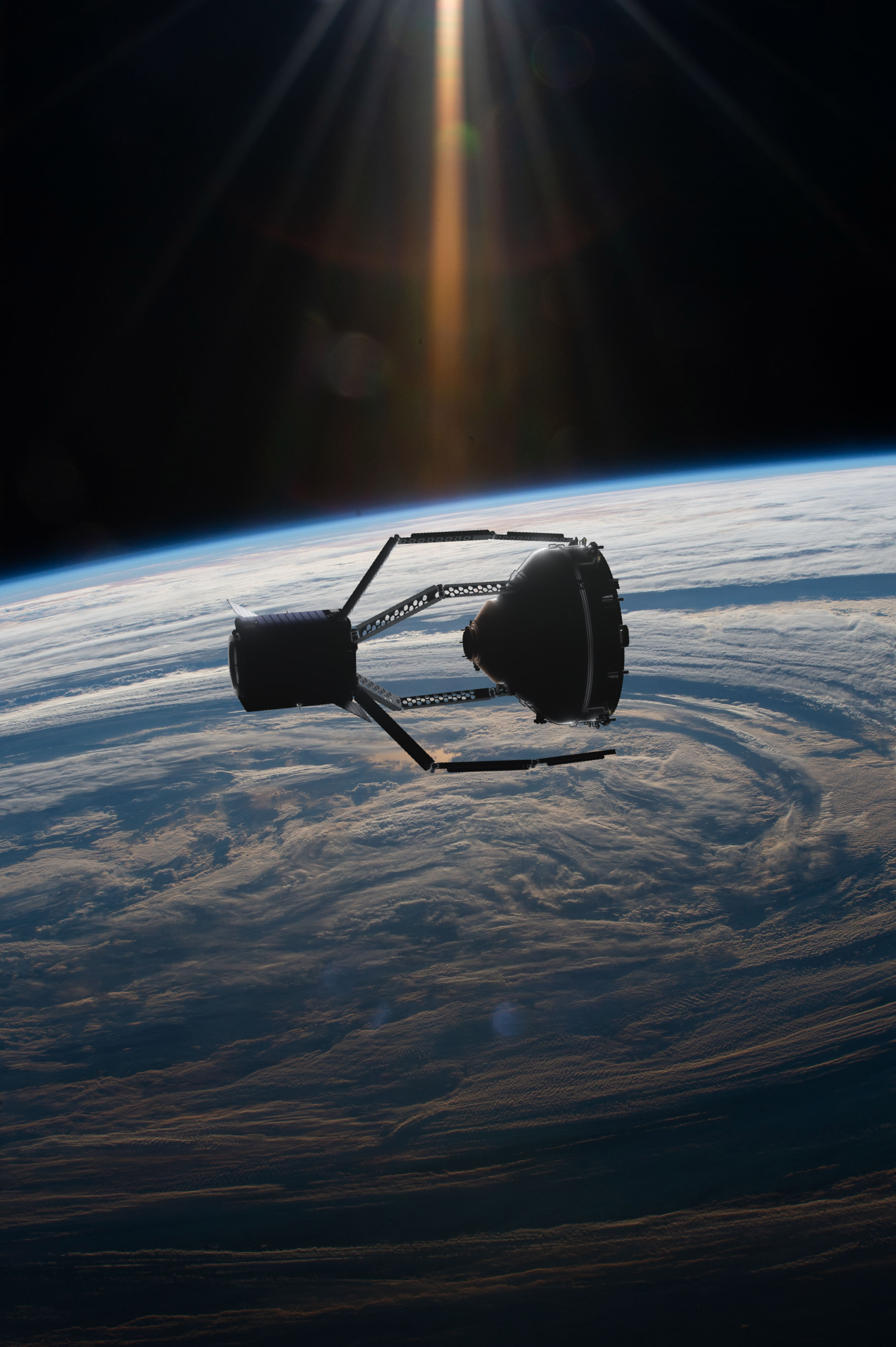
In November 2019, ESA awarded ClearSpace a landmark contract for what would become the world's first active debris removal mission: ClearSpace-1. The initial contract was valued at EUR 86 million, funded by contributions from eight ESA member states. The original plan was elegant in its simplicity: launch a spacecraft equipped with robotic capture arms, rendezvous with a piece of known debris, grab it, and drag both the chaser and the target into the atmosphere to burn up on reentry.
The original target was VESPA, the Vega Secondary Payload Adapter left in orbit after a Vega launch in 2013. VESPA was the size of a small washing machine, weighed about 112 kilograms, and was tumbling in a well-characterized orbit -- a manageable first target for an untested technology.
Then space debris did what space debris does. In August 2023, ESA announced that the VESPA adapter had likely been struck by a smaller piece of untracked debris, fragmenting it and creating several new pieces of trackable junk. The irony was brutal: the target of the world's first debris cleanup mission had itself become a debris event.
Following a thorough technical and programmatic review, ESA and ClearSpace announced in April 2024 that the mission would be redesigned with a new target: PROBA-1, a 94-kilogram ESA technology demonstration satellite launched in 1998. PROBA-1 offered several advantages as a replacement target -- it is a well-characterized object with known dimensions, and capturing an intact satellite would demonstrate capabilities directly applicable to future commercial deorbiting services.
The industrial structure was also simplified. OHB SE of Bremen, Germany, provides the satellite bus and leads systems integration and launch, while ClearSpace oversees the mission's core innovation: autonomous rendezvous and proximity operations, capture of the debris target, and controlled reentry. The spacecraft completed vibration and thermal vacuum chamber tests in 2024, and a launch aboard a Vega C rocket is currently planned for 2028.
Beyond ClearSpace-1: The PRELUDE Mission
ClearSpace is not waiting for ClearSpace-1 to fly before advancing its capabilities. In January 2026, ESA and ClearSpace announced PRELUDE, a new in-orbit servicing technology demonstration mission targeting a 2027 launch. PRELUDE will deploy two small spacecraft designed to test close-proximity operations -- high-accuracy tracking, vision-based navigation, and autonomous fault-tolerant guidance, navigation, and control software. The mission is expected to operate for seven to twelve months and aims to validate the autonomous rendezvous capabilities that underpin not just debris removal, but the entire emerging field of in-orbit servicing.
The company has grown from six employees at its founding to approximately 82 as of 2024, with total private funding of roughly $33 million from investors including Swisscom and OTB Ventures, on top of the ESA mission contracts.
The Market ClearSpace Is Creating
The space debris removal market is growing rapidly. Estimates vary, but analysts project the space debris monitoring and removal market at approximately USD 1.14 billion in 2025, growing to USD 1.68 billion by 2030. The broader on-orbit satellite servicing market -- which includes life extension, refueling, and repair alongside debris removal -- is projected to reach USD 5.1 billion by 2030. Tightening disposal regulations and rising insurance premiums are transforming active debris removal from an optional cost into an operational requirement.
ClearSpace is positioning itself not just as a debris removal company, but as an in-orbit servicing provider -- a company that can approach, inspect, capture, reposition, and deorbit objects in space. If ClearSpace-1 and PRELUDE succeed, the Swiss startup will have demonstrated a capability that every satellite operator, insurer, and space agency on Earth will eventually need.
Beyond Gravity: The Swiss Company on Every European Rocket

If ClearSpace represents Switzerland's space future, Beyond Gravity represents its space present -- and its past.
Originally known as RUAG Space, the company rebranded to Beyond Gravity on 1 May 2022 to reflect its evolution from a division of a Swiss defense conglomerate into a focused, independent space technology supplier. Headquartered in Zurich, Beyond Gravity is one of Europe's largest space product suppliers by component count, with approximately 1,900 employees across 12 locations in six countries: Switzerland, Sweden, Austria, the United States, Finland, and Portugal.
Payload Fairings: Protecting Every Launch
Beyond Gravity's most visible product is the payload fairing -- the protective nose cone that shields satellites from aerodynamic forces, heat, and acoustic vibration during launch. When Ariane 6 made its inaugural flight on 9 July 2024, the payload fairing that split apart to release the payload into orbit was manufactured by Beyond Gravity at its facility in Emmen, Switzerland.
These fairings are engineering marvels of composite manufacturing. Each shell is manufactured in one piece from carbon fiber-reinforced polymer, then cured in an industrial oven. The Ariane 6 fairings come in two variants: 20 meters tall or 14 meters tall, both matching the rocket's 5.4-meter diameter. The larger variant weighs 2.6 tonnes; the smaller, 1.8 tonnes. They must be strong enough to protect delicate satellite hardware during the violence of launch, yet light enough to minimize the mass penalty of the protective structure itself.
Beyond Gravity's fairing business extends well past European launchers. The company produces the 5.4-meter-wide fairing design used across Ariane 6, Japan's H3 rocket (the W-type fairing), Relativity Space's Terran R, and ULA's Vulcan Centaur. When Amazon needed satellite dispensers for its Project Kuiper constellation, Beyond Gravity won that contract too.
Financial Performance
In 2025, Beyond Gravity reported net sales of CHF 412 million, with adjusted sales of CHF 402.4 million representing organic growth of 12 percent compared to the previous year. The Launchers division achieved significant milestones with products integrated into new launch systems including Vulcan, Ariane 6, and Amazon's Kuiper dispenser program.
For a company that began as the space division of a Swiss defense firm, the transformation has been remarkable. Beyond Gravity now supplies structural and electronic components for satellites, rocket structures, and thermal insulation systems, making it one of the most diversified space hardware companies in Europe.
The company is also investing in reusability. As launch providers increasingly demand reusable fairing systems to reduce per-flight costs, Beyond Gravity has been developing next-generation fairing designs that can survive reentry and ocean recovery. It is a natural evolution for a company whose core competence is advanced composite manufacturing -- and a signal that even the most established Swiss space companies are adapting to the rapidly changing economics of launch.
EPFL Space Center: Where Swiss Space Innovation Begins
The Swiss Federal Institute of Technology Lausanne -- known worldwide by its French acronym EPFL -- is one of Europe's premier technical universities, consistently ranked among the top institutions globally for engineering and physical sciences. Its Space Center, known as eSpace, has become a crucible for Swiss space innovation, producing both breakthrough research and commercially viable spin-offs.
SwissCube: Switzerland's First Satellite
On 23 September 2009, a CubeSat measuring just 10 centimeters on each side was launched into orbit. SwissCube-1 was entirely designed and built in Switzerland, primarily by students at EPFL with contributions from several other Swiss universities. Its scientific mission was to study nightglow -- the faint luminescence of Earth's upper atmosphere caused by chemical reactions among atmospheric gases.

What makes SwissCube remarkable is not its science, but its longevity and its legacy. Designed for a mission life of a few months to a year, SwissCube was still operational as of October 2023 -- more than fourteen years after launch. More importantly, it demonstrated that Swiss universities could design, build, and operate spacecraft, inspiring a generation of students and spawning a broader culture of space entrepreneurship at EPFL.
CleanSpace One and the Road to ClearSpace
The CleanSpace One project, initiated in 2012 by Muriel Richard-Noca at eSpace, was conceived as an audacious academic challenge: build a satellite that could chase down SwissCube, capture it, and drag both objects into the atmosphere. The project forced researchers to confront three fundamental technical challenges -- trajectory adjustment to match a tumbling target, capture of a rapidly moving uncooperative object, and controlled deorbit.
The research produced real solutions and real expertise, which Luc Piguet and his colleagues then carried into ClearSpace. The path from SwissCube to CleanSpace One to ClearSpace-1 is a textbook case of how academic research, when properly supported and commercialized, creates entire new industries.
The Broader EPFL Space Ecosystem
EPFL's space ambitions extend far beyond debris removal. The eSpace center serves as a hub connecting academic research with commercial application, providing students and researchers with access to satellite design facilities, mission simulation tools, and a network of industry partners. The center's research spans rendezvous and proximity operations, debris tracking using ground-based and space-based sensors, and the application of artificial intelligence to autonomous space operations -- areas where Switzerland is building deep institutional expertise.
SWISSto12, another EPFL spin-off, has developed patented 3D-printed radio frequency waveguides for satellite communication payloads. Founded in Renens in the canton of Vaud, the company uses additive manufacturing to produce antenna components with a proprietary metal coating process -- a technology that merges Swiss precision manufacturing with cutting-edge materials science. SWISSto12 secured EUR 73 million in ESA funding in January 2026 for its HummingSat compact geostationary satellite program, a next-generation affordable satellite designed to meet growing demand for commercial and sovereign communications. The company recently opened Switzerland's largest satellite integration facility, and with additional private investment during the second half of 2025 bringing total fresh capital past EUR 100 million, SWISSto12 has become one of Europe's most significant new space companies.
The pattern repeats across EPFL's ecosystem: academic research produces specialized knowledge, that knowledge spawns spin-offs, and those spin-offs attract ESA contracts and private investment that fund further growth. It is the Swiss space model in miniature -- small, focused, and leveraged for maximum impact.
Swiss Precision Instruments in Space
Switzerland's reputation for precision -- built over centuries of watchmaking, scientific instrument manufacturing, and metrological excellence -- has found perhaps its highest expression in the instruments Swiss institutions have built for space missions. The list is long, and it begins with the Moon.
The First Experiment on the Moon
On 21 July 1969, when Neil Armstrong and Buzz Aldrin stepped onto the lunar surface, the first scientific experiment they deployed was not American. It was Swiss.
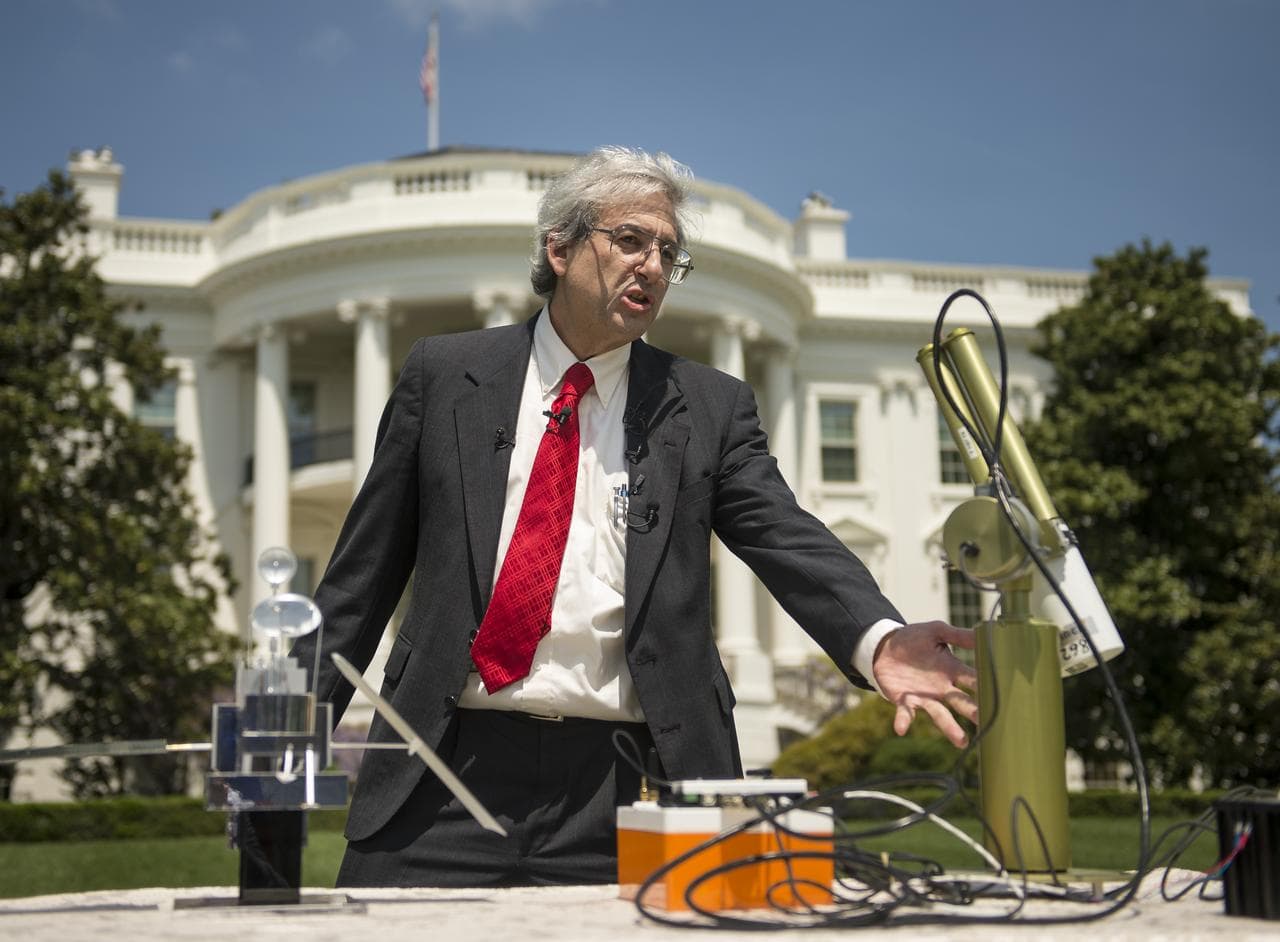
The Solar Wind Composition Experiment (SWC) was designed and built by a team led by Johannes Geiss and Peter Eberhardt at the University of Bern, with contributions from Peter Signer at the Swiss Federal Institute of Technology in Zurich. The experiment was elegantly simple: a sheet of ultra-pure aluminum foil, roughly one foot by 4.6 feet, erected on a telescopic pole and oriented toward the Sun. Solar wind particles -- ions streaming outward from the Sun at hundreds of kilometers per second -- embedded themselves in the foil, which was then rolled up, returned to Earth, and analyzed in Bern's laboratories.

By combining scientific arguments and diplomatic persistence, Geiss convinced NASA to deploy the Swiss experiment before unfurling the American flag, maximizing the foil's exposure time to the solar wind. The foil was exposed for 77 minutes during Apollo 11. The experiment was repeated and refined on Apollo 12, 14, 15, and 16, producing the first definitive isotopic measurements of solar material -- data that fundamentally advanced understanding of the Sun's composition and the processes that formed the solar system.
It remains one of the most remarkable facts in space history: the only non-American scientific experiment on the first Moon landing came from a country with no space program of its own, built by physicists at a university in the Swiss capital.
ROSINA and Rosetta: Sniffing a Comet
The University of Bern's tradition of building instruments that reveal the composition of celestial bodies continued with ROSINA (Rosetta Orbiter Spectrometer for Ion and Neutral Analysis), a suite of instruments aboard ESA's Rosetta spacecraft. ROSINA comprised two mass spectrometers and a gas pressure sensor, designed and built under the leadership of Principal Investigator Kathrin Altwegg at the University of Bern.
When Rosetta arrived at Comet 67P/Churyumov-Gerasimenko in 2014 after a ten-year journey, ROSINA performed some of the mission's most scientifically significant measurements. It detected molecular oxygen in the comet's coma -- unexpected and difficult to explain with existing models of comet formation. It measured the deuterium-to-hydrogen ratio in the comet's water, finding it significantly different from Earth's oceans and complicating the hypothesis that comets delivered water to early Earth. These were measurements that only Swiss-built instruments could make at the required precision.
From Mercury to Jupiter: A Continuing Legacy
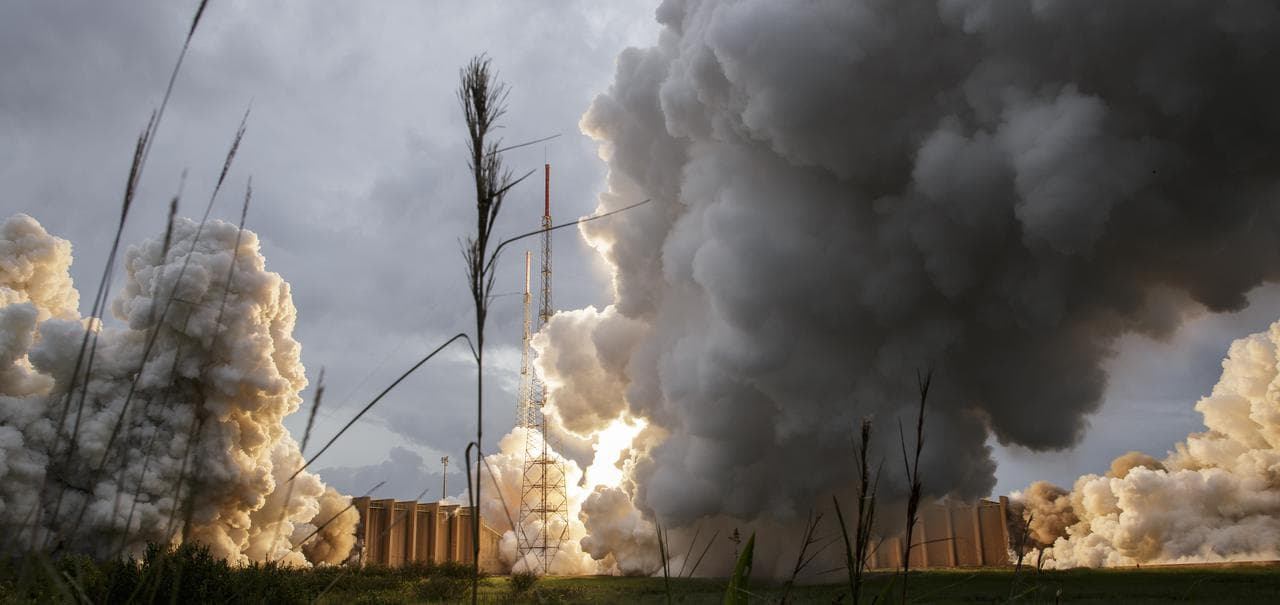
The pipeline of Swiss space instruments shows no sign of slowing. The University of Bern contributed instruments to BepiColombo, ESA's mission to Mercury launched in 2018, including chemical analysis tools for the orbiter. In 2023, ESA launched JUICE (Jupiter Icy Moons Explorer) carrying mass spectrometers from Bern, where the team serves as co-principal investigator. JUICE will arrive at Jupiter in 2031 to study Ganymede, Callisto, and Europa.
Swiss institutions are also deeply involved in the Euclid space telescope, launched in 2023 to map the geometry of the dark universe. The Swiss Space Office, EPFL, the University of Geneva, the University of Zurich, and other institutions contributed to the mission, which released its first stunning images and catalogs of cosmological data.
And then there is CHEOPS -- the Characterising Exoplanets Satellite -- a joint ESA-Switzerland mission led by the University of Bern in collaboration with the University of Geneva. Launched in December 2019, CHEOPS measures the sizes of known exoplanets with extreme precision by observing the tiny dips in starlight as planets transit their host stars. The satellite has exceeded all expectations, with precision better than originally specified, enabling discoveries including the first detection of tidal deformation of an exoplanet (WASP-103b, whose extreme tidal forces distort it into a rugby ball shape). CHEOPS has been extended to 2026 with an indicative further extension to 2029.
Swiss Atomic Clocks: Timing the Universe
Perhaps the most fitting expression of Swiss precision in space is timekeeping. SpectraTime and T4Science, both based in Neuchatel -- the heart of Swiss watchmaking country -- produce the passive hydrogen maser atomic clocks that serve as the master clocks aboard every Galileo navigation satellite. These clocks, the only space-qualified passive hydrogen masers in the world, maintain timing accuracy to within a few billionths of a second, enabling Galileo to provide positioning accuracy of less than one meter.
The Swiss atomic clock heritage extends beyond navigation. T4Science's active hydrogen maser clocks were used to synchronize the worldwide network of radio telescopes that captured the first-ever image of a black hole in 2019 as part of the Event Horizon Telescope project. When humanity needed the most precise timing synchronization ever achieved to photograph a black hole, it turned to Swiss clocks.
The CERN-ESA Nexus: Switzerland's Scientific Ecosystem
Switzerland hosts two of the world's most important scientific organizations: CERN, the European Organization for Nuclear Research, located in Meyrin near Geneva, and major ESA activities throughout the country. This is not coincidence -- it is the product of deliberate Swiss scientific diplomacy spanning seven decades.
The connection between CERN and ESA runs deep. After helping create CERN in the 1950s, Italian physicist Edoardo Amaldi -- who served as CERN's Secretary General -- joined forces with French physicist Pierre Auger in 1958 to urge European governments to establish a European space research organization modeled on CERN. Their advocacy directly led to the creation of ESRO, which became ESA. The two organizations even share a pension fund for their employees.
In practical terms, CERN and ESA signed a formal cooperation agreement covering research and technology in areas of mutual interest: innovative materials for extreme conditions, micro-technologies for sensor systems, and high-performance detectors applicable to both particle physics experiments and space payloads. The technologies flow both ways -- detector designs developed for particle physics at CERN end up in space instruments, while radiation-hardened electronics developed for space find applications in particle accelerators.
Both organizations are members of EIROFORUM, a coordination group of seven major European intergovernmental research organizations that also includes the European Southern Observatory (ESO), the European Molecular Biology Laboratory (EMBL), and the European Synchrotron Radiation Facility (ESRF). For Switzerland, hosting two of these organizations on its territory creates a scientific ecosystem of extraordinary density -- a concentration of talent, funding, and institutional knowledge that benefits every aspect of the country's space program.
The ecosystem effect is tangible. Postdoctoral researchers move between CERN and university space physics departments. Engineering firms that supply ultra-high-vacuum components to CERN discover their products are equally suited to satellite systems. Software developed for tracking particles in accelerator detectors is adapted for tracking space debris. Geneva and Lausanne have become a corridor of scientific excellence where particle physics, astrophysics, and space technology cross-pollinate in ways that would be difficult to replicate anywhere else in Europe.
In 2024, this ecosystem expanded further with the creation of the European Space Deep-Tech Innovation Centre (ESDI), jointly established by ESA and the Paul Scherrer Institute (PSI), Switzerland's largest research institute for natural and engineering sciences. The ESDI Centre is designed to accelerate the transfer of deep-tech innovations from laboratory to space applications, reinforcing Switzerland's role as Europe's space technology incubator.
Future Outlook: Precision for a Sustainable Cosmos
Switzerland's space trajectory reveals a nation that has consistently chosen depth over breadth, precision over scale, and collaboration over competition. It does not try to do everything. It tries to be the best at what it does.
The next decade will test whether this strategy can scale. ClearSpace faces the challenge of turning a demonstration mission into a viable commercial service in a market that barely exists yet. Beyond Gravity must continue innovating in composite structures and satellite components as new competitors emerge from the United States and Asia. Swiss instrument builders must maintain their edge as mission complexity increases and budgets tighten.
But the fundamentals are strong. Switzerland's space sector accounts for over 130 companies, with more than 30 percent comprising startups and spin-offs -- a ratio that suggests a healthy pipeline of innovation. The institutional support from SERI, the ESA relationship, and the university system (particularly EPFL and the University of Bern) provides a foundation that most space-aspiring nations would envy. The ESA-PSI Deep-Tech Innovation Centre adds another node to an already dense network.
The debris removal challenge may prove to be Switzerland's defining space contribution. As of early 2026, there is no proven, operational capability anywhere on Earth to remove a single piece of debris from orbit. If ClearSpace and its PRELUDE and ClearSpace-1 missions succeed, Switzerland will have created not just a company but an industry -- one that addresses the most urgent sustainability challenge in space.
There is a certain poetic logic to it. A nation famous for neutrality, for staying out of conflicts, for maintaining order and cleanliness, has set itself the task of cleaning up the one environment that belongs to everyone and no one. Swiss watchmakers spent centuries perfecting the measurement of time to ever-finer increments. Swiss space engineers are now applying that same obsessive precision to the measurement and manipulation of objects hurtling through orbit at eight kilometers per second.
The cosmos does not care about national flags or geopolitical ambitions. It cares about precision, reliability, and sustainability -- qualities that Switzerland has been cultivating for centuries. In the emerging era of space sustainability, where the ability to service, repair, and remove objects in orbit will be as important as the ability to launch them, Switzerland's particular strengths are not just relevant. They are essential.
The small, neutral nation that never launched its own rocket may end up doing something more important: ensuring that space remains usable for everyone who does.