Disclaimer: This article is for informational and educational purposes only. Nothing here constitutes financial advice, investment advice, or a recommendation to buy or sell any securities. Always do your own research and consult a qualified financial advisor before making investment decisions.
The world's best space companies aren't called space companies. They're called Lockheed Martin. Northrop Grumman. L3Harris. Raytheon Technologies. They show up in defense sector ETFs. Their CEOs give earnings calls dominated by F-35 production rates and Patriot missile deliveries. Yet buried inside each of these defense conglomerates is a multibillion-dollar space business that builds the satellites keeping your GPS accurate to within 30 centimeters, the missile warning systems watching for nuclear launches, and the deep-space capsules carrying astronauts back to the Moon.
For investors who want real space exposure — not just narrative, but revenue — understanding the defense-space crossover is essential. The largest, most financially durable space programs on Earth don't belong to SpaceX or Rocket Lab. They belong to the Beltway giants, and learning to read their numbers is the first step to positioning intelligently.
The Defense-Space Nexus: Why It Matters Now

Space and defense have never been truly separate. The GPS constellation was a military program before it became a civilian utility. The National Reconnaissance Office — whose budget remains classified but is estimated at $15–20 billion annually — has always been the largest single customer for satellite manufacturing in the United States. The Space Development Agency, founded in 2019, was explicitly created to move the Pentagon away from expensive exquisite satellites toward proliferated, resilient LEO constellations.
What has changed in the past five years is scale and urgency.
The U.S. Space Force, stood up as an independent branch of the military in December 2019, now commands a fiscal 2026 budget approaching $40 billion — a record, and one that reflects the Pentagon's recognition that space superiority is no longer optional. China's rapid expansion of counterspace capabilities, including direct-ascent anti-satellite missiles, co-orbital weapons, and ground-based jamming infrastructure, has transformed the orbital environment into a contested domain. Russia's development of nuclear-armed space weapons, disclosed by the U.S. intelligence community in 2024, added a new dimension of urgency to American investment in resilient space architectures.
This geopolitical backdrop has created a spending environment that defense-space companies have not seen since the Cold War. The Space Development Agency's Proliferated Warfighter Space Architecture (PWSA) alone represents over $25 billion in projected spending across five years. The Next Generation Overhead Persistent Infrared (Next Gen OPIR) program, the GPS IIIF follow-on, Space Fence, and Golden Dome sensors add billions more. Every one of these programs flows through the companies this article examines.
For investors, the implication is clear: defense-space isn't a side note to these companies' earnings. For some, it is the highest-margin, most defensible segment they operate.
Lockheed Martin Space: Orion, GPS, and $13 Billion in Space Revenue
Lockheed Martin is the world's largest defense contractor by revenue, reporting approximately $71 billion in full-year 2025 sales. Its Space segment — one of five reported business areas alongside Aeronautics, Missiles & Fire Control, Rotary & Mission Systems, and Mission Solutions — posted $13 billion in 2025, a 4% increase over 2024 and representing roughly 18% of company-wide revenue.
That $13 billion funds a program portfolio that spans virtually every major U.S. national security space priority:
GPS III and GPS IIIF: Lockheed Martin has been the prime contractor for the GPS Block III constellation since the mid-2000s. GPS III satellites offer three times the accuracy and eight times the anti-jamming capability of earlier generations. As of 2026, eight GPS III satellites are on orbit, with the GPS IIIF variant — adding a new civil signal and enhanced accuracy — now in production. Each satellite costs approximately $500–600 million fully burdened, giving the total GPS IIIF program a value well north of $7 billion.
SBIRS and Next Gen OPIR: The Space-Based Infrared System (SBIRS) is America's missile warning backbone — constellations of satellites in geosynchronous and highly elliptical orbit that detect the heat signatures of ballistic missile launches within seconds. Lockheed has built every SBIRS satellite. Next Gen OPIR, the successor program designed to be more resilient and harder to jam or blind, is now in development, with Lockheed competing for the GEO and highly elliptical orbit components.
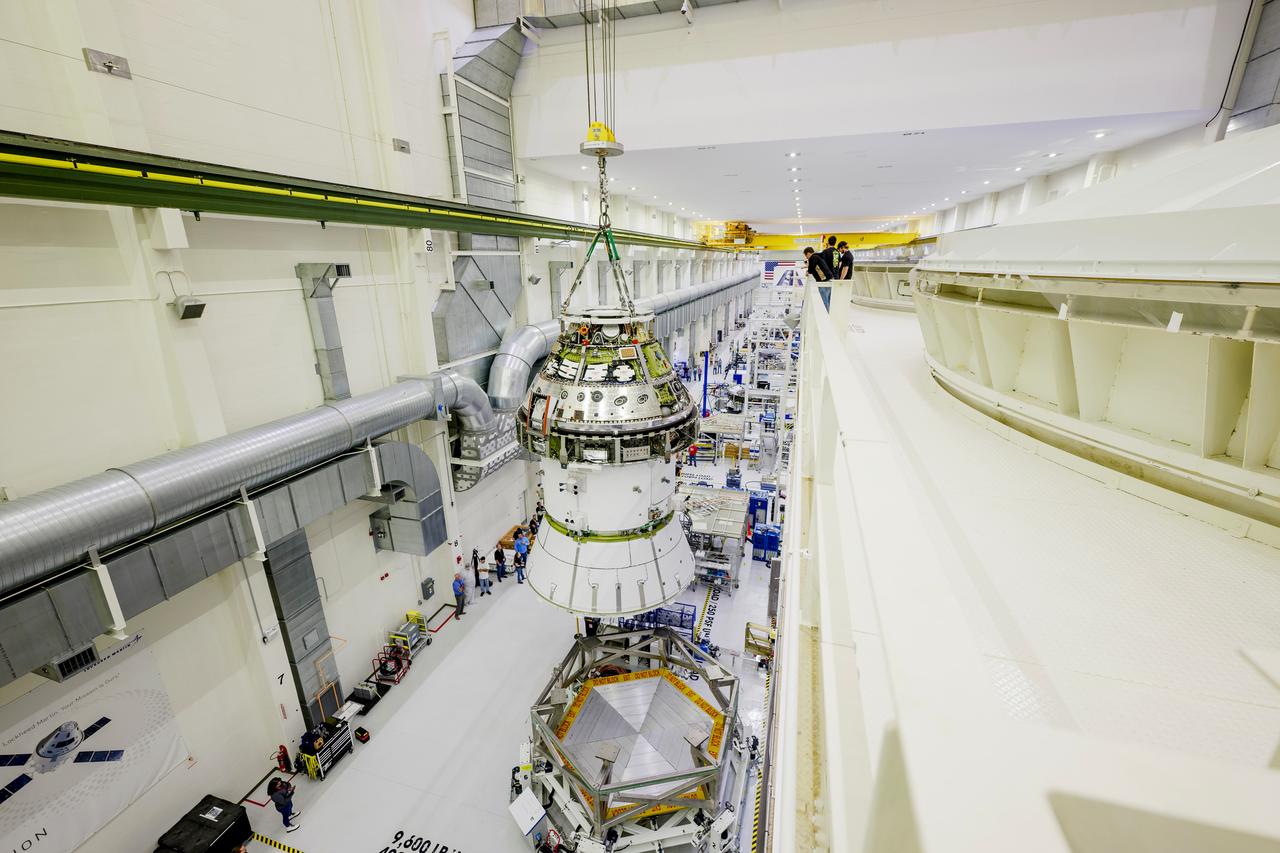
Orion Crew Capsule: Lockheed is the prime contractor for the Orion Multi-Purpose Crew Vehicle, the spacecraft that carries astronauts on Artemis missions. With Artemis II, the first crewed lunar flyby in 50 years, completing its mission in April 2026, Orion's profile has never been higher. The Artemis program sustains Lockheed's Orion contracts through at least Artemis VIII under current NASA planning.
Space Fence: The Space Fence ground-based radar system on Kwajalein Atoll, operated by Lockheed, tracks objects in low Earth orbit as small as 10 centimeters. As LEO becomes more congested, Space Fence data becomes more valuable to the U.S. Space Force.
SDA Transport Layer: Lockheed received the largest Tranche 3 Tracking Layer award of $1.1 billion from the Space Development Agency in December 2025, cementing its role in the PWSA constellation that forms the backbone of the Golden Dome missile defense sensor network.
Reading the 10-K: In Lockheed's annual report, Space segment operating profit came in at $1.3 billion in 2025 — a margin of roughly 10%, slightly below Aeronautics and MFC but consistent and improving. Higher profit booking rate adjustments on commercial civil space (Orion) and favorable performance on strategic and missile defense programs drove the 10% operating profit growth year-over-year.
Northrop Grumman: From JWST to the SLS
Northrop Grumman is the company that built the James Webb Space Telescope. Full stop. The most scientifically complex machine humanity has ever sent to space — $10 billion, a 25-year development timeline, 344 potential single-point failures all of which had to work perfectly — was prime contractor work done by Northrop. That alone tells you something about the depth of its space engineering capability.
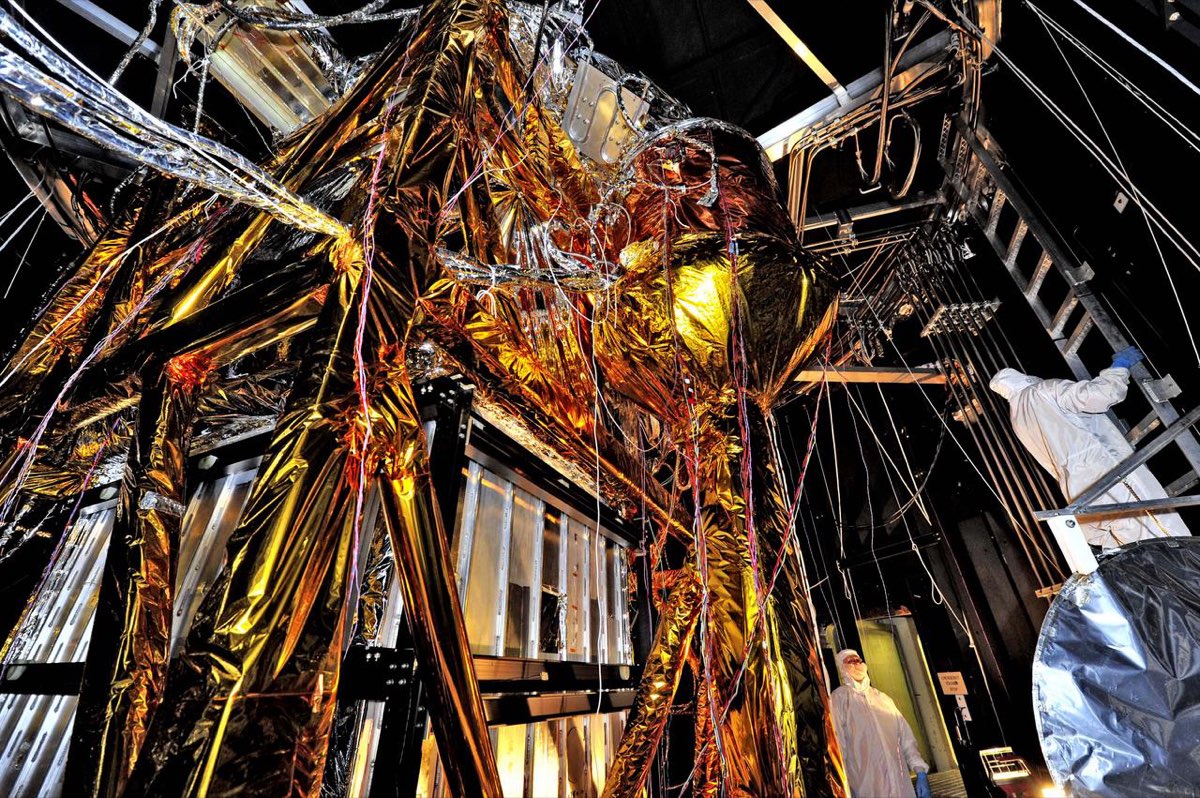
Northrop's Space Systems segment reported approximately $10.77 billion in 2025 revenue, representing roughly 24% of the company's total. The segment spans civil space, national security space, and a rapidly growing commercial satellite business:
James Webb Space Telescope (operations): JWST continues to operate beyond its initial performance envelope, and Northrop supports ongoing mission operations. Its contribution is more reputational than financial at this stage, but JWST is the brand anchor for Northrop's space division when recruiting talent and winning new science mission competitions.
Cygnus Cargo Spacecraft: Northrop's Cygnus is one of two U.S. vehicles (alongside SpaceX Dragon) currently supplying the International Space Station under NASA's Commercial Resupply Services contracts. Each CRS mission is worth roughly $350–450 million to Northrop. The program is now in CRS-2 and transitioning toward CRS-3 contracting, where Northrop competes against SpaceX, Sierra Space, and others. Cygnus provides stable, recurring revenue with government-backed payment schedules.
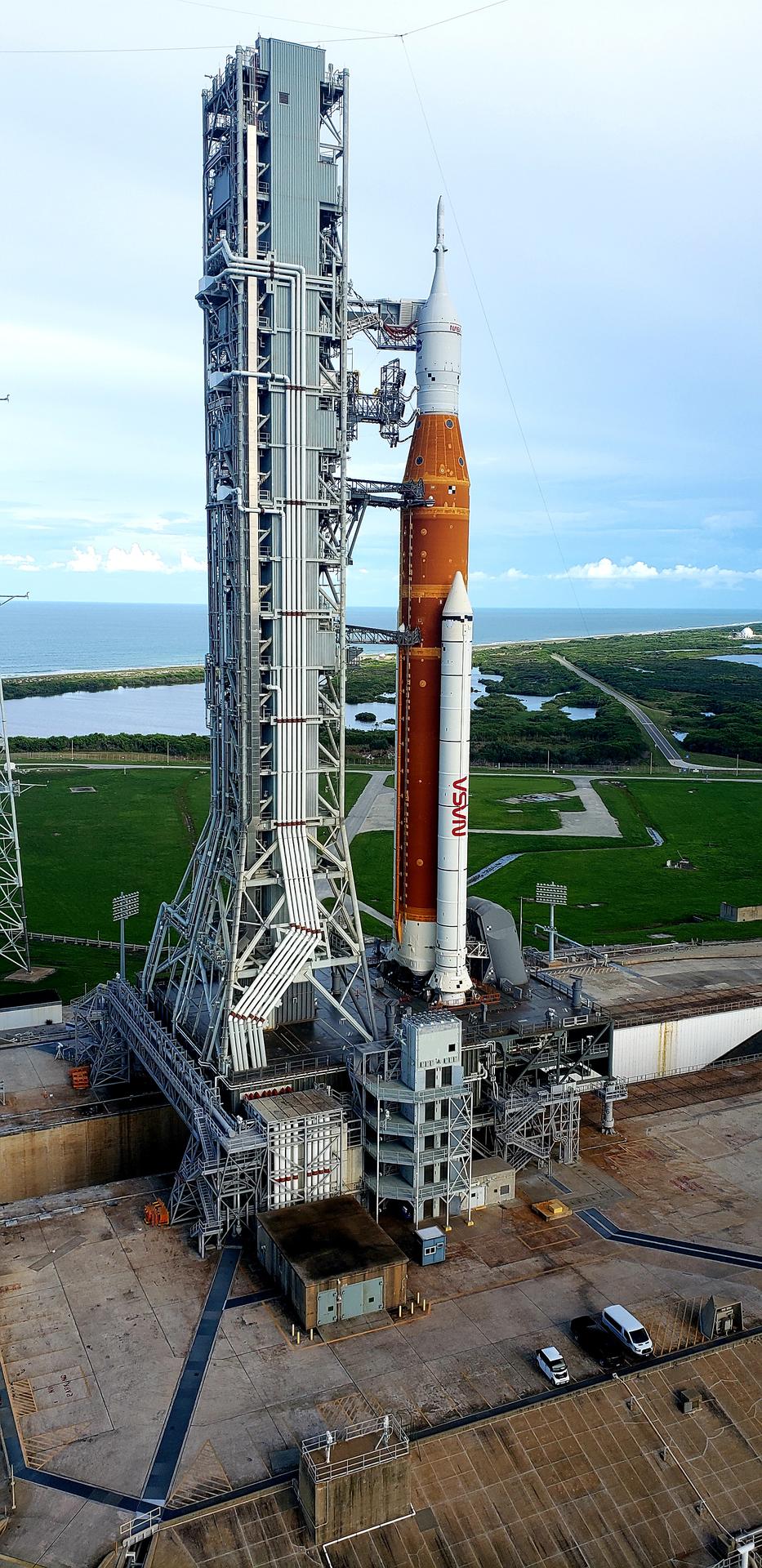
Space Launch System Upper Stage: Northrop builds the solid rocket boosters for NASA's Space Launch System and also serves as the prime contractor for the Exploration Upper Stage (EUS) that will power later Artemis missions to cislunar space. After the SLS core stage cost overruns absorbed by Boeing (discussed below), Northrop's SLS work has been more stable — boosters are a known production challenge, and Northrop's experience with solid rocket motors (it makes the Minuteman III motors as well) gives it a genuine cost discipline advantage here.
SDA Proliferated Warfighter Space Architecture: Northrop is a major participant in the PWSA, having received Tranche 1 and Tranche 2 contracts for transport layer satellites and the $764 million Tranche 3 Tracking Layer award. The classified programs are a substantial contributor — a canceled classified Space Force satellite program created a $595 million drag on 2024 revenues, demonstrating how dependent the segment is on government program continuity.
Next Generation Interceptor (NGI): The NGI program — the new ground-based strategic interceptor to replace the existing Ground-Based Interceptor fleet — was awarded to Lockheed in 2021, and Northrop did not win. The program's absence from Northrop's backlog is a meaningful headwind, as NGI has a potential total value exceeding $17 billion. It helps explain why Northrop's Space revenue guidance for 2025 came in at $11 billion versus the $11.7 billion posted in 2024.
Reading the 10-K: Northrop reports Space Systems as a separate segment. Operating margins in the high 10% range are the target for 2025. Investors should watch closely for the mix of classified versus unclassified revenue and monitor program continuation risks on large restricted contracts that don't appear by name in filings.
L3Harris and Raytheon: The Enablers
Not every defense-space company operates in the spotlight of Orion or JWST. L3Harris Technologies and RTX (the company formerly known as Raytheon Technologies) occupy a different but equally critical niche: they build the components, sensors, receivers, and communications systems that make every satellite program function.
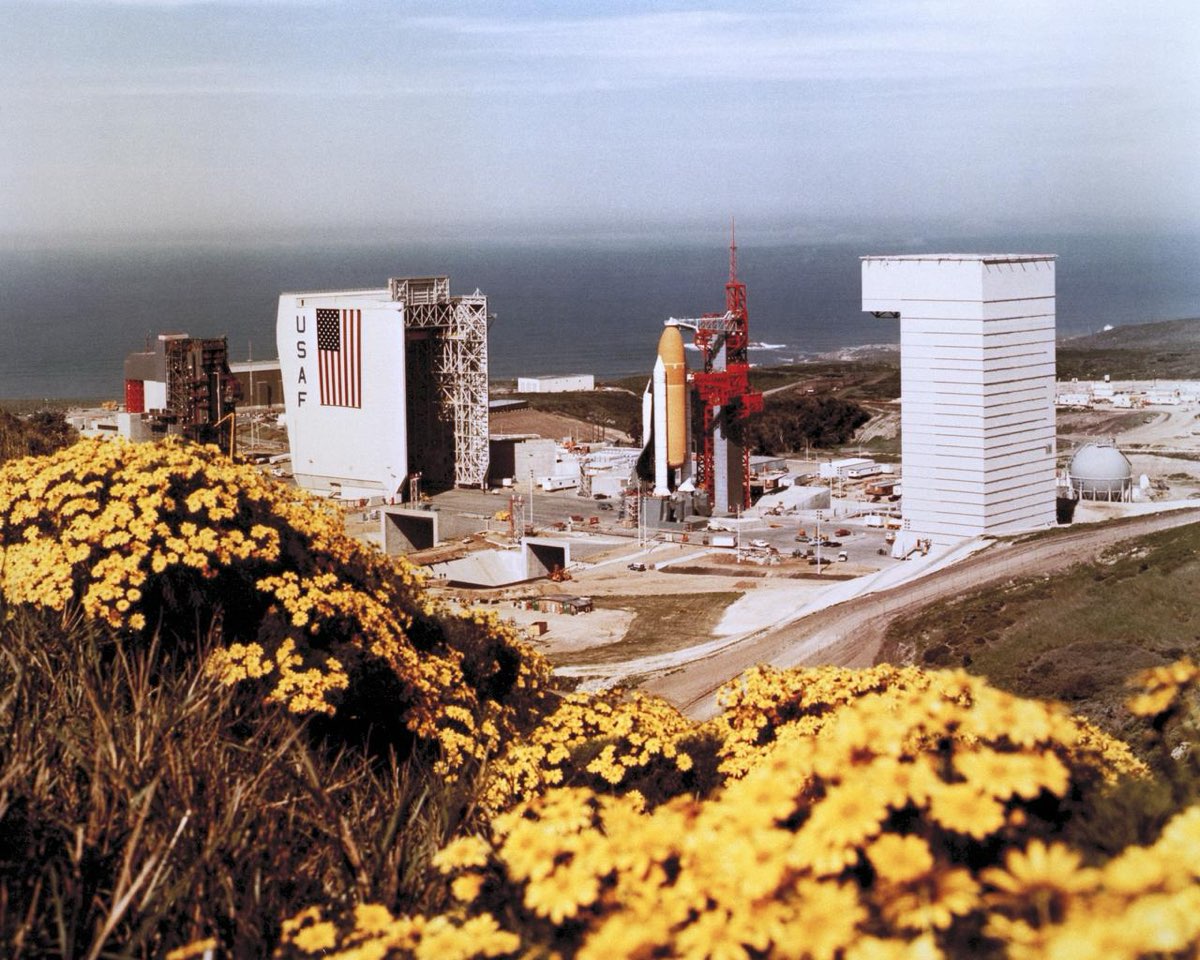
L3Harris Technologies reported Space and Airborne Systems segment revenue of approximately $6.9 billion in 2025, essentially flat year-over-year. The company's space heritage comes primarily from its Harris Corporation legacy — Harris was for decades a preeminent maker of space instruments, antennas, solar arrays, and ground systems. L3Harris now holds:
- NRO classified contracts: A significant portion of L3Harris' space revenue comes from classified intelligence satellite programs — sensors, signal intelligence payloads, and imaging instruments for reconnaissance satellites whose very existence is not publicly acknowledged.
- SDA Tracking Layer: L3Harris has positioned aggressively in the SDA PWSA, with Tranche 0 satellites already on orbit, 34 satellites across Tranche 1 and Tranche 2 in production, and the $843 million Tranche 3 Tracking Layer contract awarded in December 2025 for 18 infrared satellites.
- Space communications: Satellite terminal systems, including tactical communications terminals for military users, and the AEHF (Advanced Extremely High Frequency) terminal program contribute to a stable base load of space-adjacent revenue.
- Restructuring note: L3Harris reorganized its segment structure going into 2026 with the intent of driving faster space business growth. Investors should watch for changed segment definitions in the 2025 10-K filings.
RTX (Raytheon) is the most indirect space play of the four. Its space exposure runs primarily through:
- GPS ground control systems: Raytheon built and delivered the Operational Control Segment (OCX) for GPS III under a long-running program that faced significant cost and schedule overruns before delivery. In a notable development, the Space Force canceled RTX's OCX follow-on contract in April 2026, shifting future GPS ground control work to a new competition. This is a headwind but not catastrophic given RTX's diversification.
- Missile warning systems: Raytheon's defense electronics division produces ground-based and space-related sensors for missile warning networks, including components that feed into the SBIRS ecosystem.
- Space-adjacent missiles and defense: Patriot, GEM-T, and Standard Missile systems all have space-related engagement modes, and Raytheon's hypersonic defense programs have space-sensor dependency — but investors should not count these as "space revenue" in any meaningful sense.
RTX's 2025 total revenue of $88.6 billion places it in a different scale category, and space is genuinely a thin slice of the overall business. Investors seeking RTX primarily as a space play are misidentifying the thesis; it is better understood as a defense and aerospace industrial with targeted space-adjacent contracts.
Boeing's Space Division: A Cautionary Tale
No discussion of defense-space investing is complete without examining Boeing — and what it warns investors about fixed-price development contracts.
Boeing's Defense, Space & Security division is nominally home to some of the most significant space programs in U.S. history: the Space Launch System core stage, the Starliner crew capsule (Commercial Crew), and the X-37B orbital test vehicle. In practice, it has become a study in how badly things can go wrong when defense contractors accept fixed-price contracts for development work without adequate cost controls.
Starliner losses: By the end of 2024, Boeing had recorded over $2 billion in charges on the Starliner program since winning the 2014 NASA contract. The fiscal 2024 charge alone was $523 million — the program's worst single year. The spacecraft's first astronaut flight, carrying Butch Wilmore and Suni Williams in June 2024, ended in a nine-month ordeal after thruster failures and helium leaks forced NASA to return the crew on a SpaceX Dragon, leaving Starliner to return uncrewed. The program's future is in active review.
SLS core stage overruns: Boeing is prime contractor for the Space Launch System core stage. Cumulative cost overruns on the SLS core stage exceed $6 billion beyond the original contract value, prompting NASA and the GAO to repeatedly cite Boeing's fixed-price contract structure as a cautionary example. The program continues, but at political and financial cost.
What this means for investors: Boeing's space woes have become a systematic drag on the Defense, Space & Security segment's profitability and credibility. The combined charges on five troubled fixed-price contracts — Starliner, KC-46A, T-7A, VC-25B, and MQ-25 — totaled over $5 billion in 2024. Space-specific losses represent a significant portion. Boeing's space division is not currently a buy thesis; it is a lesson in why investors should scrutinize contract structures, not just program names.
How to Read Space Segment Data in 10-K Filings
The most actionable skill an investor in defense-space companies can develop is extracting and interpreting segment-level space data from annual reports. Here is a practical guide.
Step 1: Identify the relevant segment. Each company structures its segments differently:
- Lockheed Martin: "Space" is a named segment
- Northrop Grumman: "Space Systems" is a named segment
- L3Harris: "Space & Airborne Systems" or equivalent (check for annual restructuring)
- RTX: Space is distributed across "Raytheon" and "Collins Aerospace" — it is not a clean segment
- Boeing: "Defense, Space & Security" (space is not separately disclosed)
Step 2: Extract the key numbers. From each segment, pull:
- Net sales (top-line revenue)
- Operating profit
- Operating margin
- Year-over-year changes (and stated drivers)
- Backlog (funded and unfunded)
Step 3: Read the MD&A section carefully. The Management Discussion & Analysis section of the 10-K is where program-level drivers are explained in plain English. Look for phrases like "higher volume on GPS III," "favorable performance at completion on Orion," or "lower classified volume." These tell you which programs are growing, which are winding down, and where margin risk lies.
Step 4: Check for program-specific risk disclosures. Defense-space 10-Ks carry specific risk factors for classified program cancellations, fixed-price development contract exposure, and government budget cycle dependencies. These are often buried in multi-page risk sections but are highly material. A canceled classified program (as Northrop experienced in 2024) can subtract hundreds of millions from a segment in a single quarter with no prior public warning.
Step 5: Track the "profit booking rate adjustments." Defense contractors regularly take upward or downward adjustments to program estimates at completion (EAC). These non-cash adjustments can swing quarterly segment margins by hundreds of basis points. Lockheed consistently notes favorable EAC adjustments on Orion and GPS as drivers of Space segment profit growth. Unexpected downward EACs are the canary in the coal mine for troubled programs.
Step 6: Look for total backlog composition. A healthy defense-space company should show backlog growing faster than revenue — indicating new contracts are being won. Northrop's Space Systems backlog, for example, reached approximately $18 billion in 2025. The ratio of funded (appropriated) to unfunded backlog tells you how dependent the company is on future Congressional action.
Defense-Space vs. Pure-Play: Risk/Return Comparison
How does owning the space segment of a defense giant compare to owning pure-play space stocks like Rocket Lab, Intuitive Machines, or Planet Labs? The comparison is more nuanced than it might appear.
Stability and cash flow: Defense-space companies generate substantial free cash flow and pay dividends. Lockheed Martin's dividend yield has historically ranged between 2.5% and 3.5%. Northrop Grumman actively returns capital through buybacks. Pure-play space companies — with the exception of Iridium Communications — are overwhelmingly pre-free-cash-flow, burning capital to fund development programs. For investors who need or value income and capital preservation, defense-space wins on a risk-adjusted basis.
Upside potential: Pure-play space stocks can generate 5x, 10x, or more returns in specific scenarios — Rocket Lab's successful commercialization of Neutron, Intuitive Machines' construction of a lunar logistics economy, or a new entrant cracking the satellite internet market. Defense-space giants are unlikely to triple from current valuations absent a significant acquisition or strategic pivot. The Lockheed Martin of today is a good business; it is not a venture bet.
Transparency and dilution: Defense companies report under well-understood U.S. GAAP standards, with clean segment reporting, predictable contract accounting, and no founder-preferential share structures. Most pure-play space SPACs and IPOs introduced complex capital structures with warrants, preferred shares, and founder dilution risk that pure defense investors never face.
Government dependency: Both categories are heavily government-dependent, but differently. Defense-space companies derive the bulk of their space revenue from cost-reimbursement or fixed-price production contracts with the U.S. government — stable but capped in margin. Pure-play space companies are often chasing commercial markets (internet connectivity, Earth observation, in-space services) where the total addressable market is large but the revenue is uncertain.
The hybrid argument: The most compelling portfolio construction case is to use defense-space companies as the anchor — stable cash flow, inflation-hedged government contracts, dividend income, exposure to guaranteed Space Force budget growth — while allocating a smaller, higher-risk allocation to pure-play names with genuine commercial upside. Owning Lockheed Martin and Rocket Lab simultaneously is not a contradiction; it is a complete space portfolio.
| Defense-Space Giants | Pure-Play Space Stocks | |
|---|---|---|
| Revenue visibility | High (contract backlog) | Low to medium |
| Dividend / income | Yes (2–3%+ yield) | Rare |
| Upside potential | Moderate | Very high |
| Downside protection | High | Low to very low |
| Transparency | High (segment reporting) | Variable |
| Space revenue % of total | 15–30% | 50–100% |
| Classified program risk | Material | None |
Conclusion: Defense-Space as the Anchor of a Space Portfolio
The space economy's most durable revenue streams don't flow through companies with "space" in their names. They flow through defense giants that have been building satellites, missile warning systems, and crew vehicles for decades — companies with classified security clearances, multi-billion-dollar backlogs, and government customers who cannot cancel their programs without unraveling national security infrastructure.
Lockheed Martin's GPS constellation keeps global logistics running. Northrop Grumman's Cygnus resupplies the International Space Station. L3Harris' infrared sensors are the eyes of America's missile warning network. These programs will not be disrupted by a launch failure, a SpaceX announcement, or a market rotation away from growth tech.
For investors serious about space — not as a narrative, but as a long-term investment theme — the defense-space crossover deserves far more attention than it typically receives in retail investment circles. The work is to extract the signal from the noise: to parse the 10-Ks, understand the program mix, track the EAC adjustments, and build a view on which segments are growing and which are winding down.
The world's best space companies aren't called space companies. But once you know where to look, they're hiding in plain sight.