
Starlink vs. Kuiper vs. OneWeb vs. Telesat: Who Wins the Satellite Internet War?
Here is a hard truth that few satellite industry observers say out loud: the $50 billion satellite broadband race is, in some meaningful sense, already over. Starlink has 10 million paying subscribers, a $12.3 billion annual revenue run rate, and a constellation of more than 7,000 spacecraft. Its nearest operational competitor serves a few hundred thousand enterprise customers. The gap is not a matter of months — it is measured in years, orbital slots, manufacturing capacity, and a vertically integrated launch advantage that no rival can replicate.
And yet capital continues to flow. Amazon has committed more than $10 billion to its Amazon Leo constellation (formerly Project Kuiper). France has pumped nearly €1 billion in state-backed debt into Eutelsat OneWeb. Canada's federal government backstopped $2.54 billion in financing for Telesat Lightspeed. The question for investors is not simply "who is winning?" — it is "where, exactly, is the value being created, who captures it, and is there a viable second place?"
This analysis takes each of the four primary Western competitors — Starlink, Amazon Leo, Eutelsat OneWeb, and Telesat Lightspeed — plus China's state-run SatNet constellation, and assesses them across five dimensions: technology and spectrum, subscriber base and revenue, financial structure and runway, strategic moat, and long-term investment case.
Why Now: The Addressable Market and Why It Is Real

The satellite broadband market is often dismissed as a niche, a fallback for people in remote areas who have no other option. That misreads the structural dynamics. The total addressable market breaks into several distinct segments, each with its own economics.
The rural broadband gap remains enormous. Approximately 2.6 billion people globally lack reliable internet access. Fixed-fiber economics cannot serve low-density geographies — the cost per subscriber passed rises exponentially as population density falls. Satellite is structurally superior for roughly the bottom quartile of addressable locations by fiber economics.
Maritime and aviation represent the highest-ARPU segments. Starlink's maritime users generate approximately $34,000 ARPU annually; aviation ARPU approaches $300,000. These are small subscriber bases with enormous per-account revenue. Every cruise ship, cargo vessel, private jet, and commercial airliner is a potential customer, and legacy VSAT contracts worth hundreds of millions are cycling off and being replaced with LEO solutions.
Government and defense constitute a third pillar. Starlink's Starshield program — a hardened, encrypted variant for U.S. government customers — operates under separate contracts and is not included in public subscriber counts. Ukraine's use of Starlink demonstrated LEO satellite communications as critical warfighting infrastructure. Every NATO government is now evaluating dedicated sovereign satellite capability.
Enterprise backup and mobility rounds out the picture. Fortune 500 companies operating in remote areas — mining, oil and gas, forestry, precision agriculture — have historically tolerated expensive and low-quality GEO VSAT connections. LEO broadband at $500–$2,000 per month is a superior product at competitive cost.
Morgan Stanley estimates the global satellite internet TAM at $50 billion by 2030. S&P Global's 2025 State of Satellite Connectivity report put the addressable market for LEO broadband services alone at $23 billion by 2028. Even the lower estimates represent a dramatic expansion from the roughly $4 billion GEO VSAT market of the early 2020s.

Starlink: The Benchmark Everyone Chases
Starlink is not just the market leader. It is, by most measures, the market. SpaceX's satellite internet division accounted for 97.1% of global satellite Speedtest samples in Q3 2025 — a figure that illustrates not just subscriber scale but the degree to which Starlink has become synonymous with satellite internet in the consumer's mind.
The Numbers
- Constellation size: 7,000+ satellites in low Earth orbit, targeting 42,000 under FCC authorization
- Subscribers: 10 million active globally as of February 2026, growing at roughly 20,000 per day
- Revenue: $11.4 billion in 2025 (approximately 61% of total SpaceX revenue), with 2026 projected near $20 billion
- EBITDA margin: ~63% on the satellite internet segment, implying extraordinary cash generation
- Pricing: $120/month residential; $250/month Priority; Starlink Mini at $599 hardware, $50/month mobile
- Latency: 20–40ms typical (Gen2), comparable to fixed broadband
The Moat
Starlink's competitive moat is multi-layered and unusually durable. The most obvious component is SpaceX's launch cost advantage. With Falcon 9 launching at internal transfer pricing far below market rates, and Starship on the horizon promising even lower cost per kilogram to orbit, Starlink can expand its constellation at a cost structure competitors cannot match. No other satellite internet operator owns its own orbital launch vehicles.
The second layer is manufacturing scale. SpaceX produces approximately 60 satellites per week at its Redmond, Washington factory — a cadence that has taken years to reach and that is protected by hard-won production know-how, specialized supply chains, and the kind of iterative hardware improvement only possible when your production and deployment cycles are tightly coupled.
The third layer is spectrum and orbital slots. The ITU's first-to-file and first-to-operate rules mean Starlink's early mover advantage in orbital shells translates into a semi-permanent structural advantage. Late entrants must maneuver around an increasingly crowded LEO environment that Starlink helped populate.
Finally, Starlink's Starshield defense program represents a revenue stream and strategic moat that has no analog among competitors. U.S. Department of Defense reliance on Starlink for secure communications — already demonstrated in combat operations — creates a political economy that makes de-selection of Starlink from federal contracts nearly impossible.
The Investment Case
Starlink is not publicly traded as of April 2026. SpaceX has confidentially filed for an IPO that prediction markets assign a 90%+ probability of completing by year-end 2026, with a market cap consensus in the $1.5–$2.0 trillion range. Pre-IPO exposure is available through private market platforms with significant illiquidity premiums. Secondary market transactions value Starlink as a standalone business at approximately $150–180 billion, implying a forward revenue multiple of roughly 9–10x on 2026 projected revenue. For a monopoly-scale platform growing at 50%+ per year in a capital-intensive market with formidable barriers to entry, that multiple appears defensible if not conservative.
Amazon Leo: The $10 Billion Bet

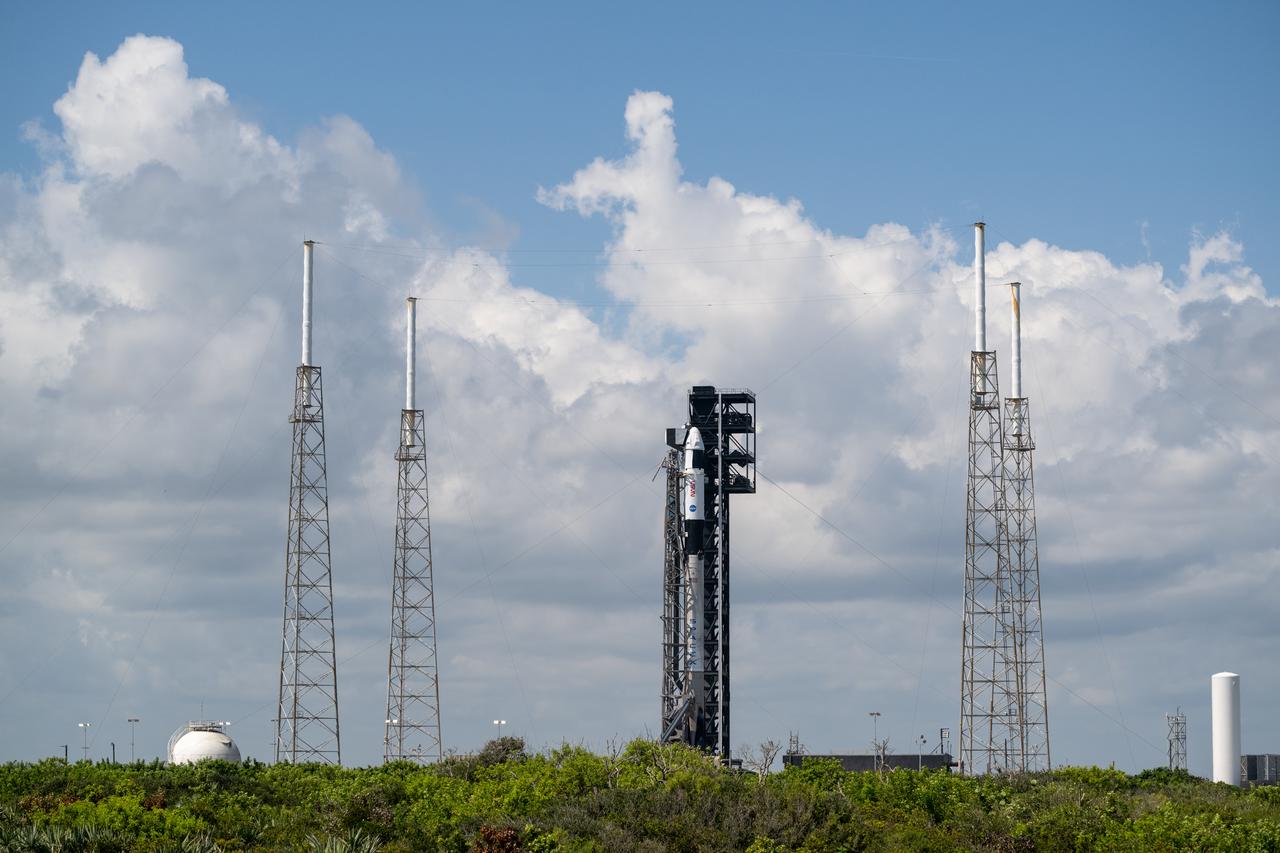
Amazon rebranded Project Kuiper as Amazon Leo in November 2025, a signal that the company was ready to transition from engineering program to commercial product. The rebrand coincided with the opening of an enterprise preview service and the first serious discussion of consumer pricing.
Where It Stands
Amazon Leo has launched 233 satellites (231 production plus two prototypes) across nine missions as of April 2026. The constellation target is 3,236 satellites, with an FCC license requiring 1,618 operational spacecraft by July 30, 2026. Amazon has requested an extension to 2028, citing satellite readiness, and expects approximately 700 satellites in orbit by the original deadline.
Commercial service for residential customers is expected in mid-2026, representing a delay from earlier targets of late 2025. Enterprise and government preview service began in Q4 2025.
The Amazon Advantage
Amazon's investment thesis rests on distribution, not technology. Amazon has 200+ million Prime subscribers, AWS operates in 34 regions globally, and Amazon's logistics network reaches more rural customers than any other American retail company. When Amazon Leo launches a consumer product, it will not need to build brand awareness from scratch — it can market satellite broadband as a Prime benefit, bundle it with Fire TV, and integrate it with Alexa. No competitor has a comparable distribution asset.
Amazon has also secured 83 launch contracts across ULA Atlas V, Blue Origin New Glenn, Arianespace Ariane 6, and SpaceX Falcon 9 — the last arrangement representing a fascinating competitive dynamic. The launch agreements give Amazon flexibility but not cost parity with Starlink's internal pricing.
The AWS angle is perhaps underappreciated. Kuiper Ground Station services would allow AWS customers to use Leo terminals as low-latency backhaul to AWS regions, creating enterprise value that goes beyond retail internet access. A mining company running AWS workloads in a remote location could use Amazon Leo as both its internet connection and its cloud on-ramp.
The Uncertainty
Amazon Leo's greatest risk is timing. Each year of delay is a year Starlink extends its subscriber lead, builds brand loyalty, and reduces customer acquisition opportunity. The FCC deadline extension request — if granted — gives Amazon more runway; if denied, it creates regulatory and financial stress. Analyst estimates for break-even range from 2030 to 2035, depending on launch cadence assumptions.
For investors, Amazon as a company (NASDAQ: AMZN) is the only public market access to Amazon Leo exposure. The satellite program is not separately capitalized or publicly tradeable. AWS and retail operations dwarf Leo in current revenue terms, which means Leo is a very long-dated option embedded in Amazon stock — interesting but not investable as a pure play.

Eutelsat OneWeb: The European Underdog in Serious Trouble
The Eutelsat OneWeb story is the most cautionary in the satellite broadband market. What began as an ambitious bet on global connectivity has become a complex, heavily leveraged restructuring exercise backed by European government intervention.
Background and Structure
OneWeb was founded in 2012, went bankrupt in March 2020, was purchased out of bankruptcy by a consortium led by the UK government and Bharti Global (SoftBank's Indian telecom partner), and completed a merger with French incumbent satellite operator Eutelsat in September 2023. The merged entity, officially Eutelsat Group, operates two distinct space assets: OneWeb's 648-satellite LEO constellation at 1,200 km altitude, and Eutelsat's legacy fleet of 35 GEO satellites serving broadcast and VSAT markets.
The business rationale was straightforward: Eutelsat would bring GEO revenue stability, government relationships, and European regulatory standing; OneWeb would bring LEO technology, spectrum, and growth potential. The integration has proven messier than anticipated.
Financial Reality
Eutelsat's credit default swap spreads climbed to 1,220 basis points in early 2026, implying bond markets assign a 65% probability of default on existing obligations. This is not a healthy company.
Revenue from OneWeb has grown — the UK subsidiary reported an 80% topline expansion in 2025 — but from a low base, with an operating loss of $456 million in the year, down 66% from the prior year. Enterprise customer wins have been slower than modeled, partly because Eutelsat's legacy GEO gateway infrastructure is not yet fully interoperable with OneWeb's LEO system.
To manage liquidity, Eutelsat completed a €1.5 billion bond offering in March 2026 and secured nearly €1 billion in French state-backed financing for constellation expansion. In early 2026, it contracted Airbus for 440 additional OneWeb satellites — a growth signal, but also a future capital commitment that extends the runway before cash flow breakeven.
Who Is Buying It
Eutelsat OneWeb's customer base is overwhelmingly enterprise and government: telecom operators using it as backhaul in underserved markets, government agencies seeking sovereign European broadband capability, maritime operators, and a handful of airline customers. It does not have a consumer product.
The European strategic rationale is explicit. French and UK government shareholders view OneWeb as critical infrastructure — a European-controlled broadband constellation that does not depend on American or Chinese operators. This political support is both Eutelsat's lifeline and its ceiling: government money will keep it alive but will not give it the consumer scale to achieve true commercial independence.
Survival Odds
Eutelsat OneWeb will likely survive — not through commercial success, but through continued government support. The question for investors is whether survival yields returns. The company's publicly traded shares (Paris: ETL) have declined approximately 85% from pre-merger highs as of early 2026. At current levels, the stock is a speculative bet on either a restructuring that dramatically improves capital efficiency or an acquisition by a well-capitalized buyer. The most plausible acquirer would be a European defense or aerospace group — Airbus, Thales, or Leonardo — with strategic interest in owning a sovereign broadband constellation.

Telesat Lightspeed: The Long Shot
Telesat is a profitable, established satellite operator — it has been in business since 1969 and generates steady cash flow from a GEO fleet serving North American broadcast and enterprise markets. Telesat Lightspeed, its LEO broadband constellation, is a different story: an ambitious, technically differentiated, perpetually delayed program that has been reshaped by schedule slippage, supply chain problems, and a fundamental pivot in strategy.
The MEO Approach and Its Tradeoffs
Telesat originally pitched Lightspeed as a medium Earth orbit (MEO) constellation for enterprise and government customers — a different market than Starlink's mass consumer play. The engineering rationale was that MEO satellites are fewer in number (originally 1,700 planned, later scaled to 198 satellites in the production contract with MDA), cover larger geographic footprints, and can deliver the low-latency, high-throughput connections enterprise customers need without requiring the massive scale of LEO constellations.
The current plan has shifted again. In March 2026, Telesat announced a pivot: 25% of Lightspeed capacity will be reserved for military Ka-band, effectively transforming a commercial enterprise program into a dual-use defense infrastructure asset. The pivot coincided with the latest delay — commercial service has slipped from an original 2024 target to a 2028 launch.
Why It Is Slipping
The latest schedule slip traces to semiconductor readiness. MDA, the Canadian satellite manufacturer building the constellation, relies on chips originally designed by Israeli firm SatixFy — now MDA-owned — for satellite processors and phased-array antennas. Those chips have run behind schedule, pushing MDA's satellite build timeline and cascading into launch delays.
The first two pathfinder satellites are now targeted for December 2026 launch. Serial production launches would begin mid-2027, with ~96 satellites in orbit by end-2027 — enough for initial global coverage. Full commercial service is expected in Q1 2028 at the earliest.
The Government Backstop
Telesat completed $2.54 billion in financing agreements with the Canadian federal government and the Government of Quebec. The government money is structured as a loan with equity-like characteristics — supportive but not unconditional. Telesat ended 2025 with approximately $1 billion CAD in Lightspeed backlog, suggesting real customer commitments exist, primarily from enterprise and government accounts in Canada, North America, and selected international markets.
Investment Assessment
Telesat is publicly traded (NASDAQ: TSAT, TSX: TSAT). The stock has been punished by delays, declining GEO revenues, and uncertainty about Lightspeed's commercial viability. At current prices, the market values Lightspeed at a fraction of invested capital.
The defense pivot is strategically interesting. If NATO governments are willing to fund resilient, sovereign LEO communications capacity — separate from U.S.-controlled Starlink — Telesat could carve a defensible government customer niche. But the timeline is late, the technology unproven at scale, and the company carries significant leverage from GEO asset amortization against declining broadcast revenues. This is a high-risk, potentially high-reward position for investors with strong conviction on the defense satellite thesis.
China's SatNet: The Wild Card
No analysis of the satellite broadband market is complete without acknowledging China's Guowang constellation, operated by China SatNet — a state-owned enterprise established in 2021 specifically to build China's equivalent of Starlink.
Guowang has filed for 12,992 satellites across two orbital shells — the largest planned constellation on Earth after Starlink. As of April 2026, 17 or more deployment launches have completed, placing approximately 180 networking satellites in orbit. The program is accelerating: Chinese officials expect the constellation to reach direct-to-smartphone capability in 2026 and full operational status by 2029–2035.
The Investor Angle
Guowang is not accessible to Western investors. It is a state-run enterprise with no public market listing, no foreign shareholder structure, and no disclosed commercial revenue model. Its strategic purpose is explicitly national security and domestic digital sovereignty.
The indirect investment question is whether Guowang's ambitions pressure Western spectrum access. The ITU's "use it or lose it" rules mean that constellation operators who fail to deploy satellites in their licensed orbital shells on schedule can lose spectrum rights. China's aggressive filing and deployment activity — including over 200,000 constellation frequency applications submitted by Chinese firms in early 2026 — is a spectrum land grab with real implications for how much room remains for other operators.
For Western investors, Guowang matters as a competitive constraint rather than an investment opportunity. Its deployment reinforces the "winner takes most" orbital dynamics that benefit Starlink's first-mover position.

How to Think About This Market as an Investor
Winner-Takes-Most Dynamics
Satellite internet exhibits strong network effects and scale economics but is not a pure winner-take-all market. The TAM contains distinct customer segments — consumer residential, maritime, aviation, enterprise, government/defense — with different willingness to pay, regulatory requirements, and competitive dynamics. Starlink dominates consumer residential and is growing aggressively in maritime and aviation. Enterprise and defense are contested.
The structural analogy is not the broadband ISP market (where geographic monopolies persist) but the cloud computing market, where AWS captured early lead and dominates overall, but Azure and GCP have built substantial positions in enterprise and hybrid workloads. Amazon Leo's strategy — enterprise first, consumer as expansion — maps directly onto this playbook.
Indirect Investment Plays
For investors who cannot or do not want to hold pre-IPO SpaceX exposure, the satellite broadband theme is accessible through:
- Amazon (AMZN): The only public market exposure to Amazon Leo. Leo is a long-dated embedded option in Amazon equity. Not a pure play, but real.
- Eutelsat (ETL.PA): Speculative. Essentially a bet on European government support maintaining the company until a strategic acquirer emerges. High risk, potential restructuring upside.
- Telesat (TSAT): Speculative. Defense pivot thesis requires conviction on government contract wins and successful technology execution. Multiple years before revenue clarity.
- Viasat (VSAT): GEO incumbent with meaningful government/defense revenues and a hedged position in the broadband transition. Not a LEO pure play but a transitional beneficiary.
- Iridium (IRDM): Different market (low-throughput L-band IoT and safety messaging), but established government revenue base and direct-to-device growth opportunity.
Supply Chain Plays
The satellite broadband buildout requires hardware that is not going away regardless of which operators win. Antenna manufacturers, phased-array chipmakers, ground station equipment suppliers, and launch services providers all benefit from the buildout:
- Rocket Lab (RKLB): Launch services and satellite components. Growing constellation deployment contracts.
- Northrop Grumman / L3Harris / Raytheon (RTX): Defense-grade satellite hardware and ground segment integration for Starshield and military broadband.
- ViaSat-adjacent: Terminal manufacturers like Kymeta, Isotropic Systems (acquired), and Cobham are embedded in LEO terminal supply chains.
Conclusion: Who Wins, and What to Do About It
The satellite internet war has a clear winner today: Starlink. With 10 million subscribers, $11+ billion in annual revenue, a vertically integrated cost structure no competitor can replicate, and a path to a public market debut that could value the business at $150–180 billion as a standalone entity, Starlink has built a moat that is deep, wide, and getting wider every week.
Amazon Leo is the only legitimate threat to Starlink's long-term consumer dominance — not because of satellite technology, but because of distribution muscle and the possibility that Amazon bundles Leo into Prime the way Google bundled Maps into Android. That thesis requires patience: Leo will not be commercially viable at scale before 2028–2029 at the earliest.
Eutelsat OneWeb will survive as a European strategic asset but will not become a mass-market broadband provider without a structural transformation of its balance sheet and a level of commercial execution it has not yet demonstrated.
Telesat Lightspeed is the most speculative option — a defense pivot that might create real niche value, but that requires successful satellite manufacturing execution, on-time launches, government contract wins, and a market in 2028 that has not already been fully claimed.
The most likely scenario for the next decade is a two-constellation world in the Western market — Starlink as the dominant global platform and Amazon Leo as a challenger with specific enterprise and distribution advantages — with Eutelsat OneWeb occupying a small government-supported European niche and Telesat serving select defense and enterprise verticals in Canada and allied nations.
For investors, the broadest and most durable exposure to this theme is the SpaceX IPO when it materializes, followed by Amazon equity for patients willing to wait for Leo to mature. The pure-play speculation plays — Eutelsat and Telesat — require high conviction on scenarios that remain far from certain.
The $50 billion market is real. The competition is not.
Sources: SpaceNews, Payload Space, Via Satellite, Spaceflight Now, Sacra SpaceX Research, S&P Global State of Satellite Connectivity 2025, Morgan Stanley Space Economy Report, Eutelsat investor relations, Telesat press releases, Amazon press center, FCC filings.