Deimos
Mars's outer moon — half the size of Phobos, slowly receding into deep space.
Vital statistics
01
Overview
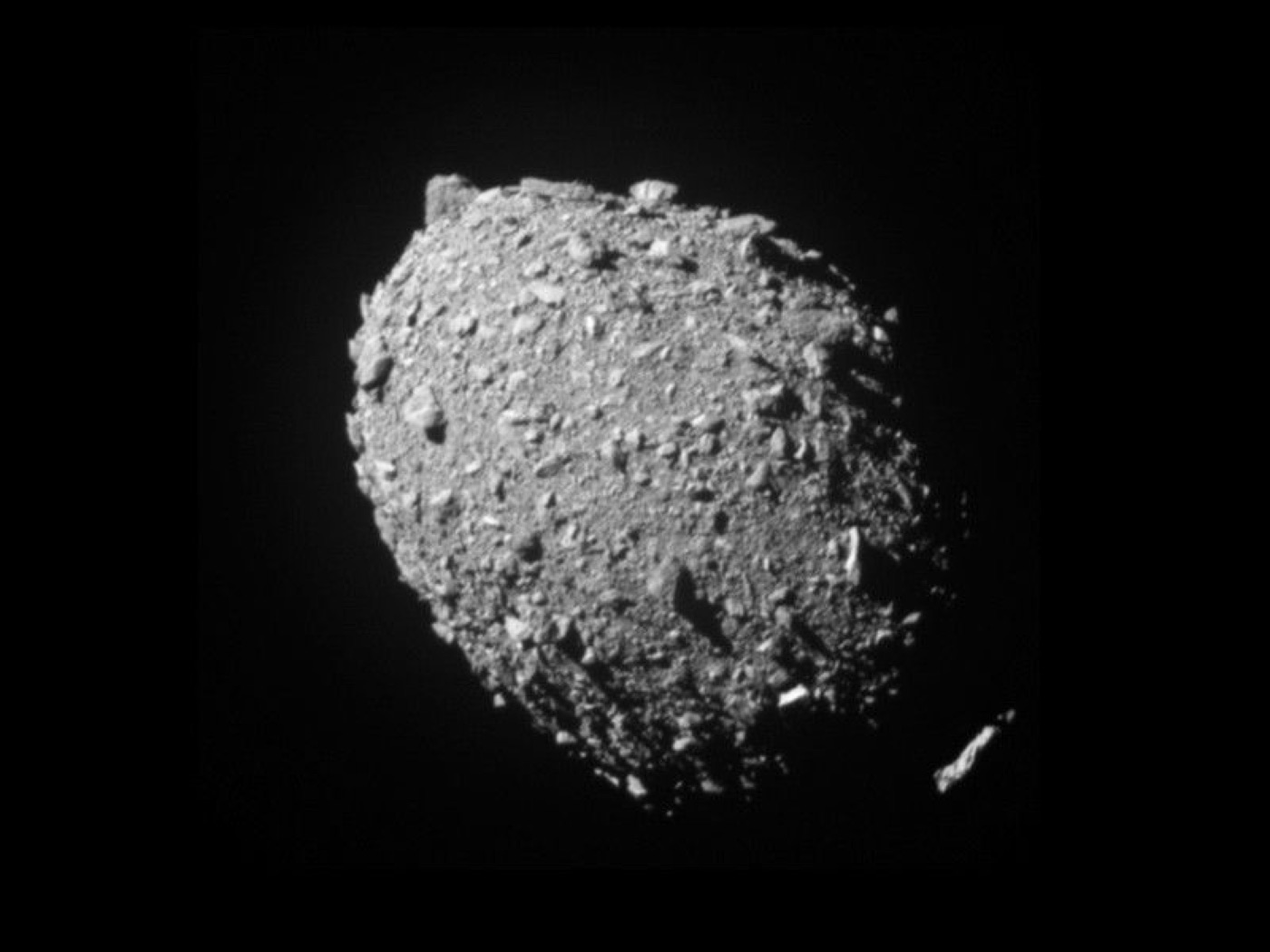
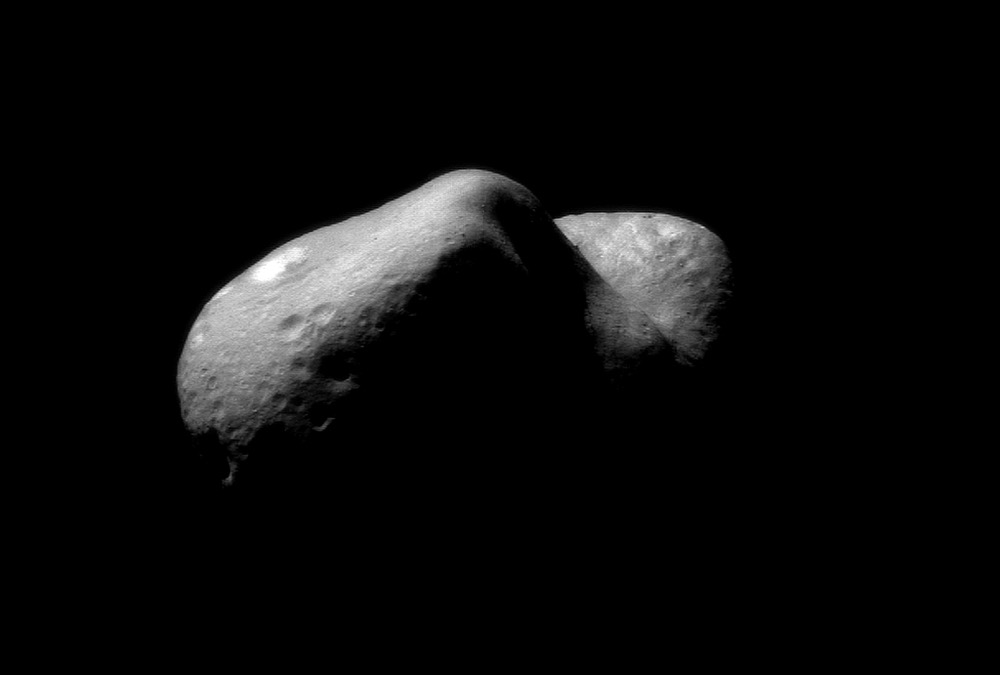
Deimos is the smaller and more distant of Mars's two moons. Like Phobos it was likely captured from the asteroid belt, and shares the same dark, carbonaceous composition. Unlike its inner companion, Deimos is slowly receding from Mars due to tidal interaction — the same process that pushes Earth's Moon outward at 3.8 cm per year. Deimos appears as little more than a faint star from the Martian surface, taking 2.7 days to cross the Martian sky.
02
Composition
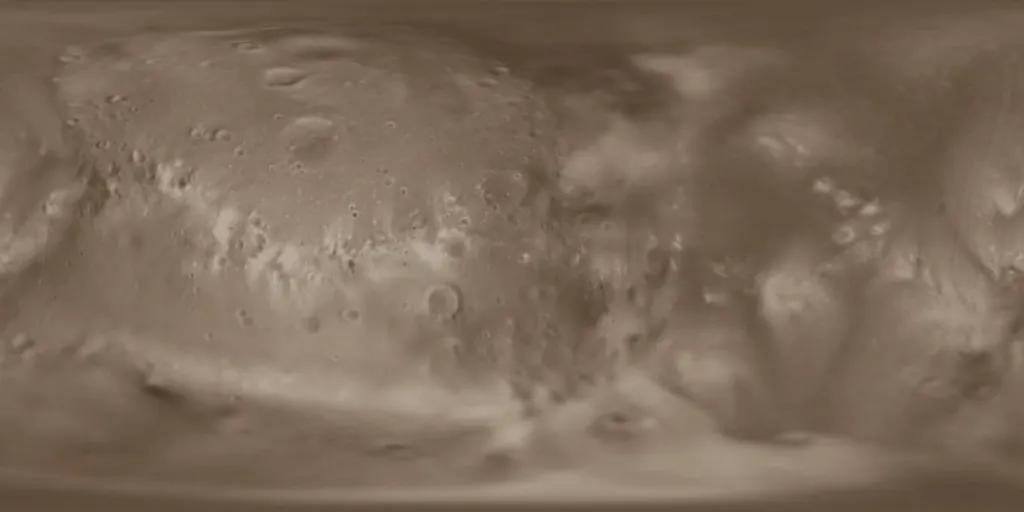
Deimos's surface is smoothed by a thicker regolith layer than Phobos, partially filling its craters. The two largest craters, Voltaire and Swift, are each about 3 km wide. Near-infrared spectra match those of D-type asteroids, supporting the captured-asteroid hypothesis.
05
Exploration
Deimos was first photographed by Viking Orbiter 2 in 1977. No spacecraft has yet landed on it. JAXA's MMX mission will perform two close flybys before its main work at Phobos.
Did you know?
From Mars's surface, Deimos appears about as bright as Venus appears from Earth — barely a "star" in the sky.
Deimos's orbit is so slow relative to Mars's rotation that it crosses the sky in 2.7 days.
Both Phobos and Deimos are named for the sons of Ares (the Greek Mars) — fear and terror.
A 2014 study suggested Deimos may have been a fragment of a much larger Mars moon that was destroyed by impact.
Deimos's surface gravity is so low that escape velocity is only 5.6 m/s — a strong jump could send you into solar orbit.
Deimos rotates synchronously with its orbit, always showing the same face to Mars.
Timeline
- 18771877
Asaph Hall discovers Deimos six days before discovering Phobos.
- 19771977
Viking Orbiter 2 returns first close-up images.
- 20092009
Mars Reconnaissance Orbiter's HiRISE camera captures the highest-resolution images of Deimos to date.
- 2026 (planned)2026 (planned)
JAXA's MMX performs Deimos flybys en route to Phobos.