The Two Most Consequential Human Spaceflight Programs of the Decade
At almost precisely the same historical moment, two of the world's most capable space agencies are executing the most ambitious human spaceflight programs of their respective histories. NASA is executing Artemis — a multi-decade campaign to return humans to the lunar surface and establish a permanent presence in cislunar space. ISRO is executing Gaganyaan — India's first human spaceflight program, designed to demonstrate that the world's most populous nation can independently send its own citizens to orbit.
On the surface, these programs appear mismatched: different destinations, different budgets, different geopolitical contexts. But comparing them reveals something important about the future of human space exploration — that it is no longer a two-superpower contest. It is a genuinely multipolar endeavor, and both programs will shape the next century of how humanity relates to the cosmos.
Goals, Destinations, and Definitions of Success
Start with what each program is actually trying to accomplish, because the destinations are meaningfully different.
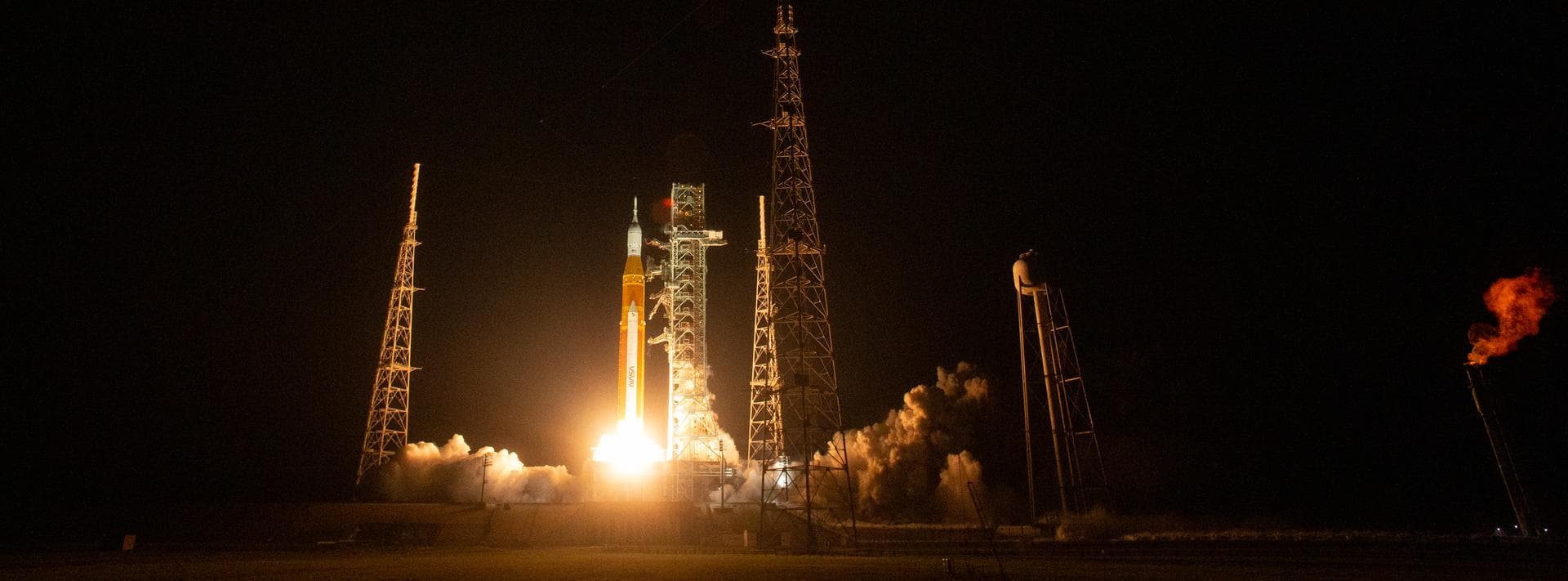
Artemis is ultimately about the Moon's surface — specifically, the south polar region where water ice deposits in permanently shadowed craters could sustain long-duration human presence. Artemis I (2022) flew an uncrewed Orion around the Moon as a systems validation. Artemis II (April 2026) carried four astronauts on a free-return trajectory around the Moon — the first humans beyond low Earth orbit since Apollo 17 in 1972 — and returned successfully after a 10-day mission. Artemis III, now redesigned as a LEO demonstration mission targeting mid-2027, will demonstrate Human Landing System docking in low Earth orbit before Artemis IV (targeting early 2028) attempts the actual crewed Moon landing near the south pole.
Gaganyaan is about reaching orbit. Its goal is to place a crew of three Indian astronauts into low Earth orbit aboard an Indian-built spacecraft, launched on an Indian rocket, operated from Indian ground stations. That may sound modest next to a lunar landing, but it places India in a very short list of nations capable of independent human spaceflight — currently only the United States, Russia, and China. Gaganyaan's success would make India the fourth.
Side-by-Side Program Comparison
| Category | NASA Artemis | ISRO Gaganyaan |
|---|---|---|
| Primary destination | Lunar surface (south pole) | Low Earth orbit (~400 km) |
| Crew size | 4 (Artemis II); 2-4 surface crew | 3 astronauts |
| Total program budget | $93B+ (through 2025) | ~$1.2B (approx. ₹9,023 crore) |
| Launch vehicle | Space Launch System (SLS) | GSLV Mk III (LVM3) |
| Crewed spacecraft | Orion Multi-Purpose Crew Vehicle | Gaganyaan orbital module |
| First crewed flight | Artemis II (April 2026) — completed successfully | Targeting 2027 |
| Life support | Mature (heritage from ISS/Apollo) | New development |
| International partners | 30+ Artemis Accords nations | Select bilateral partners |
| Long-term goal | Permanent lunar presence, Gateway | Regular Indian crewed missions to LEO |
The budget comparison is startling and deserves elaboration. NASA's Artemis program has cost more than $93 billion through 2025 by Government Accountability Office accounting — a figure that includes SLS development, Orion development, ground systems, Human Landing System contracts, and the Lunar Gateway. ISRO's Gaganyaan program was initially budgeted at approximately $1.2 billion. Even accounting for India's lower cost structures, this remains one of the most cost-efficient crewed spaceflight development programs in history. ISRO has historically accomplished missions at costs that cause Western space analysts to double-check their arithmetic.
Budget Realities: What a Dollar (or Rupee) Buys
The efficiency gap between Artemis and Gaganyaan is real but requires context. Artemis is building infrastructure that does not exist: a launch vehicle capable of placing more than 95 metric tons on a trans-lunar trajectory, a spacecraft that can survive deep-space radiation for weeks, a cislunar Gateway station, and the human landing systems that will deposit astronauts on a world they haven't touched in more than fifty years. The cost reflects scope and ambition.
Gaganyaan is building capabilities that exist elsewhere — orbital human spaceflight has been done since Vostok 1 in 1961 — but that ISRO is developing indigenously for the first time. The lower cost also reflects real trade-offs: Gaganyaan will conduct shorter-duration orbital missions initially, without the life support maturity of ISS or the deep-space radiation shielding of Orion. But the cost efficiency is also genuine — ISRO has a proven track record of engineering to mission requirements without the overhead structures of Western government programs.
Neither budget is "better." They reflect different missions, different starting points, and different national space industrial bases.
Vehicles: SLS + Orion vs. GSLV Mk III + Gaganyaan Spacecraft

The Space Launch System is a direct descendant of Space Shuttle propulsion heritage — it uses RS-25 engines (originally Shuttle main engines) in its core stage and Shuttle-derived solid rocket boosters. Block 1 SLS can deliver 95 metric tons to low Earth orbit, making it the most powerful operational rocket in the world as of early 2026 (Starship's operational status is still developing). Orion is a large, four-person capsule with a European Service Module providing propulsion and consumables, designed for missions of up to 21 days in deep space.
India's GSLV Mk III — now officially renamed LVM3 — is a workhorse that has proven itself through multiple missions including Chandrayaan-3, which successfully landed on the Moon's south pole in August 2023. For Gaganyaan, the rocket's cryogenic upper stage provides the performance needed to reach LEO with a crew module and service module combination. The Gaganyaan orbital module itself — housing crew in a pressurized environment with life support, communication systems, and a crew escape system — has been developed by ISRO with considerable investment in human-rating processes that go beyond what unmanned missions require.
The Crews: First Names at the Frontier
Artemis II made history when it flew four astronauts — Commander Reid Wiseman, Pilot Victor Glover, Mission Specialist Christina Koch, and Canadian Space Agency astronaut Jeremy Hansen — on a circumlunar free-return trajectory. Glover became the first African American to travel beyond low Earth orbit. Koch and Hansen set records of their own. The mission lasted approximately ten days and validated Orion and SLS as a crewed deep-space transportation system.
India's Gaganyaan crew — selected from Indian Air Force test pilots — includes Prashanth Balakrishnan Nair, Ajit Krishnan, Angad Pratap, and Shubhanshu Shukla. Shukla flew to the International Space Station aboard the Axiom Space Ax-4 mission in June 2025, serving as Pilot under Commander Peggy Whitson and returning July 15, 2025 after an 18-day mission — marking the first time an Indian national flew to the ISS and providing valuable operational experience ahead of Gaganyaan. The four designated crewed mission candidates have undergone training in Russia, India, and at facilities in Europe. Whoever flies the first Gaganyaan crewed mission will become among the most celebrated figures in Indian history.
International Partnerships: Coalition vs. Strategic Autonomy
NASA's Artemis program is the nucleus of the largest peacetime coalition in the history of space exploration. The Artemis Accords — bilateral agreements establishing norms for responsible behavior in space — have been signed by more than 40 nations as of early 2026. The Accords cover transparency, interoperability, deconfliction of operations, and sharing of scientific data. They represent the United States' effort to shape the governance architecture of the next era of space exploration before it hardens around competing frameworks.
Concrete Artemis partners include ESA (European Service Module for Orion), JAXA (Gateway module contributions, crew participation), CSA (Jeremy Hansen on Artemis II), and a growing list of nations contributing to the Lunar Gateway and surface operations.
ISRO's approach is more bilateral and strategically autonomous. India has signed cooperative agreements with NASA, ESA, and JAXA for various aspects of Gaganyaan training and safety standards, but the program is deliberately structured as a demonstration of indigenous capability. India's goal is not coalition leadership — it is establishing the technical foundation to participate in human spaceflight on its own terms. This distinction matters: India wants a seat at the table as a peer, not as a junior partner.
Timeline: How the Calendars Compare
| Milestone | Artemis | Gaganyaan |
|---|---|---|
| First uncrewed test | Artemis I: November 2022 | TV-D1 abort test: October 2023 |
| Second uncrewed test | Integrated Artemis I flight | G1 (uncrewed orbital): pending as of April 2026 |
| First crewed flight | Artemis II: Flown April 1–10, 2026 | Crewed orbital mission: 2027 |
| LEO HLS demonstration | Artemis III: Mid-2027 (Moon landing moved to Artemis IV) | Not in scope |
| Lunar landing | Artemis IV: Early 2028 — First crewed lunar landing | Not in scope |
| Sustained presence | Gateway + surface ops: 2030s | Follow-on Indian space station: 2035 |
Artemis II's April 2026 successful mission means NASA successfully crewed a deep-space mission following multiple schedule revisions. In February 2026, NASA announced that Artemis III will be a LEO demonstration mission — docking with the Human Landing System in low Earth orbit rather than landing on the Moon — with the actual crewed lunar landing now assigned to Artemis IV, targeting early 2028. Gaganyaan's crewed flight — following uncrewed test missions that validate the spacecraft and launch abort system — is expected in 2027. The G1 uncrewed mission remains pending as of April 2026 after repeated delays from its original late-2025 target. The timeline pressure from political expectations (India's space ambitions are prominently featured in national development narratives) makes the window ambitious but achievable.
Program Maturity, Risk, and Public Support
| Dimension | Artemis | Gaganyaan |
|---|---|---|
| Program maturity | High — Artemis II (April 2026) completed successfully | Medium — crewed flight pending |
| Technical risk (crewed) | Low-medium (proven vehicle pair) | Medium-high (new vehicle, first crewed) |
| Cost overrun history | Significant — GAO flags repeatedly | Moderate delays, within budget |
| Public enthusiasm (domestic) | Moderate — polls show declining interest | Very high — pan-national excitement |
| Media coverage intensity | High in US/Europe | Extremely high in India |
| Political support | Varies with administration | Bipartisan, strong |
The public support comparison is striking. In the United States, Artemis enjoys broad institutional support but polls suggest general public enthusiasm for lunar exploration is lower than during Apollo — the "been there" perception, combined with cost scrutiny, creates headwinds. In India, Gaganyaan represents something more emotionally resonant: a first. The national pride attached to a first Indian orbital flight mirrors the feeling in the United States during Mercury and early Gemini — the sense of a nation proving something fundamental about itself.
What Success Looks Like for Each Program
Artemis success means boots on the Moon's surface — a human standing in the south polar permanent shadow regions, photographing ice, collecting samples, and returning safely. With Artemis II now successfully completed (April 2026) and Artemis III redesigned as a LEO Human Landing System demonstration mission, that moment falls to Artemis IV, currently targeting early 2028. That image, when it comes, will be among the defining photographs of the 21st century. Beyond the moment, success means establishing Gateway in lunar orbit, developing reusable surface landers, and enabling the kind of sustained lunar presence that makes resource utilization and eventual Mars staging practical.
Gaganyaan success means an Indian astronaut looking down at Earth from orbit in an Indian spacecraft launched on an Indian rocket. It means the technical readiness to execute longer-duration missions, to participate in international space stations as an equal, and to anchor India's ambition to operate its own space station (Bharatiya Antriksha Station, targeted for 2035) and eventually participate in lunar surface exploration.
Both definitions of success are meaningful. Neither diminishes the other.
Why Both Programs Matter for the Global Space Ecosystem
The argument that only one program matters — that only the Moon program is significant because LEO is routine — misses the geopolitical and technological reality. Every nation that independently demonstrates crewed spaceflight expands the universe of partners, customers, and contributors to the broader human spaceflight enterprise. India's successful Gaganyaan mission would create:
- A new source of crewed mission operational expertise outside the US-Russia-China axis
- New demand for crew training, mission support, and commercial crew services
- Proof that the cost floor for crewed spaceflight can be dramatically lower than Western estimates suggest
- A geopolitical signal that space-capable nations now include the Global South
Artemis simultaneously demonstrates that the era of deep-space human exploration is not over — that the Apollo achievement was not a peak but a preview. The combination of India reaching orbit and the United States returning to the Moon in the same half-decade sends a clear signal about humanity's direction.
The space race of the 21st century is not a binary competition. It is a multiplayer game with different objectives, different timelines, and different definitions of winning. Artemis and Gaganyaan are not rivals — they are parallel expressions of a species that has not yet decided to stop going up.