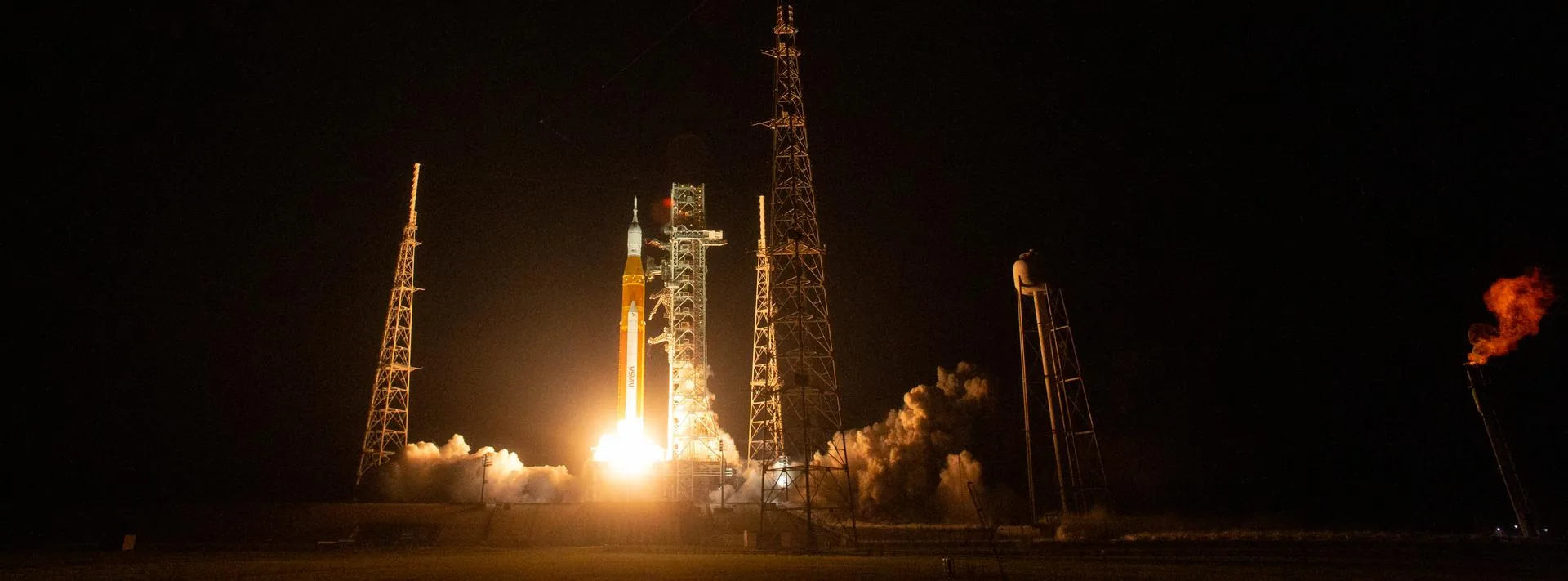
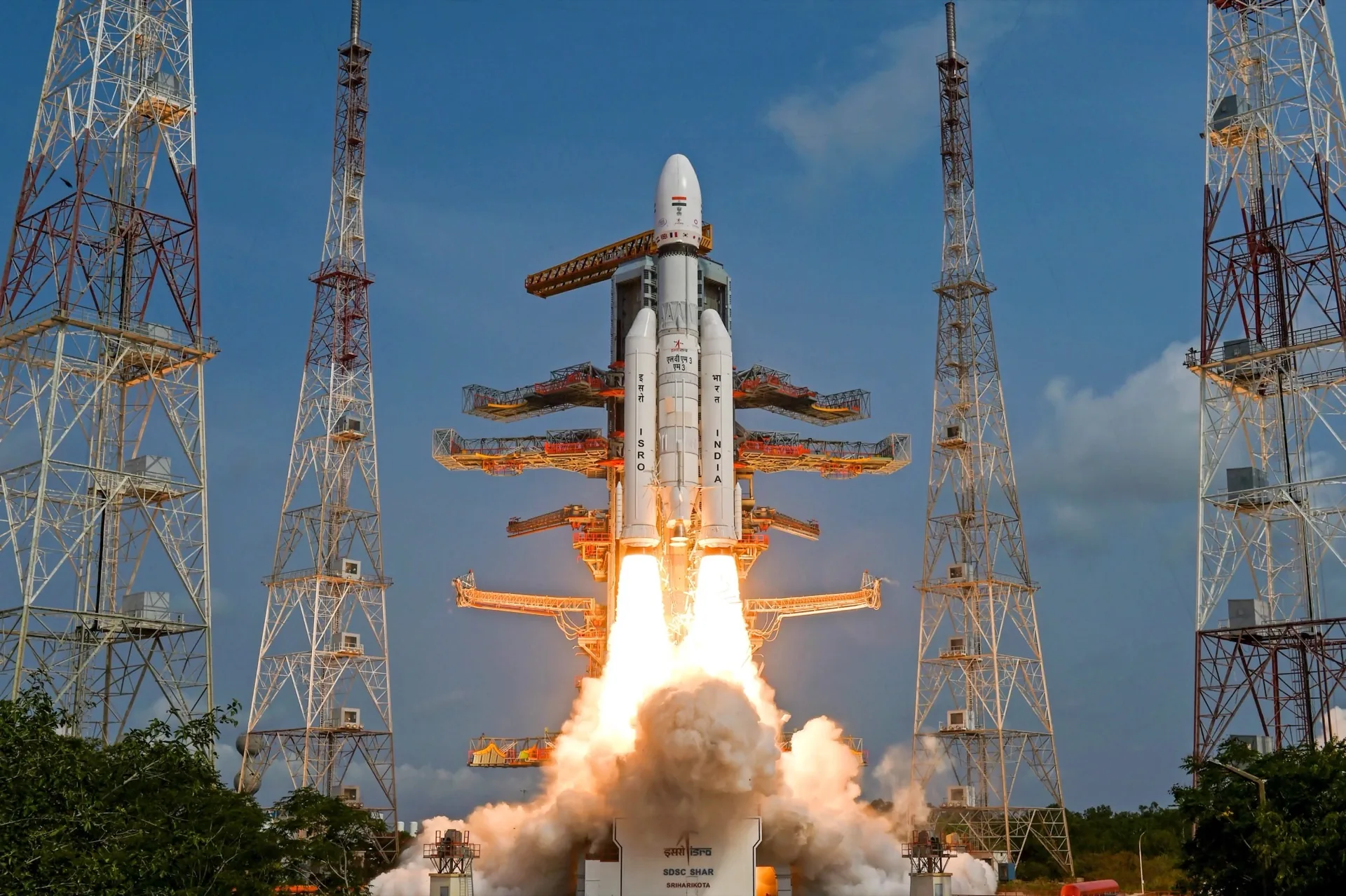
On a clear October morning in 2023, a rocket roared off the launch pad at Sriharikota, carrying something India had never flown before: a crew escape system designed to save astronauts' lives. The test vehicle, designated TV-D1, was not carrying anyone -- it was an unmanned abort test, proving that in an emergency, the system could pull a crew module free from a failing rocket and bring it safely back to Earth.
The test was a success. The crew escape system fired perfectly, the module separated cleanly, parachutes deployed, and the capsule splashed down in the Bay of Bengal. It was a brief flight -- just minutes from launch to splashdown -- but it represented decades of work and a nation's determination to join the most exclusive club in human history: countries that have sent their own citizens to space in their own spacecraft.
Gaganyaan, which means "Sky Vehicle" in Sanskrit, is India's first crewed spaceflight program. When it succeeds, India will become only the fourth nation -- after Russia, the United States, and China -- to independently launch humans into orbit. For a country of 1.4 billion people, many of them young and scientifically ambitious, the stakes extend far beyond any single mission.
The Road to Gaganyaan
India's space program, operated by the Indian Space Research Organisation (ISRO), has a remarkable track record of achieving ambitious goals on modest budgets. The Mars Orbiter Mission (Mangalyaan) reached Mars on its first attempt in 2014 at a cost of roughly $74 million -- less than the production budget of many Hollywood films. The Chandrayaan-3 mission successfully landed a rover near the lunar south pole in August 2023, making India the fourth country to achieve a soft landing on the Moon and the first to land near the south polar region.
Human spaceflight, however, is an order of magnitude more challenging than robotic missions. Keeping humans alive in space demands life support systems, thermal protection, abort capabilities, and crew recovery systems that robotic spacecraft do not require. It demands a level of reliability that tolerates essentially zero failures in critical systems. And it demands training programs, medical support infrastructure, and operational protocols that take years to develop.
ISRO announced Gaganyaan in 2018, with then-Prime Minister Narendra Modi declaring from the ramparts of the Red Fort that India would send astronauts -- called vyomanauts, from the Sanskrit word for space -- to orbit by the 75th anniversary of Indian independence in 2022. That timeline proved ambitious, as the COVID-19 pandemic and the inherent complexity of crewed spaceflight pushed the schedule rightward. But the program has continued to make steady progress.
The Rocket: GSLV Mk III / LVM3
Gaganyaan will launch aboard India's most powerful operational rocket, the GSLV Mk III, also known as the Launch Vehicle Mark 3 (LVM3). This three-stage vehicle stands about 43 meters tall and can place approximately 10 metric tons into low Earth orbit -- enough capacity for the Gaganyaan crew module and its service module.
The GSLV Mk III uses two solid-fuel strap-on boosters (the S200s, the largest solid boosters built by India), a liquid-fuel core stage (the L110, burning unsymmetrical dimethylhydrazine and nitrogen tetroxide), and a cryogenic upper stage (the C25, using liquid hydrogen and liquid oxygen). This cryogenic upper stage was a significant technological achievement for ISRO -- mastering cryogenic engine technology took years of development after the cancellation of a technology transfer agreement with Russia in the 1990s.
The rocket has a proven track record, having launched the Chandrayaan-2 and Chandrayaan-3 lunar missions as well as multiple communication satellites. For Gaganyaan, it has been human-rated with additional safety margins, redundancy, and the crew escape system tested during TV-D1.
The Crew Module
The Gaganyaan crew module is designed to carry three astronauts into low Earth orbit for missions lasting up to seven days. It is a blunt-body capsule, broadly similar in concept to NASA's Apollo command module or SpaceX's Dragon, with a pressurized inner structure surrounded by a thermal protection system capable of withstanding the extreme heat of atmospheric reentry.
The module is approximately 3.7 meters in diameter and 7 meters tall (including the service module), with a habitable volume designed to support a three-person crew with life support, communication, navigation, and thermal control systems. A system of parachutes and retro-rockets will slow the module for a water landing in the Indian Ocean, where the Indian Navy will handle recovery operations.
ISRO has conducted extensive ground testing of the crew module, including airdrop tests of the parachute recovery system and structural tests of the heat shield. The crew escape system, validated by the TV-D1 test, sits atop the launch vehicle and can pull the crew module away from the rocket at any point during ascent if a critical failure is detected.
Training the Vyomanauts
In 2020, ISRO selected four Indian Air Force test pilots for Gaganyaan crew training. Their identities were kept confidential for some time, following a tradition common in several space programs. These pilots were sent to the Yuri Gagarin Cosmonaut Training Center in Star City, Russia, for initial training that included spacecraft systems, survival training, centrifuge runs to experience high-G forces, and zero-gravity flights aboard modified aircraft.
The choice of Russia as a training partner was pragmatic. Russia has more than six decades of experience training cosmonauts and has hosted international trainees for generations. The training covered not just technical skills but the physical and psychological preparation needed for spaceflight, including how to handle emergencies, perform tasks under stress, and live in confined spaces for extended periods.
Upon returning to India, the crew candidates continued training at ISRO facilities, including systems familiarization in Gaganyaan simulators, parachute training, water survival exercises for post-landing recovery, and medical monitoring. Astronaut training center infrastructure has been established in Bengaluru, building the institutional capability that India will need for a sustained human spaceflight program beyond the initial Gaganyaan missions.
Test Flights: A Careful Sequence
ISRO has planned a series of test flights building systematically toward the first crewed launch. The TV-D1 abort test in October 2023 was the first major milestone, validating the crew escape system under real flight conditions.
Additional test flights include an uncrewed orbital mission designated G1, which will send an empty crew module into orbit aboard the GSLV Mk III, execute a series of orbital maneuvers, and return through the atmosphere for a controlled splashdown. This mission will validate the full integrated system -- rocket, spacecraft, life support, thermal protection, navigation, reentry, parachutes, and recovery -- under operational conditions.
A second uncrewed mission may follow, potentially carrying Vyommitra, a humanoid robot developed by ISRO to sit in the crew seat, monitor the cabin environment, and simulate astronaut responses. Vyommitra (whose name combines the Sanskrit words for "space" and "friend") would test the life support and monitoring systems with a human surrogate before actual crew members fly.
The uncrewed test flights have been targeting 2025, with the first crewed mission anticipated in 2026. As with all ambitious space programs, the exact dates are subject to adjustment based on test results and technical readiness.
What Gaganyaan Means for India
The significance of Gaganyaan extends far beyond the technical achievement of putting Indians in orbit. The program is driving the development of an entire ecosystem of capabilities -- advanced life support, human-rated rocket technology, ground support infrastructure, recovery operations, and space medicine -- that India will need for future ambitions including a space station and eventually crewed lunar missions.
ISRO has announced plans for an Indian space station, tentatively called the Bharatiya Antariksha Station (BAS), which would be built in phases starting in the late 2020s. Gaganyaan is the essential first step: you cannot build and operate a space station without the ability to get people there and bring them home safely.
The program also has profound economic implications. India's space industry is growing rapidly, with a vibrant startup ecosystem and increasing private sector participation. Gaganyaan is catalyzing the development of domestic suppliers for everything from advanced materials to life support components, building an industrial base that will support India's space ambitions for decades.
And then there is the intangible but very real effect of inspiration. India has one of the youngest populations on Earth, with a median age of about 28. A generation of Indian students is growing up watching their country land on the Moon and prepare to send people to orbit. The scientists and engineers that Gaganyaan inspires today will be the ones designing missions to Mars in the 2040s and 2050s.
Joining the Club
When Gaganyaan finally flies with crew aboard, it will be a moment of tremendous national pride for India and a milestone for the global spacefaring community. Every nation that develops independent human spaceflight capability adds to humanity's collective resilience and reach. The more countries that can safely send people to space, the more secure our future as a spacefaring species becomes.
India's path has been distinctive -- methodical, cost-conscious, building capability step by step through robotic missions before attempting the crewed leap. It is an approach born of necessity (ISRO's budgets are modest compared to NASA or CNSA) but also of wisdom. Every successful robotic mission has built the experience, infrastructure, and confidence needed for the immense challenge of human spaceflight.
The countdown to Gaganyaan continues. Somewhere in India, four pilots are training for a flight that will change their nation's place in history. The sky vehicle is almost ready.