Disclaimer: This article is for informational and educational purposes only. Nothing here constitutes financial advice, investment advice, or a recommendation to buy or sell any securities. Always do your own research and consult a qualified financial advisor before making investment decisions.
Imagine an invisible catastrophe that requires no enemy, no natural disaster, and no single act of negligence. It builds quietly over decades, each collision adding fragments that make the next collision more likely, until the most economically critical zone above Earth becomes permanently, irreversibly unusable. Every Starlink satellite, every GPS receiver, every weather forecast, every broadband terminal in a developing market — all of it suddenly at risk.
This is not a thought experiment. It is the physics of what happens if orbital debris reaches a critical density in low Earth orbit. It already has a name — Kessler Syndrome — and the uncomfortable truth for space investors is that most portfolio models treat it as a tail risk rather than a structurally embedded systemic threat. That mispricing has consequences.
The Scale of the Problem: How Bad Is It?

The numbers are stark. As of early 2026, the U.S. Space Surveillance Network tracks approximately 45,000 objects in orbit larger than 10 centimeters. These range from dead satellites and spent rocket stages to fragments from collisions and anti-satellite tests. Below that tracking threshold, estimates for objects between 1 and 10 centimeters reach 500,000. Fragments smaller than 1 centimeter — still capable of catastrophic damage to a satellite — number in the hundreds of millions.
Against that backdrop sit roughly 2,000 operational satellites and approximately 3,000 dead ones that remain in orbit, occupying the same lanes and altitudes as live spacecraft. The dead satellites do not maneuver. They do not respond to conjunction warnings. They simply drift, and the probability that one intersects with another object rises every year.
The velocity context matters enormously. In low Earth orbit, objects travel at roughly 7.8 kilometers per second. A relative collision velocity between two objects in crossing orbits can exceed 14 kilometers per second — nearly 50,000 kilometers per hour. At those speeds, a 1-centimeter aluminum fragment carries roughly the same kinetic energy as a hand grenade. A 10-centimeter fragment can destroy a satellite outright.
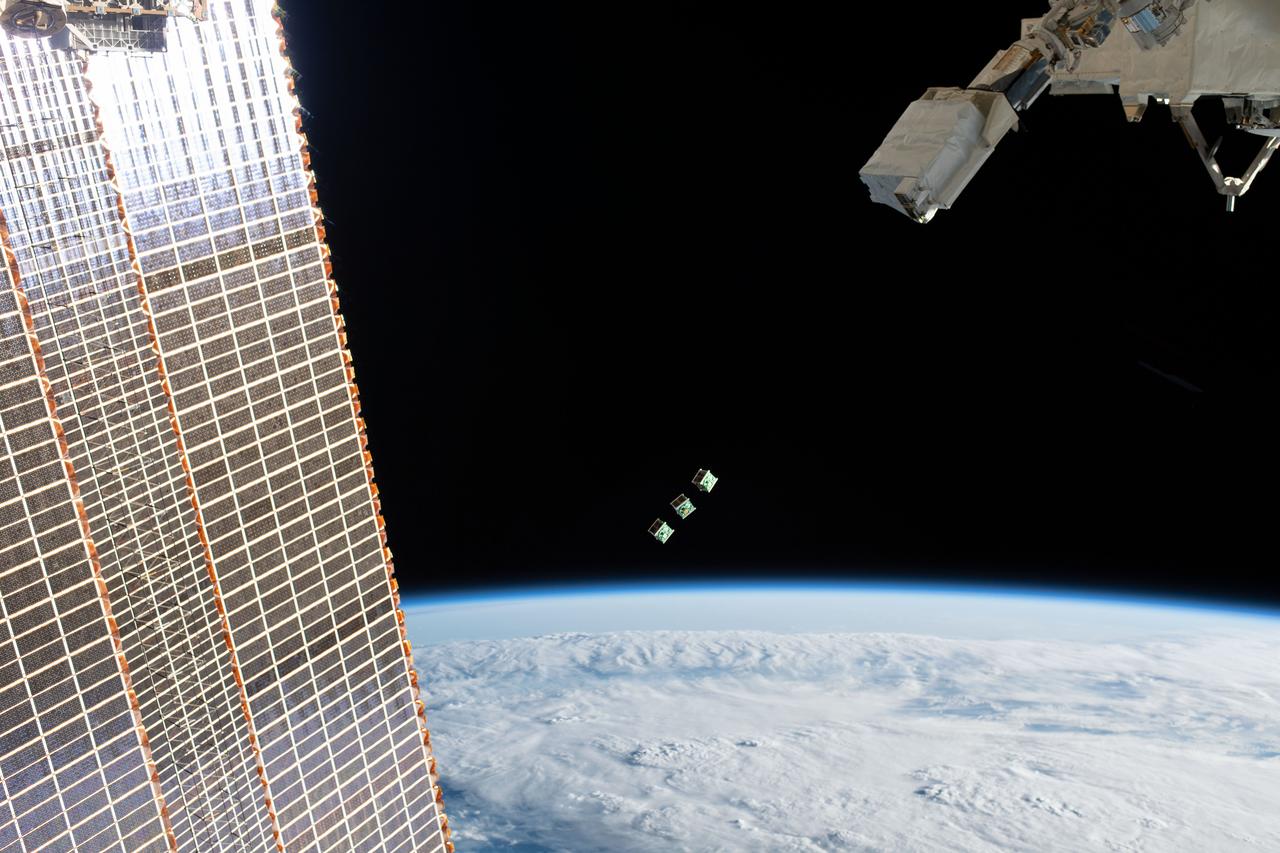
What has changed in the last decade is not merely the number of dead objects — it is the rate at which new objects are being added. SpaceX's Starlink constellation crossed 7,000 operational satellites in early 2026. Amazon's Leo constellation is scaling. OneWeb, Telesat Lightspeed, and Chinese Guowang are all committing to thousands more. The International Telecommunication Union has registered filings for constellations totaling over 100,000 satellites, a number that may never fully launch but illustrates the regulatory demand signal. The LEO population is on a growth trajectory with no historic precedent.
The two events that define the modern debris problem are both over a decade old, yet their consequences are still unfolding. In February 2009, the defunct Russian military satellite Cosmos 2251 collided with Iridium 33 — an operational commercial communications satellite — at approximately 790 kilometers altitude over Siberia. The collision produced roughly 2,300 trackable fragments and tens of thousands of smaller pieces. It was the first hypervelocity collision between two intact satellites in history, and it was entirely accidental.
Two years earlier, China had conducted a direct-ascent anti-satellite test against its own Fengyun-1C weather satellite, creating more than 3,000 trackable debris objects at an altitude of 850 kilometers — a zone that will remain hazardous for generations, because objects at that altitude take decades to naturally deorbit. The Fengyun-1C test remains the single largest debris-generating event in history.
Kessler Syndrome: What It Is and How Close We Are
In 1978, NASA scientist Donald Kessler published a paper with colleague Burton Cour-Palais describing a scenario that now bears Kessler's name. The core insight was deceptively simple: once the density of objects in a given orbital band exceeds a critical threshold, collisions become self-sustaining. Each collision generates fragments. Those fragments increase collision probability. More collisions generate more fragments. The cascade continues until the entire orbital shell is saturated with debris — not for years or decades, but potentially for centuries.
The critical word is "cascade." Individual debris events are already concerning. A Kessler cascade would be civilizational in its economic impact.
The altitude zones most at risk are between approximately 500 and 1,000 kilometers. Below 500 kilometers, atmospheric drag eventually pulls debris down within years or decades. Above 1,000 kilometers, objects can persist for centuries or millennia, but natural collision rates are lower. The 500–1,000 km band is the sweet spot for LEO constellations precisely because it balances communication latency with reasonable orbital lifetime — and it is where the density of both operational satellites and debris is highest.
How close are we? This is where scientific consensus and investor communication diverge uncomfortably. NASA's Orbital Debris Program Office has published analyses suggesting that the current debris population in certain orbital shells is already sufficient to sustain a slow-motion Kessler cascade without any new launches — the so-called "stability threshold." The question is whether we are in a slow-buildup phase or approaching a nonlinear inflection.
The honest answer is that no one knows the precise trigger point. Collision models have improved dramatically, but the uncertainty ranges are wide enough that the debris community discusses probability distributions rather than hard dates. What the models do agree on: the risk is not static. Every new constellation launch, every uncontrolled reentry failure, every spent rocket stage left in orbit shifts the probability distribution toward the bad tail.
How Debris Directly Impacts Space Investments
For investors in space companies, debris translates into four concrete financial pressures that are already visible in balance sheets and operating costs.
Collision avoidance maneuvers consume propellant and operational time. Starlink satellites conduct thousands of avoidance maneuvers per year. Each maneuver burns fuel and reduces the satellite's operational lifetime. For a constellation operator, the aggregate cost of avoidance maneuvers — in propellant, operational labor, and reduced satellite lifetimes — runs into hundreds of millions of dollars annually across the fleet.
Insurance premiums are rising. The space insurance market is a barometer for debris risk, and underwriters have been tightening terms on in-orbit coverage for several years. Premiums for satellites operating in high-density orbital shells are increasing, exclusions for "debris-related damage" are becoming more explicit in policy language, and some underwriters are requiring operators to demonstrate conjunction analysis capabilities as a condition of coverage. At Lloyd's of London, the world's largest space insurance market, debris is now consistently cited as a top-tier risk factor alongside launch vehicle reliability.

Regulatory compliance costs are accelerating. The FCC's 2022 rule requiring LEO satellites to deorbit within five years of mission completion — down sharply from the previous 25-year ITU guideline — has direct financial implications. Operators must now design satellites with sufficient propellant reserves to execute a controlled deorbit, or demonstrate they will naturally deorbit within five years from their operational altitude. For spacecraft designed at the 500–600 km range, natural deorbit within five years is achievable. Above 700 km, it is not, and active deorbit capability must be built in. That engineering requirement adds cost to every satellite in a constellation.
Spectrum and orbital slot risk is the most underappreciated financial exposure. International rights to operate in specific orbital bands are increasingly contested. Operators that accumulate poor debris-compliance records face regulatory challenges to license renewals and spectrum allocation. In a world where orbital spectrum is a limited and increasingly litigated resource, regulatory standing is a balance-sheet-relevant asset.
The Regulatory Response: FCC, ITU, and Tightening Rules
The regulatory environment around space debris has shifted more rapidly in the last four years than in the previous four decades, and the trajectory is toward further tightening.
The FCC's September 2022 decision to adopt a five-year deorbit rule for LEO satellites was a landmark. The prior ITU guideline of 25 years had been largely aspirational; the new FCC rule creates an enforceable obligation for U.S.-licensed operators and any foreign operator seeking FCC market access authorization. The Commission also signaled it would use its licensing and enforcement authority more aggressively — including the power to deny license renewals for operators with compliance failures.
In November 2023, the FCC took a step further, fining DISH Network $150,000 for failing to properly deorbit a retired satellite — the first fine ever levied by any government regulator for space debris violations. The amount was modest, but the precedent was seismic. Debris compliance is no longer a voluntary industry norm; it is an enforceable regulatory obligation with financial consequences.
The international picture is more fragmented but moving in the same direction. ESA's Zero Debris Charter, launched in 2023 and endorsed by over 100 organizations by 2026, represents industry commitment to zero net debris generation by 2030. The UN Committee on the Peaceful Uses of Outer Space (COPUOS) is advancing long-term sustainability guidelines, though enforcement remains weak at the international level. The real enforcement lever remains the FCC — and, increasingly, the European Union's forthcoming space regulatory framework.
For operators of Starlink, OneWeb, and Amazon Leo, the regulatory risk is not hypothetical. All three constellations are licensed to operate at altitudes where compliance with five-year deorbit rules requires active propulsion on every satellite. If propulsion systems fail — as they inevitably will on a statistical basis across thousands of satellites — the operators face regulatory jeopardy and the potential cost of active debris removal for their own non-compliant spacecraft.
Companies That Profit From Debris
The debris problem has created a dedicated commercial sector that is, in its own way, one of the most structurally sound investment theses in the space industry: the picks-and-shovels play on the entire LEO economy.
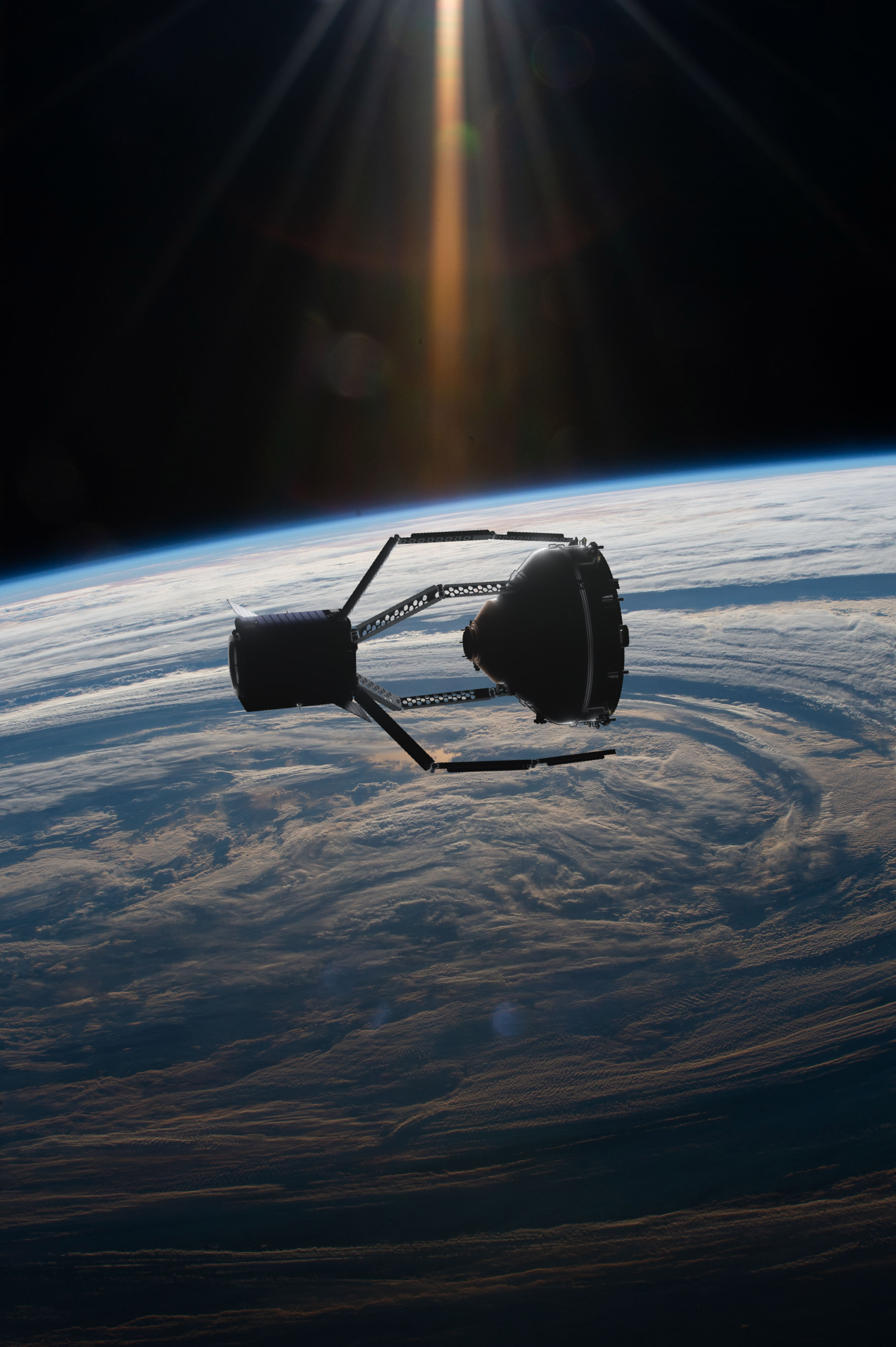
Astroscale (Tokyo Stock Exchange: 186A) is the most prominent pure-play in active debris removal. The Japanese company, founded in 2013, raised over $384 million across multiple funding rounds before going public on the Tokyo Stock Exchange in 2024. Its ELSA-d (End-of-Life Services by Astroscale-demonstration) mission demonstrated magnetic capture technology for defunct satellites in 2021–2022. The company has secured contracts for on-orbit servicing with OneWeb, JAXA, and the UK Space Agency, and is developing COSMIC, a hosted payload mission to demonstrate multi-debris capture. Astroscale's commercial model — selling end-of-life servicing contracts to satellite operators — aligns naturally with the regulatory pressure operators now face to comply with deorbit rules.
ClearSpace is a Swiss startup spun out of EPFL (École Polytechnique Fédérale de Lausanne) that won ESA's ADRAS-J (Active Debris Removal by Astroscale-Japan, conducted in partnership) contract for the first commercial debris removal mission. ClearSpace-1, targeting a Vega rocket adapter that has been orbiting since 2013, is intended to demonstrate robotic capture and controlled deorbit. ESA has committed over €120 million to the project. ClearSpace remains privately held and primarily ESA-funded, but it represents the European approach to building sovereign debris removal capability.
LeoLabs is the leading commercial provider of space situational awareness (SSA) data — the real-time tracking and collision prediction services that every satellite operator now relies on. Founded in 2016, LeoLabs operates a global network of phased-array radars capable of tracking objects as small as 2 centimeters. Its customer base includes commercial operators, government agencies, and insurance underwriters who need independent debris tracking data. As the orbital population grows, demand for SSA data scales linearly with every new satellite launched. LeoLabs is privately held but has raised over $100 million and is widely considered a strong IPO candidate as the market matures.
Exoanalytic Solutions occupies a complementary niche, using a global network of optical telescopes to track objects in higher orbits, including GEO, where radar systems are less effective. Its government and commercial intelligence products feed into the same collision avoidance ecosystem as LeoLabs.
ExoTerra Resource and a growing cohort of in-space propulsion startups are building the enabling technology layer — high-efficiency electric propulsion, drag sails, tethered deorbit devices — that will be embedded in future satellites to enable compliant end-of-life disposal. These companies benefit from the regulatory tailwind without bearing the execution risk of active debris removal missions.
Incorporating Debris Risk Into Your Space Portfolio
Debris risk should be part of every due-diligence framework for space investments, but most institutional models either omit it entirely or treat it as a binary black-swan event rather than a continuous probability distribution that shifts the expected value of every space asset.
Questions to ask about constellation operators. What percentage of the operator's satellites are at altitudes where five-year natural deorbit is not feasible? What is the operator's historical track record on conjunction management? Does the company have disclosed reserves for debris compliance costs, active deorbit missions, or regulatory fines? What happens to the business model if the FCC tightens the deorbit rule further — say, to three years?
Questions to ask about launch providers. Upper stage disposal is a significant debris generator. Does the provider perform controlled reentry or passivation of rocket bodies after deployment? Rocket Lab's return-to-launch-site ambitions and their Kick Stage, for example, address this explicitly. SpaceX has been criticized for leaving Falcon 9 upper stages in orbit, though the company has improved upper-stage disposal practices over time.
Red flags to watch for. Constellation operators that describe debris compliance as a "legacy concern" being managed by industry guidelines — rather than a regulatory obligation with financial penalties — are underweighting the risk. Any space company operating above 700 km with satellites that lack active propulsion should face questions about their deorbit plan. Insurance coverage disclosures that include broad debris exclusions without quantification of that exposure are a gap in financial transparency.
The debris solution companies as a portfolio hedge. Astroscale, LeoLabs, and the broader SSA/debris-removal sector represent a structural hedge within a space portfolio. Their revenue scales with the growth of the overall LEO economy — every new satellite launched is a potential customer — and they benefit directly from the regulatory tightening that creates headwinds for constellation operators. This asymmetric payoff profile makes debris-solution companies attractive as a partial offset to constellation operator exposure.
Scenario analysis matters more than point estimates. The prudent approach is to stress-test space portfolios against a moderate Kessler-cascade scenario: one significant collision event in a heavily populated orbital shell generating enough debris to force widespread avoidance maneuvers, trigger insurance claims, and prompt emergency regulatory action. Under that scenario, which companies in the portfolio lose revenue and which gain it? The answers reveal concentration risk that most current space portfolio models do not capture.
The Companies That Solve Debris Will Underpin the Space Economy
The debris problem is ultimately a market failure: the actors generating debris — satellite operators, launch providers, governments conducting ASAT tests — do not bear the full cost of the external risk they impose on everyone else. That market failure will eventually be corrected, either by catastrophic event or by the steady accumulation of regulatory and insurance pressure that forces debris costs onto the parties generating them.
The trajectory of that correction is already clear. The FCC's five-year rule was not the end of regulatory tightening — it was the beginning. Insurance markets are pricing debris risk into premiums and exclusions with increasing precision. The first debris-compliance fine in history was levied in 2023; there will be more. The commercial active debris removal market, still nascent, is moving toward the first demonstration missions that will establish pricing, technology, and contract structures for an industry that does not yet exist at scale.
For space investors, the insight is not that debris will necessarily cause a Kessler cascade — the probability distribution, while concerning, does not make that outcome inevitable or even most likely in the near term. The insight is that debris risk is not tail-priced. It is a continuous, compounding cost already embedded in the operating economics of every LEO constellation, rising in severity with every new launch, and generating a class of solution providers whose long-term revenue visibility is among the best in the space sector.
The companies that solve the debris problem will not just profit from it. They will become the essential infrastructure layer on which the entire LEO economy depends. In a sector prone to hype cycles and speculative excess, that is a rare and bankable thing.
Space debris statistics sourced from NASA's Orbital Debris Program Office, ESA's Space Debris Office, and the U.S. Space Surveillance Network. Financial and regulatory information reflects publicly available disclosures as of April 2026. This article does not constitute investment advice.