There are two ways to build a space program. You can concentrate authority in a single agency, fund it with one government's budget, point it at the Moon, and dare anyone to tell you it cannot be done. Or you can gather 23 sovereign nations around a table, negotiate for years over who builds what, and somehow produce a comet lander, the world's most accurate navigation constellation, and the most comprehensive Earth observation system ever designed.
NASA and ESA represent these two approaches. One is not better than the other. They are different -- in funding, governance, ambition, risk tolerance, and what they ultimately deliver. Understanding those differences matters, because the future of space exploration depends on both agencies working at their best, sometimes together and sometimes in productive competition.
This is not a ranking. It is a side-by-side look at two agencies that together account for much of humanity's progress in space.
The Money: How Much and Where It Goes
Start with budget, because budget dictates everything else.
NASA's fiscal year 2026 budget is approximately $25.4 billion. Congress rejected the Trump administration's proposed 24% cut and kept the agency at roughly its FY2025 level, including $7.25 billion for the Science Mission Directorate -- a mere 1.1% reduction compared to the 47% cut that had been proposed in the President's Budget Request. NASA's budget represents roughly 0.35% of total federal spending.
ESA's 2026 annual budget is approximately EUR 8.26 billion (roughly $9 billion at current exchange rates). This comes from the record EUR 22.3 billion three-year package approved at the Ministerial Council in Bremen in November 2025 -- a 32% increase over the previous cycle (17% when adjusted for inflation). Germany leads contributions at EUR 5.067 billion for the three-year period, followed by France at EUR 3.6 billion, Italy at EUR 3.462 billion, and a surging Spain at EUR 1.854 billion (double its 2022 commitment).
But here is where the comparison gets tricky. ESA's budget does not capture everything Europe spends on space.
The European Union funds the Copernicus Earth observation program and the Galileo navigation constellation through separate budgets. Copernicus alone received EUR 5.421 billion for 2021-2027 under the EU's Multiannual Financial Framework, and Galileo's budget is comparable. When you add EU space spending to ESA's budget, Europe's total public investment in space is considerably larger than the ESA headline number suggests -- closer to EUR 13-14 billion per year when all streams are combined.
Per Capita Perspective
The United States has roughly 335 million people. At $25.4 billion, that works out to about $76 per American per year on NASA alone (not counting the Space Force or other defense space spending).
ESA's 23 member states collectively have a population of roughly 540 million. At EUR 8.26 billion, that is about EUR 15 per European per year -- around $16-17. Even adding EU space spending, the per capita figure reaches perhaps $25-30.
The gap is enormous. NASA spends roughly three times more per capita than Europe does on civil space -- and that is before accounting for U.S. military and intelligence space spending, which adds tens of billions more. What is remarkable is not the gap itself but what ESA manages to accomplish within it.

Governance: One Flag vs. Twenty-Three
The structural differences between these two agencies run deep, and they explain much of what each does well and where each struggles.
NASA: Presidential Direction, Congressional Funding
NASA is a single-nation agency. Its administrator -- currently Jared Isaacman, confirmed in December 2025 -- reports to the President and is subject to Congressional oversight and appropriation. The agency's priorities can shift dramatically with each administration: the Constellation program was cancelled under Obama, the Artemis program was launched under Trump's first term, continued under Biden, and is now being restructured again under Trump's second term.
This system creates volatility but also enables bold, concentrated bets. When a president commits to a goal -- landing on the Moon by a certain date, for example -- NASA can mobilize enormous resources toward that single objective. The downside is that those commitments can be reversed four years later.
Congress controls the purse strings and frequently overrides presidential budget requests, as it did in FY2026. Individual members fight to protect programs that benefit their districts, which is why the Space Launch System -- built across facilities in Alabama, Louisiana, Mississippi, Utah, and Florida -- has proven nearly impossible to cancel despite persistent criticism of its cost.
ESA: Consensus Among Sovereigns
ESA's governance is fundamentally different. The agency is governed by a Council where each of the 23 member states has one vote. Major decisions are made at Ministerial Council meetings held every two to three years, where ministers from each country negotiate program subscriptions.
The critical principle is juste retour -- fair return. When a member state contributes money to an ESA program, it expects a proportional share of the industrial contracts to flow back to companies in that country. This means that if Germany contributes 22% of a program's budget, roughly 22% of the work should go to German industry.
Juste retour has been foundational to ESA's success as a diplomatic achievement. It is what keeps 23 nations at the table, because each country can point to tangible industrial benefits from participation. But it also introduces inefficiency. Work is sometimes distributed based on political geography rather than technical optimality. A component might be built in one country when the best engineering team for that component sits in another.
Decision speed is another consequence. NASA's administrator can make significant programmatic decisions relatively quickly (subject to Congressional approval for funding). ESA's Director General -- currently Josef Aschbacher, whose mandate was extended through 2029 -- must build consensus among 23 governments with 23 different domestic political pressures, 23 different industrial bases, and 23 different strategic priorities.
The result is that ESA tends to be more conservative in its commitments but remarkably durable once a program is approved. Programs rarely get cancelled mid-stream because the political cost of unwinding a multi-national commitment is enormous. NASA, by contrast, has a long history of starting ambitious programs and cancelling them when administrations change.
Human Spaceflight: The Sharpest Divide

If there is one area where the gap between NASA and ESA is most visible, it is human spaceflight.
NASA: The Full Stack (Almost)
NASA has maintained continuous human spaceflight capability for decades. It owns and operates the U.S. segment of the International Space Station. It developed the Space Launch System and Orion capsule for the Artemis program. And through the Commercial Crew Program, it funded SpaceX and Boeing to develop crew vehicles for ISS transport.
The Artemis program represents NASA's most ambitious human spaceflight effort since Apollo. Artemis I flew an uncrewed test in 2022. Artemis II completed a crewed lunar flyby on April 1, 2026, carrying astronauts Reid Wiseman, Victor Glover, Christina Koch, and Canadian astronaut Jeremy Hansen around the Moon and back -- the first humans beyond low Earth orbit since Apollo 17 in 1972. Artemis III has been expedited to 2027, though it will no longer include a lunar landing; instead, it will test rendezvous and docking with commercially developed Human Landing System vehicles from SpaceX and Blue Origin. The first Artemis lunar landing is now targeted for early 2028.
The Commercial Crew approach has been one of NASA's greatest successes -- and one of its most painful lessons. SpaceX's Crew Dragon has been operational since 2020 and flies regularly. Boeing's Starliner, which received $4.2 billion compared to SpaceX's $2.6 billion, suffered a troubled crew flight test in June 2024 when thruster malfunctions made it too risky to return astronauts aboard, leading to an uncrewed return and the crew coming home on a SpaceX Dragon in March 2025.
ESA: No Crew Vehicle, But Critical Hardware
ESA does not have an independent human spaceflight capability. It has never built a crew vehicle. European astronauts have historically flown on the Space Shuttle, Soyuz, and now SpaceX Crew Dragon.
What ESA does provide is indispensable hardware. The European Service Module (ESM) powers and propels every Orion spacecraft. Built by Airbus Defence and Space in Bremen, the ESM provides propulsion, power, thermal control, and life support consumables. ESA has contracts through ESM-6, with four already delivered to NASA. Without the ESM, Orion cannot fly. This gives Europe a seat at the Artemis table -- literally. Jeremy Hansen's presence on Artemis II was partly a consequence of Canada's contributions; ESA's contributions secure European astronaut slots on future missions.
For the Lunar Gateway, ESA is contributing the I-HAB habitation module (built by Thales Alenia Space Italy, with JAXA contributions), the Lunar View refueling module (formerly ESPRIT), and the Lunar Link communications system. The total value of ESA's Gateway hardware contracts is approximately EUR 787.5 million.
The Crew Vehicle Debate
Whether Europe should build its own crew vehicle is one of the most charged questions in European space policy. ESA Director General Aschbacher has publicly asked: "Why should Europe be excluded from the group of countries that master human spaceflight on their own?"
The answer, for now, is money and consensus. ESA has taken a pragmatic cargo-to-crew approach through its LEO Cargo Return Services initiative, funding companies like The Exploration Company to develop cargo vehicles that could eventually be adapted for crew. The Exploration Company has estimated that a crew-rated spacecraft would cost roughly EUR 1 billion to develop -- a sum that is difficult to raise privately and requires a political decision that Europe's member states have not yet made.
At the November 2025 Ministerial Council, there was still no consensus. The question will likely come up again at the next Ministerial -- but three more years of depending on American launch providers for European astronaut access is three more years of strategic vulnerability.
Science Missions: Where ESA Punches Above Its Weight
If human spaceflight is where NASA dominates, science is where ESA consistently demonstrates what a smaller budget can achieve when applied with discipline and focus.
ESA's Science Portfolio
ESA's science program is organized into Large-class (L), Medium-class (M), and Small-class (S) missions through its Cosmic Vision programme. This structured approach forces prioritization and ensures that each mission is scientifically justified before it receives funding.
The results speak for themselves:
-
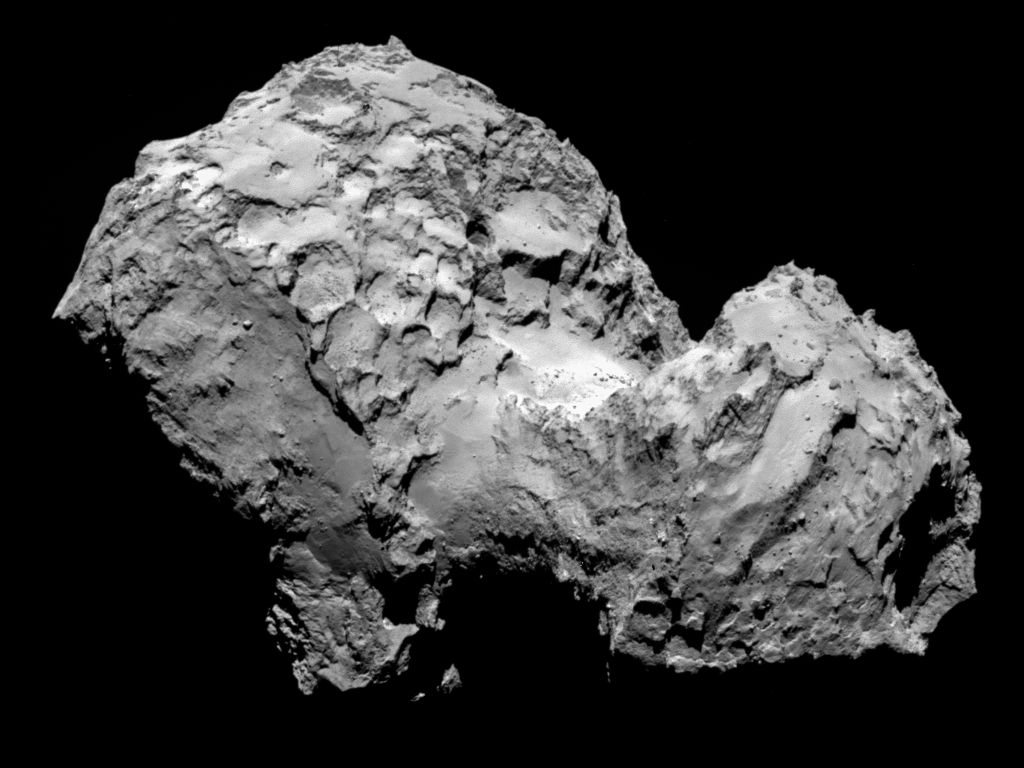
Rosetta (2004-2016): The first spacecraft to orbit a comet and deploy a lander (Philae) onto a comet's surface. Rosetta's study of Comet 67P/Churyumov-Gerasimenko revealed that the comet's water is isotopically different from Earth's oceans, detected molecular oxygen for the first time at a comet, and found amino acids in the comet's dust. It remains one of the most scientifically productive planetary missions ever flown.
-
Gaia (launched 2013): Has catalogued the precise positions, distances, and motions of nearly two billion stars in the Milky Way, producing the most detailed three-dimensional map of our galaxy ever created. Gaia's data releases have fundamentally transformed stellar astrophysics, galactic archaeology, and our understanding of the Milky Way's structure and history.
-
Euclid (launched 2023): Currently surveying more than a third of the sky to map the distribution of dark matter and dark energy over 10 billion years of cosmic history. Its first data release is scheduled for October 2026.
-
JUICE (launched 2023): En route to Jupiter's icy moons Ganymede, Europa, and Callisto. After a successful Venus flyby in August 2025, JUICE will fly by Earth in September 2026 before arriving at Jupiter in 2031. It will become the first spacecraft to orbit a moon other than our own when it enters Ganymede orbit in 2034.
-
BepiColombo (launched 2018): A joint ESA-JAXA mission to Mercury that completed its sixth and final flyby in January 2025 and will enter Mercury orbit in November 2026, beginning science operations in early 2027.
-
Hera (launched 2024): The follow-up to NASA's DART asteroid deflection test, arriving at the Didymos-Dimorphos binary asteroid system in late 2026 to characterize the impact crater and measure the deflection results in detail.
-
Herschel and Planck (both launched 2009): Herschel was the largest infrared telescope ever launched, revealing star formation in unprecedented detail. Planck mapped the cosmic microwave background with unmatched precision, producing the definitive picture of the early universe and refining our measurements of the age, composition, and geometry of the cosmos.
NASA's Science Portfolio
NASA's science program is simply the largest and most diverse in the world:
-
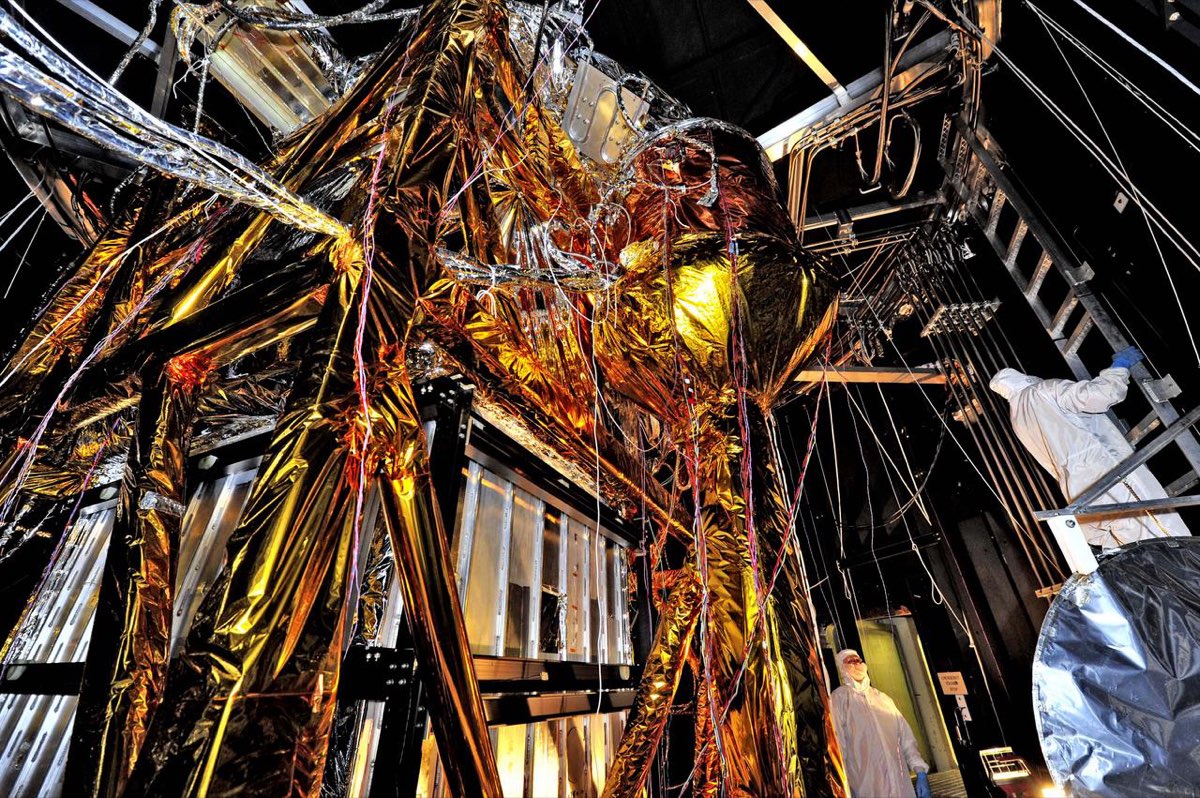
James Webb Space Telescope (launched 2021): The most powerful space telescope ever built, a $9.7 billion joint project with ESA (which contributed NIRSpec, MIRI optics, and the Ariane 5 launch vehicle, valued at approximately EUR 700 million) and CSA. JWST has revolutionized our understanding of the early universe, exoplanet atmospheres, star formation, and virtually every field of astronomy.
-
Mars rovers: From Spirit and Opportunity to Curiosity and Perseverance, NASA's Mars surface exploration program is unmatched. Perseverance has been collecting samples that were intended for the Mars Sample Return mission -- though Congress effectively cancelled MSR in January 2026 by eliminating nearly all future funding.
-
Voyager 1 and 2: Launched in 1977, still transmitting from interstellar space -- the most distant human-made objects in existence.
-
Hubble Space Telescope: After 36 years and five servicing missions, still producing world-class science.
-
DART (2022): Successfully deflected asteroid Dimorphos, the first demonstration of planetary defense technology. ESA's Hera mission is the essential follow-up.
-
Europa Clipper (launched 2024): Currently cruising toward Jupiter after a March 2025 Mars flyby, scheduled to arrive at Europa in April 2030 to investigate whether the ocean moon could harbor conditions suitable for life.
The Comparison
NASA's science budget ($7.25 billion in FY2026) is roughly comparable to ESA's entire annual budget. Yet ESA consistently produces missions that rival or complement NASA's best work. Gaia has no NASA equivalent. Rosetta was a mission NASA considered but never flew. Euclid is doing science that complements JWST in ways that neither agency could achieve alone.
The difference is focus. ESA cannot afford to do everything, so it is forced to choose carefully. NASA can fund a broader portfolio, but its missions sometimes suffer from scope creep and cost overruns -- JWST was originally estimated at $1 billion and ended up costing nearly ten times that.
Earth Observation: Europe's Quiet Dominance
If there is one area where ESA and the European Union together lead the world, it is Earth observation.
Copernicus: The Gold Standard
The Copernicus programme, jointly run by ESA and the European Commission, is the most comprehensive Earth observation system ever built. Its backbone is the Sentinel satellite fleet -- a family of missions designed to provide systematic, continuous data on land surfaces, oceans, atmosphere, and climate.
The current fleet includes:
- Sentinel-1 (radar imaging, day/night, all-weather)
- Sentinel-2 (high-resolution optical imaging for land monitoring)
- Sentinel-3 (ocean and land surface temperature, color, and altimetry)
- Sentinel-5P (atmospheric composition, monitoring pollution and greenhouse gases)
- Sentinel-6 (precision sea-level measurement, jointly with NASA)
Each Sentinel mission has at least two satellites for temporal coverage, and the European Commission announced six Copernicus Expansion Missions to address gaps in urbanization, food security, sea-level rise, and greenhouse gas monitoring.
What makes Copernicus transformative is its free and open data policy. All Copernicus data is freely available to anyone in the world, and the downstream economic benefits have been estimated at EUR 30 billion through 2030. This data feeds climate monitoring, agricultural planning, disaster response, urban development, and hundreds of commercial applications.
NASA's Earth Observation
NASA operates an extensive fleet of Earth-observing satellites -- including Landsat (jointly with USGS), GRACE-FO, ICESat-2, PACE, SWOT, and the recently launched NISAR (a collaboration with ISRO that launched in July 2025). NASA is also developing its next-generation flagship EO missions, now renamed Falcon (atmospheric observation) and Eagle (surface biology and geology), which together will include at least six new satellites.
NASA's Earth science is world-class. But it lacks the unified, systematic architecture of Copernicus. NASA's EO missions tend to be individual science investigations rather than an operational monitoring system. They produce groundbreaking research but are not designed as a continuous, operational service in the way that Copernicus is.
The Verdict on EO
Copernicus is arguably Europe's single greatest contribution to global public goods in space. It provides the data infrastructure that underpins the Paris Agreement's climate monitoring, the EU's environmental regulations, and a growing ecosystem of commercial services. No other entity -- not NASA, not any other space agency -- has built anything comparable in scope, continuity, or accessibility.
Navigation: GPS vs. Galileo
Strictly speaking, GPS is not a NASA program -- it is operated by the U.S. Space Force. Similarly, Galileo is an EU program managed by the European Union Agency for the Space Programme (EUSPA), with ESA handling development and procurement. But the comparison is relevant because these systems reflect the broader strategic philosophies of the U.S. and Europe.
GPS (Global Positioning System) has 31 operational satellites and has been the world's dominant navigation system since the 1990s. Its civilian signal provides accuracy of roughly 3 meters.
Galileo currently has 28 satellites in orbit and is the world's most accurate satellite navigation system. Its Open Service provides sub-1-meter accuracy worldwide with dual-frequency positioning -- roughly three times more accurate than GPS's civilian signal. Galileo's signal-in-space ranging error is 1.6 cm compared to GPS's 2.3 cm, and its High Accuracy Service delivers corrections for 20 cm precision.
Beyond accuracy, Galileo represents something strategically important: European sovereignty. GPS is controlled by the U.S. military and can theoretically be degraded or denied in a region at Washington's discretion. Galileo gives Europe an independent navigation capability that cannot be switched off by a foreign power. In a world of increasing geopolitical tension, this is not a theoretical concern -- it is a practical necessity.
Most modern smartphones and receivers use both GPS and Galileo simultaneously, along with Russia's GLONASS and China's BeiDou, for the best possible accuracy. But if you had to pick just one system for raw civilian accuracy, Galileo wins.
Launchers: Build vs. Buy
NASA and ESA have taken fundamentally different approaches to launch vehicles, and both approaches carry risks.
NASA: The Customer Model
NASA no longer builds rockets in the traditional sense. The Space Launch System is technically a NASA program, but it is built by contractors (Boeing, Northrop Grumman, Aerojet Rocketdyne) and has been criticized for costing over $31.6 billion through 2025 with a per-launch cost exceeding $2 billion. Its future beyond Artemis III is uncertain, with the Trump administration proposing to terminate it.
For everything else, NASA buys launches commercially. SpaceX's Falcon 9 and Falcon Heavy carry the bulk of NASA's science and cargo missions. ULA's Vulcan Centaur and Rocket Lab's Electron provide additional options. This commercial procurement model has driven down costs dramatically and given NASA access to the most capable and affordable launch fleet in history.
ESA: Sovereign Access
ESA takes a fundamentally different view: Europe must maintain independent access to space. This means funding and operating European launch vehicles even when they cost more than buying a Falcon 9 from SpaceX.
Ariane 6 flew its inaugural mission on July 9, 2024, from the Guiana Space Centre. The first flight was a partial success -- the core mission objectives were met, but an upper-stage anomaly prevented a planned deorbit burn. The second launch in March 2025 successfully delivered the CSO-3 reconnaissance satellite, and the rocket has been ramping up its launch cadence since then. Ariane 6 comes in two configurations: the A62 (two solid boosters) and A64 (four boosters), giving Europe flexibility for payloads ranging from institutional satellites to heavy commercial missions.
Vega-C, the smaller European launcher, returned to flight in December 2025 after being grounded due to a 2022 failure and subsequent redesign.
Through the European Launcher Challenge, approved at the November 2025 Ministerial Council with over EUR 900 million in funding, ESA is also fostering a new generation of commercial launch providers. Five companies -- Isar Aerospace, MaiaSpace, Orbex, PLD Space, and Rocket Factory Augsburg -- have been selected and must demonstrate orbital capability by 2027.
The philosophical difference is clear. NASA says: let the market provide launch services, and NASA will be a smart buyer. ESA says: launch capability is a strategic asset that Europe cannot afford to outsource, even if domestic rockets cost more. Both positions have merit, and both carry risks -- NASA's approach makes it dependent on a small number of commercial providers (overwhelmingly SpaceX), while ESA's approach means European taxpayers subsidize a launch industry that is not yet cost-competitive with American alternatives.
Commercial Space: Creator vs. Late Adopter
NASA's role in creating the modern commercial space industry is difficult to overstate. The Commercial Orbital Transportation Services (COTS) program, started in 2006, invested roughly $800 million in SpaceX and Orbital Sciences to develop cargo vehicles for the ISS. That investment -- a fraction of what a traditional NASA program would have cost -- helped turn SpaceX from a startup into the dominant force in global launch.
The Commercial Crew Program followed the same model for human spaceflight, awarding contracts to SpaceX ($2.6 billion) and Boeing ($4.2 billion). The SpaceX side has been a spectacular success; the Boeing side has been a cautionary tale. But the model itself -- NASA as an anchor customer that provides seed funding and guaranteed demand while companies retain ownership and can sell to other customers -- has been validated beyond any reasonable doubt.
NASA is now extending this approach to commercial space stations (funding Axiom Space, Blue Origin, and others to develop ISS successors), commercial lunar landers (SpaceX Starship HLS, Blue Origin Blue Moon), and commercial Mars services.
ESA has been slower to adopt this model but is catching up. The European Launcher Challenge is explicitly modeled on NASA's commercial approach. The LEO Cargo Return Services initiative follows a similar logic. But Europe's commercial space ecosystem is years behind America's -- there is no European SpaceX, no European Rocket Lab, and the venture capital infrastructure for space startups in Europe is a fraction of what exists in the United States.
The reasons are structural. America's defense budget provides a massive anchor customer for launch services that does not exist in Europe. Silicon Valley's venture capital culture funds ambitious, high-risk space startups more readily than European investors do. And NASA's willingness to accept failure -- COTS was explicitly designed to tolerate some failures -- is harder to replicate in a consensus-driven, 23-nation environment where every failed investment is a political liability.
ESA Director General Aschbacher has identified this gap as a priority, pushing for what he calls "de-bureaucratisation" and urging member states to provide sufficient, coordinated funding. But closing the commercial space gap with the United States will take a decade at minimum.
Where They Work Together
Despite the differences, NASA and ESA are deeply intertwined partners. Their collaboration is one of the most productive international scientific partnerships in history.
James Webb Space Telescope: ESA contributed two of JWST's four instruments (NIRSpec and 50% of MIRI), plus the Ariane 5 launch. In return, European astronomers get guaranteed observing time on equal terms with Americans. Total European contribution: approximately EUR 700 million against NASA's $9.7 billion.
Artemis and Gateway: ESA's European Service Module is essential to every Orion mission. ESA's Gateway modules (I-HAB, Lunar View, Lunar Link) are critical to the lunar station. In return, European astronauts will fly on Artemis missions and work aboard Gateway.
Hubble Space Telescope: ESA contributed the Faint Object Camera and solar arrays for the original Hubble and has provided astronaut support for servicing missions. European astronomers receive at least 15% of Hubble observing time.
International Space Station: ESA operates the Columbus laboratory module, contributes the Automated Transfer Vehicle (ATV) resupply missions (now concluded), and flies European astronauts on ISS expeditions.
Sentinel-6/Michael Freilich: A joint NASA-ESA mission providing precision sea-level data -- a perfect example of how the two agencies complement each other, with NASA contributing instruments and launch and ESA contributing the satellite platform.
SOHO and Solar Orbiter: ESA's solar science missions have been conducted in deep partnership with NASA, combining European spacecraft with American instruments and tracking stations.
Mars Sample Return: This was supposed to be the next great NASA-ESA collaboration -- ESA would build the Earth Return Orbiter and the Sample Fetch Rover, while NASA would provide the Mars Ascent Vehicle and launch services. But the program's ballooning costs (estimates reached $11 billion) and the January 2026 Congressional decision to effectively cancel U.S. funding have left the partnership in limbo. ESA is now exploring whether components of its contribution can be repurposed for other missions.
The loss of Mars Sample Return is the most significant setback in NASA-ESA cooperation in decades. The samples collected by Perseverance represent some of the most scientifically valuable material ever gathered in the solar system, and there is currently no funded plan to bring them home.
The Honest Assessment
Neither agency is "better." They are built for different purposes, operate under different constraints, and excel at different things.
Where NASA Leads
- Scale of ambition: NASA can commit to programs -- Artemis, JWST, Mars rovers -- that no other agency can match in scope or cost.
- Human spaceflight: NASA is one of only three entities (alongside China and, historically, Russia) that have independently launched humans into orbit. It remains the only agency actively sending humans beyond low Earth orbit.
- Commercial ecosystem: NASA's investment model created SpaceX and the modern commercial space industry. No other agency has replicated this at scale.
- Planetary exploration: NASA's Mars program, outer planets missions, and deep space network are unrivaled.
- Budget: Three times more per capita than Europe, with the resources to pursue multiple flagship-class missions simultaneously.
Where ESA Leads
- Science per euro: Missions like Rosetta, Gaia, and Euclid deliver world-class science at a fraction of NASA's typical costs.
- Earth observation: Copernicus is the global gold standard -- more comprehensive, more systematic, and more open than any competing program.
- Navigation: Galileo is the most accurate civilian navigation system in the world.
- Diplomatic achievement: Maintaining a productive 23-nation space agency for over 50 years is an accomplishment in itself. ESA proves that meaningful international cooperation on complex technical programs is possible.
- Program stability: Once approved, ESA programs tend to survive political changes. The consensus model that slows decision-making also protects programs from cancellation.
Where Both Struggle
- Cost discipline: SLS has cost over $31 billion. Ariane 6 was years late. JWST went from $1 billion to $9.7 billion. Both agencies have struggled to deliver large programs on budget and schedule.
- Speed: Government space agencies on both sides of the Atlantic are slower than the commercial sector. SpaceX iterates faster than either NASA or ESA can approve a requirements document.
- Workforce: Both face the challenge of attracting and retaining talent when private space companies offer stock options and faster career progression.
Looking Ahead
The next decade will test both agencies. NASA faces an uncertain SLS future, the restructured Artemis timeline, the cancellation of Mars Sample Return, and a political environment where space budgets are under pressure. ESA faces the challenge of maintaining its record funding levels, building a competitive commercial ecosystem, and deciding whether Europe will ever fly its own astronauts on its own vehicle.
But the partnership between them is more important than ever. JWST has shown what NASA and ESA can accomplish together. Artemis cannot succeed without the European Service Module. The Hera-DART tandem proves that dividing planetary defense tasks across agencies produces better science than either could achieve alone.
The question is not ESA vs. NASA. The question is whether both agencies can adapt fast enough to remain relevant in a world where SpaceX launches more frequently than all other providers combined, China is building its own space station and heading for the Moon, and India is emerging as a capable and ambitious space power.
Space exploration has always been about what humanity can accomplish when it commits resources and ingenuity to the hardest problems. NASA and ESA represent two very different answers to how that commitment should be organized. The universe does not care which model is more elegant. It only cares whether we show up.
And so far, both agencies keep showing up.