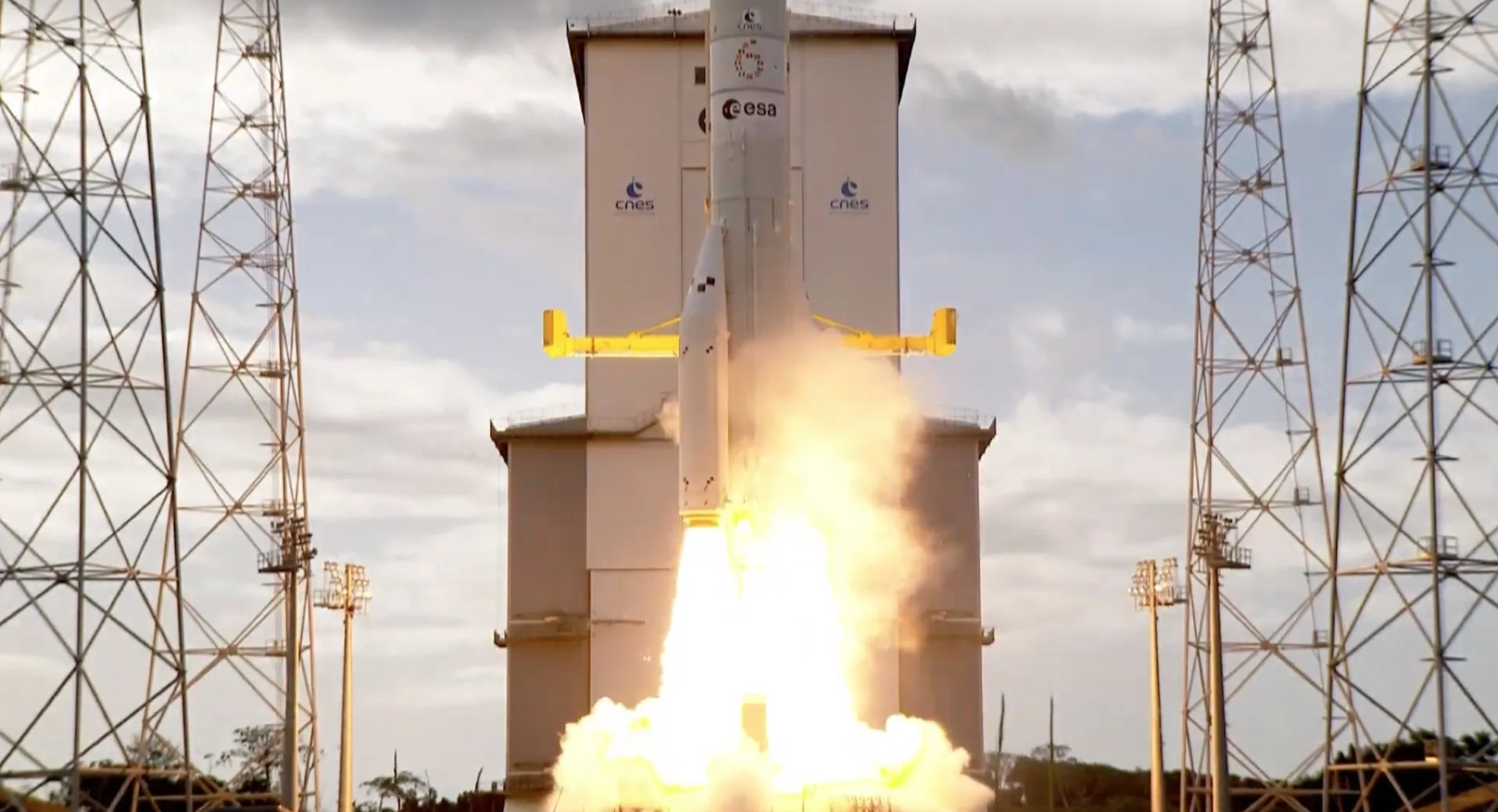
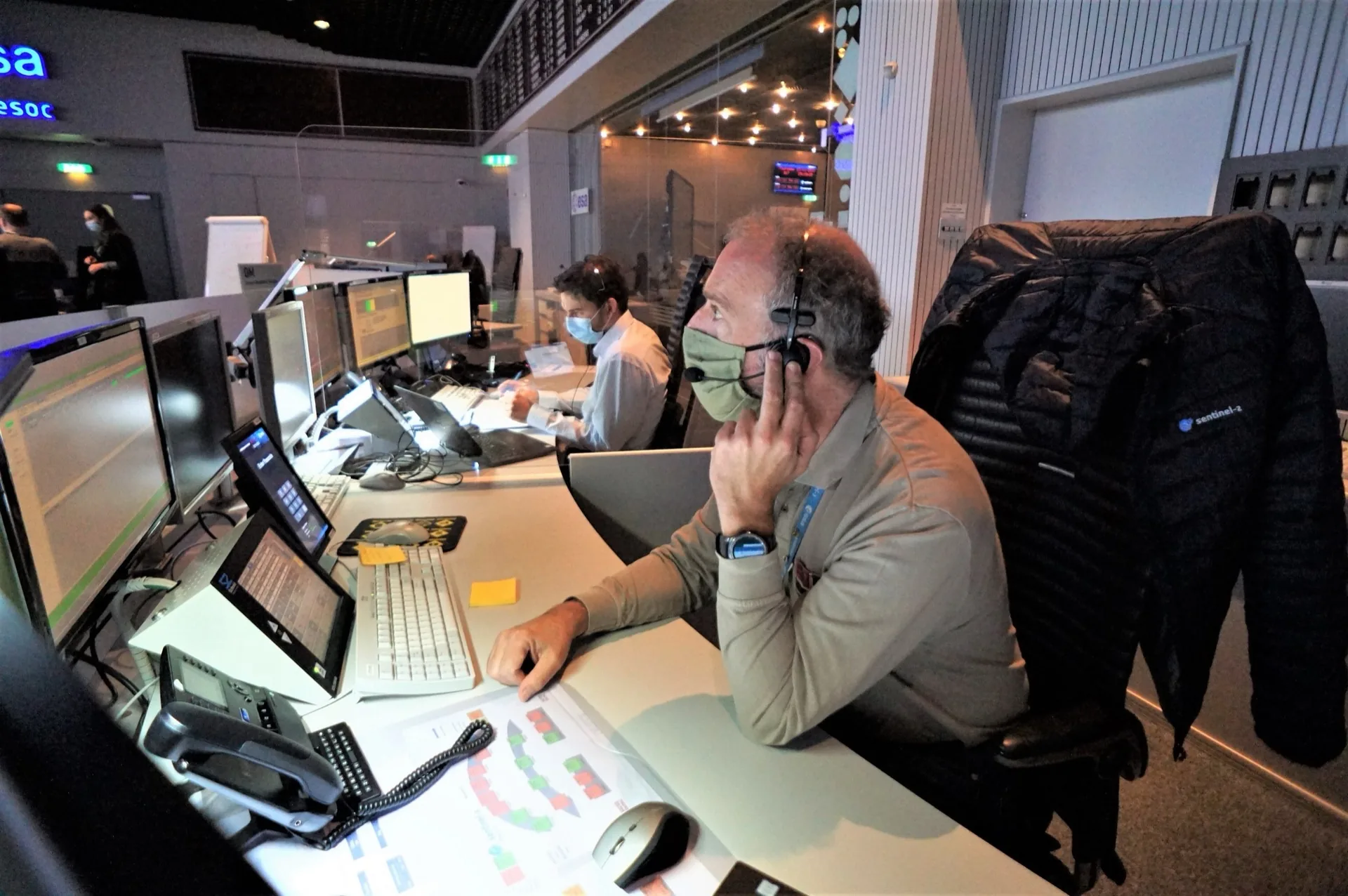
"Wir sind da." We are there. The words, spoken in German by Andrea Accomazzo, ESA's spacecraft operations manager, on August 6, 2014, announced that the Rosetta spacecraft had arrived at Comet 67P/Churyumov-Gerasimenko after a ten-year chase through the inner solar system. Three months later, in a mission control room in Darmstadt packed with engineers who had spent a decade of their careers on a single gamble, a small lander named Philae touched down on the comet's surface -- the first time any human-made object had landed on a comet.
In Part 1 of this series, we traced the institutional story of the European Space Agency: how 23 nations with different languages, budgets, and political systems built a functioning space agency from the wreckage of the failed Europa rocket program. We explored the governance, the facilities, the launchers, and the astronaut corps. That was the story of the machine. This is the story of what the machine has built.
Because ESA's missions -- the satellites monitoring every square meter of Earth's surface, the navigation constellation guiding four billion devices, the deep-space probes chasing comets and mapping dark matter -- are where the institutional compromises, the ministerial budgets, and the industrial contracts become something more than bureaucracy. They become science. They become infrastructure that hundreds of millions of people depend on daily without knowing it. And increasingly, they become Europe's ticket to the Moon.
Copernicus: The World's Largest Earth Observation System
If you have ever checked a weather forecast enhanced by satellite data, tracked a wildfire's spread in near-real time, monitored illegal fishing in protected waters, or studied how quickly the Arctic ice sheet is retreating, there is a reasonable chance you were looking at data from Copernicus. And you almost certainly did not pay for it.
Copernicus is the European Union's Earth observation programme, developed and operated in partnership with ESA, and it is -- by virtually any measure -- the largest and most comprehensive civilian Earth-monitoring system ever built. Its data policy is radical in its simplicity: full, free, and open access for everyone, everywhere, no exceptions. A farmer in Kenya, a climate scientist in Sao Paulo, a disaster-response coordinator in Manila, a startup in Stockholm -- all have equal access to the same satellite imagery, the same atmospheric measurements, the same ocean-temperature records. As of late 2023, the Copernicus data access system supported nearly 760,000 registered users, with the number growing steadily since the programme migrated to its new Copernicus Data Space Ecosystem platform.
The space component of Copernicus consists of a family of dedicated satellites called the Sentinels, each designed for a specific observation task. ESA develops, builds, and launches the Sentinel satellites; the EU funds and owns the programme. The relationship is one of the closest and most productive collaborations between the two institutions, though it is not without institutional friction -- ESA is an intergovernmental body, the EU is supranational, and their procurement rules, member state lists, and decision-making cultures differ significantly.
The Sentinel Family
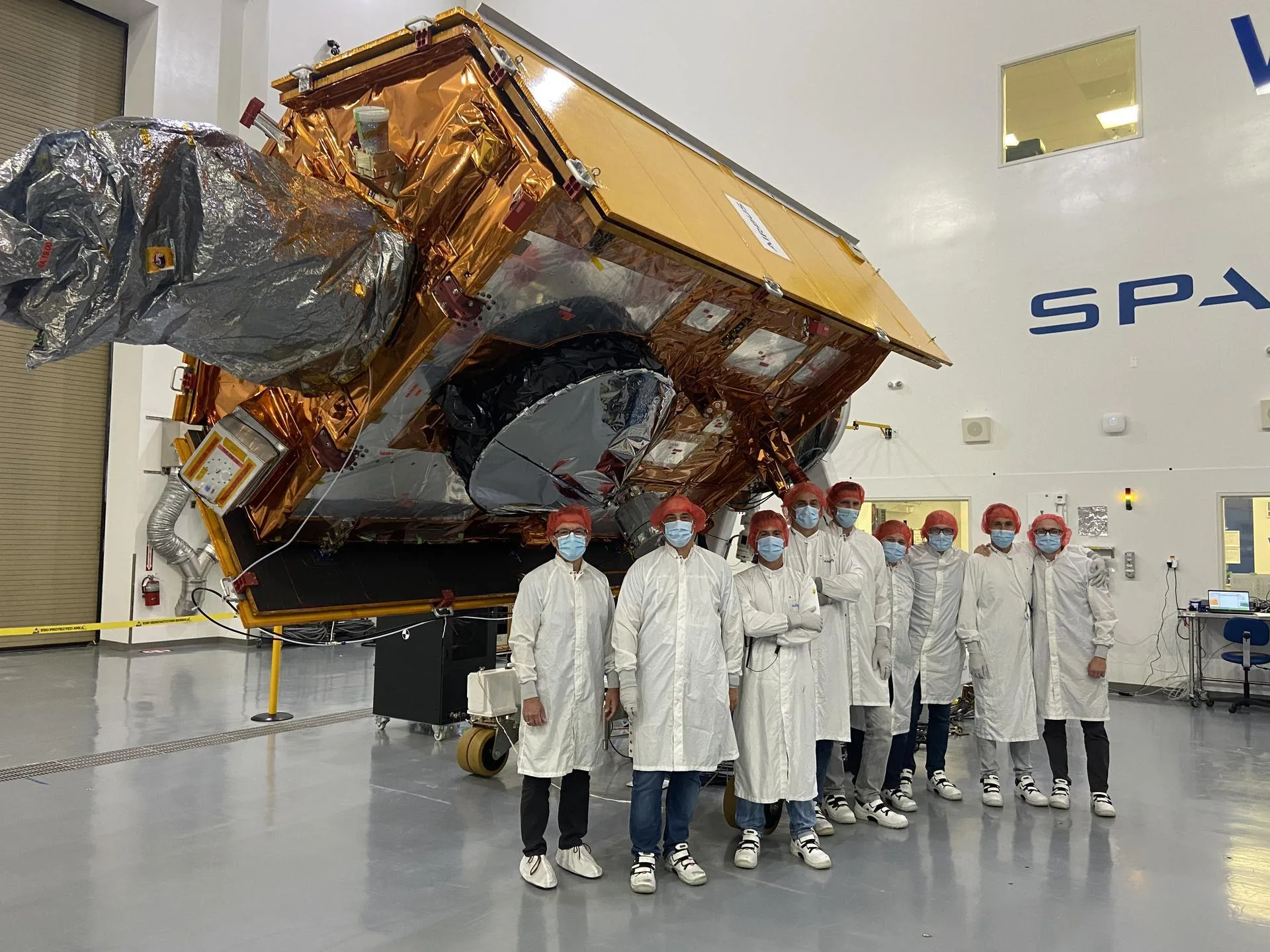
Sentinel-1 carries a C-band synthetic aperture radar (SAR) that can image Earth's surface day and night, in all weather conditions, penetrating cloud cover that blinds optical satellites. This makes it indispensable for monitoring floods, oil spills, sea ice, ground subsidence, and deforestation. The constellation images the entire Earth every six days. Sentinel-1A launched in April 2014, Sentinel-1B in April 2016 (though it suffered an anomaly in December 2021 that ended its mission), and Sentinel-1C launched on December 5, 2024, aboard a Vega-C rocket to restore the constellation's two-satellite capability.
Sentinel-2 is the optical workhorse -- a pair of multispectral imaging satellites that capture high-resolution imagery across 13 spectral bands, with a 290-kilometer swath width and a five-day revisit time at the equator. Agriculture, forestry, urban planning, disaster mapping, water quality -- Sentinel-2 data touches all of it. The images are beautiful enough to frame, detailed enough to count individual crop rows.
Sentinel-3 is the ocean and land-monitoring mission, carrying multiple instruments to measure sea-surface temperature, sea-surface height, ocean color, and land-surface conditions. If you care about the health of the world's oceans -- and the livelihoods of the billions of people who depend on them -- Sentinel-3 is one of the most important satellites flying.
Sentinel-5 Precursor (Sentinel-5P) monitors the atmosphere. Its TROPOMI instrument measures trace gases and aerosols in the troposphere -- nitrogen dioxide, ozone, formaldehyde, sulfur dioxide, methane, carbon monoxide -- with unprecedented spatial resolution. It can detect pollution plumes from individual power plants and track the atmospheric fingerprints of volcanic eruptions. During the COVID-19 lockdowns of 2020, Sentinel-5P data provided some of the most dramatic visual evidence of how quickly air quality improved when industrial activity dropped.
Sentinel-6 Michael Freilich carries a radar altimeter that measures global sea-surface height with millimeter-level precision, extending a continuous record of sea-level data that began in 1992 with the TOPEX/Poseidon mission. In a warming world, this long-baseline altimetry record is one of the most important climate datasets in existence.
Budget and Expansion
The EU allocated approximately 4.3 billion euros to Copernicus in its 2014-2020 Multiannual Financial Framework, and approximately 5.4 billion euros for 2021-2027. ESA contributes additional funding for spacecraft development through its own Earth observation programmes. The total investment -- encompassing satellites, ground infrastructure, data services, and operations -- makes Copernicus the world's most expensive civilian Earth-observation programme. It is also, by a wide margin, the most cost-effective when measured by the volume and quality of data it delivers per euro spent.
Looking ahead, six Copernicus Expansion Missions (Sentinels 7 through 12) are under development to address gaps in current capabilities -- monitoring anthropogenic carbon dioxide emissions, measuring land-surface temperature at high resolution, tracking polar ice topography, and more. With the United Kingdom's re-entry to the EU's Copernicus programme, funding has been confirmed to complete development of all six expansion missions, cementing Copernicus as the backbone of global environmental monitoring for decades to come.
Galileo: Europe's Answer to GPS
Every time you open a navigation app on your smartphone, there is an excellent chance that Galileo -- Europe's global navigation satellite system -- is helping determine your position. As of 2025, nearly four billion Galileo-enabled devices are in use worldwide. Every smartphone sold in the European Single Market is Galileo-enabled. And yet most people have never heard of it.
Galileo exists because of a principle that is central to the European project: sovereignty. In the late 1990s, European leaders confronted an uncomfortable reality. The Global Positioning System (GPS), on which Europe's aviation, shipping, agriculture, finance, and emergency services increasingly depended, was owned and operated by the United States military. The U.S. government retained the right to degrade or deny GPS signals to civilian users at any time -- a capability it had exercised during the 1999 Kosovo War and the 2003 Iraq invasion. For Europe, dependence on a foreign military system for critical civilian infrastructure was strategically unacceptable.
The decision to build Galileo was taken in 1999 by the European Commission and ESA. The original plan envisioned a public-private partnership that would have private companies investing alongside governments. That plan collapsed in 2007, when the private consortium withdrew, and the EU assumed full funding responsibility. The cost overruns and delays were significant -- the programme was originally expected to be operational by 2008, and it did not reach Initial Services until December 2016 -- but the end result has proven to be worth the political pain.
The Constellation
Galileo currently operates 30 satellites in medium Earth orbit at an altitude of approximately 23,222 kilometers, arranged in three orbital planes. The constellation has been declared fully operational, providing positioning, navigation, and timing (PNT) services globally. Its accuracy surpasses that of GPS: Galileo's High Accuracy Service (HAS), introduced as a free-of-charge service, delivers horizontal accuracy of approximately 20 centimeters and vertical accuracy of 40 centimeters -- a substantial improvement over GPS's typical 3-5 meter accuracy for civilian users. Galileo's signal-in-space ranging error is approximately 5.79 centimeters, compared to GPS's 7.26 centimeters.
Second Generation
On December 17, 2025, two new Galileo satellites -- SAT 33 and SAT 34 -- launched aboard an Ariane 6 rocket from Kourou, marking the first time Galileo satellites flew on Europe's new launcher. This was a milestone for European sovereignty: Europe's navigation constellation, launching on Europe's rocket, from Europe's spaceport.
The next major evolution is Galileo Second Generation (G2), with the first pair of G2 satellites scheduled to launch on Ariane 6 in 2026. The second-generation satellites feature fully digital navigation payloads, electric propulsion, improved navigation antennas, inter-satellite link capacity, and additional atomic clocks. They will provide more robust and reliable positioning, navigation, and timing services -- capabilities that are increasingly critical as autonomous vehicles, precision agriculture, and drone operations demand centimeter-level accuracy.
The total investment in Galileo -- from initial development through deployment, operations, and the second-generation upgrade -- is estimated at over 13 billion euros, with some analyses placing the full lifecycle cost considerably higher. It is one of the largest infrastructure projects the European Union has ever undertaken.

Rosetta and Philae: Chasing a Comet
Some missions are important. A few are historic. Rosetta was both.
Approved in November 1993 as the third Cornerstone Mission of ESA's Horizon 2000 science programme, Rosetta was conceived with an audacious goal: to rendezvous with a comet, orbit it for an extended period, deploy a lander onto its surface, and study the composition and behavior of one of the solar system's most primitive objects. Comets are remnants from the formation of the solar system 4.6 billion years ago -- frozen time capsules that preserve the chemical conditions of the earliest epochs. Understanding their composition could illuminate how Earth got its water, its organic molecules, and perhaps the precursor ingredients of life.
The Journey
Rosetta launched on March 2, 2004, from Kourou aboard an Ariane 5 rocket. What followed was a ten-year odyssey through the inner solar system that required four gravity assists -- one from Mars (February 2007) and three from Earth (March 2005, November 2007, November 2009) -- to build up enough velocity to reach Comet 67P/Churyumov-Gerasimenko. Along the way, Rosetta flew past two asteroids: 2867 Steins in September 2008 and 21 Lutetia in July 2010. In June 2011, with the comet still far from the Sun and the spacecraft too distant for its solar panels to generate adequate power, mission controllers put Rosetta into a 31-month hibernation -- the deepest sleep any ESA spacecraft had ever entered.
On January 20, 2014, Rosetta's internal alarm clock woke the spacecraft. The signal, traveling at the speed of light, took 45 minutes to reach Earth. When it arrived at ESOC in Darmstadt, it triggered celebrations that were broadcast worldwide.
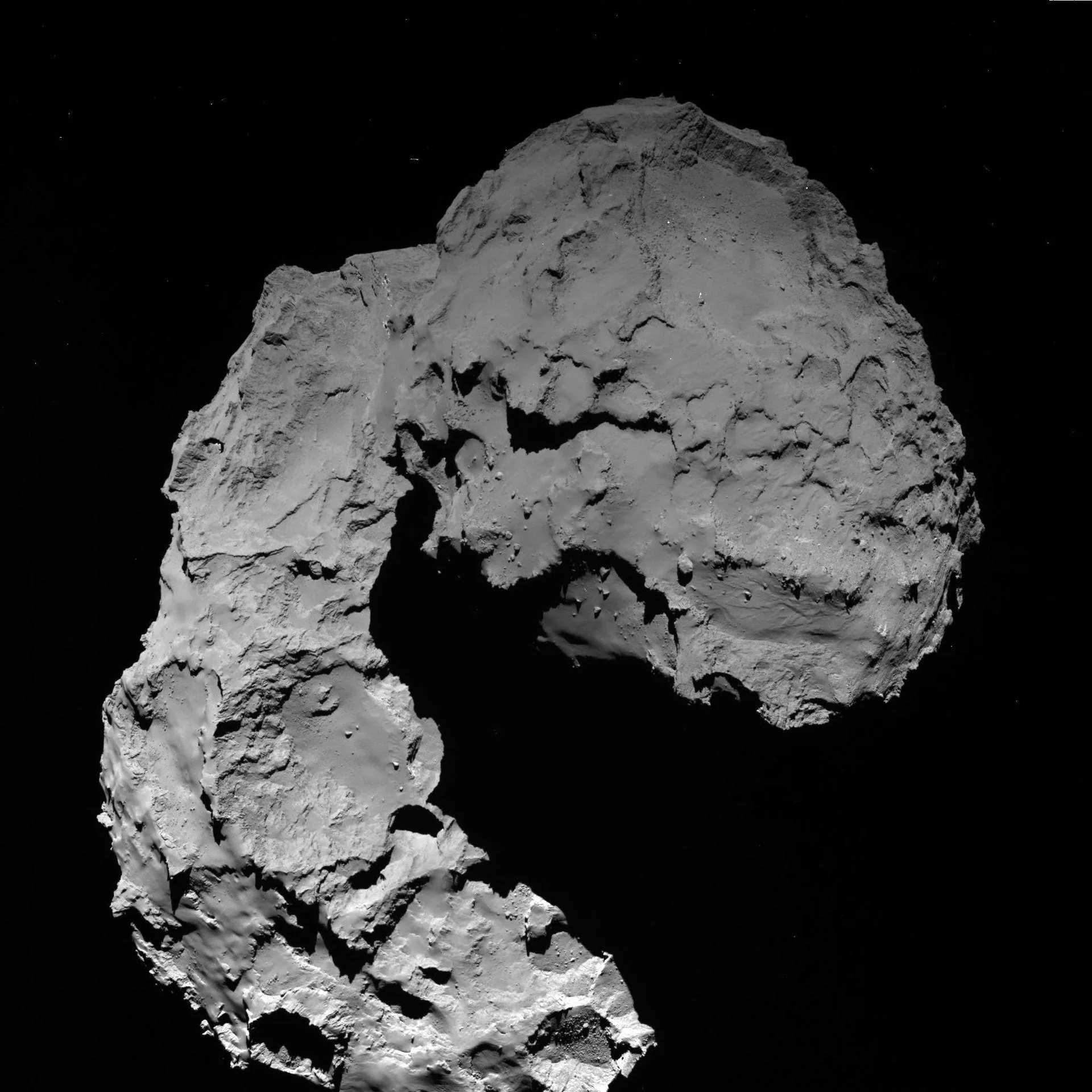
On August 6, 2014, Rosetta arrived at Comet 67P and began a series of maneuvers to enter orbit -- the first time any spacecraft had orbited a comet. The images it returned were astonishing. No one had predicted that 67P would have a double-lobed, rubber-duck-shaped structure -- the result of two smaller bodies gently colliding and fusing together in the distant past. The comet's surface was a landscape of cliffs, boulders, pits, and smooth plains, all coated in dark organic material.
Philae's Landing
On November 12, 2014, the Philae lander separated from Rosetta and descended to the comet's surface. What was supposed to be a controlled touchdown became one of the most dramatic moments in space exploration history. Philae's anchoring harpoons failed to fire, and the thruster designed to push the lander against the surface did not activate. Philae bounced off the comet's surface, soared to an altitude of approximately one kilometer, drifted for nearly two hours, bounced a second time, and finally came to rest in a shadowed crevice near a cliff face -- far from its intended landing site.
Despite the chaotic landing, Philae operated for approximately 60 hours on its primary battery, returning data from all ten of its onboard instruments before power ran out. The lander briefly revived in June 2015, transmitting intermittent signals as the comet moved closer to the Sun and light reached its solar panels, but contact was lost definitively in July 2015. Its final resting place was identified in Rosetta imagery in September 2016, wedged into a dark crack -- a fitting end for a machine that had done the impossible.
The Science
Rosetta's scientific legacy is immense. Among the key discoveries:
The ratio of deuterium to hydrogen in the water vapor emanating from Comet 67P was measured to be approximately three times higher than that of Earth's oceans. This finding dealt a significant blow to the hypothesis that Earth's water was delivered primarily by comets of the Jupiter-family type, suggesting that asteroids may have played a larger role.
Rosetta made the first detection of molecular oxygen (O2) in a cometary coma -- a finding that was entirely unexpected and that challenged existing models of how comets form.
The spacecraft detected the amino acid glycine and phosphorus in the gas cloud surrounding the comet -- two of the key ingredients for life as we know it. The presence of these molecules in a body that formed 4.6 billion years ago lends support to the idea that the building blocks of life were present throughout the early solar system.
The mission cost approximately 1.4 billion euros over nearly 20 years -- barely half the price of a modern submarine, as ESA was fond of pointing out, or roughly the cost of three Airbus A380 aircraft. On September 30, 2016, Rosetta was deliberately crashed onto the comet's surface, returning close-up images during its final descent. The mission was over. The data will be analyzed for decades.
JUICE: Europe's Voyage to the Outer Solar System
If Rosetta was ESA's greatest achievement to date, JUICE -- the Jupiter Icy Moons Explorer -- may be its most ambitious.
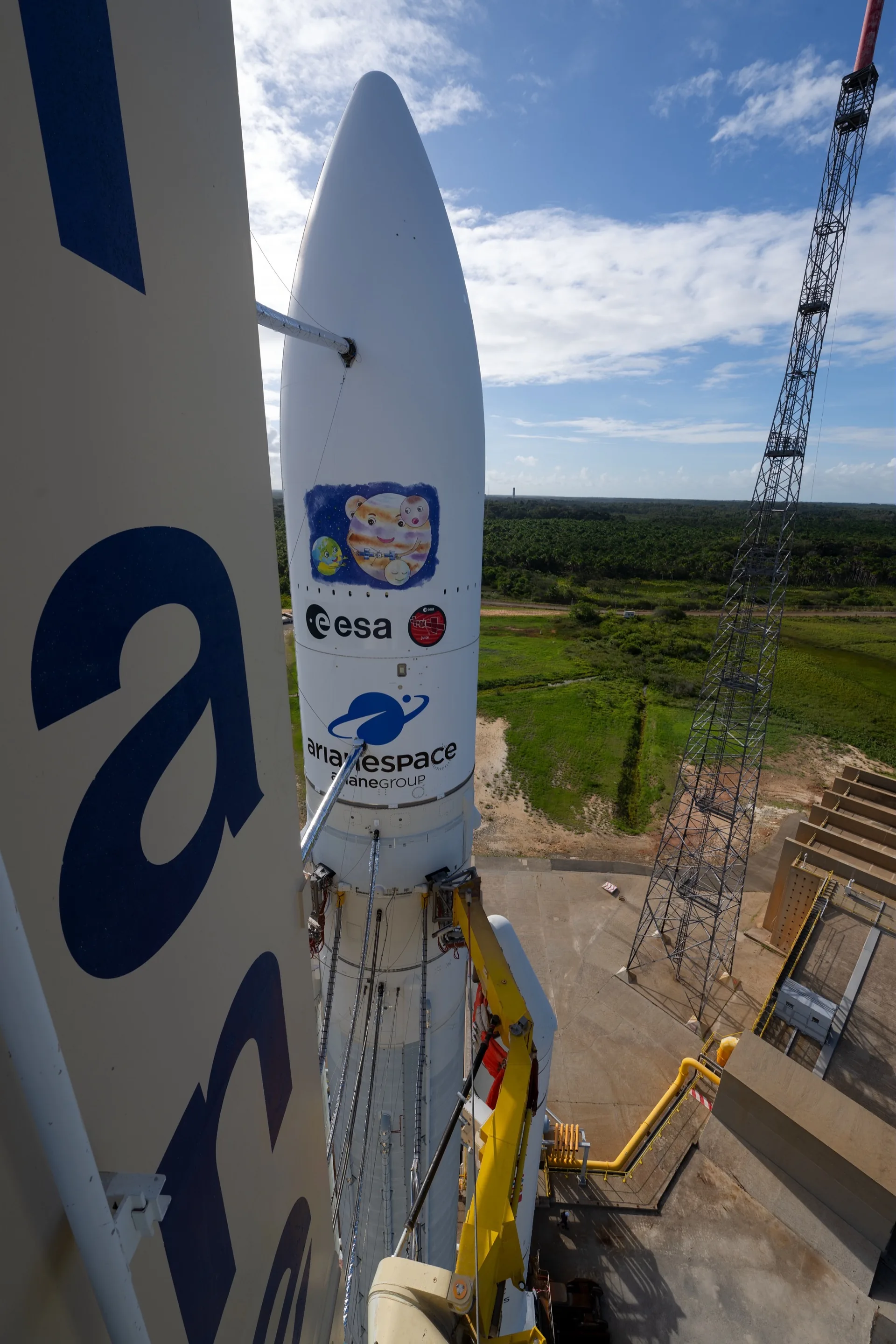
Launched on April 14, 2023, from Kourou aboard an Ariane 5 rocket, JUICE is the first European mission to the outer solar system. Its destination: the Jupiter system, where three of the gas giant's four large Galilean moons -- Ganymede, Callisto, and Europa -- are believed to harbor vast liquid-water oceans beneath their icy crusts. The search for habitable environments beyond Earth is the central scientific question of our time, and JUICE is Europe's answer.
The journey to Jupiter takes eight years and requires a complex series of gravity assists. In August 2024, JUICE performed the first-ever combined lunar-Earth gravity assist, flying past the Moon and then Earth in quick succession to gain the velocity needed for its next maneuver. On August 31, 2025, the spacecraft successfully flew past Venus at a distance of 5,088 kilometers, gaining a velocity boost of 5.1 kilometers per second. The Venus flyby was not without drama: on July 16, 2025, a software timer bug temporarily severed contact between the spacecraft and Earth. After nearly 20 hours of recovery efforts by ESOC and Airbus engineers, communication was restored -- a reminder that deep-space missions operate with vanishingly thin margins.
Following its Venus flyby, JUICE entered a cold-cruise phase in January 2026. The spacecraft is scheduled for further Earth flybys in September 2026 and January 2029 before arriving at Jupiter in July 2031. Once there, it will spend approximately three and a half years studying the Jupiter system, with particular focus on Ganymede -- the largest moon in the solar system and the only moon known to generate its own magnetic field. JUICE will ultimately enter orbit around Ganymede, becoming the first spacecraft to orbit a moon other than Earth's.
The spacecraft carries ten scientific instruments, including radar to penetrate the moons' ice shells, cameras to map their surfaces in detail, magnetometers to probe their internal oceans, and spectrometers to analyze their compositions. The central question: do these moons have the ingredients -- liquid water, energy sources, organic chemistry -- necessary for life?
In an unexpected bonus, JUICE conducted observations of interstellar comet 3I/ATLAS between November 2 and 25, 2025 -- only the third interstellar object ever detected passing through our solar system -- demonstrating that the spacecraft's instruments are performing superbly even during cruise.
Euclid: Mapping the Dark Universe
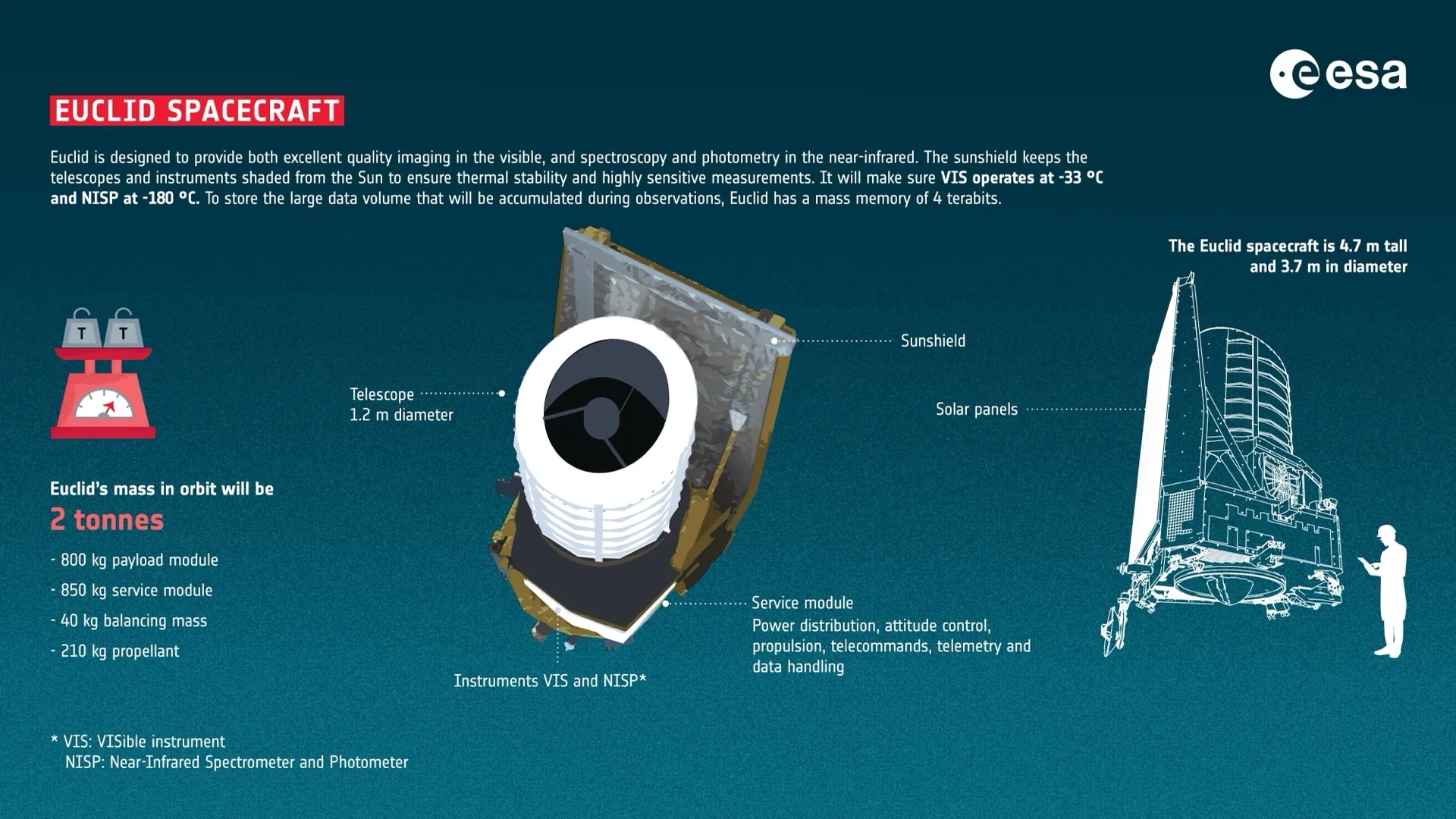
On July 1, 2023, ESA launched Euclid -- a space telescope with a single, staggering ambition: to map the geometry of the dark universe. Dark matter and dark energy together make up approximately 95 percent of the total mass-energy content of the cosmos. We know they exist because of their gravitational effects, but we do not know what they are. Euclid was built to change that.
Operating from the Sun-Earth Lagrange point L2 -- the same gravitational sweet spot where the James Webb Space Telescope resides -- Euclid is surveying the extragalactic sky over a six-year primary mission. Its 1.2-meter telescope feeds two instruments: a visible-light camera (VIS) and a near-infrared spectrometer and photometer (NISP). Together, they will measure the shapes, positions, and redshifts of billions of galaxies, creating a three-dimensional map of the universe spanning the last ten billion years of cosmic history.
By analyzing how the distribution of galaxies has changed over time -- how they cluster, how their shapes are subtly distorted by the gravitational lensing of dark matter -- Euclid will constrain the properties of dark energy and test whether Einstein's general theory of relativity holds at the largest cosmic scales.
The early results have been remarkable. Euclid's Quick Data Release 1, published in March 2025, covered approximately 63 square degrees of sky -- seven times larger than its earlier commissioning release -- making it the largest contiguous area of sky ever observed by an optical/near-infrared space telescope. In just one week of observations, with a single scan of each region, Euclid detected 26 million galaxies, the farthest of them up to 10.5 billion light-years away. The data has already yielded discoveries of strong gravitational lensing systems, explorations of galaxy clusters and the cosmic web, and studies of active galactic nuclei and dwarf galaxies.
The first cosmological conclusions -- the ones for which the mission was designed -- are expected by the end of 2026, with a first worldwide data release planned for October 2026. If Euclid achieves its goals, it will fundamentally reshape our understanding of what the universe is made of.
ExoMars Rosalind Franklin: The Mars Rover That Would Not Die
No ESA mission has had a more tortured path to the launch pad than the Rosalind Franklin rover. Named after the British chemist whose X-ray crystallography work was crucial to discovering the structure of DNA, the rover was designed for a single, compelling purpose: to drill up to two meters beneath the Martian surface -- deeper than any previous Mars mission -- and search for molecular signs of past or present life.
The mission began as a joint venture between ESA and Russia's Roscosmos. Russia was to provide the landing platform (named Kazachok) and the Proton rocket for launch. Two launch dates came and went -- first 2018, then 2020, each delayed by technical problems. When the third launch window in September 2022 finally arrived, the rover was ready. But by then, Russia had invaded Ukraine, and ESA's governing council voted unanimously in March 2022 to sever all cooperation with Roscosmos on ExoMars.
The decision was painful. Years of work, hundreds of millions of euros in Russian-supplied hardware, and the entire landing platform had to be replaced. For months, the mission's future hung by a thread. Then, in a remarkable pivot, ESA secured NASA's commitment to fill the gaps left by Russia. NASA agreed to provide the launch vehicle, radioisotope heater units, a braking engine, and one science instrument. ESA, working with Thales Alenia Space, began developing a new European landing platform to replace the Russian Kazachok.
The current plan targets an October 2028 launch, with a landing on Mars in late November 2030. In late 2025 and again in March 2026, NASA reaffirmed its commitment to the mission despite budget pressures in Washington -- a welcome signal of transatlantic solidarity on Mars exploration.
Rosalind Franklin's two-meter drill is its defining capability. The Martian surface is bathed in radiation and oxidizing chemicals that would destroy organic molecules. But two meters down, shielded by rock and soil, biosignatures from Mars's wetter, warmer past could survive for billions of years. If there is evidence of ancient life on Mars, Rosalind Franklin may be the mission that finds it.
PLATO: Hunting for Another Earth
The question of whether Earth-like planets exist around Sun-like stars -- and whether they could harbor life -- is one of the oldest questions in human civilization. ESA's PLATO mission (PLAnetary Transits and Oscillations of stars) is designed to answer it.
Scheduled for launch in late 2026 or early 2027 aboard an Ariane 6 rocket, PLATO will orbit the Sun-Earth Lagrange point L2 and stare at up to one million stars for extended periods, watching for the tiny dips in brightness caused when a planet transits -- passes in front of -- its host star. What makes PLATO unique is its multi-telescope design: 26 cameras (24 "normal" cameras arranged in four groups plus two "fast" cameras for bright stars) will observe the same field of view simultaneously, providing an unprecedented combination of sensitivity, precision, and sky coverage.
PLATO's primary focus is on rocky planets in the habitable zone of Sun-like stars -- the narrow orbital band where surface temperatures could allow liquid water to exist. Previous exoplanet missions (notably NASA's Kepler and TESS) have found thousands of exoplanets, but most detections are of planets orbiting smaller, cooler red dwarf stars. PLATO will target the yellow dwarf stars most similar to our own Sun, and its long staring time will allow it to detect planets with orbital periods of a year or more -- precisely the type of planet that could most closely resemble Earth.
Crucially, PLATO will also perform asteroseismology -- studying the oscillations of host stars to determine their ages, masses, and radii with high precision. Knowing the star is essential to knowing the planet: you cannot determine a planet's size, mass, or surface conditions without accurately characterizing the star it orbits. As of mid-2025, the spacecraft was fully integrated at OHB System AG in Germany and on track for its launch window.
Europe's Path to the Moon: Artemis, the Gateway, and an Uncertain Future
ESA's contributions to humanity's return to the Moon have been, until very recently, one of the agency's greatest success stories. The centerpiece is the Orion European Service Module (ESM), designed and built by Airbus Defence and Space in Bremen, Germany, with contributions from companies across 13 European countries. The ESM provides the Orion spacecraft with propulsion, power, thermal control, and the air and water astronauts need to survive in deep space.
Artemis II: Europe Powers the Return to the Moon
On April 10, 2026, the world watched as the Artemis II capsule splashed down in the Pacific Ocean southwest of San Diego, California, at 8:07 p.m. EDT, completing the first crewed mission beyond low Earth orbit since Apollo 17 in December 1972. The four-person crew -- NASA astronauts Reid Wiseman, Victor Glover, and Christina Koch, and Canadian Space Agency astronaut Jeremy Hansen -- returned safely after a nearly ten-day journey around the Moon.
Much of Artemis II's success rested on the European Service Module. ESM-2, built under ESA leadership and assembled in Bremen, supplied breathable air (90 kilograms of oxygen) and drinking water (240 kilograms), generated electrical power through four seven-meter-long solar arrays, regulated spacecraft temperature, and delivered the propulsion -- via one main engine (a repurposed Space Shuttle Orbital Maneuvering System engine), eight auxiliary engines, and 24 attitude-control thrusters -- needed to carry Orion through deep space. When the crew module and ESM separated 20 minutes before re-entry, the service module burned up harmlessly in Earth's atmosphere, its job done. ESM-5 and ESM-6 are already in production in Bremen, with deliveries scheduled for 2027 and 2028.
For ESA, the European Service Module is more than hardware. It is a bargaining chip. By providing a critical component that NASA cannot fly without, Europe has secured astronaut flight opportunities that its relatively modest budget could never buy directly. The ESM is Europe's ticket to the Moon.
The Gateway Question
That ticket, however, just became more complicated. In March 2026, NASA Administrator Jared Isaacman announced a fundamental restructuring of the Artemis architecture: the Lunar Gateway -- the planned orbital station around the Moon that was to serve as a staging point for lunar surface missions -- would be paused. NASA would instead focus on building a permanent base on the lunar surface between 2029 and 2036, repurposing Gateway hardware and partner contributions where possible.
The implications for ESA are significant. Europe had committed to building three major Gateway components: Lunar I-Hab, a habitation module developed with JAXA and contracted to Thales Alenia Space Italy; Lunar View, a refueling and docking module (formerly known as ESPRIT) contracted to Thales Alenia Space France; and Lunar Link, a communications system mounted on the HALO module. In exchange, ESA had secured agreements for three European astronaut flights to the Gateway.
With Gateway paused, those astronaut seats are suddenly uncertain. ESA Director General Josef Aschbacher has stated that he will negotiate with NASA on how the astronaut opportunities originally earmarked for the Gateway can be redirected -- potentially to lunar surface missions or other Artemis flights. ESA is expected to present a plan to its governing council by June 2026. The outcome will shape Europe's human exploration strategy for the next decade.
The Road Ahead: Can Europe Compete?
At the ESA Ministerial Council in Bremen in November 2025, member states agreed to a budget of 22.1 billion euros over three years -- a 30 percent increase over the previous period and the largest commitment in the agency's history. For 2026 alone, the budget stands at 8.26 billion euros, allocated across space transportation (4.4 billion euros), Earth observation including Copernicus (3.46 billion euros), and human and robotic exploration (2.98 billion euros).
The numbers sound impressive, and they are -- by European standards. But context matters. The United States accounts for approximately 60 percent of global space spending. Europe accounts for roughly 10 percent. Defense-related spending makes up about half of global space budgets, but less than 15 percent of European investment. In a world where SpaceX alone launches more mass to orbit than all other providers combined, where China's CNSA budget grows at double-digit annual rates, and where India's ISRO achieves missions at a fraction of Western costs, Europe's position is far from assured.
The November 2025 ministerial responded to this reality by broadening ESA's mandate to include security and defense -- a historic shift for an agency that was created as a purely civilian scientific body. The ministerial also funded the European Launcher Challenge, a competitive program to stimulate innovative launch services and reduce Europe's dependence on any single vehicle. And it confirmed the priorities of "Strategy 2040," an autonomy-focused roadmap that emphasizes climate monitoring, secure communications, and technological sovereignty.
The challenges are real. Ariane 6's development delays -- years behind schedule and over budget -- exposed weaknesses in Europe's industrial base and decision-making processes. The loss of Soyuz launches from Kourou after Russia's invasion of Ukraine left Europe temporarily without a medium-lift launcher. The gap between ESA's scientific ambitions and its budget remains a permanent tension.
But the achievements are equally real. Copernicus is the world's gold standard for Earth observation. Galileo serves four billion devices. Euclid is mapping the dark universe. JUICE is en route to Jupiter. Rosalind Franklin will drill deeper into Mars than any previous mission. PLATO will search for Earth's twin. And the European Service Module just helped carry humans around the Moon for the first time in over half a century.
The European Space Agency is not the fastest, not the cheapest, and not the most powerful space organization on Earth. It is, however, something that no other space agency is: a functioning demonstration that 23 nations with different languages, different interests, and different histories can build world-class space systems together. In an era when international cooperation is under strain everywhere, that may be ESA's most important mission of all.
This is Part 2 of a two-part deep dive into the European Space Agency. Part 1 covers ESA's origins, governance, launchers, and astronaut corps.