Sovereign Wealth Funds Are Quietly Buying Into Space: What They Know That You Don't
There is a reliable signal in markets that retail investors almost always miss: when the most patient, best-resourced, and strategically motivated capital on the planet quietly positions itself in a sector, it tends to be right over a ten-to-twenty-year horizon. Not right every quarter. Not right every year. But right in the way that matters — the kind of right that compounds into generational wealth.
That signal is flashing now in the global space economy.
The sovereign wealth funds of Abu Dhabi, Saudi Arabia, Singapore, Norway, and the UAE collectively manage somewhere north of $3.5 trillion in assets. These are not venture capitalists chasing the next headline. They are not hedge funds trying to front-run an earnings report. They are the long-duration, strategic capital arms of nation-states — funds whose mandates are measured in decades and whose investment committees include ministers, central bankers, and heads of state. When they move into a sector, they are making a generational bet.
And across 2024 and 2025, quietly and with remarkably little mainstream financial press coverage, they have been moving into space.
Why Sovereign Wealth Funds Are Different

To understand why SWF activity matters as a signal, you first have to understand how different their investment posture is from every other institutional class.
A mutual fund manager is evaluated quarterly. A venture capitalist lives and dies by a five-to-seven-year fund cycle. An activist hedge fund expects returns within twelve to eighteen months. Even the most patient endowment managers face scrutiny from their boards when three-year returns disappoint. This structural pressure toward short-termism shapes everything — which companies get funded, on what terms, and with what expectations attached.
Sovereign wealth funds are almost uniquely exempt from these pressures. Norway's NBIM (Norges Bank Investment Management), which manages the Government Pension Fund Global, has an explicit mandate to preserve national wealth across generations. Its investment committee does not face quarterly pressure. Saudi Arabia's Public Investment Fund exists to fund the diversification of the kingdom's economy away from oil — a multi-decade project. Abu Dhabi's Mubadala was explicitly designed to invest in industries where the payoff is measured not in quarters but in the reshaping of global industrial capacity.
This time horizon changes the risk calculus entirely. A sector can be genuinely transformative while remaining deeply unprofitable for a decade. Retail investors, fund managers, and even most institutional capital flee in the interim, crushed by impatience. SWFs stay — and often accumulate more on the way down. They can absorb illiquidity, tolerate early-stage losses, and wait for the physics of a market to play out. The space industry, which requires massive upfront capital and has a long lag between technology maturation and commercial profitability, is precisely the type of sector where this posture produces outsized long-run returns.
The second distinction is strategic. Many SWFs are not investing purely for financial return. They are building options on industries their nations need to access — satellite connectivity for remote megaprojects, Earth observation data for agricultural and climate management, launch access for national security. This strategic overlay means they will sometimes invest even when the financial return alone does not justify the capital. For co-investors, this is a form of de-risking that rarely gets priced into public market valuations.
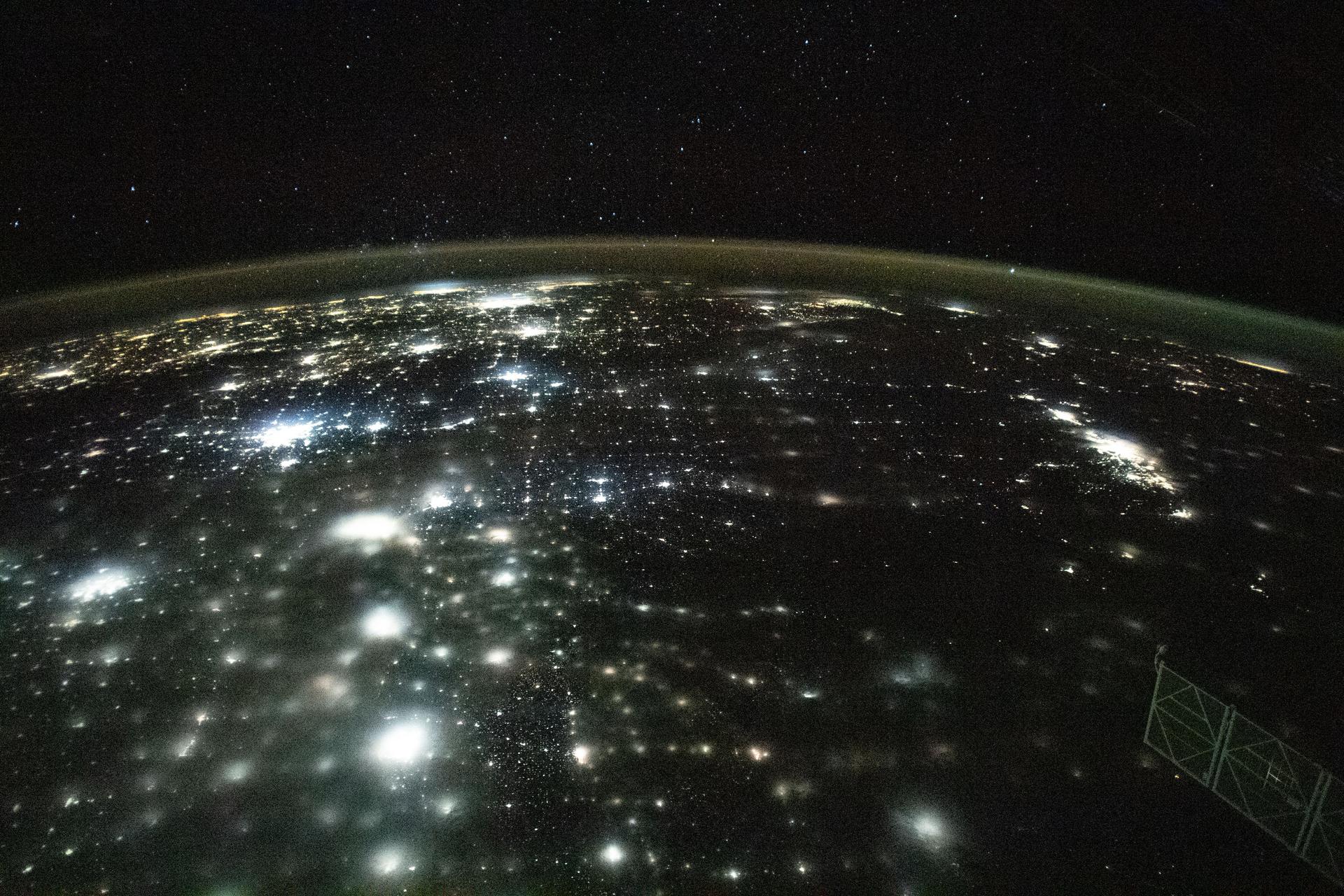 Earth at night from the International Space Station. The density of city lights maps directly to demand for satellite connectivity — the core commercial thesis behind multiple SWF space investments. Source: NASA
The UAE: Building a Space Nation From Scratch
The most dramatic SWF space story of the past decade belongs to the United Arab Emirates. It is worth dwelling on because it illustrates something almost no investment commentary acknowledges: the UAE did not just invest in space. It methodically built the entire supply chain of a space-capable nation within a single generation.
The Hope Mars probe, launched in July 2020 and successfully inserted into Martian orbit in February 2021, was the most visible milestone. The UAE became the fifth entity in history to reach Mars — joining NASA, the Soviet Union, the European Space Agency, and India — on its first interplanetary attempt. That is a technically extraordinary achievement, but its strategic meaning extends well beyond the science. The Hope mission was a forcing function: it required the UAE to develop indigenous orbital mechanics expertise, ground station infrastructure, data pipeline engineering, and mission operations capability, all within a decade of establishing the Mohammed Bin Rashid Space Centre (MBRSC).
The Hope probe's success was not an endpoint. It was a proof-of-concept for an entire national space ecosystem. In early 2025, the UAE launched six satellites in a single operational cluster, including Thuraya 4 for communications and MBZ-SAT, described as the region's most advanced Earth observation satellite. The PHI-1 modular platform followed, incorporating international scientific payloads for the first time. MBRSC has now committed to Rashid Rover 2, targeting a historic landing on the Moon's far side in 2026 aboard Firefly Aerospace's Blue Ghost Mission 2. And in a 15-year partnership signed in 2025, the MBRSC is building the Crew and Science Airlock for NASA's Lunar Gateway — a commitment that anchors UAE's permanent presence on the Moon's orbital station.
Behind the mission milestones sits financial infrastructure of a different order. Mubadala Investment Company, Abu Dhabi's $385 billion sovereign wealth fund, had already been placing space bets before the Hope probe existed. Mubadala's predecessor relationship with Aabar Investments — the Abu Dhabi-linked fund that put $280 million into Virgin Galactic in 2009 and increased its stake to 38.7 percent — represented one of the earliest and largest sovereign bets on commercial space tourism. By 2020, those Virgin Galactic shares had migrated to Mubadala's direct holdings, giving it a disclosed 7.1 percent stake in the newly public company. The investment was ultimately disappointing — Virgin Galactic's collapse after 2021 made it a high-profile space SPAC casualty — but the strategic signal it sent in 2009 was prescient about where the industry was going, even if the particular vehicle did not survive the journey.
Mubadala's current posture is broader and more sophisticated. With AUM growing 17 percent to $385 billion in 2025 and the fund deploying AED 143 billion (approximately $39 billion) in capital that year — one of its most active deployment years on record — Mubadala is systematically building positions across technology infrastructure that increasingly overlaps with the space economy: AI, data centers, semiconductor supply chains, and advanced manufacturing. The UAE's broader $12 billion investment in satellite and space infrastructure, announced through 2024-2025, signals that national and sovereign capital is now flowing in parallel toward the same destination.
Saudi Arabia's PIF and the Space Economy
Saudi Arabia arrived at the space sector with characteristic ambition and institutional velocity. The Saudi Space Authority was formally established in 2018, embedded directly into the Vision 2030 framework — the kingdom's sweeping plan to diversify its GDP beyond hydrocarbons before oil's structural relevance declines. Space is not a peripheral pillar of Vision 2030. It is a strategic infrastructure layer for the entire program.
The clearest expression of PIF's direct space commitment was the creation of Neo Space Group. Launched in 2024 as a direct portfolio company of the Public Investment Fund, NSG is Saudi Arabia's first major sovereign-backed venture into satellite and space services. Neo Space Group operates across satellite communications, geospatial data, and PNT (Positioning, Navigation, and Timing) services — the three domains that NEOM, the kingdom's $500 billion smart city megaproject, requires in massive volume. NEOM cannot function without ultra-dense connectivity: its autonomous vehicle networks, real-time supply chain management, environmental monitoring systems, and defense perimeter awareness all depend on LEO and GEO satellite coverage at a level that terrestrial infrastructure cannot provide. Neo Space Group is, in part, a vertical integration play — ensuring Saudi Arabia owns its satellite connectivity stack rather than paying perpetual rents to foreign operators.
The PIF's commitment includes a $270 million satellite manufacturing investment and is building ground station infrastructure and a planned dedicated constellation. By 2030, the kingdom targets partial independence in satellite manufacturing, launch access, and space data infrastructure.
The PIF's interest in SpaceX is harder to document precisely but widely reported among capital markets analysts. The kingdom has demonstrated a pattern of making large direct investments in U.S. technology champions — SoftBank's Vision Fund, in which PIF committed $45 billion, channeled substantial capital into the technology infrastructure layer that overlaps with commercial space. Whether PIF takes a direct position in a potential SpaceX IPO — now reportedly targeting a mid-2026 listing at a valuation above $1.5 trillion — is a question that will crystallize investor attention on SWF participation in a single transaction more dramatically than any prior data point.
 The global space economy surpassed $630 billion in 2025. Sovereign wealth fund capital is now flowing into every segment of this stack, from satellite manufacturing to launch services to ground infrastructure. Source: Space Foundation / SpaceOdysseyHub
Singapore's GIC and Temasek: Asia-Pacific Space Positioning
Singapore's two sovereign investment institutions — GIC (Government Investment Corporation) and Temasek — operate from a different strategic logic than the Gulf SWFs. Singapore has no oil wealth, no space agency building indigenous missions. What it does have is an extraordinary track record of identifying transformative industries early, positioning patient capital ahead of the curve, and leveraging its geography as Asia-Pacific's financial center to build bridges between capital and opportunity.
In the space sector, GIC and Temasek have concentrated their visible investment activity on India's commercial space ecosystem — a market that is arguably the most underappreciated story in global space investing. India's Indian Space Research Organisation (ISRO) opened the commercial sector in 2020, and a generation of well-capitalized private companies has emerged with serious technology pedigrees. Skyroot Aerospace, which has raised over $95 million — with Temasek and GIC as lead investors — is targeting orbital launches from India with a domestically designed small launch vehicle. This is a bet on the same thesis that made Rocket Lab valuable: dedicated small launch capability in a region with growing satellite deployment demand and limited access to U.S. launch providers.
The India-Singapore space corridor is not just bilateral. It is part of a broader Asia-Pacific space ecosystem thesis where GIC and Temasek are positioning ahead of what both institutions believe will be the next decade's dominant commercial space geography. Asia accounts for roughly 40 percent of global GDP and is dramatically underrepresented in orbital launch capacity relative to that economic weight. Singapore-backed capital is effectively taking the position that this will correct within ten years, and that being early to the region's leading private launch and satellite companies will generate outsized returns.
The institutions' broader technology infrastructure investment posture also creates indirect space exposure through data center investment, semiconductor supply chains, and advanced manufacturing — sectors where the boundary between earth-based and space-based applications is increasingly blurred.
Norway's NBIM: The Biggest Passive Space Investor You've Never Heard Of
If you ask most space investors to name the world's largest sovereign fund allocated to the space sector, they would likely name Mubadala, PIF, or GIC. They would be wrong. The world's largest sovereign investor in publicly traded space companies is Norway's NBIM — and it almost certainly holds more combined space-sector equity than all Gulf SWFs combined.
The reason is structural rather than strategic. NBIM, which manages Norway's Government Pension Fund Global and has grown to approximately $2.2 trillion in AUM, tracks a global benchmark that requires it to own a small stake in virtually every publicly listed company on earth. NBIM currently holds positions in approximately 8,900 companies across 70 countries, representing on average 1.5 percent of every listed company's shares outstanding. It does not pick space winners. It owns all of them.
That means NBIM is a meaningful shareholder in every publicly traded space company. Rocket Lab (RKLB). Planet Labs (PL). AST SpaceMobile (ASTS). Intuitive Machines (LUNR). Spire Global (SPIR). Redwire (RDW). Velo3D. Every company in the space-adjacent defense and communications satellites sector — Lockheed Martin, Northrop Grumman, Raytheon, Boeing. Every major launch company that has listed shares. NBIM holds them all, with stakes that collectively represent billions of dollars even though its individual position in any one company is modest by percentage.
The strategic implication for retail investors is nuanced but important. NBIM's passive presence means there is always a deep-pocketed, long-duration natural buyer for space company shares. Every time a small-cap space stock gets sold off on a bad quarterly result — the pattern that crushed space SPAC investors between 2022 and 2024 — NBIM is rebalancing back in. The fund's benchmark-tracking mandate makes it a structural long-term accumulator of every publicly listed space company, regardless of near-term performance. This floor under the market is invisible in normal conditions but becomes meaningful during drawdowns when retail and institutional momentum investors are selling.
NBIM's 2025 annual report confirmed the fund's value at approximately $2.2 trillion, up 15 percent, driven primarily by tech and banking equity gains. The fund generated $247 billion in returns in 2025 — the largest single-year gain in its history. That magnitude of compounding wealth will continue to flow into every equity market sector, including space, simply because the mandate requires it.
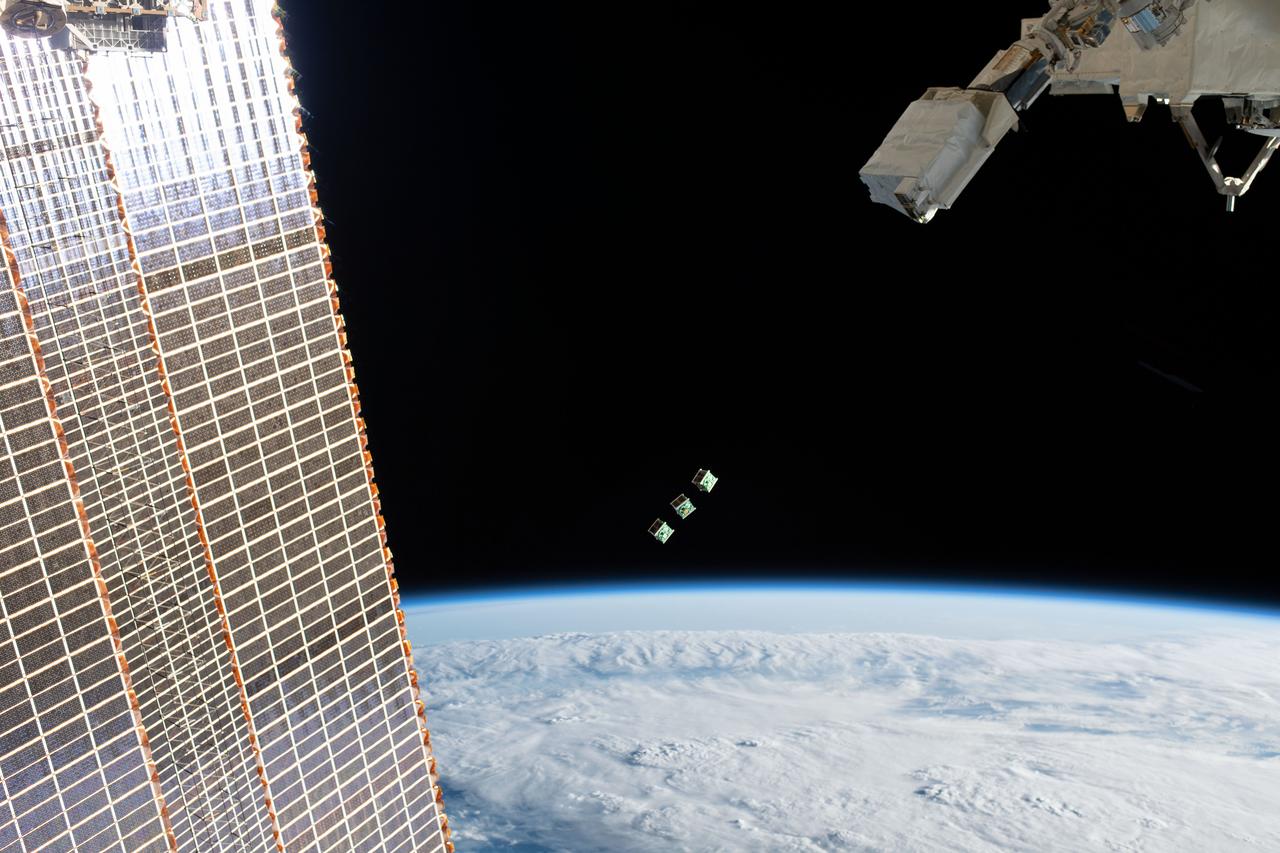 A LEO satellite constellation. Norges Bank Investment Management's index-tracking mandate means it holds stakes in every publicly listed space company on earth. Source: ESA / NASA
How to Track Sovereign Investment as a Retail Investor
Sovereign wealth fund activity is harder to track than hedge fund or mutual fund moves, but it is not invisible. Here are the specific methods that yield the best signal.
13F Filings (For U.S.-Registered SWF Vehicles)
Any institution managing over $100 million in U.S. equities is required to file Form 13F with the SEC on a quarterly basis, disclosing all long equity positions. Several SWF-affiliated vehicles file 13Fs. NBIM files detailed U.S. equity disclosures. Mubadala Capital, the fund management subsidiary, files in connection with its U.S. venture and public market positions. GIC files for its U.S. public equity portfolio. These disclosures lag by 45 days but provide genuine visibility into positions taken.
The SEC's EDGAR database (sec.gov/cgi-bin/browse-edgar) allows searching by fund name. The key search term for NBIM is "Norges Bank." For Mubadala vehicles, searching "Mubadala" and "Aabar" surfaces historical and current positions. Most SWF filings are available free, downloadable as structured data, and cross-referenced by financial data platforms including fintel.io, WhaleWisdom, and 13f.info.
Company Press Releases and Investor Relations
Private company funding rounds typically disclose lead investors. When a space startup announces a Series B or growth round and includes a sovereign fund name in the press release, that is direct evidence of conviction. Neo Space Group's formation, Skyroot Aerospace's Temasek/GIC backing, and Mubadala's Virgin Galactic stake were all disclosed initially through company PR. Track space company IR pages, SpaceNews, Payload Space, and The Space Review for funding announcements.
SWF Institute and Global SWF
The SWF Institute (swfinstitute.org) and Global SWF (globalswf.com) maintain running databases of sovereign fund transactions, including space-adjacent deals. Global SWF published detailed profiling of Mubadala's portfolio allocation and transaction history in their 2025 fund tracker. These are not free tools, but many university libraries provide access, and both publish regular free-tier reports.
Follow the NEOM and Megaproject Infrastructure
NEOM's public procurement and partnership announcements signal where Saudi sovereign capital is flowing. When NEOM signs a satellite connectivity partnership, or when Saudi Aramco's technology subsidiary invests in a geospatial data company, these are downstream expressions of PIF's strategic priorities before they surface in direct investment disclosures.
What SWF Activity Tells Us About the Space Market's Future
The deeper question for any retail investor is not which specific companies the SWFs own — that information is always somewhat stale by the time it surfaces. The more durable signal is what the aggregate pattern of SWF commitment tells us about the space market's structural trajectory.
Several clear conclusions emerge from the current pattern.
Validation of the asset class. The 2021-2023 space SPAC collapse created genuine doubt about whether commercial space companies could build durable businesses before requiring continuous capital infusions. SWF commitment — particularly the creation of entirely new sovereign-backed space companies like Neo Space Group — signals that the most rigorous long-duration investors on earth do not share that doubt. They have concluded that the commercial space market will be large enough to reward patient capital, even if the timeline is measured in years rather than quarters.
Infrastructure over applications. The SWF investment pattern strongly favors space infrastructure — satellite manufacturing, ground station networks, connectivity services — over pure-play mission applications. This mirrors the broader pattern from the early internet era, when sovereign and quasi-sovereign capital flowed into fiber and spectrum rather than e-commerce. The implication for retail investors is that infrastructure-layer space companies may outperform application-layer companies over the coming decade, because sovereign demand is structural and contract-backed rather than dependent on consumer adoption curves.
The IPO window. SpaceX's potential IPO at a reported valuation above $1.5 trillion would be the single largest public offering in market history. SWF demand for that offering will be enormous — both as strategic positioning and as benchmark obligation (NBIM alone would need to acquire a meaningful stake simply to maintain its passive index parity). The SWF bid for a SpaceX IPO would likely function as a price floor, attracting additional institutional co-investment and compressing the typical post-IPO discount that has historically punished space company investors.
Geographic diversification of the space economy. The Gulf SWFs' investment pattern signals a belief that the commercial space economy will be more geographically distributed in its second decade than in its first. SpaceX and NASA dominate today's launch and infrastructure layer, but sovereign capital from the UAE, Saudi Arabia, and Singapore is actively building the capacity for that to change. Investors who only track U.S.-listed companies will miss a substantial portion of the value creation in this cycle.
 The UAE's Hope Mars orbiter in Martian orbit. The mission represented a sovereign-wealth-backed space program going from concept to interplanetary orbit in under a decade — a template other Gulf states are now following. Source: Mohammed Bin Rashid Space Centre / UAE Space Agency
Conclusion: Following Sovereign Capital Into Space
There is an investment axiom that sounds obvious in retrospect but is genuinely difficult to act on in the moment: follow the patient money.
Sovereign wealth funds are not always right. They made high-profile mistakes in the 2008 financial crisis, absorbing losses on bank equity that took years to recover. Individual SWF investments fail, as Mubadala's Virgin Galactic position eventually did. No investor, however large and patient, is immune to bad timing.
But the pattern of SWF commitment to the space sector in 2024 and 2025 is not the behavior of funds chasing a narrative. It is the behavior of strategically motivated, generationally oriented capital building exposure to an industry they believe is structurally inevitable. The UAE is building a space nation because it has concluded that space is infrastructure for the 21st century economy. Saudi Arabia is building satellite capacity because NEOM and Vision 2030 cannot function without it. Singapore is backing Asian launch providers because it sees the next decade of satellite deployment concentrated in Asia-Pacific. Norway owns every space company because the benchmark demands it, and the fund's $2.2 trillion in assets will keep growing into every equity market sector for generations.
The retail investor takeaway is not to copy SWF trades — you cannot buy what they buy, and you cannot hold it the way they hold it. The takeaway is to recognize the signal their aggregate commitment provides: that the global space economy is moving from speculative asset class to investment-grade infrastructure in the eyes of the world's most rigorous institutional capital. That transition does not happen overnight. It happens over a decade, through cycles of boom and bust, through technical failures and landmark successes, through regulatory evolution and geopolitical competition.
When $3.5 trillion in sovereign capital decides an industry is worth owning, it is usually not wrong over twenty years.
The clock is already running.
Disclosure: This article is for informational purposes only and does not constitute investment advice. SpaceOdysseyHub has no financial relationship with any company or fund mentioned in this article. All investment decisions involve risk; past sovereign fund activity does not guarantee future performance.
Sources consulted: Mubadala Investment Company 2025 Annual Report; Caproasia SWF Database (April 2026); Global SWF Fund Profile — Mubadala; PIF Neo Space Group portfolio disclosure; OMFIF Sovereign Funds Report (December 2025); NBIM Annual Report 2025; CNBC / Financial Standard NBIM coverage; SpaceTech Gulf 2026 Market Report; The National (Abu Dhabi) — UAE space milestones 2025; Khaleej Times — Rashid Rover 2 mission profile; Ekonomy Middle East — UAE space ambitions 2025; SpaceNews — Virgin/Saudi investment agreement; SWF Institute — Aabar/Virgin Galactic timeline; Bloomberg — Mubadala Virgin Galactic 7.1% stake disclosure; The Star (Malaysia) — GIC/Temasek India space funding; Tabla.com.sg — Indian space startups Singapore capital.
