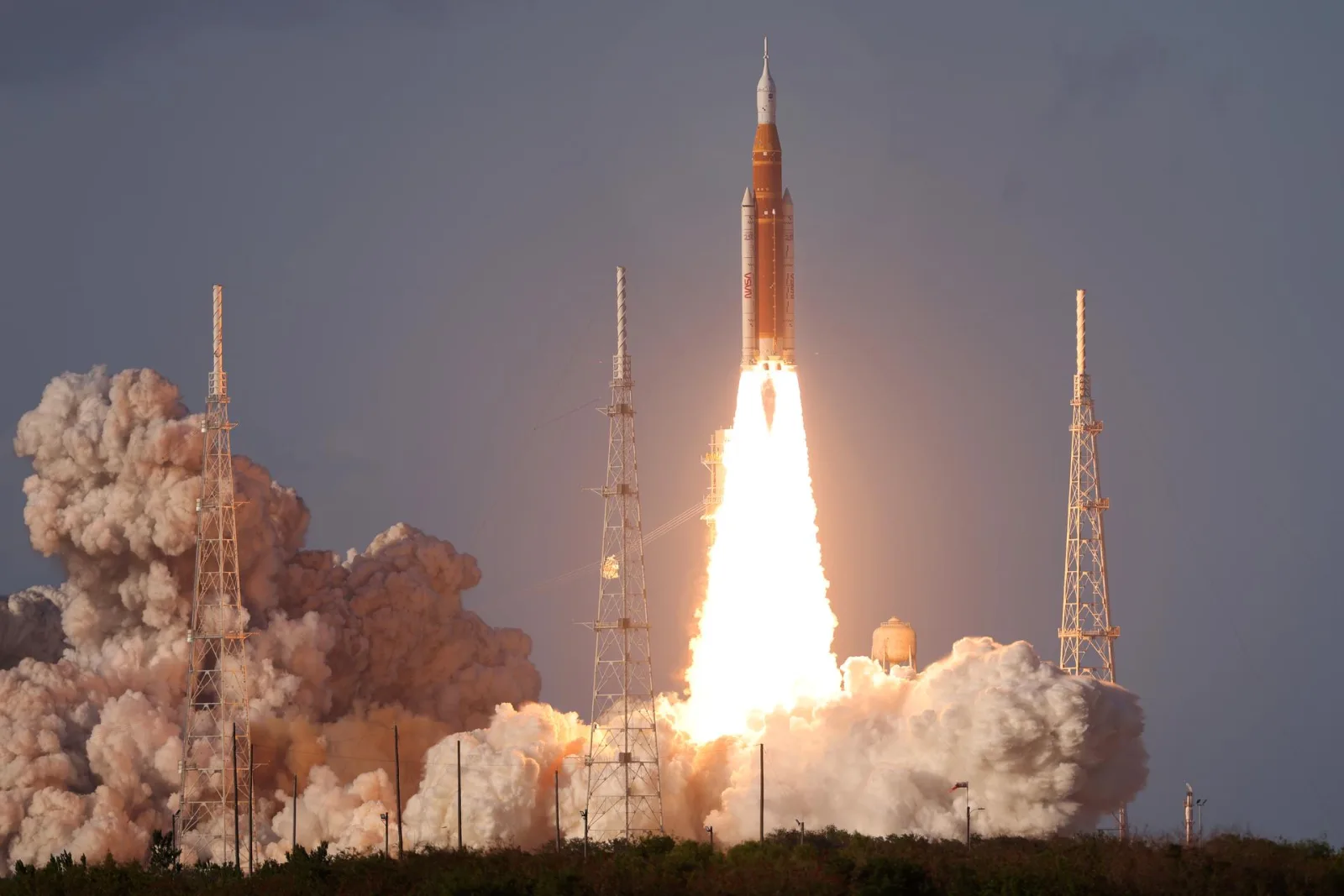
In February 2026, NASA restructured Artemis III into a Low Earth Orbit Human Landing System (HLS) demonstration targeting mid-2027 — meaning the first crewed lunar landing since Apollo 17 has been moved to Artemis IV in early 2028. Artemis III will now test rendezvous and docking between Orion and the SpaceX Starship HLS and Blue Origin Blue Moon landers in LEO, while Artemis IV becomes the mission that returns humans — including the first woman and first person of color — to the lunar surface near the south pole. This article covers both missions, the propellant-transfer and HLS-certification gaps that drove the change, and the timeline ahead.
Mission Profile Update: What Changed and Why
If you've been following Artemis headlines and arrived here expecting an article about Artemis III landing on the Moon, you need to know about a significant program restructuring before reading further.
In February 2026, NASA's Administrator announced that Artemis III has been redesigned from a crewed lunar landing into a Low Earth Orbit Human Landing System (HLS) demonstration mission. Artemis III — now targeting mid-2027 — will test meeting and docking procedures between the Orion crew capsule and one or both Human Landing Systems (SpaceX's Starship HLS and Blue Origin's Blue Moon) in low Earth orbit. No crew will land on the Moon during Artemis III.
The first crewed lunar landing since Apollo 17 has been moved to Artemis IV, targeting early 2028.
The two main technical drivers of this decision:
- Propellant transfer demonstration: SpaceX's full-scale cryogenic propellant transfer between orbital tankers and the Starship HLS depot — a prerequisite to any lunar Starship flight — had not been completed as of March 2026. Without a successful demonstration at operational scale, NASA could not certify Starship HLS for a crewed lunar descent.
- HLS design certification: NASA's HLS design certification review for both Starship HLS and Blue Origin's Blue Moon had not been completed by that date, and the combined schedule could not support a lunar landing attempt before late 2027 at the earliest.
Rather than slip the crewed flight indefinitely while waiting on HLS certification, NASA restructured the manifest. Artemis III now gives the crew and both HLS contractors a flight-hardware rendezvous and docking test in LEO — a lower-risk environment where anomalies can be recovered — before committing to a crewed descent to the lunar surface on Artemis IV.
The rest of this article covers both missions: what Artemis III will actually do, and what Artemis IV (the real Moon landing) will look like once Artemis III clears the way.
Why the South Pole Still Matters
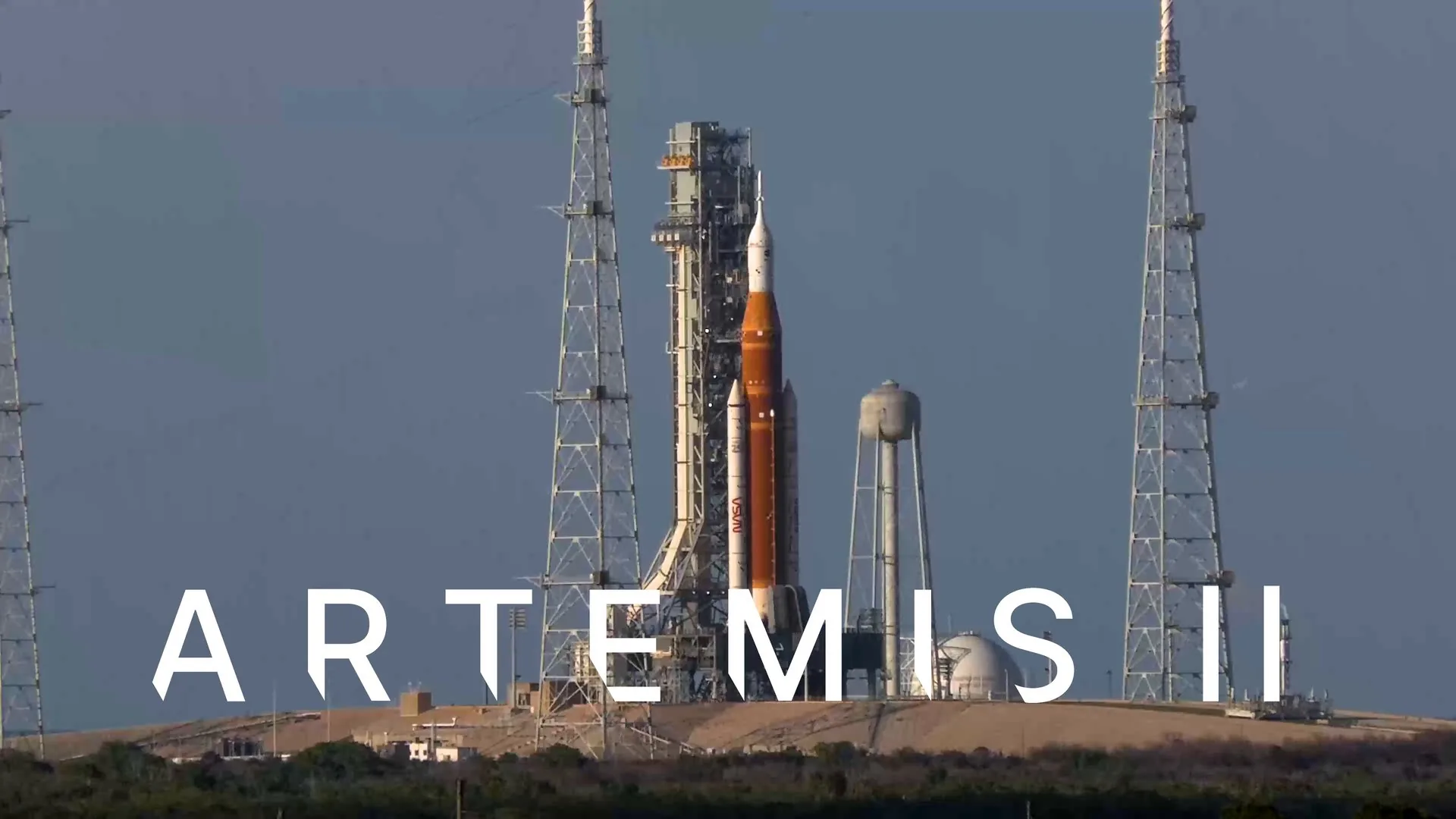
Apollo reached the equatorial highlands and mare basalts of the near side. Those were the easiest places to land safely with 1960s navigation technology. The south pole was never reachable because it required either a highly inclined orbit or a trajectory that burned too much propellant. That constraint no longer applies. Artemis IV is specifically designed to land in the south polar region, a terrain so permanently shadowed in some areas that water ice has accumulated over billions of years, never having seen direct sunlight.
This isn't a sentimental return visit. It's a geological and resource reconnaissance mission dressed in the suit of a historic human achievement. The water ice at the south pole is potentially the most valuable substance in the solar system — it can be electrolyzed into hydrogen and oxygen, the propellant combination that powered Apollo's engines and now powers Artemis. If that ice can be extracted and converted in situ, the Moon stops being a dead-end destination and becomes a fuel depot on the road to Mars.
Mission Overview and Timeline
Artemis III is NASA's Low Earth Orbit HLS demonstration mission, following Artemis I (uncrewed Orion test, November 2022) and Artemis II (crewed Orion lunar flyby, completed April 2026). Artemis III is targeting mid-2027 and will rendezvous and dock with HLS vehicles in low Earth orbit — it will not go to the Moon. Artemis IV, targeting early 2028, is the first crewed lunar landing.
| Mission | Status | Key Milestone |
|---|---|---|
| Artemis I | Complete (Nov 2022) | Uncrewed Orion test around Moon |
| Artemis II | Flown April 2026 | First crewed Orion lunar flyby (10-day mission) |
| Artemis III | Mid-2027 (LEO HLS demo, not Moon landing) | Crew docking and rendezvous with HLS in low Earth orbit |
| Artemis IV | Early 2028 — First crewed lunar landing | First humans on the Moon since Apollo 17; first to Lunar Gateway |
| Artemis V | Planned | Second south pole landing |
Artemis II recap. Launched April 1, 2026 from Kennedy Space Center Launch Complex 39B, Artemis II carried four astronauts on a 10-day crewed lunar flyby — the first humans to travel beyond low Earth orbit since Apollo 17 in 1972. The crew splashed down successfully on April 10, 2026. Artemis II validated the Orion capsule's life support, navigation, and deep-space communication systems in an operational crewed environment.
Artemis III (LEO HLS demo). With Orion now certified for crewed deep-space operations, the next step is certifying the Human Landing Systems. Artemis III will conduct close approach, docking, and systems verification with Starship HLS, Blue Moon, or both in low Earth orbit. This is the critical gate separating Artemis III from Artemis IV.
Artemis IV (the Moon landing). Once HLS hardware has been demonstrated in LEO, Artemis IV sends a crew to the lunar surface. The mission is planned to last approximately 30 days from launch to splashdown, with roughly 6.5 days on or near the lunar surface, multiple EVAs, and a south polar landing site.
The South Pole Landing Site: Nobile Massif and Permanently Shadowed Regions
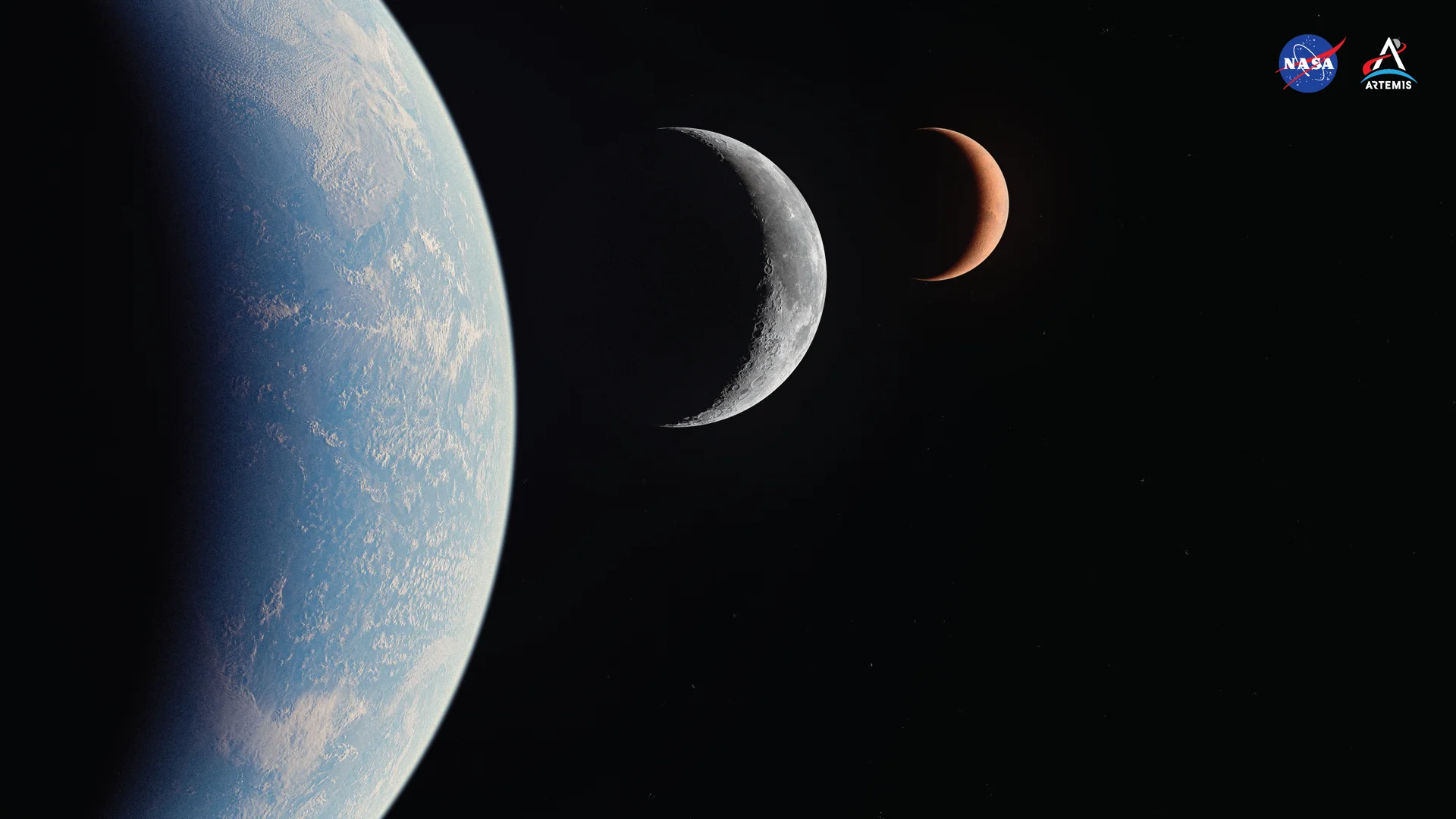
This section describes the Artemis IV Moon landing mission (early 2028), following the Artemis III LEO demonstration.
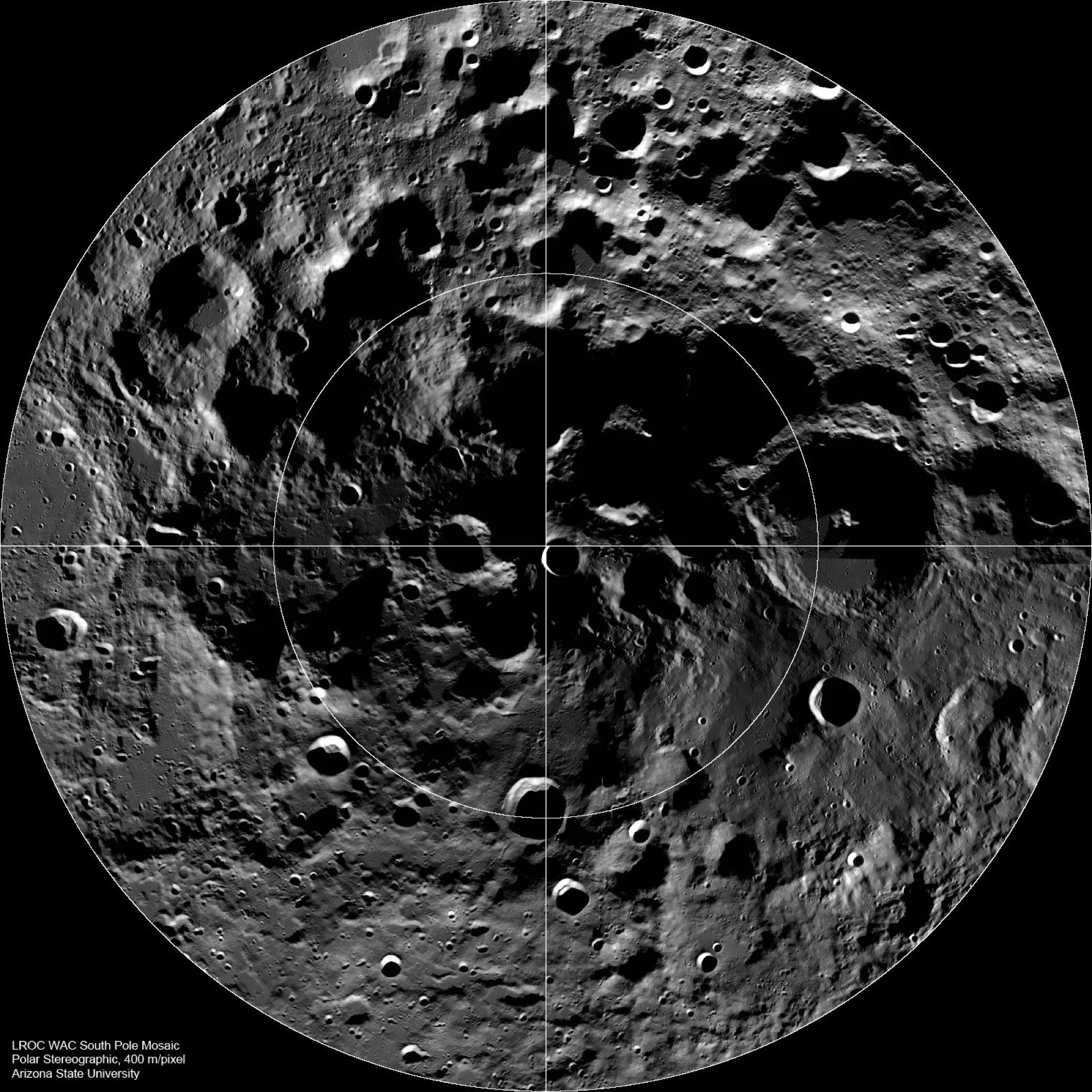
NASA has identified 13 candidate landing regions near the lunar south pole, all within 6 degrees of latitude of the pole itself. The leading candidate sites cluster around the Nobile crater region and the adjacent highlands — terrain that offers a combination of sunlit ridges (for solar power), proximity to permanently shadowed regions (for ice access), and terrain flat enough for a Starship to set down without risk.
The science case for the south pole is extraordinary. In 2009, NASA's LCROSS mission deliberately crashed a Centaur upper stage into the permanently shadowed Cabeus crater and detected unmistakable water ice in the debris plume. The SOFIA airborne observatory later confirmed water molecules distributed more broadly across the lunar surface. India's Chandrayaan-3 in 2023 became the first spacecraft to land near the south pole at 69°S, and its Pragyan rover detected sulfur, iron, calcium, and other elements in the regolith — but was too far north to access the shadowed ice deposits directly.
Permanently shadowed regions (PSRs) are extraordinary places. Some crater floors have not received direct sunlight for two billion years or more, meaning temperatures hover around -230°C (-382°F). In this deep freeze, volatile compounds — water, carbon dioxide, methane, ammonia — that arrived via cometary impacts have been preserved rather than sublimated away. The Artemis IV crew won't walk into a PSR directly; the radiation environment is not well characterized and lighting is essentially zero. Instead, they'll work at the illuminated rims and upper slopes, using instruments to sample ice-bearing regolith that has migrated toward the surface via thermal gardening over geological time.
Starship HLS: The Most Ambitious Landing System Ever Built
This section describes the HLS architecture relevant to both Artemis III (LEO demo) and Artemis IV (the Moon landing).
The Human Landing System was the most contentious element of the Artemis program before it became the most technically fascinating one. In April 2021, NASA awarded the HLS contract solely to SpaceX for $2.89 billion — a decision that triggered protests from Blue Origin and Dynetics, and a congressional mandate that NASA fund a second HLS provider. NASA subsequently awarded Blue Origin's Blue Moon lander a second HLS contract worth $3.4 billion in May 2023.
For Artemis III, both Starship HLS and Blue Moon are candidates for the LEO demonstration docking. Artemis IV — the actual Moon landing — will use Starship HLS as the primary descent vehicle.
SpaceX's lunar Starship is a purpose-modified version of its stainless-steel upper stage — the same 50-meter-tall, 9-meter-diameter ship that's been flight-tested from Boca Chica. The lunar variant strips out the payload section and replaces it with crew airlocks, EVA suit ports, and a propulsion system optimized for the vacuum of cislunar space. It does not have grid fins or landing legs designed for atmospheric reentry; it's purely an in-space vehicle. It will never land on Earth.
How the HLS Architecture Works
Starship HLS cannot carry its own propellant from Earth to the Moon efficiently — the Raptor engines simply require too much propellant. Instead, SpaceX's architecture requires depot tanker missions: a fleet of cargo Starships will launch from Earth, deliver propellant to a depot spacecraft in low Earth orbit, and the HLS vehicle will dock with that depot to fill its tanks before heading to the Moon. NASA's contract requires SpaceX to demonstrate an orbital propellant transfer before any crewed HLS mission.
This is the single largest technical uncertainty in the program. Transferring cryogenic liquid methane and liquid oxygen between vehicles in zero gravity — with all the boiloff, fluid dynamics, and sealing challenges that entails — has never been done operationally. As of March 2026, the full-scale demonstration at the volumes required for HLS remained ahead. That incomplete demonstration was a primary reason NASA restructured Artemis III into a LEO demo rather than a lunar landing attempt.
Mission Architecture: The Full Flight Path for Artemis IV
This section describes the Artemis IV Moon landing flight profile (early 2028). Artemis III will conduct a shortened version of steps 1–2, stopping at LEO rendezvous and docking rather than proceeding to the Moon.
The Artemis IV flight profile is a choreographed sequence involving two vehicles, two launches, and a rendezvous in lunar orbit.
Step 1 — Starship HLS launches first. The Starship HLS vehicle, already fueled via depot missions, departs from a depot or directly from a fueling orbit and travels to near-rectilinear halo orbit (NRHO) around the Moon. NRHO is a highly elliptical orbit that passes close over the lunar north pole and swings far out over the south — it's energetically efficient to reach from Earth and stable over long periods, making it the planned home of the Lunar Gateway.
Step 2 — Orion launches on SLS Block 1B. For Artemis IV, the Space Launch System Block 1B — featuring the more powerful Exploration Upper Stage — carries the Orion capsule with the four-person crew into a trans-lunar injection trajectory. (SLS Block 1, without the Exploration Upper Stage, is the vehicle used for Artemis III.) After several days of transit, Orion docks with the Lunar Gateway in NRHO, and the crew transfers to Starship HLS.
Step 3 — Two crew members transfer to Starship. Two of the four crew members — likely the mission commander and the mission specialist who will conduct EVAs — transfer into Starship HLS. The remaining two stay aboard Gateway or Orion in NRHO.
Step 4 — Descent and surface operations. Starship HLS performs a powered descent to the south polar landing site over approximately 30–45 minutes. The two crew members then conduct multiple EVAs over approximately six days, exiting through the airlock near the base of the vehicle via an elevator system.
Step 5 — Ascent and return. Starship HLS fires its Raptor Vacuum engines to return to NRHO, docks with Orion, and the crew reunites. Orion then departs for a trans-Earth injection and splashdown in the Pacific Ocean.
Surface Activities and Science
This section describes planned surface activities for the Artemis IV Moon landing mission (early 2028), following the Artemis III LEO demonstration.
Each EVA from Artemis IV is expected to last up to two hours initially, constrained by the new xEMU (Exploration Extravehicular Mobility Unit) spacesuit's consumables budget and the novelty of the terrain. Astronauts will collect geological samples from the highland regolith, deploy seismic sensors, photograph the terrain in multiple wavelengths, and operate the PROSPECT drill — a European Space Agency-contributed instrument designed to core into the regolith and extract volatile-bearing samples.
The PROSPECT drill is particularly significant. It can reach 1 meter below the surface, which is deep enough to access ice-bearing layers that surface gardening hasn't depleted. The drill heats cores to detect and analyze volatile compounds — essentially telling scientists, for the first time from the surface, exactly what's in that ice and in what quantities. That data feeds directly into the feasibility calculations for future ISRU systems.
Astronauts will also deploy the LunaNet-compatible communications node and a series of retroreflectors that Earth-based lasers can bounce signals off — refining our models of the Moon's interior by measuring orbital librations with centimeter precision.
Crew Selection: Who Flies to the Moon
This section discusses crew selection for Artemis IV (the Moon landing). Artemis III crew assignments are separate and have not yet been announced.
NASA has not announced the Artemis IV crew as of April 2026. The Artemis program carries a statutory requirement that the first woman on the Moon fly on the lunar landing mission. NASA has repeatedly confirmed this commitment. The astronaut corps that would be candidates includes veterans of the International Space Station from backgrounds spanning the military test pilot tradition and the research scientist track — precisely the dual-competency combination needed for a mission that requires both precision piloting of HLS and high-value geological field work.
Artemis II's four-person crew remain candidates for future Artemis assignments, and crew selection for Artemis IV is expected to be announced following completion of Artemis III.
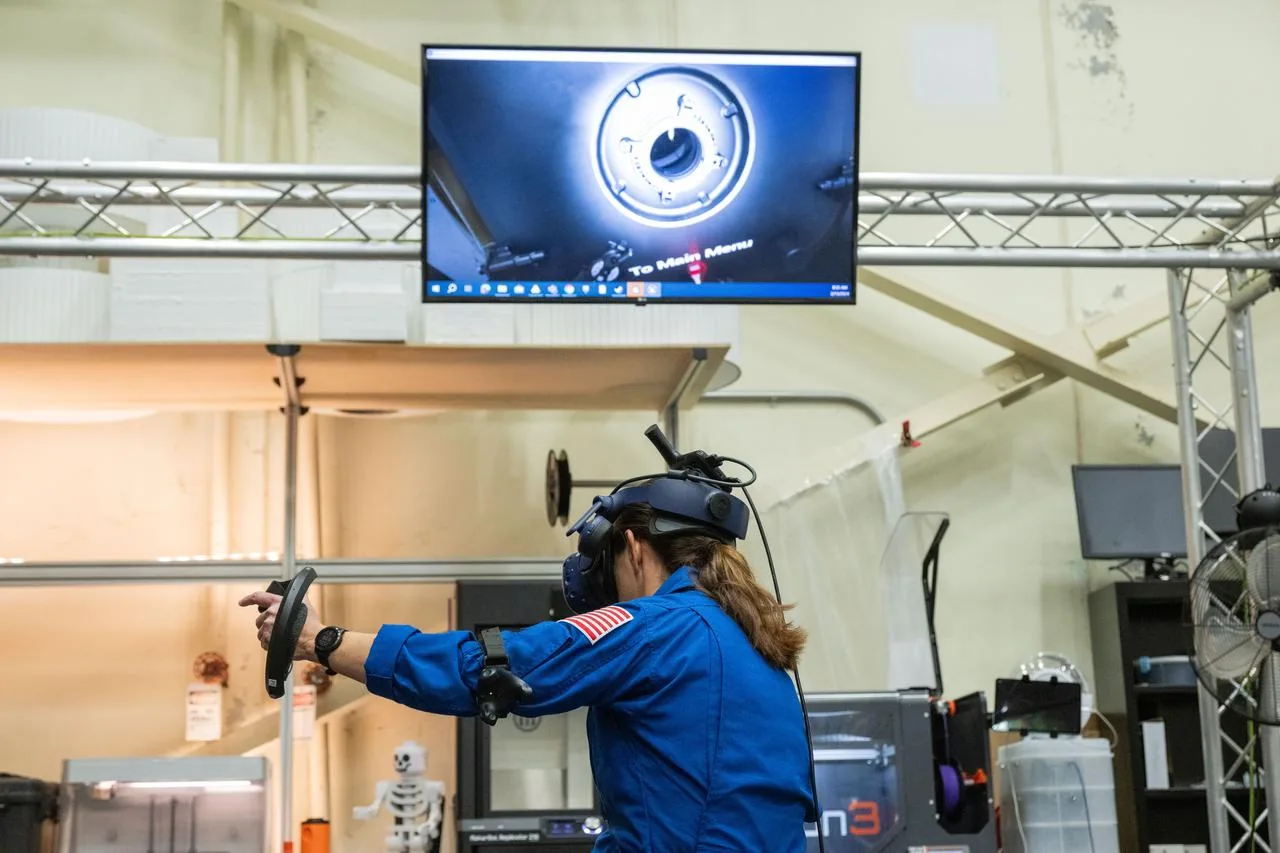
Training for the south pole landing adds dimensions that Apollo never required: operating in near-zero-illumination terrain with headlamps, rehearsing geological sampling on terrestrial volcanic terrain analog sites in Hawaii and Iceland, and practicing Starship-specific ingress/egress procedures using a full-scale mockup at SpaceX's Starbase facility in Texas.
What Could Go Wrong
The path to Artemis IV runs through several hard technical gates — and as of April 2026, the most critical ones remain open.
Starship certification for crew. The FAA must license Starship for human spaceflight. As of early 2026, Starship has completed multiple integrated test flights and demonstrated booster recovery and ship reentry capability, but has not yet conducted a crewed mission or completed all certification milestones NASA requires for lunar HLS use.
Orbital propellant transfer. SpaceX must demonstrate full-scale cryo-propellant transfer between orbital tankers and the HLS vehicle. As of March 2026, this demonstration had not been completed. It remains the schedule critical path for Artemis IV. If it slips significantly, the Moon landing slips with it.
Artemis III LEO demo success. The restructured Artemis III is a prerequisite for Artemis IV. If the LEO rendezvous and docking with HLS reveals hardware or software problems in the HLS vehicles, Artemis IV could be delayed while those issues are resolved.
SLS and Orion reliability. The Space Launch System has now flown twice — Artemis I (uncrewed) and Artemis II (crewed, successful April 2026). Two successful flights build confidence, but the configuration for Artemis IV introduces Block 1B's Exploration Upper Stage, which has not yet flown. A qualification issue there could delay the mission.
Congressional funding. The Artemis program competes annually for appropriations in a budget environment where discretionary spending has been under sustained pressure. A significant funding cut in any year between now and launch would force NASA to descope mission objectives or delay further.
After Artemis IV: Building the Infrastructure for Permanence
Artemis IV is not the destination — it's the first step in a sequence designed to culminate in a semi-permanent presence on the Moon. The Lunar Gateway, a small space station in NRHO built with ESA, JAXA, and CSA contributions, will provide a persistent orbital outpost by the late 2020s. From Artemis IV onward, crews will use the Gateway as an intermediate stopping point, allowing longer surface stays and more complex operations.
The endgame is an Artemis Base Camp near the south pole: a pressurized rover, surface habitat module, and in-situ resource utilization plant that can extract water ice and convert it to propellant. This isn't science fiction — NASA and ESA have contracts in place for ISRU technology demonstrations. Artemis IV provides the ground truth data (ice composition, soil trafficability, radiation environment at the surface) that makes those follow-on systems possible to design.
The geopolitical signal is also impossible to ignore. China's CNSA has announced its own crewed lunar program targeting the south pole in the 2030s, alongside Russia. The Artemis Accords — signed by over 40 nations as of 2026 — are partly a normative framework for who governs the rules of lunar resource extraction. An American-led first landing at the south pole establishes practical precedent that treaty text alone cannot provide.
Fifty-three years after Gene Cernan climbed that ladder, a new crew will descend a different one — electric, designed by a commercial company, lowering them to soil that has sat in darkness since before the dinosaurs went extinct. Artemis III will prove the hardware can meet and dock. Artemis IV will prove humans can go back. Whatever happens next in space exploration will be shaped by what that crew finds when the lights finally come on.