Two Billionaires, One Market, Very Different Scoreboards
The narrative writes itself: Elon Musk versus Jeff Bezos, Silicon Valley disruption versus Old Space money, speed versus deliberateness. But the SpaceX-versus-Blue-Origin story has never been a fair fight — at least not yet. One company operates the world's most frequently flown orbital rocket and is actively colonizing low Earth orbit with its own satellite constellation. The other, after years of cautious development, finally reached orbit for the first time in January 2025.
Both companies are real. Both have real hardware and real ambitions. But in 2025 and heading into 2026, the gap between them is measured not in philosophy but in flight rates, revenue, and manifest depth. Understanding that gap — and why it still might close — is essential for anyone watching the commercial launch market.
The Numbers Don't Lie: Launch Cadence
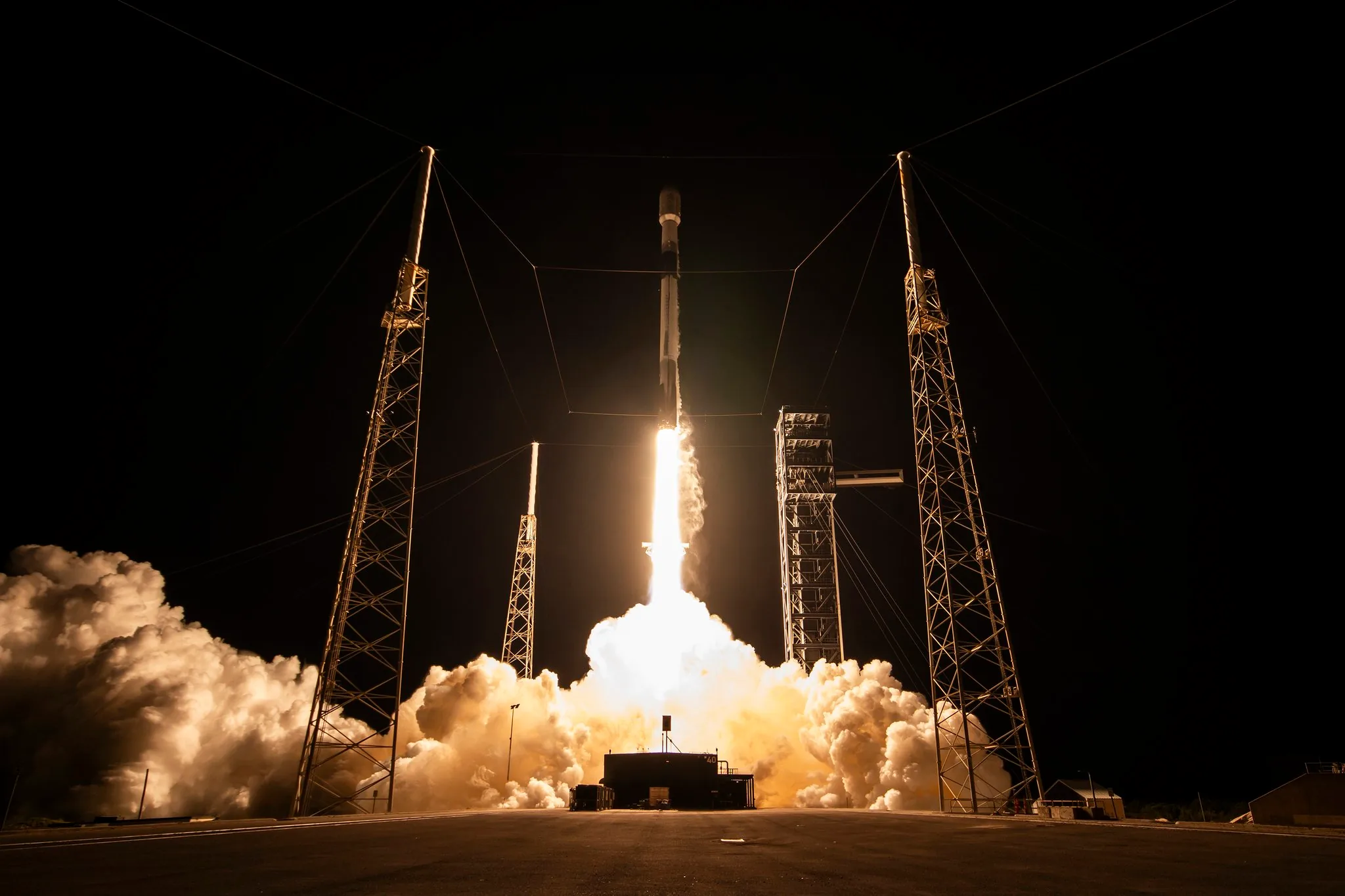
SpaceX's 2024 launch manifest was staggering by any historical standard: 134 flights, with a large share carrying Starlink satellites to fill out SpaceX's own constellation, and a substantial portion serving external commercial customers, NASA science missions, DoD payloads, and international commercial operators. 2025 pushed even further: SpaceX flew 165 orbital missions — a new annual record and more than the rest of the world combined. Through the first four months of 2026 the company has already flown 58 Falcon missions and is tracking toward an internal target of 170–180 launches for the calendar year. As of April 30, 2026, the cumulative Falcon 9 launch count has reached 690 with 656 successful booster landings, and Falcon-family vehicles have lifted an estimated 4,150 metric tons of payload to orbit since 2010 — more cumulative tonnage than the rest of the global launch industry combined.
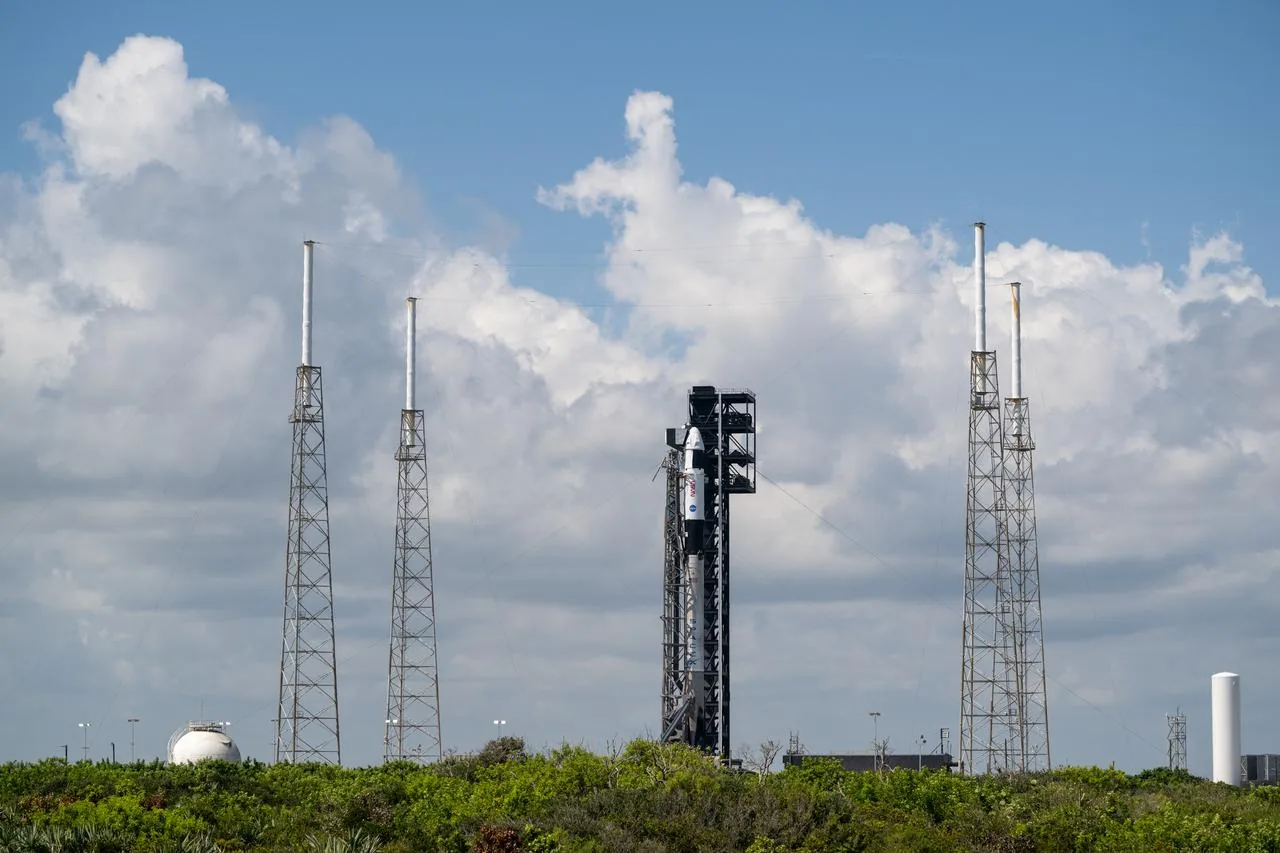
By comparison, Blue Origin's New Glenn is now an operational, flight-proven vehicle with three orbital missions on the books and a fourth on the pad. NG-1 (January 16, 2025) reached orbit on its first attempt — an achievement that even SpaceX did not manage with Falcon 9 — carrying Blue Origin's Blue Ring pathfinder to a 2,400 × 19,300 km medium Earth orbit; the first-stage booster was lost during the landing attempt, but mission objectives in orbit were met. NG-2 (November 13, 2025) sent NASA's twin ESCAPADE Mars probes toward Sun–Earth L2 and achieved the first successful New Glenn booster landing on the droneship "Jacklyn"; NASA paid roughly $20 million for the mission. NG-3 (April 19, 2026) reused that same booster — Blue Origin's first-ever orbital booster reflight, with another clean landing — but the second stage malfunctioned and left AST SpaceMobile's BlueBird 7 satellite in a degraded 265 × 465 km orbit. The FAA grounded New Glenn pending a mishap investigation that Blue Origin expects to close in early June, with NG-4 carrying the first 27 Project Kuiper satellites already integrated at LC-36 and targeting a return-to-flight window in mid-June 2026. Three flights in fifteen months — two with successful booster recoveries — is real progression, but the cadence remains a fraction of SpaceX's pace.
The cadence gap remains the defining competitive reality of this moment. SpaceX does in a weekend what Blue Origin is targeting per month. Blue Origin CEO Dave Limp has held to a public target of 8–12 New Glenn flights in calendar-year 2026 with a booster turnaround approaching 30 days — a goal that slipped after the NG-3 second-stage anomaly but that the company is still publicly committing to as Kuiper deployment ramps in the second half of the year.
Revenue Reality: Public Estimates vs. Private Silence
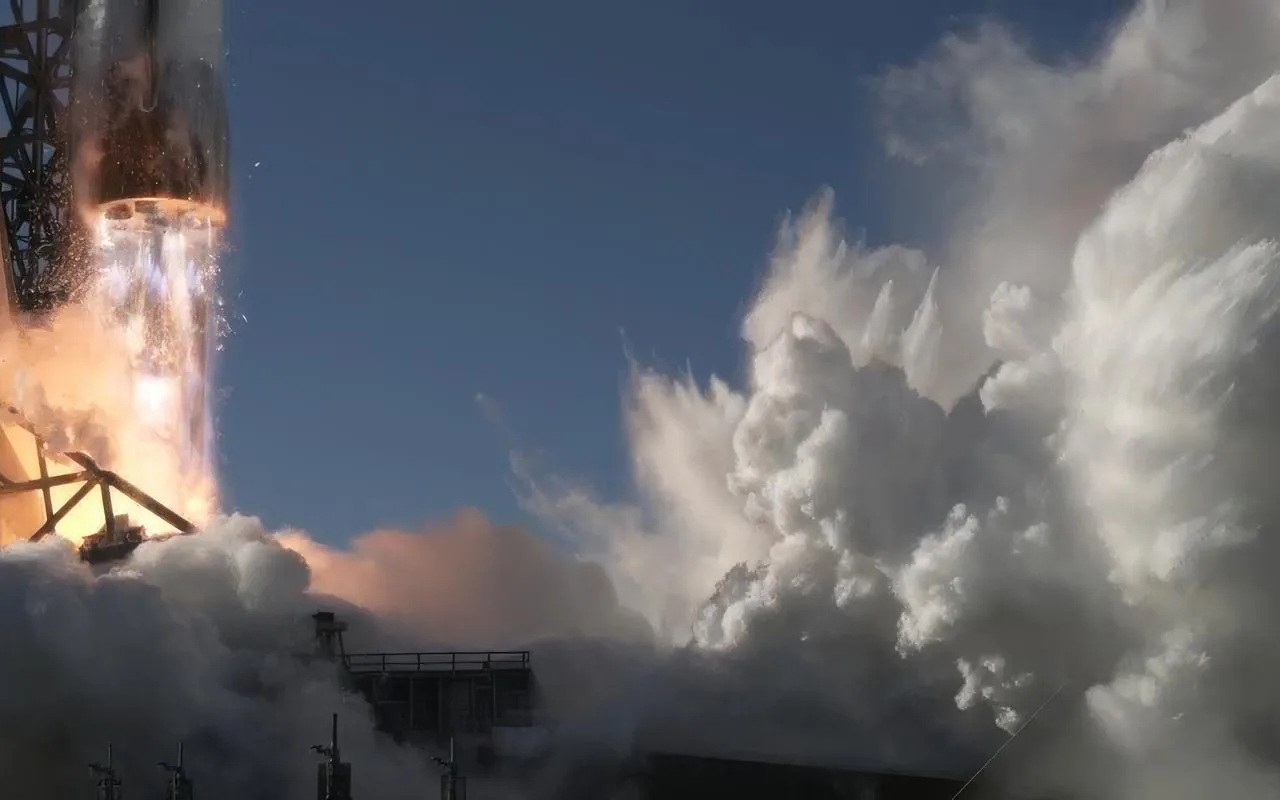
SpaceX is a private company, but enough data has surfaced — through investor documents, government contract filings, and reporting — to sketch a revenue picture. SpaceX reported approximately $16 billion in 2025 revenue with roughly $8 billion in operating income, driven heavily by Starlink (which crossed 10 million subscribers in February 2026 and contributed an estimated $11.8 billion in 2025) plus several billion in launch services revenue. The commercial launch business alone — before Starlink — would rank SpaceX among the largest aerospace companies in the world.
Blue Origin is even more opaque. Jeff Bezos has personally funded the company to the tune of billions of dollars over two decades, with estimates suggesting he has invested more than $10 billion since founding it in 2000. External revenue — from New Shepard tourism flights, NASA contracts, and now nascent New Glenn commercial arrangements — is estimated in the $1–2 billion range annually. That figure will grow as New Glenn builds its flight history, but it reflects a company still in the investment phase rather than the return phase.
Head-to-Head: Falcon 9 vs. New Glenn
| Specification | Falcon 9 Block 5 | New Glenn |
|---|---|---|
| Height | 70 m | 98 m |
| Payload to LEO | 22,800 kg | 45,000 kg |
| Payload to GTO | 8,300 kg | 13,600 kg |
| Fairing diameter | 5.2 m | 7 m |
| First flight | 2010 | January 16, 2025 |
| Cumulative orbital flights (to May 2026) | 690 (Falcon 9) + 11 (Falcon Heavy) | 3 |
| Booster reusability | Yes (leading booster has flown 35 times by May 2026) | Yes (first reuse on NG-3, April 19, 2026) |
| Estimated price (commercial) | ~$70M | ~$68M (per leaked Kuiper contract terms) |
| Engine (first stage) | 9x Merlin 1D | 7x BE-4 |
| Propellant | RP-1/LOX | LNG/LOX |
Several things stand out from this table. New Glenn is physically a larger rocket — it can lift roughly twice the payload to LEO as Falcon 9 — and its 7-meter fairing opens doors for payload configurations that simply cannot fly on Falcon 9. The BE-4 engines burning liquid natural gas and liquid oxygen represent a different propellant path than Falcon 9's kerosene-based Merlins, with some efficiency and handling advantages.
But Falcon 9's edge is its flight history. 690 cumulative Falcon 9 launches as of April 30, 2026, with only two in-flight failures and one partial failure across the entire program, plus 11 Falcon Heavy flights through Q1 2026 (most recently the GOES-U weather satellite and a USSF national-security mission) — Block 5 boosters routinely fly 15–20+ times before retirement, and the leading single booster (B1067) has now flown 35 missions. That reliability record is what signs contracts. Satellite operators betting hundreds of millions on a single payload want the rocket that has done it hundreds of times before, not one that has done it three times.
Mission Focus: Very Different Strategies
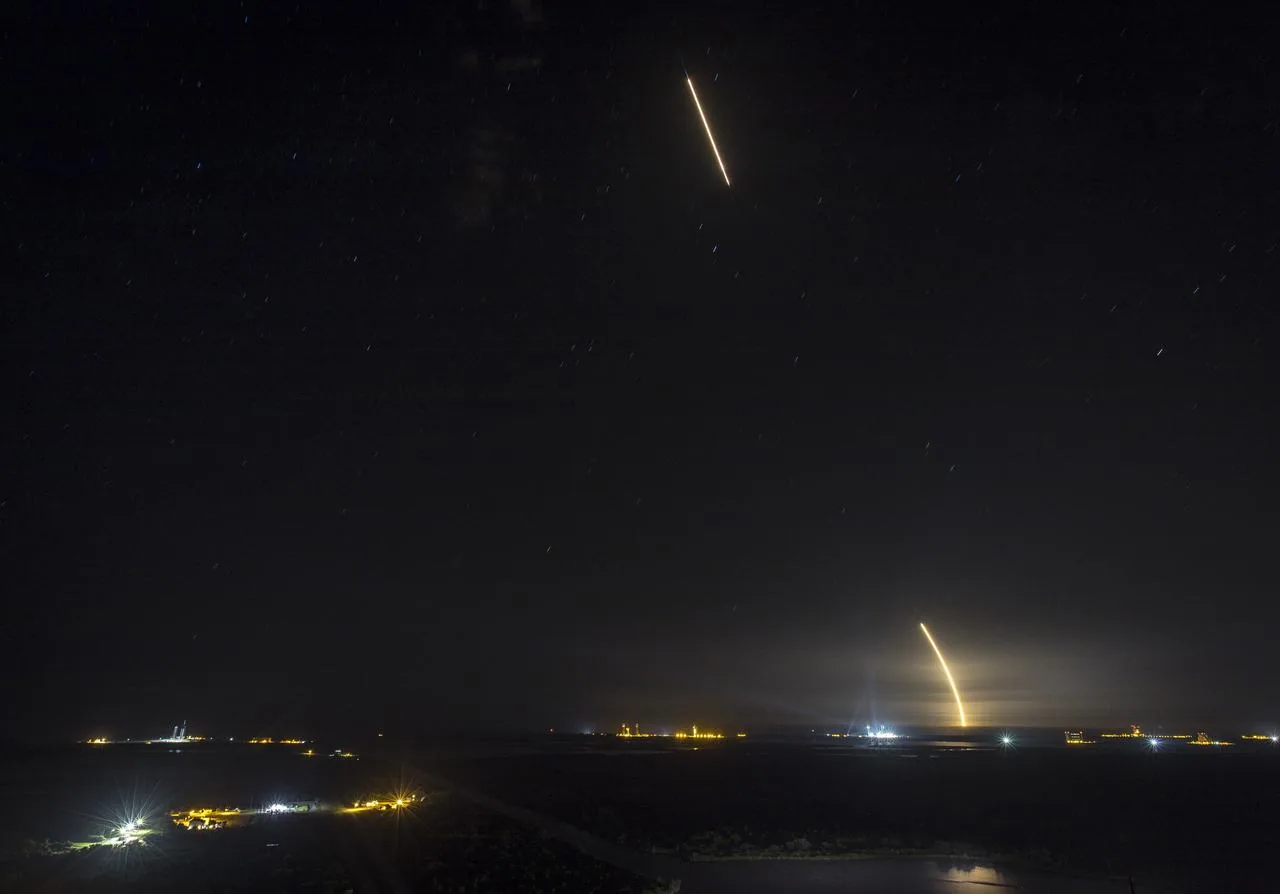
SpaceX operates across the full spectrum of launch demand. Internally, Starlink drives a massive captive manifest — SpaceX essentially runs a launch airline for its own constellation. Externally, it serves NASA (crew and cargo to the ISS, science missions), the DoD (NRO reconnaissance satellites, military GPS), and a deep commercial manifest including Intelsat, SES, Telesat, and dozens of smaller operators and rideshare customers.
Blue Origin's mission architecture has historically been bifurcated: New Shepard served the suborbital tourism market (and flew Alan Shepard's grandson, among others), while New Glenn was developed for orbital payloads. The company holds NASA's Sustaining Lunar Development (SLD) Human Landing System contract for the Blue Moon Mark 2 lander — a $3.4 billion award that positions Blue Origin alongside SpaceX as one of two crewed-lunar-lander providers for Artemis V — and is a primary launch provider for Amazon's Project Kuiper broadband constellation, a direct Starlink rival. With NG-4 carrying the first 27 Kuiper satellites on a New Glenn as the company's return-to-flight after the NG-3 anomaly, the manifest is no longer theoretical: Kuiper deployment is now the single largest driver of Blue Origin's near-term launch backlog and is expected to consume the majority of New Glenn slots through 2027.
Reusability: Proven vs. In Progress
Falcon 9 booster reusability is no longer an experiment — it is an industrial process. By May 2026, the single most-flown booster had accumulated 35 reflights, and Block 5 stages routinely turn around in weeks. The cost economics of reusability are central to SpaceX's pricing power: it can charge less than competitors partly because it amortizes booster costs across many flights.
New Glenn's reusability story has moved rapidly through three chapters. NG-1 (January 2025) reached orbit but the first stage was lost during the landing attempt. NG-2 (November 2025) nailed it — the first-ever New Glenn booster recovery on droneship "Jacklyn." NG-3 (April 19, 2026) achieved the next milestone: Blue Origin's first booster reuse, flying the NG-2 stage ("Never Tell Me The Odds") again and landing it successfully, even as the second stage malfunction left the primary payload in a degraded orbit. NG-4 — currently on the pad at LC-36 with the first 27 Kuiper satellites — is expected to mark the first operational Kuiper deployment on a New Glenn once the FAA mishap-investigation hold is lifted. The reusability trajectory is real. The open question is whether Blue Origin can scale it to the 30-day turnaround cadence CEO Dave Limp has publicly targeted, especially with the bulk of the 2026 Kuiper manifest still ahead.
Suborbital Tourism: A Very Different Comparison
New Shepard — Blue Origin's suborbital vehicle — has now flown 33 missions through April 2026 (16 crewed, 17 uncrewed), carrying more than 70 paying passengers above the Kármán line since commercial service began in 2021. The program was grounded for roughly 15 months after the September 2022 NS-23 uncrewed booster failure but has flown without incident since returning to service in late 2023. It is a genuine product with a real customer base.
| Metric | New Shepard | SpaceX (Crew Dragon orbital) |
|---|---|---|
| Mission type | Suborbital tourism | Orbital missions |
| Cumulative flights (to May 2026) | 33 (16 crewed) | 17 crewed Dragon flights |
| Flight duration | ~11 minutes | Days to months |
| Altitude | ~105 km | ~400 km (ISS) |
| Crew capacity | 6 passengers | 4 crew |
| Ticket price | ~$450,000+ | Not publicly offered for tourism |
| Reusability | Yes (capsule + booster) | Yes (capsule reflown, no booster recovery) |
This comparison is somewhat unfair — they are not competing for the same customers. But it illustrates the different market segments each company has developed. SpaceX's orbital tourism via Crew Dragon (the Inspiration4 mission, Polaris Dawn) targets a very different experience and price point than New Shepard's brief hop. The question of whether a true space tourism market will emerge at scale remains open.
Customer Base and Contracts
SpaceX's customer list reads like a who's-who of the satellite and government launch industry. Inmarsat, ViaSat, Intelsat, SES, DirectTV, the NRO, NASA, the ESA — the company has won business from virtually every major buyer in the market. The Starlink manifest means SpaceX will fly regardless of external demand, giving it a financial floor that pure launch providers lack.
Blue Origin's customer base is smaller but strategically targeted. The Project Kuiper contract is the cornerstone: Amazon plans to deploy 3,236 satellites in LEO, and Blue Origin is positioned as a primary launch provider alongside ULA's Vulcan Centaur and Arianespace. With NG-4 carrying the first 27 Kuiper satellites on a New Glenn as the imminent return-to-flight mission — and an estimated 12+ Kuiper-dedicated New Glenn flights penciled in through 2027 — the manifest is no longer aspirational. NASA's $3.4 billion Blue Moon Mark 2 HLS contract for Artemis V signals federal confidence in Blue Origin's broader system architecture, not just the rocket. As New Glenn builds flight history, the commercial manifest will broaden beyond Kuiper.
The Future: Starship vs. New Glenn Block 2
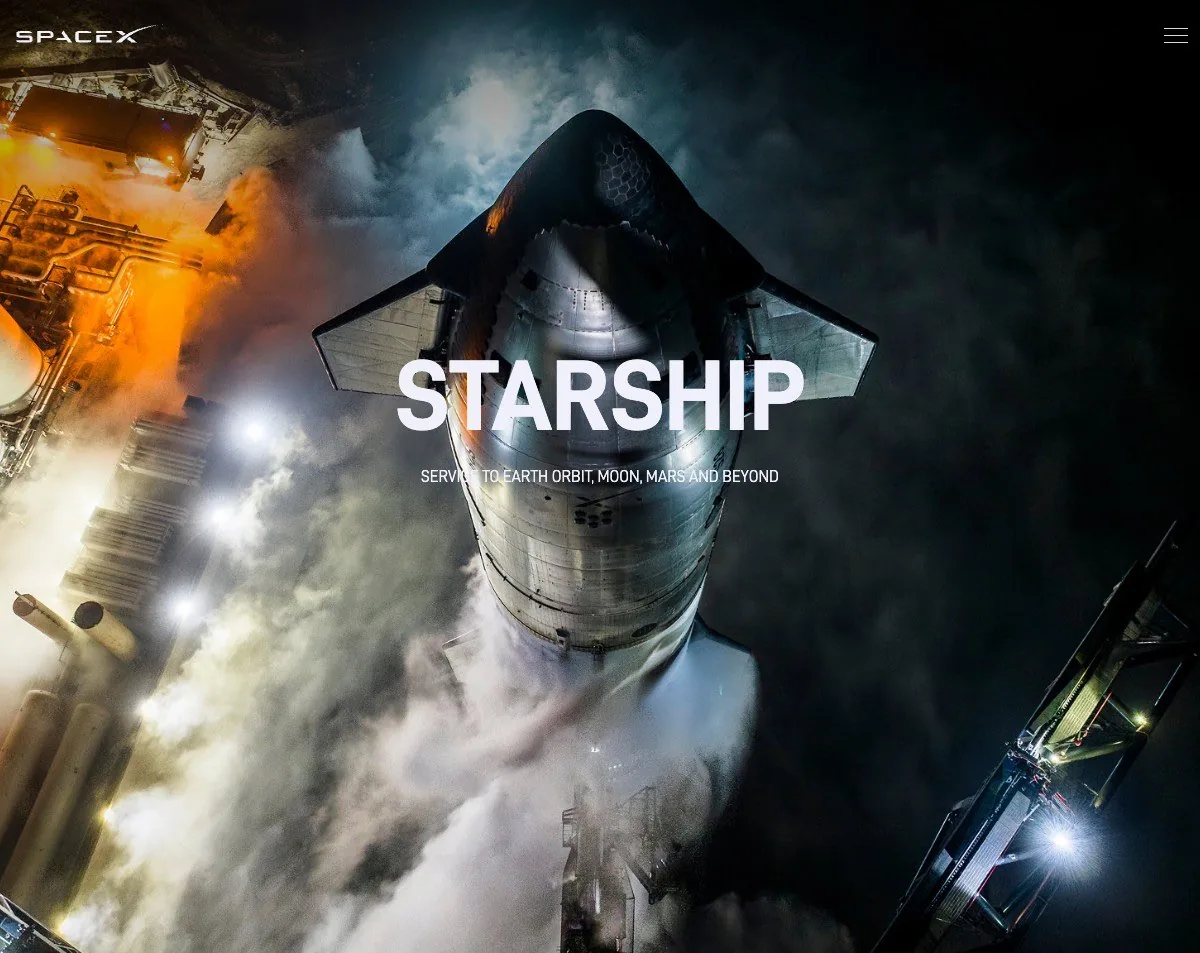
Neither company is standing still. SpaceX's Starship — the fully reusable stainless-steel behemoth capable of carrying 100+ metric tons to orbit — has flown 11 integrated flight tests from Starbase, Texas as of April 2026. The October 2024 IFT-5 produced the program's defining moment when Mechazilla caught the returning Super Heavy booster on the launch tower for the first time, a feat repeated on IFT-7 (January 2025) and on every subsequent successful flight. IFT-8 through IFT-11 (across 2025 and Q1 2026) progressed through orbital-velocity ship tests, on-orbit Starlink V3 deployment demonstrations, and a successful ship soft-splashdown in the Indian Ocean; SpaceX is now openly targeting an in-flight propellant-transfer demonstration on IFT-12 later in 2026 as a precursor to the Artemis III HLS mission. Once operational, Starship would dwarf any competing vehicle and would enable launch economics that make even Falcon 9 look expensive.
Blue Origin is working on New Glenn Block 2 improvements (including a stretched second stage and BE-4U upper-stage engine upgrade), is flying the Blue Ring in-space transportation vehicle on operational missions, and is building out the Blue Moon Mark 2 lunar lander under its $3.4 billion NASA HLS contract for Artemis V (currently targeting 2030). Blue Origin's New Armstrong rocket — a vehicle rumored to be in development for super-heavy lift — has still not received a confirmed public specification or timeline as of May 2026.
Verdict: Market Position in Mid-2026
SpaceX is not winning the launch market — it has already won it, at least for this decade. The combination of flight rate, reliability record, pricing power, Starlink vertical integration, and an operational Starship that is now actively catching boosters out of the sky gives SpaceX a competitive position that no single company can match in the near term.
Blue Origin is not losing, either. It is building — and faster than many expected. Three New Glenn flights in fifteen months, two consecutive booster recoveries, a first orbital booster reuse on NG-3, and an imminent NG-4 return-to-flight with the first batch of operational Kuiper satellites represent real progression. The Kuiper manifest and the Blue Moon HLS contract position Blue Origin as a genuine second-tier player that could become a first-tier player by the end of the decade. Jeff Bezos has shown willingness to sustain multi-billion-dollar losses for long development cycles. If New Glenn approaches even the lower end of the 8–12 flights CEO Dave Limp is targeting for 2026, and if booster reuse becomes genuinely routine on the Kuiper manifest, the competitive dynamics shift meaningfully.
The most interesting question for the rest of 2026 is not whether SpaceX or Blue Origin wins — SpaceX already has. It is whether Blue Origin can establish a defensible second position in the market before Rocket Lab's Neutron, ULA's Vulcan, and other competitors solidify their own niches. The launch market is large enough for multiple providers. But only one company, right now, can reasonably claim to dominate it.
Key Takeaways
The SpaceX versus Blue Origin comparison reveals two companies at fundamentally different stages of maturity. SpaceX is a profitable, high-volume launch provider with a secondary revenue engine (Starlink) that funds aggressive R&D, and Starship is now demonstrating booster catches as a routine operational technique rather than a stunt. Blue Origin is a well-capitalized entrant that has now proven it can reach orbit, recover boosters, and reuse them — the three foundational capabilities of modern reusable launch — and is days away from beginning operational Kuiper deliveries on NG-4. What Blue Origin still has to prove is that it can do all of this at volume and with consistent upper-stage performance; the off-nominal orbit on NG-3 is a reminder that the product is still maturing. The comparison is becoming less of a before-and-after and more of a genuine race to build operational cadence.
Both companies will shape the next decade of human access to space. But if you needed to bet today on who launches the most payloads in 2026, there is no contest.