For the First Time in Years, Falcon 9 Has Company
For most of the 2010s and early 2020s, choosing a launch vehicle for a commercial satellite mission meant choosing between SpaceX's Falcon 9 and hoping ULA's Atlas V was available — or paying a premium for Ariane 5 if you needed European sourcing or redundancy. The market was thin, pricing was opaque, and reliability was unevenly distributed.
That era is ending. In 2024 and 2025, two significant new entrants moved from debut to operational service: United Launch Alliance's Vulcan Centaur, which flew its Cert-1 mission on January 8, 2024 (a full success carrying the Peregrine lunar lander), Cert-2 in October 2024, and its first national security flight (USSF-106) in 2025; and Blue Origin's New Glenn, which achieved orbit on its maiden flight on January 16, 2025 (booster lost on the landing attempt). By May 2026, Vulcan Centaur is in operational cadence with roughly 6–10 cumulative flights, and New Glenn is operational with 3–6 flights to its name. For the first time since Falcon 9 Block 5 reached full operational status in 2018, customers selecting a launch vehicle have genuine alternatives.
This does not mean the competition is equal. Falcon 9 has now surpassed 500 cumulative flights with more than 450 consecutive successes behind it, a flight rate that reached 165 orbital missions in 2025 (up from 134 in 2024), and a pricing structure honed by years of amortizing reusable boosters that have now been reflown 25+ times on individual cores. But Vulcan Centaur brings ULA's legendary reliability heritage, full USSF NSSL Phase 3 certification, and ITAR-clean national security credentials; and New Glenn brings payload volume no Falcon 9 can match plus its own newly demonstrated booster reusability. Each vehicle has a profile — and depending on your payload, your customer, and your tolerance for newness, the answer to "which rocket?" is not as obvious as it once was.
The Specifications: What Each Vehicle Offers
| Specification | Falcon 9 Block 5 | Vulcan Centaur (VC6S max) | New Glenn |
|---|---|---|---|
| Height | 70 m | 61.6 m | 98 m |
| Diameter (core) | 3.7 m | 5.4 m | 7 m |
| Payload to LEO | 22,800 kg | 27,200 kg | 45,000 kg |
| Payload to GTO | 8,300 kg | ~13,600 kg | 13,600 kg |
| Payload to TLI | 3,500 kg | 8,900 kg | ~8,000 kg+ |
| Fairing diameter | 5.2 m | 5.4 m | 7 m |
| First stage engines | 9x Merlin 1D (RP-1/LOX) | 2x BE-4 (LNG/LOX) | 7x BE-4 (LNG/LOX) |
| Upper stage | Merlin Vacuum | Centaur V (RL-10) | BE-3U (LH2/LOX) |
| First stage reusability | Yes — up to 25+ flights | No core (SMART engine recovery in development); solid boosters jettisoned | Yes — booster recovery and reuse demonstrated |
| Estimated price | ~$110M | Undisclosed (~$80–100M est.) | |
| First orbital flight | June 2010 | January 8, 2024 | January 16, 2025 |
Several data points from this table demand attention. Vulcan Centaur's payload to geostationary transfer orbit — approximately 13,600 kilograms in its maximum VC6S configuration — significantly outperforms Falcon 9 on the metric that matters most for heavy commercial communications satellites. The Centaur V upper stage, burning liquid hydrogen and liquid oxygen through RL-10 engines, delivers exceptional energy efficiency for high-energy trajectories. If you are flying a 10,000 kg satellite to GEO, Vulcan is the vehicle to look at first.
New Glenn's raw mass to LEO — 45,000 kilograms — is nearly double Falcon 9's. Its 7-meter fairing is the largest in the Western commercial launch market and enables payload geometries that are simply impossible on competing vehicles. If you are flying a large-volume payload (a modular space station segment, a very large reflector antenna, a future space telescope), New Glenn's fairing diameter may be the deciding factor.
Falcon 9 wins on cost per kilogram to LEO and on a manifest so dense that it offers booking flexibility no competitor can match.
Falcon 9: The Gold Standard and Why It's Hard to Displace
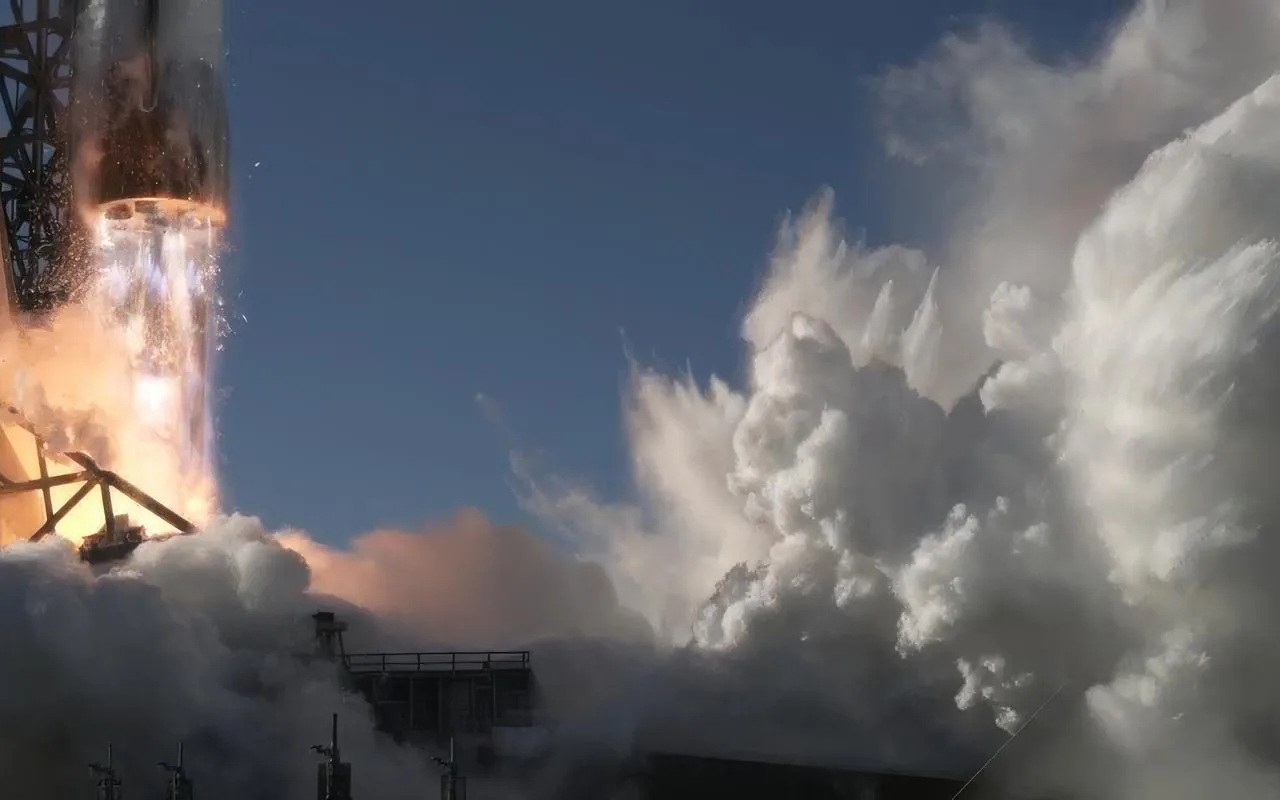
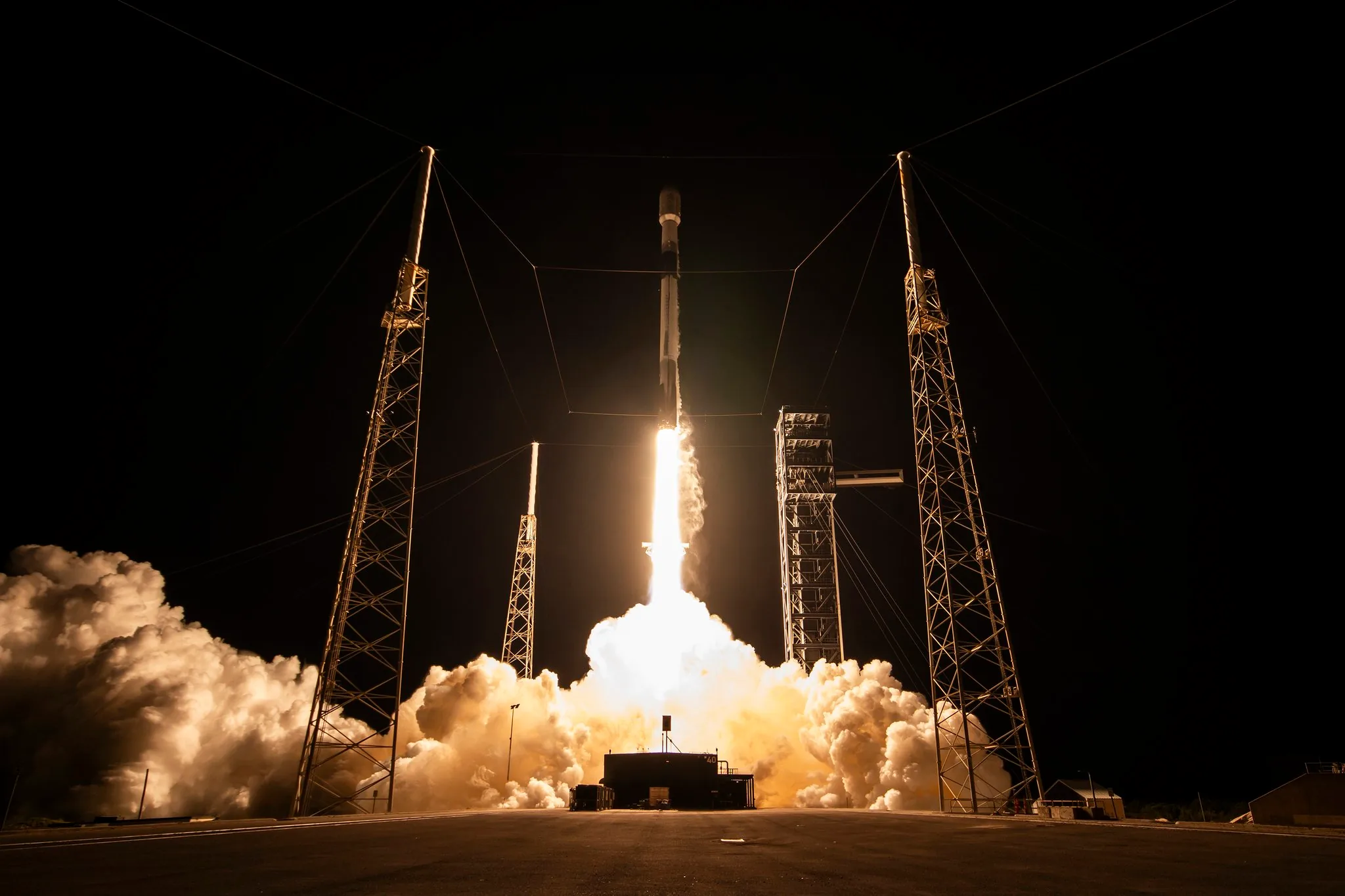
The case for Falcon 9 begins and ends with its reliability record. As of May 2026, the rocket has cleared 500 cumulative flights with more than 450 consecutive successful missions — a run without precedent in orbital launch history. Previous long reliability streaks — Ariane 5's run, Atlas V's near-perfect record — were achieved at flight rates of 6–12 per year. Falcon 9 has achieved its streak at up to 165 flights per year (2025), under conditions of constant operational tempo that expose reliability weaknesses faster than low-cadence programs ever could.
Block 5, introduced in 2018, was specifically designed to be the final iteration of Falcon 9 — optimized for high reuse rates, thermal protection, structural life, and rapid turnaround. SpaceX has delivered on that design intent. Individual boosters have now flown 25+ times, and the leading core has pushed past that mark with no signs of imminent retirement. Turnaround times between launches of the same booster have compressed to weeks, sometimes days. The drone ships — Of Course I Still Love You (east coast) and A Shortfall of Gravitas (west coast) — execute booster landings with an industrial regularity that the aerospace community has largely stopped treating as remarkable, which is itself remarkable.
The price point reflects this maturity. At approximately $67–70 million for a commercial dedicated launch — roughly $1,500/kg to LEO at full payload — Falcon 9 offers a price that no competitor currently matches for comparable LEO performance. The reusable booster economics allow SpaceX to price aggressively while maintaining margins that fund Starship development.
For rideshare specifically — smaller payloads sharing a fairing with other satellites — SpaceX's Transporter missions have essentially captured the market, launching hundreds of small satellites per year at costs that make dedicated small launch vehicles struggle to compete.
Vulcan Centaur: ULA's Heritage, In Operational Cadence
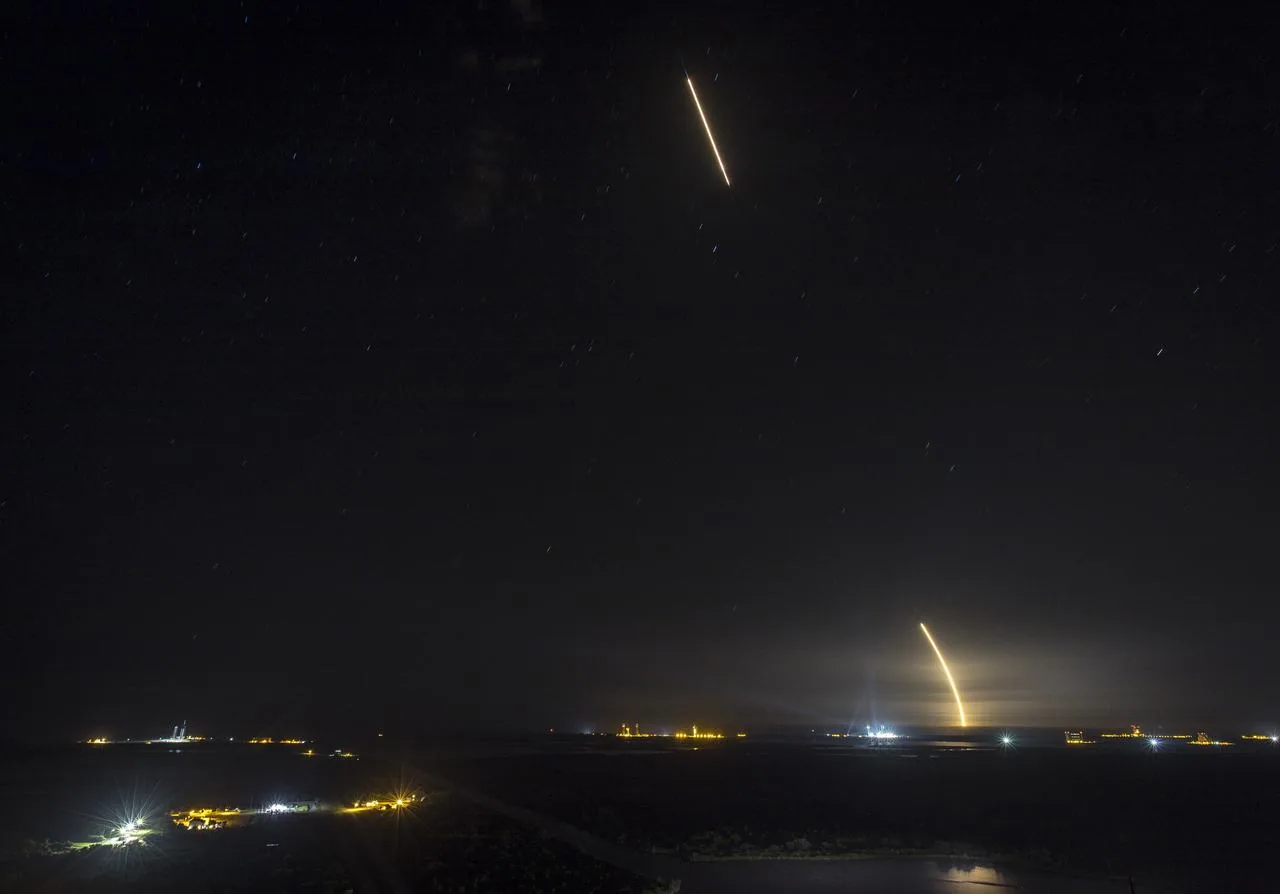
United Launch Alliance's Vulcan Centaur is no longer a "newly operational" launcher — by May 2026 it is in operational cadence, with roughly 6–10 cumulative flights since its January 8, 2024 debut and a steady NSSL Phase 3 manifest. The vehicle represents a generational transition for a company that has flown Atlas V and Delta IV for more than two decades with extraordinary reliability. ULA's national security launch record is essentially unblemished — it has never failed a national security mission. That heritage is the foundation on which Vulcan is built.
Vulcan's first stage is powered by two Blue Origin BE-4 engines burning liquefied natural gas (methane) and liquid oxygen — together producing about 4.9 million newtons of liftoff thrust — augmented by zero, two, four, or six Northrop Grumman GEM-63XL solid rocket motors depending on configuration (the VC0 through VC6S variants). The BE-4 is the same engine family powering New Glenn's first stage, though in a different configuration. The BE-4's development was a years-long saga involving engine development challenges at Blue Origin, but those challenges are now well behind both programs. Cert-1 (January 8, 2024) carried Astrobotic's Peregrine lunar lander to a translunar trajectory, a full vehicle success. Cert-2 (October 4, 2024) flew without Sierra Space's Dream Chaser lifting body — that vehicle was dropped from the mission — and instead carried a USSF mass simulator and tech-demo payload. The U.S. Space Force formally certified Vulcan on March 26, 2025, and USSF-106 in 2025 became Vulcan's first operational national security launch. Subsequent missions across 2025 and into 2026 have included additional NSSL Phase 3 payloads and commercial customers (including Amazon Project Kuiper batches), bringing Vulcan to a cadence in the 5–10 flights/year range. Dream Chaser is now targeting a late-2026 debut launch; its first flight will not dock to the ISS, a change from the original mission profile.
The upper stage is where Vulcan genuinely shines. Centaur V — a stretched, 5.4-meter-diameter cryogenic upper stage burning liquid hydrogen and liquid oxygen in two Aerojet Rocketdyne RL-10C-1-1 engines — is the most energy-efficient upper stage in the Western launch market. Centaur V's enlarged propellant tanks (more than double the propellant load of legacy Centaur III on Atlas V) and long-duration coast capability give Vulcan unmatched reach for direct-to-GEO insertions, lunar trajectories, and deep-space departures. For missions requiring high delta-V — GEO insertion, lunar trajectories, deep space departure, planetary missions — Centaur V's specific impulse of 450+ seconds significantly outperforms Falcon 9's Merlin Vacuum (approximately 348 seconds).
The critical limitation is reusability. Vulcan's first stage is expendable. ULA has developed SMART (Sensible Modular Autonomous Return Technology), a system to recover and reuse the BE-4 engines — the most expensive component — via mid-air capture after they separate and re-enter under a protective heat shield and parafoil. SMART reuse has been tested and is planned for implementation, but as of early 2026 it has not yet been operationally demonstrated in flight recovery.
This means Vulcan's economics do not benefit from the full booster reusability that drives Falcon 9's cost advantage. At approximately $110 million per flight for a competitive heavy commercial manifest, Vulcan is priced in the range necessary to sustain ULA's business, but it is not pricing to win on cost alone. It wins on capability (high-energy trajectories), on certification status for national security missions, and on ULA's unmatched heritage of operational reliability.
New Glenn: Operational Heavy-Lift
Blue Origin's New Glenn is no longer an "expected first flight" — as of May 2026 it is operational, with 3–6 cumulative flights since its January 16, 2025 maiden launch and a customer manifest that spans broadband constellations, national security, and planetary science. The 98-meter-tall rocket is a different category of vehicle: its 7-meter fairing dwarfs competitors, its 45-metric-ton LEO capacity exceeds any single-stick vehicle in the Western market, and its first stage burns clean-burning liquefied natural gas in seven BE-4 engines (the same Blue Origin-developed methalox engine that powers Vulcan, here clustered at roughly 17 million newtons of liftoff thrust). The two-engine BE-3U upper stage burns liquid hydrogen and liquid oxygen, giving New Glenn strong high-energy performance for GTO and beyond-LEO missions.
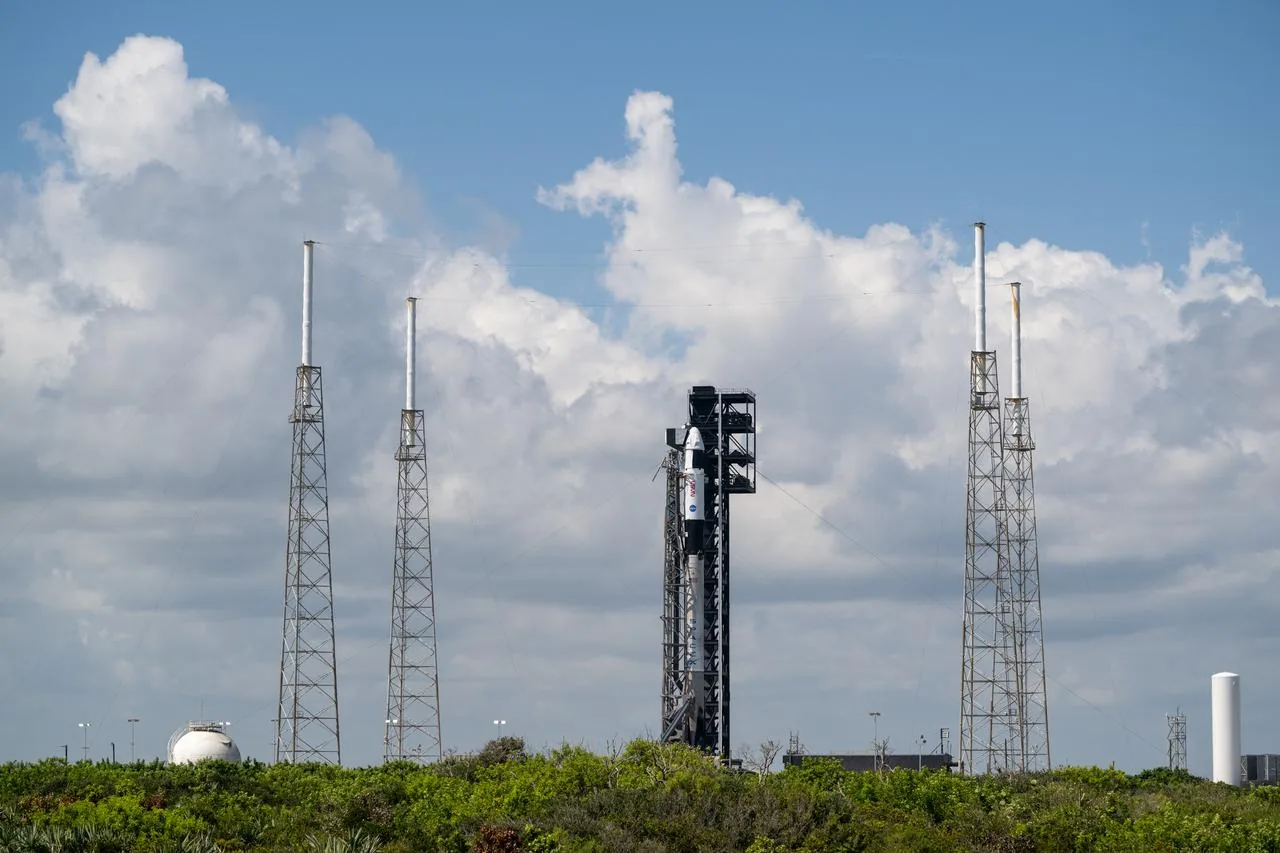
The first-stage design is built for reusability, with landing legs and a propulsion configuration intended to support drone-ship recovery on the recovery vessel "Jacklyn" — similar in concept to Falcon 9's drone-ship recoveries. The maiden flight (NG-1, January 16, 2025) reached orbit but lost the booster on its landing attempt. Blue Origin iterated quickly: NG-2 (November 13, 2025), which deployed NASA's ESCAPADE twin Mars probes, achieved the first successful New Glenn booster landing. NG-3 (April 19, 2026) went further — it was the first New Glenn booster reuse, and that landing also succeeded. The NG-3 payload (AST SpaceMobile BlueBird 7) was delivered to an off-nominal orbit, an issue under investigation, but the booster recovery program has now demonstrated the core capability. Subsequent flights through early 2026 have continued building the cadence toward Blue Origin's 8–12 flights/year target. Achieving consistent payload delivery precision is the remaining prerequisite for New Glenn becoming fully cost-competitive at scale.
The customer manifest spans three strategically important categories. First, Amazon's Project Kuiper: Amazon has secured a large block of New Glenn launches to help deploy its 3,236-satellite broadband constellation, giving Blue Origin a guaranteed multi-year manifest that removes the "first-mover" commercial uncertainty that typically plagues new rockets. Flying for your parent company's constellation — both Amazon and Blue Origin are Jeff Bezos enterprises — is an advantage Falcon 9 never had. Second, NSSL Phase 3: New Glenn was selected for the U.S. Space Force's NSSL Phase 3 Lane 1 in 2024 and is now ramping toward national security task orders as it builds the flight history required for sensitive missions. Third, planetary science: NG-2 carried NASA's ESCAPADE probes to Mars, and additional NASA and commercial deep-space payloads are on the manifest, leveraging Centaur-V-class energy from the BE-3U upper stage and the 7-meter fairing.
For government customers, New Glenn's large fairing enables payload configurations — wide-field space telescopes, large radar apertures, modular station segments — that no other current Western vehicle can accommodate. As the DoD and intelligence community continue to build large space systems, New Glenn's volume advantage becomes strategically significant.
Customer Perspective: Who Flies What, and Why
Different customers prioritize different things, and the three-vehicle comparison looks very different depending on who is signing the launch contract.
Government/national security: ULA wins this customer for Certification-required missions, at least initially, because of its established relationship and cleared heritage. Vulcan received EELV certification from the USAF. Falcon 9 also holds national security certification and flies a substantial DoD manifest. New Glenn is pursuing certification and will likely achieve it within the next few years as its flight history builds.
Commercial communications (GEO): Falcon 9 and Vulcan Centaur compete directly here. For the heaviest GEO satellites (>6,000 kg at GEO insertion), Vulcan Centaur's energy advantage is significant. For smaller GEO payloads, Falcon 9's proven record and cost advantage are compelling.
Broadband constellation deployment (LEO): Falcon 9 dominates via Starlink self-launches and Transporter rideshare. New Glenn will serve Project Kuiper. Vulcan is less positioned for high-cadence LEO constellation deployment given its expendable economics.
Space science and exploration: Vulcan Centaur's Centaur V upper stage makes it the preferred commercial option for high-energy missions. The first Vulcan certification mission carried the Peregrine lunar lander; subsequent missions are expected to include planetary science payloads.
Actual Launch History as of May 2026
| Vehicle | First orbital flight | Flights as of May 2026 | Successes | Notes |
|---|---|---|---|---|
| Falcon 9 (all variants) | June 2010 | 500+ cumulative; ~450+ on Block 5 since May 2018 | 450+ consecutive successes; >99% mission success rate | Lead booster has flown 25+ times; ~$1,500/kg to LEO at full payload |
| Vulcan Centaur | January 8, 2024 | ~6–10 cumulative; in operational cadence | 100% mission success | Cert-1 (Peregrine lunar lander, Jan 2024), Cert-2 (Oct 2024), USSF-106 first NSSL flight in 2025; full USSF NSSL Phase 3 certification March 26, 2025; commercial customers include Amazon Project Kuiper |
| New Glenn | January 16, 2025 | ~3–6 cumulative; operational | Orbit achieved on every flight; 1 payload off-nominal (NG-3) | NG-1 lost booster on landing; NG-2 (Nov 13, 2025) deployed NASA ESCAPADE Mars probes and achieved first booster landing; NG-3 (Apr 19, 2026) first booster reuse with successful landing; manifest includes Project Kuiper, NSSL Phase 3 Lane 1, NASA planetary missions |
The disparity in flight history is the defining competitive reality, but it is narrower than it was a year ago. Falcon 9 has cleared 500 cumulative flights with 450+ consecutive successes as evidence of reliability. Vulcan Centaur is in operational cadence with a perfect mission success record, full USSF NSSL Phase 3 certification, and a manifest that now includes both national security and commercial customers. New Glenn is operational with booster recovery and reuse demonstrated, a NASA deep-space mission delivered, and a guaranteed multi-year Project Kuiper manifest. For a satellite operator betting $300 million on a payload, the question "how many times has this rocket flown?" carries enormous weight — but the answer for both Vulcan and New Glenn is now meaningful rather than aspirational.
Pricing: What We Know and What Remains Hidden
Falcon 9's pricing is the market reference point: approximately $67–70 million for a dedicated commercial launch. SpaceX publishes a list price, though actual contracted prices vary based on rideshare, volume agreements, and mission requirements.
Vulcan Centaur's pricing has been reported in the range of $100–120 million for commercial missions, reflecting ULA's cost structure, expendable economics, and the premium customers pay for its reliability heritage and national security credentials. For government missions, ULA has historically commanded premium pricing and has operated under cost-plus-style contracts.
New Glenn's commercial pricing has not been publicly disclosed. Blue Origin has been deliberately opaque, likely because pricing strategy depends on flight rate and booster recovery success. Early contracts for Project Kuiper are internal. Third-party commercial pricing will emerge as the manifest fills, but analysts expect New Glenn to price competitively with or below Vulcan to establish market share, potentially in the $80–100 million range for commercial dedicated launches.
Reusability: The Economic Foundation
Reusability is not just an engineering achievement — it is an economic model that determines long-term competitiveness.
Falcon 9's reusability is the most mature in the industry. Booster landing and reflight has been operationally proven to 25+ reflights per leading booster, with turnaround costs that SpaceX has not publicly disclosed but which clearly enable the company's aggressive pricing. The fairing halves are also recovered and reflown, recovering additional hardware value.
Vulcan's SMART engine recovery concept is elegant but unproven in operational use. Recovering the two BE-4 engines (the most expensive components, representing an estimated 65% of first-stage cost) via parafoil and helicopter capture would meaningfully improve Vulcan's economics without requiring a full booster landing system. Until SMART recovery is operational and reliable, Vulcan's economics remain at a disadvantage.
New Glenn's full booster reusability — now demonstrably underway — is transforming the economics of flying the largest rocket in the Western commercial market. Blue Origin achieved its first successful booster landing on NG-2 (November 2025) and completed its first booster reuse on NG-3 (April 2026). A 45-metric-ton LEO vehicle with reflyable first stages would be extraordinarily compelling for large-payload customers, and that vehicle now exists in early operational form. The outstanding challenges are improving payload delivery precision (NG-3's off-nominal orbit) and building a flight rate sufficient to amortize development costs.
2026 Forecast: Manifest and Market Share
Falcon 9 will continue to dominate the manifest through 2026, having already delivered 165 orbital missions in 2025. The question is not whether Falcon 9 flies — it is whether Starship transitions from test to operations, which would reshuffle the market dramatically.
Vulcan Centaur's 2026 manifest now includes Dream Chaser's debut launch (targeting late 2026, without an ISS docking on its first mission), continued NSSL Phase 3 cadence following Space Force certification in March 2025, and a growing block of Amazon Project Kuiper missions. ULA is operating at a 5–10 flights/year cadence and is on track to establish Vulcan as the credible Atlas V successor for high-energy government missions.
New Glenn enters mid-2026 from a position of genuine momentum: 3–6 flights completed, booster reuse already demonstrated (NG-3, April 19, 2026), and the Project Kuiper deployment sequence underway. Blue Origin is targeting 8–12 New Glenn flights across 2026. The NG-3 off-nominal orbit issue needs resolution, but the booster recovery program has proved out the core capability faster than many expected, and NSSL Phase 3 task orders should begin flowing as flight history accumulates.
Verdict: Different Rockets for Different Jobs
The three-vehicle comparison does not resolve to a single winner, because the customers and use cases are different enough that all three vehicles can coexist and thrive.
Falcon 9 is the right choice for any mission where reliability data is the first filter, cost matters, and the payload fits within a 5.2-meter fairing. For the vast majority of commercial satellite missions, this description applies.
Vulcan Centaur is the right choice for high-energy missions, for national security customers requiring a certified vehicle from a heritage provider, and for payloads that benefit from Centaur V's exceptional performance to GEO, lunar, or deep-space trajectories.
New Glenn is the right choice for large-volume payloads that cannot physically fit on competing vehicles, for customers with patient timelines willing to build a relationship with a rocket early in its operational life, and for missions where the 7-meter fairing diameter is the enabling factor rather than just a convenience.
The commercial launch market is growing fast enough to support all three — and Rocket Lab's Neutron, if it flies on schedule, will add a fourth player targeting medium lift. The days of a single-rocket market are over. For payload owners, that is unambiguously good news.