SpaceX: Inside the Company Reshaping Spaceflight
There is no company in the history of the aerospace industry that has compressed more disruption into a shorter timeframe than SpaceX. Founded on March 14, 2002, with a hundred million dollars and an ambition that the entire aerospace establishment considered delusional, Elon Musk's rocket company has demolished cost structures that were treated as laws of physics, proved that orbital booster reusability was not merely theoretically desirable but operationally routine, and built a satellite internet constellation so large it now constitutes 65% of every active satellite in Earth orbit. As of April 2026, the SpaceX–xAI combined entity is valued at roughly $1.25 trillion following the February 2026 all-stock acquisition — a figure that places it among the most valuable companies in the world, private or public — and a long-anticipated IPO appears to be approaching with four banks selected in January 2026. This is the definitive account of how that happened, where the company stands today, and where it is going.
Key Takeaways
- Valuation: ~$1.25 trillion combined SpaceX + xAI (February 2026 all-stock merger)
- Revenue 2025: $16 billion; Operating income ~$8 billion
- Largest revenue source: Starlink — ~$11.8 billion in 2025; ~10 million subscribers (Feb 2026), 10,020+ satellites
- 2025 launch cadence: 165 orbital missions — a single-operator world record, more than the rest of the world combined
- Falcon 9 record: 632 total launches as of late April 2026, 598 successful booster landings, single-booster reuse record at 34 flights
- Starship: 11 integrated flight tests completed across 2023–2025; Block 2 retired with IFT-11 (Oct 13, 2025); Block 3 first flight targeted for 2026
- Mechazilla: Super Heavy booster caught at the launch tower for the first time on October 13, 2024 (IFT-5)
- Dragon: Only operational US crew vehicle; 12+ crew missions plus private flights including Polaris Dawn (first commercial spacewalk)
- IPO: Expected mid-2026; four banks selected January 2026
- Key risk: Block 3 Starship development risk; regulatory friction; Elon Musk concentration risk across SpaceX/Tesla/xAI
1. Company Profile: From the Brink of Bankruptcy to a Trillion Dollars
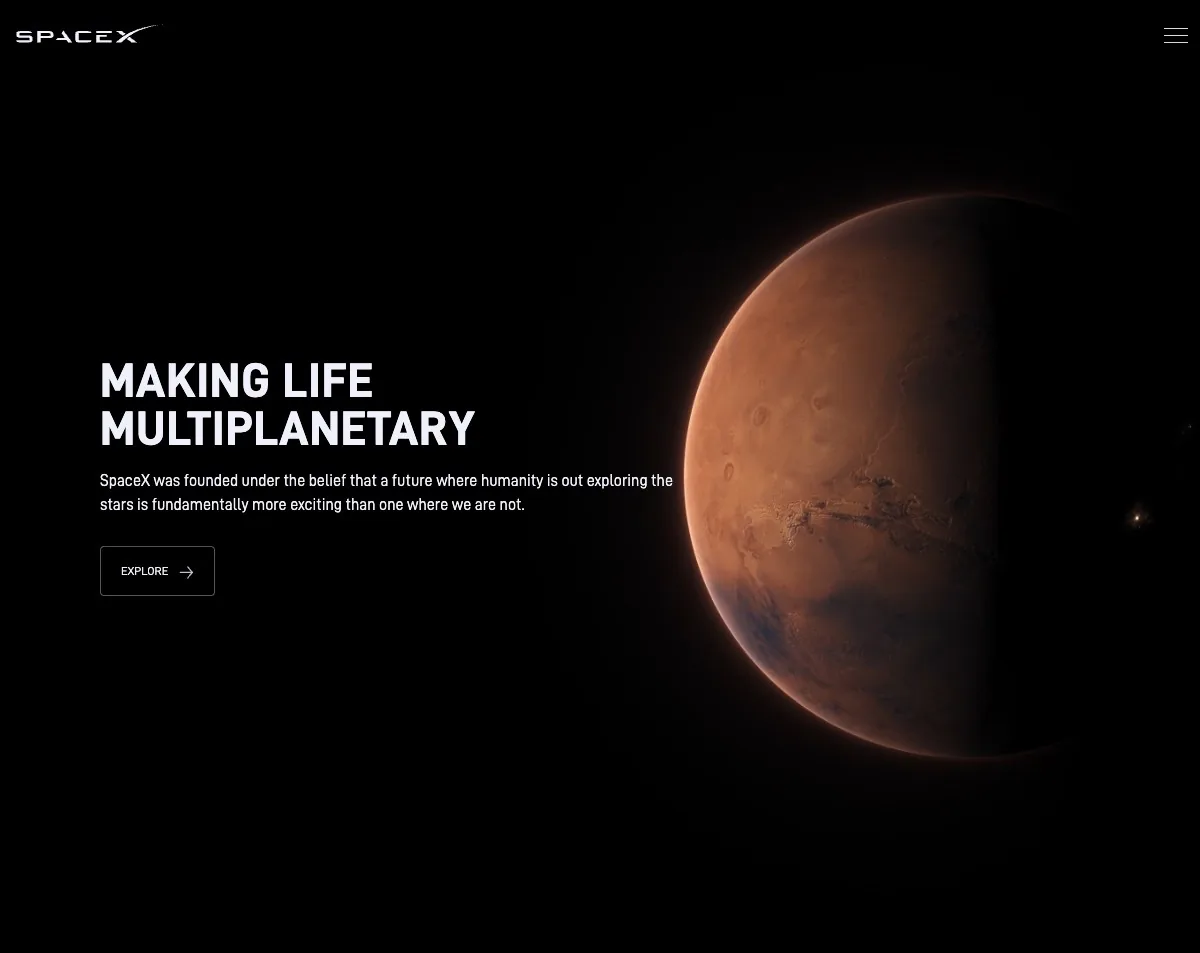 SpaceX's mission: "Making Life Multiplanetary" — the company is now valued at approximately $1 trillion. Source: spacex.com
SpaceX was incorporated on March 14, 2002, in El Segundo, California. The founding vision was stated plainly and has never changed: make life multi-planetary by establishing a self-sustaining human civilization on Mars. Elon Musk, who had recently pocketed approximately $180 million from the sale of PayPal to eBay, invested roughly $100 million of his own money into the venture — essentially his entire liquid net worth at the time.
The early years were brutal. SpaceX's first orbital rocket, the small Falcon 1, failed on its first three flights. By September 2008, the company had nearly exhausted its capital. The fourth Falcon 1 flight, on September 28, 2008, succeeded — the first privately developed liquid-fueled orbital rocket in history to successfully reach orbit. Six weeks later, on December 23, 2008, NASA awarded SpaceX a $1.6 billion Commercial Resupply Services (CRS) contract, providing the cash runway that kept the company alive and funded the development of Falcon 9.
The NASA relationship proved to be the most consequential public-private partnership in the history of commercial space. The COTS (Commercial Orbital Transportation Services) agreement of 2006 provided $396 million in milestone-based funding. CRS in 2008 added $1.6 billion. Commercial Crew was finalized in September 2014. The Human Landing System contract for Artemis arrived on April 16, 2021. Each contract arrived at a moment when SpaceX needed capital and credibility in equal measure.
Today, SpaceX is headquartered at Starbase, Texas — a company town it effectively built on the Gulf Coast near Boca Chica — having relocated from Hawthorne, California in August 2024. The company employs more than 13,000 people. Elon Musk holds approximately 42% equity and 79% voting control. Revenue reached $16 billion in 2025 with operating income of $8 billion — margins that reflect the extraordinary leverage of a vertically integrated operation that manufactures roughly 80% of its components in-house, from Raptor engines to Starlink solar panels.
"The goal of SpaceX is to make life multi-planetary. We want to have a self-sustaining city on Mars." — Elon Musk, SpaceX CEO
2. Falcon 9: The Workhorse That Changed Everything
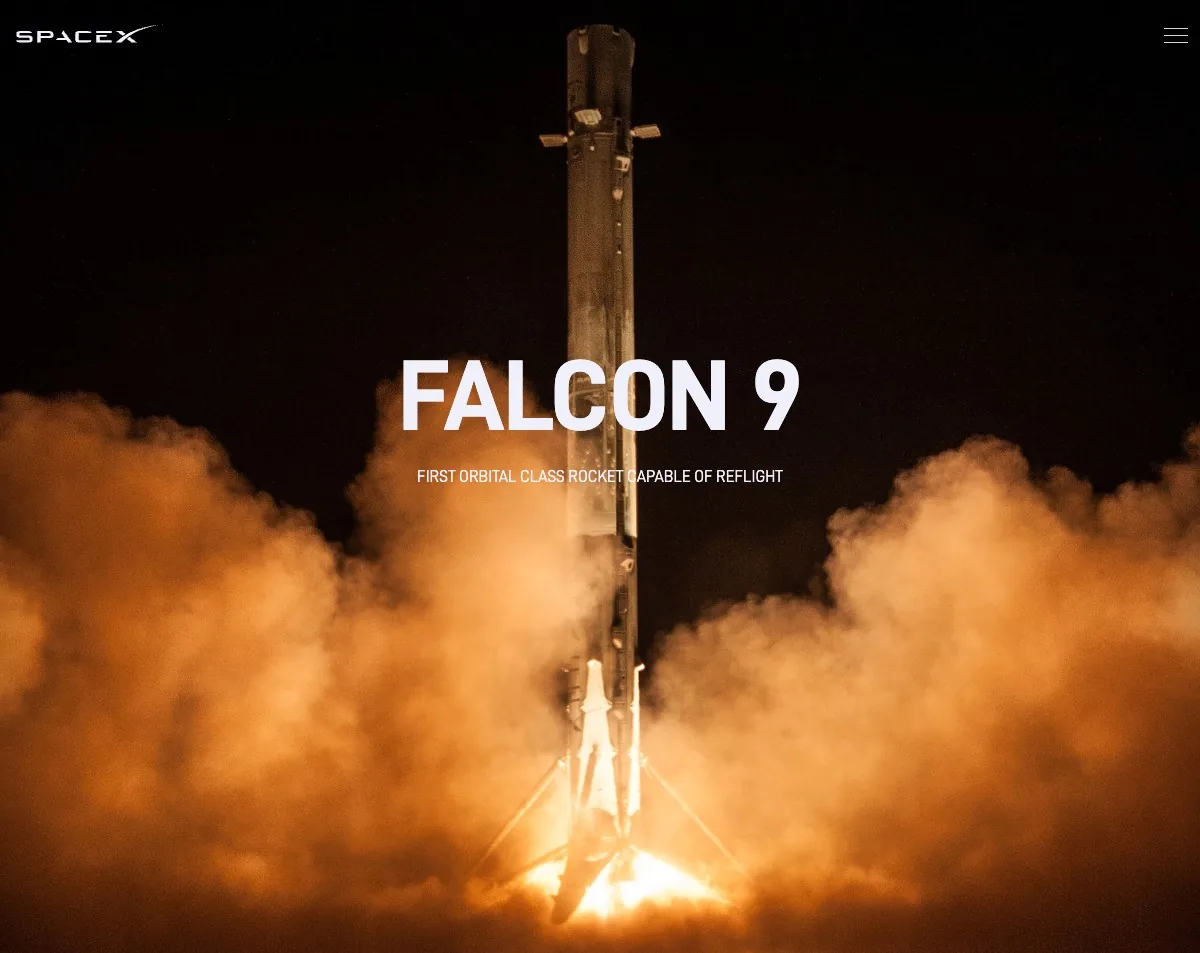
Falcon 9: 620 launches, 575 landings, one booster flown 33 times. The most launched orbital rocket in history. Source: spacex.com/vehicles/falcon-9
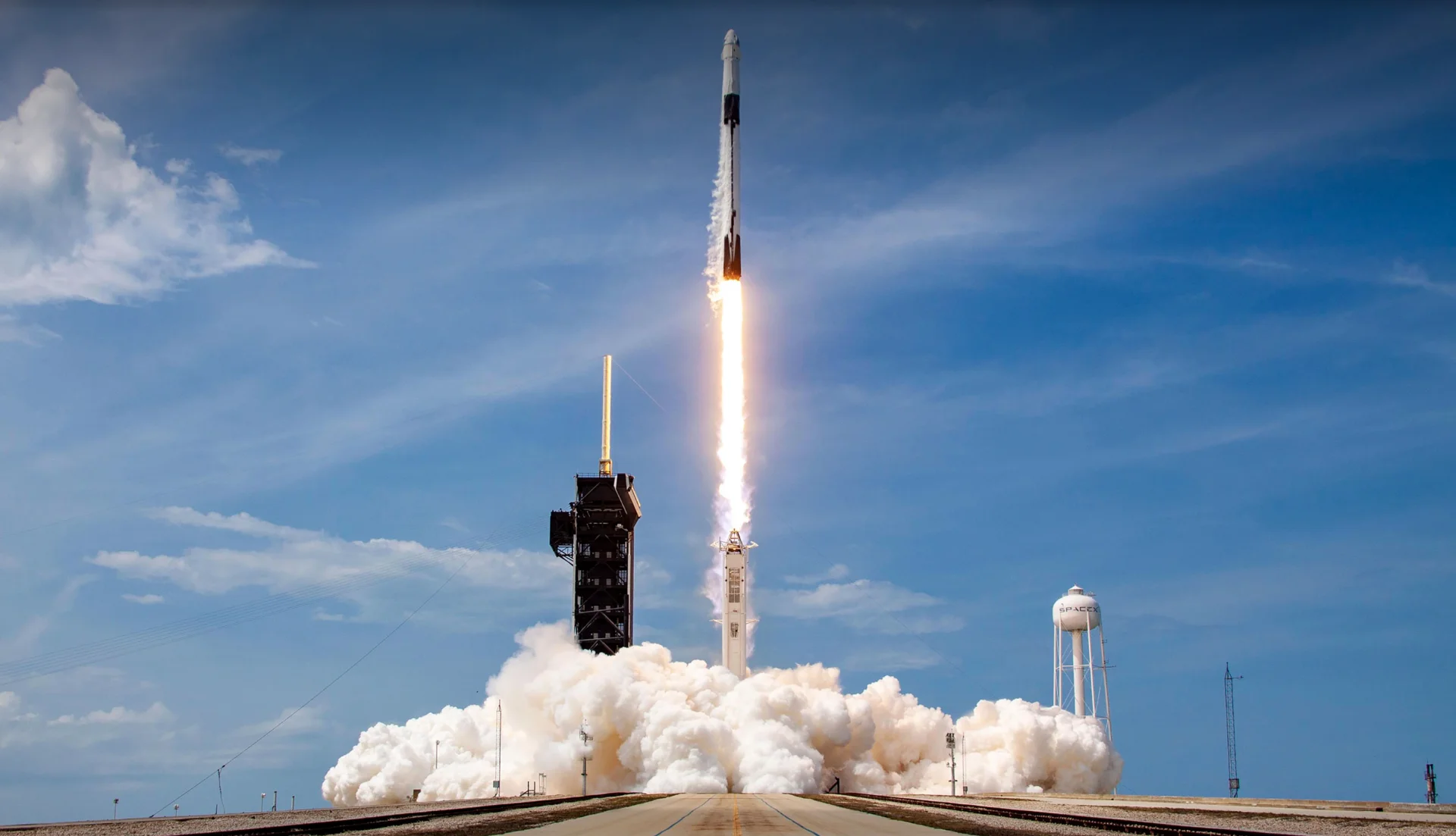
No single rocket in history has done more to reshape the commercial launch market than Falcon 9. It is a two-stage, partially reusable medium-to-heavy lift vehicle powered by SpaceX's in-house Merlin engines running on liquid oxygen and RP-1 (rocket-grade kerosene). Its first flight was on June 4, 2010. The first orbital booster landing — an event that stunned the aerospace world — occurred on December 22, 2015. The first reuse of an orbital booster followed on March 30, 2017.
Falcon 9 Official Specifications
| Parameter | Value |
|---|---|
| Height | 70 m / 229.6 ft |
| Diameter | 3.7 m / 12 ft |
| Total Mass | 549,054 kg |
| Payload to LEO | 22,800 kg |
| Payload to GTO | 8,300 kg |
| Payload to Mars | 4,020 kg |
| First Stage Engines | 9x Merlin (LOX/RP-1) |
| First Stage Thrust (sea level) | 845 kN each / 7,607 kN total |
| Second Stage Engine | 1x Merlin Vacuum |
| Second Stage Thrust | 981 kN |
| Second Stage Burn Time | 397 seconds |
| Fairing Height | 13.1 m |
| Fairing Diameter | 5.2 m |
| Fairing Material | Carbon composite |
| Commercial Launch Cost | $69.85 million |
| Internal Cost Estimate | $15–28 million |
The Reusability Revolution
The economics of Falcon 9 reusability are worth dwelling on. The commercial list price is $69.85 million. Internal estimates cited in press reporting place the marginal cost of a reused launch at $15–28 million. At the cadence SpaceX now operates — 134 orbital launches in 2024 alone, the most by any single operator in history, surpassing even the Soviet Union's record from 1982 — the economic advantage compounds dramatically.
As of April 26, 2026, Falcon 9 has completed 632 total launches with two in-flight failures, one partial failure, and one pre-flight destruction across the entire 16-year program — a success record without precedent in orbital launch history. Booster landing success stands at 598 of 598 recent attempts. The single most reused booster has flown 34 times. The operational standard has shifted: a booster that has flown fewer than 10 times is essentially new. Turnaround times that once seemed aspirational — measured in months — have been compressed to days for high-priority missions. SpaceX flew 165 orbital missions in 2025 alone — the most by any single operator in history, exceeding the global total flown by everyone else combined.
The broader market consequence has been a sustained 40–60% price reduction compared to traditional expendable competitors. United Launch Alliance's Vulcan Centaur lists above $100 million. Ariane 6, which Arianespace finally flew commercially in 2024 after years of delays, is similarly priced. Neither can match Falcon 9's cadence, reliability record, or cost structure.
Key Falcon 9 milestones:
- First private spacecraft recovery — December 9, 2010
- First private spacecraft to reach the ISS — May 25, 2012
- First orbital booster landing — December 22, 2015
- First orbital booster reuse — March 30, 2017
- Single booster reuse record — 34 flights (as of April 2026)
- 165 orbital launches in 2025 — single-year, single-operator world record
3. Falcon Heavy: When You Need to Move Something Enormous
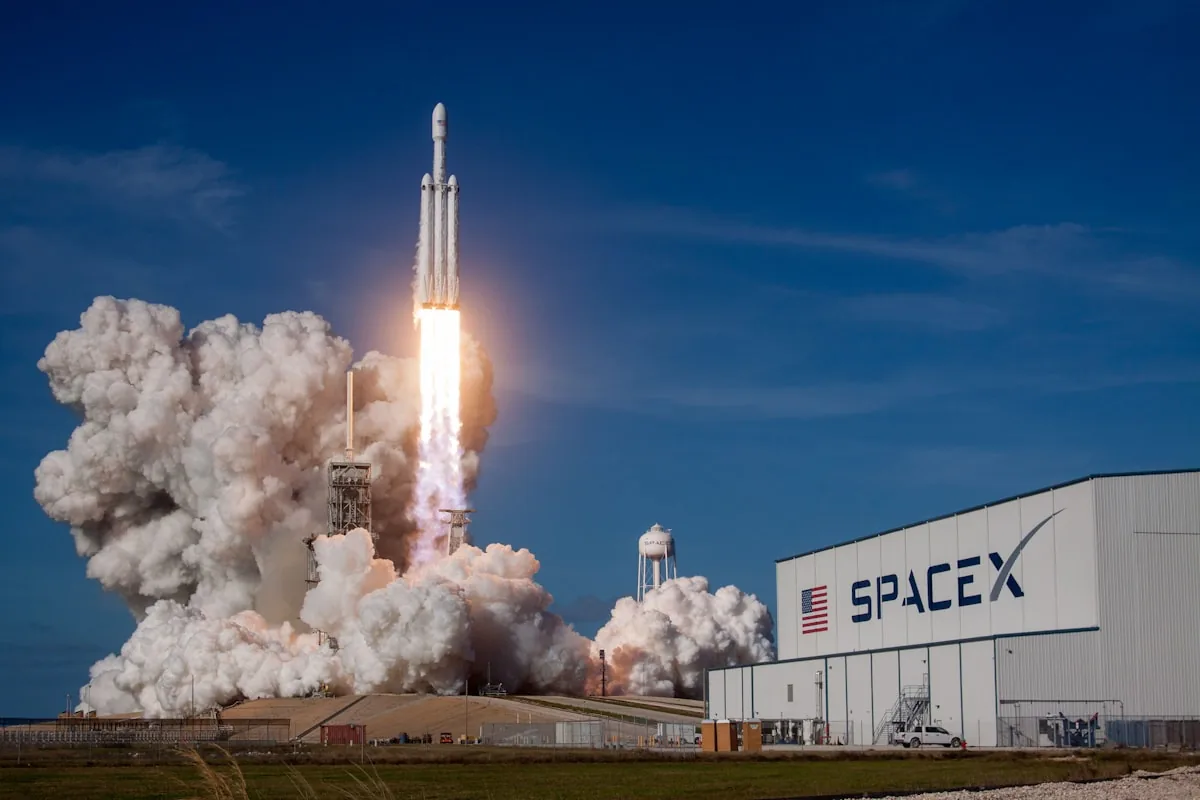
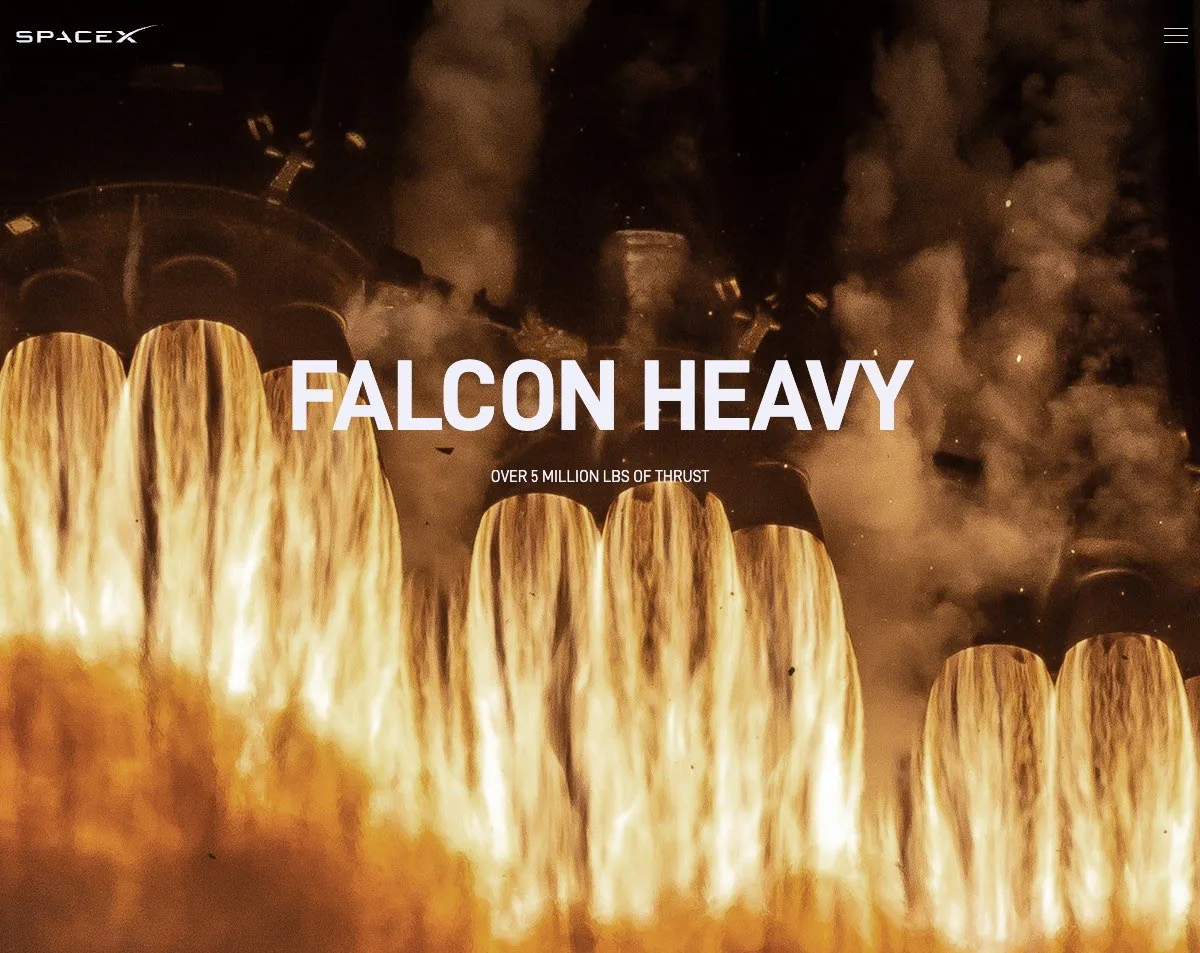 Falcon Heavy's 27 Merlin engines generate more than 5 million pounds of thrust — equivalent to eighteen 747 aircraft at full power. Source: spacex.com/vehicles/falcon-heavy
Falcon Heavy is a triple-core configuration of three Falcon 9 first stages, sharing structural and propulsion systems for economies of scale in production. Its first flight on February 6, 2018, put Elon Musk's personal Tesla Roadster — with a spacesuit-clad mannequin named Starman at the wheel — into a heliocentric orbit as a demonstration payload. The moment was a masterclass in spectacle as marketing.
Falcon Heavy Specifications
| Parameter | Value |
|---|---|
| Payload to LEO | 63,800 kg (expendable) |
| Payload to GTO | 26,700 kg (expendable) |
| Total Engines | 27x Merlin (first stage) |
| Side Core Recovery | Both side boosters land simultaneously |
| Commercial Launch Cost | ~$97–150 million depending on configuration |
Key missions have included classified USSF national security payloads (USSF-44, USSF-52, USSF-67), the Psyche asteroid mission for NASA (October 2023), and ViaSat-3 Americas. Falcon Heavy occupies a market niche for large GEO satellites and deep space missions that Falcon 9 cannot serve and that Starship, until fully operational, cannot yet address commercially.
4. Dragon: America's Crew Ship
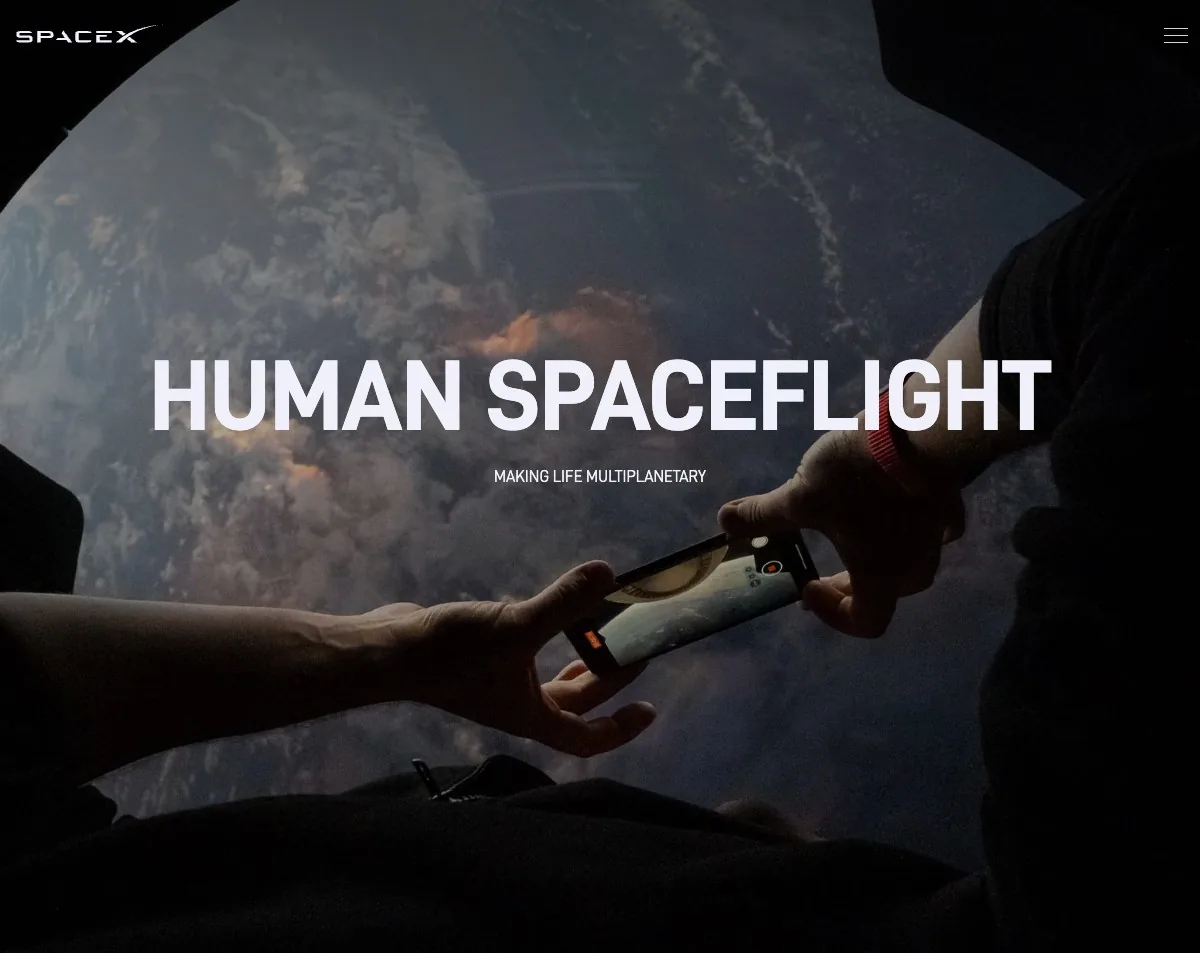 An astronaut photographs Earth from inside Dragon's cupola at 400 km altitude — SpaceX has restored American crewed launch capability. Source: spacex.com/humanspaceflight
Dragon is the only US-built crewed orbital spacecraft currently in operational service. It exists in two configurations: Crew Dragon for human spaceflight and Cargo Dragon for ISS resupply. SpaceX has built 13 Dragon vehicles in total — 7 Crew Dragon, 3 Cargo Dragon, and 3 early prototypes.
Dragon Specifications
| Parameter | Value |
|---|---|
| Mass | 12,500 kg |
| Diameter | 4 m |
| Capsule Height | 4.5 m |
| Crew Capacity (normal) | 4 |
| Crew Capacity (emergency) | 7 |
| Abort System | 8x SuperDraco engines |
| Pressurized Cargo Capacity | 3,310 kg (up) / 2,500 kg (down) |
Mission Record
Dragon's human spaceflight record through March 2026 includes more than 12 NASA Commercial Crew missions to the ISS. Beyond NASA, Dragon has supported a series of private missions that have pushed commercial spaceflight into genuinely new territory:
- Inspiration4 (September 2021) — First all-civilian orbital spaceflight in history
- Axiom Mission 1 (April 2022) — First private crew to the ISS
- Axiom Mission 2 (May 2023)
- Axiom Mission 3 (January 2024)
- Axiom Mission 4 (2024)
- Polaris Dawn (September 12, 2024) — The mission most notable for conducting the first commercial spacewalk in history, using EVA suits designed and manufactured by SpaceX. Commander Jared Isaacman and Mission Specialist Sarah Gillis spent approximately 1.5 hours outside the vehicle at an altitude of roughly 700 km — the highest altitude humans had reached since the Apollo era. The suits performed flawlessly.
- Fram2 — Private mission to the polar orbit, also marking a number of firsts in orbital trajectory selection for commercial crew.
"Polaris Dawn is about pushing the boundaries of what's possible in human spaceflight — with a private crew, at orbital altitudes not visited since Apollo, conducting the first commercial spacewalk." — Elon Musk, SpaceX
The SpaceX Crew Dragon system additionally served as the rescue vehicle for NASA astronauts Butch Wilmore and Suni Williams, who were stranded aboard the ISS following the extended delays of Boeing's Starliner vehicle. Dragon's reliability record has made it the de facto backbone of US human access to low Earth orbit.
5. Starship: The Biggest Rocket Ever Built
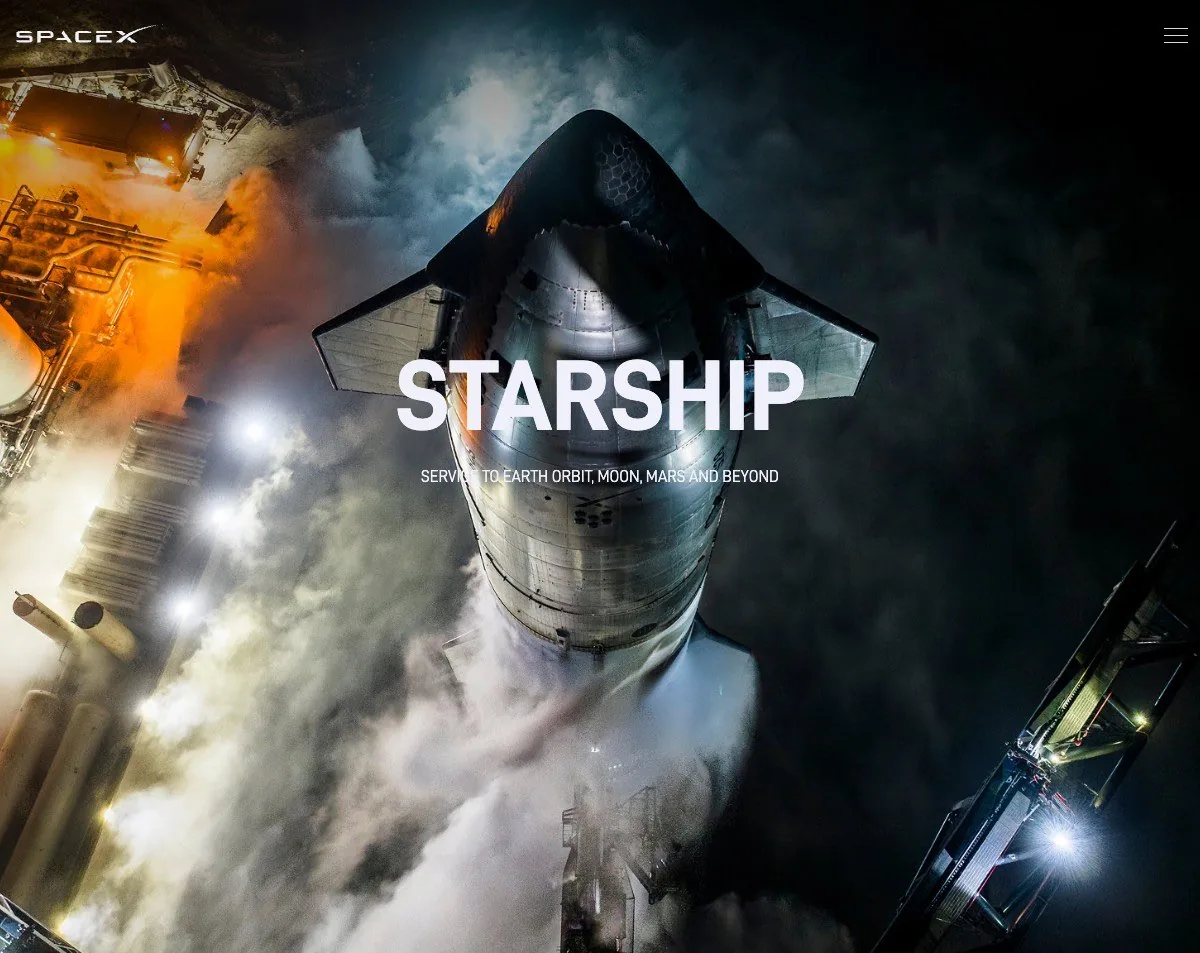 Starship: 123 meters tall, 33 Raptor engines, 7,590 tonnes of thrust — the most powerful launch vehicle ever developed. Source: spacex.com/vehicles/starship
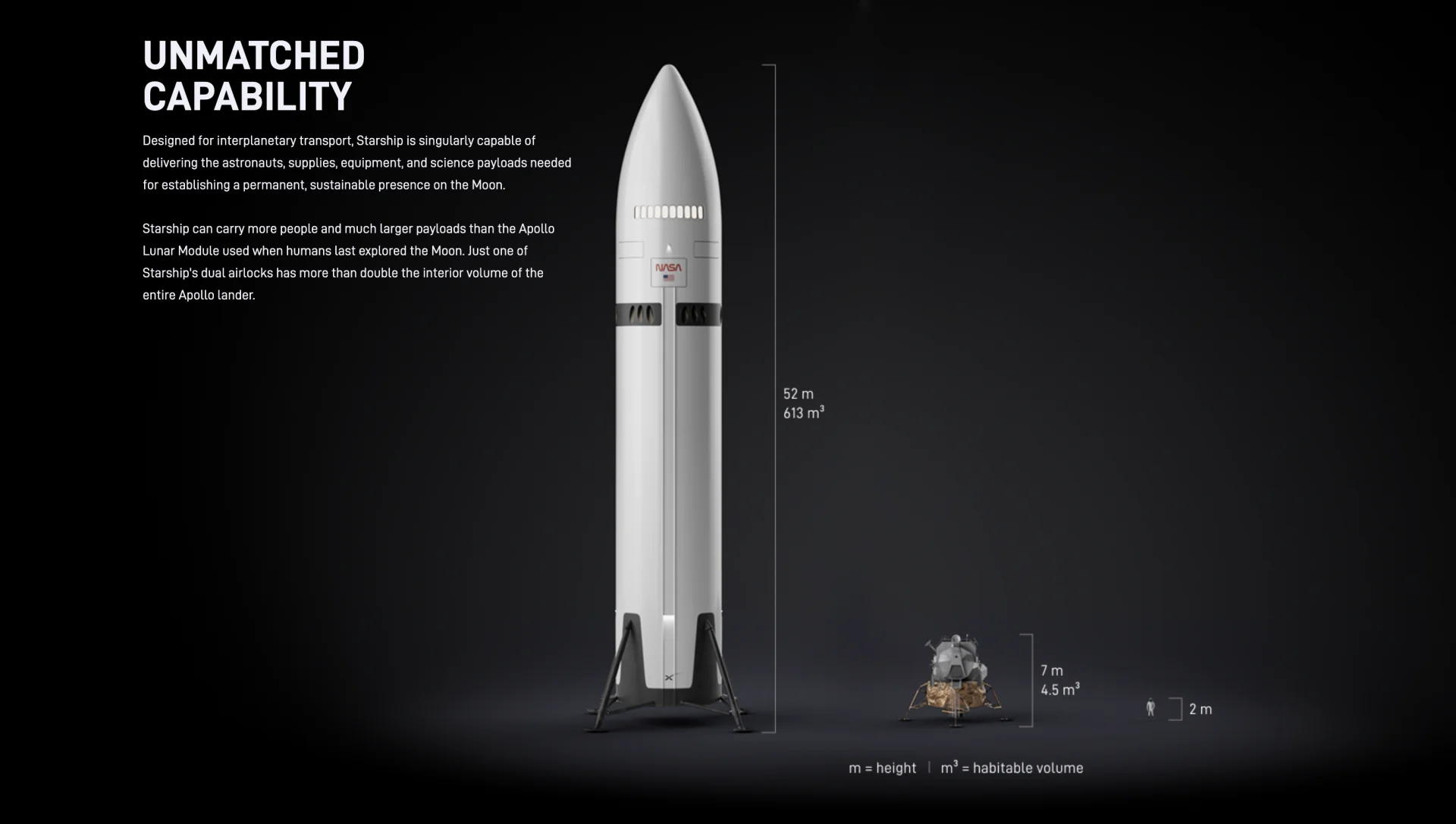
Starship is a fully reusable two-stage super heavy-lift launch vehicle — the most powerful ever flown. The complete stack consists of the Super Heavy booster and the Starship upper stage. Its official height of 123 meters makes it taller than the Statue of Liberty by a significant margin, taller than NASA's Saturn V, and taller than any structure at most launch sites. It is designed to be the foundation of everything SpaceX wants to do beyond Earth orbit: cargo to the Moon, humans to Mars, point-to-point Earth transport, and eventually the colonization of another planet.
Starship System Specifications (Official, spacex.com)
| Parameter | Value |
|---|---|
| Overall Height | 123 m / 403 ft |
| Diameter | 9 m / 29.5 ft |
| Super Heavy Booster | |
| Booster Height | 71 m |
| Booster Engines | 33x Raptor |
| Booster Propellant Load | 3,400 tonnes |
| Booster Thrust | 7,590 tf |
| Starship Upper Stage | |
| Upper Stage Height | 52 m |
| Upper Stage Propellant | 1,500 tonnes |
| Upper Stage Thrust | 1,500 tf |
| Upper Stage Engines | 6x Raptor (3 sea-level + 3 vacuum) |
| Raptor Engine | |
| Raptor Diameter | 1.3 m |
| Raptor Height | 3.1 m |
| Raptor Thrust | 230 tf |
| Payload | |
| Payload to LEO (reusable) | 100–150 tonnes |
| Crew Capacity | Up to 100 people (interplanetary) |
Propellant: The Mars Connection
Starship runs on liquid methane (CH4) and liquid oxygen (LOX) — a combination Musk has described as the only propellant choice compatible with in-situ resource utilization on Mars. The Martian atmosphere is approximately 95% CO2, and water ice exists at the poles. With the Sabatier reaction, CO2 and H2O can be converted into methane and oxygen using energy from solar panels. A colony using Starship therefore does not need to ship return propellant from Earth — a distinction that may prove to be one of the most consequential engineering decisions in the vehicle's design.
"With Starship, we're trying to build a fully reusable transportation system that can carry 100 people or 100 tonnes to orbit — and do it many times a day." — Elon Musk, SpaceX Starship Development Update
All 11 Integrated Flight Tests
 October 13, 2024: Super Heavy booster caught mid-air by the Mechazilla tower arms — a moment that changed spaceflight forever. Source: SpaceX
| Flight | Date | Outcome | Key Events |
|---|---|---|---|
| IFT-1 | April 20, 2023 | Failure | Exploded approximately 4 minutes after liftoff; pad damage from lack of flame deflector |
| IFT-2 | November 18, 2023 | Failure | Rapid unscheduled disassembly of both stages; hot-stage separation system introduced |
| IFT-3 | March 14, 2024 | Partial success | First successful hot-stage separation; both stages reached near-space before loss |
| IFT-4 | June 6, 2024 | Success | First Super Heavy booster splashdown; first controlled Starship upper stage reentry and splashdown |
| IFT-5 | October 13, 2024 | Success | FIRST BOOSTER CATCH by Mechazilla — Super Heavy caught by tower arms; historic milestone |
| IFT-6 | November 19, 2024 | Success | Second successful booster catch; Starship splashdown in Indian Ocean |
| IFT-7 | January 16, 2025 | Mixed | Booster caught at tower; Ship 33 lost over Turks and Caicos |
| IFT-8 | March 6, 2025 | Failure | Booster caught; four of six Ship engines experienced premature shutdowns |
| IFT-9 | May 27, 2025 | Failure | First reused booster flown; propellant leak caused Ship breakup during reentry |
| IFT-10 | August 26, 2025 | Success | Ship splashed down within meters of target in Indian Ocean — fully validated reentry |
| IFT-11 | October 13, 2025 | Success | Final Block 2 flight; in-space Raptor relight repeated; Ship splashdown on target |
The trajectory of the Starship flight test program is a masterclass in iterative engineering — and a lesson in how three consecutive Ship failures can precede a definitive breakthrough. IFT-5 on October 13, 2024, stands as perhaps the single most dramatic moment in commercial spaceflight history: Mechazilla's giant mechanical "chopstick" arms catching a 71-meter, 200-tonne booster descending from the sky with pinpoint precision. The catch required coordination between the booster's 33 Raptor engines, its grid fins, and the launch tower's catching mechanism to within tolerances measured in centimeters. SpaceX engineers had called it impossible until the day it happened.
The three Block 2 Ship losses (IFT-7, IFT-8, IFT-9) represent the most concentrated setback in the program's history, and they matter because each failure extended the gap between SpaceX's Starship schedule and NASA's Artemis timeline. Block 2 was designed as a transitional architecture; its persistent Ship-side reliability issues accelerated the push toward Block 3. IFT-10 (August 26, 2025) and IFT-11 (October 13, 2025) closed out the Block 2 program on a high note, with on-target splashdowns and successful in-space Raptor relights validating the corrected design.
An additional milestone: the first Super Heavy booster reuse occurred on IFT-9 (May 27, 2025), when a previously flown booster was reflown — demonstrating that the rapid reusability model central to Starship's economics is achievable in hardware, not merely in simulations. With Block 2 retired, all 2026 flights will be Block 3 vehicles featuring redesigned heat shield tiles, Raptor 3 engines, and the docking ports and quick-disconnect hardware required for orbital propellant transfer.
Starfactory, SpaceX's Starship production facility at Starbase, is designed for a production rate of 1,000 Starships per year — the kind of manufacturing scale that would make a sustained Mars transportation architecture economically conceivable.
Moon and Mars Pricing
SpaceX has published official pricing for Starship cargo delivery to the Moon and Mars:
- Moon cargo flights: Starting 2028, $100 million per metric ton
- Mars cargo flights: Starting 2030, $100 million per metric ton
These figures represent the initial pricing for a vehicle that is not yet commercially operational. If Starship achieves the internal cost targets SpaceX has discussed — single-digit millions per flight at scale, leveraging the Starfactory production rate and rapid turnaround — the pricing trajectory points toward an order-of-magnitude reduction that would redefine what is economically possible in deep space logistics.
"Starship will be the most capable rocket ever built. It needs to be. We need to build a city on Mars from scratch." — Elon Musk, SpaceX
6. Starlink: The $12 Billion Revenue Engine
Starlink: 10,020+ satellites, 10 million subscribers, ~150 countries — 65% of every active satellite in orbit belongs to SpaceX. Source: starlink.com
Starlink is, by any measure, the defining commercial success story of the new space era. What began as an internal project to fund Starship development has grown into the world's largest satellite internet constellation, the world's largest constellation of any kind, and the primary revenue engine of a company valued at one trillion dollars.
Constellation Scale
As of March 2026, Starlink operates more than 10,020 active satellites — representing approximately 65% of every active satellite in Earth orbit. This figure is not a typo. SpaceX has put more hardware into low Earth orbit than every other operator in human history combined, and it has done so by using its own launch vehicle at a cadence no competitor can approach. The cost of deploying each satellite has fallen with every iteration, from the original v1.0 design to v1.5, v2.0 Mini, and the current v2.0 generation with full inter-satellite laser links.
Subscriber Growth
| Period | Subscribers |
|---|---|
| October 2020 (beta launch) | ~10,000 |
| 2021 (end of year) | ~250,000 |
| 2022 | ~1 million |
| 2023 | ~2.3 million |
| 2024 | ~4–5 million |
| December 2025 | ~9 million |
| February 2026 | ~10 million |
The acceleration to 10 million subscribers reflects the dramatic expansion of Starlink's geographic coverage (115 countries with active service as of June 2025, ~150 territories with coverage), the addition of maritime, aviation, and government segments, and the commercial launch of Direct to Cell service in mid-2025.
Revenue Trajectory
| Year | Revenue |
|---|---|
| 2022 | $1.4 billion |
| 2023 | ~$4 billion |
| 2024 | $7.7 billion |
| 2025 (projected) | $11.8 billion |
Pricing Tiers
| Tier | Hardware Cost | Monthly Service |
|---|---|---|
| Residential (Consumer) | $599 | $120 |
| Business | $2,500 terminal | $500 |
| Maritime | $10,000 terminal | $5,000 |
| Aviation (Starlink Aviation) | Custom installation | Custom pricing |
Direct to Cell
Starlink Direct to Cell launched commercially for SMS in July 2025, initially available across T-Mobile, AT&T, Verizon, and One NZ networks in the United States and New Zealand. The service allows standard smartphones with no hardware modification to send and receive text messages via satellite — using the cellular modems embedded in v2.0 Mini satellites and operating on existing LTE spectrum. In August 2025, Ukrainian operator Kyivstar conducted Eastern Europe's first Direct to Cell test, signaling rapid international expansion. Voice and data capabilities are the next phase.
The strategic implications are significant. Direct to Cell effectively extends cellular coverage to every point on Earth's surface — including oceanic shipping lanes, remote wilderness, and conflict zones where terrestrial infrastructure has been destroyed.
Starshield: The National Security Layer
Starshield is SpaceX's government-focused derivative of the Starlink constellation, offering hardened, encrypted communications for national security applications. The company holds a contract valued at up to $900 million over 10 years. The Starshield constellation demonstrated its operational value during geopolitical conflicts — most prominently in Ukraine, where Starlink terminals provided critical connectivity for military and civilian operations — and has made SpaceX a de facto participant in US and allied national security infrastructure.
EchoStar Spectrum Acquisition
In September 2025, SpaceX completed the acquisition of EchoStar's spectrum assets for $17 billion — one of the largest transactions in the company's history. The acquisition secured valuable radio spectrum licenses that strengthen Starlink's long-term competitive position, particularly for Direct to Cell applications where spectrum access is a fundamental constraint. The transaction also effectively neutralized EchoStar/DISH as a potential future competitor in the satellite broadband market.
7. Financial Profile and the Road to IPO
 Mars & Beyond: The vision that drives SpaceX's trillion-dollar valuation — cargo flights to Mars starting 2030 at $100M per metric ton. Source: spacex.com/humanspaceflight/mars
Revenue and Valuation Timeline
| Year | Revenue | Valuation |
|---|---|---|
| 2015 | ~$1B | ~$12B |
| 2019 | ~$2B | ~$33B |
| 2021 | ~$5B | ~$100B |
| 2023 | ~$9B | ~$180B |
| 2024 | ~$13–15B | ~$350B |
| 2025 | $16B | ~$800B (mid-2025 secondary tender) |
| April 2026 | — | ~$1.25T (combined SpaceX + xAI post-merger) |
The valuation arc is extraordinary: from $12 billion in 2015 to approximately $1 trillion in 2026 — an 80x increase in approximately 11 years. The driving factors are clear in sequence: Falcon 9 reusability established SpaceX as the dominant launch provider; Starlink's subscriber growth transformed the revenue model from launch-dependent to subscription-based; and Starship's progress toward operational status opened the prospect of an entirely new market in deep space logistics and transportation.
Operating income of $8 billion on $16 billion in revenue — a 50% operating margin — reflects the extraordinary economics of a company where the primary cost of deploying more Starlink satellites is the marginal cost of a Falcon 9 launch that SpaceX manufactures and operates itself.
The xAI Acquisition
On February 2, 2026, SpaceX closed an all-stock acquisition of xAI — Elon Musk's artificial intelligence company — bringing the combined valuation to approximately $1.25 trillion. The strategic rationale centers on computational infrastructure: xAI requires massive computing resources, and SpaceX's Starlink constellation and eventual Starship capabilities can provide both the communications backbone and potentially the power generation infrastructure for distributed AI computing at scale. In April 2026, the combined entity moved to extend its AI footprint further with an agreed $60 billion acquisition of Cursor, the AI coding startup.
Terafab: Tesla, SpaceX, xAI Convergence
On March 21, 2026 — just days before this article's writing — SpaceX, Tesla, and xAI announced a joint initiative called Terafab: a shared advanced manufacturing platform designed to leverage robotics (Tesla's Optimus), AI (xAI's Grok), and space-grade manufacturing processes (SpaceX) into a unified production ecosystem. The strategic convergence of Musk's three most valuable companies represents a bet that the most important manufacturing challenges of the coming decade — from rocket production to humanoid robot deployment to AI hardware fabrication — share enough common problems to benefit from unified infrastructure.
IPO Timeline
SpaceX has been expected to conduct an initial public offering for years. As of January 2026, four investment banks have been selected to lead the offering, and sources familiar with the process have indicated a target of mid-2026 for the IPO. If completed at or near the current trillion-dollar valuation, it would rank among the largest IPOs in history, comparable to Aramco's 2019 debut. Starlink is widely expected to be spun out as a separately listed entity, though SpaceX has not confirmed the structure.
8. Contracts and Customers
SpaceX's contract portfolio encompasses the most consequential agreements in the modern space industry:
NASA:
- COTS (2006): $396 million in milestone-based development funding
- CRS (2008): $1.6 billion for ISS cargo delivery
- Commercial Crew (finalized September 2014): $2.6 billion for crewed ISS transport
- HLS/Artemis (April 16, 2021): $2.89 billion plus a $1.15 billion Option B modification (2023) for the Starship Human Landing System
Department of Defense / Space Force:
- Multiple National Security Space Launch (NSSL) contracts; total DoD business exceeds $3 billion across active agreements
- Starshield: up to $900 million over 10 years
Commercial:
- EchoStar spectrum acquisition: $17 billion (September 2025)
- Commercial GEO satellite operators: Intelsat, SES, ViaSat, Telesat, and others
- International government customers: South Korea, Japan, UAE, Saudi Arabia, and across Europe
Key firsts in contract history:
- First private spacecraft to dock with ISS — May 25, 2012
- First private humans launched to orbit — May 30, 2020
9. Competitive Landscape
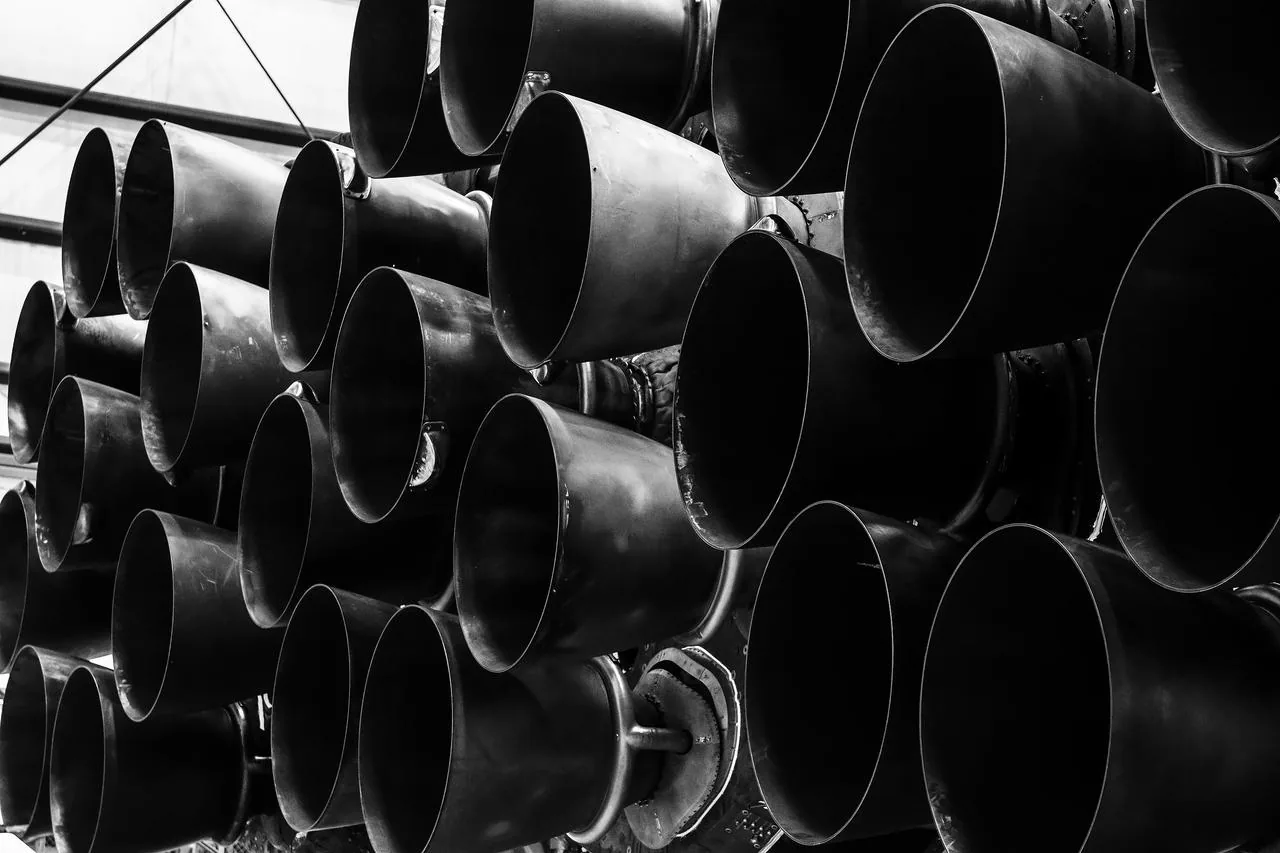 Three Falcon 9 cores assembled as Falcon Heavy — SpaceX's Starfactory can build up to 1,000 Starships per year. Source: SpaceX
SpaceX's competitive position in 2026 is the strongest it has ever been, and the moat is widening rather than narrowing.
United Launch Alliance (ULA): The Vulcan Centaur finally flew commercially in 2024 after years of delays. It is a capable vehicle, but it is expendable, priced above $100 million per flight, and limited to national security and government customers. ULA has essentially ceded the commercial launch market to SpaceX.
Arianespace (Ariane 6): Europe's flagship rocket launched commercially in 2024, years behind schedule and significantly over budget. At a list price comparable to Falcon 9 but without reusability, Ariane 6 competes primarily on political grounds — the "sovereign European access to space" argument — rather than on economics.
Rocket Lab: The most credible small-lift competitor. Electron has an excellent reliability record, and Neutron (medium-lift, partially reusable) is in development. Rocket Lab is an excellent small satellite launcher but does not compete in the heavy-lift market that defines SpaceX's revenue base.
Blue Origin: New Shepard is a suborbital tourism vehicle. New Glenn, a medium-heavy orbital rocket, conducted its first flight in January 2025 after years of delays. Blue Origin is a decade behind SpaceX in reusability experience and launch cadence, though it is backed by Jeff Bezos's personal capital and is making credible progress.
China (LandSpace, CAS Space, Galactic Energy): China's commercial launch sector has produced the Zhuque-2 (methane-fueled, partially reusable in development), Ceres-1, and other vehicles. These companies can undercut SpaceX on price for some missions, particularly for customers willing to accept the geopolitical implications of Chinese launch services. However, they remain significantly behind in performance, reliability record, and reusability maturity.
Amazon Kuiper: The only credible near-term rival to Starlink in broadband satellite internet. Amazon has authorized up to 3,236 Kuiper satellites, began commercial service in 2025, and is backed by AWS resources and Amazon's distribution network. However, Kuiper enters the market years behind Starlink, with fewer satellites, at a time when Starlink has 10 million subscribers and 65% of all active satellites. The gap is difficult to close.
SpaceX's structural advantage is the integration between Starlink and Falcon 9: every Falcon 9 Starlink mission costs less than a commercial customer's mission due to internal transfer pricing, and every Starlink satellite launched strengthens a business that funds the development of Starship. No competitor possesses this closed-loop economic flywheel.
10. Future Roadmap 2026–2030
 The Moon: Starship will land humans on the lunar surface for the first time in 50+ years under NASA's Artemis program. Moon cargo flights start 2028. Source: spacex.com/humanspaceflight/moon
2026:
- Starship Block 3 development and initial flight tests; Block 3 incorporates lessons from all 11 Block 2 flights
- IPO targeting mid-2026; potential Starlink spin-out
- Terafab manufacturing platform development with Tesla and xAI
- Continued Starlink Direct to Cell expansion (voice and data phases)
- Continued NSSL and commercial launch cadence on Falcon 9/Heavy
2027:
- NASA Artemis III lunar landing — currently targeting 2027, contingent on Starship HLS readiness; timeline may shift pending Starship development progress
- Starship first commercial payload missions
- Starlink Gen 3 satellites with enhanced throughput
2028:
- Moon cargo flights begin: $100 million per metric ton
- Starfactory scale-up toward higher annual production rates
- Point-to-point Earth transport demonstration missions (Musk's stated vision for intercontinental travel via Starship)
2029–2030:
- Mars cargo flights begin: $100 million per metric ton
- First crewed Mars mission (Musk's stated target; considered optimistic by most analysts)
- In-space propellant transfer demonstration (required for high-energy Starship missions including HLS)
Long-term:
- Starfactory producing up to 1,000 Starships per year
- Self-sustaining Mars city (Musk's stated civilization-scale goal)
- Expendable Starship mode: 300+ metric ton payload configuration for maximum mass-to-orbit applications
The roadmap reflects the same internal logic that has governed SpaceX since 2002: every near-term revenue stream (Starlink, Falcon 9 commercial launch, NASA contracts) is instrumental to funding the next tier of capability (Starship), which in turn enables the stated mission (Mars). The difference between 2002 and 2026 is that the revenue streams are now real, the capabilities are increasingly demonstrated, and the timeline — while optimistic in its specifics — is no longer purely aspirational.
11. Risks and Challenges
Block 2 reliability and development cadence: The three consecutive Starship failures in IFT-7, IFT-8, and IFT-9 represent the most concentrated technical setback in SpaceX's recent history. While IFT-10 demonstrated recovery, each launch failure consumes time, funding, and regulatory goodwill. NASA's Artemis program is directly dependent on Starship HLS milestones; continued slippage creates political and contractual risk.
Regulatory friction: FAA launch licensing has been a persistent constraint on Starship test cadence. Environmental review processes at Starbase — a launch facility SpaceX built in a sensitive coastal ecosystem — have caused multi-month delays. As Starship transitions from test to operations, regulatory approval processes become more consequential.
Key-man risk: Elon Musk's simultaneous leadership roles at SpaceX, Tesla, xAI, and (until recently) DOGE create genuine questions about management bandwidth. SpaceX's culture, technical decision-making, and public identity are deeply intertwined with Musk's personal involvement in a way that would be difficult to replicate with different leadership. This is the most commonly cited long-term governance risk by institutional investors.
Starlink competition: Amazon Kuiper, backed by the deepest pockets in technology, is the only credible broadband constellation rival. OneWeb (Eutelsat), Telesat Lightspeed, and AST SpaceMobile represent partial competitive threats in specific segments. The broadband satellite market will not remain a SpaceX monopoly, and sustained competition could pressure subscriber growth and pricing.
Geopolitical exposure: Starlink's role as communications infrastructure in active conflict zones has made SpaceX a geopolitical actor in ways that create regulatory risk in multiple markets. The EchoStar acquisition, the Starshield contracts, and Direct to Cell partnerships with sovereign carriers each create jurisdictional and political surface area.
IPO execution risk: A trillion-dollar IPO at a company with heavily private financials, concentrated ownership, and a CEO with demonstrated willingness to make decisions that surprise public markets would be among the most complex equity offerings in history. Execution risk is real, and the structural questions around Starlink spin-out timing add further complexity.
Key Records and Milestones — A Chronology
- December 9, 2010 — First private spacecraft recovery
- May 25, 2012 — First private spacecraft to reach and berth at the ISS
- December 22, 2015 — First orbital booster landing
- March 30, 2017 — First orbital booster reuse
- September 2021 — First all-civilian orbital spaceflight (Inspiration4)
- May 30, 2020 — First private humans launched to orbit (Crew Dragon Demo-2)
- October 13, 2024 — First booster catch (Mechazilla, IFT-5)
- September 12, 2024 — First commercial spacewalk (Polaris Dawn)
- August 5, 2025 — First fully recovered both-stage Starship flight (IFT-10)
- February 2026 — 10 million Starlink subscribers; 10,020+ active satellites
Sources and References
- SpaceX Official Website — Falcon 9 — Official Falcon 9 specifications and mission data
- SpaceX Official Website — Starship — Official Starship specifications, pricing, and production data
- SpaceX Official Website — Dragon — Official Dragon vehicle specifications
- SpaceX Official Website — Starlink — Official Starlink pricing tiers and service availability
- Wikipedia — SpaceX — Company history, financial data, and launch records
- Wikipedia — Starship (spacecraft) — Comprehensive Starship flight test history
- Wikipedia — Falcon 9 — Falcon 9 technical specifications and launch history
- Wikipedia — Starlink — Constellation data and subscriber growth
- NASA Commercial Crew Program — Contract details and Dragon mission history
- NASA Human Landing System — HLS Starship contract announcements and Artemis context
- Ars Technica Space Coverage — Authoritative technical reporting on Starship test flights and Falcon 9 operations
- SpaceNews SpaceX Coverage — Industry reporting on contracts, launches, and company developments
- Jonathan McDowell's Orbital Launch Statistics — planet4589.org — Authoritative global launch database and satellite catalog
- Payload Space Launch Database — Launch cadence data and commercial space market analysis
- SEC EDGAR — SpaceX Related Filings — Secondary market documents and regulatory filings
- Wikipedia — Polaris Dawn — Commercial spacewalk mission details
- Wikipedia — EchoStar — EchoStar spectrum acquisition context