On April 26, 2023, a small spacecraft built by a Tokyo-based startup called ispace attempted something no private company had ever done: land on the Moon. The HAKUTO-R Mission 1 lander descended toward the Atlas crater, its altimeter feeding data to an onboard guidance system that had been tested relentlessly in simulation but never in the unforgiving vacuum of actual lunar space. At an altitude of roughly five kilometers, the software misjudged terrain, the lander ran out of fuel, and the spacecraft crashed into the lunar surface. The mission was over. But something remarkable happened in the aftermath: ispace's stock did not collapse. The company's engineers immediately began analyzing telemetry. And within months, the company announced Mission 2 was on track. The crash had not killed the dream. It had confirmed that Japan's private space sector was serious, resilient, and playing a long game.
This is Part 2 of our comprehensive deep dive into the Japanese space program. Part 1 traced the arc from JAXA's founding to the Hayabusa asteroid sample-return triumphs, the SLIM precision Moon landing, and Japan's contributions to the International Space Station. Here, the focus shifts to the commercial revolution -- the startups, the venture capital, the policy frameworks, and the ambitious missions that are positioning Japan as Asia's leading commercial space hub.
Setting the Stage: Japan's Space Policy Shift
For most of its history, Japan's space program was a government affair. JAXA and its predecessor agencies designed, built, and operated nearly everything that flew. Private companies like Mitsubishi Heavy Industries (MHI) and IHI Aerospace served as prime contractors for rockets and satellites, but they operated under JAXA direction and with JAXA funding. There was no Japanese equivalent of the American venture-backed startup ecosystem that produced SpaceX, Rocket Lab, or Planet Labs.
The transformation began with the Basic Space Law of 2008. Before this law, Japanese space policy was guided by a 1969 Diet resolution that restricted space activities to "exclusively peaceful purposes" -- interpreted so narrowly that it effectively limited Japan to civilian scientific and commercial applications, discouraging dual-use technologies and constraining the development of a robust space industrial base. The Basic Space Law broadened the permissible scope of space activities to include national security applications and, critically, emphasized the role of private industry in developing space capabilities.
The law established the Strategic Headquarters for National Space Policy within the Cabinet Office, elevating space from a science-ministry concern to a matter of national strategy. It also created the framework for Japan's successive Basic Plans on Space Policy, which have set five-year roadmaps for the country's space ambitions.
The Space Activities Act of 2016
The next major milestone came with the Space Activities Act, passed in 2016 and effective from November 2018. This law provided a licensing framework for private launch activities and satellite operations -- something Japan had previously lacked entirely. Without such a framework, any private company wanting to launch a rocket from Japanese territory faced a regulatory void. The Space Activities Act filled it by establishing:
- Launch licensing: A clear permitting process administered by the Prime Minister's office for private launch vehicles
- Liability framework: A government-backed third-party liability regime, capping operator liability and providing government indemnification beyond a certain threshold -- modeled on similar frameworks in the United States and France
- Satellite operation permits: A registration and licensing system for satellite operators
JAXA as an Ecosystem Builder
JAXA itself began evolving from a purely operational agency into an ecosystem enabler. Two programs stand out:
- S-NET (Space New Economy Creation Network): Launched in 2017, S-NET was designed to connect space startups with potential corporate partners, investors, and mentors. It served as a matchmaking platform between the established aerospace industry and the emerging startup scene.
- J-SPARC (JAXA Space Innovation through Partnership and Co-creation): This program, also launched in 2018, allows private companies and entrepreneurs to collaborate directly with JAXA researchers on new business concepts using space technology. Unlike traditional procurement, J-SPARC is structured as co-creation -- JAXA contributes expertise and sometimes facilities, while the private partner brings commercial ambition and speed.
By the mid-2020s, Japan's space budget had grown to approximately $4 billion per year, making it the fourth-largest national space budget globally after the United States, China, and the European Space Agency (as a collective). The government's stated target is for Japan's space industry to reach 8 trillion yen (roughly $53 billion) by the early 2030s, roughly quadrupling its current size.
The policy shift was not merely bureaucratic. It reflected a strategic recognition that Japan's traditional strengths -- precision engineering, advanced materials, robotics, miniaturization -- were perfectly suited to the NewSpace economy, where small satellites, autonomous systems, and high-reliability components command premium value. The question was whether Japan could translate industrial excellence into entrepreneurial dynamism.
ispace: The Moon Economy Pioneer
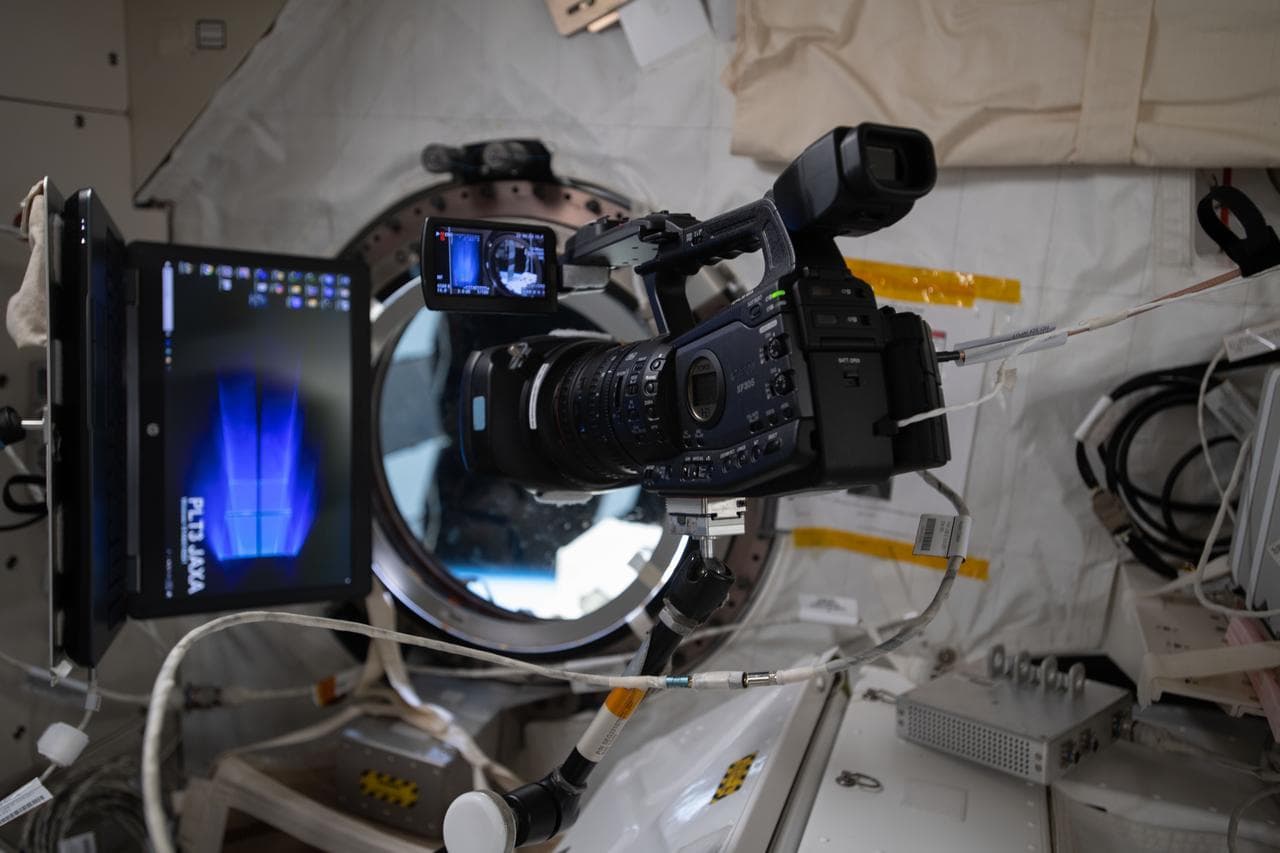
No company better embodies Japan's commercial space ambitions than ispace, the Tokyo-headquartered lunar exploration company that has bet its future on the idea that the Moon is not just a scientific destination but an economic frontier.
From Google Lunar XPRIZE to the Stock Exchange
ispace's origins trace back to Team Hakuto, one of the finalist teams in the Google Lunar XPRIZE competition. Founded by Takeshi Hakamada, Team Hakuto aimed to land a rover on the Moon and travel at least 500 meters across its surface. The XPRIZE expired in 2018 without a winner, but Hakamada had already incorporated ispace in 2010, determined to pursue the lunar surface commercially.
The company's business model rests on a concept it calls the cislunar economy -- a future in which regular transportation between Earth and the Moon enables resource utilization, scientific research, telecommunications, and eventually habitation. ispace positions itself as the "logistics provider" for this economy, building lunar landers and rovers that can deliver payloads to the Moon's surface for government agencies, research institutions, and private companies.
HAKUTO-R Mission 1: A Noble Failure
HAKUTO-R Mission 1 launched on a SpaceX Falcon 9 in December 2022 and arrived in lunar orbit in March 2023. The lander carried payloads from multiple customers, including the United Arab Emirates' Rashid rover, a JAXA-developed transformable lunar robot, and a commercial solid-state battery from NGK Spark Plug.
As described above, the landing attempt on April 26, 2023, ended in a crash. Post-mission analysis revealed that the lander's altimeter was confused by the rim of a crater, causing the software to believe it was closer to the surface than it actually was. When the lander passed over the crater's edge, the sudden change in terrain altitude caused the guidance system to command continued descent, exhausting propellant before touchdown.
Despite the failure, the mission demonstrated several critical capabilities: successful trans-lunar injection, lunar orbit insertion, de-orbit maneuvers, and communication throughout. ispace gathered an enormous volume of telemetry data that would inform subsequent missions.
Mission 2 and Beyond
HAKUTO-R Mission 2, also called RESILIENCE, was launched in December 2024 on a Falcon 9. This mission carried an upgraded lander and ispace's own micro rover. The mission incorporated lessons from Mission 1, including redundant altimetry systems and updated terrain-relative navigation algorithms. The mission reached lunar orbit in early 2025 and attempted a landing. Although the lander again experienced anomalies during its final descent phase, ispace continued iterating on its design.
Mission 3 is planned for the 2026-2027 timeframe and will feature a significantly larger lander platform with increased payload capacity. ispace has stated that Mission 3 is designed to demonstrate the company's ability to provide reliable, repeatable lunar delivery services -- the foundation of the commercial lunar economy it envisions.
A Publicly Traded Lunar Company
In a move that underscored the seriousness of Japan's commercial space sector, ispace listed on the Tokyo Stock Exchange (TSE) Growth Market in April 2023 -- just days before its Mission 1 landing attempt. The IPO raised approximately $46 million, and the company's market capitalization reached several hundred million dollars.
The listing was significant for multiple reasons. It demonstrated that Japanese public markets were willing to invest in deep-tech space companies with long development timelines and high risk. It provided ispace with access to capital markets beyond venture funding. And it set a precedent that other Japanese space startups have since studied closely.
ispace has raised over $200 million in total funding, including its IPO proceeds and venture rounds from investors such as Incubate Fund, Suzuki Motor Corporation, Japan Airlines, and the Development Bank of Japan. The company has also secured payload contracts with NASA through the Commercial Lunar Payload Services (CLPS) program, giving it a direct role in the American-led Artemis ecosystem.
Astroscale: World's Debris Removal Leader
If ispace represents Japan's ambition to reach new destinations, Astroscale represents its ambition to clean up what humanity has already left behind. The Tokyo-based company is the global leader in on-orbit servicing and space debris removal -- a sector that barely existed a decade ago but is now recognized as essential to the long-term sustainability of space operations.
Nobu Okada's Unlikely Journey
Astroscale was founded in 2013 by Nobu Okada, a former McKinsey consultant and IT entrepreneur with no prior aerospace experience. Okada became convinced that the growing problem of orbital debris -- estimated at over 36,000 objects larger than 10 centimeters and millions of smaller fragments -- posed an existential threat to the space economy. Without active debris removal, the risk of a cascading collision scenario (the Kessler syndrome) could render key orbital regimes unusable.
Okada's outsider status proved advantageous. Unburdened by the conventions of the traditional aerospace industry, he built Astroscale as a commercially oriented company from day one, focused on developing practical, scalable debris removal technologies rather than theoretical concepts. He recruited talent from JAXA, the European Space Agency, and major aerospace firms, and established operations in Japan, the United Kingdom, the United States, Israel, and France.
ELSA-d: Proving the Concept
Astroscale's first major mission, ELSA-d (End-of-Life Services by Astroscale - demonstration), launched in March 2021 aboard a Soyuz rocket from Baikonur. The mission consisted of two spacecraft: a servicer and a client satellite equipped with a magnetic docking plate. Over the course of 2021 and 2022, ELSA-d demonstrated autonomous rendezvous, proximity operations, and capture of the client satellite using a magnetic capture mechanism -- the core technologies needed for debris removal.
The mission encountered challenges, including a tumbling anomaly in the client satellite that complicated capture operations. But the overall demonstration was considered a success, validating the technical approach and generating critical operational data.
ADRAS-J: Inspecting Real Debris
The next leap came with ADRAS-J (Active Debris Removal by Astroscale - JAXA), launched in February 2024 on a Rocket Lab Electron. This mission was contracted by JAXA as part of its Commercial Removal of Debris Demonstration (CRD2) program. Unlike ELSA-d, which used a cooperative client, ADRAS-J targeted an actual piece of space debris: the upper stage of a Japanese H-IIA rocket that had been orbiting since 2009.
ADRAS-J successfully rendezvoused with the spent rocket body in mid-2024, approaching to within a few hundred meters and capturing detailed imagery of the object's condition, rotation rate, and structural integrity. This was a groundbreaking achievement -- the first time a commercial spacecraft had conducted close-proximity inspection of a real piece of space debris. The data gathered by ADRAS-J will inform the design of future removal missions.
ELSA-M and the Path to Commercial Service
ELSA-M (End-of-Life Services by Astroscale - Multi-client) represents the company's transition from demonstration to operational service. Designed to remove multiple pieces of debris in a single mission, ELSA-M is intended to serve satellite operators who want to responsibly deorbit their defunct satellites. The spacecraft will use robotic arms to capture and deorbit client satellites, servicing several objects per mission to reduce per-unit costs.
Astroscale has raised over $400 million in total funding from investors including Mitsubishi Electric, Seraphim Capital, DNCA Invest, the Government of Japan's INCJ (Innovation Network Corporation of Japan), and numerous others. In 2024, Astroscale also listed on the Tokyo Stock Exchange, becoming the second major Japanese space startup to go public after ispace.
The company's revenue model combines government contracts (from JAXA, ESA, and the UK Space Agency) with anticipated commercial services for satellite operators. As regulatory pressure mounts globally for satellite operators to deorbit their spacecraft at end of life -- the FCC's five-year rule in the United States being one example -- Astroscale is positioning itself as the go-to provider for on-orbit servicing and removal.
Synspective: SAR Satellite Intelligence
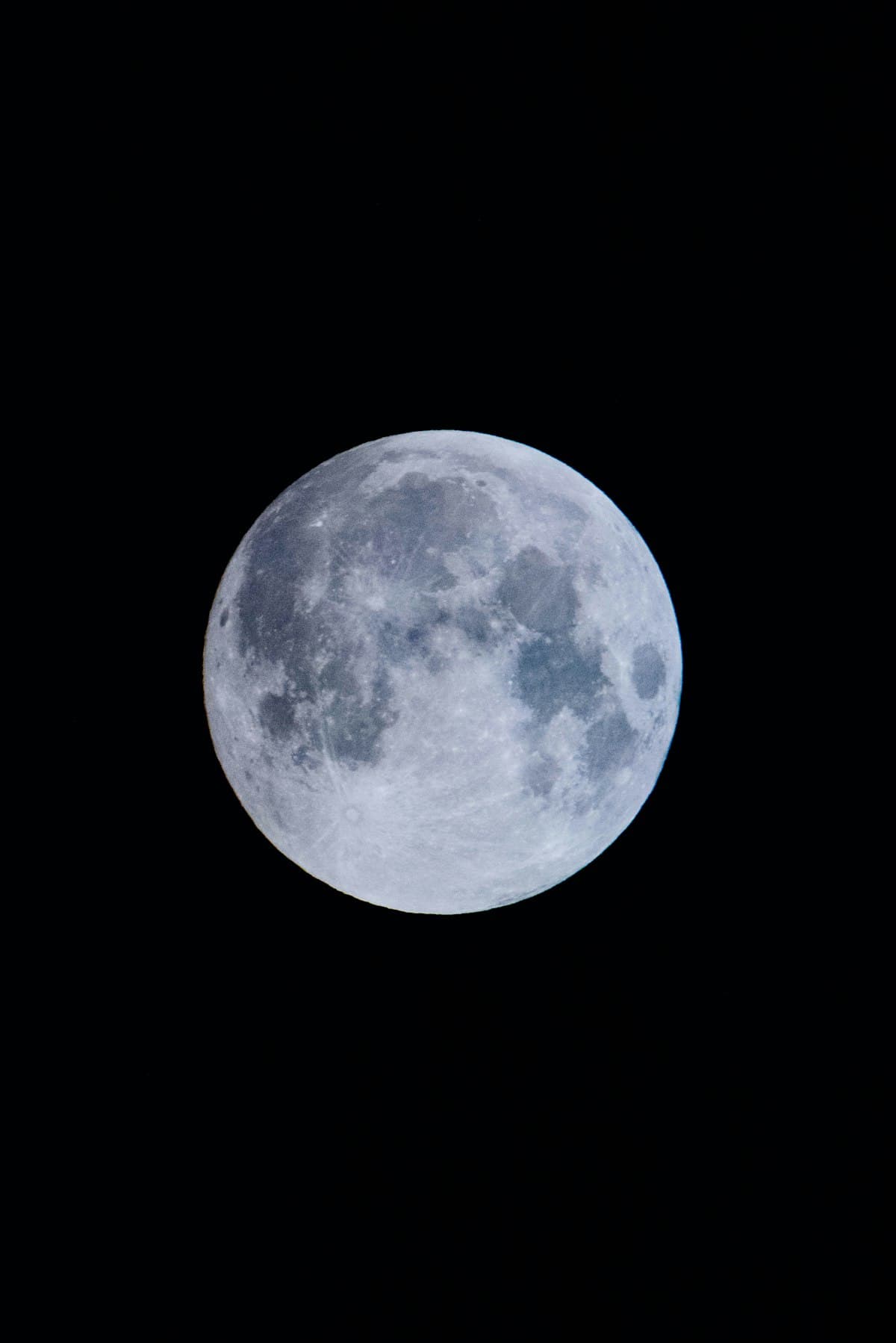
While ispace looks to the Moon and Astroscale looks to cleaning up orbit, Synspective is building an entirely new way to observe the Earth. The Tokyo-based company is developing a constellation of small synthetic aperture radar (SAR) satellites that can image the Earth's surface day or night, through clouds and darkness -- capabilities that optical satellites cannot match.
The StriX Constellation
Synspective was founded in 2018 by Motoyuki Arai, a researcher who had worked on SAR technology at the Japan Aerospace Exploration Agency and the University of Tokyo. The company's satellite platform, called StriX, is a small SAR satellite weighing approximately 150 kilograms -- far lighter and cheaper than traditional SAR satellites, which can weigh several tons and cost hundreds of millions of dollars.
The StriX design leverages Japan's strengths in miniaturization and antenna technology. Each satellite carries a deployable antenna that enables high-resolution radar imaging despite the platform's small size. The company has launched several demonstration satellites, beginning with StriX-alpha in 2020, followed by subsequent units that have validated the technology and provided initial commercial imagery services.
Synspective's plan calls for a constellation of 30 satellites by 2027, providing near-real-time radar monitoring of the entire Earth with revisit times measured in hours rather than days. The target applications span:
- Disaster response: SAR can image flood zones, earthquake damage, and volcanic activity regardless of weather or time of day, making it invaluable for emergency management
- Infrastructure monitoring: Detecting ground subsidence, structural changes in bridges and buildings, and land-use changes over time
- Maritime surveillance: Tracking ships, detecting oil spills, and monitoring coastal erosion
- Agricultural assessment: Measuring soil moisture, crop health, and deforestation
Funding and Market Position
Synspective has raised over $300 million in funding, making it one of the best-capitalized space startups in Asia. Investors include Sompo Japan Insurance, Mitsubishi UFJ Capital, the Development Bank of Japan, and various global venture funds.
The company operates in a competitive global SAR market that includes Finland's ICEYE, the United States' Capella Space, and the Italian Space Agency's COSMO-SkyMed constellation. However, Synspective differentiates itself through its integrated analytics platform -- the company does not merely sell satellite imagery but provides processed intelligence products that extract actionable insights from raw radar data. This data-as-a-service approach commands higher margins than raw imagery and creates stickier customer relationships.
Synspective has also secured contracts with the Japanese government for disaster monitoring applications, leveraging Japan's acute vulnerability to earthquakes, typhoons, tsunamis, and volcanic eruptions. In a country where natural disasters are a constant threat, all-weather, day-and-night Earth observation is not a luxury but a necessity.
Rocket Startups: Japan's Launch Vehicle Insurgents
No commercial space ecosystem is complete without indigenous launch capability. Japan's traditional launch vehicles -- the H-IIA, H-IIB, and now the H3 -- are built by Mitsubishi Heavy Industries under JAXA oversight. They are reliable but expensive, designed for government missions rather than commercial market competition. A new generation of rocket startups is attempting to change that.
Interstellar Technologies
Interstellar Technologies (IST), based in Taiki, Hokkaido, is Japan's most prominent private rocket company. Founded in 2003 by Takafumi Horie -- the flamboyant internet entrepreneur who once attempted to buy the Kintetsu Buffaloes baseball team -- IST has been pursuing low-cost access to space with a scrappy, iterative approach that contrasts sharply with the methodical conservatism of traditional Japanese aerospace.
IST's development program centers on two vehicles:
- MOMO: A suborbital sounding rocket that has been IST's primary testbed. MOMO has flown multiple times, with a mix of successes and failures. MOMO-3, launched in May 2019, became the first privately developed Japanese rocket to reach space (defined as above 100 kilometers altitude). Subsequent flights have continued to refine the vehicle and its operations.
- ZERO: IST's orbital rocket, designed to place small payloads (up to approximately 150 kg) into low Earth orbit. ZERO uses liquid oxygen and liquid methane as propellants -- aligning with the global trend toward methane-fueled rockets for their performance, reusability potential, and cleaner combustion. IST has been testing ZERO's engines at its Hokkaido facility and aims to achieve orbital flight in the coming years.
IST has raised significant funding, including from venture capital firms and high-net-worth individuals. The company's location in Hokkaido provides geographical advantages for polar orbit launches, which are optimal for Earth observation and communications satellite constellations.
Space One
Space One is a joint venture backed by Canon Electronics, IHI Aerospace, the Development Bank of Japan, and the Shimizu Corporation. Unlike the startup-style approach of IST, Space One brings together established industrial players to develop a small solid-fuel launch vehicle called KAIROS.
KAIROS had a high-profile setback in March 2024 when its inaugural launch from the Kii Space Port in Wakayama Prefecture ended in an explosion just seconds after liftoff. The vehicle self-destructed after its flight safety system detected a deviation from the planned trajectory. The failure was a blow to Space One's ambitions, but the company announced its intention to investigate, fix the issue, and resume launches.
Space One's business model targets the growing market for dedicated small-satellite launches. Its Kii Space Port, located on the southern coast of Japan's Kii Peninsula, provides access to both sun-synchronous and low-inclination orbits, making it a versatile launch site.
Pale Blue
Pale Blue, a spin-out from the University of Tokyo, is developing water-based satellite propulsion systems. Instead of traditional chemical propellants or expensive electric thrusters using xenon gas, Pale Blue's thrusters use ordinary water as propellant, heating it to produce steam thrust or ionizing it for more efficient electric propulsion.
Water propulsion offers several advantages: water is cheap, non-toxic, easy to store, and widely available. For small satellite operators looking to add maneuverability (for orbit maintenance, collision avoidance, or deorbiting) without the cost and complexity of traditional propulsion, water thrusters represent a compelling option. Pale Blue has secured contracts with satellite operators and is positioning its technology as a standard propulsion solution for the rapidly growing smallsat market.
ALE (Astro Live Experiences)
One of the more unconventional Japanese space companies, ALE is developing technology to create artificial meteor showers -- "shooting stars on demand" produced by releasing small pellets from orbit that burn up upon atmospheric reentry, producing brilliant streaks of light visible from the ground. The company, founded by Lena Okajima, envisions selling these spectacles for major events, celebrations, and scientific research into atmospheric composition.
ALE has launched two demonstration satellites, ALE-1 and ALE-2, aboard JAXA and international launch vehicles. While the concept of commercial artificial meteors may seem frivolous, the underlying technology -- precision reentry and atmospheric interaction modeling -- has serious applications in debris remediation and atmospheric science.
Axelspace
Axelspace, founded in 2008, occupies a different niche: small satellite manufacturing and Earth observation. The company's AxelGlobe constellation consists of microsatellites that provide daily optical imagery of the Earth's surface. Axelspace also builds custom microsatellites for government and commercial customers, leveraging Japan's manufacturing precision to deliver high-quality platforms at competitive prices.
Axelspace represents the "picks and shovels" approach to the space economy -- rather than pursuing headline-grabbing missions, it provides the reliable, affordable hardware that other companies and agencies need to operate in space.
LUPEX, MMX, and Japan's Next Decade
Japan's commercial space sector does not operate in isolation. It is deeply intertwined with JAXA's own ambitious exploration roadmap, which provides technology development, demand signals, and international partnerships that benefit the entire ecosystem.
LUPEX: Japan and India Go to the Lunar Poles
The Lunar Polar Exploration Mission (LUPEX) is a joint project between JAXA and the Indian Space Research Organisation (ISRO). Scheduled for the late 2020s, LUPEX will send a rover to the lunar south pole to investigate the presence, distribution, and extractability of water ice in permanently shadowed craters.
JAXA is providing the rover, which will carry a drill capable of penetrating up to 1.5 meters below the lunar surface, along with instruments to analyze the composition of subsurface material. ISRO is providing the lander. The mission represents a convergence of Japanese precision robotics and Indian cost-effective spacecraft design.
LUPEX's scientific objectives are directly relevant to the commercial lunar economy that ispace and others envision. If water ice can be found in accessible quantities at the lunar poles, it could be processed into drinking water, breathable oxygen, and rocket propellant (by splitting water into hydrogen and oxygen). This in-situ resource utilization (ISRU) capability would fundamentally change the economics of lunar operations, eliminating the need to lift every kilogram of water and fuel from Earth's deep gravity well.
MMX: Sampling Phobos
The Martian Moons eXploration (MMX) mission is one of JAXA's most ambitious undertakings. Scheduled for launch in 2026, MMX will travel to the Martian system, orbit the moon Phobos, land on its surface, collect samples, and return them to Earth by around 2031.
If successful, MMX would represent the first sample return from the Martian system and only the third body from which Japan has returned extraterrestrial material, after the asteroids Itokawa (Hayabusa) and Ryugu (Hayabusa2). The mission's scientific objectives include:
- Origin of Phobos: Determining whether Phobos is a captured asteroid, a fragment of Mars ejected by a giant impact, or something else entirely
- Mars system evolution: Using Phobos samples to understand the geological and chemical evolution of the Mars system
- Biological interest: Assessing whether Phobos samples contain material ejected from Mars that might preserve evidence of past Martian life
MMX will also carry a small rover developed by the German Aerospace Center (DLR) and the French space agency CNES, which will be deployed to the surface of Phobos to conduct in-situ measurements.
Destiny+: Flyby Science
Destiny+ (Demonstration and Experiment of Space Technology for INterplanetary voYage with Phaethon fLyby and dUst Science) is a JAXA mission planned for the late 2020s that will fly by the asteroid 3200 Phaethon, the parent body of the Geminid meteor shower. Destiny+ will test advanced electric propulsion technology and carry dust-analysis instruments to study the particles shed by Phaethon.
The mission is notable for its use of a small, low-cost spacecraft platform -- reflecting JAXA's philosophy that not every science mission needs to be a flagship. This approach aligns with the broader NewSpace ethos of doing more with less, and the technologies demonstrated by Destiny+ could find applications in future commercial missions.
The Artemis Connection
Japan is one of the original signatories of the Artemis Accords and a key partner in NASA's Artemis program. JAXA is contributing the habitation module for the Lunar Gateway, the orbital outpost that will serve as a staging point for crewed lunar surface missions. Japan has also secured two seats for Japanese astronauts on future Artemis lunar surface missions -- a historic commitment that reflects the depth of the U.S.-Japan space partnership.
This Artemis participation creates a virtuous cycle for Japan's commercial sector. Japanese companies gain access to the Artemis supply chain, Japanese technology gets validated in the most demanding environments, and Japanese astronauts on the lunar surface generate public excitement and political support for continued space investment.
Can Japan Become Asia's Space Hub?
Japan's commercial space sector operates in a competitive Asian landscape. China's space program dwarfs Japan's in budget and scale, with its own space station, lunar sample returns, and a rapidly growing commercial sector. India's ISRO offers some of the world's most cost-competitive launch services, and its private space ecosystem is growing explosively. South Korea has successfully developed its own orbital launch capability with the Nuri rocket.
Against this backdrop, Japan's strategy is not to compete on scale or cost. It is to compete on precision, quality, and high-value niches.
The Precision Niche
Japan's commercial space companies tend to cluster in areas where precision engineering, advanced manufacturing, and systems integration matter more than raw cost. Debris removal (Astroscale), lunar landing (ispace), SAR satellite imaging (Synspective), water propulsion (Pale Blue) -- these are technically demanding domains where Japan's industrial culture provides a genuine competitive advantage.
This is consistent with Japan's broader economic strategy across industries. In automobiles, Japan does not compete on volume with China but on reliability, quality, and hybrid technology. In semiconductors, Japan lost the memory chip wars to South Korea but retained dominance in semiconductor manufacturing equipment and specialty materials. In space, Japan appears to be pursuing a similar path: ceding the commodity segments (bulk launch, mass-produced LEO broadband satellites) and focusing on the premium segments where its engineering culture can command a premium.
Investment Landscape
Since 2018, over $1.5 billion has been invested in Japanese space startups, according to industry tracking by SpaceFund and local Japanese sources. While this is dwarfed by U.S. space venture investment (which has totaled tens of billions over the same period), it is substantial by Asian standards and has been growing steadily.
Key trends in Japanese space investment include:
- Corporate venture capital: Japan's large industrial conglomerates (Mitsubishi, Sumitomo, Mitsui, Suzuki, Canon) have been active investors in space startups, often taking strategic stakes that come with technology partnerships and customer relationships
- Government-linked funds: The Development Bank of Japan, INCJ, and JAXA's own investment initiatives have provided patient capital that helps bridge the "valley of death" between technology demonstration and commercial operation
- Public markets: The TSE listings of ispace and Astroscale have opened a new capital channel, allowing retail and institutional investors to participate in space companies directly
- International investors: Global venture funds from Silicon Valley, Singapore, and Europe have increased their allocations to Japanese space companies, attracted by the technology quality and the growing domestic market
Challenges Ahead
Japan's path to becoming Asia's commercial space hub is not without obstacles:
- Demographics: Japan's aging and shrinking population creates long-term labor constraints, particularly in engineering talent. The space sector must compete for engineers with the automotive, semiconductor, and technology industries.
- Risk culture: Despite the growing startup ecosystem, Japan's corporate culture historically favors consensus, incremental improvement, and risk avoidance -- qualities that can slow the rapid iteration required in NewSpace. Companies like ispace and IST have deliberately cultivated Silicon Valley-style "move fast" cultures, but scaling this across the broader industry remains a challenge.
- Launch infrastructure: Japan's launch sites at Tanegashima and Uchinoura are geographically constrained and operationally limited compared to the launch cadence possible at Cape Canaveral or Boca Chica. The new Kii Space Port in Wakayama is expanding capacity, but Japan still lacks the launch infrastructure needed for high-frequency commercial operations.
- Regulatory speed: While the Space Activities Act was a major step forward, the pace of regulatory adaptation has not always kept up with the speed of commercial innovation. Streamlining licensing, spectrum allocation, and export controls will be essential to maintaining competitiveness.
- China's shadow: China's rapidly growing space capabilities, including its commercial sector, create both competitive pressure and geopolitical complexity. Japan must navigate U.S.-China technology restrictions while maintaining its own competitive position.
The Quality Argument
Despite these challenges, the fundamental argument for Japan as a commercial space hub remains compelling. The country has the fourth-largest space budget in the world, a deep bench of engineering talent forged in one of the world's most demanding manufacturing cultures, a stable regulatory environment, strong alliances with the United States and Europe, and a growing roster of well-funded, technically ambitious startups.
Japan may never match China in scale or India in cost. But in a space economy that increasingly values precision, reliability, sustainability, and high-value services -- debris removal, lunar logistics, all-weather Earth observation, advanced propulsion -- Japan's commercial space sector is building a position that plays to the country's deepest strengths.
The next five years will be decisive. If ispace can land reliably on the Moon, if Astroscale can scale debris removal into a routine commercial service, if Synspective can complete its SAR constellation, and if at least one of Japan's rocket startups can achieve orbit -- then the case for Japan as Asia's premier commercial space hub will be difficult to argue against. The foundations have been laid. The startups are funded. The policy framework is in place. What remains is execution -- and execution, historically, is where Japan excels.