Company / Organization Overview
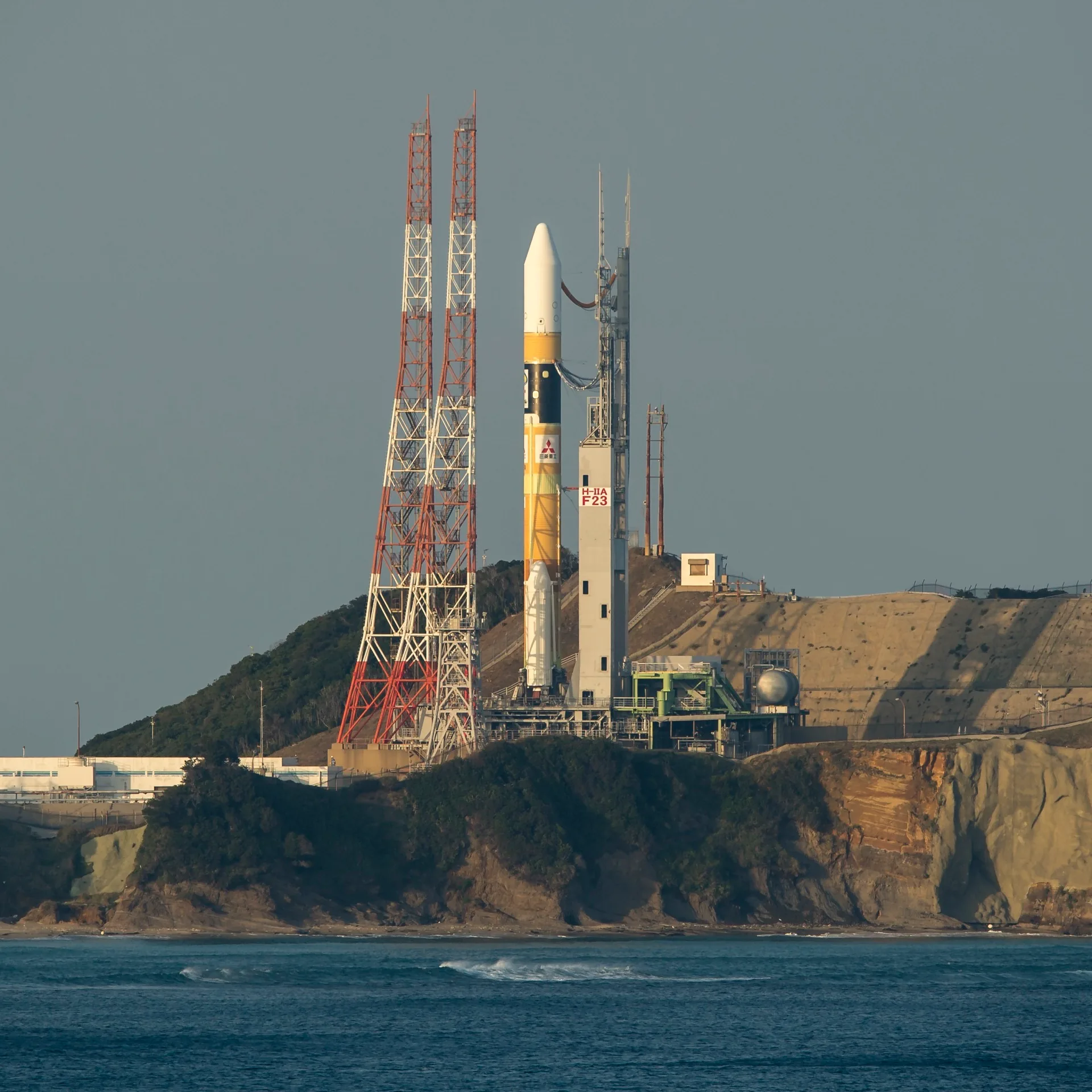
Mitsubishi Heavy Industries (MHI) is Japan's largest defense and industrial conglomerate, and its space division represents the industrial spine of Japan's national launch capability. With roots tracing back to 1884 — making it older than the aerospace age itself — MHI has evolved from shipbuilding into one of the world's leading manufacturers of power systems, industrial machinery, and aerospace products. Its space business, while not separately incorporated, is one of the world's most strategically significant national launch services organizations.
MHI's Space Systems division, headquartered in Tokyo with major operations in Nagoya (rocket production), Tanegashima (launch operations), and the Mitsubishi Aircraft Corporation facilities, is the prime contractor for Japan's H-IIA, H-IIB, and now H3 rocket families. The company employs approximately 80,000 people group-wide, with the space segment accounting for several thousand dedicated engineers and technicians.
In 2007, JAXA (the Japan Aerospace Exploration Agency) transferred commercial launch services responsibilities to MHI under a landmark agreement, making MHI not just the manufacturer but the commercial operator of Japanese launch vehicles. This model — where a private industrial company manages launch operations under a national space agency's oversight — mirrors the relationship between ArianeGroup/Arianespace and ESA, positioning Japan for commercial market participation.
MHI's space activities are deeply intertwined with Japan's national space policy, managed through JAXA under the Cabinet Office's Space Policy Secretariat. Japan's Basic Plan on Space Policy, regularly updated, designates MHI as the key industrial partner for maintaining indigenous launch capability — a sovereign asset deemed essential for national security, disaster monitoring, and scientific research.
Key Takeaways
- Revenue/Budget: MHI Defense, Space & Intelligence segment
¥1.4 trillion ($9B) FY2024; Japan national space budget¥640B ($4.2B) FY2025 (boosted by ¥1 trillion Space Strategic Fund through 2034) - Key Achievement: Five H3 successes from F2 (Feb 2024) through F7 (HTV-X1 debut, Oct 2025); SLIM pinpoint Moon landing (Jan 19, 2024); H-IIA retired with GOSAT-GW success (June 28, 2025)
- Key Program: H3 rocket — five configurations now flying, targeting
¥5–6B ($35–45M) per launch - Key Risk: H3 F8 second-stage anomaly (Dec 22, 2025) drove a return-to-flight investigation; cost structure remains challenged versus reusable competitors
- Outlook: H3 cadence target 6+ launches/year; HTV-X already serving ISS, HTV-XG variant under study post-Gateway descope; LUPEX joint mission with ISRO targeted for 2028
Notable Quotes
"H3 is not just a successor to H-IIA — it is Japan's answer to a transformed global launch market. We have set ourselves the goal of halving launch costs while increasing capability, because that is what competitiveness demands in the SpaceX era."
— Hiroshi Yamakawa, President of JAXA, on the H3 development philosophy
"Japan's space program has always been defined by reliability — by the principle that if we commit to a mission, we deliver. H3 carries that heritage, and with each successful flight, we rebuild the trust that is the foundation of Japan's commercial launch offering."
— Hiroshi Yamakawa, JAXA President, following H3's second flight success in February 2024
Mission & Strategic Position

Japan's space program, and MHI's role within it, is shaped by a specific national philosophy: reliable, high-quality, precision-engineered access to space that serves both civil and security purposes, built on indigenous technology. Japan does not seek to be the cheapest launcher; it aims to be the most reliable, particularly in a Pacific region context where assured access to space is a security imperative as much as a commercial one.
MHI's H-IIA rocket achieved a remarkable operational record over more than two decades — 100+ flights with a single-digit failure count, making it one of the most reliable large rockets in history. This reliability record is a cultural as much as an engineering achievement, reflecting Japan's manufacturing quality ethos ("monozukuri") applied to orbital mechanics.
Strategically, Japan faces the same competitive challenge as Europe: how to maintain a sovereign launch capability in an era dominated by SpaceX's cost-competitive reusable rockets. The answer is H3 — a next-generation rocket designed from the ground up to cut launch costs by 50% versus H-IIA while improving payload capacity and simplifying ground operations. H3 is MHI and JAXA's bet that a lower-cost, flexible medium-heavy launcher can carve out a viable commercial niche while serving Japan's growing governmental launch needs.
Japan's 2023 National Space Policy also elevated the role of space in national security, accelerating demand for reconnaissance satellites, communications payloads, and space situational awareness — providing MHI with a growing domestic government launch manifest.
Key Products & Services
H-IIA (Retired 2025)
Japan's primary orbital launch vehicle from 2001 to 2025:
- Configurations: Multiple, using varying numbers of solid rocket boosters (SRBs)
- Payload to GTO (H-IIA 202): ~4,000 kg
- Payload to GTO (H-IIB): ~8,000 kg
- Launch site: Tanegashima Space Center, Kagoshima Prefecture
- Total flights: 50 (49 successes, 1 failure — ADEOS-II, November 2003)
- Success rate: 98%
- Final flight: F50 on June 28, 2025, lofting GOSAT-GW (Global Observing Satellite for Greenhouse gases and Water cycle)
H-IIA's legacy is extraordinary, reflecting Japan's engineering discipline ("monozukuri") applied to rocketry. The H-IIB was specifically developed to launch Japan's HTV cargo spacecraft to the ISS.
H3
MHI's new-generation rocket — the future of Japanese launch capability:
Design Goals:
- Launch cost: ~50% reduction vs. H-IIA (targeting ¥5–6B / ~$38–45M per mission)
- Payload capacity: 6,500 kg to SSO or 4,000 kg to GTO
- Simplified ground operations for higher launch cadence
Key Technical Features:
- LE-9 Engine: Staged combustion cycle, LOX/LH2; expander bleed cycle reduces parts count vs. H-IIA's LE-7A
- SRB-3 Solid Boosters: Derived from Epsilon rocket technology
- Configurations:
- H3-22S: Two LE-9s, two SRBs
- H3-22L: Two LE-9s, two SRBs, long fairing
- H3-30S: Three LE-9s, no SRBs
- H3-24L: Two LE-9s, four SRBs, long fairing
- Digital Ground Systems: Automated launch processing, reduced countdown crew requirements
Flight History (through April 2026):
- TF1 (March 2023): Second-stage ignition failure; ALOS-3 lost
- TF2 (February 2024): Complete success — critical program recovery
- F3 (July 2024): ALOS-4 SAR Earth observation satellite to SSO — success
- F4 (November 2024): DSN-3 (Kirameki 3) defense communications satellite to GTO — success
- F5 (February 2025): QZS-6 (Michibiki-6) navigation satellite to GTO — success
- F7 (October 26, 2025): First H3-24W heavy variant; lofted HTV-X1 cargo to the ISS — success
- F8 (December 22, 2025): QZS-5 (Michibiki-5) — failure, suspected payload-fairing impact and second-stage liquid-hydrogen tank pressure anomaly; investigation under way as of April 2026
Epsilon
JAXA's solid-propellant small launch vehicle (developed primarily by IHI Aerospace):
- Payload to SSO: ~700 kg
- Propulsion: Solid propellant
- Status: Upgraded Epsilon-S in development following 2021 static fire explosion
HTV (Kounotori) and HTV-X Cargo Spacecraft
MHI prime contractor for JAXA's H-II Transfer Vehicle and its successor:
- HTV (Kounotori): 9 successful ISS missions between 2009–2020
- HTV-X1: Launched October 26, 2025 on H3-24W; berthed with ISS October 30, 2025; undocked March 6, 2026; reentry planned June 2026
- HTV-X2 / X3: Both scheduled for Japanese Fiscal Year 2026
- HTV-XG: Cargo variant under study to serve NASA's revised lunar architecture after the 2026 Lunar Gateway descope — possibly delivering logistics to a co-orbital element or directly to the lunar surface base
Revenue & Financials
- MHI Defense, Space & Intelligence segment:
¥1.4 trillion ($9B) FY2024 - Space-specific revenues (estimated): ¥250–450 billion annually (~$1.7–3B) — rocket manufacturing, satellite bus production, launch services
- Japan national space budget (FY2025):
¥640 billion ($4.2B), supported by the ¥1 trillion Space Strategic Fund (2024–2034) administered by JAXA to subsidise commercial space R&D - Commercial launch approach: MHI and JAXA have prioritized reliability over high cadence historically; H3's lower cost structure explicitly enables a more competitive commercial offering
Major Programs & Contracts
JAXA Institutional Launches: H3 to launch next generation of JAXA Earth observation (ALOS series), scientific, and operational satellites through the late 2020s.
QZSS (Quasi-Zenith Satellite System): Japan's regional navigation satellite system providing centimeter-level accuracy; MHI manufactures and launches QZSS satellites.
Defense Satellite Programs:
- Information Gathering Satellites (IGS) — optical and radar reconnaissance
- Japan significantly expanded IGS capabilities following North Korean missile developments and China's military space expansion
DSN (Defense Space Network): Japan's Defense Rapid Transport Satellite and dedicated military communications satellite programs provide growing defense launch demand.
NASA Lunar Gateway (HTV-X / Gateway Logistics): Japan has signed agreements with NASA to supply logistics services to the Lunar Gateway through enhanced HTV-X spacecraft — a commercial contract framework giving MHI a footprint in the cislunar economy.
Recent Milestones (2024–2026)
SLIM Precision Moon Landing (January 19, 2024):
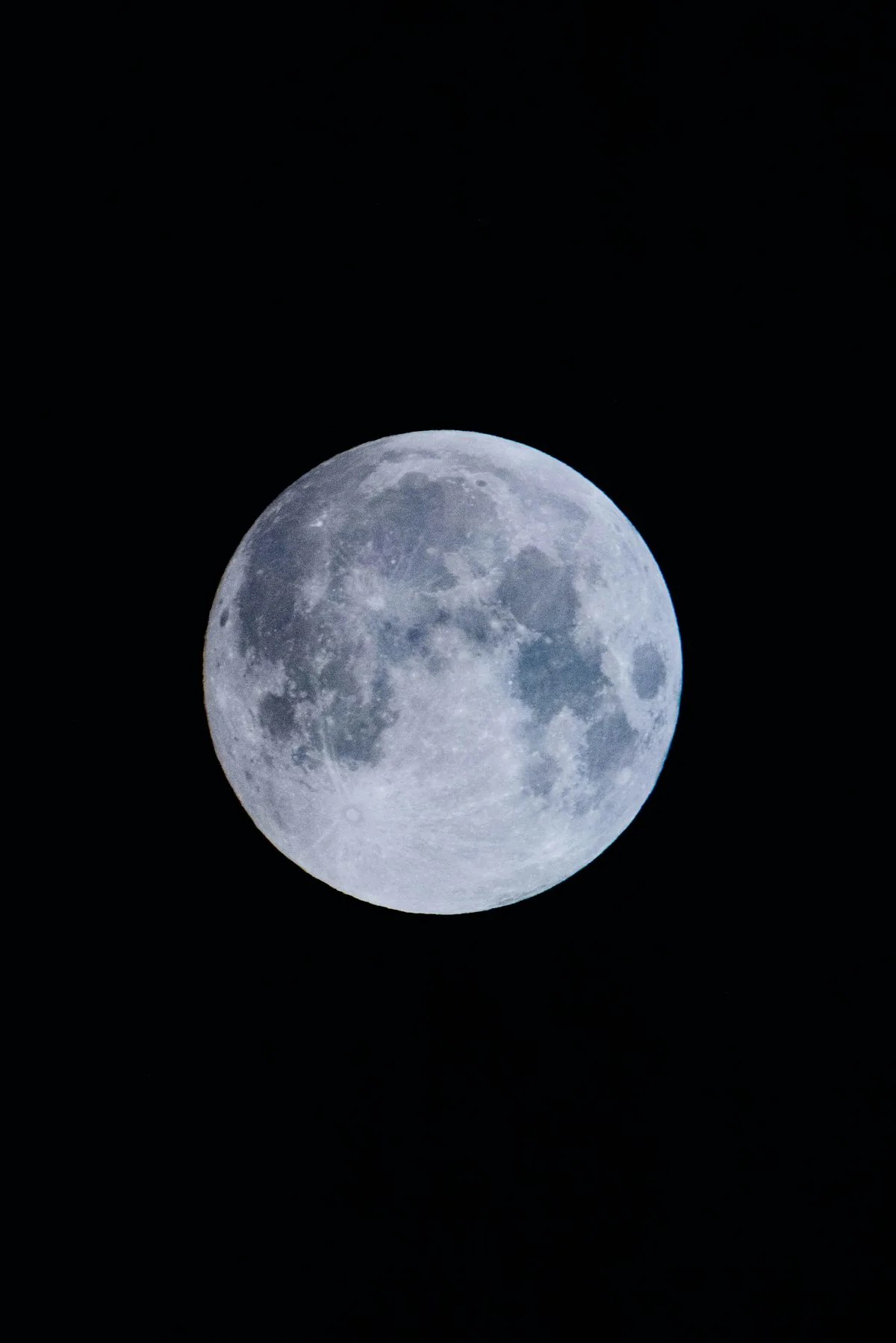
- JAXA's SLIM spacecraft (launched by H-IIA, September 2023) touched down within 55 metres of its target near Shioli crater
- Made Japan the fifth nation to soft-land on the Moon
- Landed on its side due to a late descent-engine anomaly but completed scientific operations and survived multiple lunar nights
- Validated "pinpoint landing" technology directly applicable to LUPEX and future lunar prospecting
H3 Operational Year (2024–2025):
- F3 (July 2024) ALOS-4, F4 (November 2024) DSN-3, F5 (February 2025) QZS-6 — three consecutive successes consolidating operational status
H3 Heavy Variant Debut (October 26, 2025):
- F7 introduced the H3-24W configuration (two LE-9s, four SRBs, wide fairing) and successfully delivered HTV-X1 to the ISS
- First operational use of the H3 heavy class to a low-inclination ISS orbit
H-IIA Final Flight (June 28, 2025):
- F50 lofted GOSAT-GW greenhouse-gas and water-cycle observatory
- Closed a 24-year operational career: 50 flights, 49 successes
- Prime Minister Ishiba framed the retirement as a generational handover to H3
H3 F8 Anomaly (December 22, 2025):
- QZS-5 mission failed, ending H3's success streak; suspected payload-fairing impact plus an abnormal LH2 tank pressure decrease
- JAXA-MHI joint investigation under way; return-to-flight not yet announced as of late April 2026
HTV-X1 ISS Mission (October 2025 – March 2026):
- Berthed October 30, 2025; undocked March 6, 2026
- Demonstrated next-generation cargo capability and pressurised module hand-over
Hayabusa2 Extended Mission:
- Continues toward asteroid 1998 KY26; arrival 2031 — sustained Japanese leadership in small-body exploration
Competitive Landscape
SpaceX Falcon 9: The dominant global competitor. H3's target price of ~$38–45M per launch is competitive for non-US government customers compared to Falcon 9's ~$67M list price. H3 competes on reliability and ITAR-free status.
Ariane 6: Europe's new medium-heavy launcher operating in the same market tier as H3. Both face the fundamental challenge of competing with SpaceX without full reusability. More parallel than directly competitive given complementary institutional bases and geographic launch site advantages.
China's Long March CZ-5: Serves China's institutional needs and some commercial customers. Aggressive pricing for non-ITAR customers; growing commercial sector competes directly with Japan for Asian launch business.
Rocket Lab Neutron (in development): Planned medium-lift reusable rocket would compete with H3 in payload class if it achieves commercial objectives.
India's LVM3: India's growing commercial ambitions with LVM3 position it as an emerging competitor in Asia, particularly for constellation deployment.
Future Roadmap (2025–2030)
H3 Operational Cadence: Immediate goal is reliable H3 operations at 6+ launches/year by the late 2020s. Requires validating launch pad turnaround procedures, supply chain reliability for LE-9 production, and commercial contract acquisition.
H3 Commercial Market Entry: MHI actively marketing H3 to international commercial customers — emphasizing reliability, ITAR-free payload processing, and competitive pricing. Government-to-government launch agreements with Australia, UK, and France are target growth areas.
HTV-X Cadence: With HTV-X1 successfully completing its ISS mission, HTV-X2 and HTV-X3 are baselined for Japanese FY2026, supporting ISS through the late 2020s and feeding the HTV-XG variant for NASA's revised lunar architecture.
LUPEX (Chandrayaan-5) with ISRO: JAXA confirmed in May 2025 that MHI will manufacture the 350 kg lunar rover; the implementing arrangement was signed August 2025 and the mission is now baselined for an H3-24L launch in 2028 with ISRO providing the lander.
Reusable Launch Vehicle Studies: Japan's space policy includes preliminary reusable launch technology studies. No firm H3-derived reusable variant announced, but Japan is closely watching SpaceX Starship and Europe's Ariane Next.
Space Security Expansion: Growing Japan Defense Ministry (JMOD) budgets for space situational awareness, missile warning, and secure communications represent a significant growth market through the 2020s.
Commercial Space Station Partnership: Japan has expressed interest in maintaining commercial station access post-ISS, potentially through private providers, with Japanese modules or logistics services.
Key Risks & Challenges
H3 Market Traction: After a difficult inaugural flight, H3 must demonstrate flawless operational performance to win international commercial contracts. Trust is earned launch by launch in this industry.
Cost Structure: Achieving ¥5 billion per launch in a domestic industrial context — with high Japanese labor costs and quality standards — is challenging. The gap with SpaceX's effective pricing (especially for rideshare or reused boosters) remains significant.
Launch Cadence: Japan has historically launched 3–5 times per year. Increasing to the higher cadence needed for commercial viability requires investments in range infrastructure, workforce, and supply chain.
Succession Planning: The simultaneous retirement of H-IIA/B and H3's early operational period creates a transition risk window. Any extended H3 grounding would leave Japan without a launch vehicle.
Export Control Complexity: Japan's security export control laws (Foreign Exchange and Foreign Trade Act) and alignment with US technology transfer policies create constraints on marketing H3 to some potential customer nations.
Sources
- JAXA H3 Launch Vehicle Overview Documentation
- JAXA Official Website — Mission History and Programme Documentation
- Mitsubishi Heavy Industries Space Systems Overview
- Japanese Cabinet Office Space Policy Secretariat — Basic Plan on Space Policy, 2023 Revision
- SpaceNews — "Japan's H3 rocket succeeds on second attempt," February 2024
- SpaceNews — "Japan's SLIM moon lander touches down, lands on its side," January 2024
- Japan Ministry of Defense — Defense Space Strategy, 2023
- BryceTech — Asia-Pacific Space Activity Report 2024
- Ars Technica — H3 Rocket First Flight Anomaly Analysis, March 2023