The Nation That Lands on a Dime
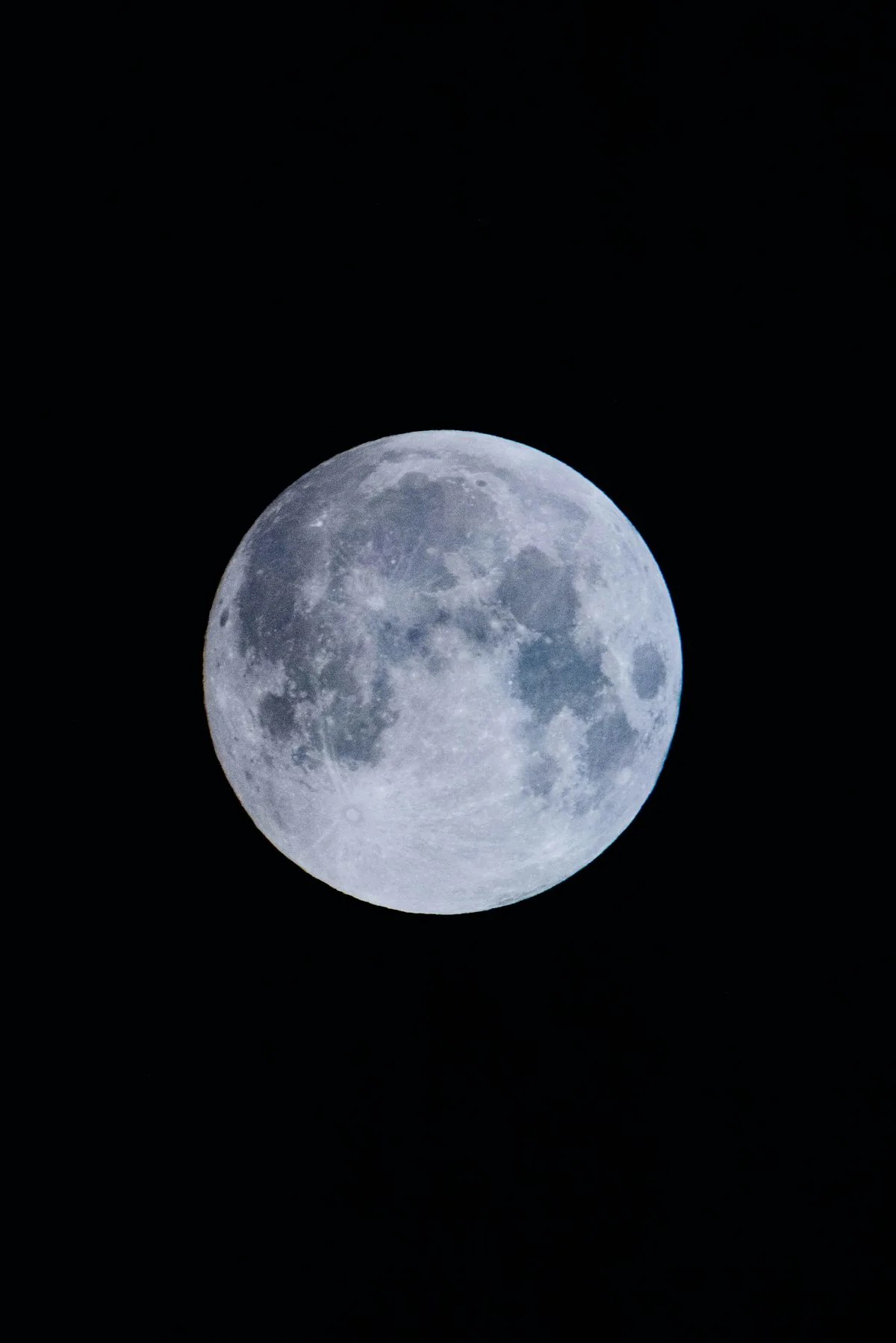
On January 20, 2024, Japan's SLIM spacecraft -- the Smart Lander for Investigating Moon -- touched down on the lunar surface and accomplished something no other country had ever demonstrated. It landed within 55 meters of its target point. Fifty-five meters. On the Moon. To put that in perspective, most lunar landers consider themselves successful if they touch down within several kilometers of their intended landing site. SLIM achieved precision that was, quite literally, an order of magnitude better than anything before it.
The landing was not perfect in every respect. SLIM came to rest at an awkward angle, with its solar panels pointed away from the Sun, which initially limited its power generation and mission duration. But the technical achievement of the precision landing itself was extraordinary. SLIM used a vision-based navigation system that matched real-time camera imagery against pre-loaded maps of the lunar surface to guide itself to its target with remarkable accuracy. JAXA, the Japan Aerospace Exploration Agency, called it a "pinpoint landing," and the data backed up the claim. Japan became the fifth nation to soft-land on the Moon, and it did so with a technological flourish that set a new benchmark for the entire industry.
This is the essence of Japan's space program: understated, technically brilliant, and punching far above what casual observers might expect. With a space budget of approximately $4.5 billion -- a fraction of what NASA, ESA, or China's space agencies command -- Japan consistently delivers missions that redefine what is possible.
The H3 Rocket: Japan's Next-Generation Workhorse
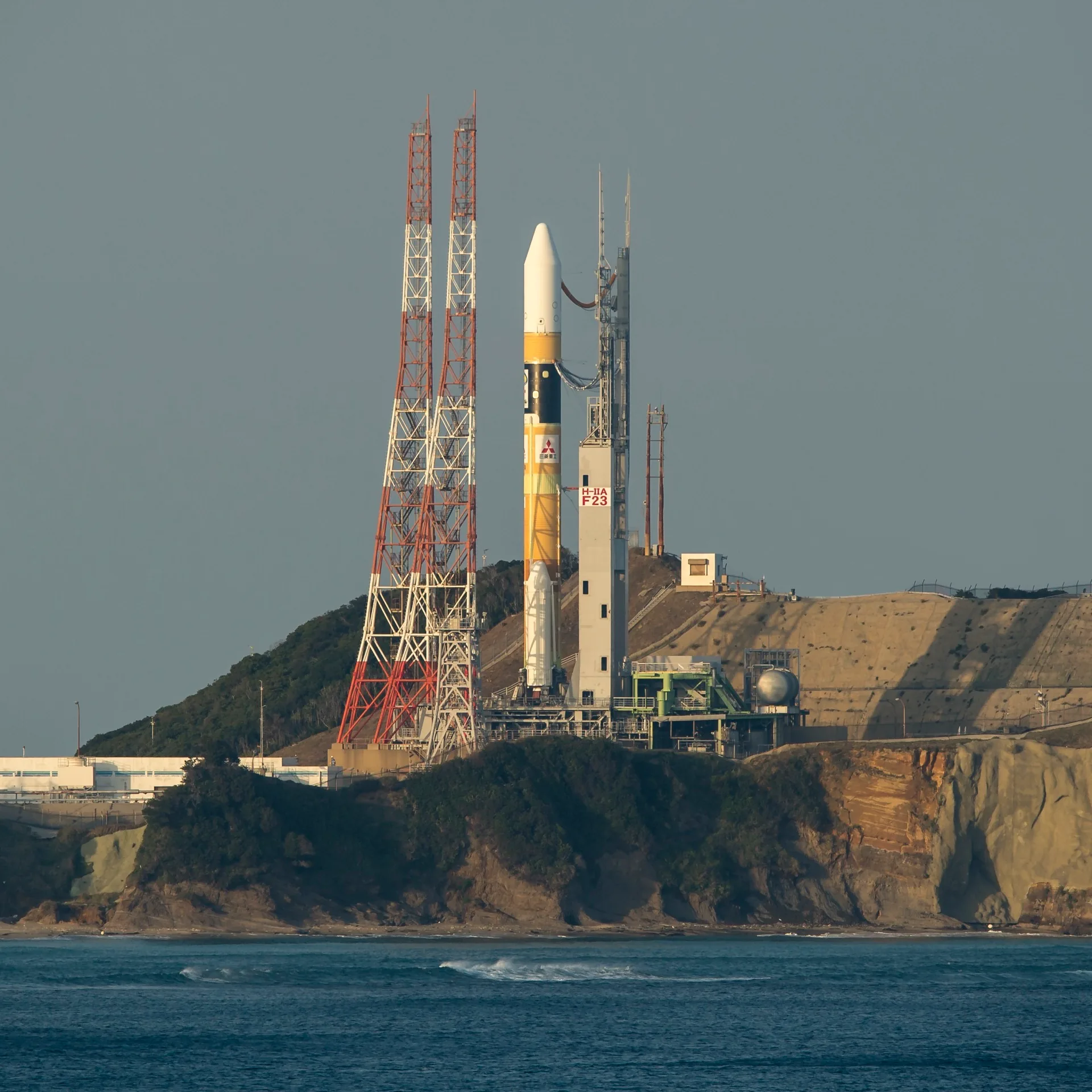
Just weeks after SLIM's lunar landing, Japan achieved another milestone that had been years in the making. On February 17, 2024, the H3 rocket successfully reached orbit on its second flight attempt, delivering the VEP-4 payload to its intended orbit. For JAXA and Mitsubishi Heavy Industries (MHI), the H3's manufacturer, it was a moment of profound relief and vindication.
The H3 program had endured a painful public failure. Its inaugural flight on March 7, 2023, ended when the second stage engine failed to ignite and the rocket had to be destroyed via remote command, along with the Advanced Land Observing Satellite-3 (ALOS-3) it was carrying. For a nation that prides itself on engineering precision, the loss was deeply felt. MHI and JAXA conducted an exhaustive investigation, identified the ignition system failure, implemented corrective measures, and returned to the pad within eleven months.
H3 is designed to be Japan's primary launch vehicle for the next two decades, replacing the reliable but expensive H-IIA rocket that has been flying since 2001. The key objective with H3 was cost reduction: JAXA set a target of cutting launch costs roughly in half compared to H-IIA, bringing the per-launch price down to approximately $51 million. This is achieved through simplified manufacturing processes, a new LE-9 main engine that uses an expander bleed cycle (avoiding the complexity of staged combustion), and modular solid rocket booster configurations that allow the vehicle to be tailored to different mission requirements.
MHI, one of Japan's largest industrial conglomerates, serves as both the manufacturer and the commercial launch service provider for H3. The rocket is designed to compete in the international commercial launch market, offering a vehicle capable of delivering approximately 6,500 kilograms to sun-synchronous orbit or over 4,000 kilograms to geostationary transfer orbit, depending on configuration. With the successful second flight, H3 has entered operational service and is expected to fly a growing manifest of government and commercial missions.
Hayabusa2: The Legacy That Keeps Giving
No discussion of Japan's space capabilities is complete without acknowledging Hayabusa2, one of the most successful deep-space missions ever conducted by any nation. Launched in December 2014, the spacecraft reached asteroid Ryugu in June 2018, spent eighteen months studying it in extraordinary detail, collected subsurface samples by firing a copper impactor into the asteroid to create an artificial crater, and returned those samples to Earth in December 2020.
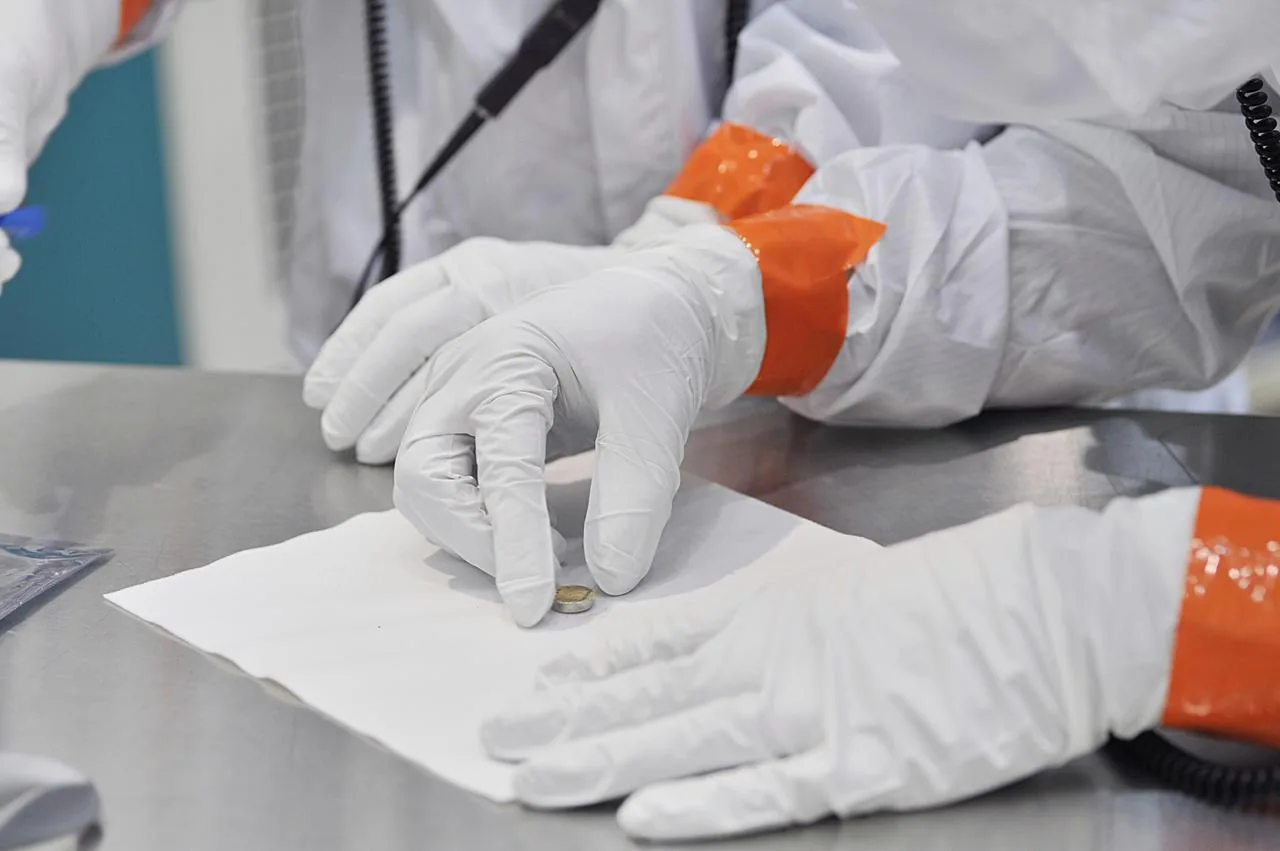
The Ryugu samples -- just 5.4 grams of pristine asteroid material -- have yielded discoveries that continue to reshape our understanding of the solar system's origins. Scientists have found amino acids, the building blocks of life, in the samples. They have identified water-bearing minerals that suggest asteroids like Ryugu may have delivered water to the early Earth. The samples contain organic molecules, carbon-rich compounds, and materials that predate the formation of the Sun itself.
Hayabusa2's success was not just scientific. It demonstrated Japan's mastery of deep-space navigation, autonomous spacecraft operations, sample collection in microgravity, and precision Earth return. The spacecraft itself is still operating and is now en route to a flyby of asteroid 2001 CC21 in 2026, followed by a rendezvous with asteroid 1998 KY26 in 2031 -- an extended mission that exemplifies the durability and versatility of Japanese spacecraft engineering.
ispace: Betting on the Lunar Economy
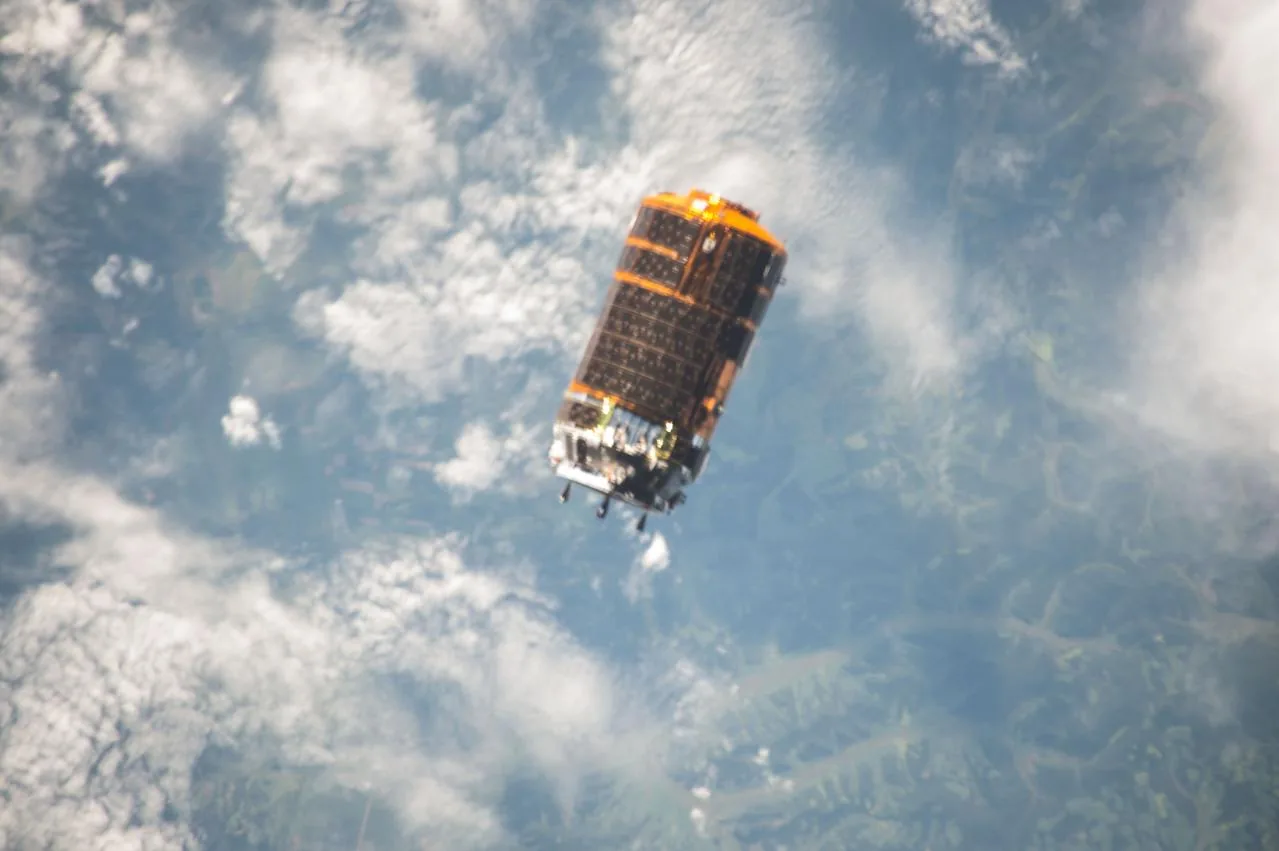
Japan's commercial space ambitions are embodied most dramatically by ispace, a Tokyo-based company that is building the infrastructure for a lunar economy. Founded in 2010 by Takeshi Hakamada, ispace grew out of the Google Lunar XPRIZE competition, where its HAKUTO team was one of the finalists.
ispace's HAKUTO-R program aims to provide commercial lunar transportation services -- delivering payloads to the Moon's surface for government agencies, research institutions, and private companies. Mission 1, launched in December 2022 aboard a SpaceX Falcon 9, successfully entered lunar orbit but crashed during its landing attempt on April 25, 2023, when a software error caused the lander to miscalculate its altitude over a crater rim. The lander believed it was still descending when it had already passed ground level, ran out of fuel, and impacted the surface.
The failure, while disappointing, provided invaluable data. ispace quickly identified the software issue, and the company's transparent communication about what went wrong earned respect across the industry. Mission 2, featuring an upgraded lander with corrected software and improved sensors, is scheduled for launch, representing Japan's next attempt at a commercial lunar landing. ispace has also begun developing its Series 2 lander, a larger vehicle capable of deploying a micro-rover on the lunar surface.
ispace is publicly listed on the Tokyo Stock Exchange and has raised substantial capital to fund its lunar ambitions. The company's business model is predicated on the belief that a lunar economy will emerge -- driven by scientific research, resource prospecting, and eventually resource utilization -- and that affordable, reliable transportation to the Moon's surface will be the critical enabling service. With NASA's Artemis program planning sustained lunar operations and multiple nations eyeing the Moon's south pole for its water ice deposits, ispace's bet may be well-timed.
Astroscale: Cleaning Up Space
While other companies are building rockets and landers, Tokyo-based Astroscale is tackling a problem that threatens the entire space industry: orbital debris. Founded in 2013 by Nobu Okada, Astroscale has positioned itself as the world leader in on-orbit servicing and debris removal, and its progress has been genuinely impressive.
In 2024, Astroscale's ADRAS-J (Active Debris Removal by Astroscale-Japan) mission achieved a historic first: it successfully rendezvoused with and conducted close-proximity observations of an actual piece of space debris -- a spent Japanese H-IIA rocket upper stage that had been tumbling in orbit since 2009. The spacecraft approached the debris object, characterized its tumbling motion and physical condition, and captured detailed images from distances as close as a few hundred meters.
This might sound straightforward, but it is extraordinarily difficult. The debris object is not cooperative -- it has no transponder, no docking port, no attitude control. It is a large, irregularly shaped piece of metal tumbling unpredictably in the vacuum of space. Approaching it safely, without creating more debris in the process, requires precise navigation, real-time decision-making, and sensors capable of tracking a non-cooperative target. ADRAS-J demonstrated all of these capabilities.
Astroscale is now working toward the actual capture and deorbiting of debris objects. The company has raised over $400 million in total funding from investors worldwide, and it has secured contracts with JAXA, the European Space Agency, and the UK Space Agency. With an estimated 36,000 objects larger than 10 centimeters orbiting Earth, and millions of smaller but still dangerous fragments, the debris removal market is not speculative -- it is a necessity. Astroscale's early mover advantage in this space could prove to be enormously valuable.
Synspective and the SAR Revolution
Synspective, founded in 2018, is building a constellation of synthetic aperture radar (SAR) satellites that can image the Earth's surface in any weather, day or night. Unlike optical satellites that are blinded by clouds and darkness, SAR satellites emit their own radar pulses and analyze the returns, producing high-resolution images regardless of atmospheric conditions.
Synspective's StriX satellites are compact, lightweight SAR platforms designed for constellation deployment. The company plans to build a fleet of approximately 30 satellites providing frequent-revisit coverage of key regions, with data products targeting disaster response, infrastructure monitoring, urban planning, and maritime surveillance. Synspective has launched multiple demonstration satellites and has raised over $200 million in funding, making it one of the best-capitalized commercial satellite companies in Japan.
The Artemis Partnership and LUPEX
Japan's space strategy extends well beyond its borders. Japan is one of the original signatories of the Artemis Accords and a key NASA partner in the Artemis program for sustained lunar exploration. JAXA is contributing critical hardware to the Artemis effort, including components for the Gateway lunar orbital station and pressurized rover systems for crewed lunar surface operations.
Perhaps most intriguingly, JAXA is partnering with ISRO on LUPEX -- the Lunar Polar Exploration mission. This joint Japanese-Indian mission will send a rover to the Moon's south polar region to investigate the presence, quantity, and accessibility of water ice. JAXA is providing the rover, while ISRO is providing the lander. LUPEX represents a fascinating convergence of two of Asia's most capable space agencies, combining Japan's robotic expertise with India's demonstrated lunar landing capability.
The Quiet Powerhouse
Japan's space program does not generate the breathless media coverage of SpaceX launches or the geopolitical anxiety of China's rapid expansion. It operates with a characteristically Japanese combination of technical excellence, long-term strategic thinking, and institutional patience. The $4.5 billion annual budget is spent with extraordinary efficiency.
From pinpoint lunar landings to asteroid sample return, from the world's leading debris removal company to commercial lunar transportation ventures, Japan's space ecosystem is delivering results that matter. And with the H3 rocket now operational, a growing constellation of commercial satellite companies, and deep partnerships in the Artemis program, Japan is positioned not just as a participant in the new space era but as one of its most capable and consequential players. The quiet powerhouse is getting louder.