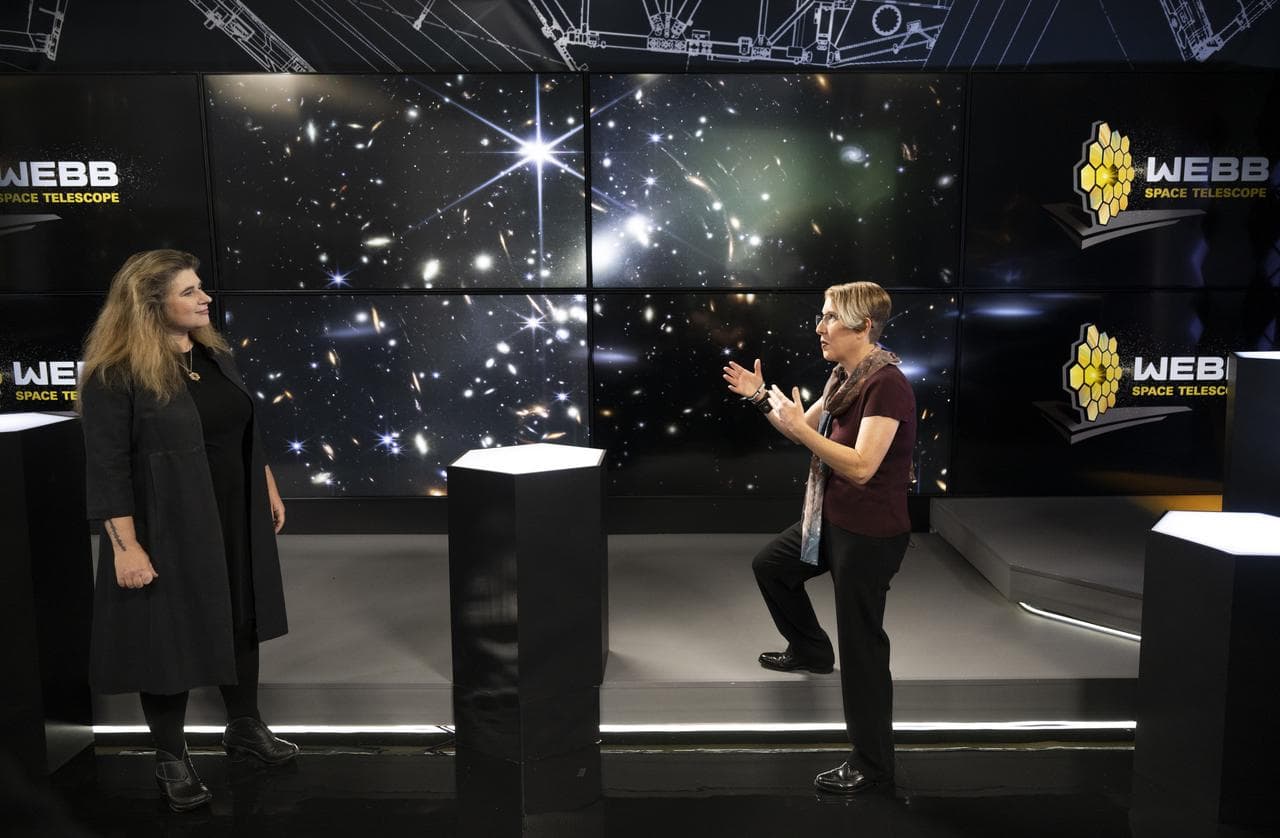
On April 22, 2026, NASA confirmed that its Nancy Grace Roman Space Telescope — the most powerful wide-field infrared observatory ever built — is scheduled to launch in early September 2026. The announcement caps a nearly two-decade development journey and places Roman at the center of a new era of cosmic cartography. Where the James Webb Space Telescope peers deep into a narrow slice of the universe, Roman will paint the entire sky in breathtaking detail, answering questions about dark energy, dark matter, and whether planets like Earth are common across the cosmos.
This is the definitive guide to what Roman is, what it will do, and why it may be the most scientifically productive NASA telescope of the 21st century.
What Is the Nancy Grace Roman Space Telescope?

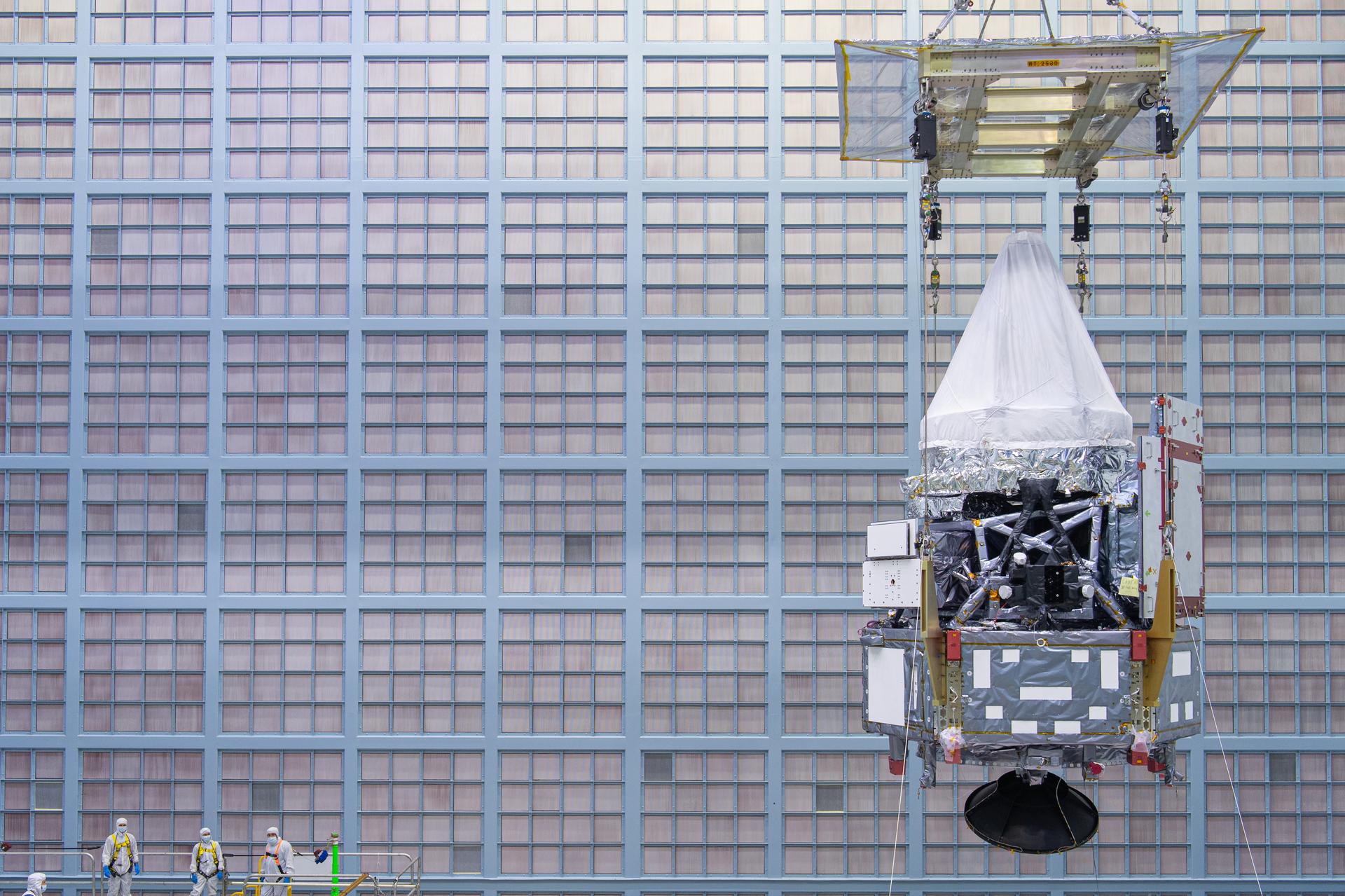
The Roman Space Telescope (formally the Wide Field Infrared Survey Telescope, or WFIRST, before its 2020 renaming) is a 2.4-meter primary mirror observatory designed to conduct wide-area surveys of the sky in near-infrared light. Its heritage is unusual: the mirror and telescope tube were donated to NASA by a U.S. intelligence agency — the same optical design used in classified reconnaissance satellites — giving Roman Hubble-class resolution at essentially zero mirror cost.
The telescope is named after Dr. Nancy Grace Roman, NASA's first Chief of Astronomy, who served from 1959 to 1979 and is widely known as the "Mother of Hubble" for her foundational work in making space-based astronomy a national priority. Roman did not live to see her namesake mission complete construction; she passed away in December 2018 at age 93, but her legacy will orbit the Sun for decades.
Roman will operate at the Sun-Earth L2 Lagrange point, approximately 1.5 million kilometers from Earth — the same orbital neighborhood occupied by the James Webb Space Telescope. This location provides stable thermal conditions and a permanent view of the sky away from the Sun.
The Wide Field Instrument: 100 Times the View of Hubble
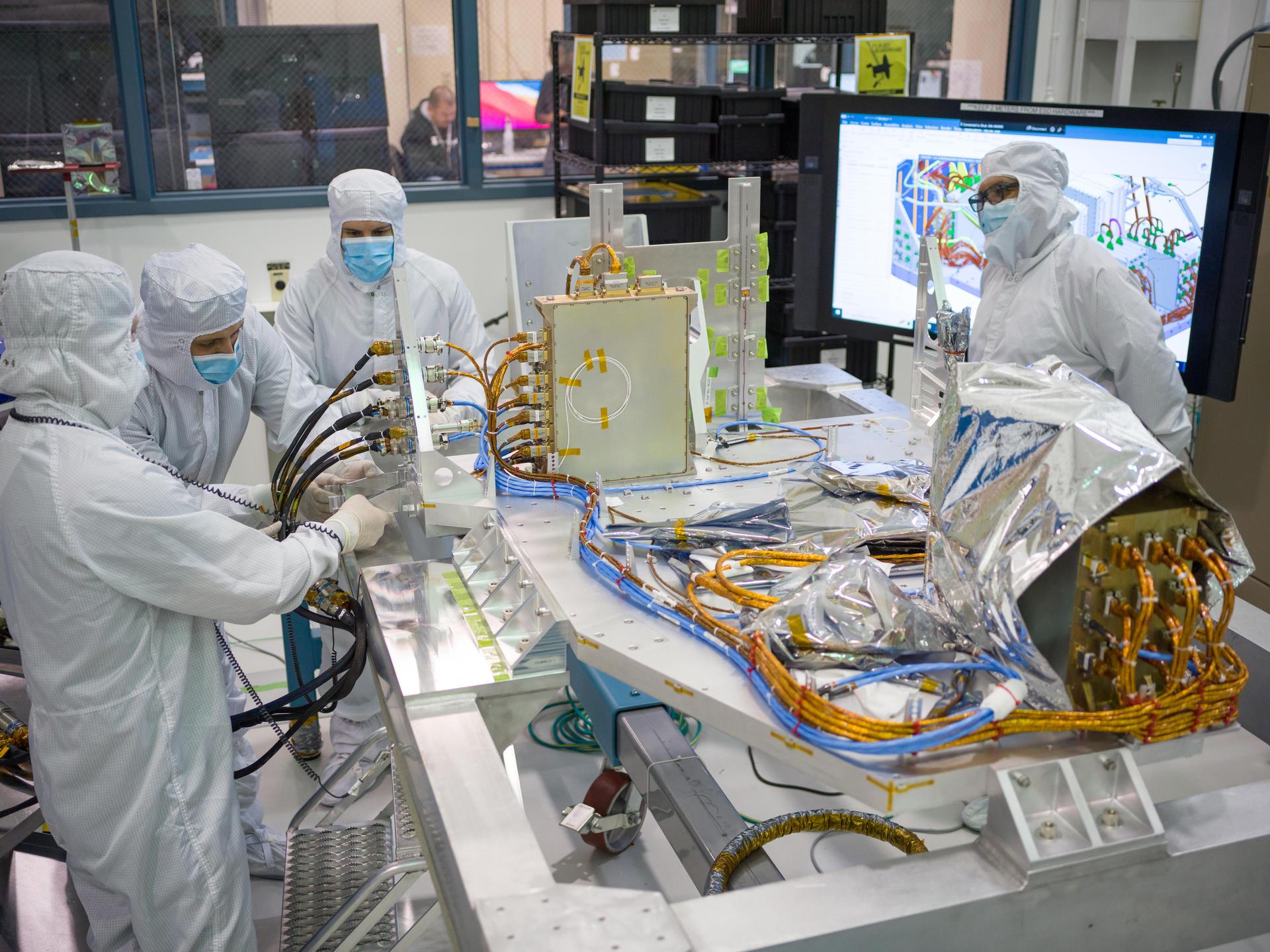
Roman's primary science instrument is the Wide Field Instrument (WFI), and its capabilities are staggering. A single WFI exposure covers 0.28 square degrees of sky — an area roughly equivalent to 100 full-moon widths placed side by side. By comparison, Hubble's Advanced Camera for Surveys covers just 0.003 square degrees per image. Roman can therefore survey the entire sky to Hubble-like depth in a fraction of the time.
The WFI contains 18 Teledyne H4RG-10 infrared detector arrays arranged in a 4×6 mosaic, producing images of 300 megapixels with a resolution of 0.11 arcseconds per pixel. This combination of area, depth, and sharpness is unprecedented. In a six-month High Latitude Wide Area Survey, Roman will image two billion galaxies — more than any observatory in history — creating the most detailed three-dimensional map of the large-scale structure of the universe ever assembled.
The WFI operates across wavelengths from 0.5 to 2.3 microns (visible light through near-infrared), capturing the red-shifted light of galaxies billions of light-years away with the same clarity that Hubble shows nearby objects.
The Dark Energy Mission: Mapping the Invisible

Dark energy — the mysterious force driving the accelerating expansion of the universe — accounts for approximately 68 percent of all the energy in the cosmos, yet its nature remains one of the deepest unsolved problems in physics. Roman's primary scientific goal is to characterize dark energy with unprecedented precision.
Roman will pursue this goal through three complementary techniques:
Weak Gravitational Lensing measures the subtle distortion of galaxy shapes caused by dark matter along the line of sight. By analyzing the shapes of two billion galaxies across the sky, Roman's WFI will detect patterns invisible to any individual distortion, building a statistical map of dark matter's distribution through cosmic time. This technique requires both Roman's extraordinary field of view and its exquisite image sharpness — the galaxy shapes must be measured to tiny fractions of their apparent diameters.
Baryon Acoustic Oscillations (BAO) exploit regular patterns in the large-scale distribution of galaxies — acoustic waves frozen into the cosmic structure when the universe was 380,000 years old — as a "standard ruler" for measuring cosmic distances. Roman will measure BAO patterns at multiple cosmic epochs, tracking how the universe's expansion rate has changed over time and constraining the properties of dark energy with roughly four times the precision of existing surveys.
Type Ia Supernovae are stellar explosions that serve as "standard candles" for distance measurement. Roman will discover tens of thousands of supernovae per year during its High Latitude Time Domain Survey, extending the cosmic distance ladder to redshifts well beyond what has been accessible before. These measurements will directly probe whether dark energy varies with time — a key test of whether Einstein's cosmological constant or something stranger governs the universe's fate.
Together, these three approaches will reduce uncertainties in dark energy parameters by roughly an order of magnitude compared to current knowledge, potentially distinguishing between the cosmological constant and dynamical dark energy models at the level of statistical significance needed to guide theoretical physics.
Exoplanets: The Coronagraph Revolution
Beyond its survey science, Roman carries a second instrument with transformative implications for the search for life: the Coronagraph Instrument.
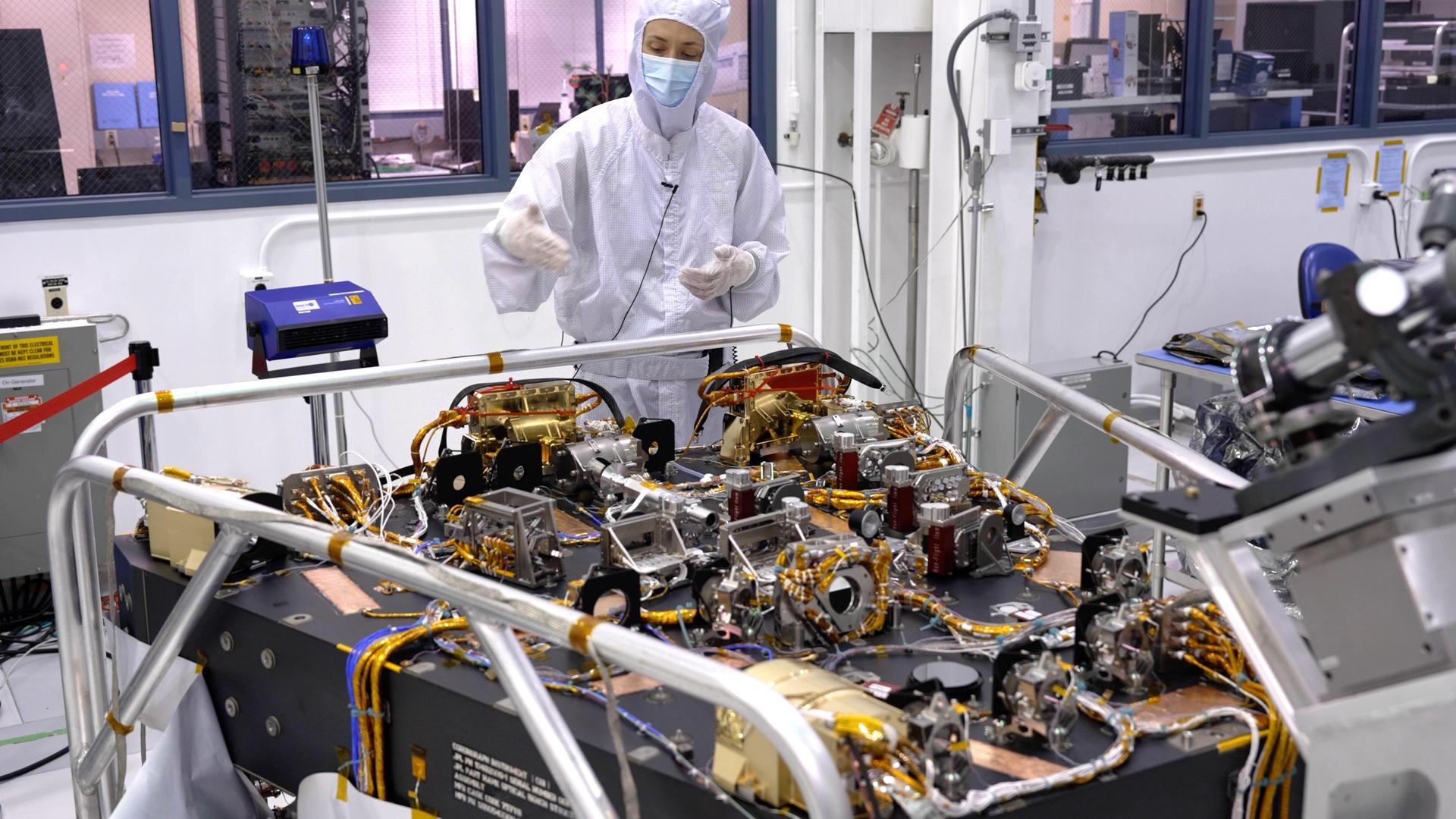
The Roman Coronagraph is a technology demonstration designed to directly image planets orbiting nearby stars. Detecting an exoplanet by direct imaging is extraordinarily difficult: the planet is typically a billion times fainter than its host star, separated by the same apparent angle as seeing a firefly next to a lighthouse from kilometers away. The Coronagraph suppresses the starlight by a factor of one billion using a combination of specialized masks, deformable mirrors, and advanced optical algorithms — a technique called "digging the dark hole."
In operation, the Coronagraph will be able to image giant planets in the habitable zones of nearby stars and, critically, analyze their reflected light spectra to identify atmospheric molecules including water vapor and methane. While the Roman Coronagraph is a technology demonstration rather than a full science instrument, it will achieve contrasts 100 to 1,000 times better than any currently operating coronagraph, demonstrating the technology needed for a future mission capable of directly detecting Earth-like planets.
The Coronagraph team at NASA's Jet Propulsion Laboratory in Pasadena, California, has been testing and calibrating the instrument for years. The device was shipped from JPL to Goddard Space Flight Center in May 2024 and integrated with the rest of the observatory, where the combined spacecraft has since been undergoing final testing.
Beyond the Coronagraph, Roman's Wide Field Instrument will discover approximately 100,000 transiting exoplanets during its Galactic Bulge Time Domain Survey — observing millions of stars toward the center of the Milky Way and detecting the tiny, regular dips in starlight caused by planets crossing in front of their host stars. Crucially, Roman can detect planets as small as Mars in orbits beyond Earth's distance from the Sun, a population almost completely inaccessible to Kepler or TESS. This "cold small planet" census is essential for understanding how planetary systems form and how common Earth analogues truly are.
Roman and Webb: A Perfect Partnership
A common question is how the Nancy Grace Roman Space Telescope relates to the James Webb Space Telescope. The answer is that they are profoundly complementary, not redundant.
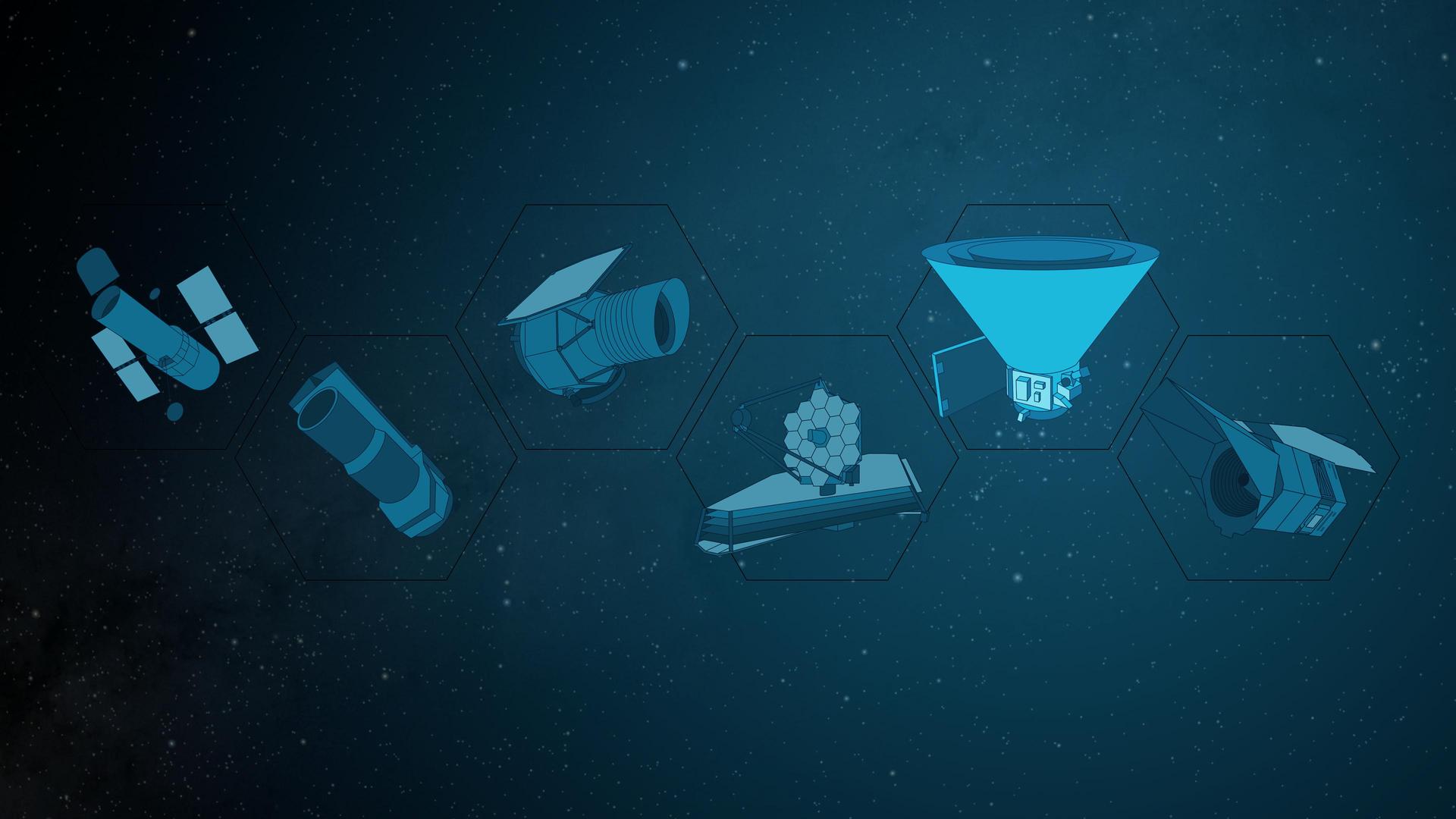
James Webb stares deeply at tiny patches of sky — individual galaxy clusters, the atmospheres of specific known exoplanets, the early universe at a single cosmic epoch. Its strength is extraordinary sensitivity and spectroscopic depth in a limited field. Roman, by contrast, sweeps vast areas of sky and provides the statistical samples that Webb can then zoom in on. Roman will discover thousands of the most interesting targets — rare galaxies, transient events, promising exoplanet systems — that Webb can then study in exquisite detail.
The two observatories will even work together physically: when Roman conducts its Galactic Bulge surveys and its deep galaxy surveys, the resulting catalogs will serve as an atlas for JWST observers. Astronomers already plan dedicated follow-up programs in which Roman discoveries trigger JWST observations within days, creating a rapid-response system for cosmic exploration that has never existed before.
The Woman Behind the Name
Any serious discussion of the Roman Space Telescope must acknowledge Nancy Grace Roman herself. Born in Nashville, Tennessee, in 1925, Roman showed extraordinary aptitude for mathematics and science from childhood. When she was 11, she organized a school astronomy club for other girls. After completing her Ph.D. in astronomy at the University of Chicago in 1949, she spent years navigating a field and an era deeply hostile to women in science.
Roman joined NASA in 1959 — before the first American astronaut flew — as one of the agency's first female executives. In an era of rockets and Moon shots, she made the case that space-based telescopes would transform astronomy, and she championed the early planning work that ultimately led to the Hubble Space Telescope. She helped design the funding architecture, managed the early technical studies, and built the scientific community consensus that made Hubble politically viable.
She received honorary doctorates from seven universities and the NASA Distinguished Service Medal, but was largely unknown outside the astronomy community until late in her life. The decision to name the new observatory after her, announced in 2020, was widely praised as overdue recognition of a scientist whose impact on NASA rivaled that of far more famous figures.
Why Roman Could Rewrite Cosmology
The scale of Roman's anticipated output is difficult to overstate. In a five-year primary mission — with a design goal of ten years — it will:
- Map the shapes of two billion galaxies across cosmic time
- Measure distances to tens of thousands of supernovae across the universe's history
- Discover approximately 100,000 transiting exoplanets including cold super-Earths
- Conduct the first coronagraphic direct imaging of gas-giant exoplanets from space
- Identify thousands of Kuiper Belt objects in our own solar system
- Create time-lapse movies of the changing sky, detecting transient events including gravitational wave counterparts
The resulting datasets — public, available to all researchers worldwide — will fuel astronomical research for decades. The Roman Space Telescope Data Management Center will handle an estimated 20 terabytes of raw data per day, more than any previous NASA astrophysics mission.
Launch, Orbit, and What Happens Next
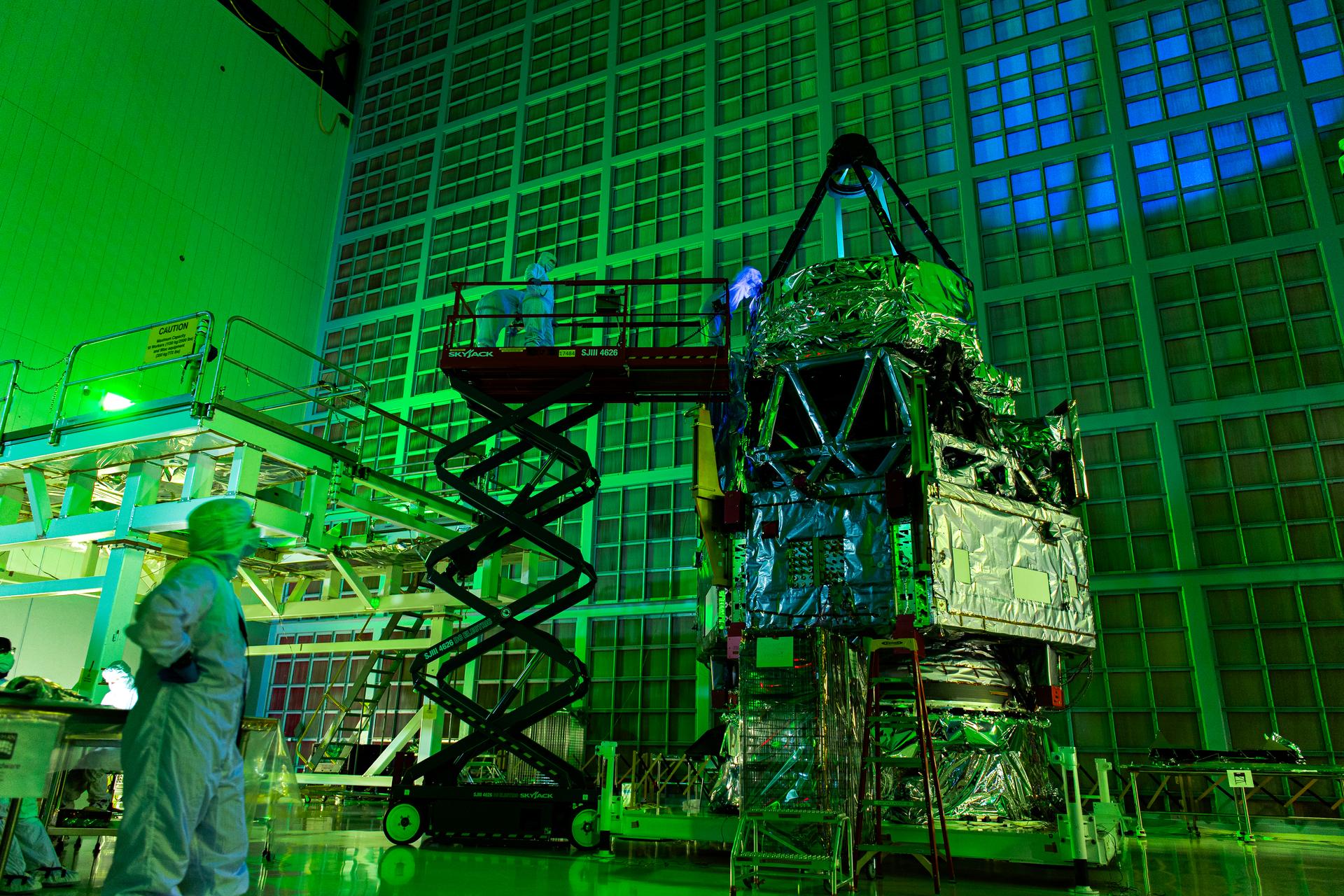
The Roman Space Telescope will launch on a United Launch Alliance Falcon Heavy or equivalent vehicle from Kennedy Space Center, Florida, in early September 2026. Following a 30-day transit to the L2 point, the observatory will spend approximately six months commissioning its instruments and verifying performance. Science operations are expected to begin in early 2027.
Unlike James Webb, Roman does not require a complex unfolding sequence — its mirror is already at full aperture and rigid, simplifying the commissioning process considerably. The Coronagraph will be commissioned separately over approximately three months, with technology demonstration results expected by mid-2027.
NASA has committed to making all Roman data publicly available with no proprietary period — a deliberate policy choice to maximize scientific return and international collaboration. ESA, JAXA, and a consortium of European institutions are all involved in Roman science, and the mission's data archive will be accessible to astronomers worldwide on the day of release.
Why 2026 Is the Right Moment to Pay Attention
The Roman Space Telescope has been in development since 2010 — a timeline typical of flagship NASA observatories. For much of that time, it was a future mission: something astronomers knew was coming but could not yet act on. That changes in September 2026.
When Roman opens its eyes at L2, the pace of discovery in cosmology and planetary science will accelerate dramatically. The fundamental questions it is designed to answer — what is dark energy, how common are Earth-like planets, what is the large-scale structure of the universe — are not peripheral scientific puzzles. They are among the deepest questions humanity has ever asked. Roman is the machine built to answer them.
For anyone who has followed the James Webb Space Telescope and been awed by its early images, Roman represents the next chapter: not the deep stare at a single galaxy, but the sweeping view of the entire cosmic landscape.
The universe is about to become a great deal more legible.