There is something profoundly moving about the idea that we build machines, launch them into the void, and use them to look back in time. Space telescopes are, in every meaningful sense, time machines -- instruments that collect ancient light and translate it into understanding. And over the past three and a half decades, a handful of these extraordinary observatories have reshaped not just astronomy, but our very sense of what the universe is and where we fit within it.
Let me walk you through the telescopes that changed everything, and the ones that are about to do it again.
The Hubble Space Telescope: 34 Years and Still Going Strong
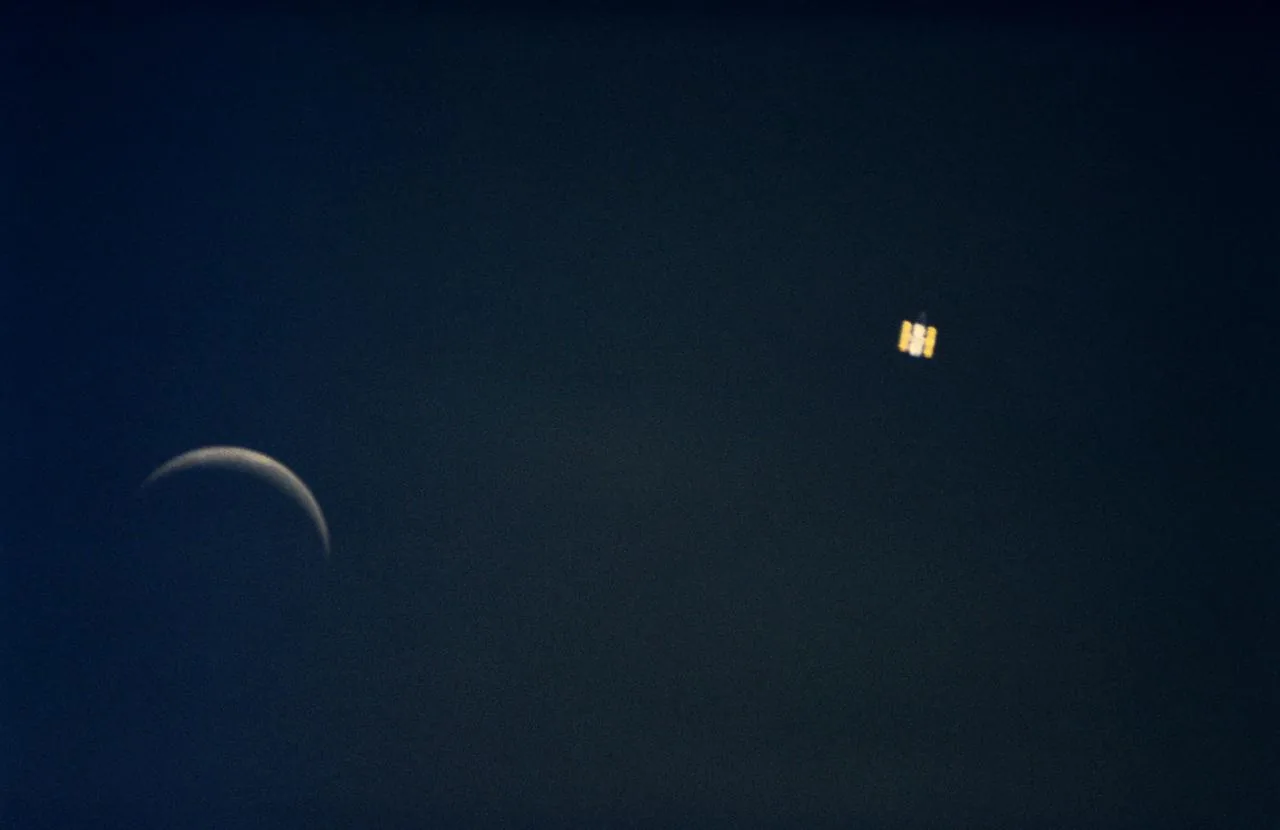
Launched on April 24, 1990, the Hubble Space Telescope was supposed to be a 15-year mission. It is now well past its 34th birthday, and it is still delivering science that makes headlines. That alone should tell you something about the quality of engineering and the sheer stubbornness of the teams that keep it running.
Hubble's 2.4-meter primary mirror, stationed 547 kilometers above Earth's atmosphere, produces images of breathtaking clarity. Its contributions to astronomy are almost too numerous to catalog: it refined our measurement of the Hubble Constant (the rate at which the universe expands), captured the iconic Deep Field images that revealed thousands of galaxies hiding in a patch of sky no bigger than a grain of sand held at arm's length, and documented everything from the collision of Comet Shoemaker-Levy 9 with Jupiter in 1994 to the atmospheric composition of exoplanets orbiting distant stars.
What amazes me most is that Hubble continues to complement the James Webb Space Telescope rather than being replaced by it. Hubble excels in ultraviolet and visible light observations -- wavelengths that JWST was not designed to capture. In 2024, Hubble was still producing valuable data on galaxy evolution, stellar nurseries, and planetary atmospheres. NASA has indicated that barring hardware failure, Hubble could remain operational into the late 2020s or even the 2030s. For a telescope that needed corrective optics installed by spacewalking astronauts just three years after launch, that is a remarkable legacy.
The Kepler Space Telescope: The Planet Hunter That Rewrote the Textbooks
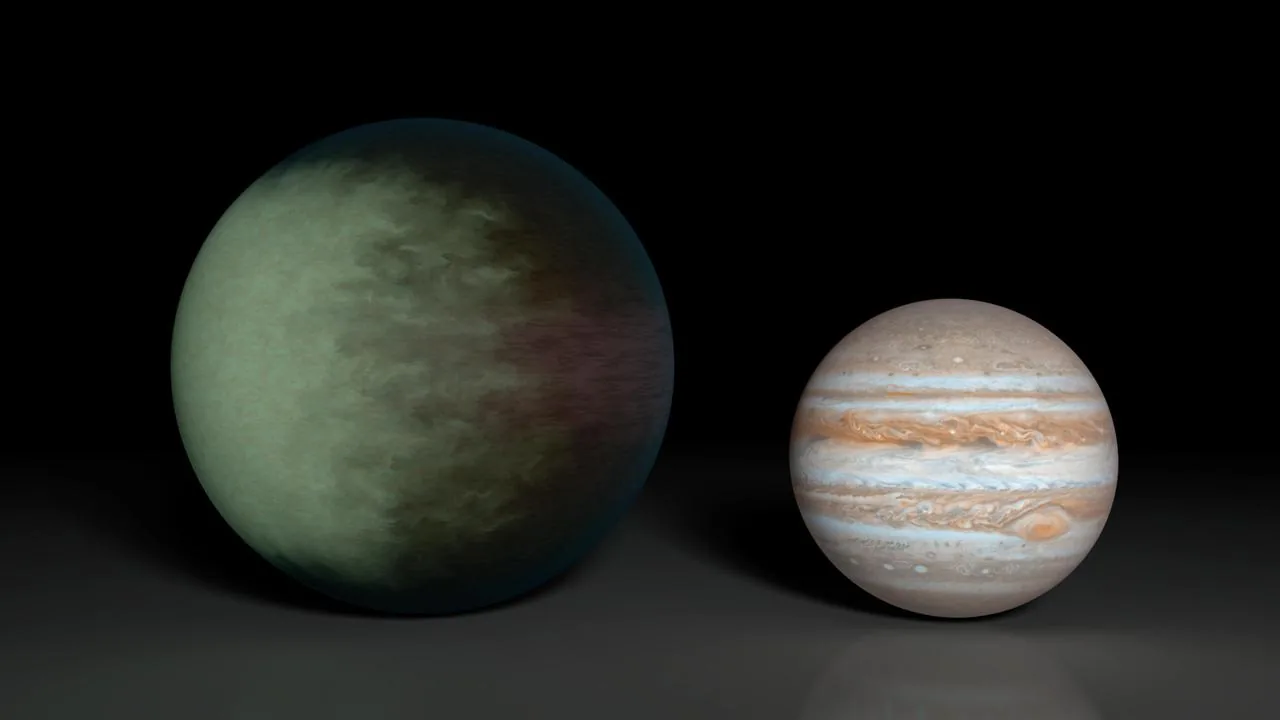
When Kepler launched on March 7, 2009, we knew of roughly 300 exoplanets. By the time the mission officially ended in 2018, Kepler had confirmed over 2,700 exoplanets and identified thousands more candidates, many of which have since been verified. The current total of confirmed exoplanets stands at over 5,600 as of early 2025, and a substantial fraction of those trace their discovery back to Kepler's patient, precise photometric measurements.
Kepler worked by staring at a single patch of sky containing about 150,000 stars and watching for the tiny, periodic dips in brightness caused when a planet crosses in front of its host star -- the transit method. Simple in concept, revolutionary in execution.
The telescope's most profound contribution was not any single planet discovery, but a statistical one: Kepler proved that planets are not rare. They are everywhere. On average, every star in our galaxy hosts at least one planet. Some systems, like TRAPPIST-1, host seven. The galaxy contains more planets than stars -- a staggering thought that was speculative before Kepler and settled science after it.
Notable discoveries include Kepler-452b, a near-Earth-sized world orbiting a Sun-like star in the habitable zone, and the remarkable Kepler-16b, which orbits two stars like a real-life Tatooine. Kepler's extended K2 mission continued discovering planets until the spacecraft ran out of fuel in October 2018, but its data continues to yield new findings years later.
The James Webb Space Telescope: Rewriting Astronomy in Real Time
I want to be honest about something: the James Webb Space Telescope has exceeded every expectation I had, and I had high expectations. Since beginning science operations in mid-2022, JWST has produced discovery after discovery at a pace that has left the astronomical community scrambling to keep up.
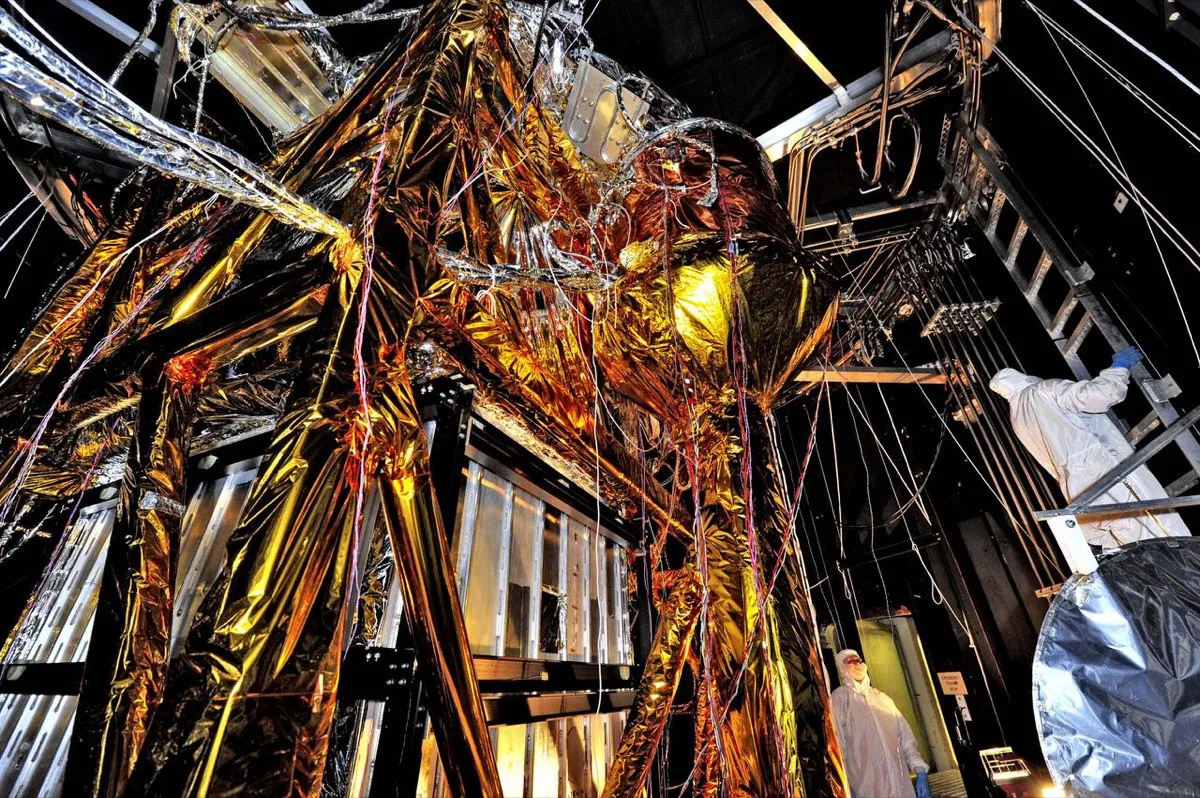
JWST is a collaboration between NASA, the European Space Agency, and the Canadian Space Agency. Its 6.5-meter gold-coated primary mirror -- nearly three times the diameter of Hubble's -- collects infrared light with extraordinary sensitivity from its orbit at the L2 Lagrange point, 1.5 million kilometers from Earth. Its four instruments (NIRCam, NIRSpec, MIRI, and NIRISS) allow it to peer through cosmic dust, analyze the chemical fingerprints of distant atmospheres, and observe objects so far away that their light has been traveling for over 13 billion years.
The Earliest Galaxies
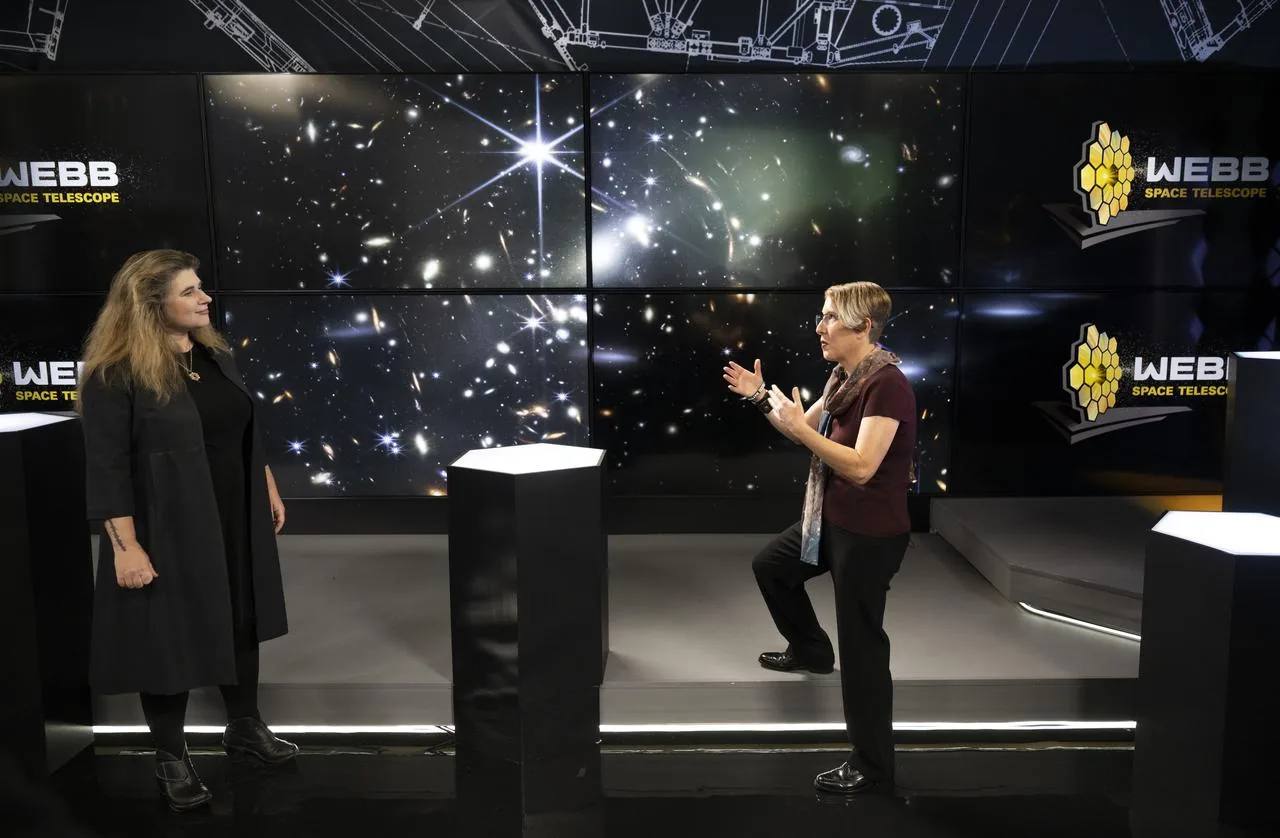
One of JWST's most startling results has been the detection of galaxies that formed astonishingly early in cosmic history. Using NIRCam deep field observations, astronomers identified galaxies existing just 300 to 400 million years after the Big Bang -- far earlier than theoretical models predicted. These galaxies appear surprisingly bright and well-structured for their age, challenging existing models of galaxy formation and forcing theorists to rethink how quickly the first stars and galaxies could have assembled from primordial gas. The JADES (JWST Advanced Deep Extragalactic Survey) program confirmed several of these ultra-distant galaxies through spectroscopic verification, with one candidate, JADES-GS-z14-0, observed at a redshift of approximately 14, placing it among the most distant objects ever confirmed.
Exoplanet Atmospheres Like Never Before
JWST's ability to characterize exoplanet atmospheres has been nothing short of transformative. Using its MIRI (Mid-Infrared Instrument) and NIRSpec (Near-Infrared Spectrograph), the telescope has detected carbon dioxide in the atmosphere of WASP-39b, mapped weather patterns on gas giants, and identified water vapor, methane, and sulfur dioxide in various exoplanet atmospheres with unprecedented precision.
Perhaps the most tantalizing result came from observations of K2-18b, a sub-Neptune exoplanet orbiting in its star's habitable zone roughly 120 light-years away. In 2023, JWST detected carbon dioxide and methane in K2-18b's atmosphere, along with a tentative signal of dimethyl sulfide (DMS) -- a molecule that on Earth is produced almost exclusively by living organisms, primarily marine phytoplankton. I want to be careful here: the DMS detection remains tentative and requires further observations to confirm. But even the possibility has electrified the astrobiology community. Follow-up observations were scheduled through 2024 and into 2025, and the scientific world is watching closely.
Stellar Nurseries and Cosmic Chemistry
JWST has also peered deep into stellar nurseries like the Carina Nebula, the Orion Nebula, and the Pillars of Creation, revealing intricate structures of gas and dust where new stars and planetary systems are being born. The level of detail is extraordinary -- we can now see individual protostars still embedded in their birth clouds, along with the jets and outflows that accompany the earliest stages of star formation.
Looking Ahead: Euclid and the Nancy Grace Roman Space Telescope
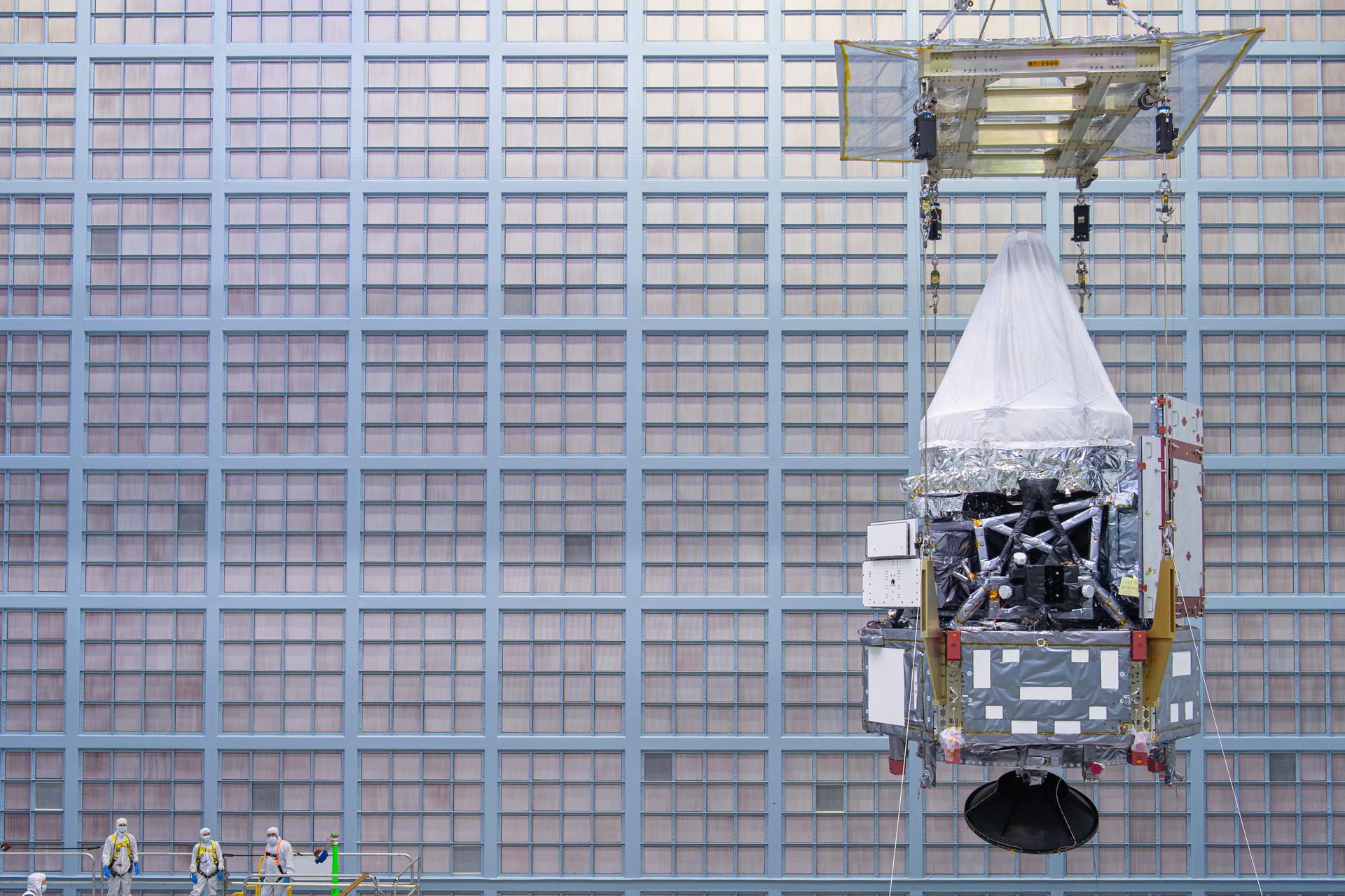
The telescope revolution is far from over. ESA's Euclid space telescope, launched in July 2023, is now conducting a massive survey of the sky designed to map the distribution of dark matter and measure the effects of dark energy across cosmic time. Euclid will observe billions of galaxies out to a distance of 10 billion light-years, creating the most comprehensive three-dimensional map of the large-scale structure of the universe ever assembled. Early results released in 2024 have already demonstrated Euclid's exceptional imaging quality and its potential to transform our understanding of the universe's dark sector.
NASA's Nancy Grace Roman Space Telescope, scheduled for launch in 2027, will carry a field of view 100 times larger than Hubble's, enabling wide-area surveys of unprecedented depth. Roman will conduct a massive census of exoplanets using gravitational microlensing, study dark energy through observations of distant supernovae and large-scale cosmic structure, and provide a sweeping panoramic view of the infrared universe that will complement JWST's targeted deep observations.
A Golden Age of Discovery
We are living through a golden age of space astronomy. Hubble, at 34 years old, continues to produce vital science. Kepler's legacy grows as its data continues to yield new discoveries. JWST is rewriting textbooks in real time. Euclid is mapping the invisible architecture of the cosmos. And Roman is on the horizon, ready to survey the sky at a scale we have never achieved before.
Every photon these telescopes collect carries information from across time and space -- the chemical composition of a distant atmosphere, the structure of a galaxy that formed when the universe was young, the fingerprint of a molecule that might, just possibly, hint at biology on another world. We built these instruments, launched them beyond our atmosphere, and aimed them at the unknown. What they have shown us is that the universe is stranger, richer, and more full of possibility than we ever imagined. And we are only getting started.