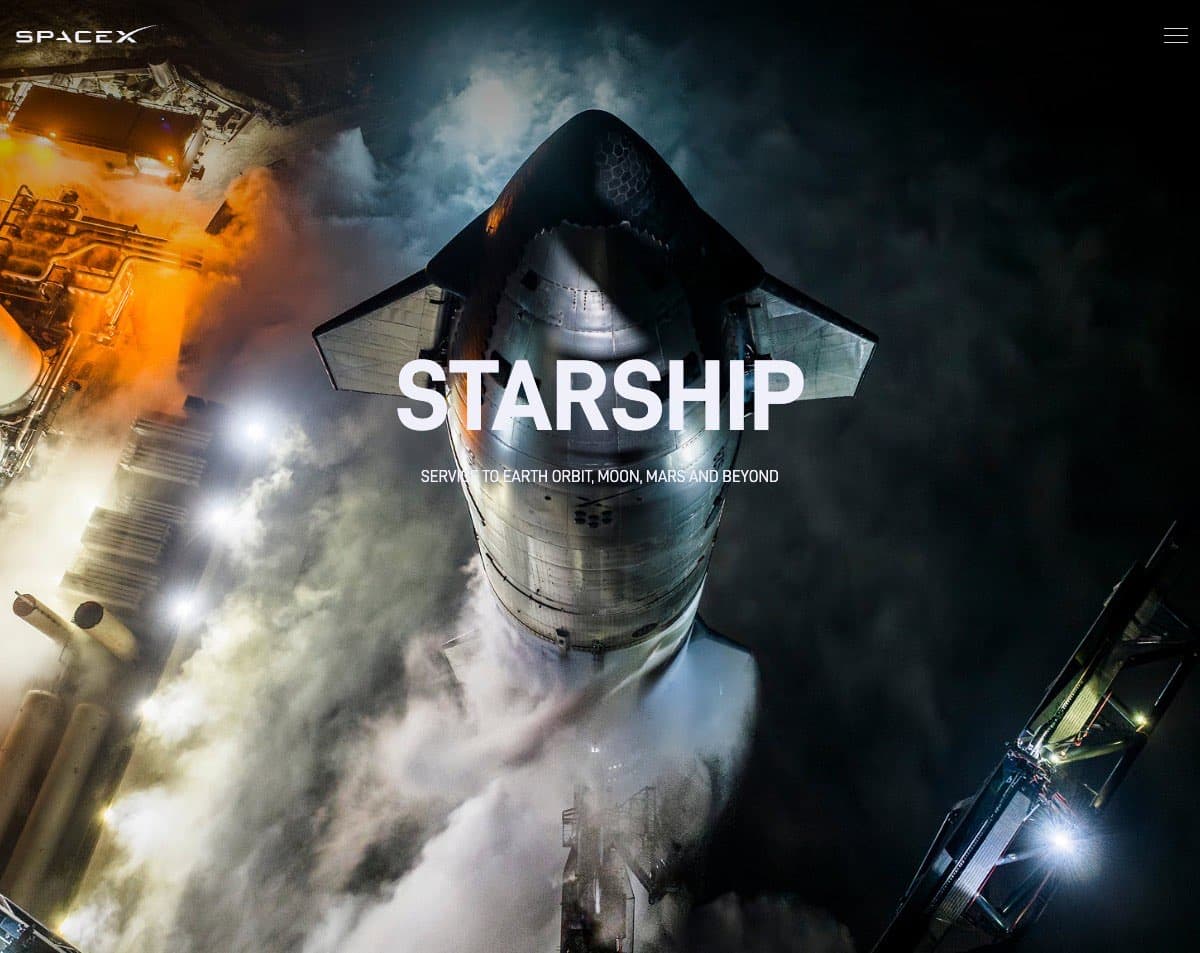
On October 13, 2024, a 71-meter-tall rocket booster fell back toward the Earth at several hundred meters per second, aimed at a pair of mechanical arms attached to a launch tower in South Texas. The arms caught it. The entire space industry exhaled at once, then started typing. Mechazilla — the tower-mounted catch system SpaceX calls "Mechazilla" internally — had worked on the first attempt, and nothing in rocketry would ever quite look the same again.
That moment, IFT-5, was not the end of Starship's development. It was the hinge point where the program stopped being a spectacular experiment and started becoming — slowly, painstakingly — something that resembles an operational system. Subsequent flights (IFT-8 in March 2025 and IFT-9 in May 2025) encountered new technical challenges — a Raptor engine failure and a methane leak respectively — reinforcing that the road to "operational" is still being traveled. The question now isn't whether Starship works. The question is how many more problems must be solved, and when.
The Test Flight History That Got Us Here
Understanding where Starship is going requires understanding how far it has already traveled. The program has been defined by a series of integrated flight tests that, cumulatively, represent one of the fastest iterative development cycles in the history of large rockets.
| Flight | Date | Key Outcome |
|---|---|---|
| IFT-1 | April 2023 | Cleared the pad; vehicle broke apart at ~39 km during ascent |
| IFT-2 | November 2023 | Stage separation achieved; both vehicles destroyed in flight |
| IFT-3 | March 2024 | Full-stack reentry; Ship survived until near-splashdown zone |
| IFT-4 | June 2024 | Ship survived reentry and achieved controlled splashdown in Indian Ocean |
| IFT-5 | October 2024 | Booster caught by Mechazilla arms; Ship splashed down intact |
| IFT-6 | November 2024 | Second booster catch; Ship executed precision reentry profile |
| IFT-7 | Early 2025 | Refined catches; Ship payload bay door deployment test conducted |
| IFT-8 | March 2025 | Booster caught by Mechazilla; Ship lost to Raptor engine failure before orbit (FAA investigation closed June 2025) |
| IFT-9 | May 2025 | First booster reflight (B14); Ship reached orbit but lost attitude control due to methane leak, disintegrated on reentry |
Each of those failures was a data point, not a defeat. SpaceX operates under a "test to failure" philosophy that treats an explosion during an uncrewed prototype test as cheap information compared to discovering the same failure mode during an operational mission. IFT-1's pad damage from insufficient flame trench design led directly to the rapid construction of a steel plate water-cooled system that solved the problem before IFT-2. IFT-2's stage separation failure led to a new "hot staging" approach that actually increased performance by firing the upper stage's Raptor engines while the booster was still attached. The iteration cycles ran in months, not years.
IFT-7 represented the program's most polished performance to that point — refined catches, nominal vehicle behavior. Then IFT-8 (March 2025) and IFT-9 (May 2025) introduced new failure modes: a Raptor engine hardware failure destroyed the Ship before orbit on IFT-8, and while IFT-9 achieved the milestone of Ship reaching orbit for the first time, a methane leak caused the vehicle to lose attitude control and disintegrate on reentry. The program has not stalled, but the data make clear that Starship's path to reliability is not linear.
What "Operational" Does and Does Not Mean

The term "operational" applied to Starship requires significant qualification. In the commercial launch industry, operational means a vehicle has sufficient demonstrated reliability to carry paying payloads on routine missions. Falcon 9 is operational — it has flown over 300 times, maintained a near-perfect success record, and has a manifest stretching years into the future that customers trust it to meet.
Starship is not operational by that standard. As of mid-2025, after IFT-8 and IFT-9 both ended in vehicle losses, SpaceX is still working toward operational status. IFT-9 delivered the milestone of Ship reaching orbit for the first time — a genuine achievement — but the vehicle was subsequently lost when a methane leak in the autogenous pressurization system caused attitude control failure and uncontrolled reentry. It has not demonstrated its payload deployment mechanisms under operational conditions (Starlink simulators were aboard IFT-9 but could not be deployed before the vehicle was lost). It has not flown with a full propellant load for a maximum-energy mission. And crucially, it does not yet have the FAA launch license it would need for anything other than a test flight.
What has changed is more subtle but more important: the core vehicle architecture has been validated. The Raptor engines work. The thermal protection system — those hexagonal tiles covering the Ship's windward surface — can survive repeated hypersonic reentries. The Super Heavy booster can be caught rather than expended. The manufacturing at Starbase has advanced to the point where multiple vehicles exist in various stages of completion. The infrastructure is real.
The gap between "validated architecture" and "operational" is where SpaceX lives right now. Bridging it requires regulatory approvals, propellant transfer demonstrations, increased launch cadence, and payload integration work that has never been done at this scale before.
The Regulatory Landscape
The Federal Aviation Administration's Office of Commercial Space Transportation licenses every Starship launch from Boca Chica. Each IFT required a new or modified license, and the FAA process has been a consistent friction point — not because the agency is hostile to Starship, but because the program pushes the boundaries of what existing regulations were designed to evaluate.
The FAA must conduct Programmatic Environmental Assessments for launch sites, assess the risk posed by vehicle debris in failure scenarios, and determine whether SpaceX's mishap response plans are adequate. The cumulative nature of environmental review means that as Starship's planned launch cadence increases, the environmental footprint increases too — and reviews must account for that. Boca Chica's proximity to the Lower Rio Grande Valley National Wildlife Refuge has been a recurring point of contention in these reviews.
SpaceX has applied for an updated launch license that would allow significantly higher annual launch numbers from Boca Chica. That license, combined with the potential development of Launch Complex 49 at Kennedy Space Center in Florida as a second Starship launch site, is critical to SpaceX achieving the cadence it needs to make the economics of full reusability work.
What Comes Next: The Mission Queue
Starlink V3 Deployment Missions
Starlink's next generation — V3 satellites — are significantly larger than the V2 Mini satellites currently flying on Falcon 9 and the V2 full-size satellites launched by Falcon Heavy. They require Starship's 9-meter fairing diameter and high LEO payload capacity to fly at all. SpaceX cannot continue growing the Starlink constellation's capacity and performance without operational Starship.
The first Starlink V3 launch on Starship will be a watershed event: the first time Starship carries a revenue-generating commercial payload to orbit. The exact timing depends on vehicle certification and FAA licensing, but SpaceX has indicated these missions are a priority for 2025-2026. A successful Starlink V3 launch proves not just that Starship can reach orbit with a payload, but that it can do so reliably enough for SpaceX to bet its primary revenue stream on it.
Artemis HLS Demonstration
SpaceX's NASA HLS contract has specific milestones that must be met before Starship can serve as the Artemis III lunar landing system. The most technically demanding of these is the demonstration of orbital propellant transfer — loading the lunar Starship with methane and liquid oxygen from a depot vehicle in orbit. This demonstration must occur before NASA will certify Starship HLS for crewed lunar operations.
SpaceX has designed a dedicated propellant depot spacecraft — a modified Starship variant with enlarged propellant capacity and optimized transfer ports — that will serve as the receiving vehicle for tanker missions. Multiple cargo Starships must launch, deliver fuel, and the depot must then top off the HLS vehicle. The logistical complexity is immense: ISRU propellant transfer at scale has never been done, and doing it with cryogens (which boil off continuously in the warmth of low Earth orbit) adds another layer of engineering challenge.
NASA has said Starship HLS must demonstrate this capability before the Artemis III mission is cleared to proceed. The timeline pressure is real.
Commercial Crew and Dedicated Missions
The Polaris Program — a series of commercial human spaceflight missions funded by entrepreneur Jared Isaacman — includes a Starship mission in its roadmap, following the Polaris Dawn Falcon 9/Dragon mission that included the first commercial spacewalk in September 2024. A crewed Starship flight under the Polaris Program banner would represent the vehicle's first human spaceflight.
SpaceX has also received inquiries about point-to-point cargo and eventually passenger transport using Starship as an Earth-to-Earth rocket — the vision of flying from New York to Sydney in under an hour. Initial demonstrations of this concept would likely involve uncrewed cargo flights between launch sites on different continents, probably using ocean platforms as endpoints to avoid overland sonic boom and debris risk issues.
The Ship Catch: Why It Changes Everything
Catching the Super Heavy booster mid-air was spectacular theater. But catching the Ship — the upper stage — is where the economics of full reusability hinge. The booster is large, has multiple engines, and has been the focus of recovery engineering since early in the program. The Ship is different: it's the part that carries payloads, it experiences the brutal heating of atmospheric reentry, and it's the part that SpaceX most needs to fly again quickly.
Current plans call for catching Ship at the Mechazilla tower as well — not splashing it down in the ocean. An ocean splashdown, even a successful one, exposes the vehicle to saltwater ingestion in engine bells and thermal protection system degradation. A tower catch eliminates ocean recovery entirely, allowing SpaceX to inspect the vehicle, replace any damaged tiles, and reflush within days rather than weeks.
IFT-7 moved toward qualifying the Ship catch scenario by demonstrating the vehicle can achieve a precise approach profile. However, IFT-8 and IFT-9 — both of which resulted in Ship losses before the catch could be attempted — have highlighted that new challenges continue to emerge as the program iterates. Future test flights are expected to attempt a Ship catch at the tower once vehicle reliability at the relevant mission phases is demonstrated. If that succeeds, Starship becomes the first fully reusable orbital-class rocket in history — both stages caught and reflown, no hardware expended.
Starship's Payload Revolution
The numbers are difficult to internalize unless you've been tracking rocket payload capacities for years. Starship's specifications, at full capability, are unlike anything that has flown before.
| Vehicle | Payload to LEO | Fairing Diameter | Status |
|---|---|---|---|
| Falcon 9 | 22,800 kg | 5.2 m | Operational |
| Falcon Heavy | 63,800 kg (expended) | 5.2 m | Operational |
| SLS Block 1B | ~38,000 kg | 8.4 m | Operational |
| Starship (target) | 150,000+ kg | 9 m | Development |
At 150 metric tons to low Earth orbit in fully reusable configuration, Starship is not incrementally better than existing rockets — it is categorically different. The 9-meter fairing is wider than a Falcon 9 is tall. Science missions that currently must fold their instruments into constrained fairings and unfold in orbit can fly fully deployed. Space telescopes. Nuclear propulsion upper stages. Enormous space station modules. Military surveillance platforms of unprecedented aperture. The entire concept of "too big to launch" collapses.
For the commercial sector, this changes cost structures for anything that touches space. If Starship achieves its target cost of around $10 million per launch in high-cadence reusable operations, the cost per kilogram to orbit drops from the current Falcon 9 figure of roughly $2,700/kg to potentially under $100/kg. At that price, applications that are currently economically marginal become viable: large-scale space solar power, asteroid mining infrastructure, true point-to-point cargo transport.
The Mars Architecture: Reality Check
SpaceX's stated purpose for Starship — stated by Elon Musk consistently for over a decade — is to establish a self-sustaining city on Mars. The architecture for doing so is roughly understood: a fleet of Starships would carry cargo and eventually people on the 6-8 month transit when Earth and Mars are properly aligned (roughly every 26 months). The vehicles would be refueled on Mars using in-situ propellant production — splitting Martian CO₂ and electrolytic water into methane and oxygen using the Sabatier reaction, powered by solar panels or a small nuclear reactor.
The number of Starships required is daunting. SpaceX has cited figures of 1,000 vehicles to establish a Mars city, which would require a manufacturing rate of perhaps 100+ ships per year over a decade. Current Starbase production is nowhere near that. The Starbase facility in Boca Chica is producing multiple vehicles per year for testing purposes; scaling to operational production rates requires factory capacity expansion that SpaceX has not yet announced or funded publicly.
A more immediate and realistic near-term Mars goal: SpaceX has said it intends to send uncrewed Starships to Mars during the 2026 Mars transfer window. These would be cargo missions to demonstrate the vehicle can survive the transit and land on Mars — critical data for eventual crewed missions. Whether those flights happen on schedule depends on whether Starship achieves orbital propellant transfer and consistent launch cadence in the intervening period.
2026 Forecast: What to Realistically Expect
SpaceX's track record on self-imposed timelines ranges from optimistic to wildly optimistic. But its track record on technical achievements, once resources are committed, is genuinely extraordinary. For 2026, realistic expectations include:
High probability: Multiple additional Starship test flights (IFT-10 was on SpaceX's schedule as of mid-2025) continuing to work through the reliability issues that caused IFT-8 and IFT-9 vehicle losses. Continued Raptor engine production rate scaling at the McGregor test facility. SpaceX flew 165 orbital Falcon missions in 2025, up from 134 in 2024, underscoring the company's operational tempo on its mature vehicles.
Medium probability: First Starlink V3 deployments in 2026 — contingent on Ship demonstrating it can reach orbit, deploy payloads, and survive reentry, none of which have been achieved in combination yet. First demonstration of orbital propellant transfer (cryo-cryo docking) in an uncrewed test. FAA approval for increased annual launch cadence from Boca Chica. Given IFT-8 and IFT-9 vehicle losses, development timelines may extend further than pre-2025 projections suggested.
Lower probability but achievable: Ship catch at the tower successfully demonstrated — IFT-7 worked on approach, but IFT-8 and IFT-9 did not reach that phase. First crewed commercial Starship mission (Polaris Program). Uncrewed Starship mission to Mars during the 2026 transfer window.
Not in 2026: Artemis III (that's a 2027+ event). Operational Starlink V3 at scale. Any crewed Mars mission. Full cost-competitive operationality at $10M/launch.
Starship is the most consequential piece of aerospace hardware under development anywhere in the world. Its success or failure over the next 24 months will determine whether humanity has a cost-competitive heavy-lift system before the end of the decade — and whether the south pole of the Moon gets its first human visitors on SpaceX's timetable or someone else's. The Mechazilla arms are waiting. The next catch is coming.