Image: NASA (public domain)
Soyuz TM-32
Mission Profile
| Launch date | 2001-04-28 |
|---|---|
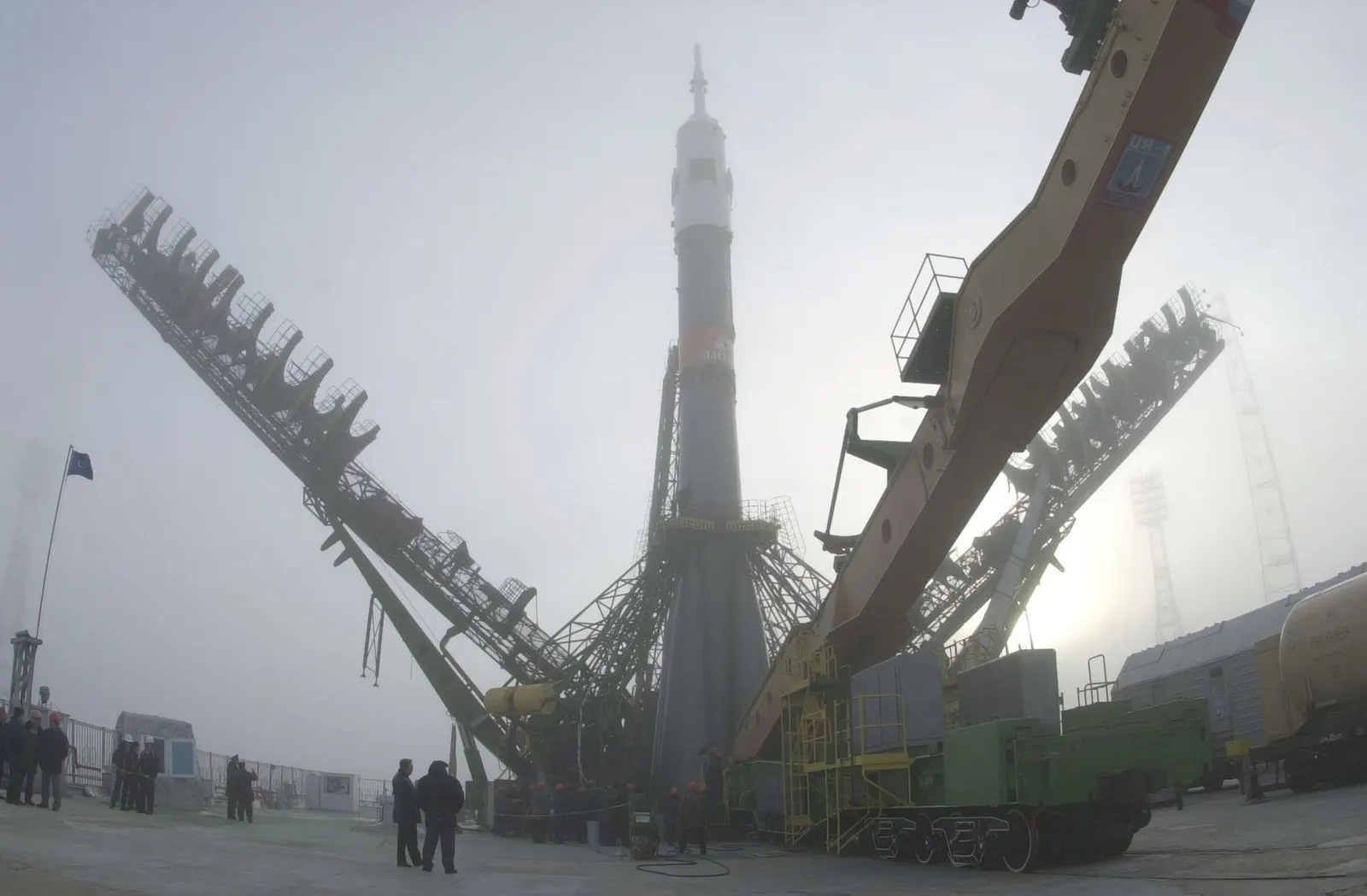
| Launch site | Baikonur Cosmodrome Site 1/5 (Gagarin's Start) |
| Launch vehicle | Soyuz-U |
| Spacecraft | Soyuz TM-32 (Soyuz 7K-STM No. 205) |
| Target | Low Earth Orbit |
| Type | Crewed |
| End date | 2001-10-31 |
| Duration | 7 days 22 hours (EP-1 crew, returned on TM-31) |
| Partners | Roscosmos, Space Adventures, NASA |
Overview
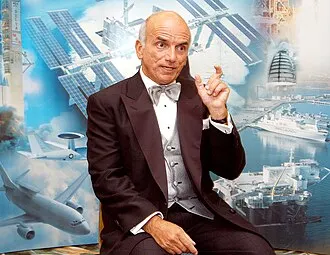
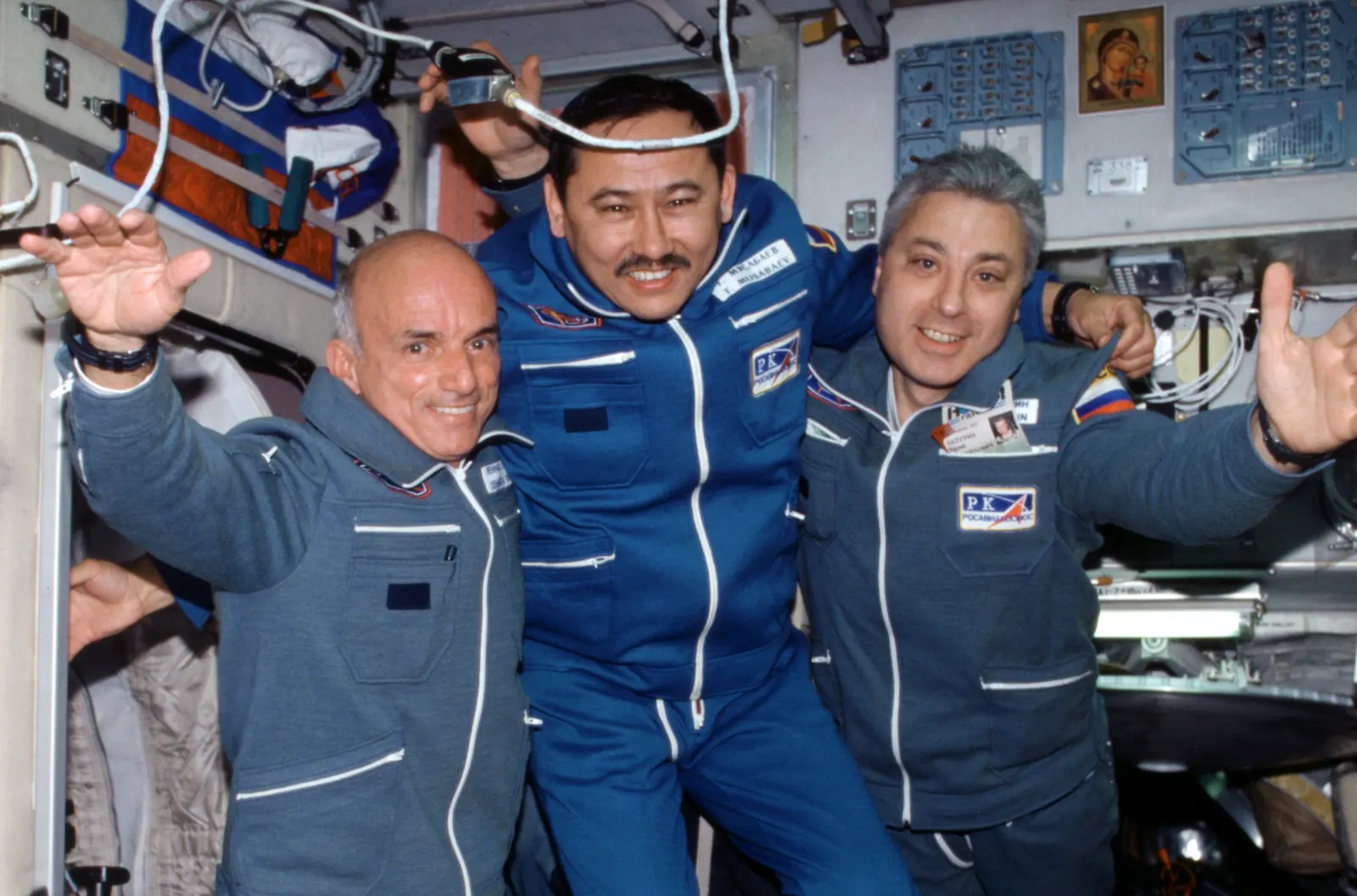
Soyuz TM-32 carried the world's first self-funded space tourist into orbit. On 28 April 2001, American engineer-financier Dennis Tito, who reportedly paid Space Adventures around US$20 million, lifted off alongside commander Talgat Musabayev and flight engineer Yuri Baturin on the ISS visiting mission EP-1. Tito, a former NASA JPL mission analyst turned investment-firm founder, had trained for months at Star City over NASA's vocal objections. After docking with the young International Space Station, he spent nearly eight days in orbit, floating in the Zvezda module, photographing Earth and, by his own account, fulfilling a lifelong dream deferred for forty years. The crew returned aboard Soyuz TM-31, while TM-32 stayed as the station's fresh lifeboat. Tito's flight cracked open commercial human spaceflight and set the template for the orbital tourism that followed.
Crew
Talgat Musabayev
Commander
Yuri Baturin
Flight Engineer
Dennis Tito
Spaceflight Participant (space tourist)
First self-funded space tourist; former NASA JPL engineer
Key Milestones
2001-04-28
Launch from Baikonur at 07:37 UTC with Tito, Musabayev and Baturin
2001-04-30
Docking with the International Space Station; Tito becomes first paying tourist aboard
2001-05-06
EP-1 crew returns to Earth aboard Soyuz TM-31 after ~7d 22h
2001-10-31
Soyuz TM-32 vehicle returns with the Andromède (TM-33) crew, ending its station duty
Key Achievements
Carried Dennis Tito, the world's first self-funded space tourist, into orbit
Opened the era of commercial private human spaceflight
Delivered a fresh Soyuz lifeboat to the early International Space Station