Andromeda Galaxy
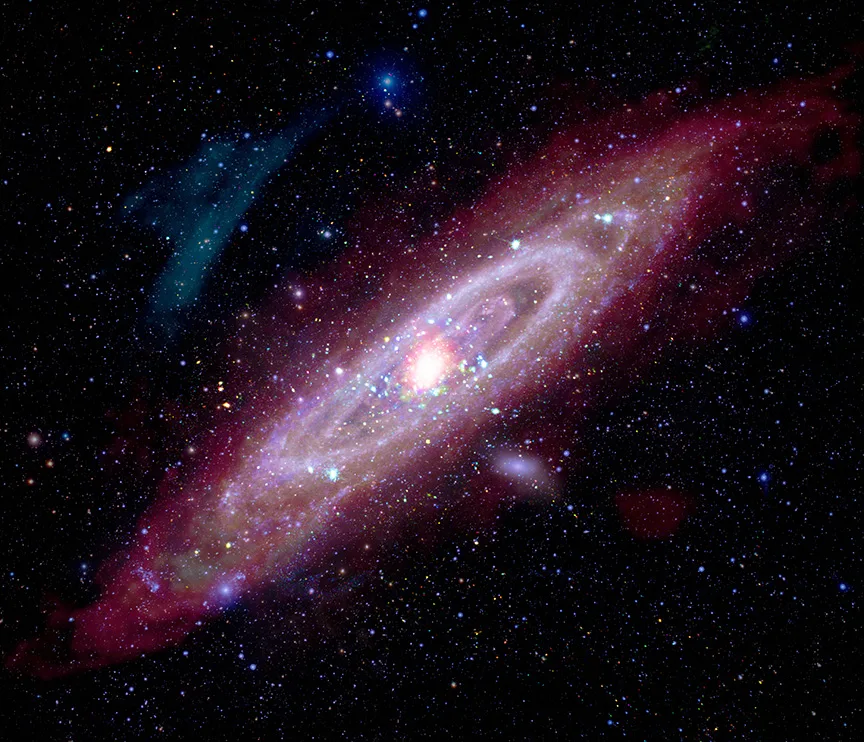
Our nearest large galactic neighbour — a 1-trillion-solar-mass spiral whose full extent spans more than 6° on the sky.
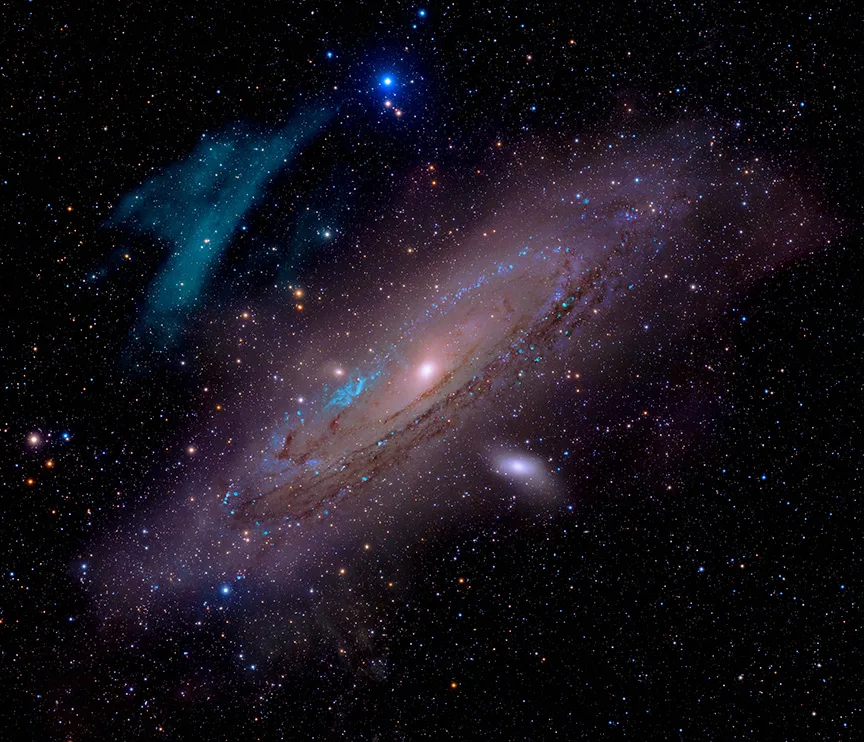
The Andromeda Galaxy is the largest and nearest spiral galaxy to the Milky Way,
set on a collision course to merge with us in roughly 4.5 billion years. At
2.5 million light-years, it is also the most distant object easily visible to
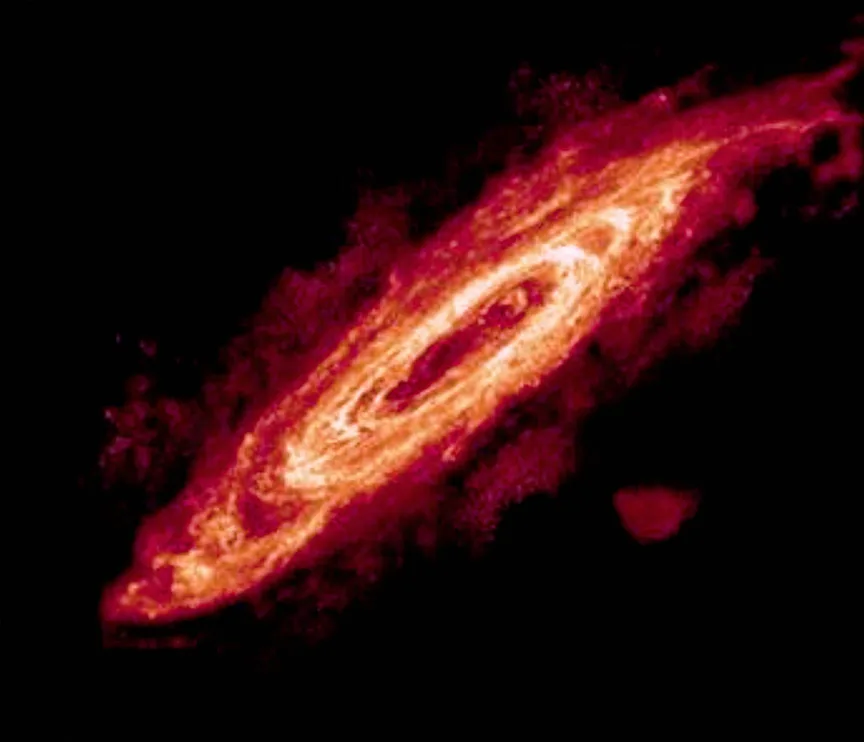
the naked eye. VLA H I 21-cm surveys show the cold neutral hydrogen disc extending
far beyond the optical boundary, warped and distorted by interactions with
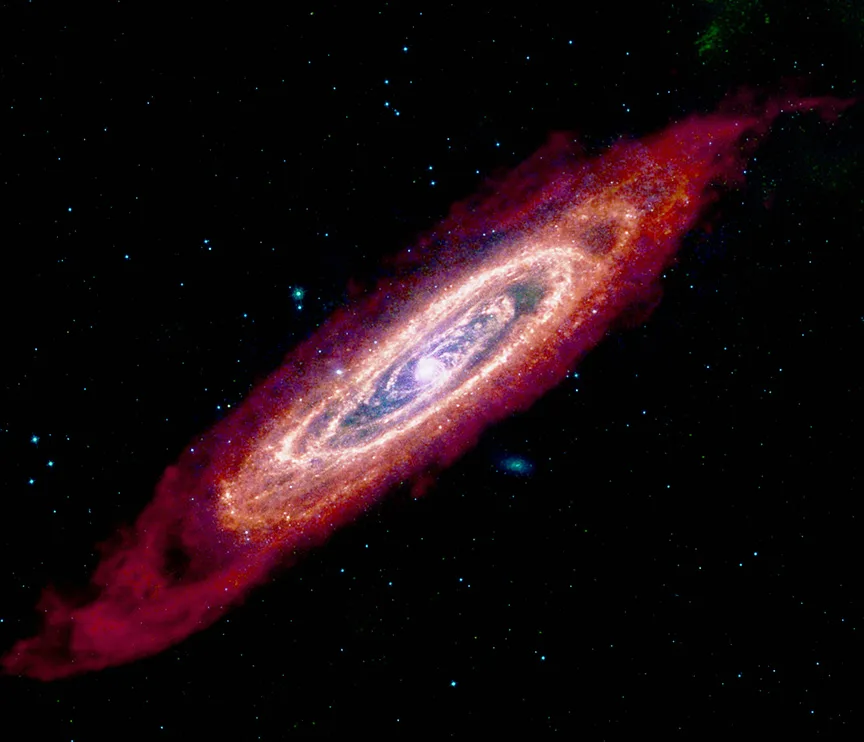
satellite galaxies M32 and M110. Spitzer 24 μm mosaic imaging famously revealed
the ~10 kpc dust ring — a ring of ongoing star formation — in unprecedented
clarity. Hubble's PHAT (Panchromatic Hubble Andromeda Treasury) survey resolved
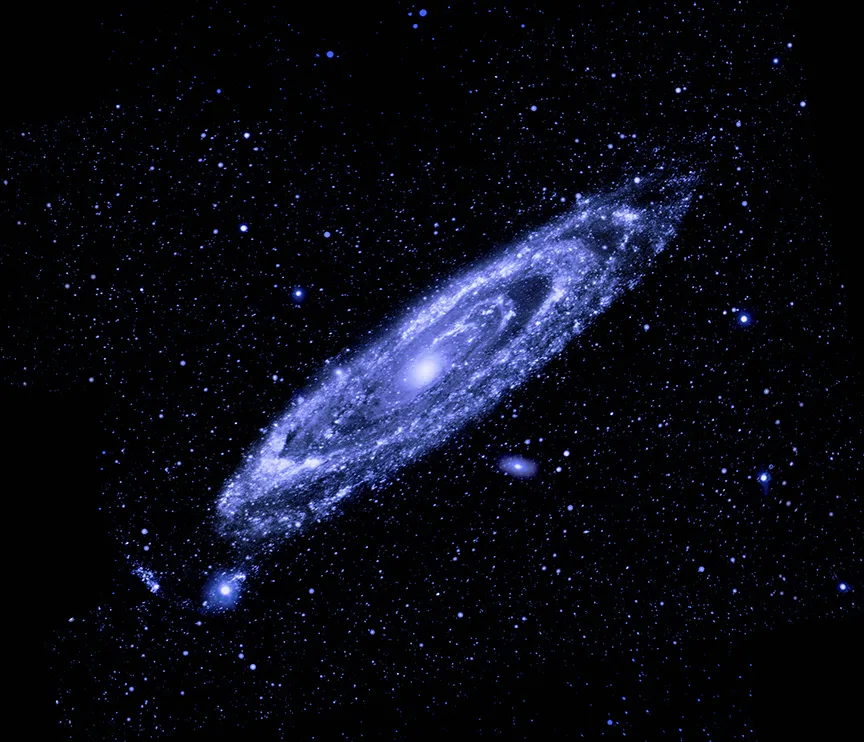
over 100 million individual stars in the disc and bulge. GALEX far-UV maps show
recent star formation concentrated in the spiral arms, contrasting with the old
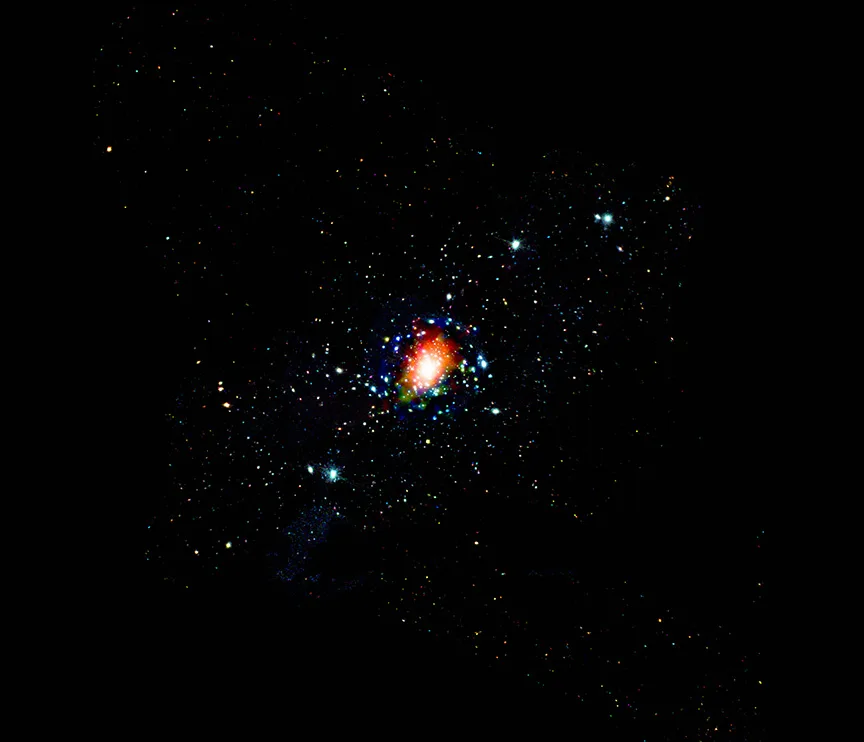
red stellar population in the bulge. XMM-Newton and Chandra observations reveal
the hot gas halo, the galactic nucleus, and a rich population of X-ray binaries
throughout the disc and bulge.