Cassiopeia A
The brightest radio source beyond the Solar System — a ~340-year-old blast wave still racing through its own ejecta.
Cassiopeia A is the youngest known core-collapse supernova remnant in the Milky Way.
Its light reached Earth around 1680, though it went unrecorded at the time. The blast
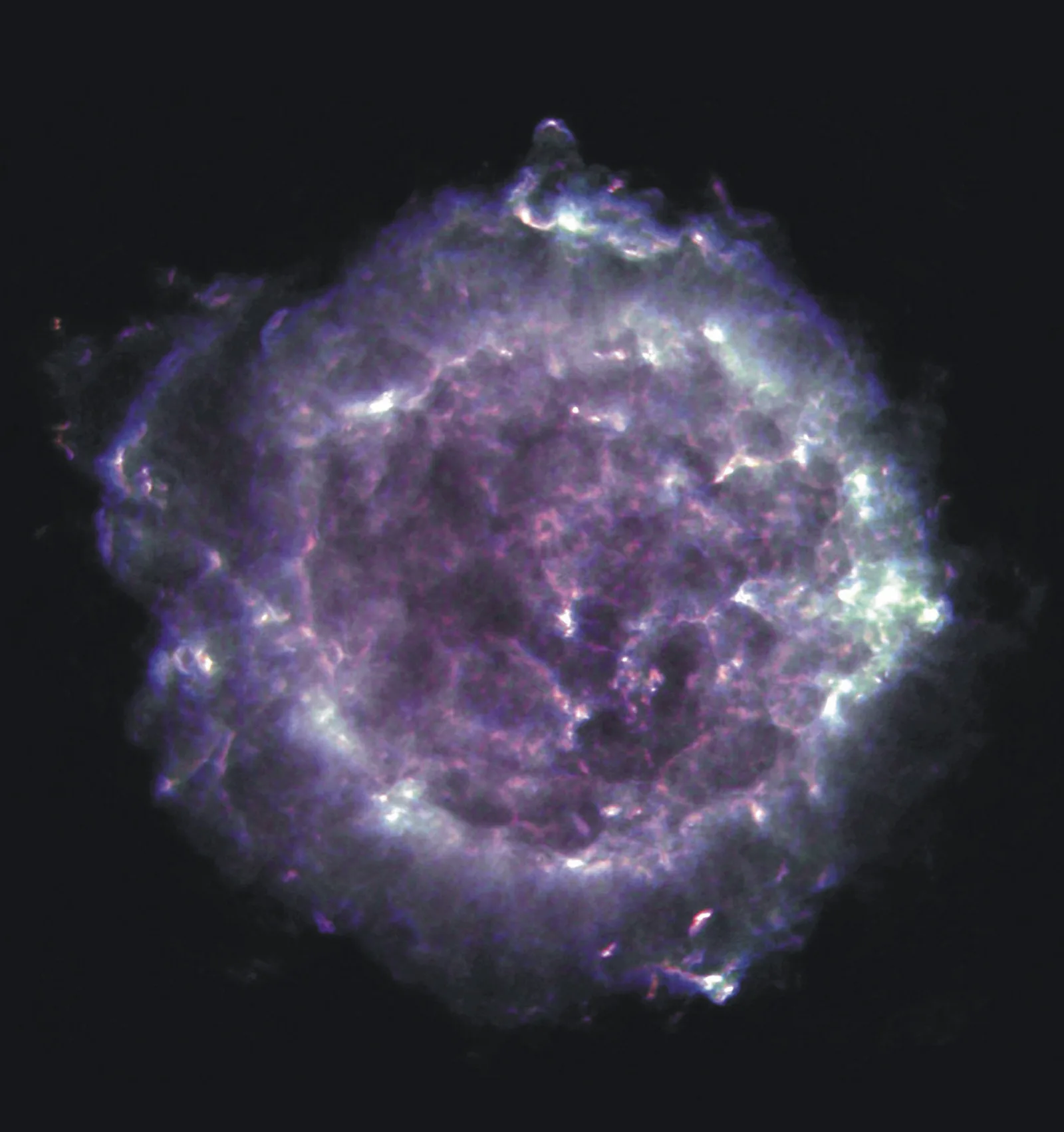
wave is still propagating outward at ~6,000 km/s, heating gas to tens of millions of
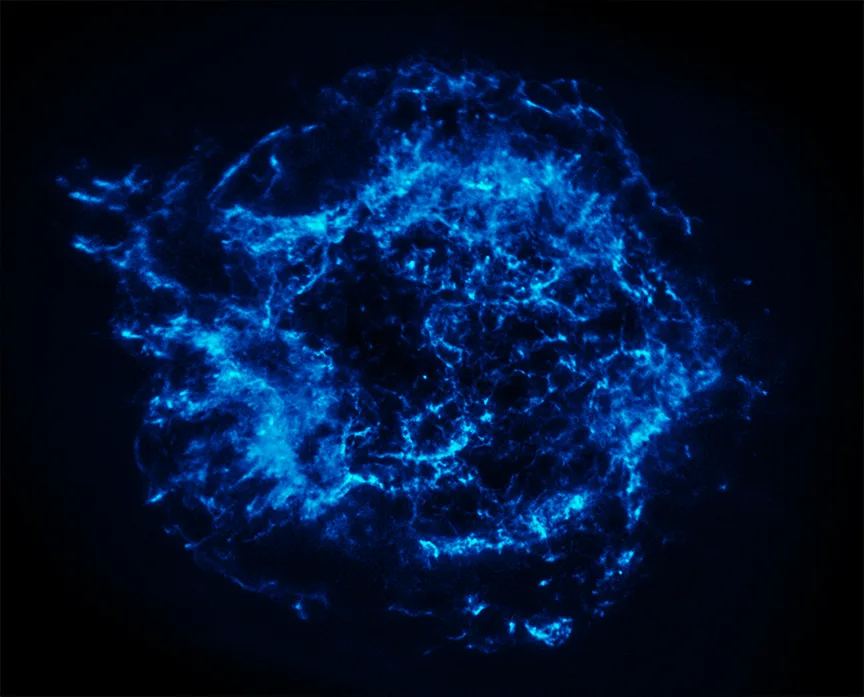
degrees visible as brilliant X-ray-emitting iron-rich ejecta knots in Chandra imaging.
In radio, the forward and reverse shocks produce the brightest extrasolar radio signal
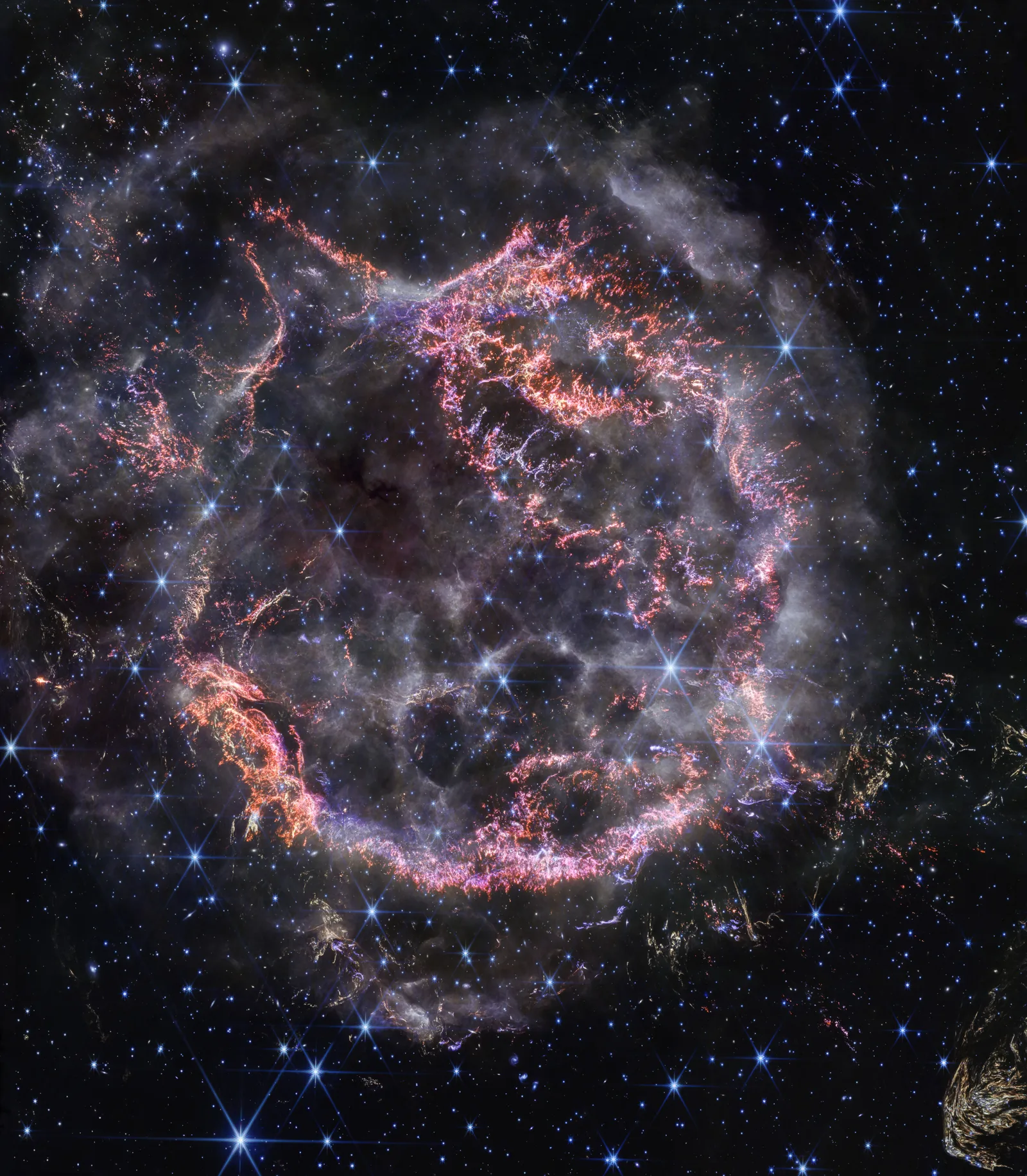
in the sky through synchrotron emission. Spitzer mid-IR imaging uncovered extensive
"light echo" rings — the supernova light still bouncing off surrounding dust sheets.
A compact central object (probable neutron star) lurks at the centre, detected in X-rays.
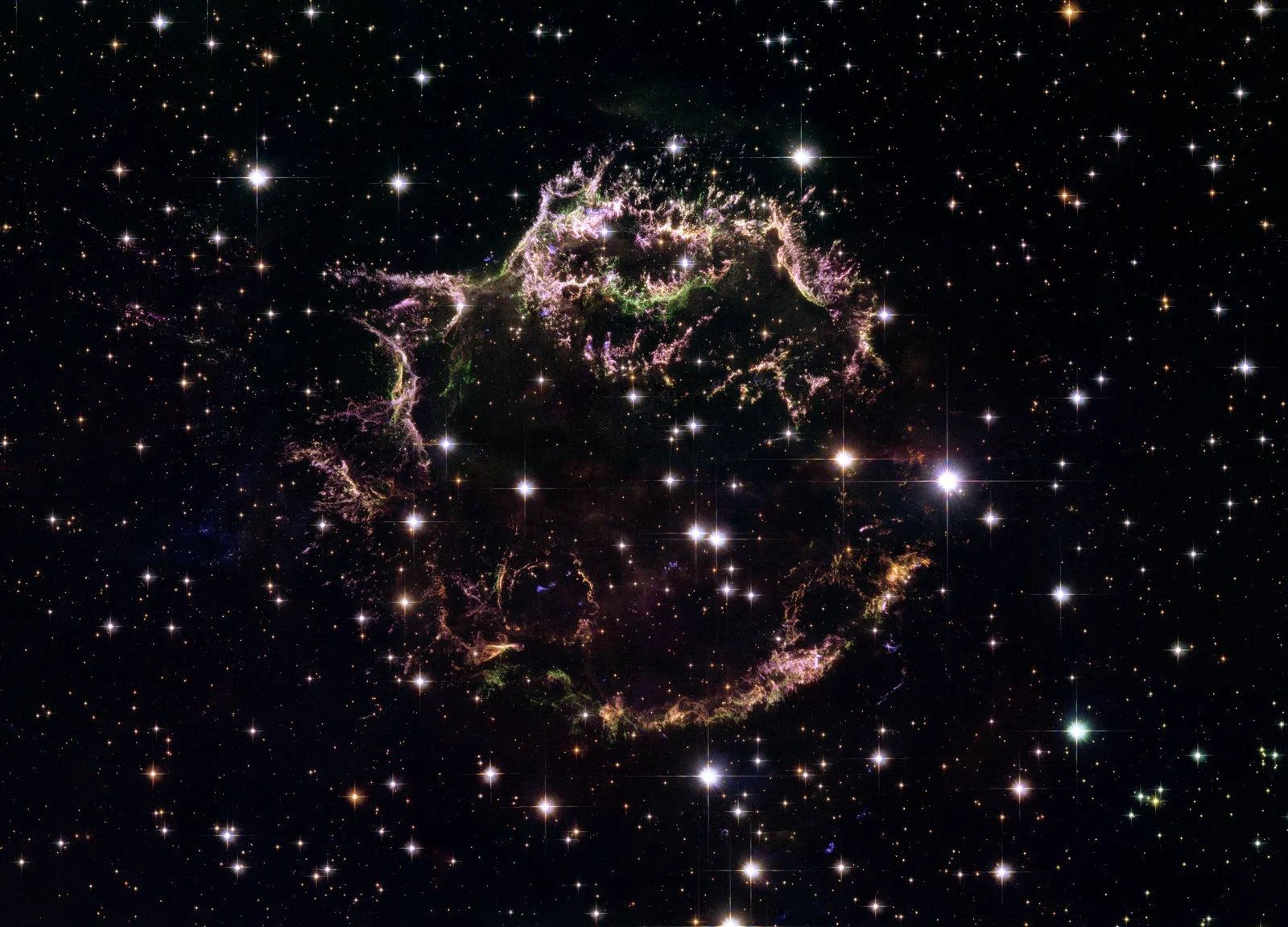
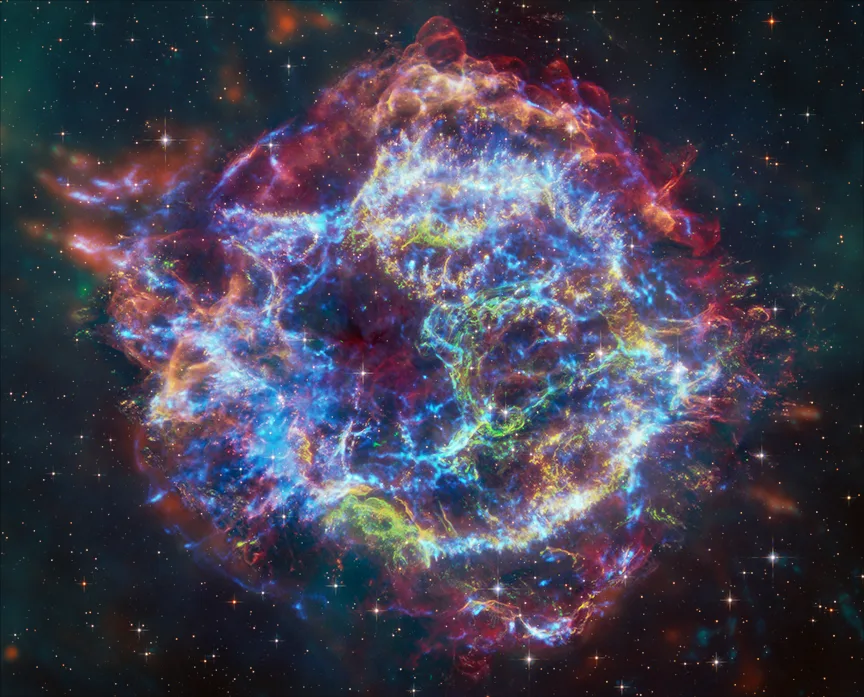
The visible remnant is faint and patchy, requiring deep narrow-band exposures to trace
the fast-moving knots of oxygen and sulphur ejecta. No two wavelengths tell the
same story, making Cas A a cornerstone of supernova physics research.