Crab Nebula
A 1,000-year-old supernova remnant powered by a rapidly spinning neutron star, blazing across every wavelength.
The Crab Nebula is the textbook example of a pulsar wind nebula. Its central
neutron star (PSR B0531+21) spins 30 times per second, injecting a relativistic
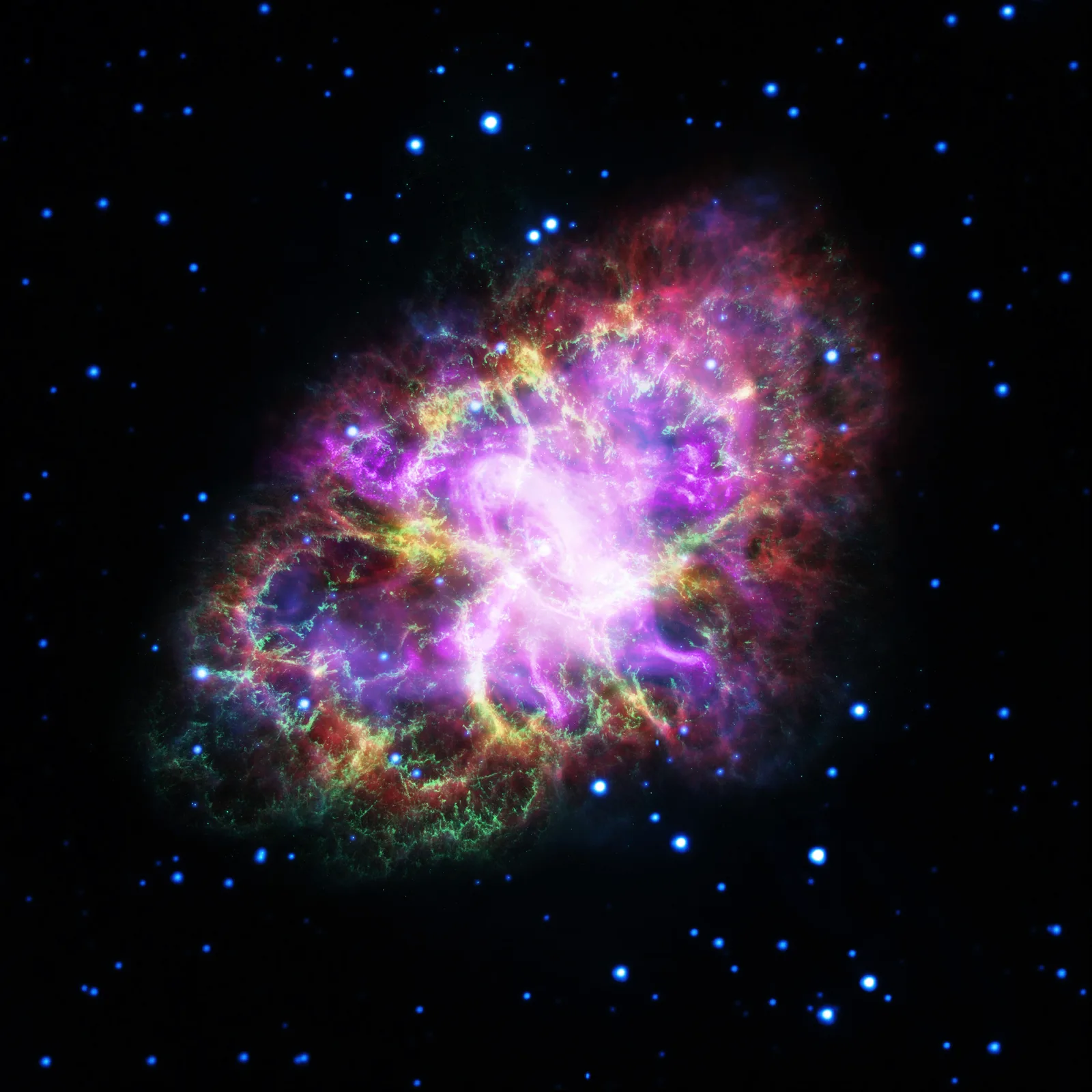
wind of electrons and positrons into the surrounding gas. In radio, that wind
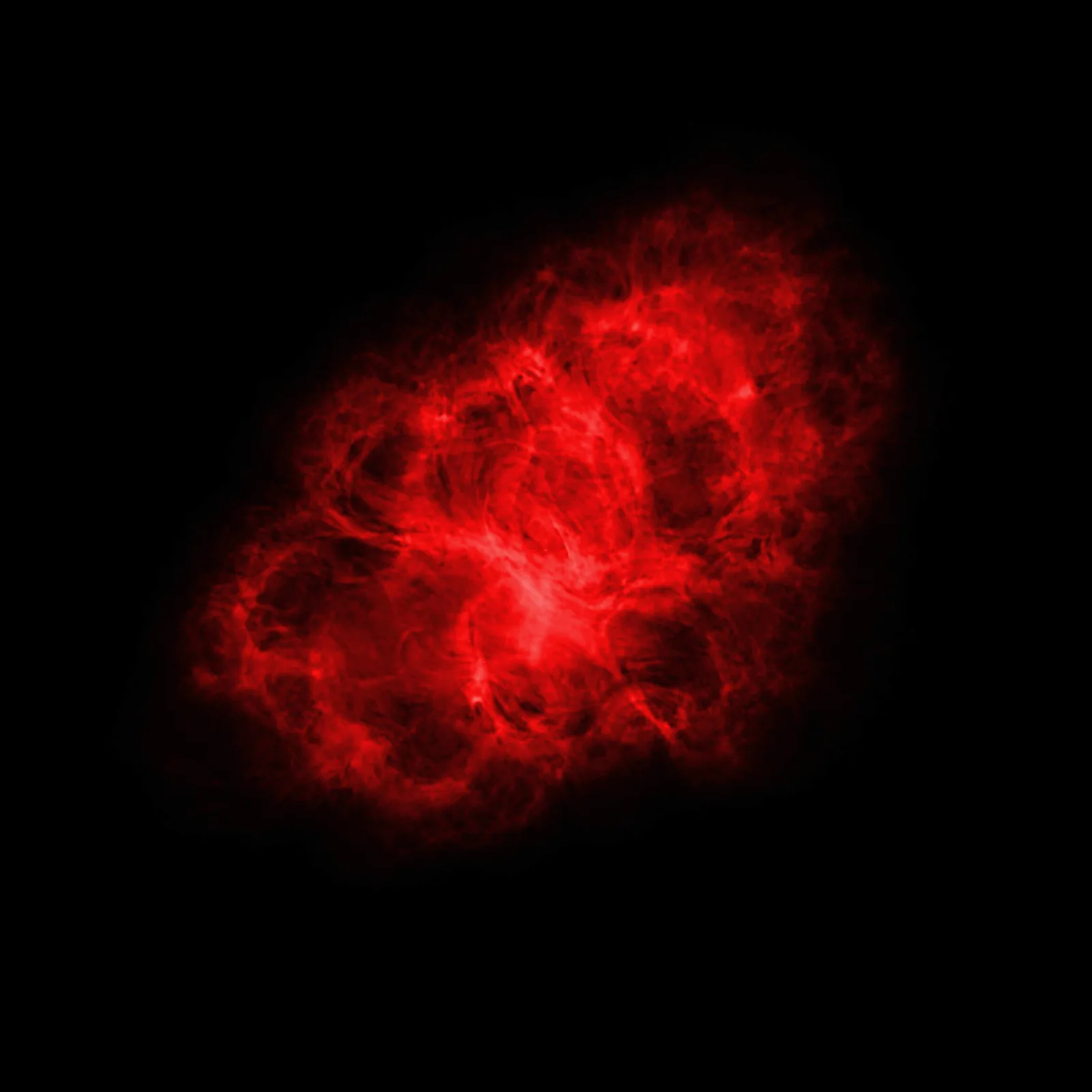
glows via synchrotron radiation across a broad cocoon. Infrared Spitzer imaging
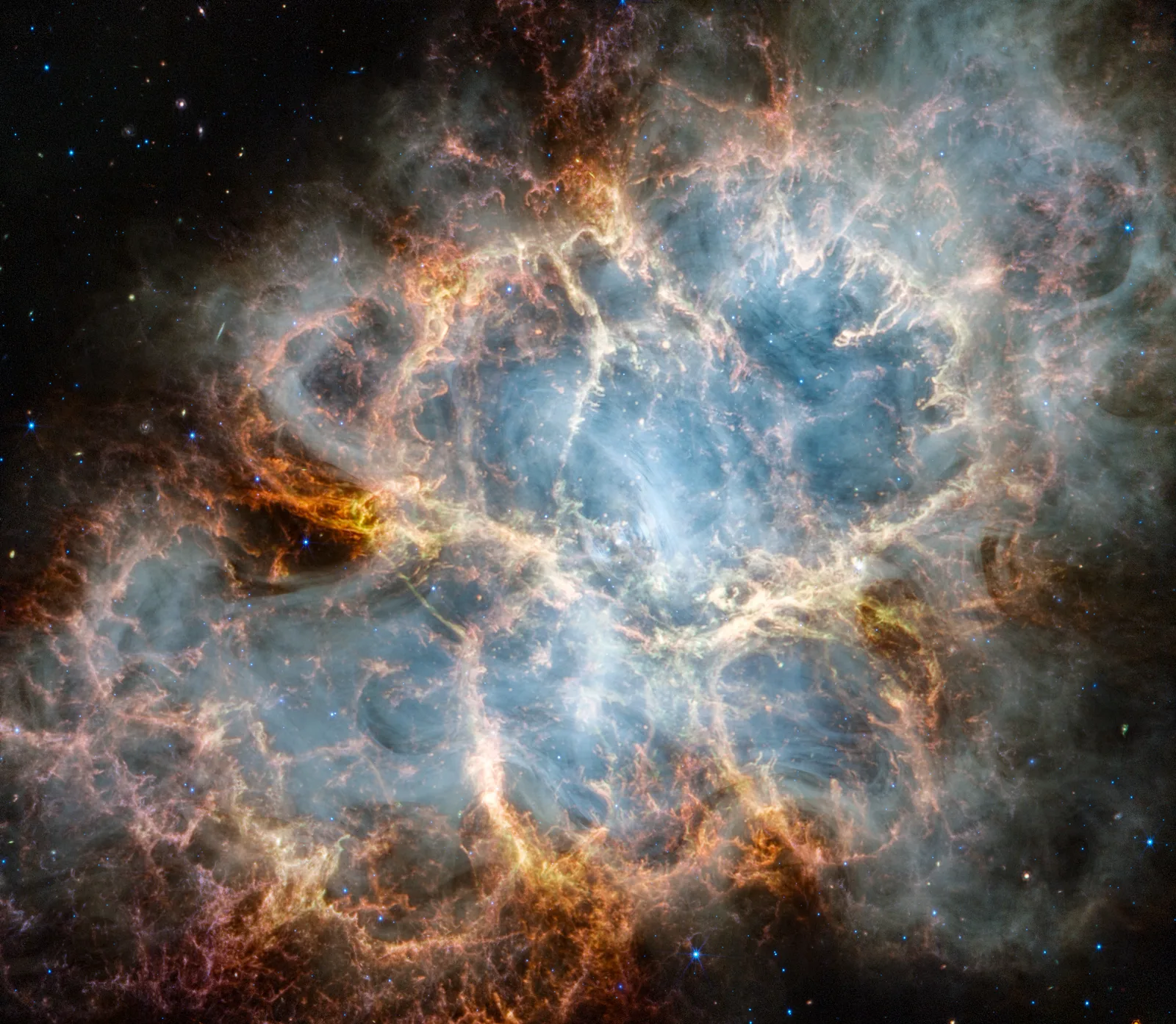
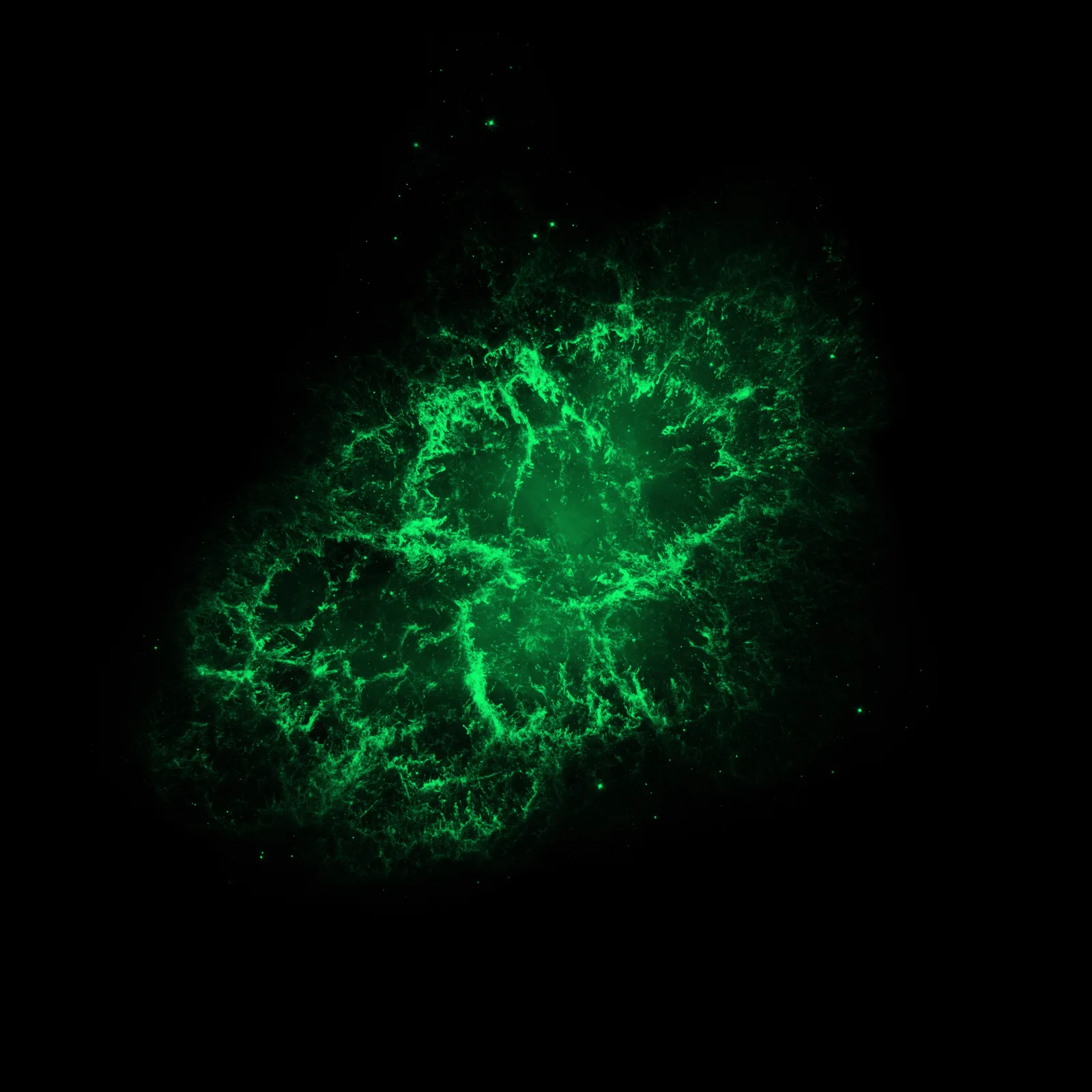
resolves filaments of shocked dust and ionised gas. In optical light Hubble
captures the iconic wispy wisps and the tightly wound toroidal wind structure.
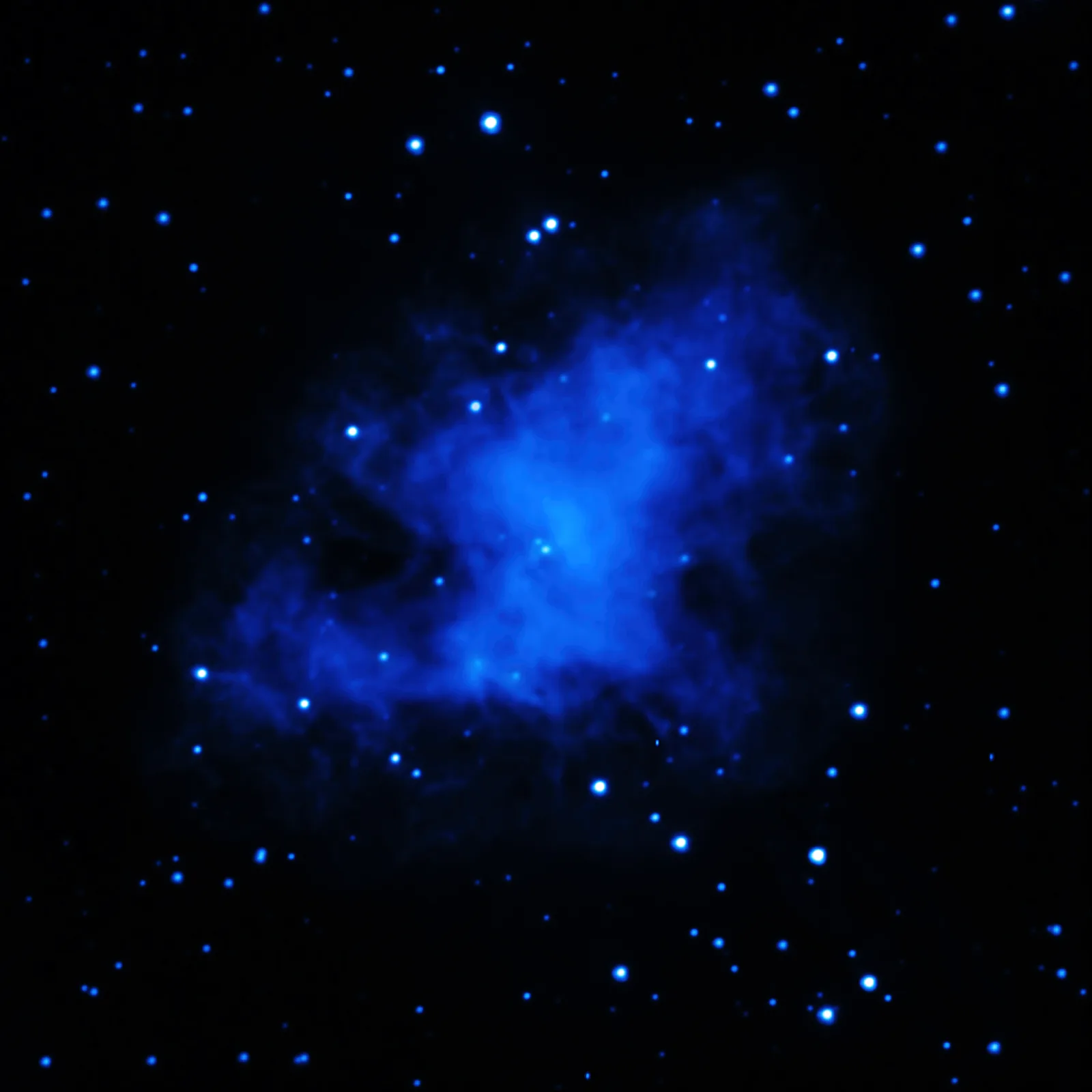
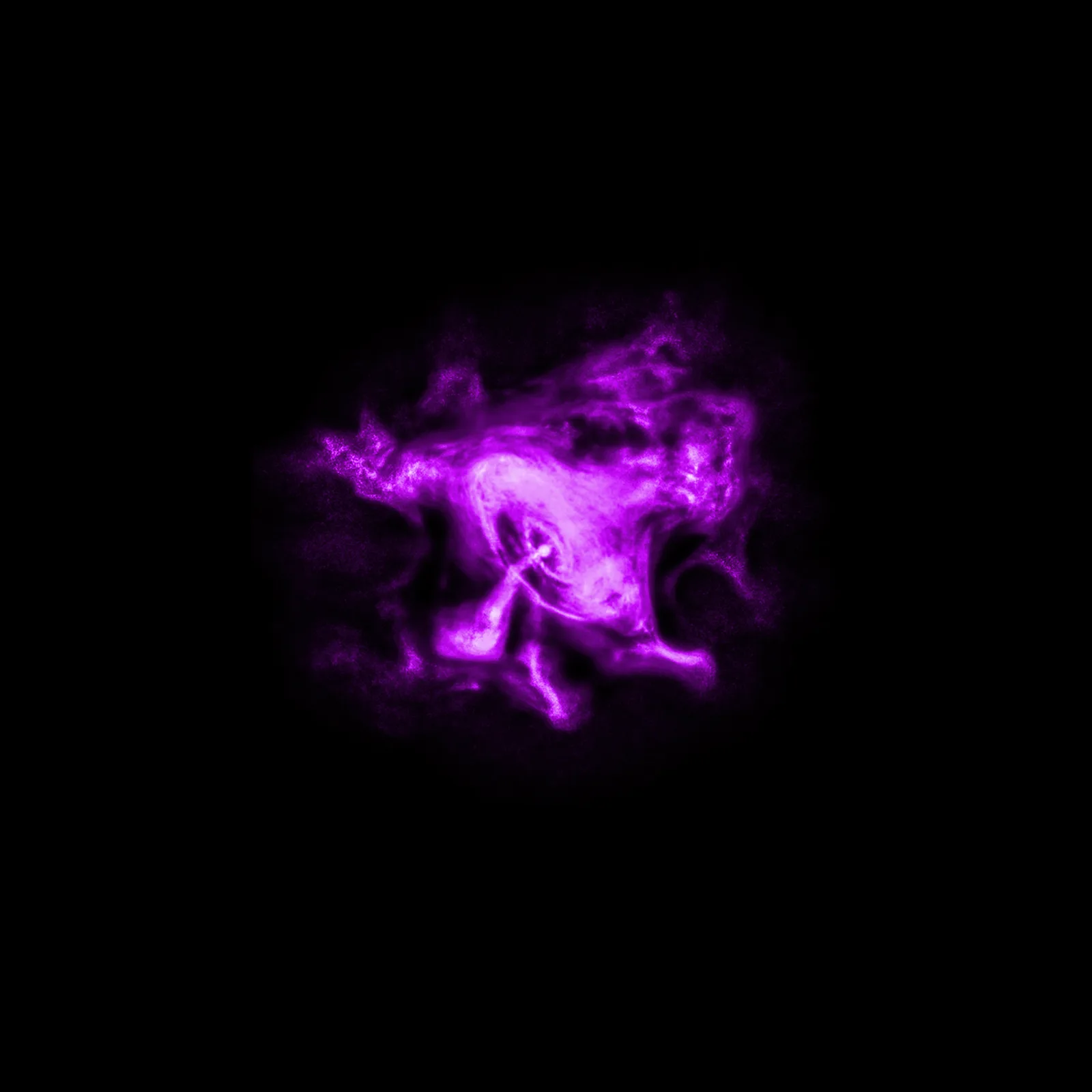
Ultraviolet emission traces the hottest shocked filaments. Chandra X-ray images
reveal the inner jet, torus, and the pulsar's dynamic wisps changing on timescales
of weeks. The composite view binds all five regimes into one coherent picture of
a still-living stellar explosion whose engine has never stopped.