Eagle Nebula
Home to the iconic Pillars of Creation, where dense molecular columns are being sculpted by UV radiation from a nearby young star cluster.
The Eagle Nebula is an H II region and young star cluster (NGC 6611) roughly
5,700 light-years away. The Pillars of Creation — three towering columns of
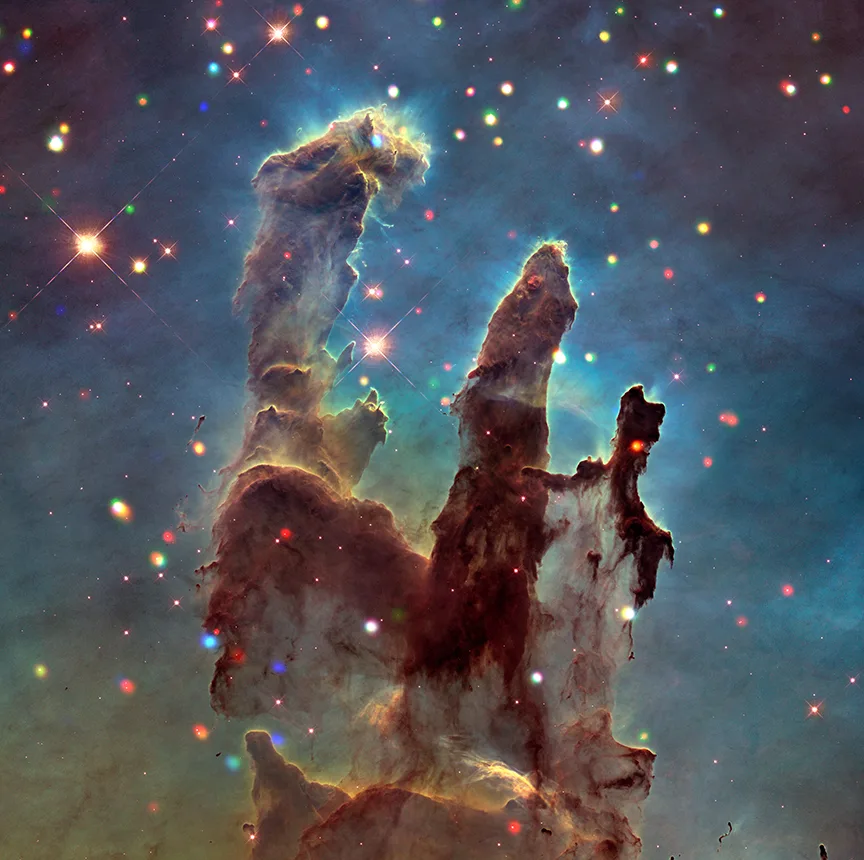
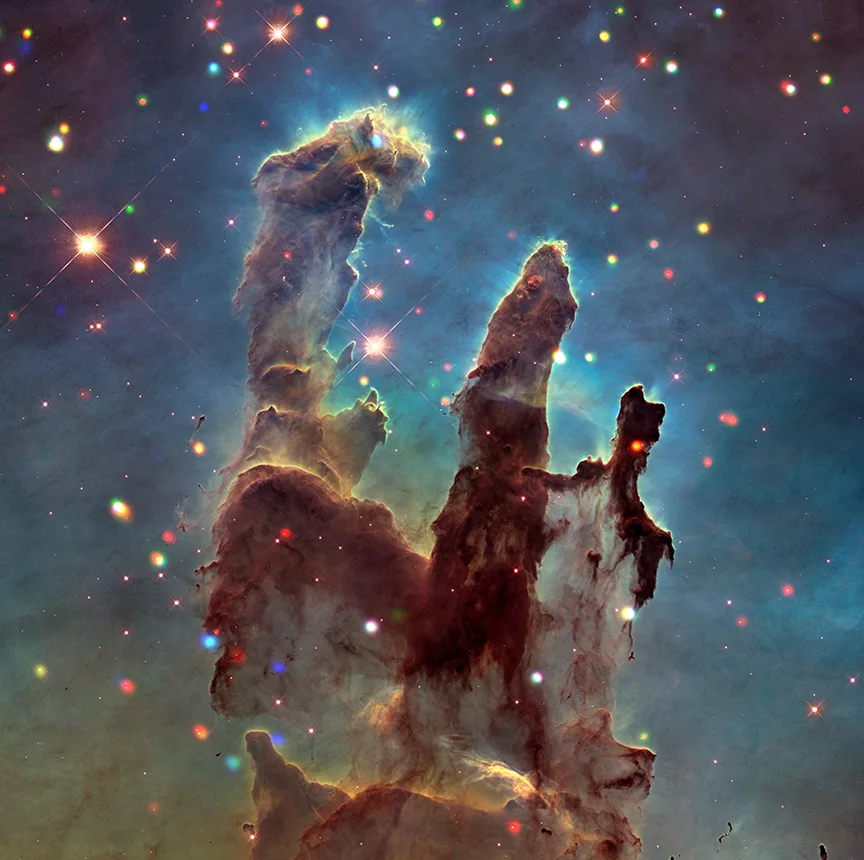
molecular gas — became iconic after Hubble's 1995 image. O-type stars in NGC
6611 blast the surrounding gas with ionising UV photons, sculpting the pillars
through a process called photoevaporation. In radio, cold CO line emission traces
the dense molecular reservoir feeding the pillars. Spitzer revealed IR emission
from the warm dust eroding pillar surfaces. The 2022 JWST NIRCam image resolved
individual protostars embedded within the pillars, previously hidden from optical
view. GALEX UV imaging shows the intense radiation field from the cluster ionising
the nebula. Chandra X-ray observations reveal dozens of young, pre-main-sequence
stellar X-ray sources within the cluster, as young stars are prolific X-ray
emitters. Together the wavelengths capture a star formation factory in action.
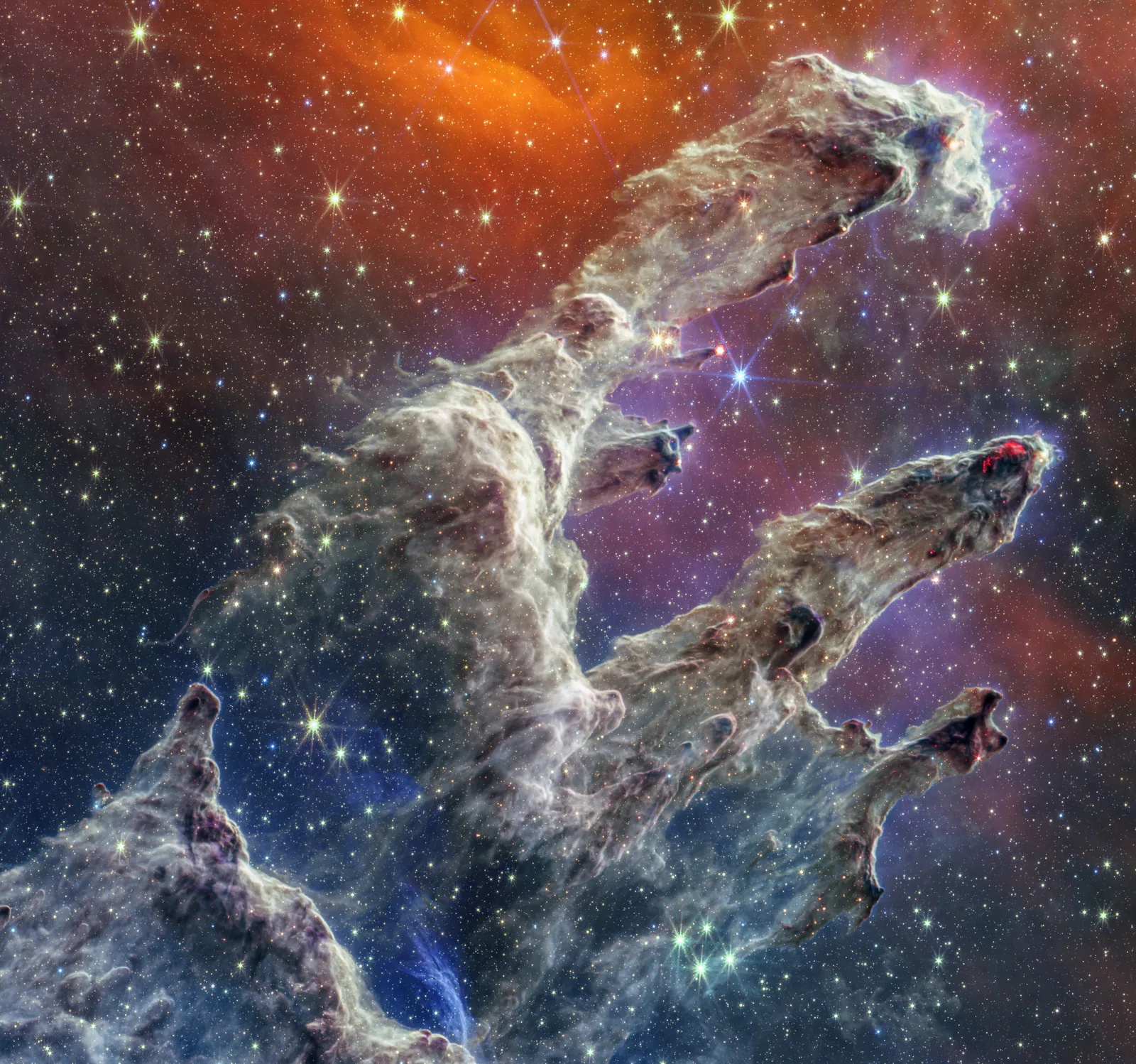
![Eagle Nebula in visible — The 2015 Hubble 20th-anniversary image of the Pillars in H-alpha, [O III], and [S II] reveals the photoevaporation front and the EGG (evaporating gaseous globule) structures on pillar surfaces.](/images/multi-wavelength/eagle-nebula/visible.webp)