M51 (Whirlpool Galaxy)
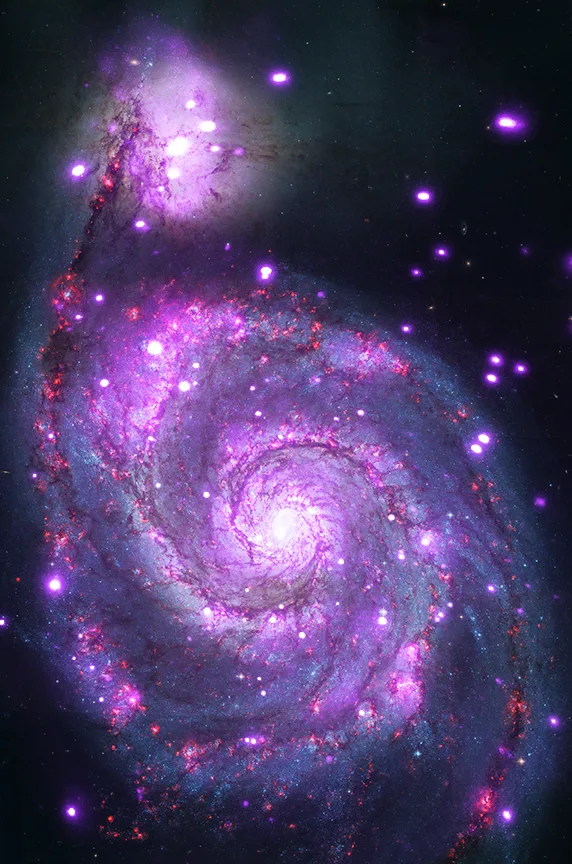
A grand-design spiral in gravitational dialogue with its companion NGC 5195, ablaze with star formation traced across every wavelength.
M51 is one of the best-studied interacting spirals in the sky. The tidal forces
from companion galaxy NGC 5195 drive density waves through the disc, triggering
vigorous star formation along the spiral arms. VLA radio maps trace the cold
neutral hydrogen extending well beyond the optical disc, and the non-thermal
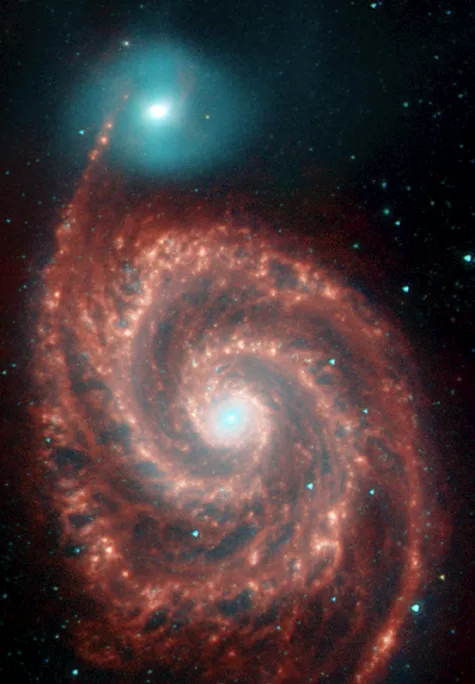
synchrotron emission from cosmic-ray electrons near the arms. Spitzer IRAC imaging
at 8 μm illuminates the arms with emission from polycyclic aromatic hydrocarbons
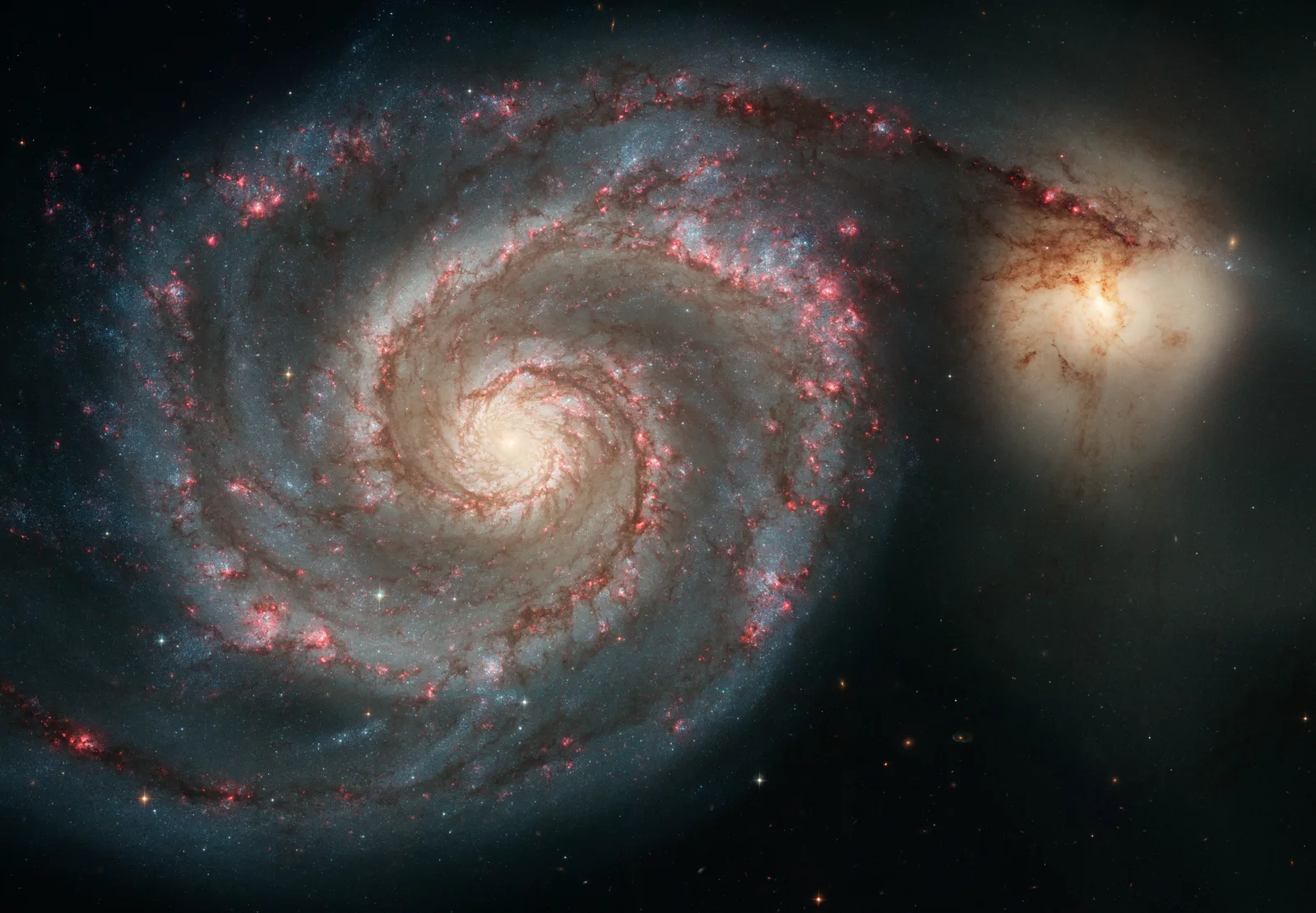
(PAHs) heated by UV photons from newly formed OB stars. Hubble's optical view
resolves hundreds of individual H II regions and dark dust lanes threading the
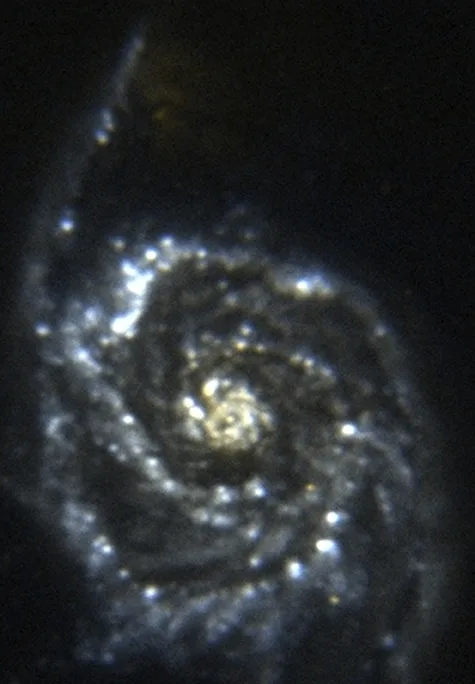
spiral pattern. GALEX UV images highlight the UV-bright OB associations that
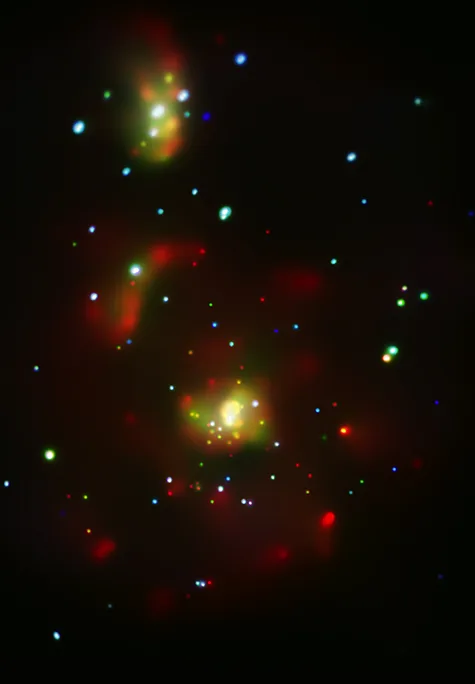
signal where star formation is most recent. Chandra X-ray observations reveal
a population of X-ray binaries, an ultraluminous X-ray source (ULX), and diffuse
hot gas filling the inter-arm regions. Together they paint a complete picture of
a galaxy's star-formation ecosystem.