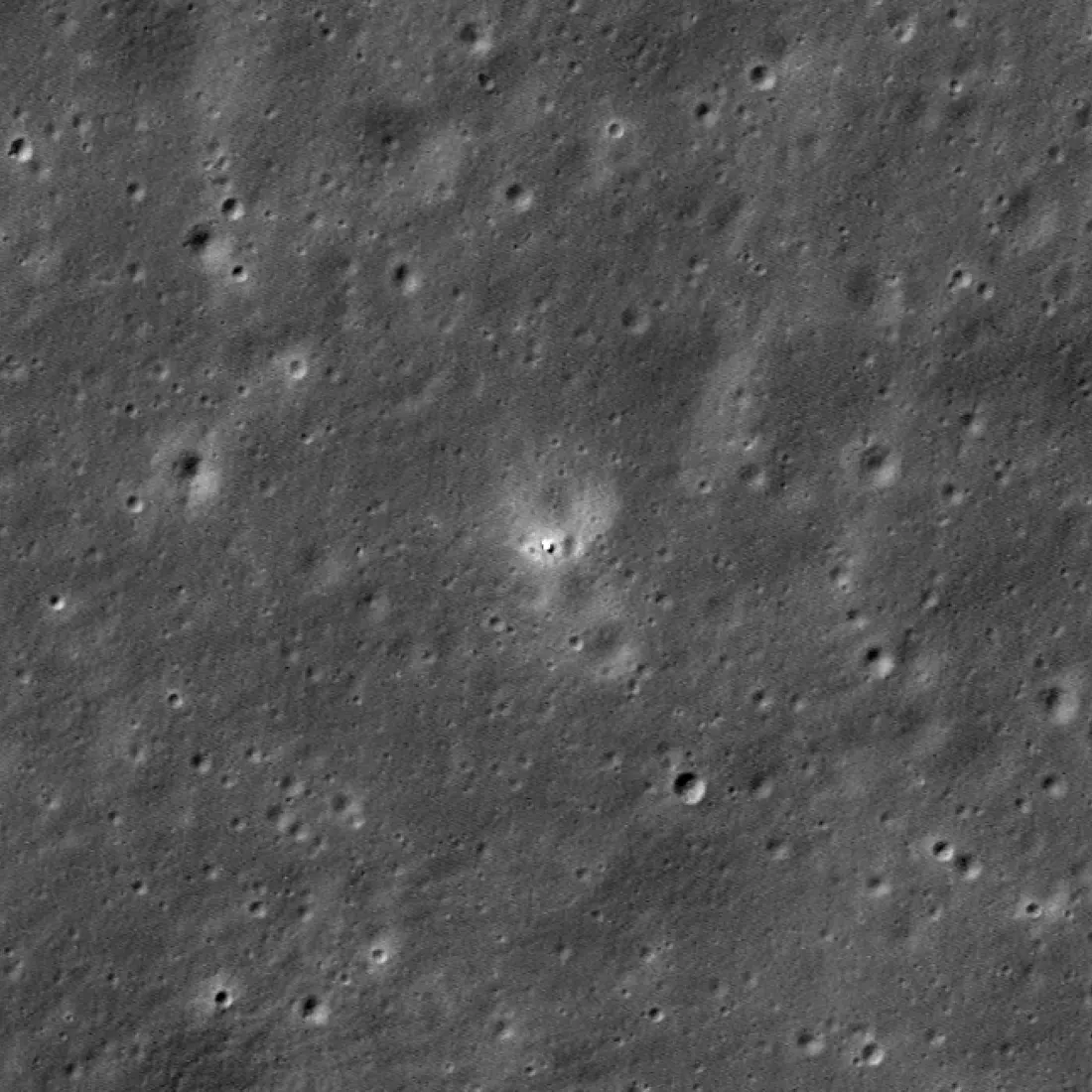
Chang'e Lunar Exploration Programme
Chang'e (嫦娥) is China's flagship robotic lunar exploration series — from the Chang'e-1 orbiter (2007) to the Chang'e-6 far-side sample return (June 2024, a world first), with Chang'e-7 polar reconnaissance (2026) and Chang'e-8 ISRU demonstrator (2028) forming the precursor architecture for the International Lunar Research Station and the Chinese crewed lunar landing by 2030 [1][2][3]. Executed by CASC's lunar systems group, the programme has delivered six of six planned mission successes and has unilaterally extended China's lunar science lead on far-side and south-polar exploration over Western peers [4].
Funding & Contract Structure
Total committed: Lifecycle cost across Chang'e-1 through -8 not officially disclosed by CNSA; CSIS ChinaPower and SpaceNews analyst estimates place cumulative programme spend in the low-single-digit billions of USD-equivalent (2008-2028) — roughly an order of magnitude below cumulative U.S. CLPS + Artemis lander precursor spend [11][12]
Annual run-rate: China's total civil space budget reached ~$14B equivalent in 2023 (CSIS / OECD comparative methodology); Chang'e + ILRS are a discrete but un-itemised slice of that envelope, with no published Chinese line-item disclosure [11]
Per launch: Chang'e-6 launched on Long March 5 Y8 from Wenchang on May 3, 2024; per-launch cost not officially disclosed but Western analyst estimates of Long March 5 unit cost are in the $180-220M-equivalent range [4]
Procurement vehicle: COST-PLUS — Government pays incurred costs plus a fee — contractor bears low risk; cost overruns common.
Congressional status: Chang'e and CLEP receive sustained, multi-decade backing from China's State Council and the Central Military Commission; inclusion in the 14th Five-Year Plan (2021-2025) and the forthcoming 15th FYP (2026-2030); no public opposition exists in China's political system [13]
GAO / CRS findings
| Date | Finding |
|---|---|
| USCC 2024 Annual Report concluded that Chang'e-6's successful far-side sample return demonstrates China's growing lunar exploration lead and the strategic value of CLEP as a precursor to ILRS and the 2030 crewed landing[12] | |
| Science publication (Chinese collaboration) reported Chang'e-6 samples date the South Pole-Aitken basin to ~4.25 Ga, providing the first absolute-age constraint on the lunar far side and the largest known impact basin in the Solar System[9] |
Beneficiary Breakdown
| Contractor | Role | Share | Ticker |
|---|---|---|---|
| China Aerospace Science and Technology Corporation (CASC) | prime | State-owned enterprise prime contractor for all Chang'e missions — orbiter and lander bus development at CAST, propulsion and avionics. CASC subsidiaries also build the Long March 3B, 5 and 5DY launchers used across the series. Unlisted parent.[14] | private |
| China Academy of Space Technology (CAST) | prime | CASC's principal spacecraft developer; designs and integrates the Chang'e orbiter, lander, ascender, sample-return capsule and rover modules at the CAST Beijing facility. Unlisted state-owned subsidiary of CASC.[14] | private |
| Shanghai Academy of Spaceflight Technology (SAST) | sub | CASC subsidiary providing landing-radar systems, propulsion sub-systems and avionics; SAST-developed components flew on Chang'e-3 through Chang'e-6. Unlisted state-owned enterprise.[14] | private |
| China Academy of Launch Vehicle Technology (CALT) | sub | CASC subsidiary designing and producing the Long March 3B (Chang'e-1 through -4 launchers) and contributing to Long March 5 (Chang'e-5, -6 and forthcoming Chang'e-7/8 launchers). Unlisted state-owned enterprise.[14] | private |
| National Astronomical Observatories, CAS (NAOC) | sub | Lead science institution for CLEP — operates the ground science data system and lunar sample curation facility; manages international science access to Chang'e-5 and Chang'e-6 samples. Not commercial.[5] | private |
Key Milestones
Chang'e-1 — China's first lunar orbiter launched on Long March 3A; completed lunar global mapping and was intentionally impacted in March 2009
Chang'e-2 — second lunar orbiter; subsequently departed lunar orbit to flyby asteroid 4179 Toutatis in December 2012 (first Chinese asteroid encounter)
Chang'e-3 — first Chinese soft lunar landing at Mare Imbrium with the Yutu rover; first soft lunar landing globally since Luna 24 in 1976
Chang'e-4 — first soft landing on the lunar far side at Von Kármán crater (3 January 2019); Queqiao-1 relay at Earth-Moon L2 enabled communications
Chang'e-5 — first lunar sample return since 1976; retrieved 1,731 g of samples from Mons Rümker on December 16, 2020
Chang'e-6 — launched May 3, 2024 on Long March 5 Y8; first ever lunar far-side sample-return mission, sampling Apollo crater in the South Pole-Aitken basin
Chang'e-6 sample-return capsule lands in Inner Mongolia on June 25, 2024 with 1,935.3 g of far-side lunar samples
First Chang'e-6 sample science publication confirms South Pole-Aitken basin age at ~4.25 Ga — first absolute-age constraint on the lunar far side
Chang'e-7 — south-polar reconnaissance: orbiter + lander + rover + mini-hopper to investigate permanently-shadowed craters for water ice
Chang'e-8 — in-situ resource utilisation demonstrator at the lunar south pole; 3D-printed regolith brick experiment and precursor to the International Lunar Research Station
Targeted Chinese crewed lunar landing — Chang'e-7 and -8 robotic precursors directly support south-pole landing site selection
Catalysts
| Date | Event | Sentiment |
|---|---|---|
| Chang'e-7 mission stack arrives at Wenchang spaceport — launch on track for ~August 2026, targeting the Shackleton crater rim at the lunar south pole[17] | bullish | |
| Chang'e-7 — polar reconnaissance mission targeting the lunar south pole (~Aug 2026); orbiter + lander + rover + mini-hopper to investigate permanently-shadowed craters for water ice[17] | bullish | |
| Queqiao-2 relay satellite ongoing operations enabling far-side / polar communications for Chang'e-6 follow-on, Chang'e-7, Chang'e-8 and crewed lunar missions[15] | neutral | |
| Chang'e-8 — in-situ resource utilisation (ISRU) demonstrator at the lunar south pole; 3D-printed regolith brick experiment and precursor infrastructure for the International Lunar Research Station[10] | bullish | |
| International scientific access to Chang'e-5 and Chang'e-6 samples — Chinese-foreign collaborative papers continuing to publish into 2026-2027 cycle, building soft-power leverage[9] | bullish | |
| Chinese crewed lunar landing targeted by 2030 — Chang'e-7 and -8 are the direct robotic precursors that de-risk the south-polar landing site[13] | bullish |
Risk Register
Competitive Landscape
Investability Map
| Ticker | Exposure | Note |
|---|---|---|
| N/A | low | No publicly listed pure-play Chang'e exposure — CASC, CAST, CALT and SAST are unlisted state-owned enterprises. Public-equity investors cannot directly capture Chang'e upside. |
| SHA: 600118 | low | China Spacesat Co. (CASC-affiliated, Shanghai-listed satellite developer) is an indirect proxy for Chinese state-space activity; Chang'e exposure is minor relative to satellite-bus production. |
| SHA: 600879 | low | Aerospace Hi-tech Holding (CASC-affiliated, Shanghai-listed) provides ancillary Chinese space-industrial exposure; not Chang'e-specific. |
| N/A | low | Chang'e remains outside U.S. and most Western institutional investment mandates because CASC and parent ministries are on or adjacent to U.S. entity-list / NS-CMIC sanctions lists. |
Not investment advice. Figures as-quoted from cited sources.
Sources
- [1] CNSA — China National Space Administration English portal (Agency budget doc, accessed )
- [2] SpaceNews — Chang'e overview series and lunar exploration tracker (Andrew Jones) (GAO / CRS report, accessed )
- [3] SpaceNews — Chang'e-7 polar reconnaissance mission detailed (Andrew Jones) (GAO / CRS report, accessed )
- [4] Xinhua — Chang'e-6 returns 1,935.3 g of far-side lunar samples (June 25, 2024) (Agency press / Congressional record, accessed )
- [5] National Astronomical Observatories, CAS — Lunar Sample Application System overview (Official company site, accessed )
- [6] China Daily — Chang'e-1 and Chang'e-2 mission heritage articles (Agency press / Congressional record, accessed )
- [7] NASA Science — Chang'e-4 and Queqiao relay: first lunar far-side soft landing (January 3, 2019) (Agency budget doc, accessed )
- [8] NASA Planetary Science — Chang'e-5 sample return (December 16, 2020) mass and landing site documentation (Agency budget doc, accessed )
- [9] Science — Chang'e-6 samples constrain South Pole-Aitken basin formation age (~4.25 Ga); November 2024 publication summary (Agency budget doc, accessed )
- [10] SpaceNews — Chang'e-8 ISRU demonstrator and 3D-printed lunar regolith brick experiment (Andrew Jones) (GAO / CRS report, accessed )
- [11] CSIS ChinaPower — China's Space Programme assessment (GAO / CRS report, accessed )
- [12] U.S.-China Economic and Security Review Commission (USCC) — 2024 Annual Report to Congress (China in Space chapter) (GAO / CRS report, accessed )
- [13] Xinhua — CNSA outlines lunar exploration phase IV plan and 2030 crewed lunar landing target (Agency press / Congressional record, accessed )
- [14] CASC (China Aerospace Science and Technology Corporation) — corporate English portal (Official company site, accessed )
- [15] SpaceNews — Queqiao-2 lunar relay satellite enters operational orbit (Andrew Jones, April 2024) (GAO / CRS report, accessed )
- [16] Congressional Research Service — U.S.-China Space Cooperation: The Wolf Amendment (GAO / CRS report, accessed )
- [17] SpaceNews — China's Chang'e-7 arrives at spaceport for lunar south pole exploration mission (Apr 2026; ~Aug 2026 launch, Shackleton rim) (Industry trade press, accessed )