Time Machine
You have arrived · A Home in Orbit
Omid era
Israel becomes a launching nation
February 2, 2009IAI
Mardetanha, CC BY-SA 3.0, via Wikimedia Commons
The world that day
5.9 billion
People on Earth
3
Nations to launch a human
12
Humans to walk on the Moon
50
Known worlds beyond the Sun
On the night of 2 February 2009, a slender two-stage rocket called Safir rose from a desert site in Iran's Semnan province carrying Omid, a small satellite whose name means Hope in Farsi. When it reached orbit, Iran became the ninth nation in history to place a satellite into space on its own rocket. The exclusive club of launching nations, founded by the Soviet Union in 1957, had not admitted a new member in twenty-one years. The last country through the door had been Israel.
Israel's entry came on 19 September 1988, when a Shavit rocket lifted the experimental Ofeq 1 satellite from Palmachim Air Base on the Mediterranean coast. Geography forced an extraordinary choice: rather than launch eastward with Earth's rotation, as every other spacefaring nation does, Israel fired westward over the sea, into a retrograde orbit, so that spent stages would never fall on neighbouring countries. The penalty is paid in payload, and Israel pays it on every flight. Ofeq 1 circled Earth for nearly four months before re-entering on 14 January 1989.
Through the 2000s Israel quietly matured this capability, lofting a series of Ofeq reconnaissance satellites on improved Shavit vehicles, sovereignty in orbit built from a coastline barely 200 kilometres long. Omid, for its part, completed more than 700 orbits in seven weeks before re-entering on 25 April 2009. Together the two programmes marked a turning point: indigenous access to space, once the preserve of Cold War giants, now belonged to small and mid-sized states pursuing it for security, prestige and independence.
The club kept growing. North Korea reached orbit in December 2012, and South Korea's fully indigenous Nuri rocket succeeded in 2022. But the era that Omid's launch crystallised, when orbital capability spread to nations outside the traditional powers, traces its modern roots to that westward-flying Israeli rocket of 1988 and the nine-member club it helped create by 2009.
By the numbers
- Omid launched
- 2 Feb 2009, on Safir
- Omid orbit
- 246 × 377 km, 55.5° inclination
- Omid re-entry
- 25 Apr 2009, after 700+ orbits
- Israel's first orbital launch
- 19 Sep 1988 (Ofeq 1 on Shavit)
- Ofeq 1 re-entry
- 14 Jan 1989
- Launching nations by Feb 2009
- 9
Why it mattered
The expansion of the launching-nations club from the Cold War duopoly to nine states by 2009 redefined what space power meant. Israel proved that a small country could sustain independent orbital access under severe geographic constraints, and Iran's Omid showed that the technology would keep spreading regardless of sanctions and export controls. Indigenous launch became the ultimate marker of strategic sovereignty: the ability to place national assets in orbit without asking permission. The era foreshadowed today's far larger landscape of spacefaring states and the security debates that travel with every new national rocket.
- Israel is the only country that launches satellites westward, against Earth's rotation, so spent rocket stages fall into the Mediterranean rather than on neighbouring countries. The retrograde route sacrifices significant payload capacity on every flight.
- Twenty-one years separated the club's eighth member (Israel, 1988) from its ninth (Iran, 2009), the longest gap between new launching nations since Sputnik.
- Omid means Hope in Farsi; the small satellite circled Earth more than 700 times in seven weeks before burning up on 25 April 2009.
- Israel kept footage of its first Shavit launch classified for three decades, declassifying it only in 2018, thirty years after Ofeq 1 flew.
- Britain remains the only nation to have achieved independent launch capability and then abandoned it, retiring Black Arrow in 1971; every member since has kept the keys.
Keep travelling
People also explored

From the same era
Moment
Falcon 1 — first privately funded liquid-fuel orbital launch
From the same era

From the same era
Moment
Chandrayaan-1 launches — India's first lunar mission
From the same era
From the same era
Moment
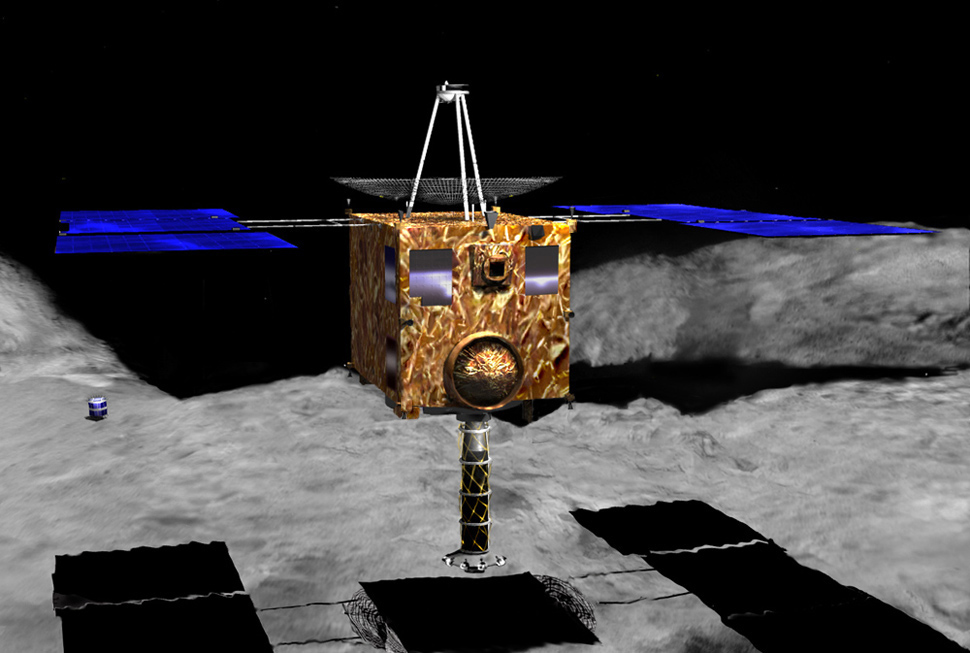
Hayabusa returns first asteroid sample to Earth
From the same era

From the same era
Moment
STS-135 Atlantis — final Space Shuttle mission
From the same era