Disclosure: We may earn a commission from purchases made through links on this page. Editorial picks are independently selected. Read our editorial standards.
Our top pick for the meteor-shower kit anchor is the Caravan Sports Infinity Zero-Gravity Recliner — your neck will thank you after three hours of sky-staring. For warmth, the REI Co-op Siesta 25 sleeping bag unzips into a quilt and is the right rating for August Perseids and December Geminids alike. For light, the Black Diamond Spot 400-R with red mode preserves your dark-adapted vision while still being bright enough to find your car keys. Below is the full kit we use for every shower from the spring Lyrids through the December Geminids.
Meteor Shower Gear Comparison
| Pick | Category | Why It's On The List | Price Tier | Buy Link |
|---|---|---|---|---|
| Caravan Sports Infinity Zero-Gravity Chair | Reclining chair | Neck-relief recline, locks at angle | $$ | Buy on Amazon → |
| REI Co-op Siesta 25 | Sleeping bag (3-season) | Zips into a quilt for warm nights | $$ | Buy on Amazon → |
| Black Diamond Spot 400-R | Headlamp w/ red mode | Real red LED, rechargeable | $ | Buy on Amazon → |
| Sky & Telescope Pocket Sky Atlas | Star atlas | Spiral-bound, lap-size, durable | $ | Buy on Amazon → |
| HotHands Hand Warmers (40-pk) | Hand warmers | 10-hour disposable warmers | $ | Buy on Amazon → |
| Stanley Classic Legendary 1.4 L Thermos | Insulated thermos | 24-hour heat retention, near-bombproof | $ | Buy on Amazon → |
| Therm-a-Rest Z Lite Sol | Foam ground pad | Insulates chair / ground from frost | $ | Buy on Amazon → |
| Stellarium Plus / Sky Safari 7 | Mobile sky app | Red night-mode, accurate radiants | $ | Buy on App Store → |
| Nemo Riff 30 (cold-weather alt) | Sleeping bag (cold) | For Geminids in northern latitudes | $$ | Buy on Amazon → |
Price tiers: $ < $100 / $$ $100–$300 / $$$ $300+
1. Caravan Sports Infinity Zero-Gravity Chair — Best Reclining Chair
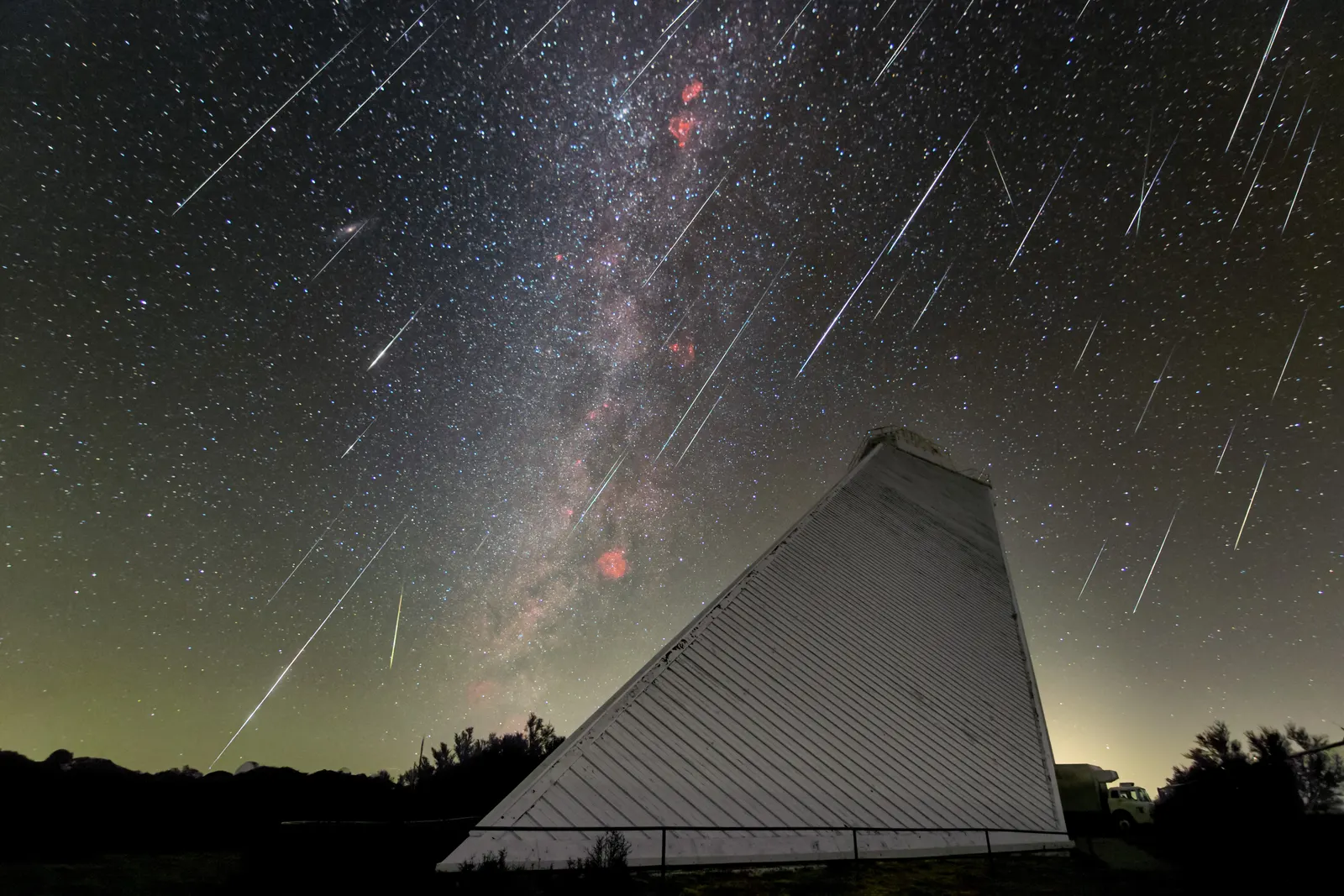
The single biggest upgrade for any meteor-shower watcher is a chair that lets you stare at the zenith without craning your neck. The Caravan Infinity is the chair almost every astronomy club ends up buying in bulk: it reclines fully flat, locks at any angle, and the pillow is positioned exactly where the back of your skull sits when you're looking 90 degrees up.
- Reclines: Full flat (180°)
- Weight capacity: 300 lb
- Folded size: ~37" × 26" × 6"
- Frame: Powder-coated steel
- Price tier: $$ (~$80–$110)
- Best for: Adults watching from a backyard, driveway, or short-walk dark site
Pros: Locks at any angle, neck-relief design is genuinely better than camping chairs, holds up to repeated dew exposure. Cons: Heavier than a camp chair (about 17 lb); not ideal for backpacking.
2. REI Co-op Siesta 25 — Best 3-Season Sleeping Bag
For meteor-shower watching specifically, you want a bag that unzips fully into a quilt — not because you'll sleep in it (you might, on a recliner) but because a quilt drapes over your legs and chest while leaving your arms free to point at fireballs. The REI Siesta 25 is a rectangular synthetic bag rated to about 25°F (-4°C) that fully unzips, with shoulder snaps that let you wear it like a poncho.
- Temperature rating: 25°F (-4°C) lower limit
- Fill: Synthetic (handles dew/damp better than down)
- Shape: Rectangular, fully unzippable
- Weight: ~3 lb
- Price tier: $$ (~$100–$140)
- Best for: Spring through fall meteor showers, dew-prone sites
Pros: Doubles as a quilt, synthetic insulation handles condensation, packs reasonably small. Cons: Synthetic is heavier than down; for hard winter use you'll want a true cold-weather bag.
3. Black Diamond Spot 400-R — Best Red-Mode Headlamp
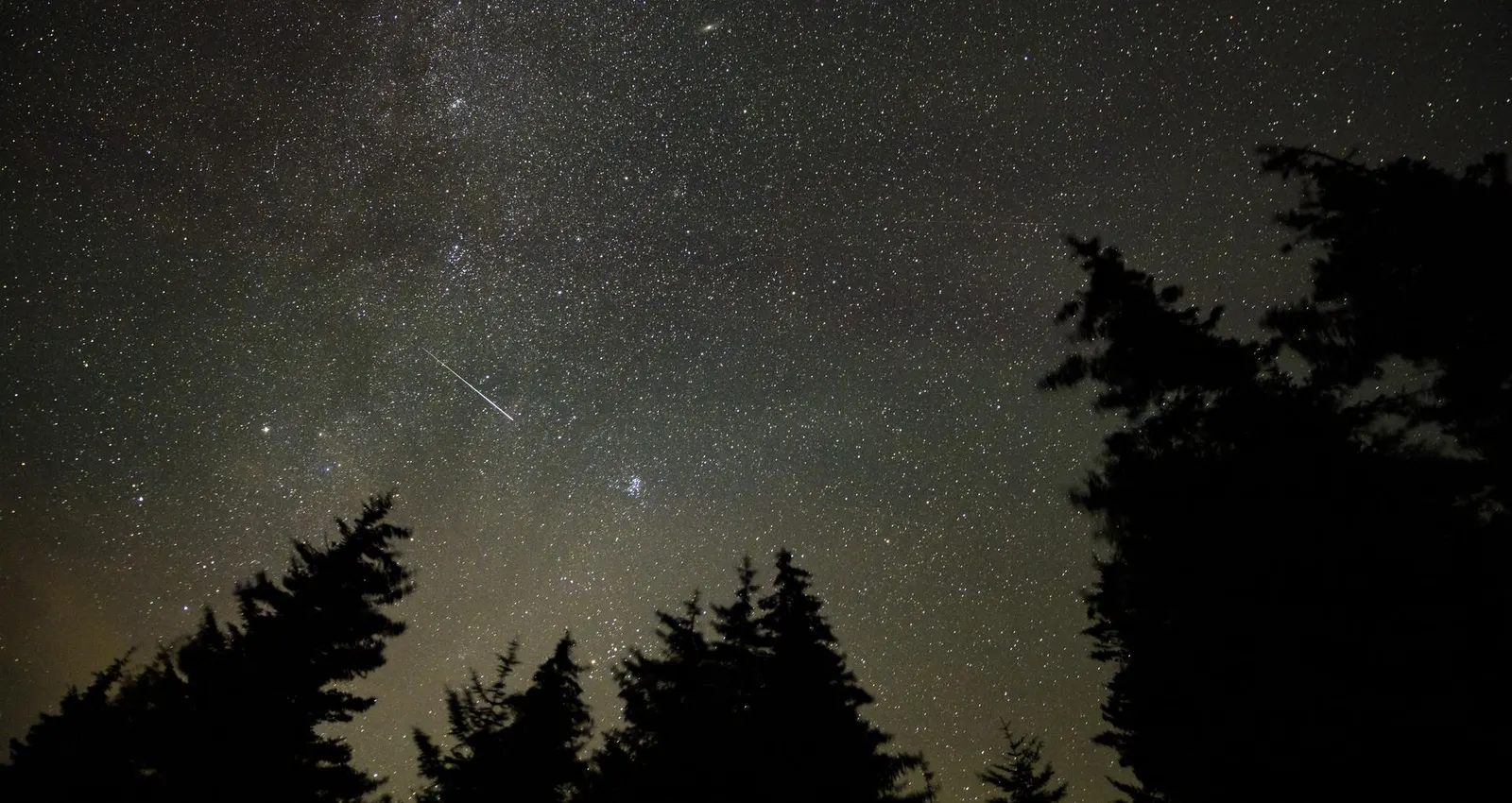
White light annihilates dark adaptation in seconds and takes 20–30 minutes to recover from. A real red LED preserves it indefinitely. The Black Diamond Spot 400-R is the standard recommendation: a true red LED (not a red filter over a white LED), rechargeable, with brightness memory that powers on at the dim setting you last used.
- Output: 400 lumens white / dim red mode
- Battery: Rechargeable Li-ion (USB-C)
- Weight: 86 g
- Waterproof: IPX8
- Price tier: $ (~$50)
- Best for: Any nighttime astronomy activity, navigating to the car, reading star charts
Pros: Real red LED, USB-C rechargeable, rugged build, dim-mode memory. Cons: Pricier than no-name red headlamps, but it's the difference between dark-adapted and not.
4. Sky & Telescope Pocket Sky Atlas — Best Star Atlas
The Pocket Sky Atlas (Jumbo or original edition) is the chart serious amateurs carry into the field. Stars to magnitude 7.6, all 109 Messier objects, hundreds of NGC targets, and a spiral binding that lays flat in your lap on a chair. For meteor shower watching specifically, knowing where the radiant is (Perseus for the Perseids, Gemini for the Geminids) lets you orient your gaze a fist or two off the radiant for the longest meteor trails.
- Format: Spiral-bound, 9.5" × 6"
- Stars to: Magnitude 7.6
- Charts: 80 main charts + close-ups
- Price tier: $ (~$25–$35)
- Best for: Anyone who wants to identify what they're seeing past "those three bright stars"
Pros: Genuinely the best paper atlas at this size, durable, no batteries needed. Cons: Northern Hemisphere oriented (a Southern edition exists separately).
5. HotHands Hand Warmers (40-pack) — Best Disposable Hand Warmers
A 40-pack of the air-activated iron-oxidation warmers from HotHands lasts a full meteor-shower season. Two in your gloves, two in your boots, two in the foot of the sleeping bag — and December Geminids in a 25°F field becomes survivable instead of miserable. They take about 30 minutes to reach full heat, so activate them on the drive out.
- Heat duration: 10+ hours per warmer (claimed)
- Type: Air-activated, iron-oxidation, single-use
- Pack: 40 individual warmers
- Price tier: $ (~$25 / 40-pack)
- Best for: Cold-weather meteor showers, especially Geminids, Quadrantids, Leonids
Pros: Cheap insurance against numb fingers, throw a pair in any pocket. Cons: Disposable (small environmental footprint). Reusable Zippo-style hand warmers are an alternative if you watch frequently.
6. Stanley Classic Legendary 1.4 L Thermos — Best Insulated Thermos
The Stanley Classic in 1.4 L (46 oz) holds enough hot tea, coffee, or hot chocolate for two people through a whole night. Stanley rates the model for 24 hours of heat retention. The hammer-tone green steel finish is essentially indestructible, which matters when it's clattering around in your trunk among camp chairs.
- Capacity: 1.4 L (46 oz)
- Heat retention: 24 hours (claimed)
- Material: Stainless steel, vacuum-insulated
- Lifetime warranty: Yes
- Price tier: $ (~$45–$55)
- Best for: Any cold-weather astronomy outing
Pros: Bombproof, holds heat overnight, doubles as a cup. Cons: Heavy (about 2 lb empty); a smaller 750 ml version exists if you go solo.
7. Therm-a-Rest Z Lite Sol — Best Foam Ground/Chair Pad
A folded section of closed-cell foam under your chair, or full-length on the ground, blocks the cold conduction that turns a 50°F night into something that feels like 30°F. The Z Lite Sol has a reflective metallized layer that boosts effective warmth by 15–20% with no batteries and no inflation.
- Material: Closed-cell foam with reflective coating
- R-value: 2.0
- Weight: ~14 oz
- Folds: Accordion-style, 5" × 20" × 5.5" packed
- Price tier: $ (~$50)
- Best for: Insulating from frosty ground or cold concrete
Pros: No inflation, no punctures, folds compact, doubles as a sit pad while waiting for full dark. Cons: Not as comfortable as an inflatable pad, but you're on a recliner anyway.
8. Stellarium Plus / Sky Safari 7 — Best Mobile Sky App
Both apps have a true red night-mode that won't kill your dark adaptation, accurate meteor-shower radiant overlays, and offline maps. Sky Safari 7 Plus is the more polished interface and better for telescope control; Stellarium Plus is the better value and matches the desktop Stellarium most amateurs already know.
- Platforms: iOS and Android
- Features: Red night mode, radiant tracking, satellite passes, planetary alignment
- Price tier: $ ($15–$30 one-time, app store)
- Best for: Identifying objects in real time, locating shower radiants
Pros: Real red mode, accurate, much better than free apps for serious work. Cons: Phone screen is a dark-adaptation hazard if you forget to enable red mode — and don't open Instagram at 2 AM.
9. Nemo Riff 30 — Cold-Weather Sleeping Bag Alternative
If you watch Geminids (December 13–14) from a high-latitude location where temperatures drop below 20°F, the Siesta isn't enough bag. The Nemo Riff 30 is a 30°F down mummy bag with a "Thermo Gills" feature that lets you vent heat without unzipping fully. At Geminid temperatures with hand warmers and a Z Lite Sol underneath, this combination is comfortable for hours.
- Temperature rating: 30°F (-1°C) comfort, lower with layers
- Fill: 800-fill RDS-certified down
- Weight: ~2 lb 7 oz
- Price tier: $$ (~$280)
- Best for: December and January meteor showers in cold climates
Pros: Genuinely warm for the weight, packs small, vents are clever. Cons: Down loses loft when wet/dewy; mummy shape limits "wear it like a poncho" use.
What to Look For
Recline Angle and Neck Support
A meteor-shower session is 2–6 hours of sky-staring. Whatever chair you use, the back of your head needs support and your neck should be in a neutral position. Camping chairs that recline only to 110° are not enough — you want 160° or fully flat.
Insulation Even on "Warm" Nights
A clear, dry sky radiates heat from your body to space at roughly 100 W/m². Even an 80°F afternoon in August can become a 50°F sky-staring session by 2 AM. Pack one layer warmer than you think you need.
Real Red LED, Not Red Filter
A genuine red LED (around 630–660 nm) preserves rod-cell dark adaptation. A red plastic filter over a white LED leaks blue and green light that destroys it. Always test the headlamp by aiming it at a white wall: if you see anything but pure red, find another headlamp.
Radiant Knowledge Doubles Your Count
The "radiant" of a meteor shower is the point in the sky meteors appear to stream from. Looking directly at the radiant gives you mostly short, head-on meteors. Looking 30–60 degrees off the radiant gives you longer trails — and substantially more meteors per hour. The IMO (International Meteor Organization) publishes radiant positions for every shower.
Light Pollution Trumps Everything
Even premium gear can't compensate for a Bortle 7 suburban sky. Drive 30–60 minutes to Bortle 4 or darker if you can. Light Pollution Map (lightpollutionmap.info) shows you where to go.
FAQ
What are the best meteor showers to watch in 2026?
Quadrantids (Jan 3–4), Lyrids (Apr 22), Eta Aquariids (May 5–6, best in Southern Hemisphere), Perseids (Aug 12–13, but waning gibbous moon will hurt), Orionids (Oct 21), Leonids (Nov 17), and Geminids (Dec 13–14, the year's best with thin crescent moon).
How long should I be outside before my eyes are dark-adapted?
Most of the adaptation happens in the first 10–15 minutes. Full adaptation takes 30–45 minutes. A single glance at a phone screen sets you back 5–10 minutes.
Do I need a telescope to see a meteor shower?
No, and a telescope actually hurts. Meteors streak across tens of degrees of sky in under a second; you want the widest possible field of view, which means naked eyes. A telescope gives you a 0.5° window — you'll miss everything.
What's the best clothing layer system?
Base layer (merino or synthetic) → insulating mid-layer (fleece or down) → wind/water-resistant shell. For your feet: wool socks, insulated boots, hand warmers in the boots. For hands: thin glove liner + insulated overmitt that you can pull off without removing the liner.
Can I bring my dog?
If your dog can stay calm for 2–3 hours and you have a safe site, yes. Dogs do not have great night vision, though, so a leash is mandatory and red light helps both of you.
How dark is dark enough?
Bortle 4 (rural skies) is the threshold where meteor counts roughly double compared to Bortle 7 suburban skies. Bortle 2 or 1 (desert / remote dark sites) can triple them again. Drive if you can.
Is it worth photographing meteors?
For most people, no — you'll spend the night fiddling with the camera instead of watching the sky. If you want photos, set up an intervalometer-driven wide-angle camera (14–24 mm) on a tripod with 15-second exposures and let it run while you watch with your eyes.
Sources
- International Meteor Organization 2026 shower calendar, imo.net
- American Meteor Society viewing guides, amsmeteors.org
- NASA Meteor Watch, blogs.nasa.gov/Watch_the_Skies
- Black Diamond Equipment Spot 400-R product specifications
- Therm-a-Rest Z Lite Sol product specifications
- Stanley 1913 product information for Classic Legendary thermos
- REI Co-op product pages for Siesta 25
- Nemo Equipment product information for Riff 30
- Sky & Telescope Pocket Sky Atlas, Sky Publishing
- Light Pollution Map, lightpollutionmap.info