Disclosure: We may earn a commission from purchases made through links on this page. Editorial picks are independently selected. Read our editorial standards.
Our top pick for 2026 is the ZWO ASI2600MC Pro for deep-sky imaging on a moderate budget — its back-illuminated Sony IMX571 APS-C sensor with set-point cooling is the sweet spot the entire hobby has converged on. For planetary work, it's the ZWO ASI678MC with its tiny pixels and 60+ FPS readout. For wide-field DSLR-style shooting, the Canon EOS Ra (refurbished) remains the only purpose-built mirrorless astro body Canon ever shipped. Below are 8 picks across budget tiers, plus a buying guide that explains why "more megapixels" is almost never the right answer.
Astrophotography Camera Comparison
| Pick | Best For | Sensor / Key Spec | Price Tier | Buy Link |
|---|---|---|---|---|
| ZWO ASI2600MC Pro | Best overall deep-sky color | Sony IMX571 APS-C, 26 MP, cooled | $$$ | Buy on Amazon → |
| ZWO ASI533MC Pro | Best beginner cooled astro cam | Sony IMX533 square 9 MP, cooled | $$ | Buy on Amazon → |
| ZWO ASI2600MM Pro | Best monochrome deep-sky | IMX571 mono, 26 MP, cooled | $$$ | Buy on Amazon → |
| QHY268C | Pro-tier alternative to ASI2600 | IMX571 APS-C, 26 MP, deeper buffer | $$$ | Buy on Amazon → |
| Player One Poseidon-C Pro | Newer challenger, IMX571 | IMX571 APS-C, 26 MP, cooled | $$$ | Buy on Amazon → |
| ZWO ASI678MC | Best planetary / lunar | Sony IMX678, 8.3 MP, 2 µm pixels | $$ | Buy on Amazon → |
| Canon EOS Ra (refurb) | Best mirrorless / wide-field | Full-frame 30 MP, H-alpha sensitive | $$$ | Buy on Amazon → |
| Nikon Z f / Z 6 III | Best modern DSLR-style for AP | Full-frame BSI, IBIS, low read noise | $$$ | Buy on Amazon → |
Price tiers: $ < $200 / $$ $200–$1,000 / $$$ $1,000+
1. ZWO ASI2600MC Pro — Best Overall Deep-Sky Camera

ZWO's ASI2600MC Pro built on the Sony IMX571 APS-C back-illuminated CMOS sensor has become the default recommendation in deep-sky imaging, and for good reason. The 26-megapixel chip with 3.76 µm pixels offers extremely low read noise (around 1.0–3.5 e- depending on gain), zero amp glow, and a 16-bit ADC. The two-stage thermoelectric cooler holds the sensor at 35°C below ambient, which crushes thermal noise on long exposures.
- Sensor: Sony IMX571, APS-C, 23.5 × 15.7 mm
- Resolution: 6248 × 4176 (26 MP)
- Pixel size: 3.76 µm
- Cooling: Regulated TEC, ΔT = 35°C
- Price tier: $$$ (~$1,999)
- Best for: Galaxies, nebulae, broadband and narrowband one-shot color imaging from suburban or dark skies
Pros: Reference-class sensor, no amp glow, excellent dynamic range, huge community support and target libraries. Cons: Needs a 2-inch filter drawer or filter wheel; large image circle requires a full-frame-corrected scope; ~$2,000 price tag.
2. ZWO ASI533MC Pro — Best Beginner Cooled Astro Camera
If the ASI2600 is too much money or too much sensor for your scope's image circle, the ASI533MC Pro is the friendliest entry point into dedicated astro cameras. Its square Sony IMX533 sensor is small (about 11.3 × 11.3 mm), which means almost any optical train will fully illuminate it without flat-field gymnastics, and the square format eliminates the "rotate the camera to frame it" problem.
- Sensor: Sony IMX533, square format
- Resolution: 3008 × 3008 (9 MP)
- Pixel size: 3.76 µm
- Cooling: Regulated TEC, ΔT = 35°C
- Price tier: $$ (~$799)
- Best for: First cooled astro cam, smaller refractors, tighter targets like planetary nebulae and galaxies
Pros: Zero amp glow, tiny but high-QE sensor, very tolerant of imperfect optics, square framing. Cons: Only 9 MP — not enough resolution for very wide mosaics or huge prints.
3. ZWO ASI2600MM Pro — Best Monochrome Deep-Sky
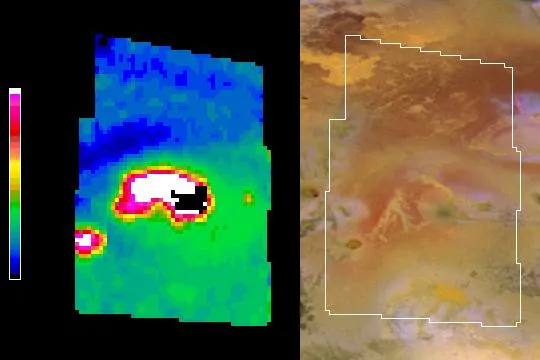
The monochrome version of the IMX571 is what serious narrowband imagers reach for. Without the Bayer color filter array, every pixel sees all the photons, which roughly doubles signal-to-noise and lets you build up Hubble-palette SHO images using H-alpha, OIII, and SII filters. The trade-off is complexity: you need a filter wheel, narrowband filters, and the discipline to combine separate channels in post.
- Sensor: IMX571 monochrome, APS-C
- Resolution: 6248 × 4176 (26 MP)
- Pixel size: 3.76 µm
- Cooling: Regulated TEC, ΔT = 35°C
- Price tier: $$$ (~$1,999 body, plus filters and wheel)
- Best for: Narrowband nebula imaging, LRGB galaxy work, bortle 6+ skies
Pros: Best signal-to-noise per minute of any camera in this guide; narrowband cuts through light pollution. Cons: Requires a filter wheel and a set of filters — adds $800–$2,000 to total system cost.
4. QHY268C — Pro Alternative to ASI2600
QHY's 268C uses the same Sony IMX571 sensor as the ZWO ASI2600MC Pro, but in QHY's housing with their own electronics, larger DDR3 frame buffer, and a slightly different cooling design. Image quality is functionally identical to the ZWO at the sensor level. The buffer matters when imaging on high-data-rate setups (USB hubs, multi-camera rigs) because dropped frames are less likely.
- Sensor: Sony IMX571 APS-C, 26 MP
- Pixel size: 3.76 µm
- Cooling: Two-stage TEC, ΔT = 35°C
- Price tier: $$$ (~$1,799–$1,999)
- Best for: Imagers who already own QHY accessories or prefer QHY's software ecosystem
Pros: Same world-class sensor, larger DDR buffer, well-built. Cons: Smaller third-party accessory ecosystem than ZWO; firmware updates less frequent than ZWO's.
5. Player One Poseidon-C Pro — The Newer IMX571 Challenger
Player One Astronomy is the newest of the big three Chinese astro-camera brands, and the Poseidon-C Pro has built a strong reputation with reviewers since launch. It uses the same IMX571 chip as ZWO and QHY, but adds Player One's distinctive features: a built-in tilt adjuster on the front housing, an argon-filled chamber to combat dewing on the sensor window, and a 256 MB DDR3 buffer.
- Sensor: Sony IMX571 APS-C, 26 MP
- Pixel size: 3.76 µm
- Cooling: Regulated TEC, ΔT ≈ 35°C
- Price tier: $$$ (~$1,799)
- Best for: Imagers fighting tilt errors with fast astrographs, humid climates
Pros: Built-in tilt plate, argon-purged chamber, identical core sensor performance to ZWO/QHY. Cons: Smaller community; ASIAIR-style ecosystem support is improving but still trails ZWO.
6. ZWO ASI678MC — Best Planetary and Lunar Camera
Planetary imaging has different rules than deep-sky imaging. Instead of long exposures and cooling, you want tiny pixels (to match the ~F/15–F/30 focal ratios planetary work demands), high frame rates, and very low read noise. The ASI678MC, built around the Sony IMX678 sensor with 2.0 µm pixels, hits all three.
- Sensor: Sony IMX678, 1/1.8"
- Resolution: 3840 × 2160 (8.3 MP)
- Pixel size: 2.0 µm
- Frame rate: 47 FPS at full resolution, much higher with ROI
- Price tier: $$ (~$499)
- Best for: Jupiter, Saturn, Mars, lunar close-ups, double-star work
Pros: Tiny pixels match high-magnification planetary scale; high QE; quick frame rates for lucky imaging. Cons: Sensor too small and noisy on long exposures for deep-sky use.
7. Canon EOS Ra (Refurbished) — Best Mirrorless / Wide-Field
Canon's EOS Ra is the rare astro-modified body shipped from a major camera manufacturer. It's a Canon EOS R (full-frame 30 MP mirrorless) with the IR-cut filter modified to pass roughly 4× more H-alpha light, making red emission nebulae bloom in a way no stock mirrorless can match. Canon discontinued the Ra in 2022, but refurbished and lightly used bodies still circulate.
- Sensor: Full-frame CMOS, 30 MP
- Modification: Extended H-alpha sensitivity (~656 nm)
- Body: Canon RF mount, in-camera intervalometer
- Price tier: $$$ (~$1,800–$2,500 used/refurb)
- Best for: Wide-field Milky Way panoramas, nightscapes, untracked or barn-door tracker work
Pros: Full-frame, in-body intervalometer, daytime-usable, large RF lens lineup. Cons: No active cooling — thermal noise on warm summer nights; out of production; commands a premium on the used market.
8. Nikon Z f / Z 6 III — Best Modern Mirrorless for Astro
If you want a brand-new mirrorless body that pulls double duty as your daily camera and your astro camera, the Nikon Z f and Z 6 III both use BSI CMOS sensors with dual-conversion-gain readout that drops read noise dramatically at higher ISO. Neither is astro-modified, but star color and tracked deep-sky framing on tracker mounts (Sky-Watcher Star Adventurer GTi, iOptron SkyGuider Pro) are excellent out of the box.
- Sensor: Full-frame BSI CMOS, ~24 MP
- Key feature: Low read noise, IBIS, in-camera intervalometer
- Price tier: $$$ (~$2,000–$2,500 body)
- Best for: Nightscapes, Milky Way, untracked wide-field, star trackers, daytime use
Pros: Dual-use camera, extraordinary high-ISO performance, modern AF. Cons: Stock IR-cut filter blocks most H-alpha, so red nebulae render dim; no active cooling.
What to Look For
Sensor (and Why It Matters More Than Megapixels)
The sensor determines almost everything: signal-to-noise, dynamic range, color fidelity, and how much faint nebulosity you can pull out of a light-polluted suburban sky. The Sony IMX571 (used in ASI2600, QHY268, Poseidon-C) is the consensus best APS-C astro sensor of the past five years. The IMX533 is its smaller-format sibling. Avoid older CCDs unless you have a specific reason.
Cooling
Thermal noise doubles roughly every 6–7°C. A regulated thermoelectric cooler (TEC) that holds your sensor at -10°C even when it's 25°C outside lets you stack 5- or 10-minute subexposures without painting the histogram with hot pixels. For long-exposure deep-sky imaging from anywhere except the dead of winter, cooling is the single biggest image-quality upgrade you can buy.
Pixel Size vs. Telescope
Match pixel size to telescope focal length. The rough rule: image scale (arcseconds per pixel) = (pixel size in microns / focal length in mm) × 206. For deep-sky, you want about 1.0–2.5 "/pixel. For planetary at F/20–F/30, you want around 0.2–0.5 "/pixel. Mismatch and you either waste resolution or oversample the seeing.
Read Noise and Gain
Modern CMOS astro cameras use unity-gain readouts where read noise drops to 1–2 electrons. That's transformative — it means you can stack many short subs (30–60 seconds) instead of one long sub, which makes mount tracking errors much less punishing.
Filter Compatibility
A color (OSC) camera is a one-and-done purchase. A monochrome camera is a system: you'll add a filter wheel, an LRGB filter set, and probably narrowband filters. Budget another $800–$2,000 for the mono ecosystem before you commit.
FAQ
Is a DSLR or dedicated astro camera better for beginners?
A DSLR or mirrorless is better if you want a dual-use camera and you're starting with a star tracker. A dedicated cooled astro camera is better if you've committed to the hobby, you have a tracking mount and a guide scope, and you want to push toward narrowband and faint-object imaging. The ASI533MC Pro is the gentlest entry into dedicated astro.
Do I need a monochrome camera?
Not for your first camera. One-shot color (OSC) cameras give you immediate, gorgeous results and are roughly half the system cost of a mono workflow. Move to mono only after you've spent a year with OSC and want either narrowband from light-polluted skies or maximum signal-to-noise on faint targets.
How much does cooling actually matter?
A lot. A 2024 Cloudy Nights side-by-side test of an uncooled IMX571 vs. the same chip cooled to -10°C showed roughly 4× lower thermal noise on 5-minute subs at 25°C ambient. For long exposures in summer, cooling is non-negotiable.
Will any of these cameras work with my smart telescope?
No. Smart telescopes (ZWO Seestar, Vaonis Vespera, Unistellar) use their own integrated sensors and are sealed systems. The cameras in this guide attach to traditional telescopes with a focuser and (usually) a filter drawer or wheel.
What about the Sony A7S III for astro?
The A7S III is excellent for video and Milky Way nightscapes thanks to its 12 MP large-pixel sensor, but for deep-sky tracked work the resolution is too low and it has no astro modification. It's a great Milky Way camera, not a great deep-sky camera.
Can I use one of these on Jupiter and on the Andromeda Galaxy?
Sort of. The ASI2600MC Pro is excellent at deep-sky and competent at planetary. The ASI678MC is excellent at planetary and useless at deep-sky. If you want to do both seriously, you'll end up with two cameras — the planetary cam is small and inexpensive enough that this is normal.
How long until I outgrow the ASI533MC Pro?
For most imagers, never. People win NASA APOD with that sensor regularly. You'll outgrow it only if you specifically want larger image circles for full-frame mosaics or you switch to mono narrowband.
Sources
- ZWO ASI camera product specifications, astronomy-imaging-camera.com
- QHYCCD product pages, qhyccd.com
- Player One Astronomy product specifications, player-one-astronomy.com
- Sony Semiconductor IMX571 / IMX533 / IMX678 sensor datasheets
- Canon EOS Ra technical specifications, Canon USA
- Nikon Z f and Z 6 III specifications, Nikon Imaging
- Cloudy Nights forum reviews and side-by-side sensor comparisons, cloudynights.com
- AstroBin equipment database and image data, astrobin.com
- NASA Astronomy Picture of the Day equipment annotations, apod.nasa.gov