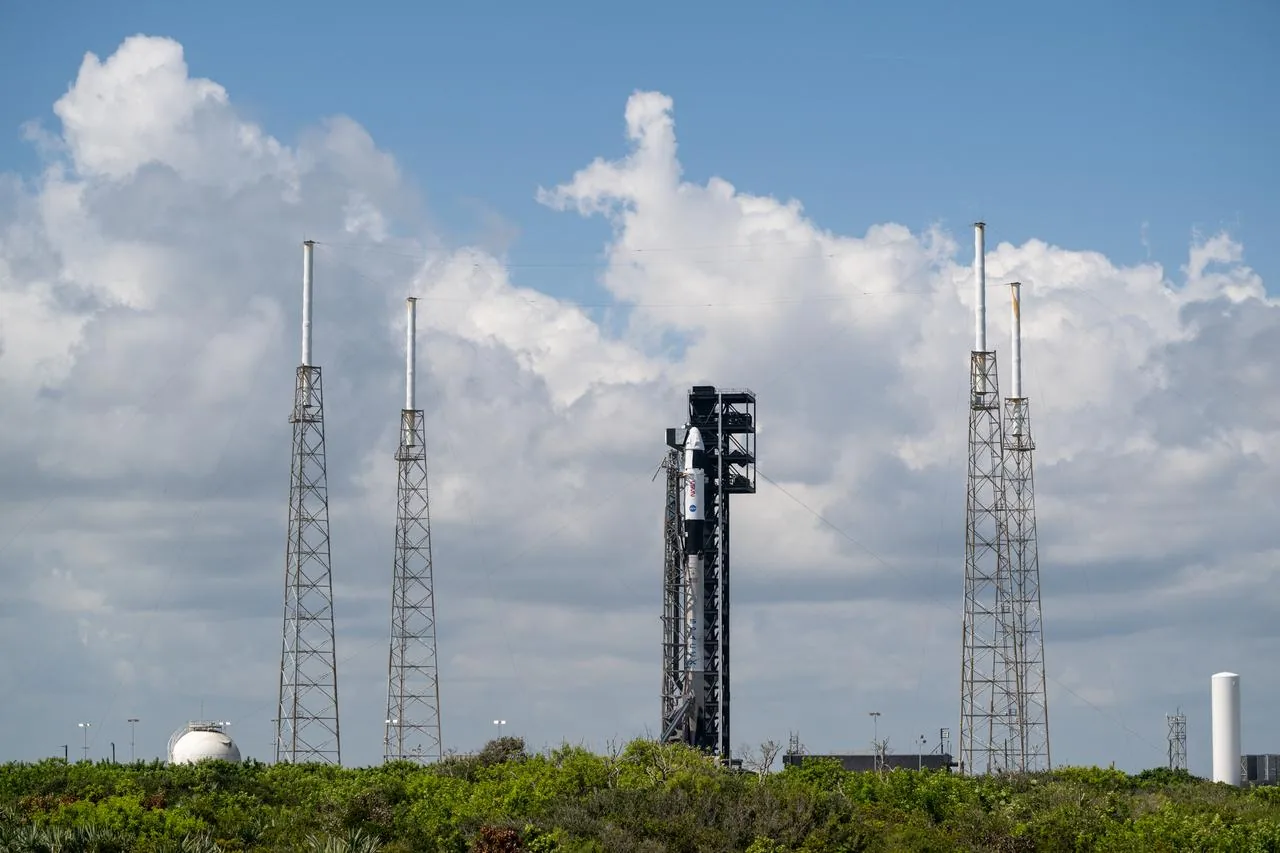
Somewhere in a centuries-old building in the City of London, a syndicate of underwriters is calculating the probability that a rocket will explode four minutes after liftoff, destroying a $300 million communications satellite. They are not guessing. They have decades of actuarial data, proprietary risk models, and engineering reviews that would rival anything NASA produces. And they are writing a policy that could pay out more money in a single claim than most insurance companies see in a year.
Welcome to the world of space insurance -- a niche, fascinating, and enormously consequential industry that most people have never heard of, but which quietly underpins the entire commercial space economy.
What Gets Insured in Space?
Space insurance generally falls into three categories, each covering a distinct phase of a mission's life.
Pre-Launch and Launch Insurance
This covers the period from when a satellite arrives at the launch site through liftoff and the initial minutes of flight, typically until the spacecraft separates from the rocket and enters its intended orbit. Launch insurance is the most dramatic (and most expensive) category because rocket launches remain inherently high-energy events where catastrophic failure, while rare, is never impossible.
A launch insurance policy for a commercial communications satellite on a Falcon 9 might cost 3-5% of the insured value. For a $200 million satellite, that translates to $6-10 million in premium. For newer or less proven rockets, premiums can be significantly higher -- sometimes 10-15% or more -- reflecting the greater uncertainty.
In-Orbit Insurance
Once a satellite reaches orbit and begins operations, it faces a different set of risks: component failures, solar array degradation, propellant leaks, radiation damage, and the growing threat of space debris collision. In-orbit insurance covers these operational risks, typically on an annual renewable basis.
In-orbit premiums are generally lower than launch premiums, often in the 0.5-1.5% range of the satellite's insured value per year, because the most dangerous phase (launch) is already complete. However, as satellites age and their systems degrade, in-orbit coverage can become more expensive or difficult to obtain.
Third-Party Liability Insurance
Governments require launch operators to carry liability insurance covering potential damage to third parties. In the United States, the Federal Aviation Administration requires launch licensees to carry liability coverage -- typically $500 million per launch for third-party damage. This covers scenarios like a rocket failing and debris striking a populated area or damaging another spacecraft.
The Outer Space Treaty of 1967 and the Liability Convention of 1972 establish that launching states are internationally liable for damage caused by their space objects. Liability insurance transfers some of this financial risk from operators (and by extension, governments) to the insurance market.
How Premiums Are Calculated

Space insurance underwriting is both an art and a science. Underwriters evaluate a complex matrix of factors:
Launch vehicle track record. The single most important variable. A Falcon 9, with over 300 successful launches as of early 2025, commands lower premiums than a rocket with five flights to its name. Every launch adds data; every failure raises rates -- not just for the failed rocket, but sometimes for the entire market.
Satellite design and heritage. A satellite built on a proven bus with flight-heritage components is less risky than a novel design. Underwriters review technical documentation in detail, often hiring independent engineering consultants.
Orbit and mission profile. Geostationary orbit missions involve complex multi-burn sequences and are generally riskier (and more expensive to insure) than simple low-Earth orbit deployments. Interplanetary missions may be effectively uninsurable on the commercial market.
Operator experience. A satellite operator with decades of experience managing on-orbit assets gets better terms than a first-time operator.
Aggregate market conditions. Like all insurance markets, space insurance is cyclical. After a period of major losses, premiums harden (rise). During loss-free periods, competition among underwriters drives premiums down, sometimes to levels that experienced industry observers consider unsustainably low.
Historic Claims: When Things Go Very Wrong
The space insurance industry has absorbed some truly spectacular losses.
In 2013, the Proton-M launch failure destroyed three GLONASS navigation satellites, resulting in a claim estimated at over $200 million. Russian launch vehicles experienced several high-profile failures in the 2010s, causing premiums for Proton launches to spike dramatically.
The Intelsat 33e satellite, launched in 2016, experienced a propulsion system anomaly that reduced its operational lifespan. The subsequent in-orbit insurance claim was among the largest in recent space insurance history, reportedly in the range of $400 million. It was a vivid illustration of how a single technical issue can cascade into an enormous financial loss.
The total destruction of the Amos-6 satellite in 2016 -- destroyed on the launch pad when a Falcon 9 exploded during a pre-flight fueling test -- resulted in claims estimated at around $285 million and briefly shook confidence in the market's ability to absorb concentrated losses.
Over its history, the space insurance industry has paid out billions in claims while collecting billions in premiums. The long-term loss ratio (claims paid divided by premiums collected) has historically hovered around 65-80%, though individual years can swing wildly.
Lloyd's of London: The Heart of the Market
While space insurance is underwritten globally, Lloyd's of London has been its spiritual and practical home since the early days of commercial satellite insurance in the 1960s. Several Lloyd's syndicates specialize in space risk, and the Lloyd's market has historically accounted for a significant share of global space insurance capacity.
The space desk at Lloyd's is a surprisingly small world. Perhaps a few dozen senior underwriters globally have the deep expertise required to evaluate launch and in-orbit risks. These individuals combine engineering knowledge with actuarial skill, and their judgment calls -- how they assess a new rocket or a novel satellite design -- can determine whether a mission gets funded.
Other key players in the market include major reinsurers like Munich Re, Swiss Re, and Hannover Re, which provide the large-scale capital backing that allows primary insurers to write the enormous policies that space requires. Specialist brokers like Marsh, Aon, and Gallagher serve as intermediaries, structuring placements that spread risk across multiple underwriters.
Mega-Constellations: A Market-Changing Challenge
The rise of mega-constellations -- SpaceX's Starlink, Amazon's Project Kuiper, OneWeb -- has fundamentally disrupted the space insurance model. Traditionally, space insurance was built around insuring a small number of very expensive, individually crafted satellites. A single GEO communications satellite might cost $200-400 million, and the loss of one was catastrophic for its operator.
Mega-constellations invert this model. Starlink satellites cost roughly $250,000-500,000 each to manufacture and are produced in enormous quantities. The loss of a single satellite -- or even a batch of 40 -- is operationally insignificant. SpaceX has lost satellites to solar storms, deployment anomalies, and the normal attrition of operating in low orbit, and the constellation continues to function perfectly.
This has led to a significant trend: self-insurance. SpaceX does not purchase traditional launch or in-orbit insurance for Starlink satellites. The company's launch cadence and manufacturing scale make it more economical to absorb losses internally than to pay premiums to the insurance market. Amazon is expected to take a similar approach with Kuiper.
The implication for the space insurance industry is profound. The fastest-growing segment of the satellite market -- mega-constellations -- is largely bypassing the insurance market entirely. This forces traditional space insurers to focus on higher-value, lower-frequency missions: GEO communications satellites, government payloads, and scientific missions.
Market Size and Outlook
The global space insurance market generates approximately $450-500 million in annual premiums, a figure that has been relatively stable in recent years despite the explosive growth of the broader space economy. This apparent disconnect reflects the self-insurance trend and the soft pricing environment that has characterized the market during recent loss-free periods.
Industry experts see both challenges and opportunities ahead. The growing problem of space debris could lead to an increase in collision-related claims, potentially driving premiums higher. The emergence of in-space servicing missions (repairing or refueling satellites in orbit) could create entirely new insurance products. And as new nations enter the space sector, regulatory requirements for liability insurance will expand the customer base.
Space insurance may never be a household name, but it is the invisible infrastructure that makes the commercial space economy possible. Every satellite beaming internet to a rural village, every weather satellite tracking a hurricane, every GPS signal guiding a driver -- all of these services exist, in part, because someone in a London office building agreed to underwrite the risk of putting them there.
This article is not financial or insurance advice. The space insurance market is complex and highly specialized. Consult qualified insurance and financial professionals for specific guidance.