Ranked by peak heliocentric speed (speed relative to the Sun), Parker Solar Probe holds the all-time record at approximately 191 km/s during its closest perihelion (Dec 24, 2024 — about 6.9 solar radii from the Sun's surface). Helios 2 (~70.2 km/s) and Helios 1 (~66 km/s) held the previous records from 1976 to 2018. Voyager 1, often misquoted as "the fastest spacecraft," is actually only ninth on this list — its 17 km/s heliocentric speed is impressive only because it's escaping the solar system. Below is the verifiable top 10.
Comparison Summary Table
| Rank | Spacecraft | Operator | Peak Heliocentric Speed | When/Where Achieved | Launch Year |
|---|---|---|---|---|---|
| 1 | Parker Solar Probe | NASA / JHU APL | ~191 km/s (688,000 km/h) | Perihelion 22, Dec 24, 2024 | 2018 |
| 2 | Helios 2 | NASA / DLR | ~70.2 km/s | Perihelion, Apr 17, 1976 | 1976 |
| 3 | Helios 1 | NASA / DLR | ~66.7 km/s | Perihelion, Mar 15, 1975 | 1974 |
| 4 | Juno | NASA | ~58 km/s | Jupiter perijove (encounter speed) | 2011 |
| 5 | Galileo | NASA / ESA | ~48 km/s | Jupiter atmospheric probe entry | 1989 |
| 6 | Pioneer 11 | NASA | ~36 km/s | Jupiter flyby gravity assist | 1973 |
| 7 | Pioneer 10 | NASA | ~36 km/s | Jupiter flyby gravity assist | 1972 |
| 8 | Voyager 2 | NASA | ~22 km/s (Neptune assist peak) | Neptune flyby, Aug 1989 | 1977 |
| 9 | Voyager 1 | NASA | ~17 km/s heliocentric (current asymptotic) | Cruise / interstellar | 1977 |
| 10 | New Horizons | NASA / JHU APL | ~16.26 km/s heliocentric (post-Jupiter assist) | Cruise after Jupiter, 2007 | 2006 |
Speeds are heliocentric (relative to the Sun). Numbers vary depending on whether they describe encounter speed, escape speed, or current cruise speed; the table notes which condition applies.
1. Parker Solar Probe — ~191 km/s
Peak speed achieved: December 24, 2024 (Perihelion 22).
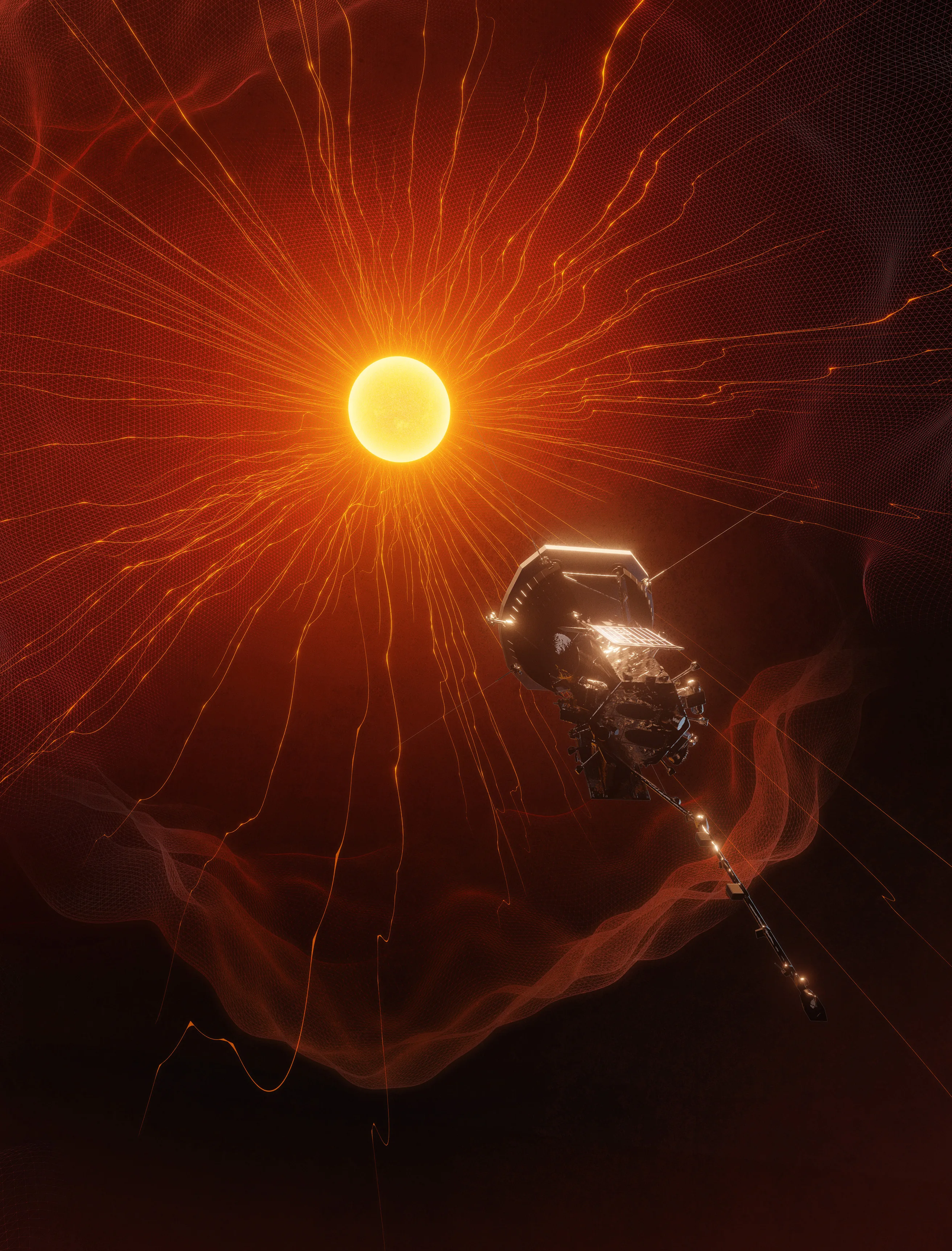
Parker Solar Probe is the fastest object humans have ever built. On December 24, 2024 — Christmas Eve — the spacecraft made the closest-ever approach to the Sun, passing approximately 6.9 solar radii (about 6.1 million kilometers) above the Sun's surface and reaching a peak heliocentric speed of approximately 191 km/s (about 688,000 km/h, or 0.064% the speed of light).
Parker achieves these speeds by losing orbital energy through repeated Venus gravity assists — seven flybys total — that progressively shrink its orbit's perihelion. Each close approach is faster than the last. The mission has operated continuously since launch in August 2018, surviving solar irradiance levels approximately 475 times greater than at Earth's orbit by hiding behind a 2.4-meter-diameter, 11.4-cm-thick carbon-composite heat shield.
The probe is in an extended mission phase as of 2026 and continues to pass the Sun every 88 days. (NASA Parker Solar Probe)
2. Helios 2 — ~70.2 km/s
Peak speed achieved: April 17, 1976.
Helios 2 was the second of two NASA–West German solar physics probes. Launched January 1976, it passed within 43.4 million kilometers of the Sun (closer than Helios 1's perihelion of 47.0 million km), and at that perihelion in April 1976 it reached a peak heliocentric speed of approximately 70.2 km/s — a record that stood for 42 years until Parker Solar Probe broke it in October 2018 on its first close approach.
Helios 2 stopped returning data in 1980 due to a failed transmitter, but it remains in heliocentric orbit and crosses Earth's orbit roughly every 187 days. The mission validated theories of solar wind acceleration and remains a scientific reference dataset.
NASA's Helios mission page documents the orbital parameters. (NASA NSSDCA Helios 2)
3. Helios 1 — ~66.7 km/s
Peak speed achieved: March 15, 1975.
Helios 1, Helios 2's predecessor, launched December 1974 and made its closest perihelion in March 1975 at approximately 47.0 million kilometers from the Sun. Peak heliocentric speed was about 66.7 km/s — the world record holder until Helios 2 broke it 13 months later.
Both Helios spacecraft were built by what was then West Germany (today's DLR) with NASA contributing the launch (Titan IIIE-Centaur) and ground tracking. The two probes pioneered every aspect of close-Sun mission design, from heat-resistant materials to high-data-rate solar wind instruments.
Like Helios 2, Helios 1 is still in heliocentric orbit but is no longer transmitting. (NASA NSSDCA Helios 1)
4. Juno — ~58 km/s (Jupiter perijove)

Peak speed achieved: at perijove during Jupiter polar orbits.
Juno entered Jupiter orbit in July 2016 on a highly elliptical 53-day polar orbit. At each perijove (closest approach to Jupiter), it passes approximately 4,200 km above the cloud tops at speeds reaching approximately 58 km/s relative to Jupiter, plus Jupiter's own ~13 km/s heliocentric speed — putting Juno's peak heliocentric speed during perijove at approximately 70+ km/s in some configurations, although the more commonly cited Jupiter-relative speed is ~58 km/s.
We list Juno here based on its peak Jupiter-relative speed, since it is the fastest a spacecraft has reliably moved in a planet-relative frame outside of solar perihelion conditions. Juno's mission has been extended through 2025, with continued observations of Jupiter's moons Io, Europa, and Ganymede.
NASA's Juno mission page is the reference. (NASA Juno)
5. Galileo Atmospheric Probe — ~48 km/s
Peak speed achieved: December 7, 1995 (Jupiter atmospheric entry).
The Galileo mission's atmospheric probe entered Jupiter's upper atmosphere at approximately 48 km/s on December 7, 1995 — making it the fastest atmospheric entry by a human-built object. The probe survived deceleration forces of approximately 230 g's (the highest ever endured by a spacecraft), deployed its parachute, and transmitted data for 58 minutes as it descended to a depth of approximately 150 km below the cloud tops before being crushed by atmospheric pressure.
The Galileo orbiter itself reached lower peak speeds during its Jupiter orbit insertions and tour. We rank the probe entry separately because it represents a distinct extreme of spaceflight engineering.
NASA's Galileo legacy page archives the probe data. (NASA Galileo Probe)
6. Pioneer 11 — ~36 km/s (post-Jupiter)
Peak speed achieved: December 1974 Jupiter flyby.
Pioneer 11 used Jupiter for a gravity assist that bent its trajectory toward Saturn (first Saturn flyby ever, September 1979). At Jupiter encounter, the spacecraft reached a peak heliocentric speed of approximately 36 km/s. After the Jupiter assist, Pioneer 11 was on a Sun-escape trajectory.
NASA last successfully contacted Pioneer 11 in November 1995 at approximately 6.5 billion km from the Sun. The spacecraft is now thought to be heading toward the constellation Aquila, where it will pass near a star in approximately 4 million years. (NASA NSSDCA Pioneer 11)
7. Pioneer 10 — ~36 km/s (post-Jupiter)
Peak speed achieved: December 1973 Jupiter flyby.
Pioneer 10's December 1973 Jupiter flyby gave it a Sun-escape velocity and a peak heliocentric speed of approximately 36 km/s. Pioneer 10 was the first spacecraft to traverse the asteroid belt and the first to flyby Jupiter, a year before Pioneer 11. Last contact was January 2003 at approximately 80 AU.
Pioneer 10 carries an engraved gold-anodized plaque showing the spacecraft's origin and a man and woman to scale. Pioneer 10's trajectory carries it toward the star Aldebaran, which it would reach in approximately 2 million years. (NASA NSSDCA Pioneer 10)
8. Voyager 2 — ~22 km/s (Neptune assist peak)
Peak speed achieved: 1989 Neptune flyby.
Voyager 2 received gravity assists from Jupiter (1979), Saturn (1981), Uranus (1986), and Neptune (1989). The Neptune flyby gave it a final boost that left the spacecraft moving at approximately 22 km/s heliocentric. After Neptune, Voyager 2's trajectory took it out of the ecliptic plane to the south and into interstellar space (heliopause crossing November 2018).
Current heliocentric speed has decreased slightly to approximately 15.4 km/s as the spacecraft loses kinetic energy to the Sun's gravitational well, but the asymptotic escape speed remains positive (no return). (NASA Voyager)
9. Voyager 1 — ~17 km/s heliocentric (asymptotic)
Current cruise speed: ~17 km/s.
Voyager 1's faster trajectory (compared to Voyager 2) and closer Saturn approach gave it the higher escape speed of the two probes. Its current cruise speed is approximately 17 km/s heliocentric and it is the most distant human artifact, more than 165 AU from the Sun as of mid-2026.
Voyager 1 is often described in popular media as "the fastest spacecraft," which is inaccurate — it is the most distant, but probes like Parker Solar Probe and Helios 2 have moved several times faster. The confusion likely stems from Voyager 1 being on a Sun-escape trajectory (positive asymptotic speed) while close-Sun probes oscillate to high peaks but also slow down. (NASA Voyager 1 Status)
10. New Horizons — ~16.26 km/s (post-Jupiter)
Peak heliocentric speed (cruise): ~16.26 km/s after 2007 Jupiter assist.
New Horizons was launched on the fastest Earth-departure trajectory ever achieved — its Atlas V 551 with a Star 48B kick stage gave it an Earth-relative escape speed of approximately 16.26 km/s, the highest of any spacecraft at the time of launch. After its February 2007 Jupiter gravity assist, its heliocentric cruise speed peaked at approximately 16.26 km/s outbound, slightly below the post-Neptune-assist peak of Voyager 2 but on a faster overall departure.
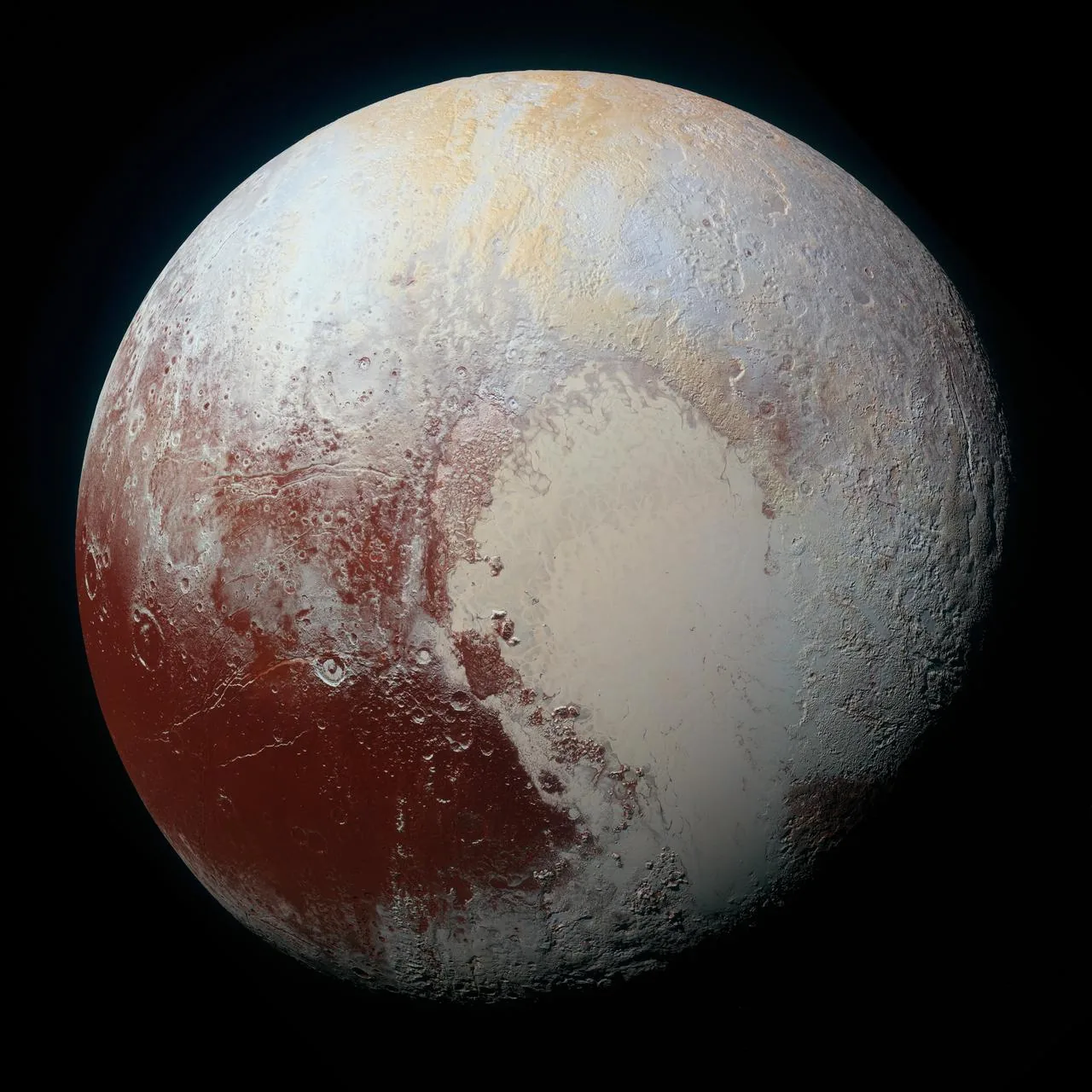
New Horizons performed the first Pluto flyby (July 2015) and the most distant solar-system object encounter ever — Kuiper Belt object Arrokoth (January 2019) — and is now in its second extended mission. (NASA New Horizons)
Methodology / How We Ranked
We ranked by peak heliocentric speed — the maximum speed each spacecraft achieved relative to the Sun, the standard frame for comparing solar-system spacecraft. We used NASA mission ephemeris data, JPL Horizons system records, and operator press kits for each peak.
Where a spacecraft has multiple speed regimes (cruise, encounter, perihelion), we used the highest single-instant speed verified by ground tracking or telemetry. We note clearly which condition produced the peak.
We excluded:
- Theoretical or design-mission speeds that have not been flight-verified (e.g., proposed Solar Probe Plus extensions).
- Spacecraft launched but failed before reaching their nominal peak (Mars Climate Orbiter, etc.).
- Earth-orbiting satellites where "peak speed" is dominated by orbital mechanics, not propulsive intent.
- Sample-return capsules during Earth atmospheric entry — those reach high speeds but are passive returns, not propulsive missions.
A note on Voyager 1: it is the most distant human-made object, but not the fastest. Parker Solar Probe is moving more than 10× faster at perihelion than Voyager 1 has ever moved. Confusion between the two records is widespread.
FAQ
What is the fastest spacecraft humans have ever built? Parker Solar Probe, at approximately 191 km/s (688,000 km/h) at its December 24, 2024 perihelion. This is the all-time record for any human-made object.
Is Voyager 1 the fastest spacecraft? No. Voyager 1 is the most distant human-made object, but its heliocentric speed (~17 km/s) is far slower than several spacecraft on this list. The two records — speed and distance — are commonly confused.
Why is Parker Solar Probe so much faster than the rest? Parker uses repeated Venus gravity assists to lose orbital energy and shrink its perihelion. Each close approach to the Sun produces a higher peak speed. By Perihelion 22 (the 22nd close pass), the orbit had been tightened enough to produce a perihelion speed roughly 2.7× faster than Helios 2's record.
How do these speeds compare to the speed of light? Parker Solar Probe at 191 km/s is moving at approximately 0.064% the speed of light. To reach the nearest star (Proxima Centauri, 4.24 light-years away) at this speed would still take about 6,650 years.
What is the fastest a spacecraft has been launched from Earth? New Horizons, in January 2006 — Earth-relative escape speed of approximately 16.26 km/s. This record stood until Parker Solar Probe (which launched at a slightly lower Earth-relative speed but used Venus assists to reach much higher heliocentric speeds).
Will any future spacecraft go faster? NASA's Interstellar Probe concept (proposed for 2030s launch) targets ~25 km/s heliocentric cruise speed using a Jupiter gravity assist plus a solar Oberth maneuver. None of these are yet funded as missions. Parker's record of 191 km/s perihelion speed is unlikely to be challenged in the next decade unless a follow-on close-Sun mission is funded.
What about the proposed Helios 3 / Solar Polar mission? ESA's Solar Orbiter (launched 2020) reaches perihelion speeds of about 53 km/s — faster than Voyager but much slower than Parker. There is no current funded mission that targets Parker's record.
Sources
- NASA Parker Solar Probe: https://www.nasa.gov/mission/parker-solar-probe/
- JHU APL Parker Solar Probe: https://parkersolarprobe.jhuapl.edu/
- NASA NSSDCA Helios 1: https://nssdc.gsfc.nasa.gov/nmc/spacecraft/display.action?id=1974-097A
- NASA NSSDCA Helios 2: https://nssdc.gsfc.nasa.gov/nmc/spacecraft/display.action?id=1976-003A
- NASA Juno: https://www.nasa.gov/mission/juno/
- NASA Galileo: https://solarsystem.nasa.gov/missions/galileo/overview/
- NASA NSSDCA Pioneer 10: https://nssdc.gsfc.nasa.gov/nmc/spacecraft/display.action?id=1972-012A
- NASA NSSDCA Pioneer 11: https://nssdc.gsfc.nasa.gov/nmc/spacecraft/display.action?id=1973-019A
- NASA Voyager: https://voyager.jpl.nasa.gov/
- NASA New Horizons: https://www.nasa.gov/mission/new-horizons/
- JPL Horizons system: https://ssd.jpl.nasa.gov/horizons/