All Astronauts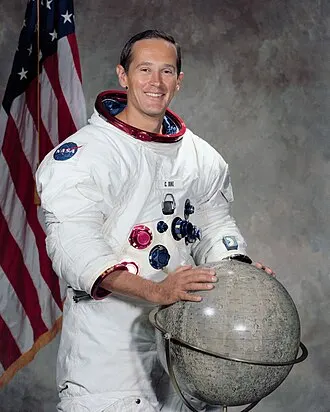 VETERANRetiredNASA
VETERANRetiredNASANASA·🇺🇸 United States·Born 1935
Charlie Duke
Tenth and youngest person to walk on the Moon, at age 36, as Apollo 16's Lunar Module Pilot.
Hours in Space
1
Missions
3
EVAs
20h
EVA Time
Biography
Tenth and youngest person to walk on the Moon, at age 36, as Apollo 16's Lunar Module Pilot. Earlier served as CAPCOM for the Apollo 11 landing.
Before NASAU.S. Air Force fighter pilot and test pilot who flew combat alert duty at Ramstein Air Base in West Germany, graduated from the Aerospace Research Pilot School in 1965, and served as CapCom for Apollo 11 — his voice famously confirming touchdown on the Moon.
Life & career
Charles Moss Duke Jr. was born on October 3, 1935, in Charlotte, North Carolina, and raised in Lancaster, South Carolina, in an era when American boys grew up imagining flight rather than spaceflight. He graduated as valedictorian of Admiral Farragut Academy, earned a bachelor's degree in naval sciences from the U.S. Naval Academy in 1957, and took a commission not in the Navy but in the U.S. Air Force. He became a fighter pilot, flew combat-alert duty at Ramstein Air Base in West Germany, and added a master's degree in aeronautics and astronautics from the Massachusetts Institute of Technology in 1964 before graduating from the Aerospace Research Pilot School in 1965. NASA selected him in April 1966. His most famous early contribution came from the ground: as the capsule communicator for Apollo 11, it was Duke's Carolina drawl that answered Neil Armstrong's landing call, telling the crew, and the world, that a lot of people back on Earth had just turned blue and were breathing again.
Duke was assigned as backup lunar module pilot for Apollo 13, and it was there that spaceflight history turned on a childhood illness. He was exposed to rubella, and through him the prime crew was exposed as well; because command module pilot Ken Mattingly had no immunity, Mattingly was pulled from the flight and replaced by Jack Swigert, then later reassigned to Duke's own mission. That mission was Apollo 16, which launched on April 16, 1972. Duke flew as lunar module pilot alongside commander John Young, guiding the lunar module Orion down to the rugged Descartes Highlands, terrain chosen in the belief it was volcanic. Over roughly eleven days and three moonwalks totaling about twenty hours of surface time, Duke and Young drove the Lunar Roving Vehicle across the highlands, deployed experiments, and gathered samples that would rewrite assumptions about the region's geology. At thirty-six, Duke became the tenth and youngest human ever to walk on the Moon, a single spaceflight that placed him permanently among an extraordinarily small fraternity.
Duke left one of Apollo's most personal artifacts behind: a plastic-wrapped photograph of his family, inscribed with a message noting that the Duke family's astronaut had landed on the Moon on April 20, 1972, still resting on the lunar surface today though decades of radiation have likely bleached it white. He retired from NASA on January 1, 1976, to enter private business, founding Duke Investments, and continued a military career in the Air Force Reserve, where he was promoted to brigadier general in 1979 and retired in 1986. After Apollo 16 he became a committed Christian and devoted much of his later life to lay ministry, public speaking, and prison outreach through Duke Ministry for Christ. Now retired and among the last surviving people to have stood on another world, Duke has remained an active ambassador for spaceflight, a living witness to the Apollo program cheering on the next generation of lunar explorers.
Mission Timeline
- Lunar Module Pilot
Apollo LM Orion
Apollo 16
Launch: Apr 16, 1972Landing: Apr 27, 1972Duration: 11 days- Youngest person to walk on the Moon, at age 36
Beyond the Mission
Hobbies & Interests
golfBoy Scouts
Languages
English
Fun fact
Duke placed a plastic-encased family photo on the lunar surface during Apollo 16, inscribed 'This is the family of astronaut Charlie Duke from planet Earth who landed on the moon on April 20, 1972' — it remains there today, though radiation has likely bleached it white.
More Astronauts
Other space travelers from NASA