All Astronauts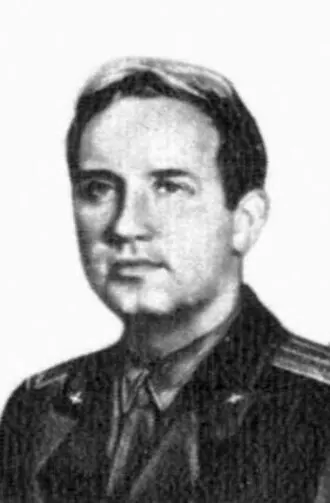 VETERANIn MemoriamROS
VETERANIn MemoriamROSRoscosmos·🇷🇺 Russia·Born 1928
Georgi Dobrovolsky
Commander of Soyuz 11, the first crew to live aboard a space station.
Hours in Space
1
Missions
0
EVAs
—
EVA Time
Biography
Commander of Soyuz 11, the first crew to live aboard a space station. He and his crewmates died during reentry in 1971 when a cabin valve opened prematurely — the only humans to have died in space.
Before NASASoviet Air Force lieutenant colonel and fighter pilot who graduated from the Air Force Military Academy in Monino in 1961 and served as a military aviator before his cosmonaut selection in 1963.
Life & career
Georgi Timofeyevich Dobrovolsky was born on 1 June 1928 in Odessa, in what was then the Ukrainian Soviet Socialist Republic. He came of age during the Second World War, and as a young man he committed himself to military aviation, rising through the ranks of the Soviet Air Force to become a fighter pilot and eventually a lieutenant colonel. He completed his advanced schooling at the Air Force Military Academy in Monino in 1961, and in 1963 he was selected for the Soviet cosmonaut corps. Over the years that followed he trained patiently in the background of the space program, serving on backup crews before finally being given a flight of his own. His path was that of the disciplined career aviator turned spacefarer — steady, professional, and long in the making.
Dobrovolsky flew only once, but that single mission placed him at a genuine frontier of human history. On 6 June 1971 he launched as commander of Soyuz 11, alongside flight engineer Vladislav Volkov and test engineer Viktor Patsayev. The following day they docked with Salyut 1, the world's first space station, and became the first crew ever to live and work aboard an orbital outpost. For more than three weeks they occupied the station — some 23 days in orbit in all — conducting meteorological observations, plant-growth studies, and astronomical work, and setting a spaceflight-endurance record for the era. It was a landmark expedition, the opening chapter of the long-duration, station-based spaceflight that would come to define the following half-century. Then came the return. During re-entry on 30 June 1971, a ventilation valve in the descent module opened prematurely at high altitude, venting the cabin atmosphere into the vacuum of space. With the crew not wearing pressure suits, the sudden decompression proved fatal within seconds. The capsule made an automated landing in Kazakhstan, but the recovery team found all three men dead in their seats.
Dobrovolsky and his crewmates remain, to this day, the only human beings to have died in space itself rather than within the atmosphere. The tragedy forced a fundamental redesign of Soviet flight procedures: crews would thereafter wear the Sokol pressure suit during launch and re-entry, a safeguard that endures on Soyuz flights to the present day. Dobrovolsky was posthumously named a Hero of the Soviet Union and awarded the Order of Lenin and the title Pilot-Cosmonaut of the USSR. His name endures beyond Earth as well: a crater on the far side of the Moon bears his name, as does the minor planet 1789 Dobrovolsky, while separate craters and minor planets honor each of his two Soyuz 11 crewmates. He is remembered not only for the terrible manner of his death but for the pioneering achievement that preceded it — commanding the first crew ever to make a home, however briefly, aboard a space station.
Mission Timeline
- Commander
Soyuz 11
Soyuz 11 / Salyut 1
Launch: Jun 6, 1971Landing: Jun 29, 1971Duration: 23 days- Commanded the first crew to live aboard a space station
Beyond the Mission
Languages
Russian
Fun fact
Dobrovolsky and his two crewmates on Soyuz 11 remain the only humans ever to have died in space — a ventilation valve opened prematurely during re-entry on 30 June 1971, depressurizing the cabin and killing all three within 40 seconds at an altitude of about 168 km.
More Astronauts
Other space travelers from Roscosmos