All Astronauts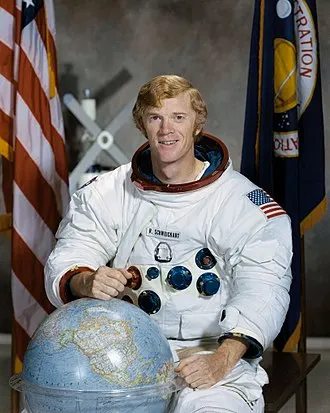 VETERANRetiredNASA
VETERANRetiredNASANASA·🇺🇸 United States·Born 1935
Rusty Schweickart
Lunar Module Pilot of Apollo 9 who performed the first EVA test of the Apollo lunar spacesuit.
Hours in Space
1
Missions
1
EVAs
1h
EVA Time
Biography
Lunar Module Pilot of Apollo 9 who performed the first EVA test of the Apollo lunar spacesuit. Later co-founded the B612 Foundation for asteroid-impact defense.
Before NASAResearch scientist at MIT's Experimental Astronomy Laboratory studying upper atmospheric physics and star tracking, and U.S. Air Force and Massachusetts Air National Guard fighter pilot with over 4,000 flight hours.
Life & career
Russell Louis "Rusty" Schweickart was born on October 25, 1935, in Neptune Township, New Jersey, where he grew up on a small farm before winning a scholarship to the Massachusetts Institute of Technology. He earned a bachelor's degree in aeronautical engineering there in 1956 and a master's in aeronautics and astronautics in 1963, and along the way flew as a fighter pilot for the U.S. Air Force and the Massachusetts Air National Guard, logging more than 4,000 hours in the air. Before NASA he worked as a research scientist at MIT's Experimental Astronomy Laboratory, studying upper-atmospheric physics and star-tracking systems. That rare blend of scientist and aviator made him a natural fit when NASA selected him as part of its third astronaut group in 1963, a class recruited specifically to fly the Gemini and Apollo spacecraft toward the Moon.
Schweickart flew only once, but his single mission was pivotal. As Lunar Module Pilot of Apollo 9, launched on March 3, 1969, he took part in the first crewed flight test of the complete Apollo lunar module in Earth orbit — the essential dress rehearsal that had to succeed before any Moon landing could be attempted. During the ten-day mission he ventured outside the spacecraft to conduct the first in-space test of the self-contained Portable Life Support System backpack, the same life-support gear that Apollo crews would later depend on while walking on the lunar surface. The spacewalk, which lasted under an hour, left a deep mark on him: gazing at Earth without the barrier of a visor during a pause in the tightly scheduled EVA, he experienced what he described as a profound shift in perspective, an overview of the planet as a single fragile whole. He logged 241 hours in space on the flight, and later served as backup commander for the first crewed Skylab mission, helping develop the emergency repair procedures the crew used to save the heat-damaged station in 1973.
Though he never returned to space, Schweickart's post-flight life extended his Apollo experience into decades of advocacy. He co-founded the Association of Space Explorers, an international organization of people who have flown in space, and in 2002 co-founded the B612 Foundation alongside fellow astronaut Ed Lu and two planetary scientists — a nonprofit dedicated to detecting and deflecting hazardous asteroids before they can strike Earth. He became one of the world's most prominent voices for planetary defense, serving in leadership roles including chair emeritus of B612. Now retired and living in California, Schweickart is remembered less for a checklist of records than for the way his brief time in orbit reshaped how he, and through him many others, came to see humanity's place in the cosmos.
Mission Timeline
- Lunar Module Pilot
Apollo LM Spider
Apollo 9
Launch: Mar 3, 1969Landing: Mar 13, 1969Duration: 10 days- First EVA test of the self-contained Apollo lunar spacesuit
Beyond the Mission
Hobbies & Interests
golfbicyclinghiking
Languages
English
Fun fact
During his 1969 Apollo 9 spacewalk, Schweickart experienced what he described as a profound metaphysical epiphany while gazing at Earth unobstructed by a visor, later leading him to practice Transcendental Meditation and co-found the Association of Space Explorers.
More Astronauts
Other space travelers from NASA