All Astronauts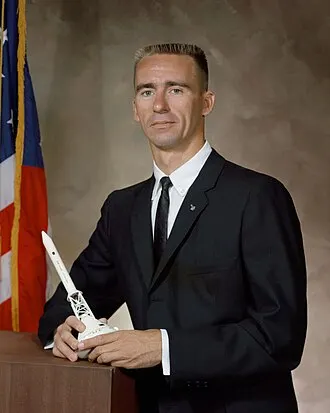 ROOKIEIn MemoriamNASA
ROOKIEIn MemoriamNASANASA·🇺🇸 United States·Born 1932
Walt Cunningham
Lunar Module Pilot of Apollo 7, the first crewed Apollo mission, which included the first live TV broadcast from an American spacecraft.
Hours in Space
1
Missions
0
EVAs
—
EVA Time
Biography
Lunar Module Pilot of Apollo 7, the first crewed Apollo mission, which included the first live TV broadcast from an American spacecraft. He died in 2023.
Before NASAU.S. Marine Corps fighter pilot who flew 54 missions in Korea, then worked as a research scientist at RAND Corporation while completing doctoral coursework in physics at UCLA before joining NASA.
Life & career
Ronnie Walter "Walt" Cunningham was born on March 16, 1932, in Creston, Iowa. He began flight training in 1952 and served on active duty as a U.S. Marine Corps fighter pilot, flying 54 missions as a night-fighter pilot during the Korean War before continuing in the Marine Corps Reserve, from which he eventually retired as a colonel. Unusually for an early astronaut, his path ran as much through the laboratory as the cockpit: he earned bachelor's and master's degrees in physics from UCLA and was working toward a doctorate while employed as a scientist at the RAND Corporation. That scientific background helped make him one of NASA's earliest civilian astronauts when he was chosen in the agency's third group in 1963.
Cunningham flew once, serving as Lunar Module Pilot of Apollo 7 — a designation he held even though the flight carried no lunar module, since the mission was devoted entirely to shaking down the redesigned Apollo Command and Service Module in Earth orbit. Launched on October 11, 1968, Apollo 7 was the first crewed Apollo flight, the mission that had to succeed to bring the program back from the Apollo 1 tragedy. Over eleven days, Cunningham and crewmates Wally Schirra and Donn Eisele exhaustively tested the spacecraft's systems and beamed home the first live television broadcast from an American crewed spacecraft, a series of light-hearted transmissions that endeared the program to the public even as friction with ground controllers simmered aboard. Cunningham logged roughly 260 hours in space. He never flew again, and later headed the Skylab branch of the Astronaut Office before leaving NASA in 1971.
In his post-NASA years Cunningham became a businessman, investor, and outspoken public figure, hosting a radio program and lecturing widely. His 1977 autobiography, The All-American Boys, remains one of the most candid early insider accounts of the astronaut corps, unflinching about the rivalries and politics behind the heroic public image. As the years passed he became the last surviving member of the Apollo 7 crew and one of the final links to the first generation of Apollo astronauts. Cunningham died in Houston on January 3, 2023, at the age of 90, from complications following a fall, closing out a life that bridged Marine aviation, physics, and the opening chapter of the Apollo Moon program.
Mission Timeline
- Lunar Module Pilot
Apollo CSM / Saturn IB
Apollo 7
Launch: Oct 11, 1968Landing: Oct 22, 1968Duration: 11 days- First live television broadcast from an American spacecraft
Beyond the Mission
Hobbies & Interests
aviationpublic speaking
Languages
English
Fun fact
Cunningham later hosted the radio show Lift-off to Logic and became a vocal public speaker; his 1977 autobiography The All-American Boys was one of the most candid early accounts of the pressures and politics inside NASA's astronaut corps.
More Astronauts
Other space travelers from NASA