All Astronauts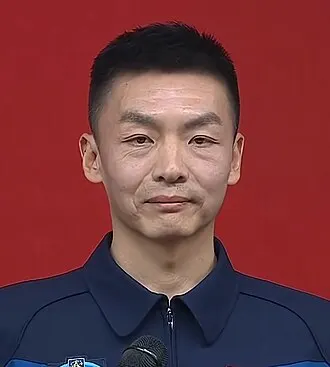 VETERANActiveCNSA
VETERANActiveCNSACNSA·🇨🇳 China·Born 1986
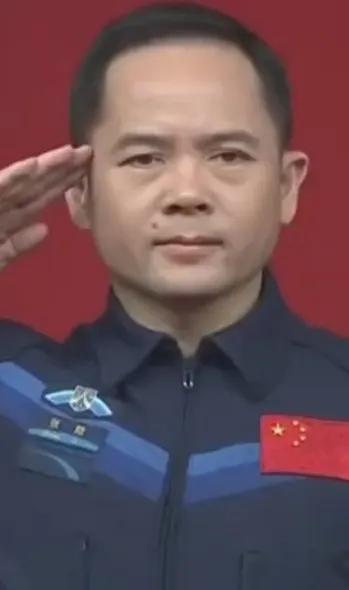
Zhang Zhiyuan
Former PLA Air Force pilot from Gansu and member of China's third taikonaut batch, making his first spaceflight as pilot of Shenzhou 23.
Days in Space
1
Missions
0
EVAs
—
EVA Time
Biography
Former PLA Air Force pilot from Gansu and member of China's third taikonaut batch, making his first spaceflight as pilot of Shenzhou 23.
Before NASAColonel and fighter pilot in the People's Liberation Army Air Force, selected into China's third taikonaut group in 2020 alongside engineers and scientists for China Space Station operations.
Life & career
Zhang Zhiyuan was born in June 1986 in Baiyin, an industrial city in Gansu Province that sits on the banks of the Yellow River in China's arid northwest. He came to spaceflight along the classic route of the Chinese human program: as a fighter pilot in the People's Liberation Army Air Force, where he rose to the rank of colonel. In September 2020 he was chosen for China's third group of taikonauts, the cohort recruited specifically to sustain long-duration operations aboard the newly assembled Tiangong space station. That group broke with tradition by pairing veteran pilots like Zhang with a new generation of flight engineers and payload specialists, and it committed its members to years of training in orbital rendezvous, station systems, extravehicular procedures, and the physiology of extended weightlessness before any of them would fly.
Zhang's chance came with Shenzhou 23, which lifted off from the Jiuquan Satellite Launch Center on 24 May 2026 atop a Long March 2F rocket. He flew as the mission's pilot alongside commander Zhu Yangzhu, a Shenzhou 16 veteran, and payload specialist Li Jiaying, Hong Kong's first astronaut. For Zhang it was a first spaceflight, and his responsibilities centered on assisting the commander through launch, the automated rendezvous and docking with Tiangong, and the daily piloting and systems duties of a long-duration expedition. The crew was welcomed aboard by the departing Shenzhou 21 team, who handed over the station before returning to Earth, and settled into the planned rotation of maintenance, science experiments, and station upkeep that keeps the three-module complex continuously staffed. A former Air Force flier turned station operator, Zhang embodied the practical division of labor the Chinese program has built around its permanent outpost.
Because his mission is ongoing at the time of writing, Zhang Zhiyuan's legacy is still being written in orbit rather than in retrospect. What is already clear is that he belongs to the operational middle generation of the Chinese astronaut corps — no longer the pioneers of the first tentative flights, not yet the scientist-specialists reshaping who gets to go, but the steady professionals who make a working space station routine. Zhang has spoken of a personal wish tied to his roots: that upon reaching orbit he most wanted to look down and pick out the Yellow River, the "mother river" that runs through the Gansu of his childhood. It is a small, human note beneath a career defined by discipline, and a reminder that even in a program measured in launch cadences and docking timelines, the view from the window still matters to the people flying. His current status is active, mid-mission aboard Tiangong.
Mission Timeline
- Pilot
Shenzhou spacecraft
Shenzhou 23
Launch: May 24, 2026Landing: OngoingDuration: 180 days- First spaceflight, supporting Tiangong operations
Beyond the Mission
Languages
Chinese (Mandarin)
Fun fact
Born in Baiyin, Gansu Province — a city on the banks of the Yellow River — Zhang said his greatest wish upon reaching orbit was to look down and see the "Mother River that nurtured me," the Yellow River winding through his home province.
More Astronauts
Other space travelers from CNSA