All Astronauts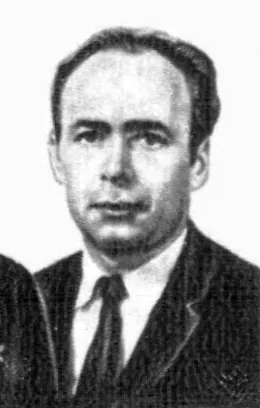 VETERANIn MemoriamROS
VETERANIn MemoriamROSRoscosmos·🇷🇺 Russia·Born 1933
Viktor Patsayev
Test engineer on Soyuz 11 and the first astronomer to operate a telescope in space, aboard Salyut 1.
570h
Hours in Space
1
Missions
0
EVAs
—
EVA Time
Biography
Test engineer on Soyuz 11 and the first astronomer to operate a telescope in space, aboard Salyut 1. He died with his crewmates during the Soyuz 11 reentry in 1971.
Before NASAEngineer at the Korolev Design Bureau after graduating from the Penza Industrial Institute in 1955, where he contributed to the development of the Salyut space station before being selected as a cosmonaut in 1968.
Life & career
Viktor Ivanovich Patsayev was born on 19 June 1933 in Aktyubinsk, in the Kazakh Soviet Socialist Republic. His was a scientific rather than a piloting path to space: he graduated from the Penza Industrial Institute in 1955 and went to work as an engineer, eventually joining Sergei Korolev's design bureau, where he contributed to the development of the Salyut space station program itself. Selected as a cosmonaut in 1968 in his mid-thirties, Patsayev represented a new kind of spacefarer — the engineer-researcher whose expertise lay in the instruments and experiments a crew would operate rather than in flying the vehicle. It was fitting that a man who had helped design the first space station would become one of the first people to live aboard one.
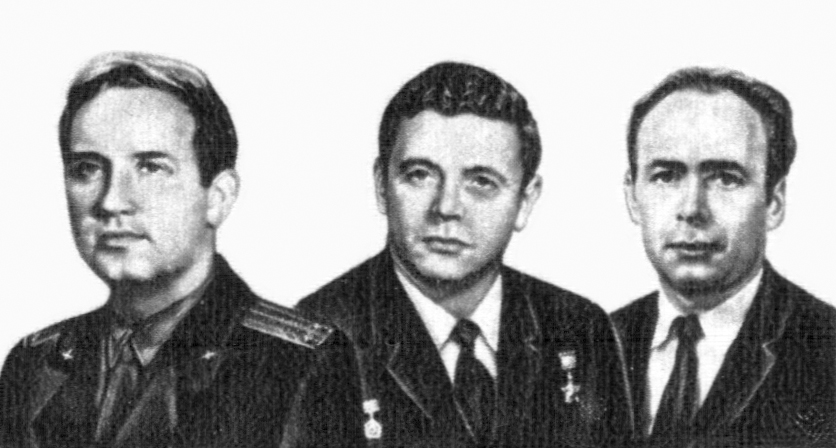
Patsayev flew a single mission, Soyuz 11, launched on 6 June 1971 with commander Georgi Dobrovolsky and flight engineer Vladislav Volkov. The next day they docked with Salyut 1 and became the first crew ever to occupy a space station, beginning a residency of scientific work in orbit that lasted some 23 days. Serving as the mission's test engineer, Patsayev achieved a milestone all his own: operating the Orion 1 space observatory aboard the station, he became the first human being ever to use a telescope from beyond Earth's atmosphere, gathering ultraviolet spectra of stars free of the distortions of the air below. The expedition was a scientific and symbolic triumph. But on the return journey, during re-entry on 30 June 1971, a ventilation valve opened prematurely and vented the cabin's air into space. The unsuited crew lost consciousness and died within seconds; the capsule landed on schedule in Kazakhstan carrying three lifeless men.
Patsayev and his crewmates hold the somber distinction of being the only humans ever to die in space rather than within the atmosphere, and their loss reshaped spaceflight safety forever, prompting the requirement that Soyuz crews wear pressure suits during launch and landing. Yet Patsayev's legacy also carries a note of genuine scientific pioneering, for he opened the discipline of space-based astronomy that later observatories from Hubble onward would inherit. Posthumously named a Hero of the Soviet Union and awarded the Order of Lenin, he is commemorated by the lunar crater Patsaev on the Moon's far side and by the minor planet 1791 Patsayev. A research ship of the Soviet space fleet also bore his name. In the arc of exploration history he stands as both a cautionary figure — a reminder of the fragility of the systems that keep crews alive — and a quiet trailblazer who first turned a telescope on the heavens from orbit.
Mission Timeline
- Test Engineer
Soyuz 11
Soyuz 11 / Salyut 1
Launch: Jun 6, 1971Landing: Jun 29, 1971Duration: 23 days- First astronomer to operate a telescope in space (Orion-1)
Beyond the Mission
Languages
Russian
Fun fact
Patsayev became the first human to operate a telescope outside Earth's atmosphere, using the Orion 1 Space Observatory aboard Salyut 1 in 1971 — a milestone that came just days before his death during Soyuz 11's re-entry.
More Astronauts
Other space travelers from Roscosmos