Image: CNSA
Chang'e 8
Mission Profile
| Launch date | TBD ~2028 |
|---|---|
| Launch vehicle | Long March 5 |
| Spacecraft | Lander + rover + ISRU technology demonstrator |
| Target | Moon |
| Type | Robotic |
| Partners | CNSA, CAST, Russia (Roscosmos), Pakistan SUPARCO, Belarus, Egypt |
Prime Contractors
Companies that built, launched, or operate this mission. Tickers link to their investor profile.
- China Academy of Space Technology (CAST)
- China Academy of Launch Vehicle Technology (CALT)
Overview
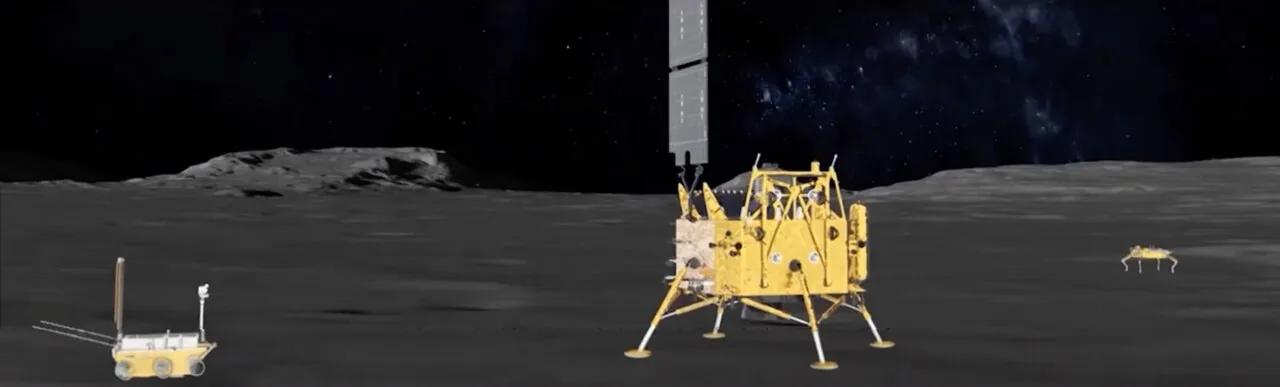
Chang'e 8 is planned as China's lunar in-situ resource utilization (ISRU) flagship — the precursor mission that will establish baseline infrastructure for the International Lunar Research Station. Targeted to land in the same lunar south polar region as Chang'e 7, Chang'e 8 carries a suite of technology demonstrations focused on producing usable materials directly from lunar regolith. Chinese officials have publicly described 3D-printing experiments using regolith-derived 'lunar bricks', water extraction from polar volatiles, and validation of a small lunar surface robot designed to assist future astronauts. Chang'e 8 is also an open opportunity for international payload partners, with CNSA having signed cooperation agreements with countries including Russia, Pakistan, Belarus, Egypt, Senegal, and others. Together, Chang'e 7 and Chang'e 8 are designed to establish the technical and scientific basis for the first phase of the ILRS, with a target of basic robotic operations by 2030 and crewed visits before 2040. China's parallel crewed lunar program targets a first taikonaut landing before 2030, using the Long March 10 launch vehicle and Mengzhou crew vehicle described separately.
Key Milestones
2023-10-04
CNSA signs first ILRS cooperation agreements (Belarus, Egypt, Pakistan, Russia, Venezuela)
TBD ~2026
Chang'e 7 surface operations precede Chang'e 8
TBD ~2028
Chang'e 8 launch on Long March 5
TBD ~2029
ISRU technology demonstration at lunar south pole