
USA · NASAfirst
April 12, 1981
STS-1 Columbia — first Space Shuttle flight
Twenty years to the day after Gagarin's flight, Space Shuttle Columbia lifted off from Kennedy Space Center at 07:00 EDT on 12 April 1981. It was the first crewed orbital test flight of any spacecraft not previously flown uncrewed — an extraordinary engineering gamble that depended on getting a wholly new vehicle right the very first time.
Commander John Young — a veteran of Gemini 3, Gemini 10, Apollo 10 and the Moon — and Pilot Robert Crippen flew Columbia to 277 km altitude and spent 54 hours and 20 minutes in orbit, completing 36 orbits before landing on the dry lakebed at Edwards Air Force Base on 14 April.
During orbit, photographs revealed that 16 thermal protection tiles had been lost and 148 had been damaged during ascent — a sobering reminder that the Shuttle's tile system was both critical and fragile. Had the damage affected belly tiles, re-entry heating could have been fatal: a fact that haunted the programme until Columbia's last mission 22 years later.
The Shuttle fleet went on to fly 135 missions over 30 years, building the International Space Station, servicing the Hubble Space Telescope five times, and carrying 355 different people into orbit. No spacecraft before or since has been reused on orbital missions as routinely.
“I have never been so relieved in my life as when that vehicle crossed the runway threshold.”
Mission Data
Launch date
12 Apr 1981
Mission duration
54 hr 20 min
Orbits
36
Altitude
277 km
Landing
Edwards AFB, 14 Apr 1981
Shuttle programme
135 flights, 1981–2011
Key Facts
The first crewed spacecraft ever flown without an uncrewed test flight first — an extraordinary engineering gamble
Photographs revealed 16 tiles lost and 148 damaged during ascent — a sobering preview of the vulnerability that would doom Columbia 22 years later
John Young was making his fifth spaceflight; he had walked on the Moon on Apollo 16 in 1972
Columbia weighed about 85,000 kg at landing — roughly the weight of an empty Boeing 747
The Shuttle programme ultimately flew 135 missions over 30 years and carried 355 different people to orbit
Why It Mattered
The Space Shuttle proved that reusable spaceflight was operationally viable. Over 30 years it built the Hubble Space Telescope, assembled the ISS, and transformed what could be launched to orbit — while the tile vulnerability it exposed on STS-1 would ultimately prove fatal in 2003.
Photo Gallery
Continue your journey

Astronaut
John Young
Flew on this mission
✦
Moment
Ariane 1 — Europe's first independent launch vehicle
From the same era
✦
Moment
Rohini-1 — India joins the orbital-launch club
From the same era
✦
Moment
Giotto launches — first close-up imaging of a comet nucleus
From the same era
Moment
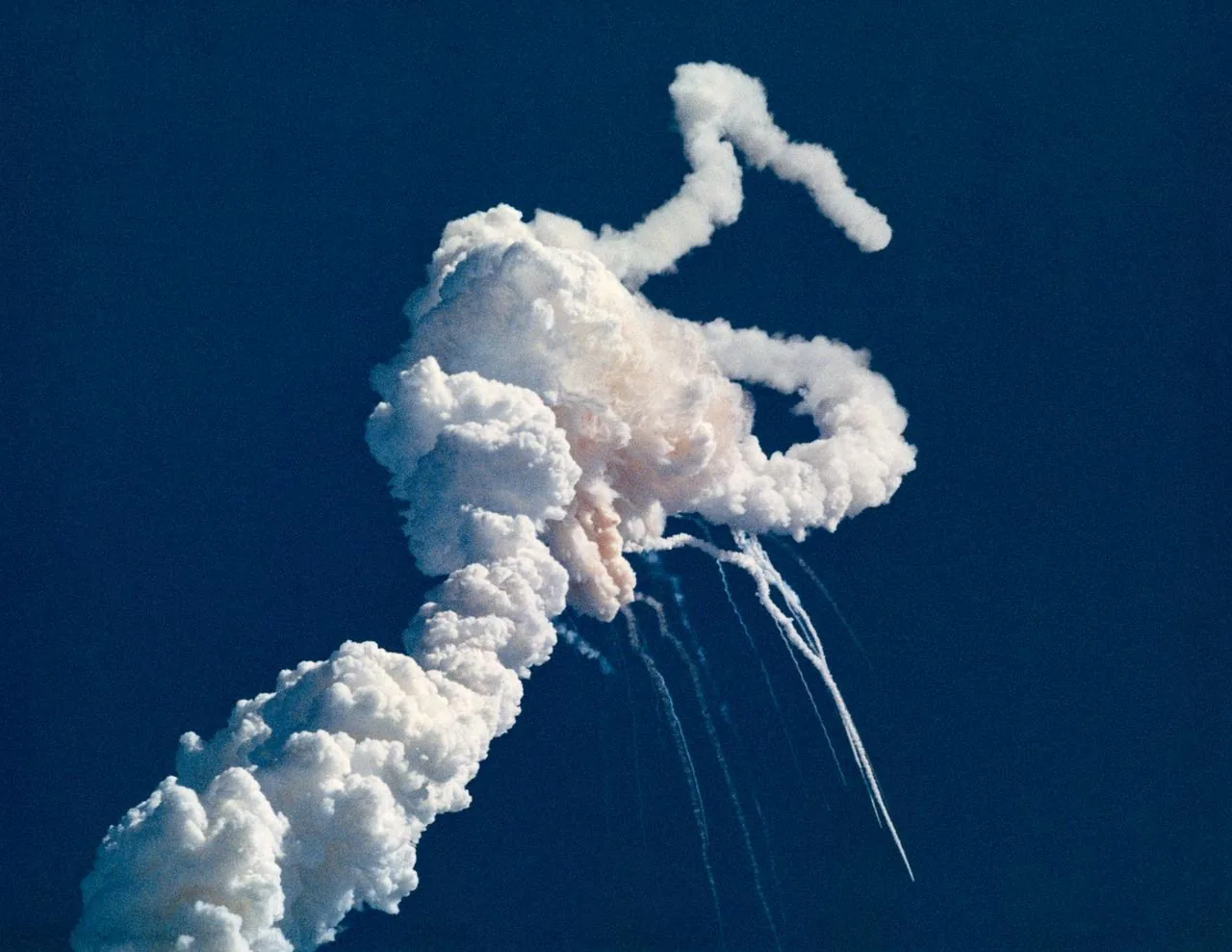
Challenger disaster
From the same era