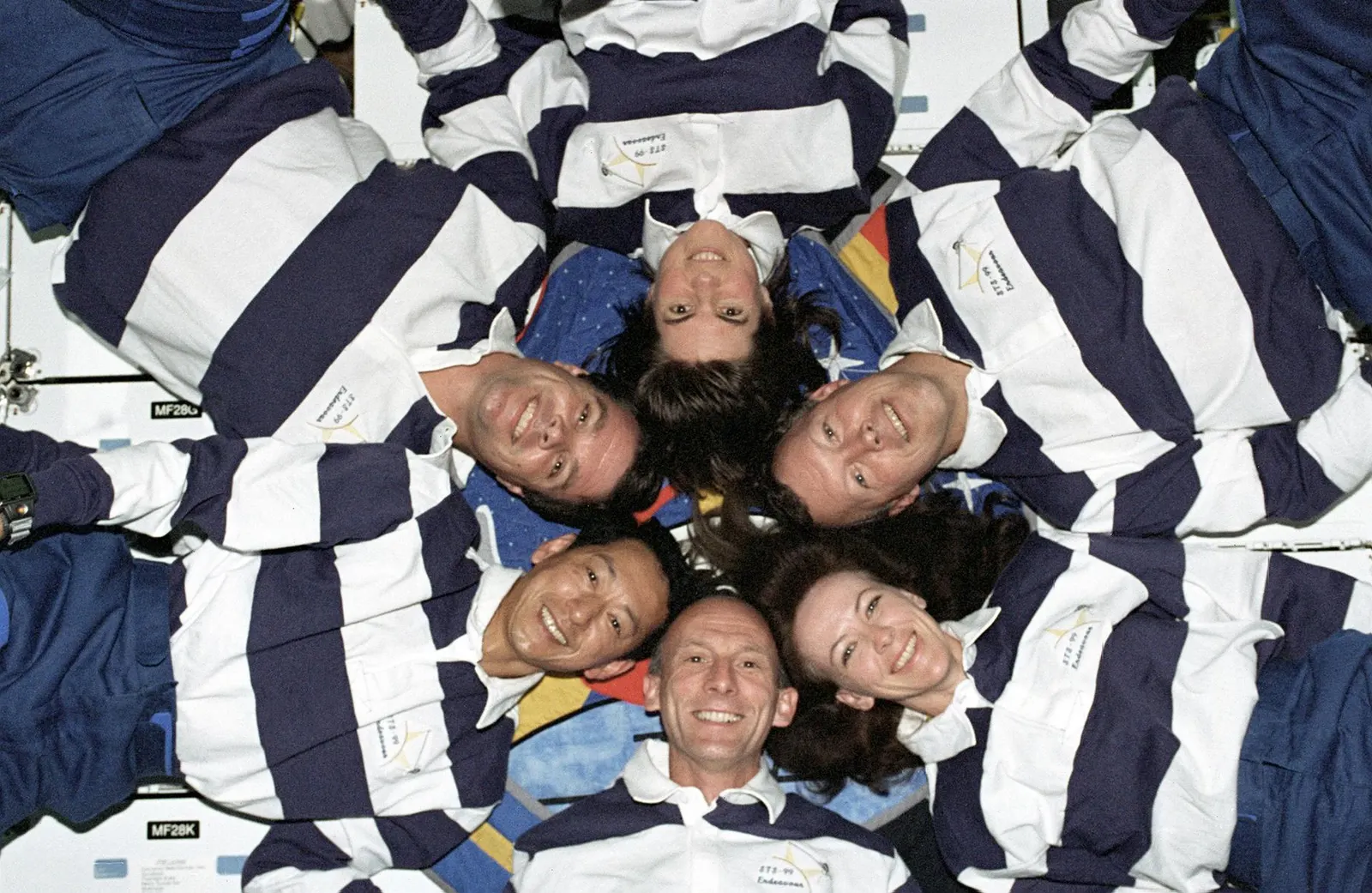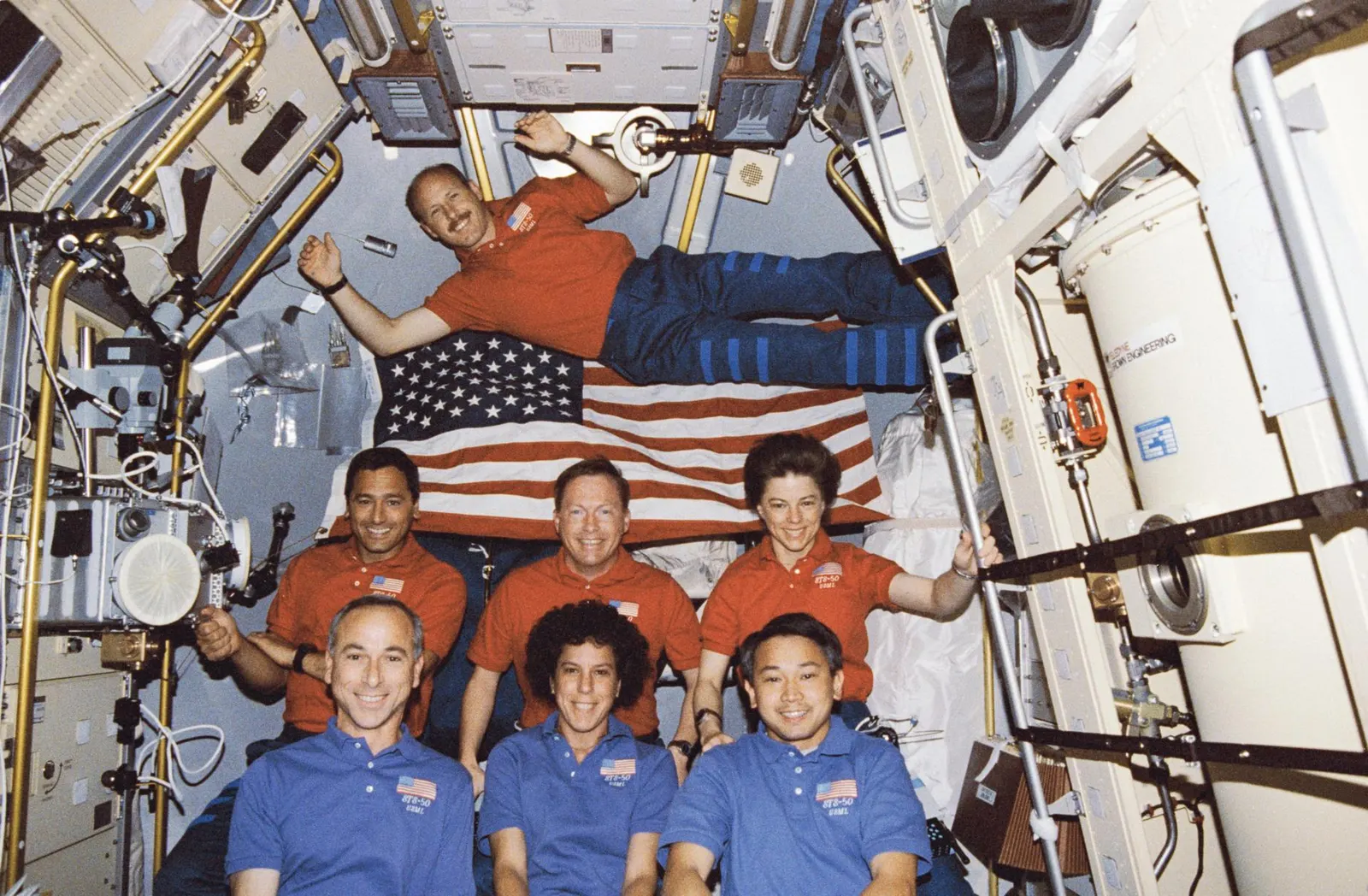
Image: NASA
STS-65
Mission Profile
| Launch date | 1994-07-08 |
|---|---|
| Launch site | Kennedy Space Center, LC-39A |
| Launch vehicle | Space Shuttle (Columbia) |
| Spacecraft | Space Shuttle Columbia (OV-102) |
| Target | Low Earth Orbit |
| Type | Crewed |
| End date | 1994-07-23 |
| Duration | 14 days 17 hours 55 minutes |
| Partners | NASA, NASDA (Japan), ESA |
Overview
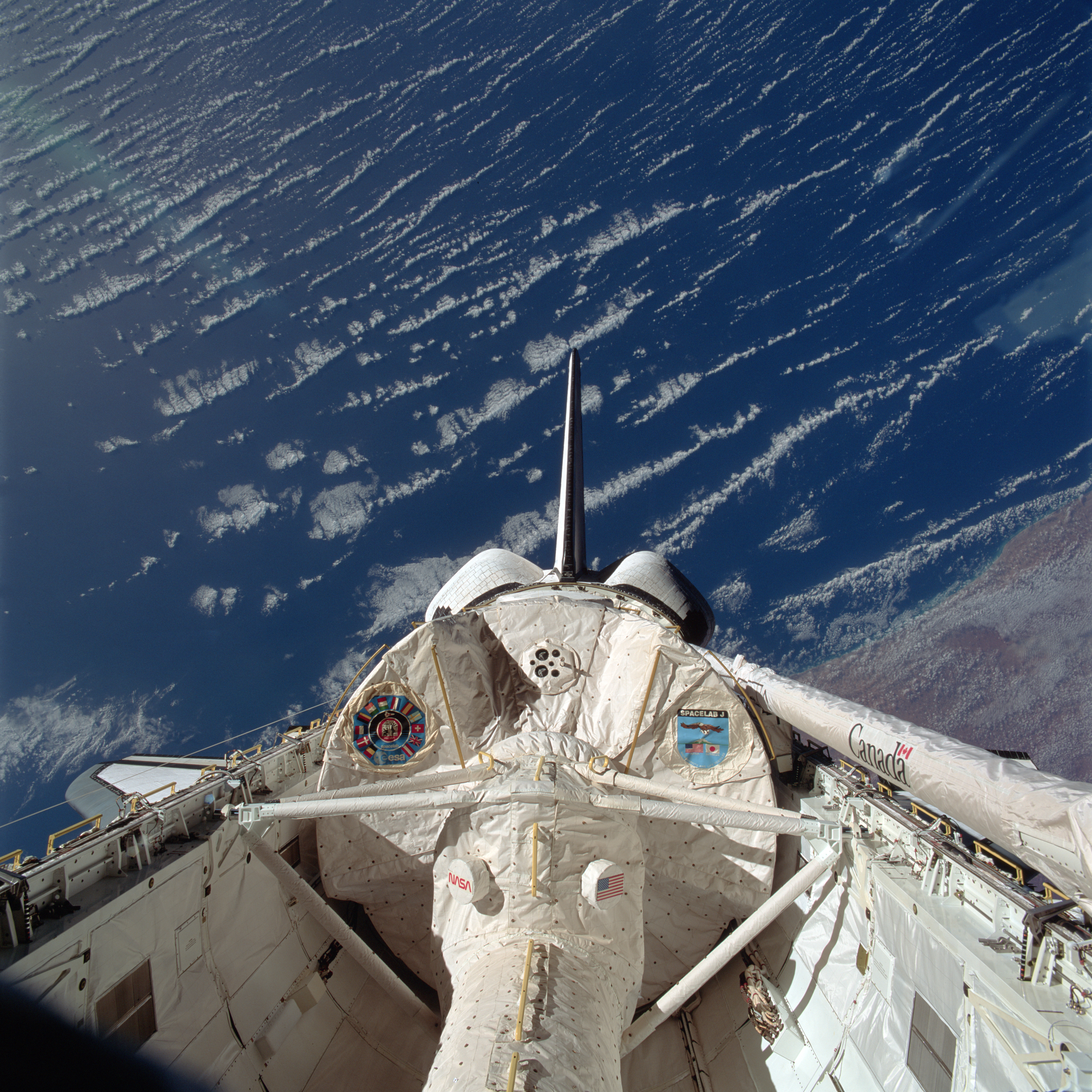
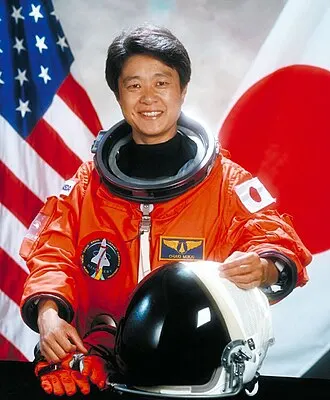
STS-65 flew the second International Microgravity Laboratory (IML-2), a Spacelab module hosting more than 80 experiments from six space agencies. The mission's human star was Japanese physician Chiaki Mukai, who became the first Japanese woman to fly in space and set a then-record for the longest spaceflight by a woman. Working two shifts around the clock, the seven-member crew studied materials processing, fluid physics and life sciences, including a landmark experiment in which Japanese rice fish (medaka) became the first vertebrates to mate and produce healthy offspring entirely in orbit. The nearly fifteen-day flight was the longest Shuttle mission to that date, demonstrating Columbia's extended-duration capability and deepening Japan's growing role in human microgravity research ahead of its participation in the International Space Station.
Crew
Robert Cabana
Commander
James Halsell
Pilot
Richard Hieb
Payload Commander / Mission Specialist
Carl Walz
Mission Specialist / Flight Engineer
Leroy Chiao
Mission Specialist
Donald Thomas
Mission Specialist
Chiaki Mukai
Payload Specialist (NASDA / Japan)
First Japanese woman in space
Key Milestones
1994-07-08
Columbia launches with the IML-2 Spacelab from KSC LC-39A
1994-07-08
Chiaki Mukai becomes the first Japanese woman in space
1994-07-13
Medaka rice fish become the first vertebrates to spawn and hatch offspring in orbit
1994-07-23
Columbia lands at Kennedy Space Center, Runway 33, ending the longest Shuttle flight to date
Key Achievements
First Japanese woman in space (Chiaki Mukai)
Then-longest spaceflight by a woman
Longest Space Shuttle mission flown to that date (nearly 15 days)
First vertebrates (medaka rice fish) to mate and bear offspring in orbit