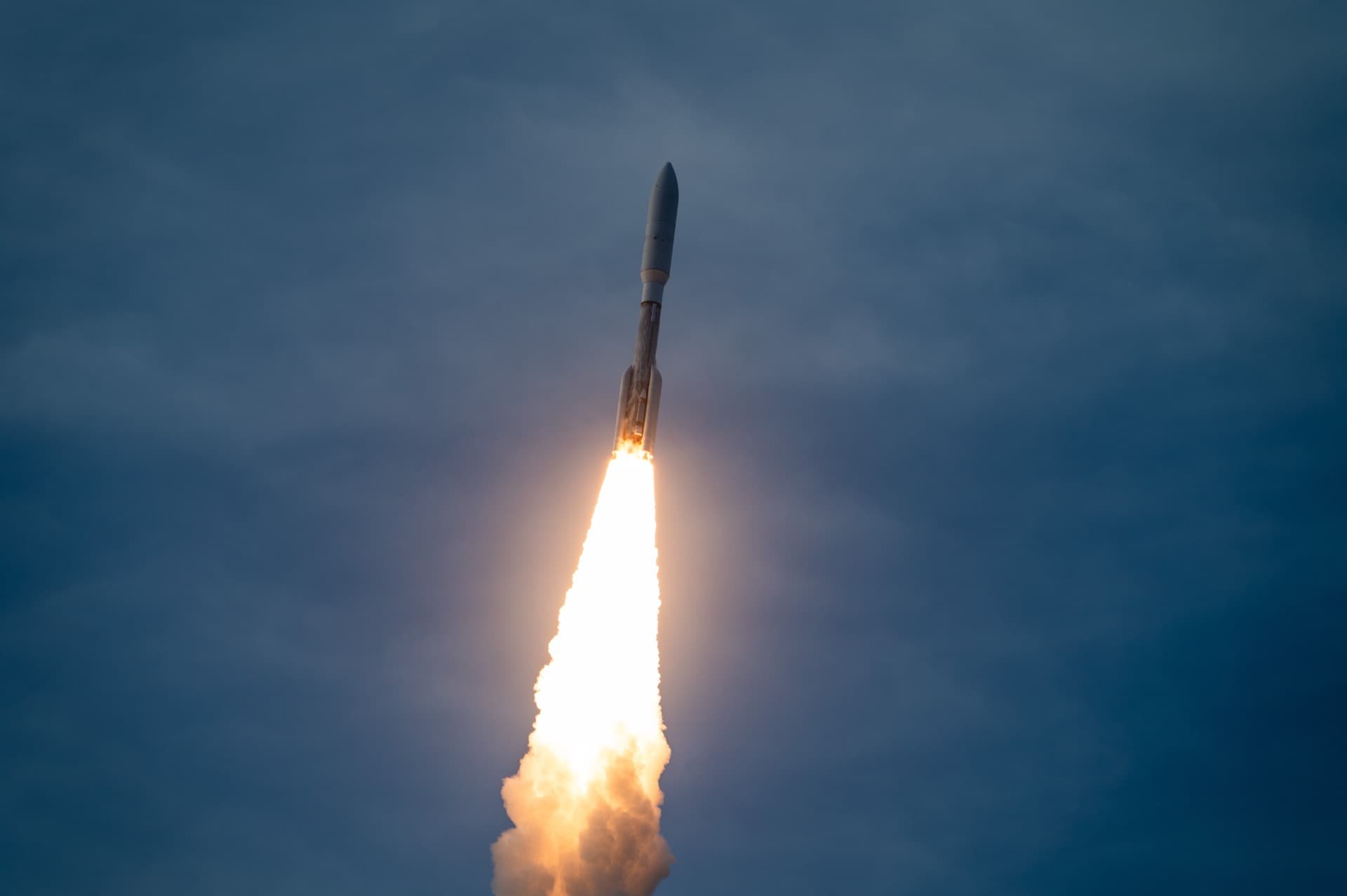
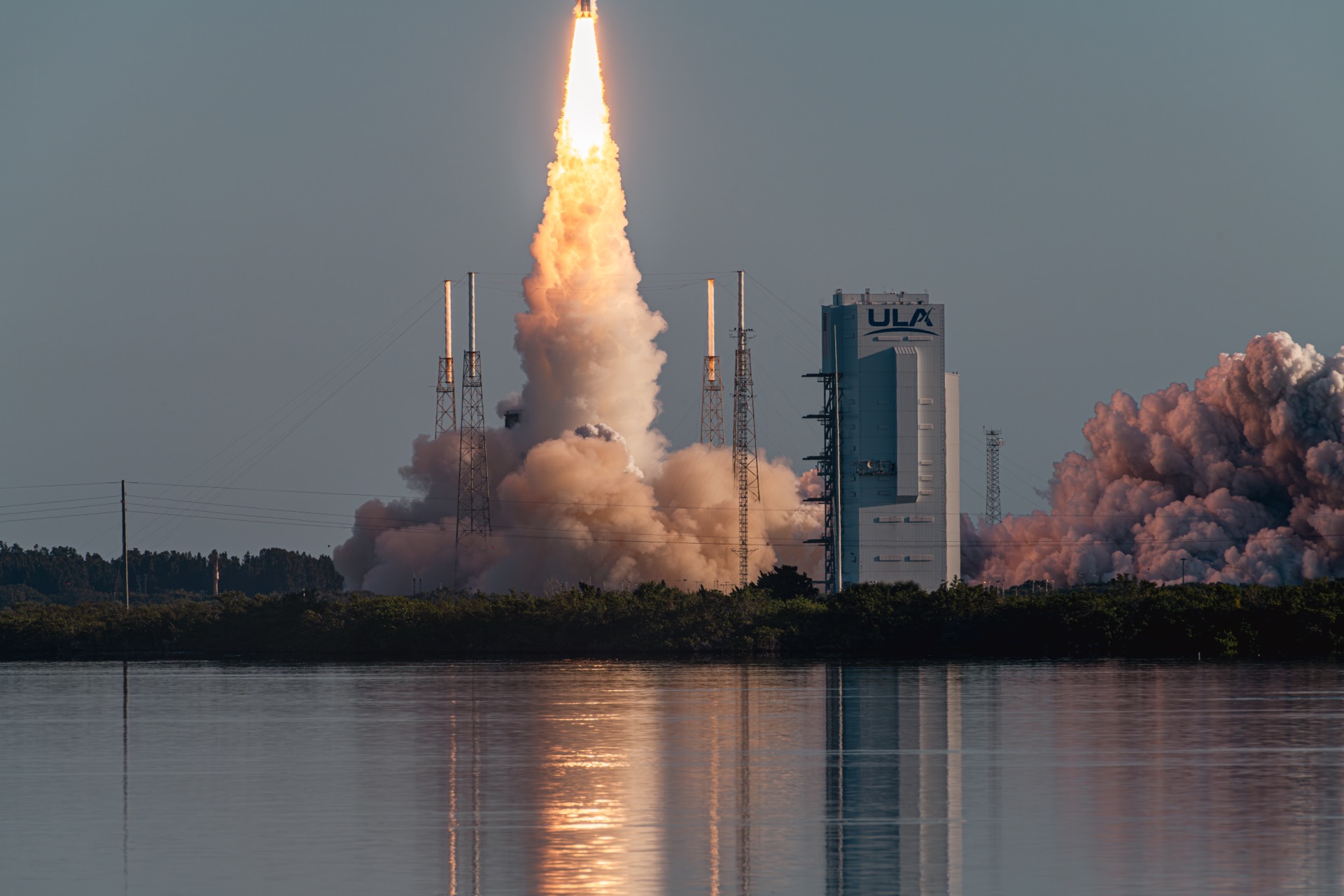
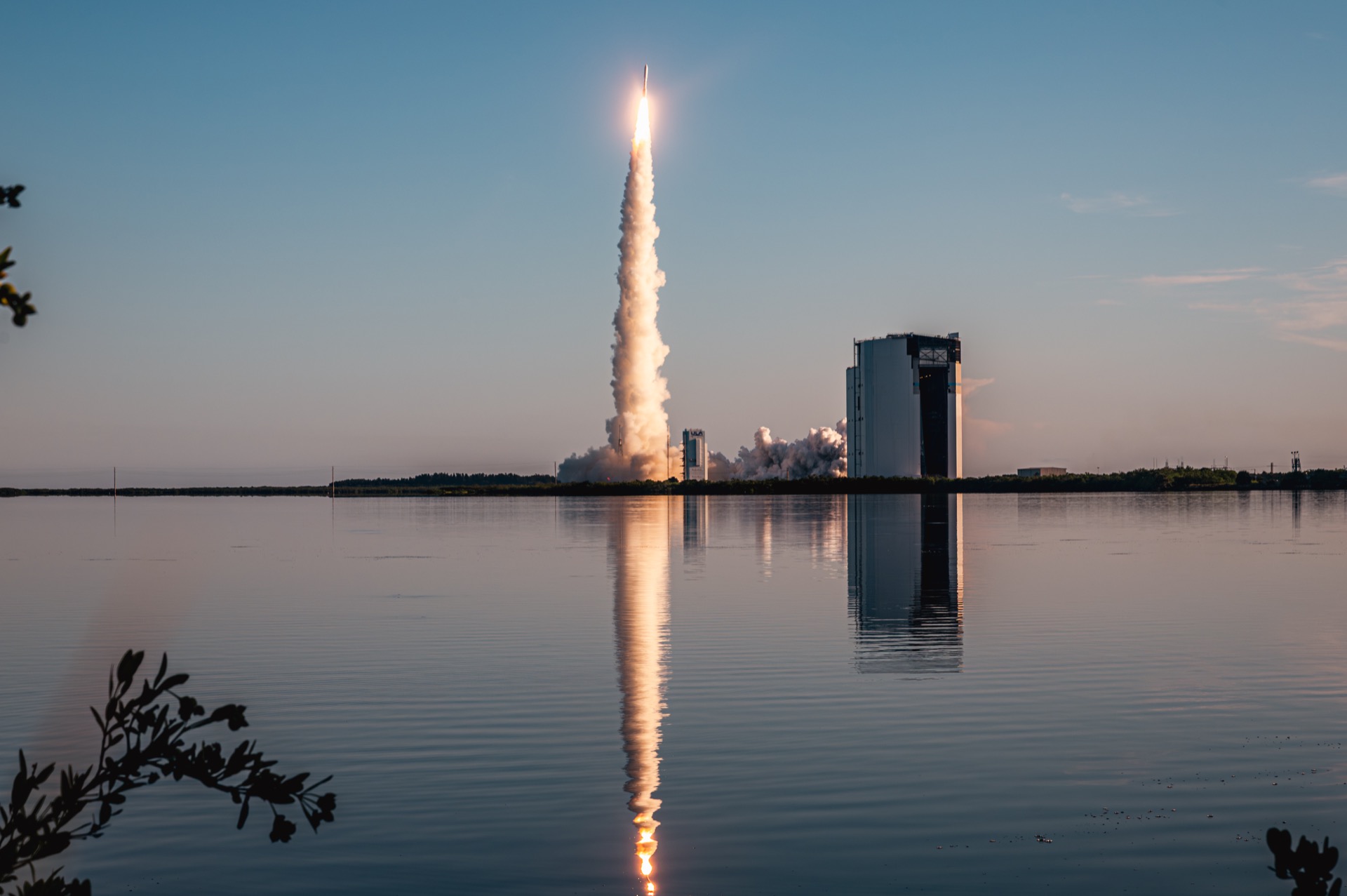
In April 2026, a United Launch Alliance Atlas V rocket lifted 29 satellites into orbit from Cape Canaveral — the heaviest payload the venerable launcher had ever carried in its 23-year history. The mission was Leo Atlas 5, the fifth deployment flight for what Amazon now calls Amazon Leo, a low Earth orbit broadband constellation formerly known as Project Kuiper. With this launch, Amazon's orbital satellite count climbed to 241 production spacecraft — still a fraction of the more than 3,200 the company has committed to fly. Behind the rocket plume sits a $10 billion engineering, manufacturing, and launch program racing against an FCC deadline, Elon Musk's Starlink, and the laws of orbital mechanics.
Here is the full story of how Amazon got into the satellite internet business, where it stands today, and what the company actually has to do to make Amazon Leo a real competitor in the global broadband market.
From Project Kuiper to Amazon Leo
Amazon first announced Project Kuiper in April 2019. The plan was audacious: build, launch, and operate a constellation of 3,236 satellites in low Earth orbit to deliver broadband internet to "unserved and underserved communities" around the world. The project was named after Gerard Kuiper, the Dutch-American astronomer best known for theorizing the existence of the icy belt of objects beyond Neptune that now bears his name.
For more than six years, the constellation was developed under the Kuiper name. Then in November 2025, Amazon rebranded the entire program. Project Kuiper became Amazon Leo — a name chosen to make the product feel less like an internal Amazon code name and more like a consumer-facing service. Leo also references the orbital regime the satellites operate in: low Earth orbit, between roughly 590 and 630 km altitude.
The rebrand coincided with the opening of a public waitlist for early service, signaling that Amazon was finally ready to talk to customers — not just engineers and regulators.
The $10 Billion Investment
When Amazon announced Project Kuiper, the company committed an initial $10 billion to the effort. That figure has since climbed. In 2022, Amazon signed what it called the largest commercial launch procurement in history — 83 launches across three providers (Arianespace, Blue Origin, and ULA), worth several billion dollars on its own. SpaceX was added to the launch manifest in late 2023, an arrangement that struck many observers as deeply ironic given the direct competition between Amazon Leo and Starlink.
Beyond launches, Amazon has built two satellite manufacturing facilities in Kirkland, Washington, and Florida, a customer-terminal R&D operation, and ground network infrastructure spanning multiple continents. Industry analysts estimate the all-in cost — manufacturing, launches, ground systems, and operating expenses — will likely exceed $20 billion before the constellation reaches break-even. Raymond James analyst Josh Beck has estimated annual operating costs alone at $1 to $2 billion once the full constellation is in place.
For context, that puts Amazon Leo in the same financial league as the most expensive infrastructure projects ever attempted by a private company. Amazon is one of only a handful of corporations on Earth — alongside Apple, Microsoft, and Saudi Aramco — that could plausibly absorb such a bet without endangering the rest of the business.
The Deployment Timeline (and the FCC Deadline)
Amazon's FCC license, granted in July 2020, came with strings attached. The original terms required Amazon to launch and operate half of the 3,236-satellite constellation — 1,618 satellites — by July 30, 2026, and the remainder by July 30, 2029. As of April 2026, Amazon has launched roughly 241 production satellites. Even with several missions per month for the rest of 2026, the company will fall short of the 1,618-satellite milestone by well over 1,000 spacecraft.
In practical terms, this means Amazon will almost certainly need to apply for an FCC waiver. The FCC has historically granted such waivers when companies demonstrate good-faith progress, and Amazon's launch cadence — five Atlas V missions and one Falcon 9 mission in roughly twelve months — clearly qualifies. But the deadline pressure is real, and it shapes every decision the program makes.
The launches are coming faster now. The most recent mission, Leo Atlas 5 (LA-05) on April 4, 2026, deployed 29 satellites — up from 27 on previous Atlas V missions, thanks to a redesigned dispenser that fits an extra tier of spacecraft. The next mission, LA-06, is targeted for late April. SpaceX Falcon 9 missions are layered in alongside the Atlas V cadence, and Blue Origin's New Glenn is expected to begin Kuiper deployment flights once the rocket is fully operational. Arianespace has already flown the Leo Europe 1 mission on Ariane 64, lofting 32 satellites in February 2026.

The Satellites and the Customer Terminals
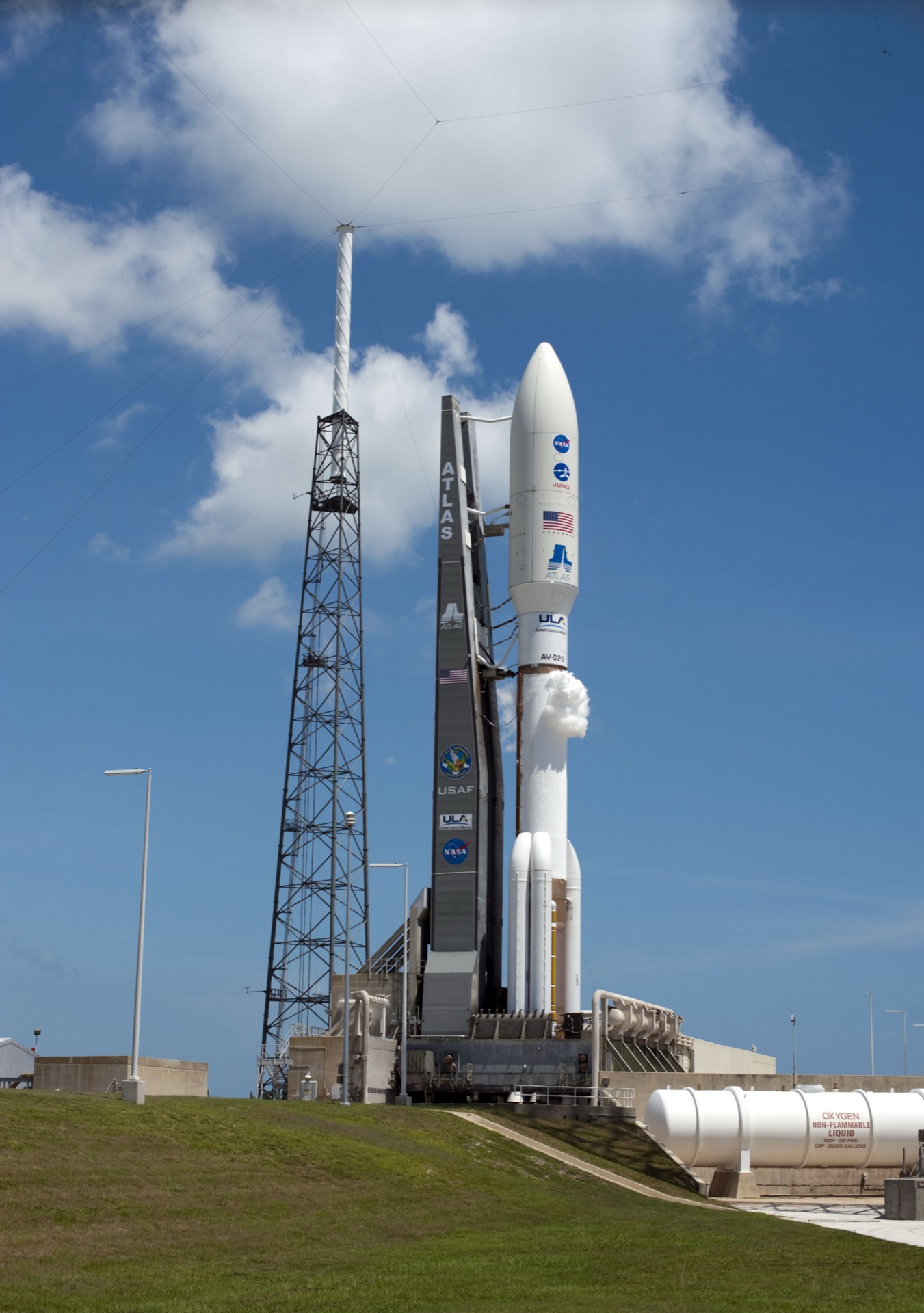
Each Amazon Leo production satellite is a flat-pack design built for high-volume manufacturing — roughly the size of a small dining table when stowed for launch, with deployable solar arrays and a phased-array antenna that can electronically steer beams toward customers below. Amazon has not published exact mass figures, but the satellites are dense enough that 27 to 29 of them fully load an Atlas V 551 — the most powerful version of the rocket, with five solid boosters strapped to the core stage.
The customer side of the business is built around three terminal designs:
- Standard terminal — a square dish smaller than 11 inches on a side, capable of delivering up to 400 Mbps. This is the consumer product that competes most directly with Starlink's residential dish.
- Ultra-portable terminal — about 7 inches square, weighing roughly a pound, with throughput up to 100 Mbps. Designed for travel, mobility, and emergency response.
- Enterprise terminal — a high-bandwidth model capable of up to 1 Gbps for businesses, governments, and backhaul applications.
Amazon claims the standard terminal will sell for under $400 — a price point it can hit because the company designed and manufactures the terminals itself, leveraging the same high-volume hardware expertise that built Echo, Kindle, and Ring devices. By comparison, Starlink's residential terminal launched at $499 and has been sold both above and below that price depending on market and promotion.
How Amazon Leo Stacks Up Against Starlink
It is impossible to talk about Amazon Leo without comparing it to SpaceX's Starlink. The two systems target the same broad market — consumers, businesses, and governments outside the reach of fiber and traditional cellular — but they approach the problem from very different starting points.
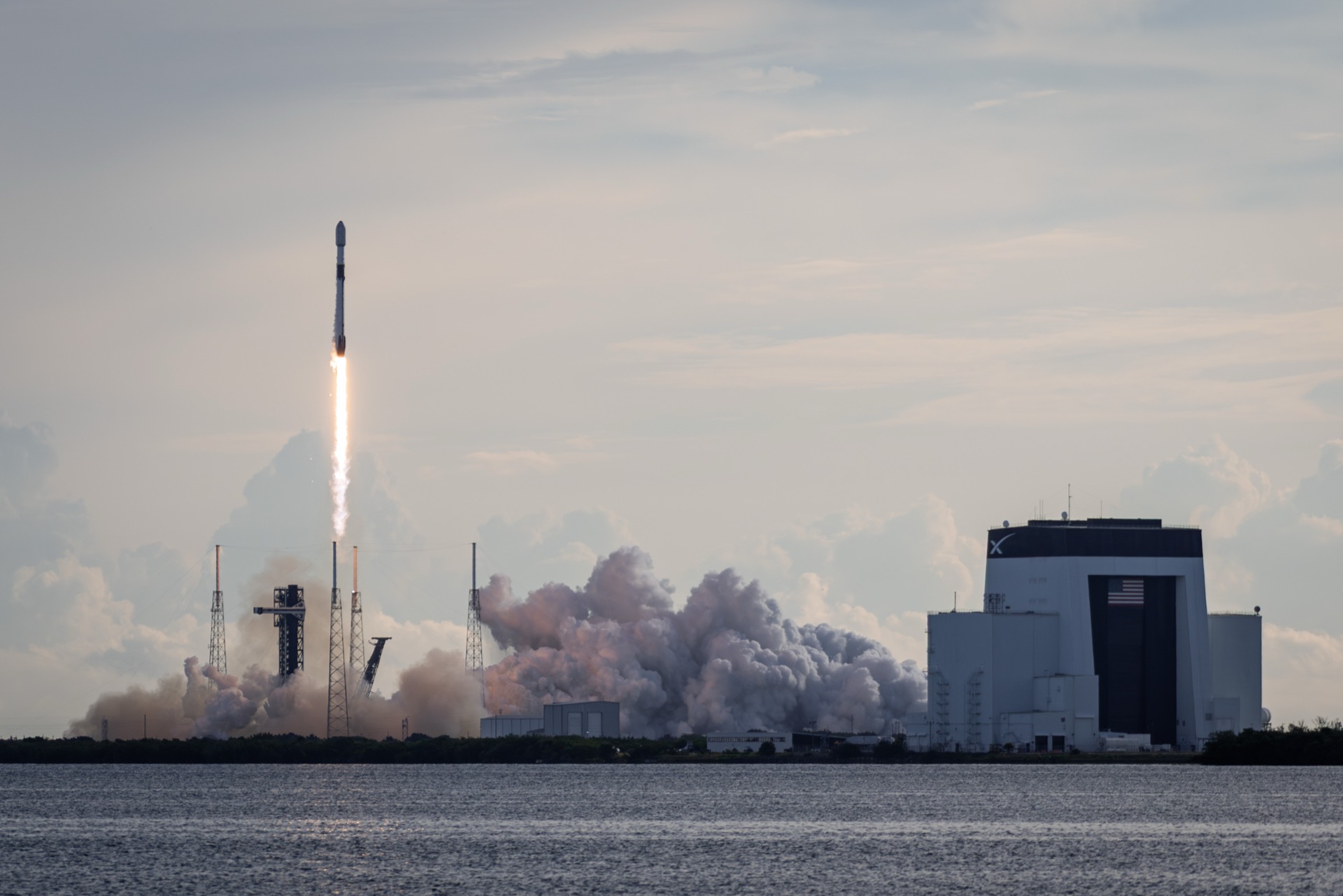
Starlink had a five-year head start. SpaceX launched its first operational Starlink satellites in 2019 and now has more than 7,000 in orbit, serving over 5 million subscribers across more than 100 countries. The vertical integration Starlink benefits from is staggering: SpaceX builds the satellites, builds and operates the rockets that launch them, and runs the user-facing service. The marginal cost to SpaceX of putting a Starlink satellite into orbit is whatever it costs to refurbish a Falcon 9 booster — almost nothing.
Amazon Leo, by contrast, must pay external launch providers for nearly every flight. ULA's Atlas V is a reliable but expensive vehicle, originally designed for high-value government payloads. Each Atlas V mission for Amazon costs an estimated $100–150 million. Even with the cheaper Falcon 9 missions in the mix, Amazon's per-satellite launch cost is meaningfully higher than SpaceX's marginal cost on Starlink.
What Amazon brings to the fight is everything outside the rocket. Amazon Web Services already operates a global network of regions, edge locations, and ground stations — including a satellite-as-a-service offering called AWS Ground Station. Amazon Prime gives the company a built-in distribution channel for consumer terminals. Amazon's enterprise sales force already serves the Fortune 500. And Amazon has retail relationships and regulatory experience in dozens of countries that SpaceX has had to build from scratch.
The fight will not be decided by who has more satellites. It will be decided by who can offer the most reliable service at the lowest total cost across the broadest geographic footprint — and that calculation has many more variables than orbital mechanics alone.
The Strategic Picture: Why Amazon Cares
For Amazon, Leo is not just a satellite internet business. It is a defensive investment as much as an offensive one. The company's most strategically important asset is Amazon Web Services, which generates roughly two-thirds of Amazon's operating profit. AWS competes directly with Microsoft Azure and Google Cloud — and increasingly, with Starlink-powered services that bypass traditional cloud regions entirely.
If Starlink becomes the dominant broadband infrastructure for ships, planes, remote facilities, military operations, and developing markets, then SpaceX (or whatever entity controls Starlink long-term) gains enormous leverage over the data flows that ultimately end up in cloud providers. Amazon does not want to be a tenant on someone else's connectivity layer. Owning Amazon Leo means owning the pipe as well as the destination.
There is also the geopolitical angle. The U.S. government, NATO allies, and many democratic governments have signaled discomfort with depending on a single private satellite operator — especially one whose CEO has shown willingness to make unilateral decisions about service availability in conflict zones. A second Western LEO broadband provider with the financial backing of Amazon and the regulatory standing of a U.S. publicly traded company offers governments an alternative they have explicitly said they want.
This is part of why the U.S. Department of Defense has been involved in Amazon Leo discussions from early on, and why European governments have welcomed the Leo Europe missions launched on Ariane 6.
What Comes Next
The next twelve months will be the most critical in Amazon Leo's history. The company needs to:
- Dramatically increase launch cadence. Five Atlas V flights and one Falcon 9 in twelve months produced roughly 165 satellites. To move toward FCC compliance and credible service coverage, Amazon needs to be flying multiple missions per month, across multiple launch vehicles.
- Bring beta service online. Amazon has said the first commercial service will begin in five countries — including the U.S. — in Q1 2026. As of early April 2026, that beta is just beginning to roll out to waitlist customers.
- Negotiate the FCC waiver. The July 2026 deadline will pass with Amazon well short of the 1,618-satellite milestone. The company's relationship with the FCC, the quality of its progress reporting, and the political environment will all shape what kind of waiver it receives.
- Prove the unit economics. Until Amazon can show that the cost of acquiring and serving a customer is meaningfully below the lifetime revenue from that customer, Leo remains a giant capital expenditure with an uncertain return.
Beyond 2026, the picture gets more interesting. Blue Origin's New Glenn is expected to begin flying Kuiper missions, eventually replacing Atlas V (which is being retired) and adding significant payload capacity. The transition from Atlas V to New Glenn is the single biggest variable in Amazon's launch math — if New Glenn proves reliable and reusable as advertised, Amazon's per-satellite launch cost could fall sharply.
Why Amazon Leo Matters Beyond Amazon
Even for people who never plan to subscribe to Amazon Leo, the program matters for several reasons.
First, it is the most credible challenge to Starlink's dominance. Competition in satellite broadband should produce lower prices, better service, and more rapid innovation than a monopoly would. The history of telecommunications strongly suggests that two well-funded players are healthier than one, even if one of them is dominant.
Second, Amazon Leo is helping anchor a new generation of launch infrastructure. ULA's Atlas V backlog has been padded by Kuiper missions; Vulcan Centaur ramp-up is partly justified by Kuiper demand; New Glenn's commercial viability depends in part on Kuiper contracts; and even Ariane 6 has flown a Kuiper mission. Without Amazon's launch demand, several of these vehicles would have weaker business cases.
Third, the constellation will eventually deliver real broadband to communities currently stuck on satellite-television-era technology with high latency and low caps. Whether that connectivity comes from Starlink, Amazon Leo, OneWeb, or some other operator, the underlying shift — from geostationary satellites at 36,000 km altitude to LEO satellites at 600 km — represents one of the most consequential infrastructure changes of the decade.
Amazon Leo is not yet a full alternative to Starlink. With 241 satellites in orbit against Starlink's 7,000+, the service area is small, the bandwidth per user is constrained, and the brand is barely established. But the trajectory is clear, the money is committed, the rockets are flying, and the strategic logic is hard to argue with. By the end of the decade, satellite broadband from low Earth orbit will likely be a two-horse race between SpaceX and Amazon — with everyone else fighting for niches at the edges.
The fifth Atlas V launch in April 2026 was not a finish line. It was a milestone in a marathon Amazon has only just started running. Whether the company can keep pace with the constellation it has promised the FCC, and whether it can convince customers to choose its service over a Starlink dish on the same roof, will define the next chapter of the satellite internet revolution.