For years, the knock on Blue Origin was simple: all talk, no orbital flight. While SpaceX was landing boosters on drone ships and ferrying astronauts to the International Space Station, Jeff Bezos's rocket company was methodically, some would say painfully, inching toward its first orbital-class vehicle. That era is over. New Glenn, Blue Origin's massive heavy-lift rocket, has arrived, and its implications for the commercial launch market, satellite broadband, and lunar exploration are enormous.
A Rocket Worth the Wait
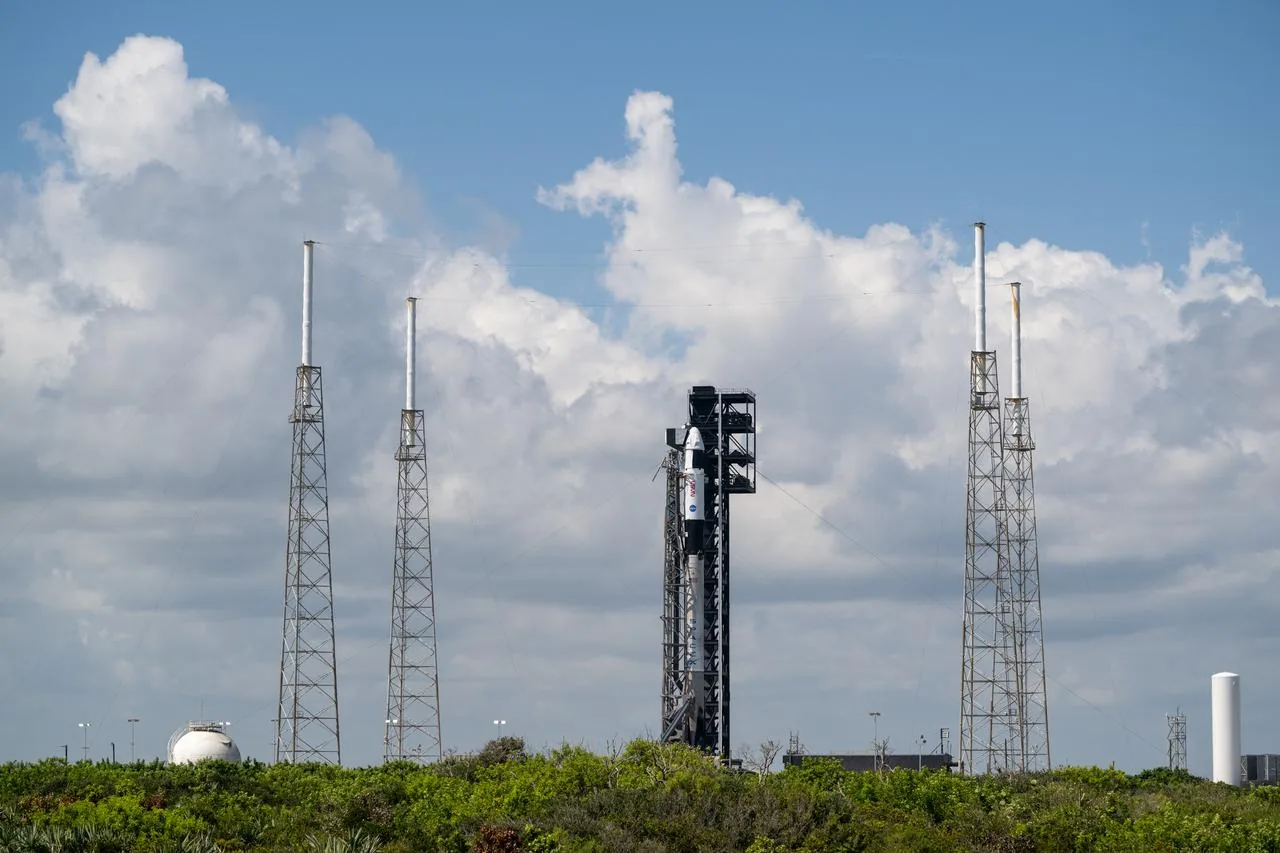
New Glenn is not a small step. It is a 320-foot tall, two-stage rocket capable of delivering 45 metric tons to low Earth orbit, which puts it squarely in competition with SpaceX's Falcon Heavy and positions it as the second most capable operational rocket in the Western world. Only SpaceX's Starship, still in its test flight phase, promises more raw lifting power.
The rocket's first stage is powered by seven BE-4 engines, each producing 550,000 pounds of thrust at sea level. These engines burn liquid natural gas (methane) and liquid oxygen, a propellant combination that is increasingly favored in the industry for its performance, lower cost, and cleaner combustion compared to the RP-1 kerosene used by Falcon 9. The BE-4 has had a complicated development history. Years of delays frustrated not only Blue Origin but also United Launch Alliance, which depends on the same engine for its Vulcan Centaur rocket. But the engine has now proven itself in flight, and its performance data looks strong.
The first stage is designed to be reusable, landing vertically on a ship at sea, much like SpaceX's Falcon 9 boosters. Blue Origin has targeted at least 25 reuses per booster, an ambitious number that, if achieved, would drive per-launch costs down dramatically. The second stage, powered by two BE-3U engines burning liquid hydrogen and liquid oxygen, is expendable, optimized for high-energy upper-stage performance.
The payload fairing is seven meters in diameter, the largest of any operational commercial rocket. This is not a trivial detail. Satellite manufacturers have long been constrained by fairing size, forced to fold, compress, and origami their spacecraft to fit inside rockets. New Glenn's generous fairing volume opens doors for larger satellites, more complex deployments, and reduced spacecraft design constraints.
The First Launch: A Statement of Arrival
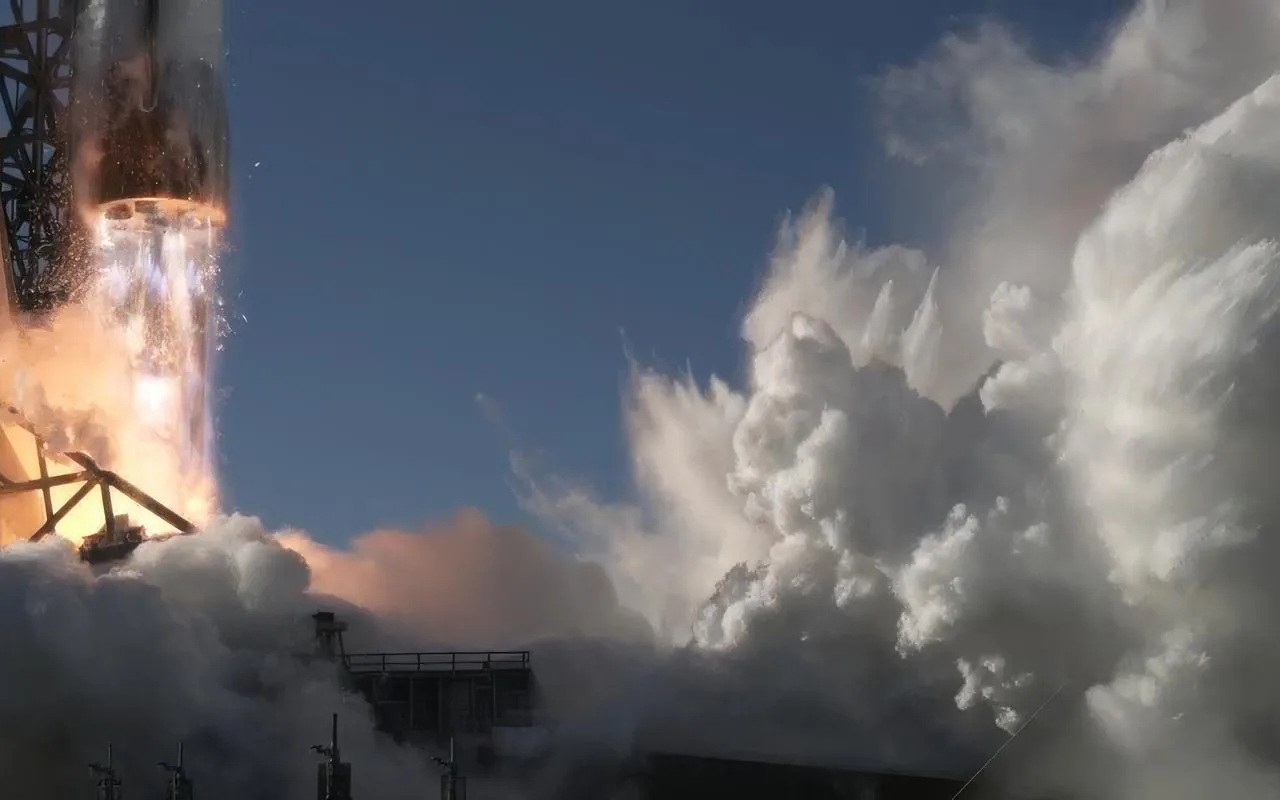
New Glenn's inaugural launch from Cape Canaveral's Launch Complex 36 in early 2025 was a defining moment for Blue Origin. The company had faced skepticism from industry observers who questioned whether a company that had never reached orbit could successfully fly a vehicle of this scale on its first attempt. The history of rocketry is littered with first-flight failures, and no one would have been shocked by an anomaly.
The first stage performed nominally during ascent. While the booster landing attempt on the first flight did not succeed, that outcome was widely expected for a debut mission. SpaceX's first Falcon 9 booster landing attempts also failed before the company perfected the technique. The critical milestone was reaching orbit with the second stage and payload, demonstrating that the fundamental vehicle architecture works. Blue Origin proved it could play in the orbital game.
Subsequent flights will refine the booster recovery process. Blue Origin's landing ship, named Jacklyn after Bezos's mother, is stationed in the Atlantic, ready to receive returning first stages. Each successful recovery will build confidence and move the program toward the rapid reuse cadence that makes the economics truly compelling.
Project Kuiper: The Business Case That Pays the Bills
If you want to understand why Bezos has invested over $15 billion of personal wealth into Blue Origin, look no further than Project Kuiper, Amazon's planned constellation of 3,236 broadband satellites. Kuiper is Amazon's answer to Starlink, and it needs a lot of rockets.
Amazon has purchased 27 New Glenn launches for Kuiper deployment, along with additional launches from ULA's Vulcan Centaur and Arianespace's Ariane 6. But New Glenn is the backbone of the deployment plan, and the vertical integration between Blue Origin and Amazon gives both entities a strategic advantage. Amazon gets priority access to a capable, cost-competitive launch vehicle. Blue Origin gets a guaranteed manifest that provides revenue stability and flight cadence, the two things most critical for a launch company trying to establish itself.
Each New Glenn launch can deploy multiple Kuiper satellites, and the seven-meter fairing is perfectly sized for the job. The deployment timeline is aggressive. The FCC requires Amazon to launch at least half the constellation by mid-2026, with the full constellation operational by 2029. This regulatory clock means New Glenn must achieve a launch tempo of roughly once every two to three weeks at peak deployment, an enormous operational challenge that will stress every part of the system.
The strategic implications are profound. If Kuiper succeeds, Amazon gains a global broadband infrastructure that complements its AWS cloud business, its logistics network, and its retail platform. Blue Origin gains the flight heritage and operational rhythm of a mature launch provider. The symbiosis between the two companies is the kind of vertical integration that makes competitors nervous.
Blue Moon and Artemis: Going Back to the Moon

New Glenn is also the launch vehicle for Blue Origin's Blue Moon Mark 1 lander, selected by NASA as part of the Artemis program to return humans to the lunar surface. The Human Landing System (HLS) contract, valued at $3.4 billion, tasks Blue Origin with developing a lander capable of carrying astronauts from lunar orbit to the surface and back.
Blue Moon represents a different kind of challenge than satellite deployment. Lunar missions demand extreme precision, redundancy, and reliability. The lander must operate in the harsh thermal environment of the Moon, navigate autonomously to a landing site, and support astronauts on the surface for extended periods. Blue Origin is leading a national team that includes Lockheed Martin, Draper, Boeing, and Astrobotic, bringing together decades of aerospace expertise.
New Glenn's role in the Artemis architecture is to launch the Blue Moon lander and its transfer stage to orbit, where it will eventually make its way to the Moon. The rocket's 45-ton LEO capacity provides ample margin for the mission, and the large fairing accommodates the lander's considerable dimensions.
The Artemis contract is not just about money, though $3.4 billion is nothing to dismiss. It is about credibility. Successfully landing astronauts on the Moon would transform Blue Origin's reputation from "Bezos's space hobby" to "critical national space infrastructure provider." That reputational shift would ripple through every part of the company's business, from commercial launch sales to government contracts.
Competition with Falcon Heavy and Beyond
New Glenn enters a market that SpaceX has dominated for years. Falcon Heavy, with its 63.8-ton LEO capacity, is more powerful than New Glenn, and its pricing, enabled by years of Falcon 9 reuse experience, is aggressively competitive. SpaceX also has an enormous advantage in flight heritage: Falcon 9 has completed over 300 missions, while New Glenn is just beginning.
But competition is not a winner-take-all game in the launch market. Many satellite operators and government agencies actively seek alternatives to SpaceX, both for supply chain resilience and for competitive pricing leverage. The U.S. Department of Defense's National Security Space Launch program explicitly maintains two launch providers to ensure assured access to space. New Glenn's certification for national security missions would open a substantial and high-margin revenue stream.
The real competitive threat to New Glenn is not Falcon Heavy but Starship. If SpaceX's fully reusable super-heavy-lift vehicle achieves its cost targets, it could fundamentally reprice the entire launch market, pushing per-kilogram costs so low that partially reusable vehicles like New Glenn would struggle to compete on price alone. Blue Origin is aware of this threat, and the company has discussed plans for a fully reusable second stage and future vehicle architectures, but those are years away.
For now, New Glenn occupies a strong competitive position: more capable than Vulcan Centaur and Ariane 6, with a larger fairing than any competitor, and backed by the deepest pockets in the industry. Bezos has repeatedly stated that he is willing to spend whatever it takes, and his track record at Amazon suggests he means it.
The Bigger Picture: Bezos's Long Game
Jeff Bezos has always described Blue Origin in civilizational terms. His stated goal is to move heavy industry off Earth and into space, preserving the planet as a residential zone while millions of people live and work in orbital habitats. That vision is decades away at minimum, but every milestone, including New Glenn's first flight, the BE-4 engine's maturation, the Blue Moon lander's development, moves the needle.
What matters in the near term is simpler. Blue Origin now has an orbital rocket. It has a multi-billion-dollar launch manifest. It has a NASA contract to land astronauts on the Moon. It has a clear path to national security launch certification. These are not aspirations; they are commitments with timelines and consequences.
The critics who spent years questioning whether Blue Origin would ever reach orbit now face a different question: how quickly can the company scale? The answer will determine not just Blue Origin's future but the shape of the entire launch industry for the next decade. One thing is certain: the era of SpaceX operating without a serious heavy-lift competitor is coming to an end, and the space industry is better for it. Competition drives innovation, lowers prices, and expands access. New Glenn is not just Jeff Bezos's big bet. It is a bet that benefits everyone who depends on getting things to orbit.