There are roughly 500,000 square miles of the United States where your cell phone simply does not work. No signal. No bars. No way to call for help if your car breaks down on a remote highway, no way to send a text from a national park, no way to access a map when you are lost in the backcountry. Multiply that by the rest of the world, and you are looking at billions of people who live or travel through areas where terrestrial cell towers do not reach. SpaceX's Starlink Direct-to-Cell service is designed to make dead zones extinct, and it does so using the phone already in your pocket.
The T-Mobile Partnership That Started It All
In August 2022, SpaceX CEO Elon Musk and T-Mobile CEO Mike Sievert stood on a stage in Texas and announced a partnership that sounded almost too good to be true. Starlink satellites would connect directly to standard, unmodified T-Mobile phones, providing text, voice, and eventually data coverage anywhere in the continental United States, including areas with zero existing cell coverage.
The announcement was met with a mix of excitement and skepticism. The technical challenges of connecting a satellite hundreds of kilometers above Earth to a phone designed to communicate with a cell tower a few miles away are genuinely formidable. The phone's antenna is tiny. Its transmit power is measured in milliwatts. The signal must travel through the atmosphere, survive path loss over enormous distances, and arrive at the satellite with enough strength to be decoded. It is, from a radio engineering perspective, an extraordinarily difficult problem.
But SpaceX has a track record of solving extraordinarily difficult problems, and the Starlink team's approach is characteristically pragmatic. Rather than requiring a new phone or a special antenna attachment, the system works with existing LTE handsets by exploiting unused T-Mobile spectrum and deploying satellites with very large, high-gain antennas that can detect the faint signals from terrestrial phones.
How Direct-to-Cell Actually Works

The technical architecture rests on several key innovations.
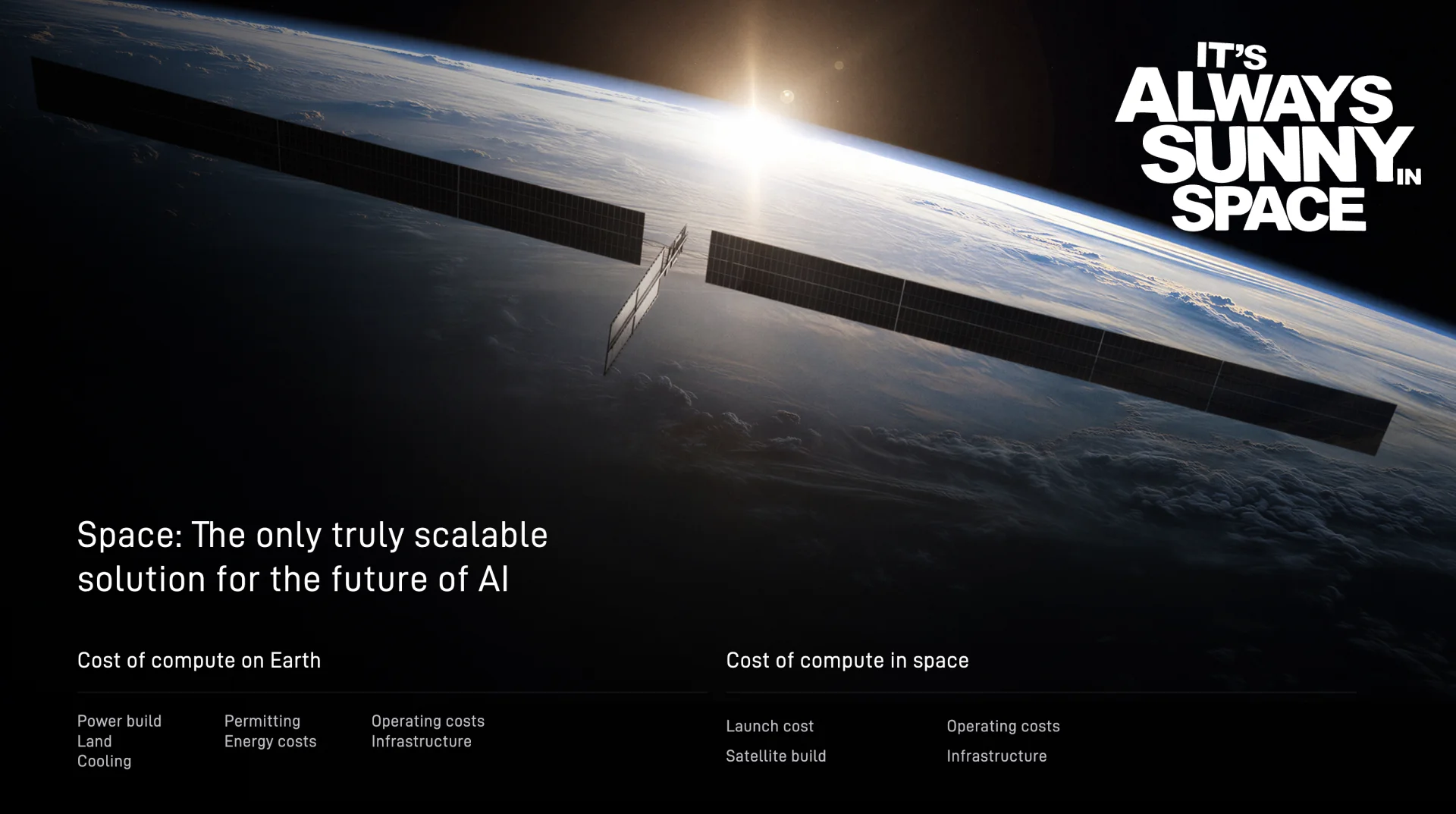
Massive satellite antennas. The Starlink v2 Mini satellites equipped for direct-to-cell service carry a large phased-array antenna, roughly 25 square meters in area, specifically designed to communicate with terrestrial cell phones. This antenna creates focused beams that concentrate the satellite's receive sensitivity on small geographic areas, dramatically improving the signal-to-noise ratio. Think of it as the satellite equivalent of cupping your hand behind your ear to hear someone whispering across a crowded room.
Standard LTE protocol. The system uses the standard 4G LTE protocol that every modern smartphone already supports. The satellite essentially acts as a cell tower in the sky, broadcasting on T-Mobile's PCS spectrum (Band 25/1900 MHz). When your phone is outside the range of any terrestrial tower, it detects the satellite's signal and connects just as it would to a ground-based tower. No app needed. No firmware update. No new hardware. The phone does not even know it is talking to a satellite.
Orbital geometry. Starlink's direct-to-cell satellites operate in low Earth orbit at approximately 540 kilometers altitude. At any given time, multiple satellites are visible from any point on the ground, and the system manages handoffs between satellites as they move across the sky. The orbital mechanics mean each satellite covers a given ground area for only a few minutes before the next one takes over, requiring seamless handoff protocols that the Starlink team has developed specifically for this use case.
Spectrum coordination. One of the trickiest aspects of direct-to-cell is avoiding interference with terrestrial cell towers using the same frequencies. Starlink's system uses geofencing to avoid transmitting over areas where T-Mobile's ground network already provides coverage. The satellite beams are shaped and pointed to serve only the dead zones, complementing rather than competing with existing infrastructure.
The Rollout: Text First, Voice and Data Later
SpaceX and T-Mobile have taken a phased approach to the rollout. Text messaging came first, which makes sense from both a technical and practical standpoint. Text messages require very little bandwidth, are tolerant of latency, and can be store-and-forwarded. A text message works even if the connection is intermittent. For someone stranded on a remote road or lost in the wilderness, the ability to send a text message can be the difference between life and death.
Voice calling followed, requiring more sustained bandwidth and lower latency than text but still manageable within the system's constraints. The voice quality may not match a strong terrestrial LTE connection, but it is functional and reliable.
Data service represents the final and most challenging phase. Streaming video from a satellite connection to a handheld phone at broadband speeds pushes the system to its limits, and early data service will likely be modest in throughput compared to terrestrial 5G. But for users in areas with zero existing connectivity, even a few megabits per second represents an infinite improvement over nothing.
The Competitive Landscape
SpaceX is not the only company pursuing direct-to-cell satellite connectivity. The competitive landscape is intensifying rapidly.
AST SpaceMobile is the most prominent rival. The Texas-based company launched its first commercial-scale test satellite, BlueWalker 3, in 2022 and has been conducting direct-to-phone connectivity tests with various carrier partners. AST SpaceMobile's approach differs from Starlink's: the company deploys satellites with enormous unfolding antennas, over 64 square meters for their BlueBird constellation satellites, which provide very high gain but require complex deployment mechanisms. AST SpaceMobile has partnerships with AT&T, Vodafone, and Rakuten, giving it a broad international carrier network. The company began launching its first commercial BlueBird satellites in 2024.
Lynk Global was an early pioneer in satellite-to-phone technology, having demonstrated the first text message from a commercial satellite to a standard phone in 2020. The company operates a small constellation and has signed agreements with carriers in multiple countries, particularly in developing markets where terrestrial infrastructure is sparse.
Apple's Emergency SOS via Satellite, available on iPhone 14 and later models, uses Globalstar's satellite network to enable emergency messaging in areas without cell coverage. While limited to emergency communications and not a full cellular replacement, Apple's implementation has familiarized millions of consumers with the concept of satellite phone connectivity.
Qualcomm's Snapdragon Satellite platform, developed in partnership with Iridium, provides satellite messaging capabilities at the chipset level, enabling any Android phone manufacturer to integrate satellite connectivity.
The competition is healthy for the market but SpaceX holds several structural advantages: the largest satellite constellation in history (providing more capacity and coverage), vertical integration in launch (dramatically reducing deployment costs), and a partnership with a major U.S. carrier that provides immediate market access.
Global Impact: Beyond the American Market
The implications of direct-to-cell satellite connectivity extend far beyond eliminating dead zones on American highways. Globally, approximately 3 billion people lack reliable access to mobile broadband, primarily in rural areas of developing countries where the economics of building cell towers do not work. The cost of deploying terrestrial infrastructure in remote areas, including roads, power, fiber backhaul, and the towers themselves, can exceed $250,000 per site, with limited revenue to justify the investment.
Satellite direct-to-cell inverts this economic equation. The infrastructure is already in orbit. The marginal cost of serving an additional user in a remote village in Sub-Saharan Africa or Southeast Asia is negligible compared to the cost of building a cell tower to serve that same village. For the first time, universal mobile connectivity becomes economically feasible regardless of geography.
The humanitarian applications are enormous. Emergency services in disaster zones where terrestrial infrastructure has been destroyed. Medical telemedicine in remote areas. Agricultural information for subsistence farmers. Financial services for unbanked populations. Educational content for children in areas without schools. Each of these applications becomes possible when a basic cell phone can connect from anywhere on Earth.
The Regulatory and Business Challenges
The path to global direct-to-cell service is not purely technical. Spectrum licensing varies by country, and SpaceX must negotiate agreements with carriers and regulators in each market it wants to serve. Some countries may resist allowing a U.S. company to provide telecommunications service over their territory. Others may lack the regulatory framework to approve satellite-to-phone operations.
The business model for direct-to-cell is still evolving. T-Mobile has indicated that basic text messaging from satellites will be included in standard plans at no additional charge, with voice and data potentially carrying premium pricing. The per-user revenue from satellite connections will likely be lower than terrestrial service, but the addressable market, every phone user on Earth, is incomparably larger.
There is also the question of network capacity. Even with thousands of satellites, the total bandwidth available for direct-to-cell service is finite. In areas with high user density, the system will be capacity-constrained. Direct-to-cell is designed to complement terrestrial networks, not replace them. In cities and suburbs, traditional cell towers will continue to provide the bulk of connectivity. Satellite service fills the gaps.
The Bottom Line
Starlink Direct-to-Cell is not a gimmick or a marketing stunt. It is a fundamental shift in how wireless connectivity works. For the first time, the default state of a cell phone anywhere on Earth will be "connected" rather than "searching for signal." The technology works with existing phones. The satellites are already being launched. The carrier partnerships are signed.
The implications ripple outward from the obvious (no more dead zones on road trips) to the profound (universal connectivity for billions of people currently offline). It is one of those rare technological developments that sounds like it should be decades away but is actually happening now. The next time you drive through a stretch of highway with no cell signal, enjoy the silence. It will not last much longer.